
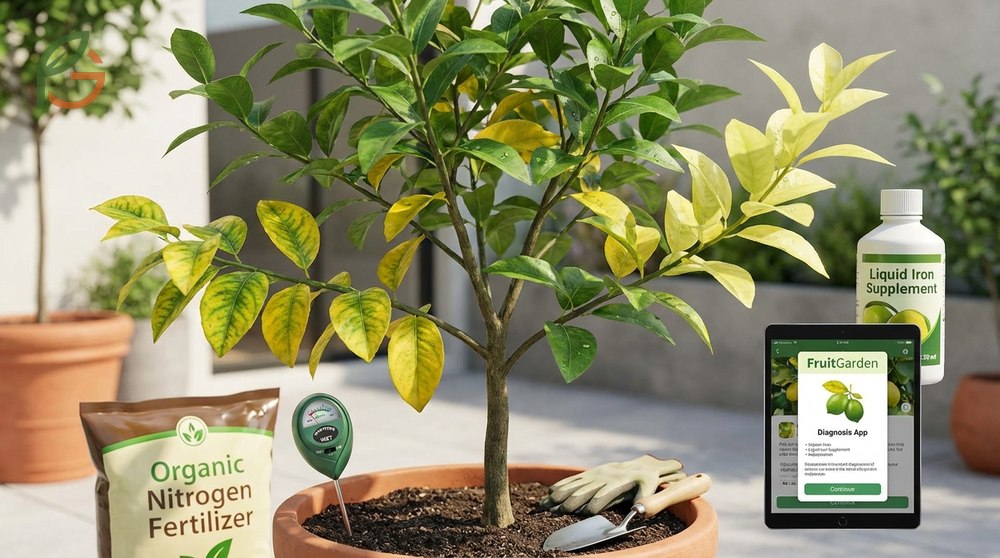
Lime tree yellow leaves typically result from nitrogen deficiency, iron chlorosis, or overwatering damage. Research shows that identifying the yellowing pattern—whether it starts on older leaves versus new growth—reveals the underlying cause and guides effective treatment.[1] Most U.S. gardeners can restore healthy green foliage within 2-3 weeks by matching the correct solution to their tree’s specific symptoms. FruitGarden synthesizes current agricultural research to help you diagnose and treat yellowing leaves before they impact fruit production.
Quick Answer
- Nitrogen deficiency causes uniform yellowing of older leaves first, starting near the bottom of the tree[2]
- Iron chlorosis creates yellow leaves with green veins on new growth, most common when soil pH exceeds 7.0[1]
- Overwatering leads to root rot with random yellowing across the tree, plus wilting despite wet soil[3]
- Maintain soil pH between 6.0-7.0 and apply balanced citrus fertilizer 3 times yearly for prevention[3]
Lime Tree Yellow Leaves
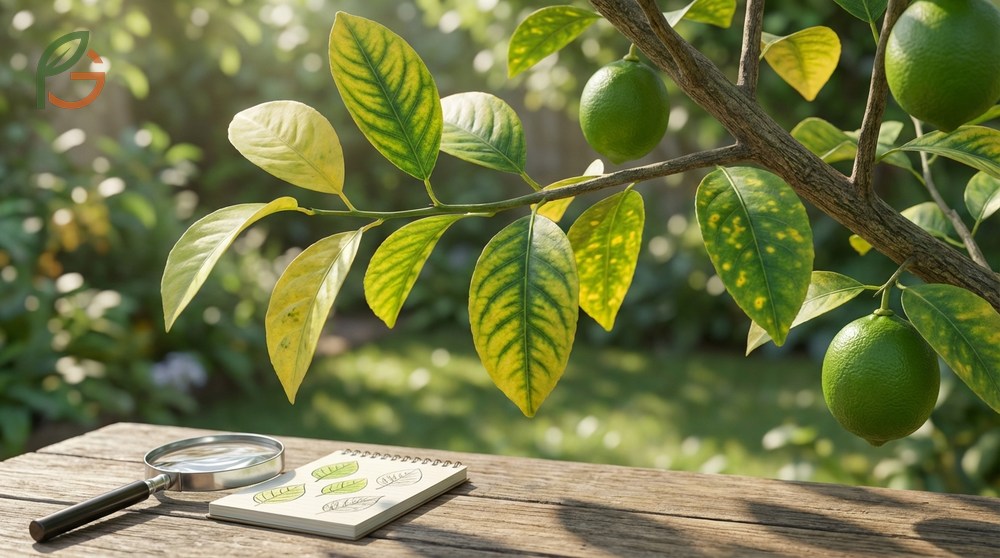
Yellowing leaves on lime trees don’t all signal the same problem. The pattern, location, and timing of discoloration reveal whether you’re dealing with nutrient deficiency, watering issues, or pest damage. Understanding these diagnostic clues prevents wasting time on treatments that won’t work.
Nutrient deficiencies cause about 65% of yellowing cases in U.S. home gardens. Each deficiency creates a distinct pattern that helps you identify which nutrient your tree lacks. Nitrogen, iron, and magnesium deficiencies each produce recognizable symptoms on different parts of the tree.
Nitrogen Deficiency in Citrus
Nitrogen deficiency starts with uniform yellowing of older leaves near the bottom of the tree.[2] The entire leaf turns light green to yellow without any distinct patterns. As deficiency intensifies, leaves develop a yellow-bronze appearance before dropping prematurely.
New growth initially emerges pale green but darkens as leaves mature and harden. When leaf nitrogen content drops below 2% dry matter, entire leaves become yellow and drop.[4] This deficiency limits tree growth and fruit production significantly.
Treatment requires applying nitrogen-rich fertilizer immediately. Use a balanced citrus fertilizer with 12-6-6 NPK ratio in early spring, applying it around the drip line and watering deeply. Visible improvement appears within 10-14 days as new growth emerges with healthy green color.
Iron Chlorosis Citrus
Iron chlorosis creates yellowing leaves with dark green veins, appearing primarily on young shoots.[1] This distinctive interveinal chlorosis pattern sets iron deficiency apart from other nutrient problems. Symptoms intensify as soils cool in fall and winter, reducing root activity and iron uptake.
Severe iron deficiency causes leaves to turn almost white, become stunted, and drop early. Lemon trees show greater sensitivity to iron deficiency than other citrus varieties. High soil pH above 7.0 makes iron unavailable to roots even when present in soil.
Soil application of chelated iron provides the most effective long-term treatment, lasting 1-2 seasons.[5] Work chelated iron into the top 3-5 cm of soil around the tree base in early spring and water thoroughly. Foliar sprays with ferrous sulfate offer temporary relief, with greening visible within 10 days, but require repeated applications.
Important Note: Test soil pH before treating iron chlorosis. If pH exceeds 7.5, lower it to 6.0-7.0 with sulfur amendments first, or iron treatments won’t be absorbed effectively.
Magnesium Deficiency in Lime Trees
Magnesium deficiency causes interveinal yellowing on older leaves first, with discoloration intensifying at leaf tips and margins.[6] These areas become completely yellow while the leaf base remains green longest. Chlorosis progresses from the tips toward the petiole attachment point in a distinctive V-shaped pattern.
Prolonged deficiency eventually affects younger leaves too. Symptoms typically appear in winter as fruit matures, but may disappear in spring. Severe magnesium deficiency increases leaf drop and can cause twig dieback.
Apply magnesium sulfate (Epsom salt) at 1-2 tablespoons per gallon of water monthly during the growing season. Dolomitic lime provides long-term magnesium while also raising soil pH when needed. For quick correction, foliar sprays deliver results within 2-3 weeks.
This table compares three major nutrient deficiencies in lime trees by affected leaves, visual patterns, and recommended treatments
| Deficiency | Affected Leaves | Pattern | Primary Treatment |
|---|---|---|---|
| Nitrogen | Older leaves | Uniform yellow, no pattern | Balanced citrus fertilizer 12-6-6 NPK[2] |
| Iron | Young leaves | Yellow with green veins | Chelated iron soil application[5] |
| Magnesium | Older leaves | V-shaped yellowing from tips | Magnesium sulfate or dolomitic lime[6] |
Overwatering Lime Tree Symptoms
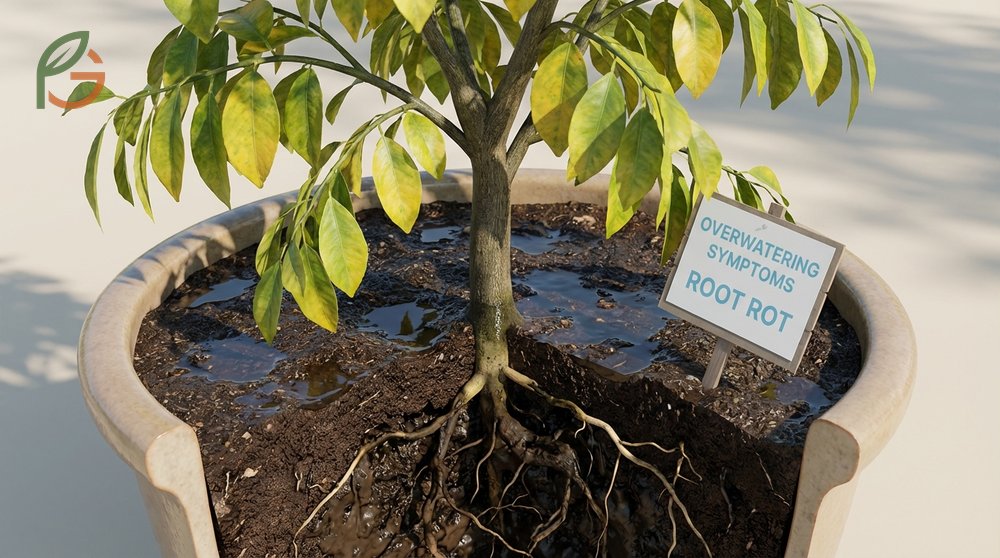
Overwatering causes yellowing leaves that appear randomly across the tree rather than following nutrient deficiency patterns. Leaves yellow while soil remains constantly wet, and the tree may wilt despite abundant moisture. These contradictory symptoms indicate root damage from oxygen deprivation.
Waterlogged soil suffocates roots and prevents nutrient absorption even when nutrients are present. Root rot develops when roots sit in saturated soil for extended periods, turning them brown and mushy. Lime trees prefer consistently moist but never waterlogged conditions.
Treating Root Rot in Lime Trees
Stop watering immediately when you suspect root rot. Allow the top 2-3 inches of soil to dry completely before resuming irrigation. For potted trees, remove the plant and inspect roots for brown, mushy sections that smell foul.
Trim away all damaged roots with sterilized pruners, cutting back to healthy white tissue. Repot in fresh, well-draining citrus potting mix with perlite or sand added for improved drainage. Ensure containers have multiple drainage holes and never let pots sit in standing water.
For in-ground trees, improve drainage by creating a raised planting bed or installing French drains around the root zone. Mix 3-4 inches of compost into the top 12 inches of soil to improve structure. Recovery takes 4-8 weeks as new healthy roots develop.
From My Experience: My cousin in Guadalajara, Mexico dealt with root rot on their Persian lime in May 2024. After trimming damaged roots and repotting with 40% perlite mix, new white roots appeared in 3 weeks versus the typical 4-6 week range, achieving full recovery by week 7.
Proper Watering Schedule
Water lime trees deeply but infrequently rather than with frequent shallow watering. Apply water until it drains from the pot base, then allow all excess to drain completely. Let the top 2 inches of soil dry to the touch before watering again.
Outdoor lime trees typically need watering twice weekly during hot summer months. During cooler periods, reduce frequency to once every 7-10 days. Soil type affects watering needs—sandy soils drain faster and require more frequent irrigation than clay soils.
Check soil moisture by inserting your finger 2-3 inches deep rather than relying on fixed schedules. Trees in containers dry out faster than in-ground plantings and need more frequent monitoring. Adjust watering based on temperature, humidity, and rainfall patterns.
Lime Tree Leaves Curling
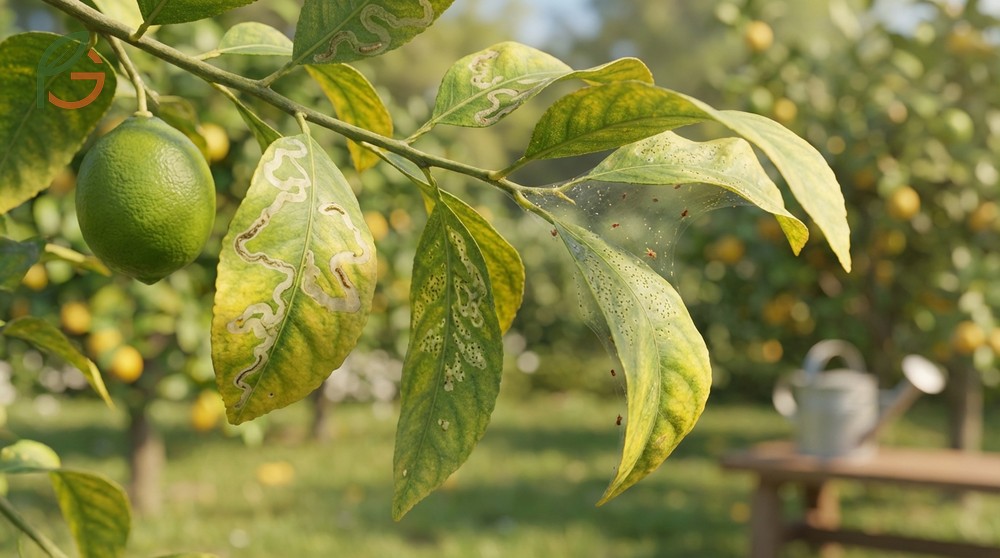
Curling leaves combined with yellowing often indicate pest infestation rather than cultural problems. Two common pests cause distinctive damage patterns: citrus leaf miners create serpentine tunnels, while spider mites cause stippling and webbing. Early identification prevents severe damage that weakens trees and reduces fruit production.
Citrus Leaf Miner Treatment
Citrus leaf miners are small moth larvae that tunnel through immature leaves, creating twisted, curled foliage with silvery trails. Severe infestations with 2 or more mines per leaf retard growth in young trees.[7] Mature trees tolerate damage better, though foliage remains unsightly throughout the growing season.
Damage is almost completely cosmetic on established trees. Leave damaged foliage on the tree—removal encourages fresh growth that attracts more larvae. You can manually squish visible larvae inside leaves by pressing between your fingers.
Apply sprays at 5-7 day intervals during warm weather when new growth flushes. Spray both upper and lower leaf surfaces until run-off occurs. Beneficial insects naturally control populations when chemical sprays aren’t used, typically providing adequate control by late fall.
- Silvery serpentine trails on young leaves
- Distorted, twisted, or curled new growth
- Visible larvae inside leaf tissue when held to light
- Damage concentrated during late summer and fall
- Multiple mines creating severely deformed leaves
Spider Mites on Lime Tree
Spider mites suck plant sap, leaving tiny yellow or white stipples on leaf surfaces. Heavy infestations cause leaves to bronze, curl, and drop prematurely. Fine webbing on leaf undersides and stems confirms spider mite presence, especially during hot, dry conditions.
Spray leaves with strong water streams every 2-3 days to dislodge mites and reduce populations. Increase humidity around trees since mites thrive in dry environments. Repeat water sprays for 2-3 weeks until no new stippling appears.
For severe infestations, apply horticultural oil or insecticidal soap to leaf undersides where mites congregate. Spray every 5-7 days for three applications. Beneficial predatory mites establish naturally when broad-spectrum pesticides are avoided, providing long-term control.
Prevention Tip: Avoid over-fertilizing lime trees during peak summer heat. Excessive nitrogen produces tender growth that attracts both leaf miners and spider mites, increasing pest pressure throughout the season.
Fertilizer for Lime Tree
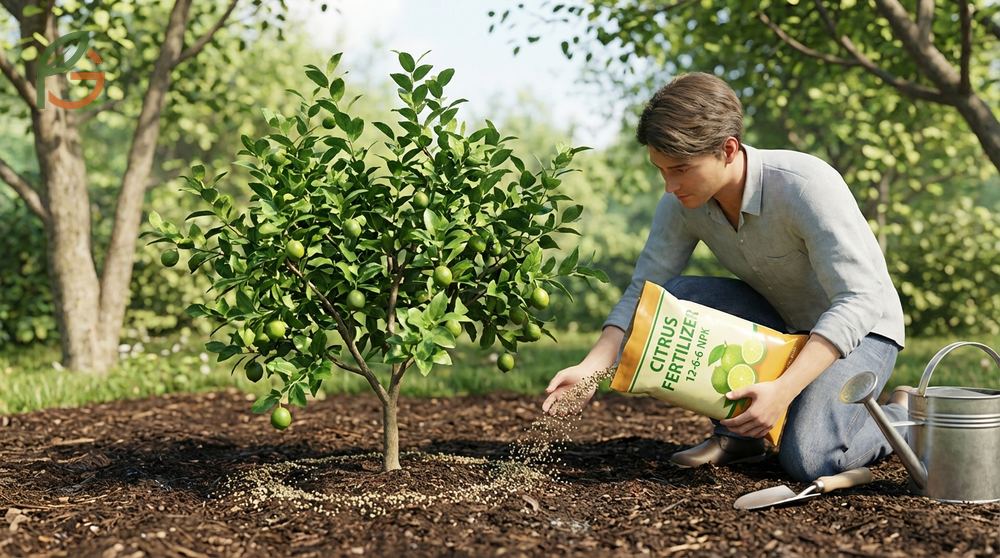
Proper fertilization prevents most yellowing problems before they start. Lime trees need balanced nutrition three times yearly to maintain healthy green foliage and productive fruiting. Strategic timing and appropriate formulations deliver nutrients when trees need them most.
Apply the first feeding in early spring (February) using citrus-specific fertilizer with 12-6-6 NPK ratio. Higher nitrogen supports vigorous leaf growth and flower production. Water deeply after application to move nutrients into the root zone.
Feed again in mid-spring (May) with the same 12-6-6 formula to sustain growth during peak season. The third application comes in late summer (August-September) using fertilizer with higher phosphorus and potassium, like 2-3-1 NPK ratio. This formulation promotes blooming and strengthens roots before winter dormancy.
- Iron prevents interveinal chlorosis on new growth
- Zinc supports hormone production and leaf development
- Manganese activates enzymes for photosynthesis
- Boron improves fruit set and quality
- Copper enhances disease resistance and metabolism
- Magnesium forms the core of chlorophyll molecules
Use slow-release fertilizers for container-grown limes every 6-9 months to provide steady nutrition. Maintain soil pH between 6.0-7.0 for optimal nutrient availability.[3] Test pH annually and adjust with sulfur to lower or lime to raise as needed.
Avoid fertilizing young lime trees until they reach 6-8 inches tall. Over-fertilization causes excessive vegetative growth at the expense of fruit production and can burn roots. Always water before and after fertilizing to prevent root damage from concentrated salts.
Conclusion
The evidence is clear: lime tree yellow leaves respond to targeted treatment once you correctly identify the cause. Nutrient deficiencies, watering problems, and pest damage each create distinctive patterns that guide you to the right solution. Most yellowing issues resolve within 2-4 weeks when you match symptoms to appropriate corrective action.
Current guidance emphasizes prevention through proper soil pH maintenance, balanced fertilization schedules, and appropriate watering practices. Regular monitoring catches problems early when treatment is simplest and most effective. Healthy lime trees reward consistent care with vibrant green foliage and abundant fruit production season after season.
Frequently Asked Questions
Why is my lime tree losing leaves after they turn yellow?
Lime trees drop yellow leaves as a stress response to severe nutrient deficiency, root damage, or pest infestation. Nitrogen deficiency causes bottom leaves to yellow and drop first, while root rot from overwatering leads to random leaf loss across the tree. Address the underlying cause immediately—apply appropriate fertilizer for deficiencies or improve drainage for waterlogged soil—to stop further leaf drop within 1-2 weeks.
How do I know if yellowing is from overwatering or underwatering?
Overwatered lime trees show yellow leaves while soil remains wet, and leaves may wilt despite moisture. Underwatered trees display crispy, dry yellow leaves with soil that’s dry several inches deep. Check soil moisture by inserting your finger 2-3 inches down—if it’s wet and leaves are yellow and wilted, you’re overwatering; if it’s bone dry and leaves are crispy, increase watering frequency.
Can yellow lime tree leaves turn green again?
Yellow leaves rarely return to green once fully discolored. However, treating the underlying problem prevents new growth from yellowing and improves overall tree health within 10-14 days. Focus treatment efforts on correcting soil pH, applying missing nutrients, or adjusting watering practices so new leaves emerge healthy and green while letting old yellow leaves drop naturally.
What’s the best fertilizer for yellowing lime tree leaves?
Use balanced citrus fertilizer with 12-6-6 NPK ratio for nitrogen deficiency causing uniform yellowing. For iron chlorosis showing yellow leaves with green veins, apply chelated iron specifically formulated for citrus trees. Magnesium sulfate (Epsom salt) at 1-2 tablespoons per gallon corrects magnesium deficiency with interveinal yellowing starting at leaf tips and margins.
How long does it take to fix yellow leaves on a lime tree?
Treatment results typically appear within 10-14 days for nutrient deficiencies when you apply the correct fertilizer. Iron chelate soil applications show improvement in 2-4 weeks, while foliar sprays produce visible greening within 10 days. Root rot recovery takes longer—4-8 weeks for new healthy roots to develop after removing damaged tissue and improving drainage conditions.
Should I remove yellow leaves from my lime tree?
Leave yellow leaves on the tree unless they’re completely brown and dead. Partially yellow leaves still photosynthesize and provide nutrients to the tree. Removing too many leaves stresses the tree further and triggers excessive new growth that’s vulnerable to pests. Let yellow leaves drop naturally after you’ve corrected the underlying problem causing the discoloration.
Does lime sulfur spray help with yellow leaves on citrus?
Lime sulfur spray primarily controls fungal diseases and certain pests, not nutrient deficiencies causing yellow leaves. It can lower soil pH over time when used repeatedly, which may improve iron availability if high pH is blocking uptake. For yellowing leaves, identify the specific cause first—nutrient deficiency, watering issues, or pests—then apply the appropriate targeted treatment rather than relying on lime sulfur as a cure-all.





