
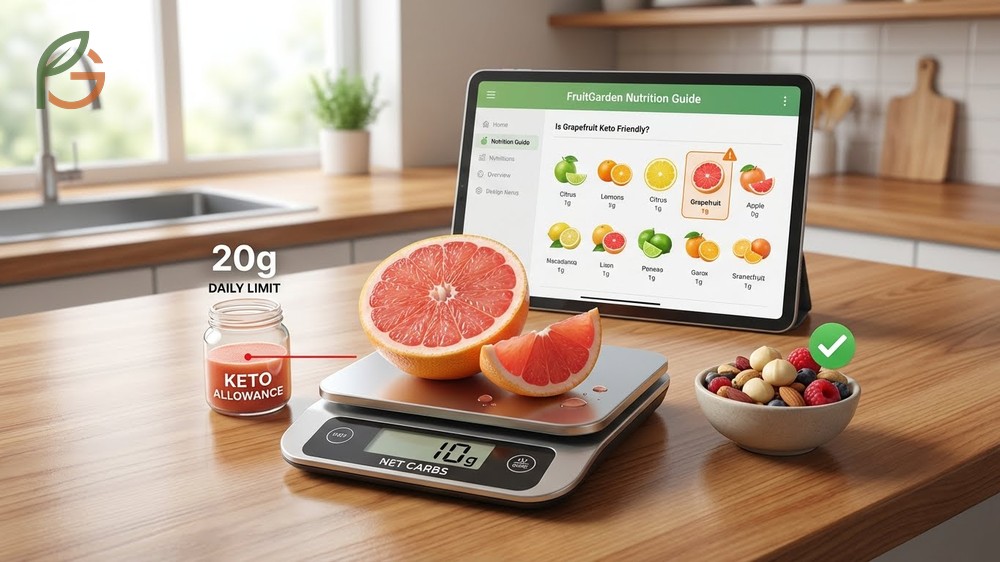
Is grapefruit keto friendly? Not ideally—while grapefruit offers vitamin C and fiber, half a medium grapefruit contains approximately 10g net carbs[1], consuming nearly 50% of the strict 20g daily keto limit. Research shows that maintaining ketosis requires limiting net carbohydrates to 20-50 grams daily[2]. FruitGarden synthesizes current nutritional research to help you make informed decisions about incorporating citrus fruits into low-carb diets.
Quick Answer
- Grapefruit contains 9.06g net carbs per 100g serving[1]
- Half a medium grapefruit (123g) provides ~10g net carbs[3]—half your daily keto allowance
- Strict keto limits net carbs to 20-25g daily[2] for optimal ketosis
- Better keto alternatives include raspberries (6g net carbs per ¾ cup)[4] and strawberries
Is Grapefruit Keto Friendly
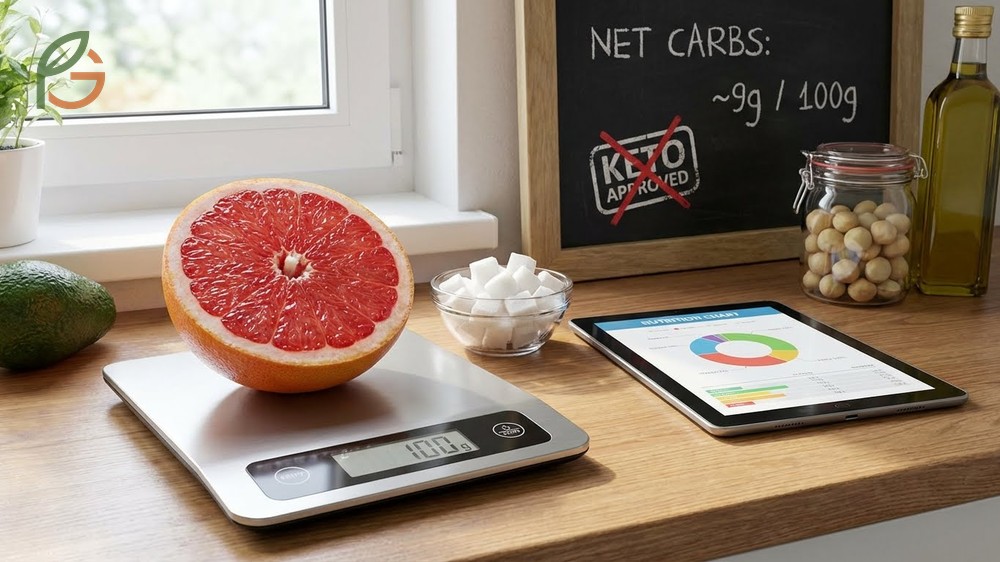
Grapefruit sits in the “moderately keto-unfriendly” category due to its carbohydrate density. Studies show that 100g of raw grapefruit contains 10.66g total carbohydrates and 9.06g net carbs after subtracting fiber[1]. This carb concentration makes it challenging to fit into strict ketogenic protocols.
The ketogenic diet works by shifting your body’s primary fuel source from glucose to ketones. This metabolic state, called ketosis, typically requires consuming fewer than 20-50g of net carbs daily[2]. A single half grapefruit can consume 40-50% of your entire daily carb budget on a strict 20g limit.
What often gets overlooked is that grapefruit’s fiber content—while beneficial for digestion—only reduces net carbs by about 1.6g per 100g serving. Unlike low-carb fruits such as raspberries or blackberries, grapefruit doesn’t provide enough fiber to substantially offset its sugar content.
Understanding Ketosis and Carb Limits
Current nutritional guidance establishes specific carbohydrate thresholds for achieving ketosis. Most individuals need to restrict net carbs to 20-25g daily for at least 3-6 months to establish stable ketone production[2]. More moderate approaches allow 25-50g net carbs, though results vary.
Net carbs represent the carbohydrates your body actually digests and converts to glucose. You calculate them by subtracting fiber and certain sugar alcohols from total carbohydrates. This distinction matters because fiber passes through your digestive system without spiking blood sugar or insulin levels.
- Metabolic health status and insulin sensitivity levels
- Activity level and exercise intensity (athletes tolerate more carbs)
- Body composition and muscle mass percentage
- Duration on ketogenic diet (keto-adapted individuals show flexibility)
- Individual genetic variations affecting carbohydrate metabolism
Grapefruit’s Impact on Ketosis
Consuming grapefruit can disrupt ketosis if you don’t carefully track your remaining macros. The 10g net carbs in half a grapefruit leave only 10-15g for your other meals on a strict 20g protocol. This tight restriction eliminates flexibility for vegetables, nuts, or incidental carbs from proteins and fats.
Evidence suggests that even moderate amounts of concentrated fruit sugars can trigger insulin responses that temporarily halt ketone production. Unlike berries that release sugars slowly due to higher fiber ratios, grapefruit’s 6.89g of simple sugars per 100g[1] can cause faster glucose elevation.
Important Note: If you’re within your first 3 months of keto adaptation, avoiding grapefruit entirely helps establish consistent ketosis. Once keto-adapted, you might tolerate small portions (2-3 segments) if tracked meticulously within your daily carb limit.
Grapefruit Carb Content
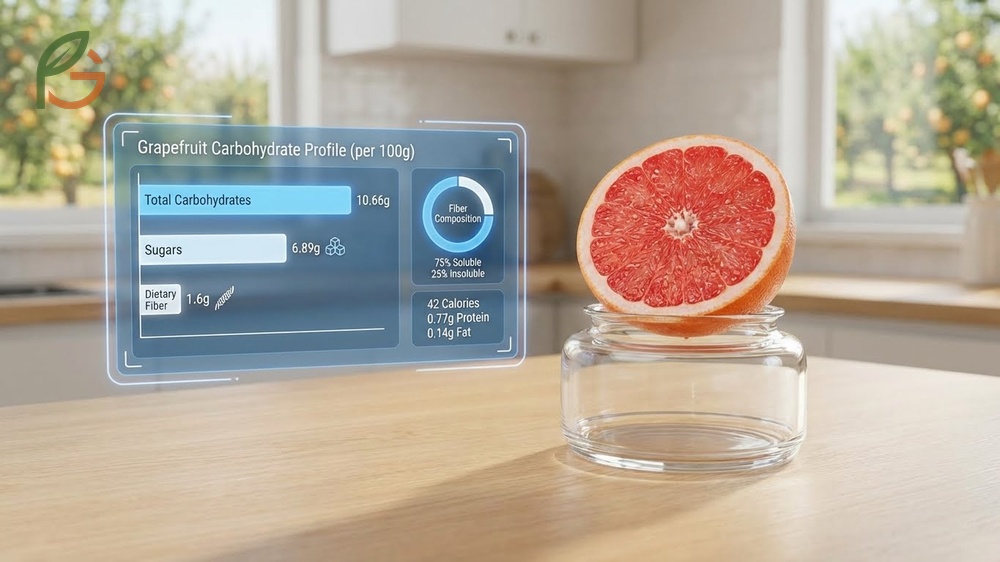
Understanding grapefruit’s complete carbohydrate profile helps you make informed portion decisions. Raw grapefruit contains 10.66g total carbohydrates per 100g, composed of 6.89g sugars, 1.6g dietary fiber, and other carbohydrates[1]. The fiber consists of 75% soluble fiber and 25% insoluble fiber.
Grapefruit’s glycemic profile poses challenges for ketogenic dieters. The fruit delivers 42 calories per 100g with minimal protein (0.77g) and virtually no fat (0.14g). This macronutrient distribution means grapefruit provides almost exclusively carbohydrate-based calories, unlike keto-friendly avocados that offer substantial fats.
Portion sizes dramatically affect carb intake. A typical medium grapefruit weighs 200-250g, meaning the entire fruit contains 18-23g net carbs—exceeding the entire daily allowance for strict keto. Even seemingly small portions add up quickly compared to truly low-carb alternatives.
Total vs. Net Carbs in Grapefruit
The distinction between total and net carbs determines whether grapefruit fits your macros. Total carbs include all carbohydrate types, while net carbs exclude fiber and sugar alcohols that don’t significantly impact blood glucose. For grapefruit, the 1.6g fiber content only reduces the 10.66g total carbs to 9.06g net carbs[1].
This minimal fiber benefit contrasts sharply with keto-friendly berries. Raspberries contain 3g fiber per ¾ cup serving, reducing 9g total carbs to just 6g net carbs[4]. The higher fiber-to-carb ratio makes berries more compatible with ketogenic eating patterns.
- Simple sugars: 6.89g (primarily fructose at 1.8g and other natural sugars)
- Dietary fiber: 1.6g (1.2g soluble, 0.4g insoluble)
- Net digestible carbs: 9.06g (total minus fiber)
- Starch content: 0g (grapefruit contains no starch)
- Total carbohydrates: 10.66g (sum of all carb types)
Red vs. White Grapefruit Varieties
Grapefruit variety affects carbohydrate content. Red grapefruit contains 10.66g total carbs per 100g, while white grapefruit contains approximately 8.66g—2g fewer carbs in the same serving size[1]. This difference stems from variations in sugar composition and fruit flesh density.
White grapefruit offers a slight advantage for carb-conscious eaters, though the 2g difference still leaves it too high for regular keto consumption. Both varieties exceed the carb density of truly keto-friendly fruits like strawberries, blackberries, and lemons by significant margins.
Net Carbs in Grapefruit
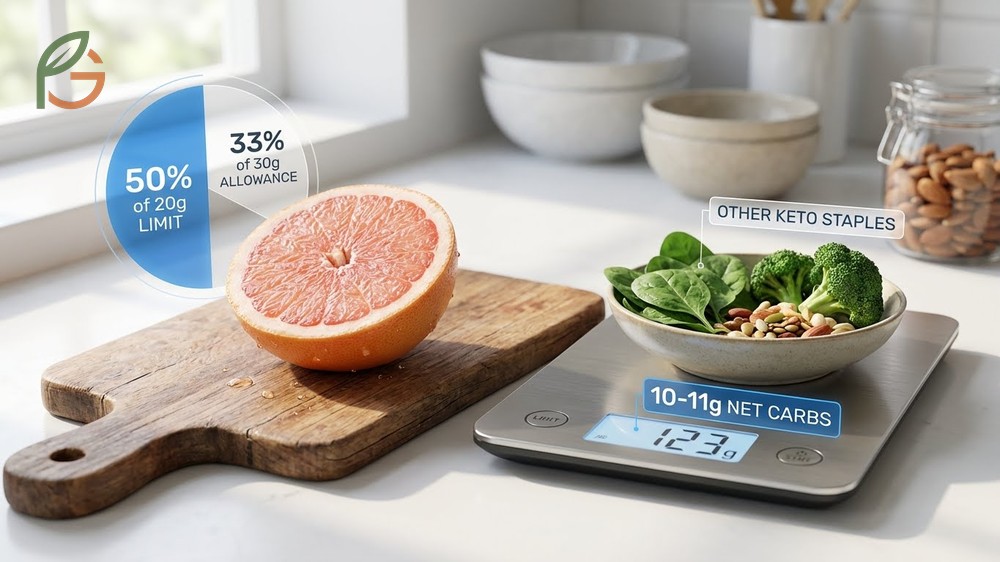
Net carbs determine grapefruit’s true impact on ketosis. Agricultural data shows that half a medium grapefruit (approximately 123g) delivers 10-11g net carbs[3]. This represents 50% of the 20g strict keto limit or 33% of a more liberal 30g allowance.
The challenge intensifies when you consider that vegetables, nuts, seeds, and incidental carbs from dairy and proteins quickly consume remaining carb allowances. Spinach, broccoli, and cauliflower—keto staples—contribute 3-5g net carbs per generous serving. After consuming half a grapefruit, you’ve eliminated room for multiple vegetable servings.
Most people find it difficult to balance grapefruit consumption with nutrient-dense vegetables required for micronutrient adequacy. Research emphasizes that well-formulated ketogenic diets should prioritize vegetables for fiber, vitamins, and minerals over higher-sugar fruits[2].
This table compares net carbohydrate content across five different grapefruit portion sizes from small segments to whole fruit, showing the percentage of a strict 20g daily keto carb limit consumed by each portion.
| Portion Size | Weight (g) | Net Carbs (g) | % of 20g Keto Limit |
|---|---|---|---|
| 3 segments | 40g | 3.6g[1] | 18% |
| ¼ grapefruit | 60g | 5.4g[1] | 27% |
| ½ medium grapefruit | 123g | 10g[3] | 50% |
| Whole medium grapefruit | 246g | 20g[1] | 100% |
| 1 cup grapefruit sections | 230g | 18.6g[1] | 93% |
- Limit to 2-3 segments (20-40g) as occasional flavor enhancement, not standalone snack
- Pair with high-fat foods like full-fat Greek yogurt or cream cheese to slow sugar absorption
- Reserve grapefruit for days when other carb sources are minimal (no nuts, limited vegetables)
- Use lemon or lime juice as citrus substitutes—they provide flavor with 0.5-1g net carbs per tablespoon
- Track all portions with food scales rather than estimating to avoid carb creep
Keto Tip: If you’re craving citrus, squeeze fresh lemon juice (1g net carb per tablespoon) into sparkling water with a few drops of liquid stevia. You’ll get citrus flavor for less than 2g net carbs versus 10g for half a grapefruit.
Grapefruit Portions on Keto
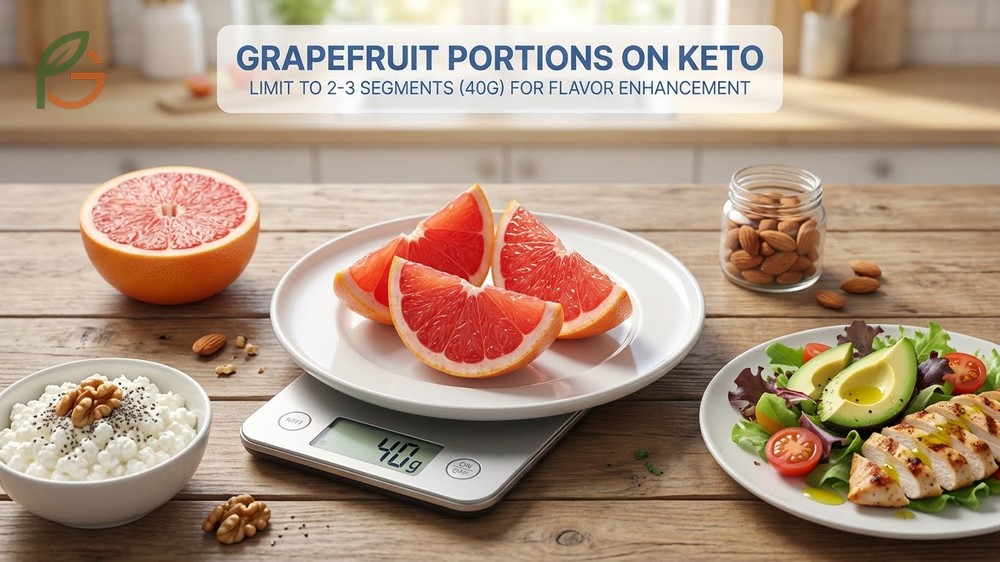
Strategic portion control makes the difference between staying in ketosis and disrupting fat burning. Evidence shows that limiting grapefruit to 2-3 segments (approximately 40g) provides citrus flavor while contributing only 3.6g net carbs[1]—about 18% of a strict daily limit.
This minimal serving size works best as flavor enhancement rather than primary food. Add grapefruit segments to salads with fatty proteins, mix into full-fat cottage cheese, or use as garnish for grilled fish. The fat and protein in these combinations help moderate blood sugar response.
Timing matters for fruit consumption on keto. Consuming small amounts of higher-carb foods like grapefruit immediately after intense workouts can help replenish muscle glycogen without disrupting ketosis. Your muscles act as glucose sinks during the 30-90 minute post-exercise window, pulling carbs into storage rather than triggering fat storage.
Most successful keto practitioners avoid grapefruit entirely during weight loss phases, reintroducing small portions only after achieving keto-adaptation (typically 8-12 weeks). Once your body efficiently burns ketones, it tolerates occasional carb variations better than during initial adaptation.
- Weigh portions with digital food scale—eyeballing leads to 30-50% underestimation
- Count grapefruit as dessert replacement, not addition to regular meals
- Choose white grapefruit over red to save 2g carbs per 100g serving
- Avoid grapefruit juice completely—it concentrates sugars to 9-11g net carbs per 4oz without fiber
- Test blood ketones 2-3 hours after eating grapefruit to assess individual response
- Skip grapefruit on days consuming other fruit, alcohol, or higher-carb vegetables like carrots or tomatoes
Keto Citrus Fruits Alternatives

Better citrus options exist for ketogenic eating patterns. Lemons and limes deliver citrus flavor with dramatically fewer carbohydrates—just 5.5g and 7.7g net carbs per 100g respectively[4]. Most people use 1-2 tablespoons of lemon or lime juice (0.5-1g net carbs) rather than eating whole fruits.
Research demonstrates that berries provide superior nutrient density with lower carb impact. Raspberries contain 6g net carbs per ¾ cup serving with 3g fiber, while blackberries offer similar ratios[4]. Strawberries deliver vitamin C comparable to citrus with only 8-9g net carbs per cup.
Current dietary guidance emphasizes that well-formulated ketogenic diets prioritize low-glycemic berries over higher-sugar citrus fruits. Berries provide antioxidants, fiber, and micronutrients with less metabolic disruption than grapefruit or oranges[5].
- Raspberries: 6g net carbs per ¾ cup with exceptional fiber content
- Blackberries: 6g net carbs per ¾ cup, rich in anthocyanins
- Strawberries: 8-9g net carbs per cup, excellent vitamin C source
- Lemons: Use juice and zest for flavor—1 tbsp juice contains ~1g net carb
- Limes: Similar to lemons, perfect for water enhancement and cooking
- Avocados: 2g net carbs per half fruit with 15g healthy fats
- Coconut (fresh): 6g net carbs per cup, provides beneficial MCT fats
- Oranges: 9g net carbs per medium fruit, similar issues as grapefruit[5]
- Tangerines: 7-9g net carbs per fruit, concentrated sugars
- Clementines: 8-9g net carbs per fruit, easy to overeat due to small size
- Mandarins: Similar carb profile to tangerines, not keto-friendly
- Blood oranges: 10-12g net carbs per fruit, higher sugar than standard oranges
- Pomelos: 11-13g net carbs per half fruit, largest citrus with proportionally high carbs
Conclusion
The evidence is clear: grapefruit isn’t keto friendly for those following strict ketogenic protocols. With 10g net carbs in half a medium fruit, grapefruit consumes 50% of your daily 20g carb allowance, leaving insufficient room for nutrient-dense vegetables and incidental carbs from other sources. Better alternatives include raspberries, blackberries, strawberries, and citrus flavor from lemon or lime juice.
Current nutritional guidance emphasizes that successful ketogenic eating prioritizes low-glycemic berries and strategic fat sources over higher-carb fruits. If you’re growing citrus in your home garden, consider dedicating space to berry bushes or using lemons and limes as culinary enhancements rather than relying on grapefruit for vitamin C. FruitGarden recommends focusing on truly keto-compatible fruits that support sustained ketosis without constant macro juggling.
Medical Disclaimer
Important Medical Disclaimer: This content is for informational and educational purposes only. It is not intended as a substitute for professional medical advice, diagnosis, or treatment. Always consult a qualified healthcare professional or registered dietitian before making any changes to your diet, particularly if you’re starting a ketogenic diet, have diabetes, take medications, or have other medical conditions. Grapefruit can interact with certain medications, including statins and blood pressure drugs. Ketogenic diets may not be appropriate for everyone, including pregnant women, children, or individuals with certain metabolic disorders.
Frequently Asked Questions
How Many Carbs Are in Half a Grapefruit?
Half a medium grapefruit (approximately 123g) contains about 10g net carbs and 11-12g total carbs. This represents 50% of the strict 20g daily keto carb limit, making it challenging to fit into ketogenic meal plans while maintaining adequate vegetable intake.
Can I Eat Grapefruit on a Low-Carb Diet?
Yes, if you’re following a moderate low-carb diet (50-100g carbs daily) rather than strict keto. Grapefruit can fit into higher-carb approaches, but strict ketogenic dieters should choose lower-carb alternatives like berries, lemons, or limes to preserve ketosis.
What Citrus Fruits Are Keto Friendly?
Lemons and limes are the most keto-friendly citrus fruits. Use 1-2 tablespoons of lemon or lime juice for citrus flavor while consuming only 0.5-1g net carbs per tablespoon. Avoid whole oranges, tangerines, and grapefruit due to their 9-11g net carb content per serving.
Does Grapefruit Kick You Out of Ketosis?
Consuming half a grapefruit or more can disrupt ketosis for most people following strict 20g net carb limits. The 10g net carbs leaves minimal room for vegetables and other foods. However, 2-3 small segments (3-4g net carbs) might fit if carefully tracked within your daily macros.
What Fruits Have the Lowest Net Carbs?
Avocados have the lowest net carbs at 2g per half fruit. Among sweet fruits, raspberries and blackberries contain 6g net carbs per ¾ cup, strawberries provide 8-9g per cup, and watermelon offers 11g per cup. These all rank significantly lower than grapefruit’s 10g per half fruit.
Is White or Red Grapefruit Better for Keto?
White grapefruit contains approximately 2g fewer carbs per 100g than red grapefruit (8.66g vs. 10.66g total carbs). While white varieties offer a slight advantage, both remain too high in carbohydrates for regular consumption on strict ketogenic diets.
Can I Drink Grapefruit Juice on Keto?
No, grapefruit juice is not keto-friendly. A 4oz (120ml) serving contains 9-11g net carbs without any fiber to slow sugar absorption. Juice concentrates the sugars while removing beneficial fiber, causing faster blood glucose spikes that can disrupt ketosis more severely than whole fruit.





