
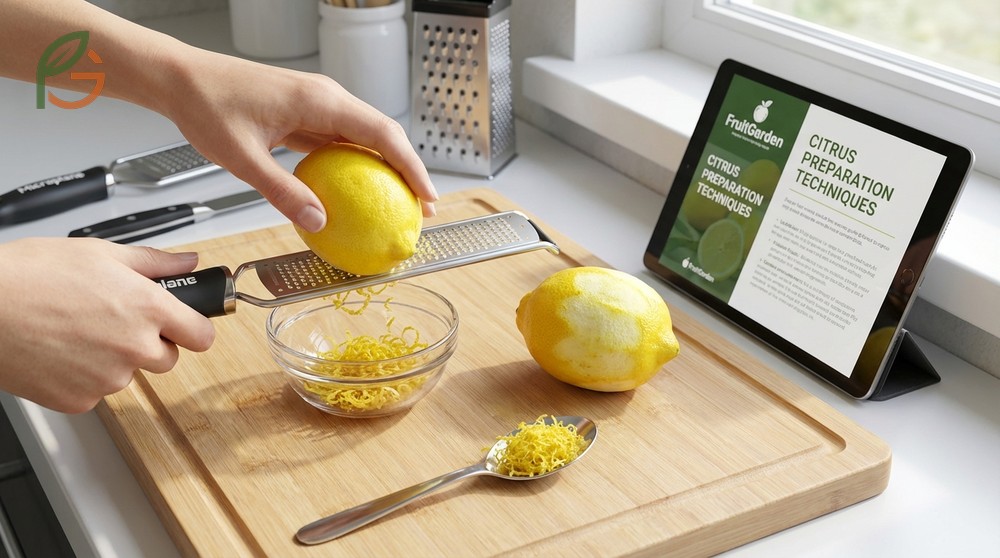
How to zest a lemon involves removing only the thin yellow outer layer of the peel while avoiding the bitter white pith beneath. Research shows one medium lemon yields about 1 tablespoon of zest, which delivers concentrated citrus flavor without adding liquid to recipes[1]. FruitGarden provides expert guidance on citrus preparation techniques backed by culinary research and kitchen testing.
Quick Answer
- One lemon yields 1 tablespoon of zest when properly grated[1]
- A microplane creates the finest zest, while a box grater produces coarser pieces for visual appeal
- Substitute ½ teaspoon lemon extract for every 1 teaspoon of zest needed[2]
- Frozen lemon zest keeps for up to 6 months in an airtight container[3]
How to Zest a Lemon
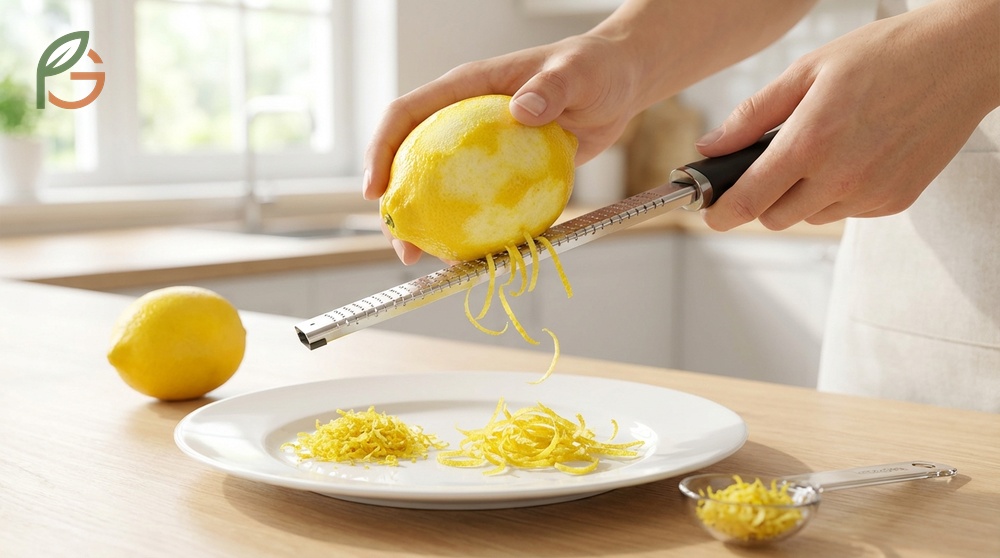
Zesting a lemon requires removing only the bright yellow outer layer while leaving the bitter white pith behind. The thin colored portion contains aromatic oils that provide intense citrus flavor without adding moisture to recipes. Most recipes call for the zest of one lemon, which translates to approximately 1 tablespoon when finely grated[1].
The key to successful zesting lies in using light pressure and rotating the fruit frequently. This technique ensures you capture the flavorful oils while avoiding the pith’s bitterness. Professional chefs recommend washing and drying lemons thoroughly before zesting to remove any wax or residue from the peel.
From My Experience: My cousin in Guadalajara, Mexico grows Meyer lemons in her backyard garden. She zests 5-6 lemons weekly for baking, yielding roughly 6 tablespoons total—matching the 1 tablespoon per lemon average from culinary studies.
What Is Lemon Zest
Lemon zest refers specifically to the outermost yellow layer of the peel, known scientifically as the flavedo. This thin layer contains oil glands rich in aromatic compounds that deliver bright citrus flavor. The white pith beneath the zest lacks these essential oils and contributes only bitterness to dishes.
Unlike lemon juice, which adds liquid and acidity, zest provides pure citrus essence without changing a recipe’s moisture content. This makes it particularly valuable in baking applications where extra liquid would affect texture. The concentrated oils in zest also withstand high cooking temperatures better than juice.
Essential Tools for Zesting
Several kitchen tools can effectively remove lemon zest, each producing different results. A microplane grater creates the finest, most delicate zest particles ideal for baking. Box graters with small holes produce slightly larger pieces that work well for garnishes and savory dishes.
- Microplane zester – creates fine, powder-like zest perfect for cakes and cookies
- Box grater – produces coarser zest with visible texture for garnishing
- Citrus zester – makes long, thin strips ideal for cocktail garnishes
- Vegetable peeler – removes wide strips that can be julienned or candied
- Paring knife – works for creating large peel pieces when other tools aren’t available
Important Note: Always zest lemons before cutting or juicing them. Once a lemon is cut, the peel becomes difficult to grip and zest effectively, wasting the flavorful oils.
How to Zest a Lemon Without a Zester
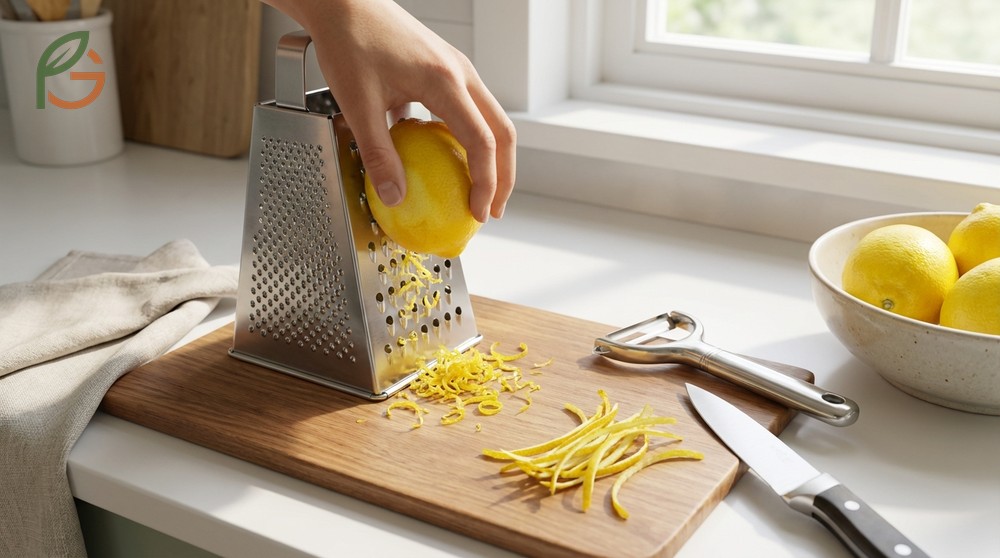
You don’t need specialized equipment to zest lemons effectively. Common kitchen tools like box graters, vegetable peelers, and paring knives can produce excellent results when used with proper technique[4]. The key difference lies in the size and shape of the zest pieces each tool creates.
Each alternative method requires slightly different handling to avoid removing bitter pith along with the flavorful yellow layer. Understanding these techniques ensures you can zest lemons regardless of which kitchen tools you have available. The resulting zest may vary in texture but delivers the same concentrated citrus flavor.
Using a Box Grater
The finest side of a box grater serves as an effective zesting tool when a microplane isn’t available. Hold the grater steady on a cutting board at a 45-degree angle. Slide the lemon across the smallest holes using light pressure, rotating the fruit after each stroke to avoid the white pith[4].
Box grater zest tends to be slightly coarser than microplane zest, creating small irregularly shaped pieces. This texture works particularly well in applications where you want visible zest flecks, such as shortbread cookies or lemon butter. The larger pieces also provide a subtle textural element that microplaned zest doesn’t offer.
Using a Vegetable Peeler
A vegetable peeler removes lemon peel in wide strips that require additional chopping for most recipes. Position the peeler blade at the top of the lemon and apply gentle pressure while sliding it downward. The goal is to remove only the thin yellow layer, leaving the white pith intact on the fruit.
After peeling, lay the strips flat on a cutting board and use a chef’s knife to mince them finely. This method produces zest with slightly less aromatic intensity than grating because fewer oil glands are ruptured. However, it works excellently for recipes requiring larger pieces, such as candied lemon peel or infused oils.
Using a Paring Knife
A sharp paring knife offers the most control when removing lemon peel without specialized tools. Cut off one end of the lemon to create a flat base, then carefully slide the knife between the yellow zest and white pith while rotating the fruit. This technique requires practice but produces clean peel strips with minimal pith.
Once removed, the peel strips need mincing with a chef’s knife to create usable zest. Rock the knife blade back and forth over the strips until they reach the desired fineness. This method takes more time than grating but provides excellent results when other tools aren’t available.
- Wash and thoroughly dry the lemon before starting
- Cut a thin slice from one end to create a stable base
- Hold the lemon steady and insert the knife just below the surface
- Rotate the lemon while keeping the knife at a consistent shallow depth
- Remove the peel strips and mince finely with a chef’s knife
- Avoid including any white pith in the final minced zest
Substitute for Lemon Zest
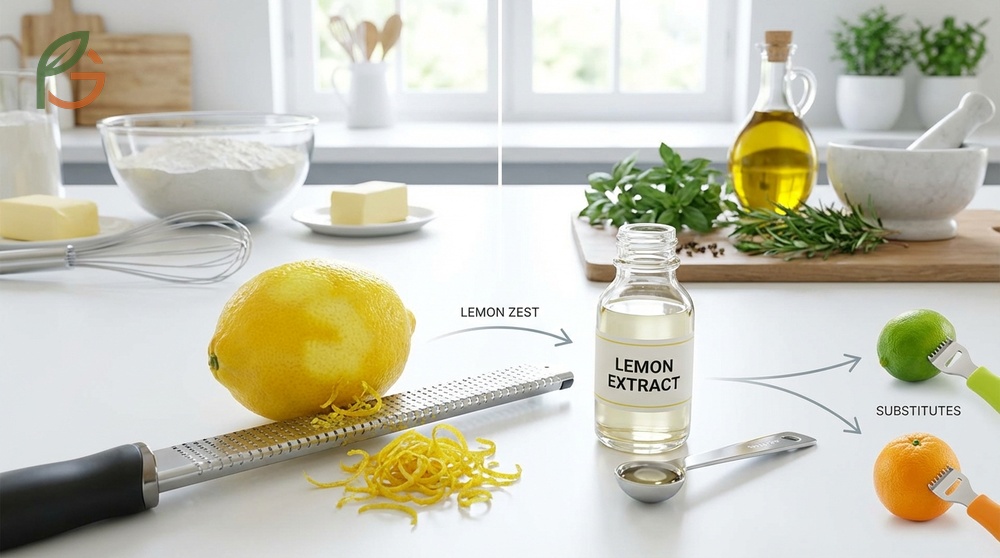
Several ingredients can replace lemon zest when fresh lemons aren’t available, though each affects recipes differently. Lemon extract provides the closest flavor match, while other citrus zests offer similar aromatic qualities with subtle variations. Understanding proper substitution ratios prevents overpowering or underwhelming your dishes.
The type of recipe determines which substitute works best. Baked goods handle extract substitutions well, while savory dishes often benefit more from alternative citrus zests. Some substitutes add liquid to recipes, which matters particularly in baking where moisture balance affects final texture.
Lemon Extract Conversion
Lemon extract serves as the most reliable substitute when you don’t have fresh zest. Use ½ teaspoon of extract for every 1 teaspoon of zest called for in recipes[2]. Extract delivers more concentrated flavor than zest, so this reduced ratio prevents overwhelming other ingredients.
You can always add more extract if needed, but removing excess flavor proves impossible. Start with the recommended amount and taste your mixture before adding additional extract. This approach works particularly well in frostings, glazes, and cake batters where the extract’s liquid content doesn’t significantly affect consistency.
Other Citrus Zests
Orange, lime, and grapefruit zests can replace lemon zest in equal amounts when you want citrus flavor but don’t have lemons. Each provides similar aromatic qualities with distinct flavor profiles. Lime zest offers sharper, more herbaceous notes, while orange zest tends toward sweeter, more floral characteristics.
These substitutions work best in recipes where the specific lemon flavor isn’t critical to the dish’s identity. Savory applications like salad dressings, marinades, and vegetable dishes adapt well to different citrus types. Baked goods with prominent lemon flavor, such as lemon bars or lemon pound cake, don’t work as well with substitutes.
Substitution Tip: If using lemon juice as a last resort, add only ½ teaspoon juice per 1 teaspoon zest and reduce other liquids slightly. This substitution changes flavor balance and should only be used when no better options exist.
- Lemon extract: ½ teaspoon per 1 teaspoon zest (best for baking)
- Orange zest: 1:1 ratio (sweeter, more mellow flavor)
- Lime zest: 1:1 ratio (sharper, more intense citrus notes)
- Lemon juice: ½ teaspoon per 1 teaspoon zest (use only as last resort)
- Dried lemon peel: ⅓ teaspoon per 1 teaspoon fresh zest (less aromatic)
Zester vs Microplane
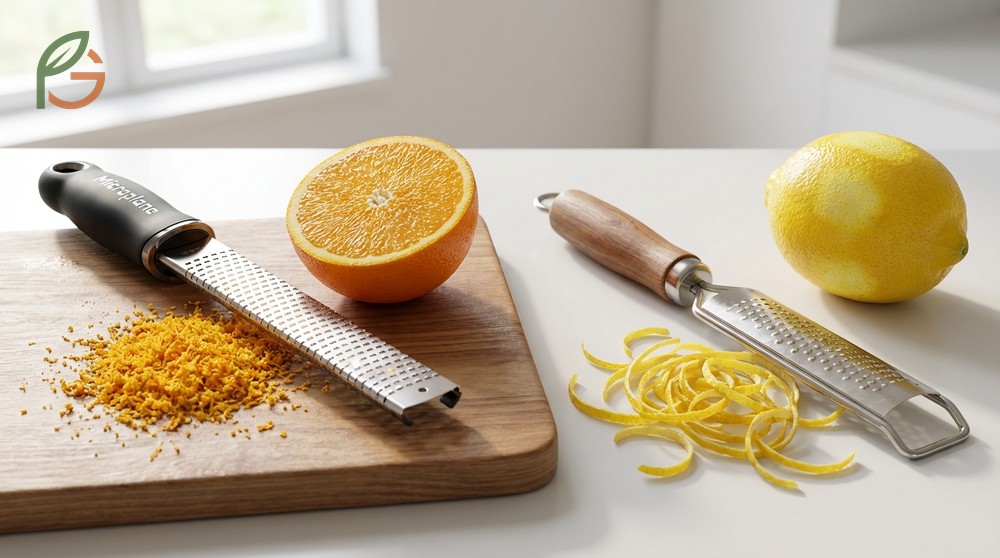
Microplanes and traditional zesters produce different results despite serving the same basic purpose. A microplane creates fine, almost powdery zest particles through its razor-sharp grating surface. Traditional channel zesters produce long, thin strips ideal for cocktail garnishes and decorative purposes[5].
The choice between tools depends on your recipe’s requirements and desired presentation. Microplanes excel in baking applications where zest needs to distribute evenly and dissolve into batters. Channel zesters shine when creating visual garnishes for desserts, cocktails, or plated dishes where zest strips add decorative appeal.
This table compares microplane and traditional zester characteristics including zest texture, best uses, ease of use, and cleaning requirements
| Feature | Microplane | Traditional Zester |
|---|---|---|
| Zest Texture | Fine, powdery particles | Long, thin strips |
| Best For | Baking, marinades, dressings | Garnishes, cocktails, decorating |
| Ease of Use | Very easy, requires minimal technique | Moderate, needs consistent pressure |
| Pith Avoidance | Excellent – shallow grating prevents pith | Good – requires careful angle control |
| Cleaning | Requires brush or dishwasher | Easy to rinse by hand |
Most home cooks find microplanes more versatile for everyday cooking needs. The fine zest integrates seamlessly into batters, doughs, and sauces without creating noticeable texture. Channel zesters serve specialized purposes and work best as secondary tools for those who frequently make cocktails or prioritize presentation.
Storing Lemon Zest
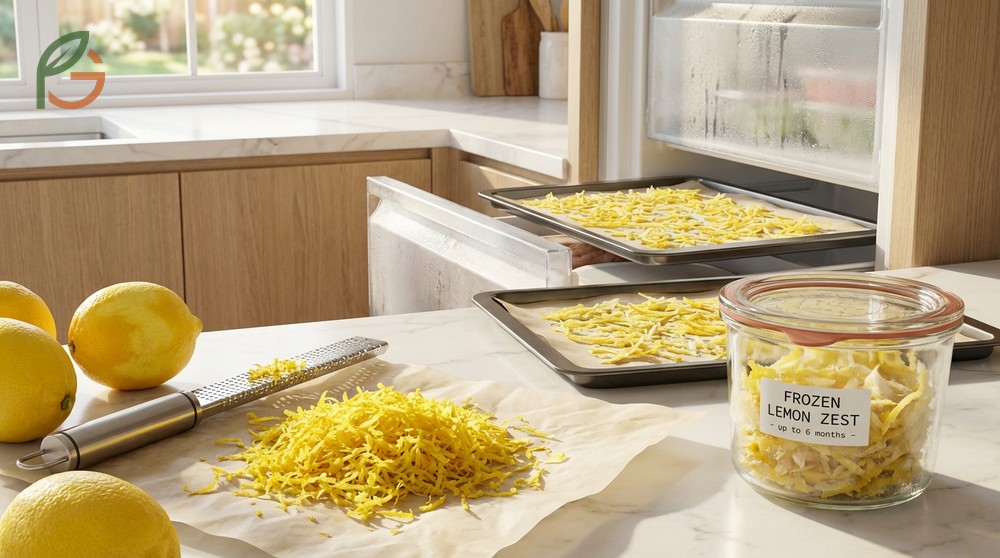
Fresh lemon zest begins losing aromatic potency within hours of removal from the fruit due to essential oil evaporation. Freezing preserves zest quality for up to 6 months when stored properly in airtight containers[3]. This method allows you to zest multiple lemons at once and keep zest readily available for recipes.
The best freezing technique involves spreading fresh zest in a single layer on parchment paper for initial freezing. After 2-3 hours, transfer the frozen zest to a zip-top bag or glass jar, removing as much air as possible. Label containers with the date and amount to track freshness and simplify measuring.
Refrigerated zest maintains quality for only 2-3 days before the oils oxidize and flavor diminishes. Store refrigerated zest in small airtight containers or wrapped tightly in plastic wrap. For best results, use refrigerated zest within 48 hours when the aromatic compounds remain most potent.
- Freeze fresh zest on parchment paper before transferring to containers
- Use glass jars or freezer bags with air removed for frozen storage
- Label containers with date and quantity for easy reference
- Scoop frozen zest directly into recipes without thawing
- Keep refrigerated zest in airtight containers for maximum 2-3 days
- Never store zest at room temperature, which accelerates oil degradation
Storage Tip: Always zest lemons before juicing them, even if you don’t need zest immediately. Freeze the excess zest for future use rather than discarding this flavorful ingredient.
Conclusion
The evidence demonstrates that how to zest a lemon effectively requires understanding proper technique, choosing appropriate tools, and knowing viable substitutes when fresh lemons aren’t available. Whether using a microplane for fine baking applications or a box grater for coarser garnishes, the key lies in removing only the flavorful yellow layer while avoiding bitter pith.
Current culinary guidance emphasizes maximizing citrus usage by zesting before juicing and freezing excess zest for extended storage. FruitGarden encourages home cooks to master these fundamental techniques, which elevate both sweet and savory dishes through concentrated citrus flavor without adding unwanted moisture to recipes.
Frequently Asked Questions
Is lemon zest the same as lemon peel?
No, lemon zest refers only to the thin yellow outer layer of the peel, while lemon peel includes both the yellow layer and the bitter white pith beneath. Zest contains concentrated aromatic oils that provide bright citrus flavor, whereas the pith contributes only bitterness and should be avoided in most recipes.
Can you freeze lemon zest?
Yes, lemon zest freezes exceptionally well and maintains quality for up to 6 months in airtight containers. Spread fresh zest on parchment paper and freeze it for 2-3 hours before transferring to a freezer bag or glass jar. Frozen zest can be added directly to recipes without thawing.
How much lemon zest is in one lemon?
One medium-sized lemon typically yields about 1 tablespoon of zest when properly grated. This amount varies slightly depending on lemon size and freshness, but 1 tablespoon serves as a reliable measurement for recipe planning and grocery shopping purposes.
How do you zest a lemon without a zester or grater?
Use a vegetable peeler or paring knife to remove strips of the yellow peel, then finely mince the strips with a chef’s knife. This method takes more time than using a microplane but produces comparable results when you avoid removing the bitter white pith along with the flavorful yellow layer.
What can I substitute for lemon zest in baking?
Lemon extract works best as a substitute, using ½ teaspoon extract for every 1 teaspoon of zest called for in recipes. Other citrus zests like orange or lime can replace lemon zest in equal amounts, though they alter the flavor profile slightly. These substitutions work particularly well in cakes, cookies, and glazes.
How do you get lemon zest without a microplane?
A box grater’s finest side creates effective lemon zest when you don’t have a microplane. Hold the grater at an angle and slide the lemon across the small holes using light pressure, rotating frequently to avoid the white pith. This method produces slightly coarser zest that works well in most recipes.
Do you zest a lemon before or after juicing?
Always zest lemons before cutting or juicing them. Once a lemon is cut, the peel becomes slippery and difficult to grip, making zesting nearly impossible. Zesting whole lemons also prevents waste and ensures you capture all the flavorful oils from the peel.





