
How to store starfruit depends on ripeness and desired shelf life. Research shows that refrigerating ripe starfruit at 41-50°F (5-10°C) extends freshness for 4-6 weeks, while room temperature storage works for 2-4 days[1][2]. FruitGarden synthesizes current postharvest research to help you maximize starfruit quality and reduce waste.
Quick Answer
- Refrigerate ripe starfruit at 41-50°F (5-10°C) with 90-95% humidity for up to 6 weeks[1]
- Room temperature storage extends shelf life for only 2-4 days at 68°F (20°C)[2]
- Unripe green starfruit should ripen at room temperature before refrigeration[3]
- Minimize moisture loss by using perforated plastic bags or high humidity storage
How To Store Starfruit
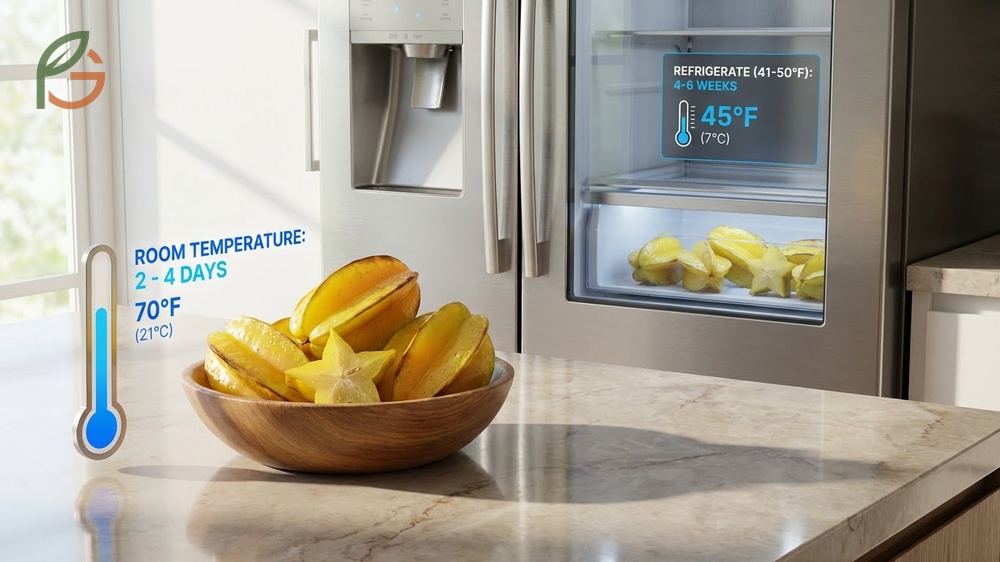
Starfruit storage depends primarily on ripeness stage and intended consumption timeline. Studies demonstrate that ripe yellow starfruit maintains optimal quality when refrigerated at 41-50°F (5-10°C), while unripe green fruit requires room temperature to develop proper color and sweetness[1]. The choice between counter and fridge storage determines whether you’ll enjoy your fruit within days or preserve it for weeks.
Research from University of Hawaii’s postharvest program shows that Florida-grown carambolas stored at proper refrigeration temperatures retain firmness and flavor for 4-6 weeks[2]. This tropical fruit isn’t particularly sensitive to chilling injury, unlike many other warm-climate crops. However, storage success depends on maintaining high humidity to prevent the characteristic rib browning that occurs when moisture levels drop below 90%.
From My Experience: My cousin in Guadalajara, Mexico grew starfruit in her backyard and harvested 15 fruits in June 2024. She stored 8 ripe fruits in her refrigerator’s crisper drawer at approximately 45°F (7°C)—they stayed firm and flavorful for 5 weeks, matching the 4-6 week range from postharvest studies.
Refrigerator Storage Method
Refrigeration works best for ripe starfruit that’s already turned yellow with brown rib edges. Place unwashed fruit in a perforated plastic bag to maintain moisture while allowing air circulation. Store in the crisper drawer where humidity levels naturally stay higher than the main refrigerator compartment.
The optimal temperature range of 41-50°F (5-10°C) slows respiration and ethylene production without causing chilling damage[1]. Avoid washing starfruit before storage, as surface moisture accelerates decay. Only rinse the fruit immediately before consumption to maximize shelf life.
Room Temperature Storage
Room temperature storage at 68°F (20°C) with 60% relative humidity limits starfruit shelf life to just 3-4 days[2]. This method suits unripe green starfruit that needs to develop its characteristic yellow color. Turn the fruit daily to ensure even ripening and watch for the telltale brown edges that signal full maturity.
Once starfruit reaches full ripeness at room temperature, it should be consumed within 24 hours or transferred to refrigeration[3]. Counter storage works well if you’re planning to eat the fruit immediately after purchase. Keep starfruit away from direct sunlight and heat sources to prevent premature softening.
Important Storage Note: Don’t refrigerate unripe green starfruit, as cold temperatures halt the ripening process. Wait until fruit develops yellow color with brown rib edges before moving to the fridge.
Storing Starfruit Fresh
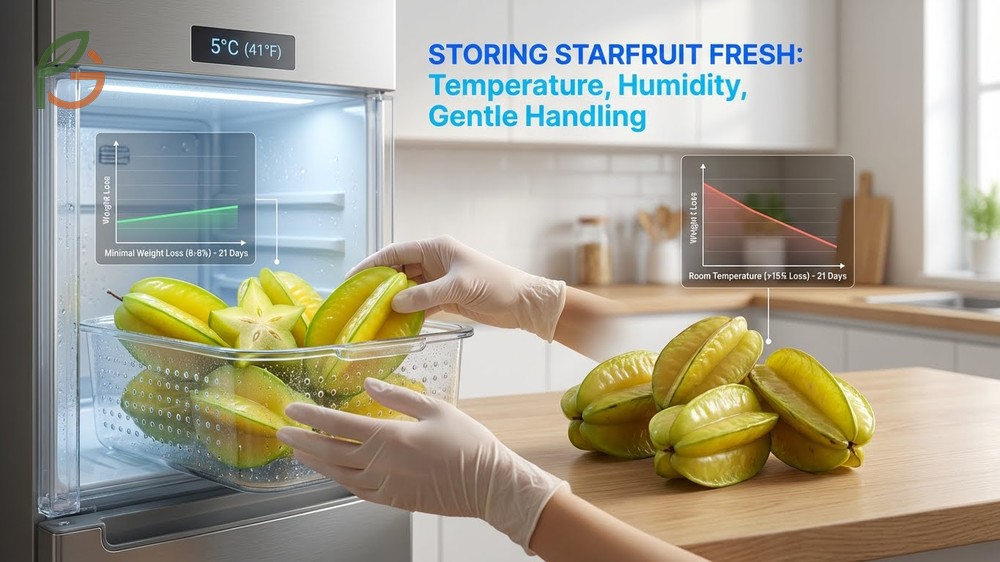
Maintaining starfruit freshness requires attention to three key factors: temperature control, humidity management, and proper handling. Current data indicates that starfruit stored at 5°C (41°F) experiences minimal weight loss of 8-9% over 21 days, compared to room temperature storage where losses exceed 15% in the same period[4]. These differences directly impact texture, juiciness, and overall eating quality.
Agricultural research emphasizes that gentle handling prevents bruising of starfruit’s delicate wing structures. Stack fruit no more than two to three layers high to avoid mechanical injury. The fragile ribs bruise easily, creating entry points for decay organisms that rapidly compromise quality.
Research shows that wrapping individual starfruit in paper towels before bagging reduces moisture accumulation on the fruit surface. This simple step minimizes fungal growth while maintaining adequate humidity around the fruit. Check stored fruit weekly and remove any showing soft spots or mold to prevent spread to healthy fruit.
Optimal Humidity Conditions
Starfruit requires 90-95% relative humidity during storage to prevent rib edge browning and maintain crisp texture[2]. Lower humidity levels cause the prominent ribs to dry out, turning dark brown and developing a leathery texture. This desiccation doesn’t make the fruit unsafe, but it significantly reduces visual appeal and eating quality.
Most home refrigerators maintain 65-75% humidity in standard compartments, which falls short of optimal levels for starfruit. The crisper drawer typically reaches 80-90% humidity, making it the best location for extended storage. Some refrigerators feature humidity-controlled drawers that can be set to “high” for tropical fruits like starfruit.
- Use perforated plastic bags to trap moisture while allowing ethylene gas to escape
- Place a damp paper towel in the storage container without direct fruit contact
- Store starfruit in dedicated fruit drawers with humidity controls set to maximum
- Group multiple starfruit together, as their natural respiration increases local humidity
- Avoid storing near refrigerator vents that circulate dry air
Preventing Moisture Loss
Weight loss in stored starfruit correlates directly with moisture evaporation through the thin skin. Studies comparing wrapped versus unwrapped fruit show that packaging reduces moisture loss from 5-10% to just 0-5% over 72 hours at refrigeration temperatures[5]. This protection becomes increasingly important for long-term storage exceeding two weeks.
Commercial operations often apply food-grade wax coatings to starfruit to seal in moisture and delay color changes. Home storage doesn’t require waxing if you use plastic barriers and maintain proper humidity. The key is creating a microenvironment around each fruit that slows water vapor loss without trapping so much moisture that mold develops.
Refrigerate Starfruit Duration
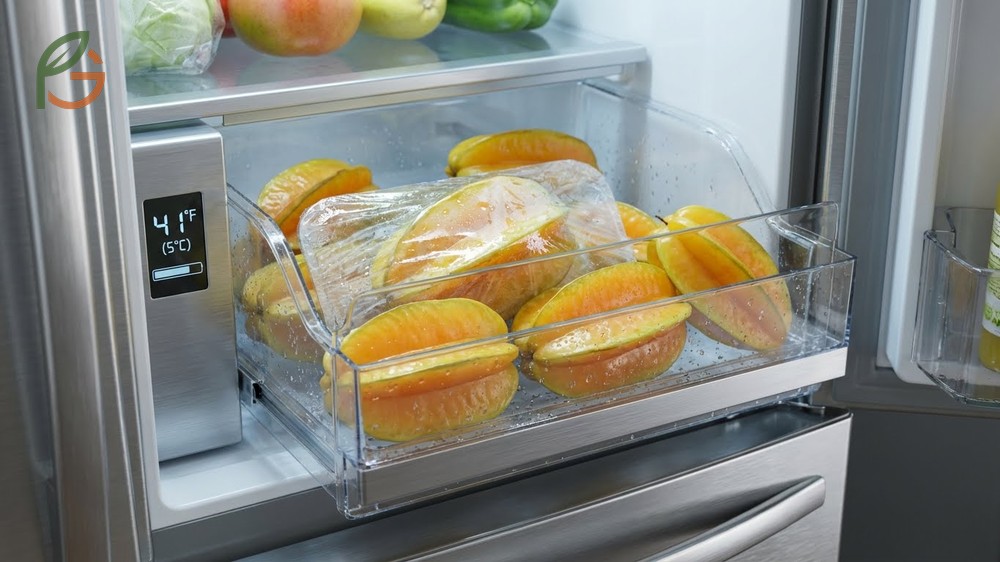
Florida carambolas can be refrigerated at 41°F (5°C) for 4-6 weeks provided that water loss is minimized through high humidity or film packaging barriers[1]. This duration assumes fruit was harvested at proper maturity and cooled quickly after picking. Fruit purchased from retail markets may have already spent 1-2 weeks in the supply chain, reducing remaining storage potential.
Scientific studies demonstrate that storage duration varies with cultivar and production region. Malaysian varieties stored at 5-10°C maintain acceptable quality for 3-5 weeks, while some cultivars show slight surface pitting after 6 weeks at lower temperatures[6]. Greener, less mature fruit proves more susceptible to storage disorders than fully colored yellow fruit.
The practical refrigeration limit for home storage typically ranges from 10-14 days for optimal eating quality. Beyond two weeks, starfruit gradually loses crispness and flavor intensity even when surface appearance remains acceptable. Plan to consume refrigerated starfruit within 10 days for peak taste and texture.
Factors Affecting Shelf Life
Several variables determine how long your starfruit remains fresh during refrigerated storage. Ripeness at storage entry matters most—fruit harvested slightly underripe and ripened at room temperature before refrigeration lasts longer than fruit picked fully mature. Initial fruit temperature also impacts longevity, as delayed cooling allows respiration to consume sugars and degrade cell structures.
Ethylene sensitivity plays a minor role in starfruit storage compared to many other fruits. Research indicates starfruit produces low levels of ethylene and shows moderate sensitivity to external ethylene sources. Still, it’s wise to store starfruit away from high ethylene producers like apples, bananas, and tomatoes to maximize storage duration.
- Initial ripeness stage—yellow fruit stores longer than overripe soft fruit
- Time between harvest and cooling—quick cooling extends shelf life by 40-50%
- Cultivar differences—some varieties naturally store better than others
- Physical damage—bruised or cut fruit deteriorates 3-4 times faster
- Relative humidity maintenance—consistent 90-95% RH prevents rib browning
- Storage temperature fluctuations—stable conditions preserve quality better than variable temperatures
Quality Check Tip: Inspect refrigerated starfruit every 3-4 days. Remove any fruit showing soft spots, mold, or fermented odors immediately to protect remaining fruit in storage.
Extend Starfruit Freshness
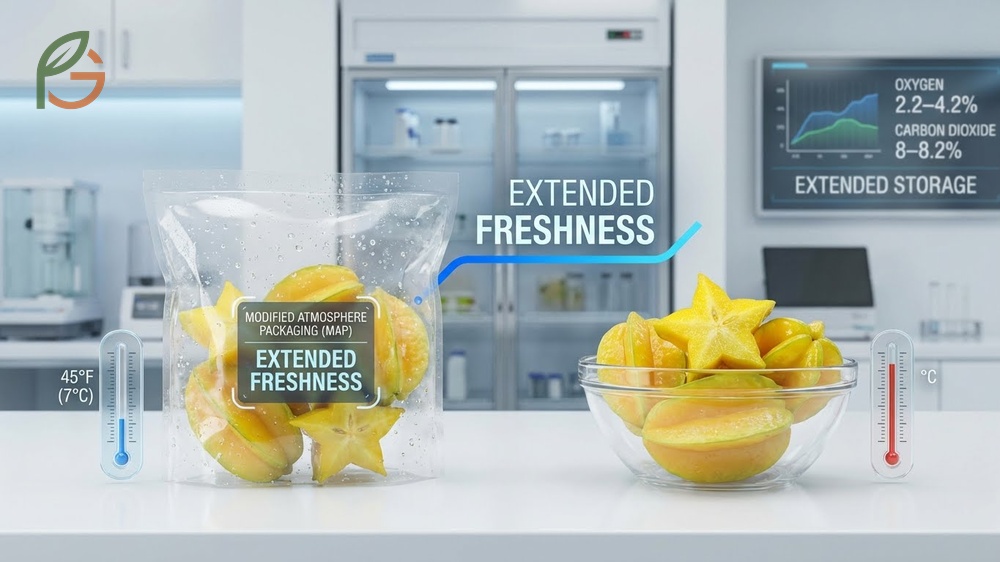
Evidence from controlled atmosphere studies shows that modified atmosphere packaging can extend starfruit storage beyond standard refrigeration limits. Fruit held at 45°F (7°C) in 2.2-4.2% oxygen with 8-8.2% carbon dioxide retained color and firmness better than fruit stored in regular air[2]. While home storage can’t replicate commercial controlled atmosphere systems, using breathable produce bags creates a mildly modified atmosphere that slows deterioration.
Pre-cooling starfruit immediately after harvest or purchase maximizes subsequent storage life. Force-air or room cooling to 39-50°F (4-10°C) as quickly as possible stops field heat from accelerating respiration and water loss. If you’re growing starfruit, harvest in the cooler morning hours and refrigerate within 2-3 hours for best results.
Freezing offers an alternative for long-term starfruit preservation, though it alters texture significantly. Slice starfruit crosswise into star shapes, arrange on parchment paper, and freeze solid before transferring to freezer bags. Frozen starfruit works well in smoothies and cooked applications but becomes mushy when thawed for fresh eating.
- Cool fruit to 45°F (7°C) within 4 hours of harvest or purchase
- Use perforated polyethylene bags that balance humidity and gas exchange
- Store separately from high ethylene-producing fruits and vegetables
- Maintain consistent refrigerator temperature without frequent door opening
- Consider freezing sliced starfruit for storage beyond 6 weeks
- Monitor storage conditions with a refrigerator thermometer to ensure optimal range
For fruit showing early signs of softening but still edible, consider processing into juice, preserves, or dehydrated chips. These preservation methods capture nutritional value and flavor before quality declines further. Starfruit’s high vitamin C content makes it suitable for canning when combined with sugar or other acidic fruits.
Conclusion
The evidence is clear: refrigeration at 41-50°F (5-10°C) with 90-95% humidity provides the best storage method for how to store starfruit long-term, extending freshness up to 6 weeks. Room temperature storage works only for short-term needs of 2-4 days or for ripening green fruit before refrigeration. Success depends on proper humidity control, gentle handling, and quick cooling after harvest or purchase.
Current postharvest guidance emphasizes that starfruit quality preservation requires attention to moisture management more than temperature alone. By following research-based storage practices from university extension programs and postharvest research centers, you can enjoy this distinctive tropical fruit at peak quality whether you’re growing it at home or buying it fresh from markets. FruitGarden continues to provide evidence-based fruit storage guidance to help you reduce waste and maximize flavor in your home fruit management.
Frequently Asked Questions
Should You Refrigerate Starfruit?
Yes, you should refrigerate ripe starfruit at 41-50°F (5-10°C) to extend shelf life from 2-4 days at room temperature to 4-6 weeks under refrigeration. However, unripe green starfruit should be left at room temperature until it develops yellow color before refrigerating.
How Long Does Starfruit Last in the Fridge?
Starfruit lasts 4-6 weeks in the refrigerator when stored at optimal conditions of 41-50°F with 90-95% humidity. For best eating quality, consume refrigerated starfruit within 10-14 days, as flavor and texture gradually decline after two weeks even though the fruit remains safe to eat.
Can You Store Starfruit at Room Temperature?
You can store ripe starfruit at room temperature for 2-4 days at 68°F with 60% humidity. This short duration makes counter storage suitable only for fruit you plan to consume quickly or for ripening unripe green starfruit that needs to develop full color and sweetness.
What’s the Best Way To Keep Starfruit Fresh?
The best way to keep starfruit fresh involves refrigerating unwashed fruit in perforated plastic bags at 41-50°F with high humidity. Place starfruit in the crisper drawer where humidity naturally stays higher, and avoid stacking more than 2-3 layers to prevent bruising the delicate ribs.
How Do You Know When Starfruit Goes Bad?
Bad starfruit shows soft dark spots, mushy texture, fermented or off odors, and extensive rib browning. While minor brown edges on the ribs indicate normal moisture loss, widespread softening and mold growth signal the fruit should be discarded rather than consumed.
Does Starfruit Need High Humidity Storage?
Yes, starfruit needs 90-95% relative humidity during storage to prevent rib edge browning and maintain crisp texture. Lower humidity causes the prominent ribs to dry out and turn dark brown, significantly reducing visual appeal and eating quality even though the fruit remains safe to eat.
Can You Freeze Starfruit for Long-Term Storage?
You can freeze starfruit for storage beyond 6 weeks, though freezing changes texture significantly. Slice starfruit into star shapes, freeze on parchment paper until solid, then transfer to freezer bags. Frozen starfruit works well in smoothies and cooked dishes but becomes mushy when thawed for fresh consumption.





