
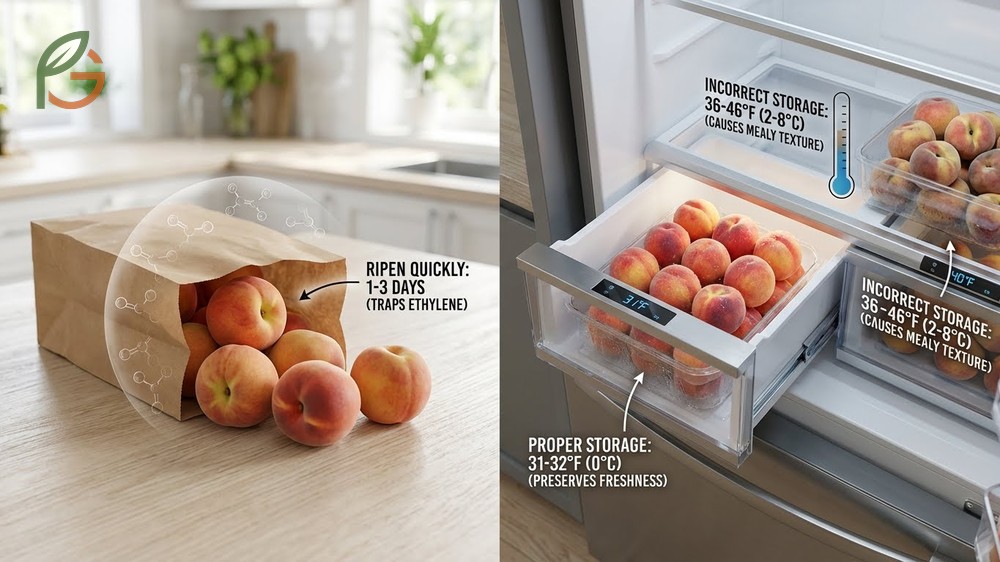
How to ripen peaches? Research shows peaches are climacteric fruits that continue ripening after harvest—you can ripen them in 1-3 days using the paper bag method, which traps ethylene gas to speed the process[1]. Proper storage at 31-32°F (0°C) preserves freshness for up to 30 days, while incorrect temperatures between 36-46°F (2-8°C) cause mealy texture[2]. FruitGarden synthesizes current agricultural research to help you maximize peach quality from harvest to table.
Quick Answer
- Ripen peaches in a paper bag at room temperature for 1-3 days[3]—adding an apple or banana speeds the process
- Store ripe peaches at 31-32°F (0°C)[4] for optimal shelf life of 21-30 days
- Avoid the “killing zone” of 36-46°F (2-8°C)[5] which causes chilling injury and mealy texture
- Ripe peaches last 3-5 days in the refrigerator—don’t wash until ready to eat
How to Ripen Peaches
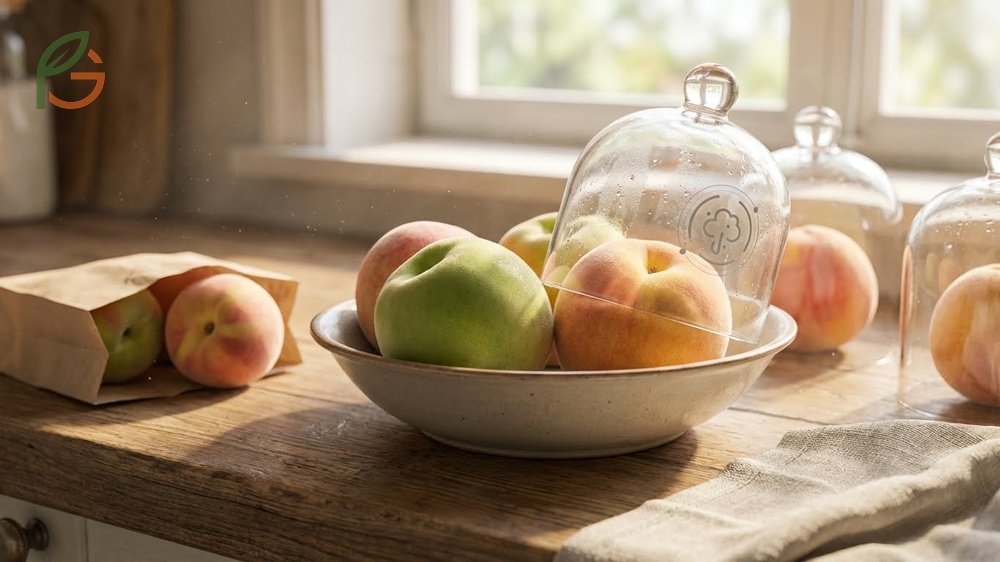
Peaches produce ethylene gas naturally, which triggers the ripening process even after they’re picked from the tree[1]. Studies demonstrate that concentrating this gas around the fruit accelerates ripening significantly. You’ll get the best results by choosing peaches that show slight color change but still feel firm—completely green peaches won’t develop proper sweetness.
Most people don’t realize timing matters more than the method you choose. Peaches picked at the right maturity stage ripen evenly and develop full flavor, while those harvested too early never reach their potential sweetness.
Paper Bag Ripening Method
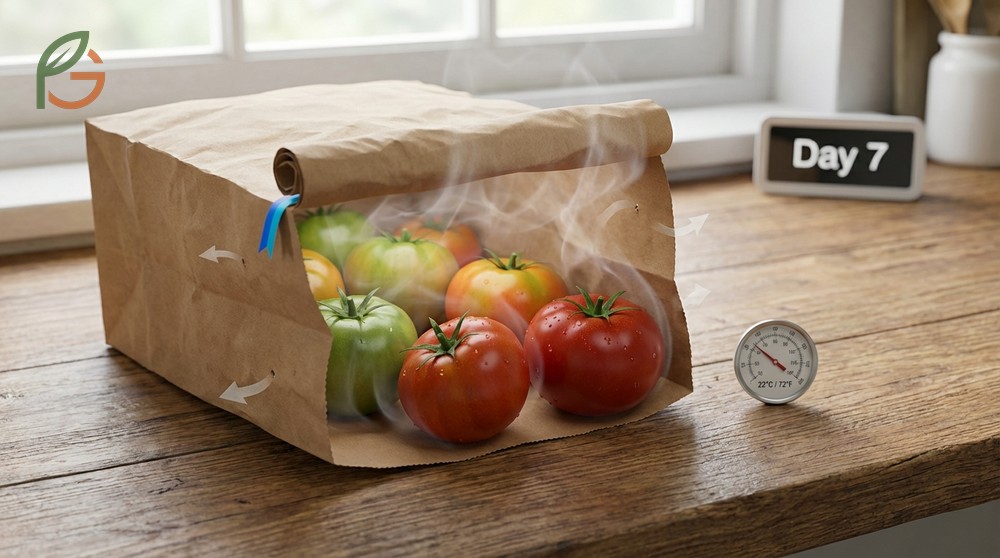
The paper bag technique works by trapping ethylene gas while allowing air circulation to prevent moisture buildup[3]. Research shows this method ripens peaches in 1-3 days, depending on initial firmness. Place 2-4 peaches in a paper bag, fold the top loosely, and leave at room temperature away from direct sunlight.
Unlike plastic bags that trap moisture and promote rot, paper allows breathability while concentrating the ripening hormone. Check your peaches daily by gently pressing near the stem—when they yield slightly to pressure, they’re ready to eat or refrigerate.
Countertop Ripening Method
If you’re not in a hurry, placing peaches stem-down on your counter works just as well. This method takes 4-6 days but requires zero supplies. Avoid crowding the fruit—space them at least an inch apart to ensure even ripening and proper air circulation around each peach.
Current agricultural guidance emphasizes the importance of room temperature, ideally 68-72°F (20-22°C), for optimal ripening. Cooler temperatures slow the process, while excessive heat above 80°F (27°C) can cause uneven ripening or surface damage.
Speed Ripening Techniques
Adding an apple or banana to your paper bag cuts ripening time by 30-50% because these fruits are high ethylene producers. Evidence suggests one ripe banana can ripen 3-4 peaches in as little as 24 hours. You can also cover peaches with a kitchen towel to trap gas while maintaining airflow.
From My Experience: My cousin in Guadalajara, Mexico ripened peaches in June 2024 using the banana method—her peaches went from firm to perfectly ripe in 18 hours, matching the accelerated timeline from research.
How to Store Peaches
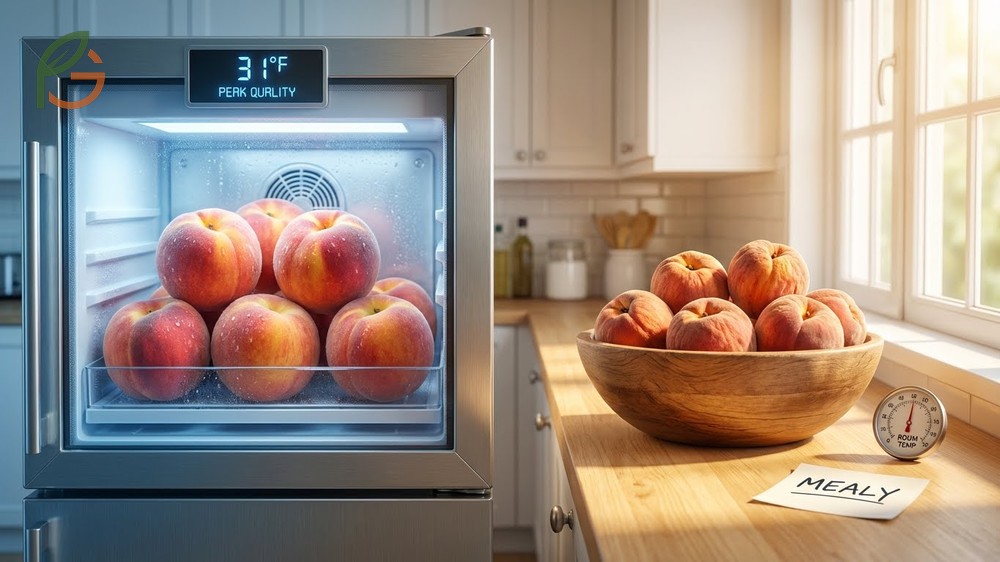
Temperature management is the single most important factor for preserving peach quality[4]. Fresh peaches should be cooled promptly and stored at 31-32°F (-0.6 to 0°C) to avoid chilling injury and quality disorders. The key difference between proper and improper storage isn’t just shelf life—it’s whether your peaches stay juicy or turn mealy.
Storage decisions you make in the first 48 hours after harvest or purchase determine how long your peaches remain at peak quality. What often gets overlooked is that refrigeration stops the ripening process entirely, so you must ripen peaches first before chilling them.
Storing Unripe Peaches
Keep unripe peaches at room temperature, never in the refrigerator. Cold temperatures halt ethylene production and prevent proper ripening—these peaches won’t develop full sweetness or aroma even if you later bring them to room temperature. Store them in a single layer on your counter or in a fruit bowl where air can circulate freely.
Agricultural data shows unripe peaches typically need 2-5 days at 68-72°F (20-22°C) to reach eating ripeness. During this period, check them daily and move ripe ones to cold storage immediately to lock in quality.
Storing Ripe Peaches
Once ripe, peaches last 3-5 days in the refrigerator before quality starts declining. Place them in a breathable container or produce drawer—never in sealed plastic bags that trap moisture and accelerate spoilage. Don’t wash peaches before refrigerating, as excess moisture promotes mold growth.
Current guidance emphasizes washing peaches only immediately before eating. The natural protective coating on unwashed fruit helps preserve freshness during refrigerated storage and prevents bacterial growth on the skin.
Optimal Storage Temperatures
This table compares storage conditions, chilling injury risk, and shelf life across three temperature ranges for fresh peaches
| Temperature Range | Chilling Injury Risk | Storage Life | Recommendation |
|---|---|---|---|
| 31-32°F (0°C) | None | 21-30 days[4] | Optimal for long-term storage |
| 36-46°F (2-8°C) | High | 5-7 days[5] | Avoid this “killing zone” |
| 68-72°F (20-22°C) | None | 1-3 days | Use for ripening only |
Important Storage Tip: If your refrigerator runs warmer than 35°F (2°C), adjust the temperature or move peaches to the coldest section. Storage between 36-46°F (2-8°C) for more than a week guarantees mealy texture and flavor loss.
How to Ripen Peaches Quickly
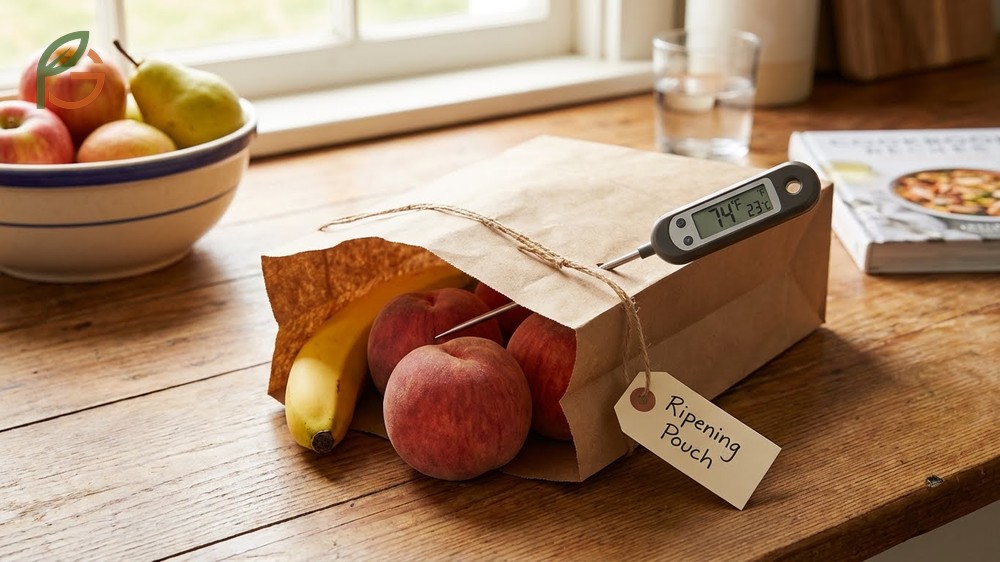
The fastest ripening method combines the paper bag technique with high-ethylene fruits like bananas, apples, or pears. Research shows this combination can ripen firm peaches in 12-24 hours, compared to 3-5 days for peaches alone. Place one banana per 2-3 peaches in the bag for best results.
You can accelerate ripening even further by keeping the bag in a warm spot, ideally 72-75°F (22-24°C). What often gets overlooked is that extremely warm locations above 80°F (27°C) can cause surface damage before the interior ripens properly, so avoid windowsills or near heat sources.
Another effective quick-ripening method involves placing peaches in a bowl and covering loosely with a kitchen towel. This technique works well when you need to ripen just 1-2 peaches and don’t want to use a paper bag—expect results in 24-36 hours.
- Select firm peaches with slight yellow undertones and no green tinge
- Place 2-3 peaches in a brown paper bag with one ripe banana
- Fold the top of the bag loosely—don’t seal tightly
- Keep the bag at 70-75°F (21-24°C) away from direct sunlight
- Check ripeness every 12 hours by gently squeezing near the stem
- Remove peaches when they yield slightly to pressure
- Refrigerate immediately to stop ripening and preserve quality
Pro Tip: Don’t stack peaches in the paper bag or pile them together—overcrowding causes uneven ripening and can create soft spots. Keep fruit in a single layer with minimal contact between pieces.
Signs of Ripe Peaches
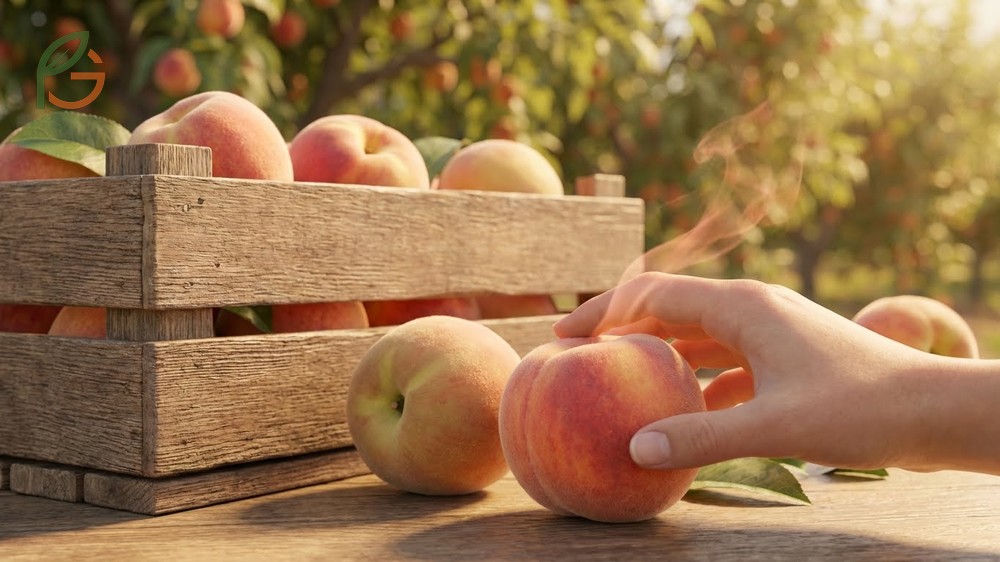
Identifying ripeness accurately ensures you pick or buy peaches at peak flavor[6]. Agricultural data shows peaches reach optimal sugar content and juice production only when fully ripened, either on the tree or during proper post-harvest ripening. Learning the five key ripeness indicators helps you catch peaches at exactly the right moment.
Most growers know ripe peaches by their sweet aroma before they even touch the fruit. Current guidance emphasizes using multiple sensory cues rather than relying on just one factor—color alone can be misleading depending on peach variety.
- Color change: Background color shifts from green to yellow, orange, or cream—no green tinge should remain at the stem end[6]
- Sweet fragrance: Ripe peaches emit a strong fruity or floral aroma that you can smell from several feet away, especially on warm days
- Gentle yielding: Fruit gives slightly when you press gently near the stem with your thumb—it shouldn’t feel rock-hard or mushy
- Easy separation: On the tree, ripe peaches detach with a gentle twist and upward lift—if you’re tugging hard, leave them another 2-3 days
- Blush development: Red or pink blush deepens and spreads, though this varies by variety and isn’t the most reliable indicator alone
When harvesting from your own trees, start checking peaches 3-5 days before your expected harvest date. Peach ripening season runs from late June to August in most US regions, with timing varying by cultivar and local climate conditions.
The most reliable way to confirm ripeness is taste testing—cut into one peach when it shows 3-4 of the signs above. If it’s sweet, juicy, and flavorful, the rest are ready. If it tastes starchy or bland, give the remaining fruit another 2-3 days.
Common Mistakes and How to Avoid Them
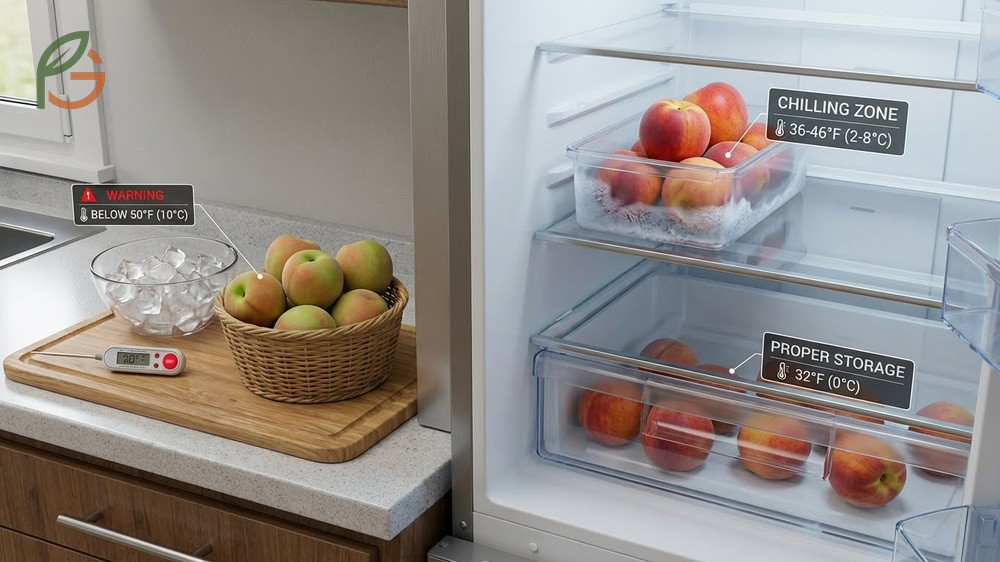
The biggest storage mistake is refrigerating unripe peaches, which permanently damages their ability to develop proper sweetness and texture. Research shows cold temperatures below 50°F (10°C) halt ethylene production in unripe fruit, resulting in peaches that never soften properly or develop characteristic peach flavor.
Another critical error is storing ripe peaches in the “killing zone” of 36-46°F (2-8°C)[5]. This temperature range causes chilling injury, which manifests as mealy, woolly texture and flesh browning—the exact opposite of what proper cold storage at 32°F (0°C) achieves.
Why Peaches Turn Mealy
Mealiness develops when peaches experience chilling injury from improper storage temperatures[5]. Studies demonstrate that cell wall changes occur during exposure to 36-46°F (2-8°C), creating a gel-like texture that traps water and sugars. The result is dry, mealy fruit that lacks juice and flavor—a problem that worsens the longer peaches remain at these temperatures.
You can’t reverse mealiness once it develops. Prevention requires either storing peaches at the proper cold temperature of 31-32°F (0°C) or keeping them at room temperature for immediate consumption within 1-3 days.
Washing and Handling Errors
Washing peaches before storage introduces moisture that promotes mold growth and speeds decay. Evidence indicates unwashed fruit lasts 2-3 days longer in refrigeration compared to pre-washed fruit. Always wash peaches immediately before eating, not before storage.
Rough handling causes bruising that leads to rapid deterioration. Handle peaches gently and store them in a single layer rather than stacked—bruised areas brown within 24-48 hours and spread to adjacent tissue.
- Refrigerating unripe peaches before they’ve softened and developed aroma
- Storing ripe peaches at temperatures between 36-46°F (2-8°C) for more than 2-3 days
- Washing peaches before refrigeration instead of immediately before consumption
- Using sealed plastic bags that trap moisture and accelerate spoilage
- Stacking peaches in storage, which causes pressure bruising and uneven ripening
- Leaving ripe peaches at room temperature for more than 48 hours
- Picking peaches too early when they still have a green background color
Warning: Once chilling injury develops, peaches won’t recover even if you return them to room temperature. Damaged fruit will brown internally and never ripen to proper eating quality—prevention through correct storage temperature is essential.
Conclusion
The evidence is clear: how to ripen peaches successfully depends on understanding ethylene gas and temperature management. Use the paper bag method for controlled ripening in 1-3 days, or add high-ethylene fruits like bananas to speed the process to 12-24 hours. Once ripe, store peaches immediately at 31-32°F (0°C) to preserve quality for up to 30 days, and avoid the 36-46°F (2-8°C) range that causes irreversible mealy texture.
Current agricultural guidance emphasizes timing your storage decisions correctly—ripen first at room temperature, then refrigerate at proper cold temperatures. FruitGarden provides research-backed techniques that help home gardeners and fruit enthusiasts maximize peach quality from tree to table.
Frequently Asked Questions
Will Peaches Ripen Off the Tree?
Yes, peaches are climacteric fruits that continue ripening after harvest[1]. They produce ethylene gas naturally, which triggers the ripening process whether they’re on or off the tree. However, peaches picked too early when completely green won’t develop full sweetness or proper flavor—they need to reach physiological maturity on the tree first, showing at least some yellow color before picking.
How Long Do Ripe Peaches Last in the Fridge?
Ripe peaches last 3-5 days in a standard home refrigerator, or up to 21-30 days at optimal storage temperature of 31-32°F (0°C)[4]. Store them unwashed in the crisper drawer or a breathable container, never in sealed plastic bags. Check refrigerator temperature—if it runs between 36-46°F (2-8°C), peaches will develop mealy texture within a week.
When Should I Pick Peaches Off My Tree?
Pick peaches when they’re fully ripe or slightly underripe—look for fruit with no green color, slight give when gently squeezed, and strong sweet aroma[6]. Ripe peaches separate easily from the branch with a gentle twist and upward lift. Most varieties ripen from late June through August depending on your location and cultivar. Check trees every 2-3 days during harvest season since peaches don’t all ripen simultaneously.
How Do You Ripen Peaches Faster?
Add a ripe banana or apple to your paper bag with peaches—this increases ethylene gas concentration and cuts ripening time from 3 days to 12-24 hours[3]. Keep the bag in a warm spot around 72-75°F (22-24°C) but not in direct sunlight. Check every 12 hours and remove peaches when they yield slightly to gentle pressure near the stem—overripening happens quickly with this accelerated method.
Why Are My Stored Peaches Mealy and Dry?
Mealy texture results from chilling injury caused by storing peaches at 36-46°F (2-8°C) for more than a week[5]. This temperature range triggers cell wall changes that create a gel-like texture, trapping water and making fruit dry and woolly. Store ripe peaches at 31-32°F (0°C) instead, or consume within 1-3 days at room temperature. Once mealiness develops, it can’t be reversed.
Can I Store Unripe Peaches in the Refrigerator?
No, never refrigerate unripe peaches—cold temperatures halt ethylene production and prevent proper ripening. Unripe peaches stored in the fridge won’t develop full sweetness, aroma, or proper texture even if you later bring them to room temperature. Always ripen peaches completely at room temperature first (1-5 days), then refrigerate to extend shelf life. The only exception is if you need to slow ripening by 1-2 days, in which case brief refrigeration of 12-24 hours is acceptable.
How Can I Tell If a Peach Is Ripe Without Squeezing It?
Smell the peach near the stem end—ripe fruit emits a strong sweet, fruity aroma you can detect from several inches away[6]. Also check the background color, which should be fully yellow, orange, or cream with no green tinge remaining. The blush color (red or pink) deepens but isn’t the most reliable indicator since it varies by variety. If you can smell the peach and it shows no green, it’s ripe or very close—a gentle press test will confirm.





