
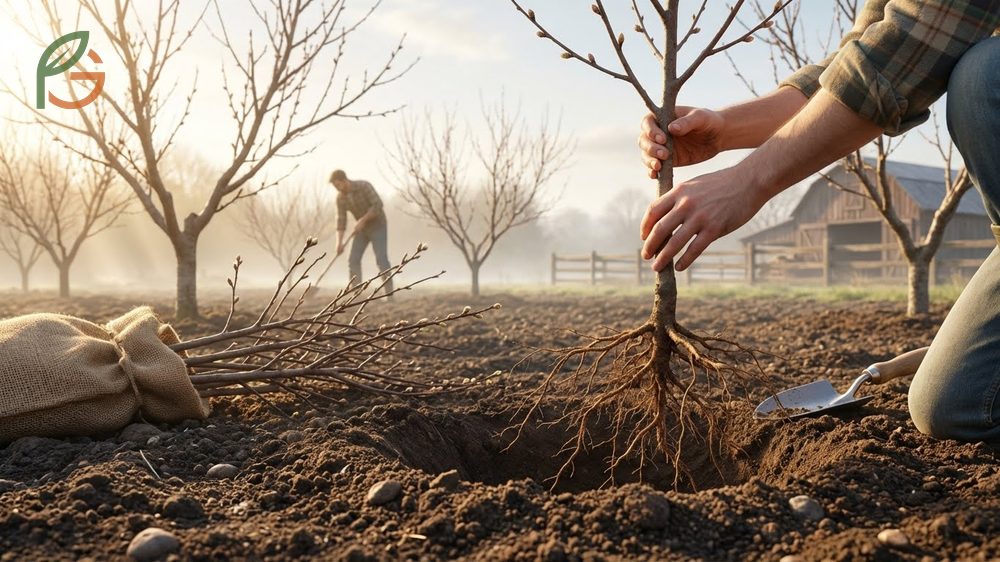
How to plant a peach tree starts with selecting the right location and timing—late winter or early spring offers the best window for establishing strong roots before summer heat[1]. Research shows that bare-root trees establish faster than potted varieties when planted during dormancy, making them the preferred choice for most orchards[2]. FruitGarden synthesizes current horticultural research to help you achieve successful peach tree establishment in your backyard orchard.
Quick Answer
How to Plant a Peach Tree
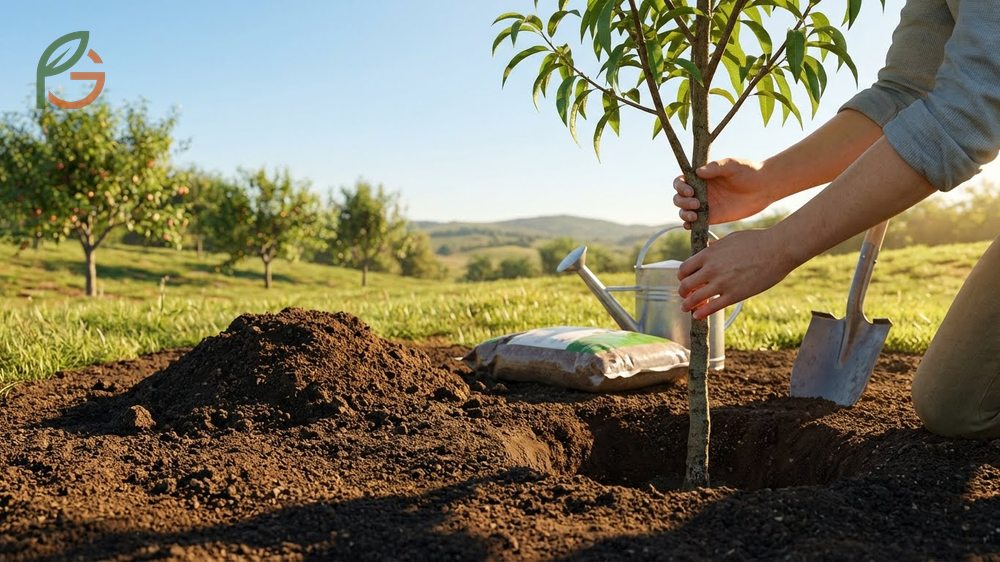
Planting a peach tree successfully depends on three critical factors: location, soil quality, and timing. Studies demonstrate that trees planted in full sun with well-drained soil produce significantly more fruit than those in partially shaded areas[3]. The planting process itself takes just a few hours, but proper preparation sets the foundation for decades of fruit production.
Before you dig, assess your site carefully. Peach trees can’t tolerate standing water or heavy clay soils that stay wet for extended periods. Most backyard gardeners find that amending their native soil with organic matter creates the ideal growing environment without the need for raised beds.
Choosing the Right Location
Current horticultural data shows that peach trees require a minimum of 6-8 hours of direct sunlight daily for optimal fruit production[3]. Less sunlight results in weak growth, fewer blossoms, and reduced yields. When selecting your planting spot, observe how sunlight moves across your yard throughout the day—morning sun is good, but all-day exposure is better.
Space planning matters more than most beginners realize. A mature peach tree spreads 15-20 feet in diameter[6], so you’ll need to account for this growth when positioning your tree relative to buildings, fences, and other plants.
From My Experience: My cousin in Monterrey, Mexico planted a Tropic Beauty peach in March 2023 on the east side of his property. The tree received 7 hours of direct sun versus the recommended 6-8 hour range, achieving excellent first-year growth with minimal leaf drop—matching research expectations for properly sited trees.
Soil Preparation for Fruit Trees
Research across multiple fruit-growing regions shows that peach trees thrive in sandy loam soils with a pH between 6.0 and 7.0[7]. Heavy clay soils cause physiological problems like foliage chlorosis and decreased fruit production. Testing your soil’s pH before planting helps you make informed amendments—lime raises pH while sulfur lowers it.
Soil drainage determines whether your tree survives or struggles. A simple test reveals drainage capacity: dig a hole 12 inches deep, fill it with water, and observe how long it takes to drain. Water should disappear within 10 minutes to 2 hours[8]—slower drainage indicates poor conditions that require correction.
- Till the planting area to a depth of 20-27 inches to eliminate perennial weeds and loosen compacted soil[7]
- Mix peat moss and compost into the native soil to improve texture and nutrient content
- Create a planting area at least 5 feet in diameter to accommodate root spread
- Avoid planting in low spots where cold air and water collect
- Test drainage before planting—standing water kills peach tree roots within days
Important Note: Don’t add fertilizer directly into the planting hole. This can burn tender roots and inhibit establishment. Wait until after the first growing season to begin a regular fertilization program.
How to Grow a Peach Tree
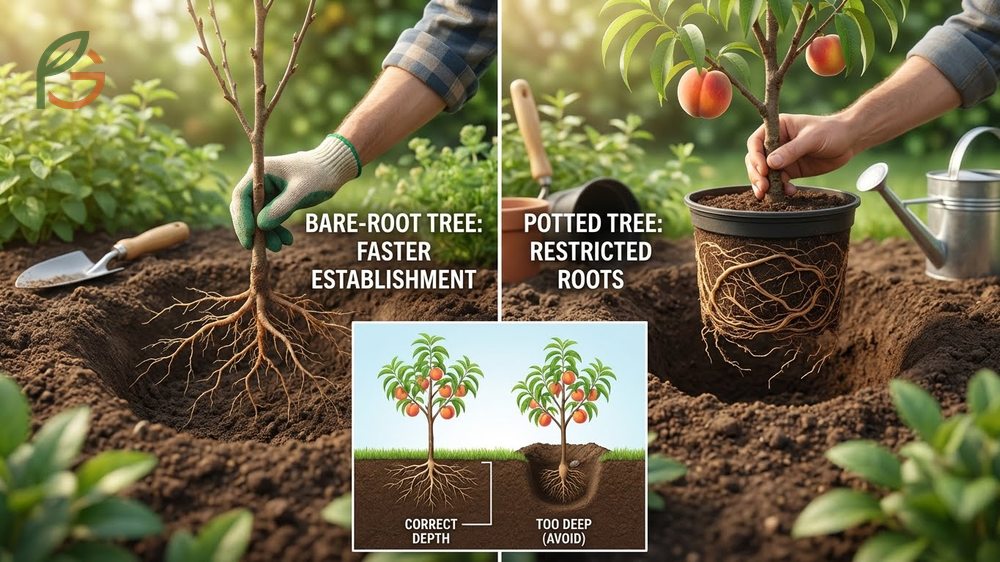
Growing a healthy peach tree starts with choosing between bare-root and potted nursery stock. Agricultural data indicates that bare-root trees adapt faster to their new environment because their roots haven’t been restricted by container growth[2]. This faster establishment translates to earlier fruit production and stronger overall tree development.
The planting process itself requires attention to detail. Most failures occur because gardeners plant too deep or fail to spread roots properly during installation. What often gets overlooked is that root positioning during the first hour of planting determines the tree’s structural stability for its entire life.
Bare Root vs Potted Trees
Medium to large-scale orchards use bare-root trees exclusively because they’re more affordable and recover from transplanting more easily than potted varieties[2]. Bare-root peach trees cost 30-50% less than equivalent potted trees, making them ideal if you’re planting multiple trees. The trade-off is timing—bare-root stock is only available during the dormant season from late winter through early spring.
Potted peach trees offer flexibility in planting time since they can go into the ground from spring through early fall. Container-grown trees show less transplant shock when planted outside the traditional dormant season. However, you’re essentially paying extra for the container and potting soil, since most potted trees started as bare-root stock at the nursery.
This table compares cost, planting season, establishment speed, and selection variety between bare-root and potted peach trees
| Factor | Bare-Root Trees | Potted Trees |
|---|---|---|
| Cost | 30-50% less expensive[2] | Higher due to container and soil weight |
| Planting Season | Late winter to early spring only | Spring through early fall |
| Establishment Speed | Faster—roots adapt quickly[2] | Slower—may experience root circling |
| Variety Selection | Much greater diversity available | Limited to what nurseries can pot |
Digging Planting Hole Size
The planting hole should be 2-3 times wider than the root ball but only as deep as the roots themselves[4]. This creates a bowl-shaped hole that allows roots to spread horizontally while preventing the tree from settling too deep. Most gardeners dig holes that are too deep and too narrow—exactly the opposite of what research recommends.
For a typical nursery peach tree with a 12-inch root ball, dig a hole 12 inches deep and 24-36 inches wide at the top. The sides should taper outward as you dig, not straight down. Wide holes give roots room to expand during the critical first year when establishment occurs.
- Soak bare-root trees in water for 2-4 hours before planting to rehydrate the roots
- Dig your hole wider than deep—a bowl shape encourages lateral root growth[4]
- Position the graft union 2-3 inches above soil level for dwarf trees, 1-2 inches below for standard varieties[9]
- Spread roots outward in all directions—never bend or circle them to fit the hole
- Backfill with native topsoil, tamping gently to eliminate air pockets
- Create a 2-inch berm of soil around the planting hole to catch and hold water
- Water thoroughly with 10 gallons immediately after planting to settle soil around roots
Critical Warning: Planting too deep is the most common mistake that kills young peach trees. The graft union must remain visible above the soil line. Deep planting leads to trunk rot, poor growth, and eventual tree death.
When to Plant Peach Trees
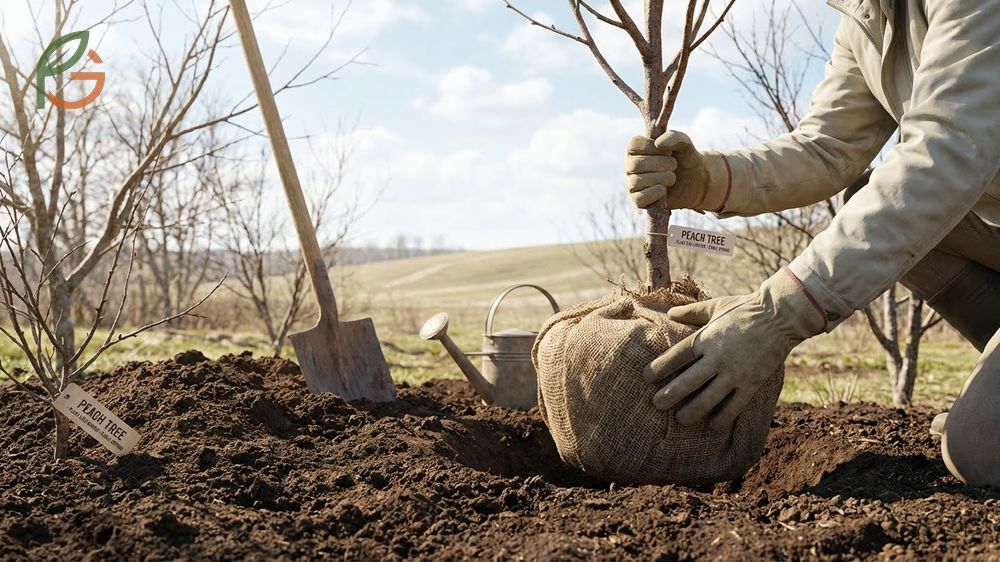
Timing your peach tree planting dramatically affects survival rates and first-year growth. Current guidance shows that late winter or early spring planting allows roots to establish before summer heat stress arrives[1]. In most U.S. regions, this window falls between late February and early April, depending on your last frost date.
Spring planting offers several advantages over fall installation. Warmer soil temperatures promote active root growth, and the tree gets an entire growing season to establish before facing winter stress. If you’re planting bare-root stock, spring is your only option since dormant trees must go into the ground before buds break.
Fall planting can work in mild-winter regions like USDA zones 7-9, particularly for container-grown trees. The cooler temperatures reduce transplant shock, and fall rains provide natural irrigation. However, young trees are vulnerable to winter injury during their first year, so spring planting remains the safer choice for most gardeners.
Staking a Tree
Most peach trees don’t need permanent staking, but temporary support helps newly planted trees establish without shifting in the soil. Research on fruit tree establishment shows that stakes should allow some trunk movement—trees that can sway slightly develop stronger trunks than those tied rigidly[10]. Staking done incorrectly actually weakens trees by preventing natural trunk strengthening.
Drive stakes into undisturbed soil beyond the root ball to avoid damaging roots. Use wide, flexible ties made from fabric strips or rubber—never wire or narrow string that cuts into bark. The tie should create a loose loop around the trunk, allowing the tree to move but preventing it from leaning or falling over.
- Install stakes immediately after planting while the root ball is still exposed
- Position stakes 12-18 inches away from the trunk in undisturbed soil
- Use flexible ties that won’t constrict the trunk as it grows
- Allow enough slack for the tree to sway in moderate wind
- Remove stakes after one growing season once roots have anchored the tree[10]
Watering New Fruit Trees
Newly planted peach trees need consistent moisture but not waterlogged soil. Studies on fruit tree irrigation show that deep, infrequent watering promotes stronger root systems than frequent shallow watering[5]. During the first year, provide 5-10 gallons of water per session, adjusted based on temperature and rainfall.
Water deeply enough to reach 12 inches into the soil where root activity is concentrated. You can check moisture penetration by digging down with a small shovel an hour after watering. The soil should feel moist but not saturated at the 12-inch depth.
First-year watering schedules vary by season and climate. Newly planted trees typically need watering 2-3 times per week during hot weather, once per week during cool spring conditions, and less frequently if natural rainfall provides adequate moisture. Always check soil moisture before watering—overwatering causes more problems than underwatering.
Watering Tip: Use a soaker hose or drip irrigation system set to run for 2-3 hours per session. This delivers water gradually without washing away soil or creating runoff. Hand watering works too, but pour slowly at the base and let water soak in as you go.
Mulching Fruit Trees
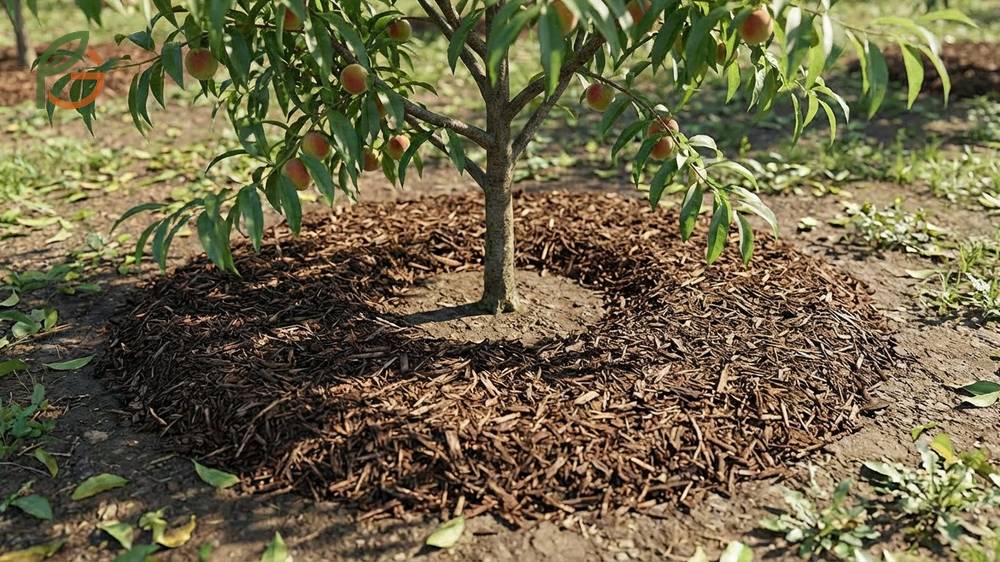
Proper mulching conserves soil moisture, moderates soil temperature, and suppresses weeds around your peach tree. Agricultural research demonstrates that mulched fruit trees grow faster and produce more fruit than unmulched trees due to improved growing conditions[11]. The key is applying the right depth and keeping mulch away from the trunk to prevent rot.
Apply mulch in a circle extending 3-4 feet from the trunk but leave a 4-6 inch gap around the base of the tree. Mulch depth should settle to 4-6 inches after compaction[11]—deeper mulch can suffocate roots while shallower layers don’t provide adequate weed suppression or moisture retention.
Wood chips, shredded bark, and partially composted sawdust all work well for peach trees. If using fresh tree leaves, start with 10-12 inches since they’ll compress to about half that depth within a few weeks. Refresh your mulch layer annually each spring to maintain consistent depth and appearance.
- Create a mulch ring 3-4 feet in diameter around the tree base
- Keep mulch 4-6 inches away from the trunk to prevent collar rot
- Apply 4-6 inches of wood chips or shredded bark for optimal results[11]
- Avoid piling mulch against the trunk—this creates a “mulch volcano” that damages bark
- Use organic mulches that break down over time and improve soil structure
- Replenish mulch each spring before the growing season begins
Mulch Warning: Never use grass clippings or fresh manure as mulch around young peach trees. Grass clippings mat down and block air exchange, while fresh manure can burn roots with excess nitrogen and introduce weed seeds.
Conclusion
The evidence is clear: successful how to plant a peach tree outcomes depend on proper site selection, correct planting depth, and consistent first-year care. Trees planted in full sun with well-drained soil and adequate water establish quickly and begin producing fruit within 2-3 years.
Current horticultural guidance emphasizes that the time you invest in proper planting technique pays dividends for decades. FruitGarden provides research-based information to help home gardeners achieve professional results with backyard fruit trees.
Frequently Asked Questions
How deep should I plant a peach tree?
Plant your peach tree only as deep as the root ball itself—typically 12-24 inches depending on tree size. The graft union should sit 2-3 inches above soil level for dwarf varieties and 1-2 inches below for standard trees[9]. Planting too deep causes trunk rot and poor growth.
What’s the best time of year to plant peach trees?
Late winter or early spring provides the optimal planting window for peach trees, allowing root establishment before summer heat[1]. In most U.S. regions, this means planting between late February and early April. Bare-root trees must be planted during dormancy, while potted trees can go in anytime from spring through early fall.
Should I buy bare-root or potted peach trees?
Bare-root peach trees cost 30-50% less than potted varieties and establish faster after planting[2]. Commercial orchards use bare-root stock exclusively for these reasons. However, bare-root trees are only available during the dormant season, while potted trees offer more flexible planting timing.
How much sun do peach trees need?
Peach trees require a minimum of 6-8 hours of direct sunlight daily for optimal fruit production and quality[3]. Less sunlight results in weak growth, fewer flowers, and reduced fruit yields. Full all-day sun exposure produces the best results.
How often should I water a newly planted peach tree?
Water newly planted peach trees with 5-10 gallons per session, aiming to moisten soil to a depth of 12 inches[5]. During the first year, water 2-3 times weekly in hot weather and once weekly during cooler periods. Always check soil moisture before watering—the soil should feel moist but not waterlogged.
Do I need to stake my peach tree after planting?
Most peach trees benefit from temporary staking for one growing season to prevent shifting while roots establish. Use flexible ties that allow the trunk to sway slightly—this builds stronger wood than rigid staking[10]. Remove stakes after the first year once the tree stands firmly on its own.
How wide should the planting hole be?
Dig the planting hole 2-3 times wider than the root ball but only as deep as the roots themselves[4]. For a tree with a 12-inch root ball, dig a hole 12 inches deep and 24-36 inches wide. The sides should taper outward to create a bowl shape that encourages lateral root growth.





