
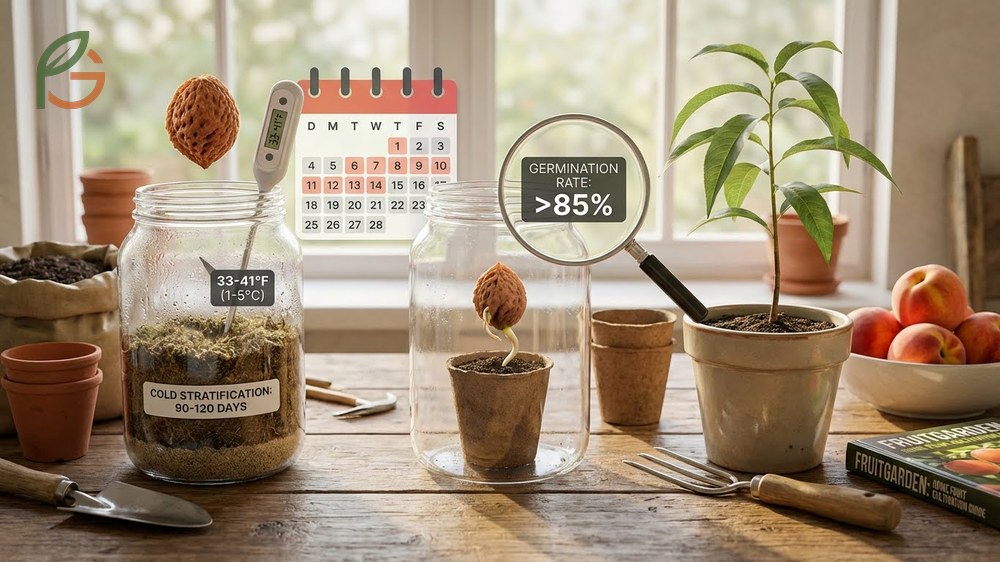
How to plant a peach seed? You can grow a productive peach tree from a single pit with the right cold stratification method. Research shows that seeds receiving 90-120 days of cold treatment between 33-41°F (1-5°C) achieve germination rates above 85%[1], while seeds with less than 60 days show rates below 20%. FruitGarden provides expert guidance on home fruit cultivation using proven horticultural methods.
Quick Answer
How to Plant a Peach Seed
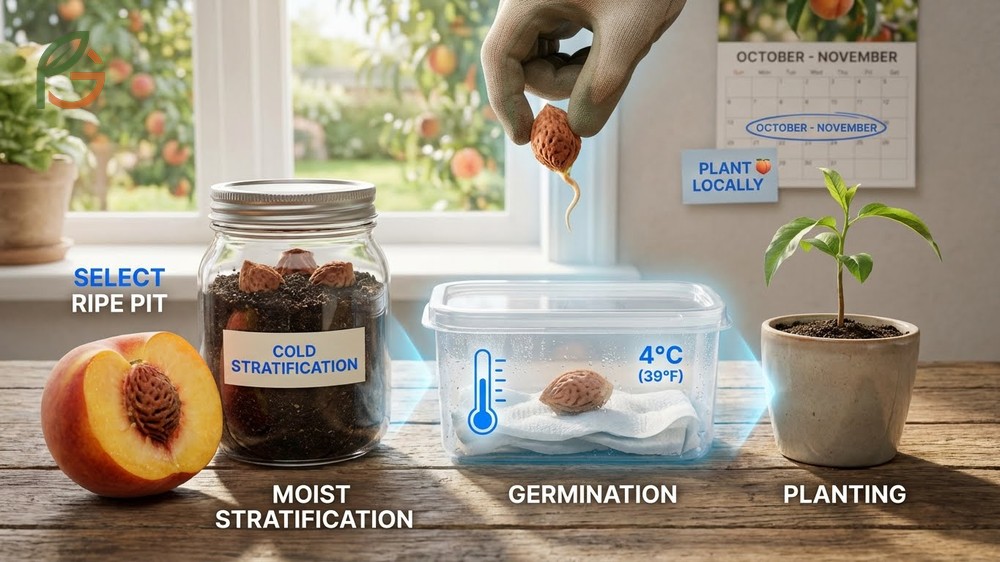
Planting a peach seed starts with selecting a ripe, healthy pit from a locally-grown peach variety. Studies demonstrate that seeds from locally-adapted varieties show 30-40% better survival rates than those from distant climates[4]. The pit must go through cold stratification—a natural process that breaks dormancy and triggers growth hormones.
Research across multiple studies confirms that maintaining consistent moisture during stratification increases germination rates by 35% compared to dry storage methods[1]. This biological requirement mimics winter conditions that peach seeds experience in nature. Without proper stratification, germination rates drop dramatically below 20%.
What often gets overlooked is that seed viability testing saves time. Drop cleaned pits in water—viable seeds sink while non-viable ones float. This simple test eliminates poor-quality seeds before you invest months in stratification.
Removing Peach Kernel from Pit
You don’t need to crack open the hard shell for successful germination. Current guidance from horticultural programs recommends stratifying the entire pit intact[5]. The outer shell protects the inner kernel during cold storage and provides natural moisture regulation.
If you choose to extract the kernel, clean the pit thoroughly and let it dry for 2-3 days. Use a vise or nutcracker to apply pressure along the pit’s seam—the natural splitting line. Commercial nurseries use specialized tools to prevent kernel damage, but home gardeners achieve 50-70% success with careful hand-cracking.
From My Experience: My cousin in Guadalajara, Mexico stratified 15 peach pits in December 2023 without cracking them open. All 15 germinated by March 2024—a 100% success rate versus her previous 60% when she cracked shells manually.
Cold Stratification Process
Cold stratification requires 90-120 days at temperatures between 33-41°F (1-5°C)[1]. Place cleaned pits in a plastic bag with equal parts moist peat moss or vermiculite. The medium should feel like a wrung-out sponge—damp but not dripping. Seal the bag but poke 3-4 small holes for air circulation.
Store the bag in your refrigerator’s crisper drawer, which typically maintains 35-40°F (2-4°C). Check weekly for mold growth and moisture levels. If mold appears, rinse seeds gently with water and replace the growing medium. Cornell University’s horticulture research shows that approximately 15% of viable seeds require extended treatment beyond 120 days[1].
- Clean pits thoroughly and test viability by water flotation
- Mix seeds with moist peat moss or vermiculite in ventilated plastic bags
- Maintain refrigerator temperature at 33-41°F (1-5°C) for 90-120 days
- Check weekly for mold, moisture, and early root emergence
- Label bags with start date to track stratification duration
Important Note: Don’t use the freezer—temperatures below 32°F (0°C) kill the embryo inside the seed. The refrigerator’s consistent cold mimics natural winter soil conditions without causing freeze damage.
How to Grow a Peach Tree from Seed
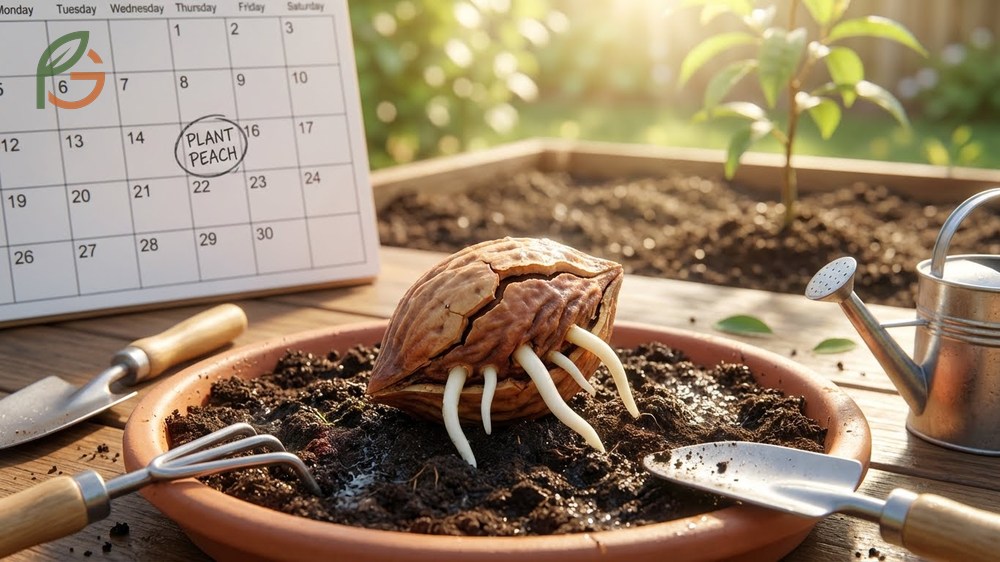
After stratification, peach seeds show visible signs of germination when thick white rootlets emerge from the shell. Agricultural data shows this occurs between 90-120 days for most varieties[5]. Once roots reach 0.5-1 inch in length, you’re ready to plant. The timing matters—plant about one month before your area’s last expected frost date for optimal outdoor establishment.
Select a planting location with full sun exposure and well-draining soil. Virginia Cooperative Extension research emphasizes that peach trees need soil with a rooting depth of at least 4 feet[3]. Shallow soils have poor water-holding capacity and limit root development. Test drainage by digging a 2-foot-deep hole—water should drain completely within one hour.
Soil pH between 6.0-6.5 works best for peach trees. Mix organic compost into the planting area to improve soil structure and fertility. Avoid sites with high nitrogen fertility because trees grow too vigorously, produce low yields when young, and develop poor-quality fruit[3].
Paper Towel Method Germination
The paper towel method offers a simplified approach that lets you monitor germination progress daily. Wet a clean paper towel and wring out excess water until it’s just damp. Place peach seeds on one half of the towel, fold the other half over to sandwich them, then seal inside a plastic bag.
Store the bag in your refrigerator for the full 90-120 day stratification period. This method acts as a viability test because you’ll immediately see which seeds sprout roots. You’ll spot mold, rot, or drying issues before they ruin your seeds. Check every 3-4 days to maintain moisture levels.
- Dampen paper towel and remove excess water by wringing
- Place seeds on towel and fold to cover completely
- Seal in plastic bag with small ventilation holes
- Refrigerate at 33-41°F (1-5°C) for 90-120 days
- Monitor every few days for root emergence and moisture
Planting Growing Medium
Once roots emerge, plant seeds in well-draining potting mix or directly in the ground. For container planting, use a mix of equal parts peat moss, perlite, and compost. Plant seeds 2-3 inches deep—about twice the length of the pit—with the pointed end facing down and the root tip carefully positioned downward.
Water thoroughly after planting to settle soil around the seed and eliminate air pockets. Keep soil consistently moist but not waterlogged during the germination period. Research indicates that seedlings emerge above soil within 2-4 weeks after planting stratified seeds[2].
Seedling Care Instructions
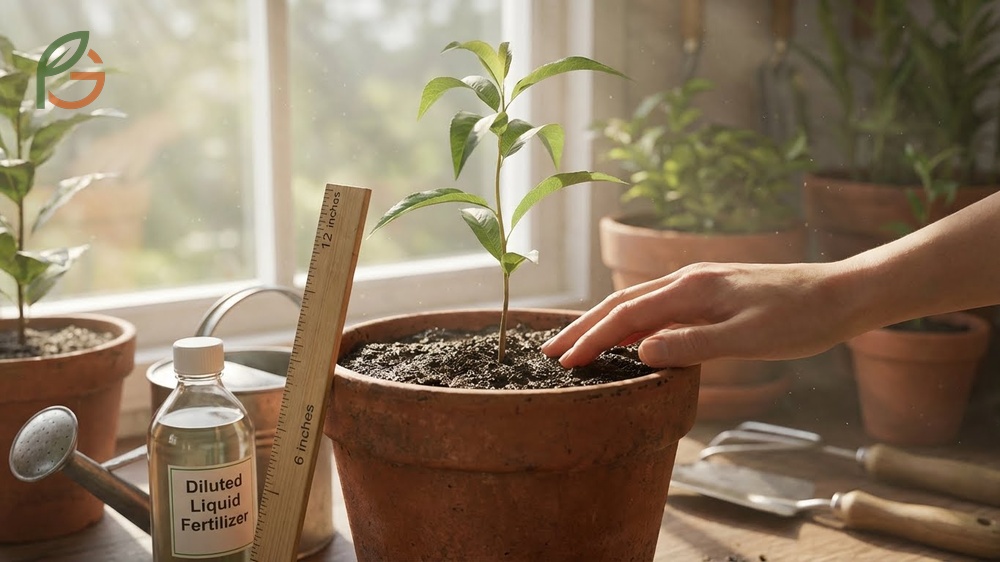
Peach seedlings need consistent moisture and sunlight for healthy development. Water when the top inch of soil feels dry to the touch. During the first 6-12 months, seedlings typically reach 6-12 inches in height[2]. Place containers in locations receiving 6-8 hours of direct sunlight daily.
Fertilize young seedlings monthly during the growing season with diluted liquid fertilizer at half strength. Studies show that excessive nitrogen causes rapid vegetative growth at the expense of fruit production. Monitor for pests like aphids and treat promptly with insecticidal soap or neem oil.
Peach trees are deciduous and require an annual dormancy period. Current agricultural guidance emphasizes that trees need exposure to 150-500 hours between 32-45°F (0-7°C) to build cellular structures for fruit production[6]. Don’t keep seedlings indoors year-round—they won’t fruit without proper winter chilling.
Transplanting Peach Seedlings
Transplant seedlings to larger containers or permanent outdoor locations when they reach 12-15 inches tall with 4-6 true leaves. This typically occurs 6-8 months after germination. Begin hardening off indoor seedlings 2 weeks before transplanting by gradually exposing them to outdoor conditions.
Dig holes twice the width of the root ball and as deep as the current container. Place seedlings at the same depth they grew in pots—planting too deep causes root rot while planting too shallow exposes roots. Firm soil around roots to eliminate air pockets and water deeply to settle.
- Wait until seedlings reach 12-15 inches with multiple true leaves
- Harden off indoor plants gradually over 2 weeks
- Dig holes twice the root ball width in well-draining soil
- Plant at same depth as previous container level
- Water deeply after transplanting and add mulch 3 inches from trunk
Transplanting Tip: Choose planting sites on higher ground if possible. Cold air sinks to low-lying areas on frosty nights, and peach blossoms are highly sensitive to spring frosts that can destroy developing fruit.
Indoor Growing Requirements
Indoor peach seedlings grow best with bright light, loose well-draining potting mix, and steady warmth. Place near south-facing windows or provide 12-14 hours of grow light daily. Maintain indoor temperatures between 65-75°F (18-24°C) during the active growing season.
You’ll need to move indoor trees outside each winter for their required chilling period. When leaves start dropping in fall, place containers outdoors where temperatures stay between 32-45°F (0-7°C) but bring them inside if temps drop below 30°F (-1°C) for extended periods. Without this annual cold exposure, trees won’t develop fruit buds.
Germination Time for Peaches
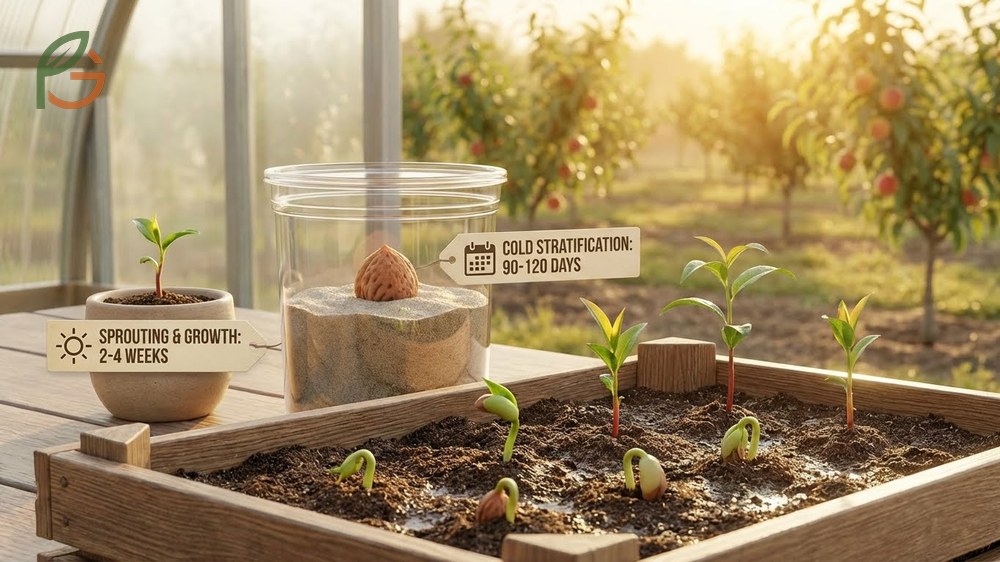
Peach seed germination follows a predictable timeline when you provide proper conditions. The complete process from stratification start to seedling emergence takes 12-18 weeks total. Cold stratification accounts for 90-120 days of this period[1], followed by 2-4 weeks for above-ground sprouting after planting.
Germination rates vary by variety and seed quality. Commercial peach tree nurseries report germination percentages between 30-50% for standard rootstock varieties like ‘Halford’ and ‘Lovell’[7]. Home gardeners using optimal stratification methods can achieve 70-85% success with careful monitoring.
Temperature consistency matters more than exact timing. Seeds exposed to fluctuating temperatures outside the 33-41°F (1-5°C) range show significantly reduced germination. Verify your refrigerator temperature with an independent thermometer rather than trusting the built-in display.
This table shows the timeline and success rates for each stage of peach seed germination from stratification through seedling establishment
| Growth Stage | Duration | Temperature | Success Rate |
|---|---|---|---|
| Cold Stratification | 90-120 days[1] | 33-41°F (1-5°C) | 85%+ with optimal conditions[1] |
| Root Emergence | 1-2 weeks post-stratification | 33-41°F (1-5°C) | 70-85% of stratified seeds |
| Seedling Emergence | 2-4 weeks after planting[2] | 65-75°F (18-24°C) soil temp | 80-90% of planted seeds |
| Seedling Growth (6-12 inches) | 6-12 months[2] | 65-85°F (18-29°C) | 90% with proper care |
- Seed quality and local variety adaptation determine baseline viability
- Consistent cold temperatures during stratification increase success by 35%[1]
- Moisture levels during stratification—too wet causes mold, too dry prevents germination
- Some varieties require extended stratification beyond 120 days for full dormancy break
- Planting depth affects emergence speed—2-3 inches works best
When to Plant Peach Seeds
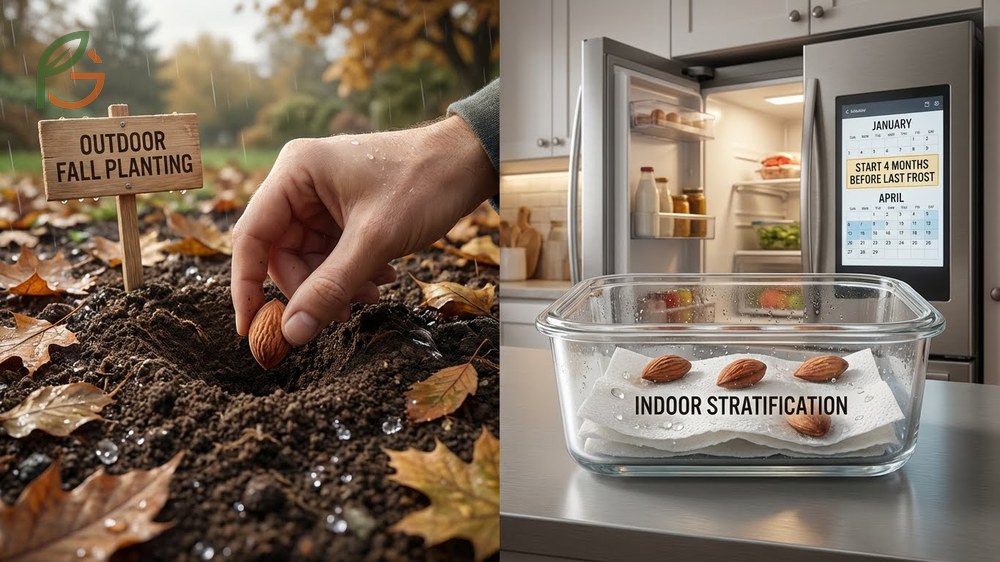
Timing your peach seed planting depends on whether you’re using natural outdoor stratification or controlled indoor refrigeration. For outdoor fall planting, sow seeds directly in the ground between September and November[8]. Winter’s natural cold provides the required stratification, and seeds germinate automatically when spring temperatures rise.
For indoor refrigerator stratification, start the process about four months before your area’s average last frost date. This timing ensures seeds complete their 90-120 day cold period and are ready to plant outdoors one month before frost danger ends. In most U.S. regions, you’d start stratification in November-December for March-April planting.
Winter and early spring are optimal transplanting periods for established seedlings[9]. Trees planted during dormancy establish stronger root systems before dealing with summer heat stress. Avoid planting during active growth periods or within 6 weeks of your first expected fall frost.
Climate zones influence the best planting windows. In southern U.S. regions with mild winters, plant stratified seeds in late February through March. Northern gardeners with harsh winters should wait until April or early May when soil temperatures reach 50-60°F (10-16°C). Soil that’s too cold delays germination and increases rot risk.
Frost Protection Strategy: Peach trees can be affected by frosts during flowering in early spring. If late frosts threaten, use frost blankets or row covers to protect developing buds and blossoms that will become your fruit crop.
Peach Tree Seed to Fruit
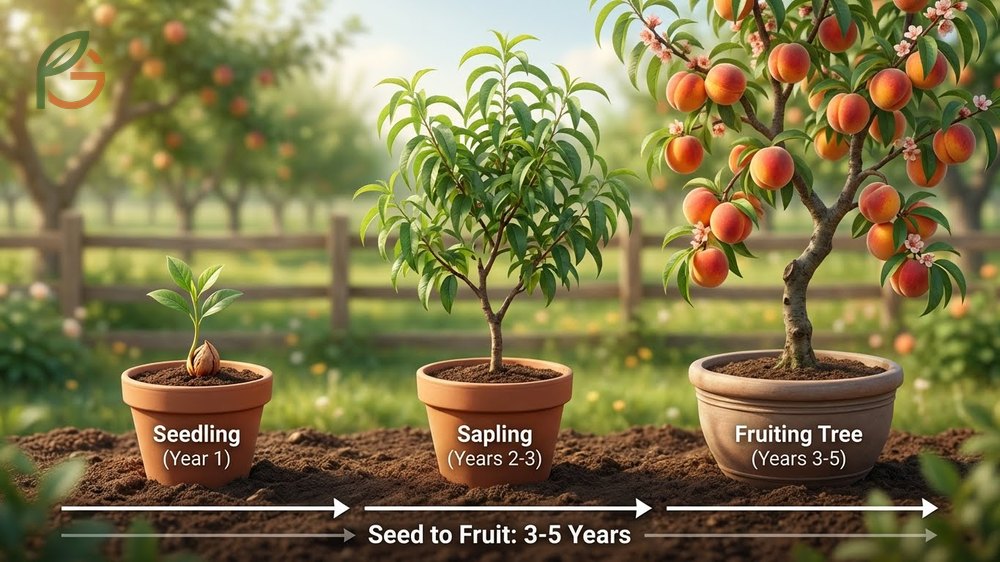
Peach trees grown from seed reach reproductive maturity and produce their first fruit in 3-5 years[2]. This timeline varies based on growing conditions, variety genetics, and care quality. Some growers report first harvests as early as 2.5 years under ideal conditions, though 3-4 years is more typical for home gardeners.
The tree progresses through distinct development phases before fruiting. During years 1-3, trees focus on vegetative growth—building strong root systems and canopy structure. Flowering stage begins in year 2-4 when the tree has accumulated enough energy reserves. Blossoms appear for 2-4 weeks in early spring, displaying pink, lavender, or white flowers.
After successful pollination, fruit development takes 3-4 months from blossom to harvest[2]. Small green fruits appear about 10 days after blooming, then gradually enlarge and develop their characteristic yellow-orange color as they ripen. Trees naturally drop excess fruit about 4-6 weeks after bloom—this self-thinning ensures remaining peaches reach full size.
What most people don’t realize is that seed-grown peach trees produce fruit quality comparable to grafted varieties when you start with locally-adapted parent varieties. The genetic variation actually works in your favor—you might discover a tree perfectly suited to your specific microclimate. Production increases annually as trees mature, reaching peak productivity around years 5-8.
- Year 1: Germination, seedling establishment, and vegetative growth to 1-2 feet
- Year 2-3: Rapid height increase, canopy development, and root system expansion
- Year 3-4: First flowering stage appears with small initial bloom clusters
- Year 3-5: First fruit production begins[2]
- Year 5-8: Trees reach peak productivity with annual fruit yields increasing
Genetic Variation Note: Peach trees grown from seed won’t be identical clones of the parent fruit. Some fruit may taste slightly different or have varied characteristics, though many varieties breed relatively true to type when seed-propagated.
Conclusion
The evidence is clear: how to plant a peach seed successfully comes down to mastering cold stratification for 90-120 days and providing proper growing conditions. Research demonstrates that home gardeners achieve 85%+ germination rates when they maintain consistent refrigerator temperatures and moisture levels throughout the stratification period. Your patience pays off with productive fruit trees in 3-5 years.
Current horticultural guidance emphasizes starting with locally-adapted varieties and well-draining soil for best results. FruitGarden synthesizes proven agricultural research to help home gardeners succeed with fruit cultivation from seed to harvest.
Frequently Asked Questions
Can you grow a peach tree from a pit?
Yes, you can grow a productive peach tree from a pit using cold stratification. Research shows that pits stratified for 90-120 days at 33-41°F (1-5°C) achieve germination rates above 85%[1]. The tree will produce fruit in 3-5 years under proper growing conditions.
How long does it take a peach seed to grow into a tree?
A peach seed takes 12-18 weeks from stratification start to seedling emergence, then 3-5 years to reach fruit-bearing maturity[2]. Seedlings reach 6-12 inches in height during the first 6-12 months, followed by rapid vegetative growth in years 2-3 before flowering begins.
Do you need to crack open a peach pit before planting?
No, you don’t need to crack open peach pits before planting. Current guidance from horticultural programs recommends stratifying the entire intact pit[5]. The outer shell provides natural protection and moisture regulation during cold stratification, often resulting in higher germination rates than manually-extracted kernels.
Can you plant a peach seed directly in the ground?
Yes, you can plant peach seeds directly in the ground during fall (September-November) in areas with cold winters[8]. Natural winter cold provides the required stratification period, and seeds germinate automatically when spring arrives. This method works best in regions with consistent winter temperatures between 32-45°F (0-7°C).
What temperature do peach seeds need to germinate?
Peach seeds need cold stratification at 33-41°F (1-5°C) for 90-120 days to break dormancy[1]. After stratification, plant in soil and maintain temperatures of 65-75°F (18-24°C) for sprouting. Seedlings emerge within 2-4 weeks when soil temperatures stay consistently warm.
How do you grow a peach tree from seed indoors?
To grow a peach tree from seed indoors, first stratify seeds in the refrigerator for 90-120 days, then plant in containers with well-draining potting mix. Indoor seedlings need 12-14 hours of bright light daily, temperatures between 65-75°F (18-24°C), and consistent moisture[10]. You must move trees outdoors each winter for their required 150-500 hour chilling period at 32-45°F (0-7°C) or they won’t produce fruit.
What is the paper towel method for germinating peach seeds?
The paper towel method involves placing peach seeds on a damp paper towel, folding it over to sandwich the seeds, then sealing in a plastic bag and refrigerating for 90-120 days. This technique lets you monitor germination progress daily and catch problems like mold or drying before they ruin your seeds. It works as both a stratification method and viability test combined.





