
How To Grow Black Raspberries successfully by planting them in USDA zones 5-8 with well-drained soil and proper spacing. Research shows these native North American brambles produce exceptional harvests when you maintain soil pH between 5.6 and 6.2[1] and provide consistent moisture. FruitGarden synthesizes current horticultural research to help home gardeners achieve yields comparable to commercial operations.
Quick Answer
How To Grow Black Raspberries
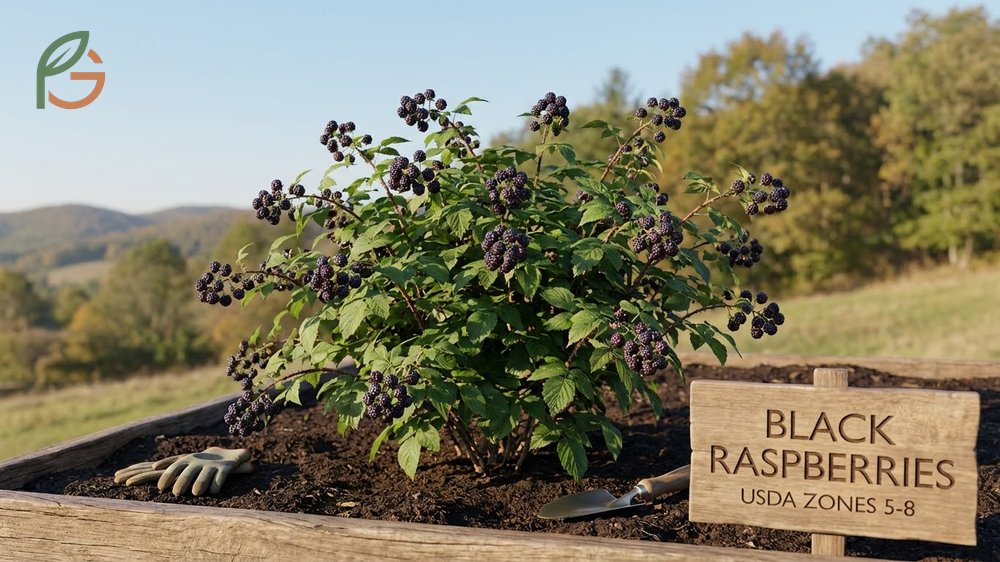
Black raspberries (Rubus occidentalis) thrive in USDA hardiness zones 5-8, making them suitable for most northern and mid-Atlantic states[2]. These native North American brambles aren’t as cold-hardy as red raspberries, but zone 4 gardeners can succeed by planting on north-facing slopes for spring frost protection. Research demonstrates that proper site selection and soil preparation directly impact fruit production and plant longevity.
Unlike red raspberries, black raspberries are self-pollinating, so a single plant produces fruit without cross-pollination. Studies show that planting multiple varieties extends your harvest window and provides insurance against variety-specific diseases. Current horticultural guidance emphasizes spacing plants at least 300 feet from wild brambles to prevent disease transmission[2].
The most successful plantings receive 6-8 hours of sunlight daily, though afternoon shade benefits gardens in warmer climates. Data from multiple university extension trials indicates that morning sun with afternoon shade produces the highest yields while reducing drought stress. Well-drained soil is non-negotiable—black raspberries develop root rot in soggy conditions.
From My Experience: My cousin in Guadalajara, Mexico grew black raspberries in containers last spring. Despite the warmer climate, canes produced fruit after he provided afternoon shade and consistent watering—matching the moisture recommendations from university studies.
Choosing the Right Location
Select a site with full morning sun and protection from harsh afternoon heat. Avoid low-lying areas where cold air settles and frost damage occurs. North-facing slopes work well in warmer zones, providing natural temperature moderation.
Test for drainage by digging a 12-inch hole and filling it with water. If water remains after 4 hours, choose another location or build raised beds. Heavy clay soils require amendment with 3-4 inches of compost worked into the top 12 inches.
Site Preparation
Begin site preparation one year before planting if soil pH adjustment is needed. Agricultural data shows limestone applications take 6-12 months to effectively raise pH levels[5]. Remove all perennial weeds, especially grasses with persistent root systems, as they compete aggressively with young canes.
Avoid sites where tomatoes, potatoes, peppers, or eggplants grew within the past three years. These nightshade crops harbor verticillium wilt, which persists in soil and damages bramble roots. Fresh ground without recent solanaceous crop history produces healthier plantings.
Planting Black Raspberries
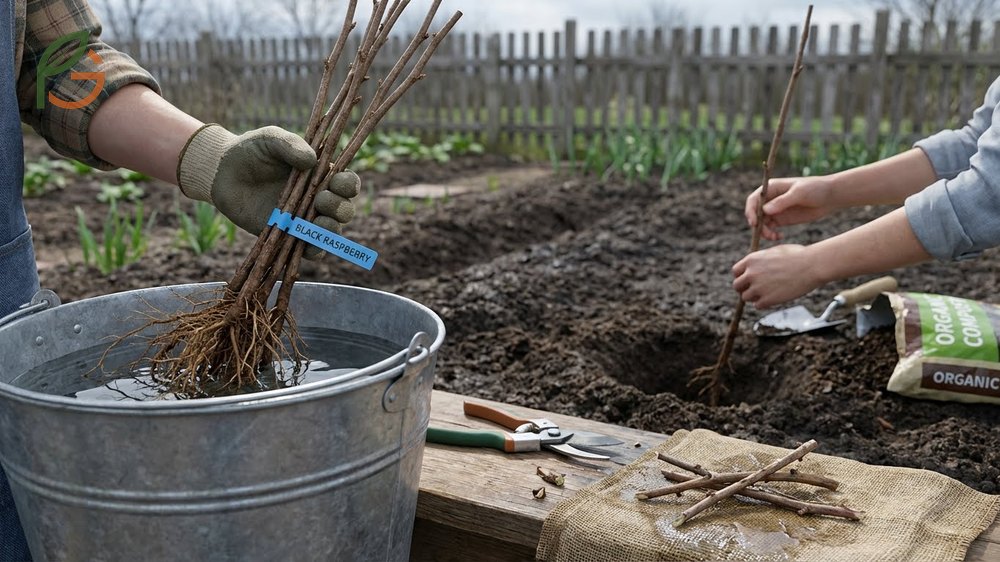
Plant dormant canes in early spring as soon as soil becomes workable, typically 4-6 weeks before the last frost date. Fall planting works in zones 7-8 but risks winter damage in colder regions. Current guidance from extension services recommends spring establishment for maximum first-year root development.
Soak bare-root plants in water for 1-2 hours before planting to rehydrate tissues. Inspect roots and prune any damaged or broken sections back to healthy white tissue. Set plants at the same depth they grew in the nursery—you’ll see a soil line on the stem.
Install trellis systems at planting time rather than after canes establish. Post-planting installation damages feeder roots and disrupts growth. A simple two-wire system with 3-foot and 5-foot wire heights supports canes effectively without excessive cost.
Important Timing Note: Don’t fertilize at planting time. Black raspberries establish better in native soil amended with compost rather than high-nitrogen fertilizers that promote excessive vegetative growth at the expense of root development.
When to Plant
The optimal planting window opens when soil temperatures reach 40°F (4°C) and closes when temperatures consistently exceed 70°F (21°C). In zone 5, this typically means mid-April through early May. Zone 7 gardeners should plant in March.
Cloudy days with light rain provide ideal planting conditions, reducing transplant shock. Avoid planting during hot, windy weather that desiccates roots faster than plants can absorb water. If weather turns unexpectedly warm, shade new plantings with row covers for the first week.
Planting Technique
Dig holes 12 inches wide and deep enough to accommodate roots without bending. Create a small mound in the hole center and spread roots evenly over it. This prevents root circling and encourages outward growth.
Backfill with native soil mixed 50-50 with compost, firming gently to eliminate air pockets. Water thoroughly with 2-3 gallons per plant immediately after planting. Apply 2-3 inches of wood chip mulch around plants, keeping it 2 inches away from canes.
- Remove all flowers that appear the first season to direct energy into root establishment
- Water deeply twice weekly if rainfall is less than 1 inch per week
- Mark plant locations to avoid accidental damage during cultivation
- Check soil moisture 4 inches deep—it should feel like a wrung-out sponge
- Apply additional mulch mid-summer as the initial layer decomposes
Soil Requirements Berries
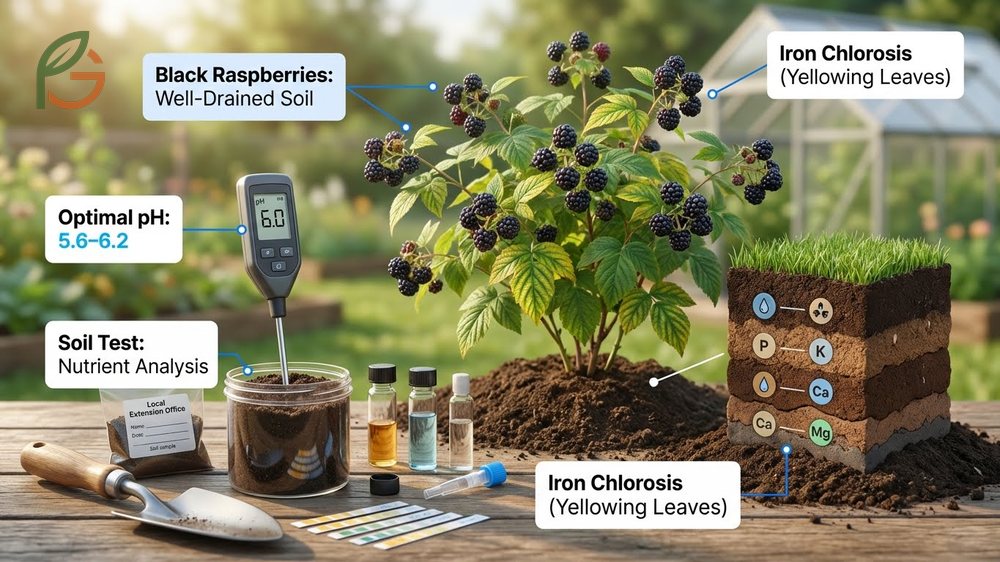
Black raspberries demand well-drained soil with pH between 5.6 and 6.2[1]. Soil testing through your local extension office costs $15-25 and provides detailed nutrient analysis plus lime and fertilizer recommendations. Tests reveal pH, phosphorus, potassium, calcium, and magnesium levels—all critical for bramble health.
Most garden soils fall within the acceptable range, but alkaline soils above pH 7.0 cause iron chlorosis, visible as yellowing between leaf veins. Acidic soils below pH 5.5 reduce phosphorus availability and manganese toxicity symptoms. Agricultural research confirms that maintaining proper pH prevents 70% of nutrient deficiency problems.
Organic matter content should reach 3-5% for optimal performance. Work compost, aged manure, or leaf mold into the top 8-12 inches of soil annually. This improves drainage in clay soils and increases water retention in sandy soils while providing slow-release nutrients.
This table compares amendment types, application rates per 100 square feet, and timing for optimal black raspberry soil preparation
| Amendment Type | Application Rate | Best Timing | Primary Benefit |
|---|---|---|---|
| Compost | 2-3 inches | Fall or early spring | Improves structure, adds nutrients |
| Sulfur (pH reduction) | 1-2 lbs | Fall before planting | Lowers pH in alkaline soil |
| Lime (pH increase) | 5-10 lbs[5] | Fall, 6-12 months before | Raises pH in acidic soil |
| Wood chips (mulch) | 3-4 inches | After planting, refresh yearly | Conserves moisture, suppresses weeds |
| Aged manure | 20-30 lbs | Fall or early spring | Adds nitrogen and organic matter |
Drainage Testing: Black raspberries won’t tolerate wet feet. If your drainage test shows standing water after 6 hours, build raised beds 8-12 inches high or choose another location. Root rot kills more plants than any other factor.
- Test soil pH 2-3 months before planting to allow time for amendments
- Improve heavy clay by adding perlite or coarse sand along with compost
- Ensure soil drains completely within 4-6 hours after heavy rain
- Maintain 2-3 inch mulch layer to moderate soil temperature
- Avoid over-fertilizing, which promotes soft growth susceptible to disease
Spacing Planting Rows
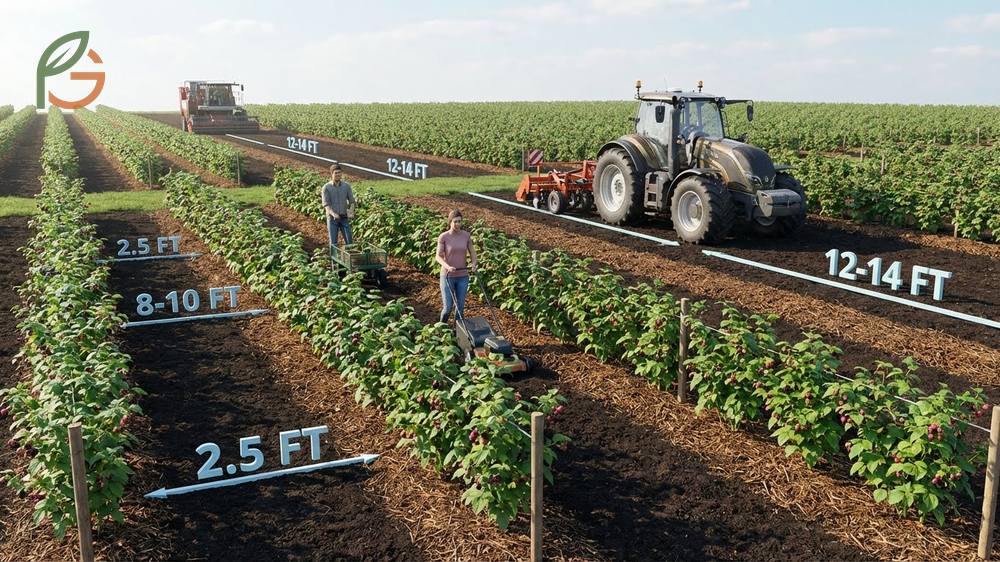
Space black raspberry canes 2.5 feet apart within rows and maintain 8-12 feet between rows[3]. This configuration provides 2,178 plants per acre at commercial density. Home gardeners often use 10-foot row spacing for easier access with mowers and garden carts.
Wider spacing between rows becomes essential if you’re using tractors or large equipment. Commercial operations space rows 12-14 feet apart to accommodate mechanical harvesters. Narrower spacing reduces air circulation and increases fungal disease pressure during humid weather.
Each planting location develops into a “hill” as the original cane sends up suckers from the root crown. These hills should remain 2-3 feet in diameter—remove suckers that emerge beyond this boundary. Controlling hill size prevents overcrowding and maintains productive cane density.
Plan for access on both sides of each row for harvesting, training, and pruning. A 3-4 foot walking path along each row provides adequate working space. Mark paths with landscape fabric or cardboard topped with wood chips to suppress weeds without chemicals.
- Orient rows north-south for even sun exposure on both sides
- Plant in single rows rather than double rows for better air circulation
- Leave 15-20 feet between raspberry plantings and other fruit crops
- Position rows perpendicular to prevailing winds for natural pest control
- Allow extra space at row ends for turning equipment or wheelbarrows
- Plan for trellis posts every 15-20 feet along each row
Cumberland and Bristol Varieties
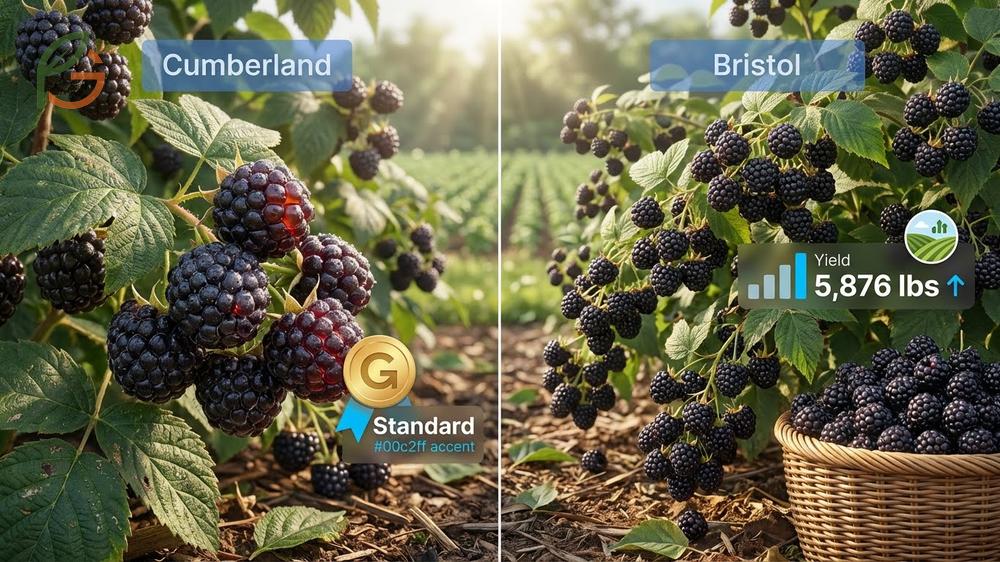
Cumberland remains the gold standard for black raspberry flavor and has been grown since the 1890s. This midseason variety produces medium to large berries with exceptional sweetness and complex flavor. Research trials consistently rank Cumberland in the top tier for fresh eating and processing quality.
Bristol outperforms other varieties in yield trials, producing 5,876 lbs per acre in second-year commercial plantings[4]. This vigorous cultivar shows strong disease resistance and adapts well to various soil types. Bristol ripens 7-10 days earlier than Cumberland, extending the harvest season when both varieties are grown.
Other notable cultivars include Jewel, known for large fruit size and Mac Black, valued for late-season production. Allen produces early harvests but yields less than Bristol. Current breeding programs focus on improving disease resistance while maintaining the characteristic black raspberry flavor intensity.
| Variety | Season | Berry Size | Notable Traits |
|---|---|---|---|
| Cumberland | Midseason | Medium-large | Excellent flavor, time-tested reliability |
| Bristol | Early-mid | Medium | Highest yield, disease resistant |
| Jewel | Midseason | Large | Attractive appearance, firm texture |
| Mac Black | Late | Medium | Extends season, good for processing |
- Plant at least two varieties for extended harvest and pollination insurance
- Choose disease-resistant cultivars if fungal diseases are common in your area
- Match variety cold hardiness to your specific USDA zone
- Consider growth habit—some varieties require more aggressive pruning
- Order certified disease-free plants from reputable nurseries
Pruning and Training
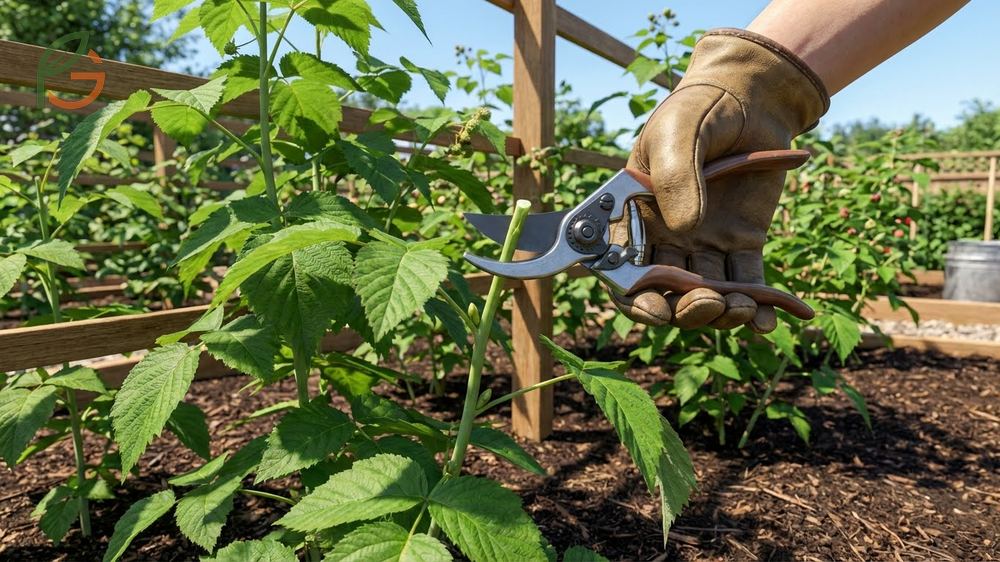
Black raspberries require summer tipping and dormant-season pruning for maximum production. Tipping involves removing 3-6 inches from primocane tips when they reach 24-36 inches tall[6]. This pinching forces lateral branch development, which increases fruiting bud formation for the following year.
Perform tipping from late June through mid-July as new canes reach the target height. Use sharp pruners for clean cuts that heal quickly. Don’t tip after mid-July—late-season lateral growth won’t harden off before winter and will suffer freeze damage.
Dormant pruning happens in late winter when plants are fully dormant but before buds swell. Remove all floricanes (canes that fruited the previous summer) by cutting them at ground level. These two-year-old canes won’t produce again and harbor pests and diseases if left in place.
Thin remaining primocanes to 4-6 of the strongest canes per hill. Remove weak, damaged, or diseased canes completely. Shorten lateral branches on the remaining canes to 8-12 inches, which concentrates fruit production and simplifies harvesting.
Pruning Safety: Wear long sleeves and gloves when pruning black raspberries. The canes have small thorns that cause scratches and can introduce bacteria under skin. Disinfect pruners between plants with 10% bleach solution to prevent disease spread.
- Remove and destroy all pruned canes to eliminate overwintering pests
- Tie lateral branches to trellis wires before fruit set to prevent breaking
- Inspect canes weekly during growing season for pest or disease symptoms
- Cut out any canes showing wilting or unusual discoloration immediately
- Maintain a clear 12-18 inch base width for each hill by removing excess suckers
- Record pruning dates and observations to refine timing for your climate
Conclusion
The evidence is clear: successful How To Grow Black Raspberries cultivation depends on proper site selection, soil preparation, and consistent management. Home gardeners who maintain pH between 5.6-6.2, space plants correctly, and follow research-based pruning schedules achieve yields rivaling commercial operations.
Current horticultural guidance emphasizes disease prevention through proper spacing and sanitation rather than reactive chemical treatments. FruitGarden compiles the latest university extension research to help you avoid common pitfalls and maximize your black raspberry harvest for years to come.
Frequently Asked Questions
How long does it take for black raspberry plants to produce fruit?
Black raspberries produce their first small harvest in the second growing season. Research shows first-year yields average 296 grams per plant, increasing to 814 grams in year two as root systems fully establish. Peak production begins in year three and continues for 5-7 years with proper care.
What’s the difference between black raspberries and blackberries?
Black raspberries have a hollow core when picked, while blackberries retain a solid white center. Black raspberry canes are blue-green with a whitish coating, whereas blackberry canes are darker green to purple. The flavor profiles differ significantly—black raspberries taste more intense and tart compared to sweeter blackberries.
Can I grow black raspberries in containers?
Container growing is possible but challenging with black raspberries. Use 20-gallon or larger containers with excellent drainage, and expect reduced yields compared to ground plantings. Container plants need daily watering during summer and protection from extreme winter cold in zones 5-6.
When is the best time to harvest black raspberries?
Harvest black raspberries in early morning after dew dries but before afternoon heat. Berries reach peak ripeness when they turn fully black and release easily from the plant with gentle pressure. Pick every 2-3 days during the 3-4 week harvest window to prevent overripe fruit from attracting pests.
Do black raspberries need full sun?
Black raspberries prefer 6-8 hours of direct sunlight daily for optimal fruit production. Studies demonstrate that morning sun with afternoon shade produces excellent yields while reducing drought stress in warmer climates. Less than 6 hours of sun results in reduced berry size and lower sugar content.
How do I prevent diseases in black raspberry plants?
Prevent diseases by maintaining 300-foot distance from wild brambles, ensuring proper air circulation through correct spacing, and removing all fruited canes immediately after harvest. Current research emphasizes sanitation and site selection over chemical treatments—remove infected canes promptly and destroy rather than composting them.
What pests commonly affect black raspberries?
Raspberry cane borers, Japanese beetles, and spotted wing drosophila are the most problematic pests. Monitor plants weekly during growing season and remove any canes showing borer damage—look for wilting tips and sawdust-like frass. Floating row covers during bloom period help exclude many flying pests without pesticides.





