
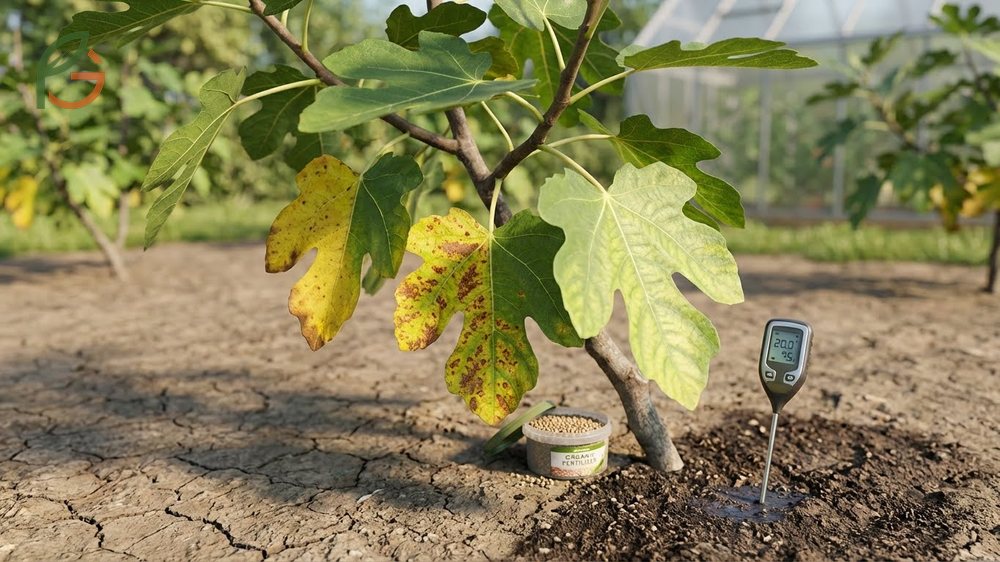
Fig tree leaves turning yellow? Research shows this common problem stems from three main causes: improper watering (either too much or too little), nitrogen deficiency, or fungal diseases like fig rust[1]. Most fig trees recover when you identify the exact cause and adjust care accordingly. FruitGarden brings you science-backed solutions from agricultural research and expert growers to restore your fig tree’s vibrant green foliage.
Quick Answer
- Overwatering causes yellowing with pale green leaves and eventual root rot in saturated soil[2]
- Underwatering triggers drooping leaves, premature fruit drop, and yellowing edges[3]
- Nitrogen deficiency creates generalized chlorosis—leaves turn light green then yellow throughout the entire plant[4]
- Fig trees need 1 to 1.5 inches of water weekly and thrive in USDA zones 7-12[5]
Fig Tree Leaves Turning Yellow
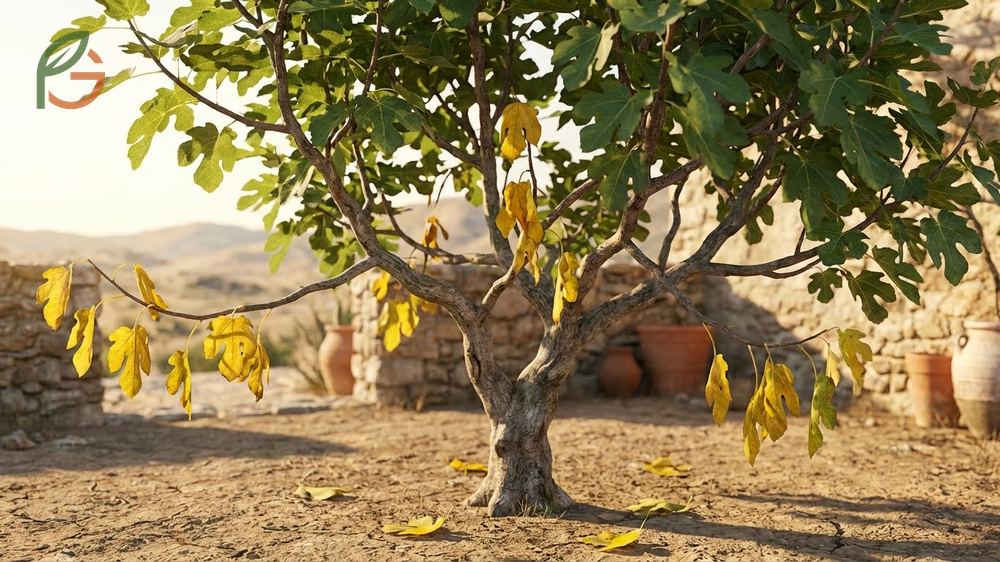
Yellow leaves on fig trees signal stress from environmental factors rather than disease in most cases. Water issues—either too much or too little—account for the majority of yellowing problems[1]. Fig trees originated in the Mediterranean region where conditions are warm and dry, so they’re adapted to specific moisture levels.
The key to diagnosing your fig tree’s yellow leaves lies in observing additional symptoms. Drooping leaves alongside yellowing indicate insufficient water, while pale green leaves without drooping suggest overwatering or nutrient issues[3]. Container-grown fig trees show symptoms faster because limited soil volume means rapid moisture changes.
Research on nutrient deficiencies shows nitrogen-starved fig trees display generalized chlorosis—the entire plant turns yellowish with stunted growth and fewer leaves[4]. This differs from localized yellowing caused by pests or diseases. Understanding these patterns helps you target the right solution.
Overwatering Symptoms in Fig Trees
Overwatered fig trees develop yellow leaves with browning edges but without the dramatic drooping seen in underwatered trees. The soil smells bad when waterlogged, and leaves turn pale green rather than vibrant dark green[3]. This happens because saturated soil lacks oxygen, creating anaerobic conditions.
Root rot develops when fig tree roots sit in waterlogged soil for extended periods. The fungus attacks thin, fibrous fig roots and prevents nutrient uptake even when nutrients are present[2]. This makes overwatering look identical to nutritional deficiency at first glance.
Container fig trees risk overwatering more than in-ground trees due to limited drainage. Check drainage holes aren’t blocked, and let soil dry between waterings until it’s dry to your second knuckle. During dormancy, fig trees need minimal water—overwatering dormant trees is especially harmful.
Important Note: Don’t assume yellow leaves always mean “add more water.” Check soil moisture first by inserting your finger 2-3 inches deep. If soil is wet or damp, overwatering is likely the culprit, not underwatering.
Underwatering Symptoms in Fig Trees
Underwatered fig trees show drooping leaves throughout the entire plant, not just top growth. Premature fruit drop occurs alongside halted growth[3]. The yellowing starts at leaf edges and progresses inward. Unlike overwatering, underwatered trees respond quickly to proper irrigation.
Fig trees need 1 to 1.5 inches of water weekly from rainfall or irrigation[5]. During hot periods, large established trees require 1-5 gallons daily. Container trees need daily watering in summer, especially when temperatures exceed 85°F (29°C). Sandy soils drain faster and require more frequent watering than clay soils.
Inconsistent watering schedules cause more problems than slightly less water overall. Missing even two days during a heatwave triggers stress symptoms rapidly. Water deeply and consistently rather than shallow, frequent irrigation—this encourages deep root growth and drought tolerance.
Nutrient Deficiency in Fig Trees
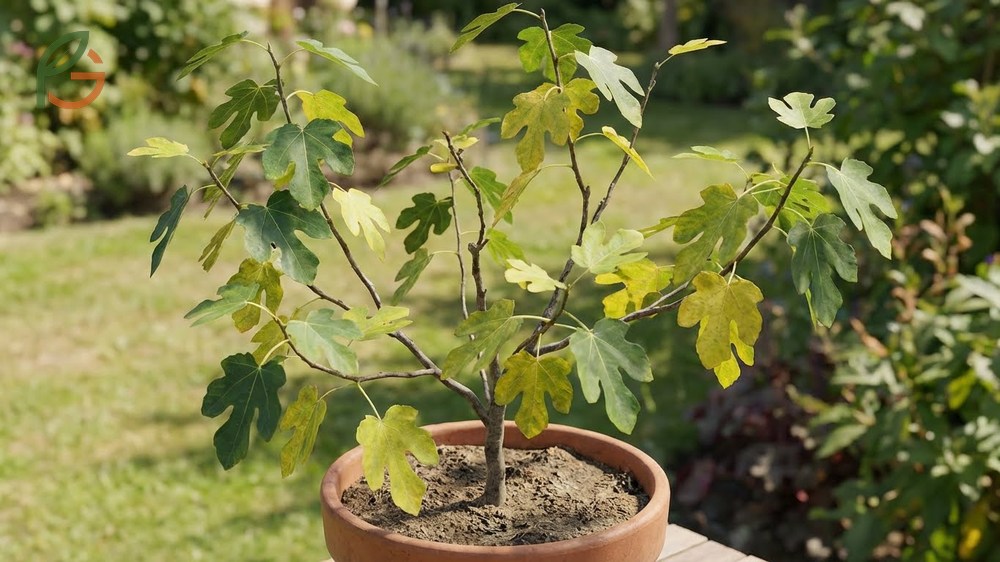
Nitrogen deficiency ranks as the most common nutritional cause of yellow fig tree leaves. Studies demonstrate that nitrogen-starved fig trees show slow growth, reduced size, thin branches, and fewer leaves[4]. The leaves present a light green color after 15 days, progressing to full chlorosis throughout the plant.
Nitrogen is essential for chloroplast production—the cell structures that make plants green. Without adequate nitrogen, fig trees can’t generate enough nutrients and energy[1]. Leaves turn yellow-green when environmental factors are normal but nitrogen is lacking.
Container fig trees experience nutritional deficiencies more frequently than in-ground trees. Limited soil volume means nutrients deplete faster. If your fig tree’s leaves are pale green rather than vibrant dark green, nutritional deficiency is likely the issue[2].
Nitrogen Deficiency Signs
Nitrogen-deficient fig trees display distinctive symptoms beyond yellow leaves. Plants stop growing almost completely, showing stunted, yellowish appearance with sparse foliage. Research shows affected trees produce fewer or no fruits[4]. This occurs because nitrogen and potassium are the nutrients required in greatest quantity by fig fruits.
Generalized chlorosis means the entire plant turns yellow, not just older or newer leaves. This differs from iron deficiency, which affects young leaves first, or magnesium deficiency, which starts with older leaves. The pattern helps identify which nutrient is missing.
Yellow leaves from nitrogen deficiency won’t turn green again once affected. Those leaves must fall and be replaced by new, healthy growth after you correct the deficiency[1]. Focus on preventing further damage rather than reversing existing symptoms.
How to Fix Nutrient Deficiency
Soil testing provides the most accurate diagnosis for in-ground fig trees. Tests reveal exactly which nutrients are deficient and how much to add. For container trees, testing every pot isn’t practical—use a well-balanced, slow-release fertilizer covering nitrogen, phosphorus, potassium, and micronutrients[2].
Yearly fertilization prevents nitrogen deficiency in most cases. Apply fertilizer in early spring as trees break dormancy. Don’t expect immediate greening—new growth will emerge healthy while old yellow leaves drop naturally.
- Conduct soil test to identify specific deficiencies before adding amendments
- Apply balanced fertilizer with nitrogen, phosphorus, and potassium in early spring
- Use slow-release formulas that feed trees for 6 months during growing season
- Avoid excess nitrogen which reduces fruit quality and delays maturity
- Monitor new leaf growth for vibrant dark green color indicating proper nutrition
- Reapply fertilizer according to soil test recommendations, typically annually
Fertilizer Warning: Excess nitrogen causes problems too—it reduces fruit quality, delays ripening, and increases susceptibility to cold damage. Follow soil test recommendations rather than adding fertilizer “just in case.”
Common Fig Tree Diseases
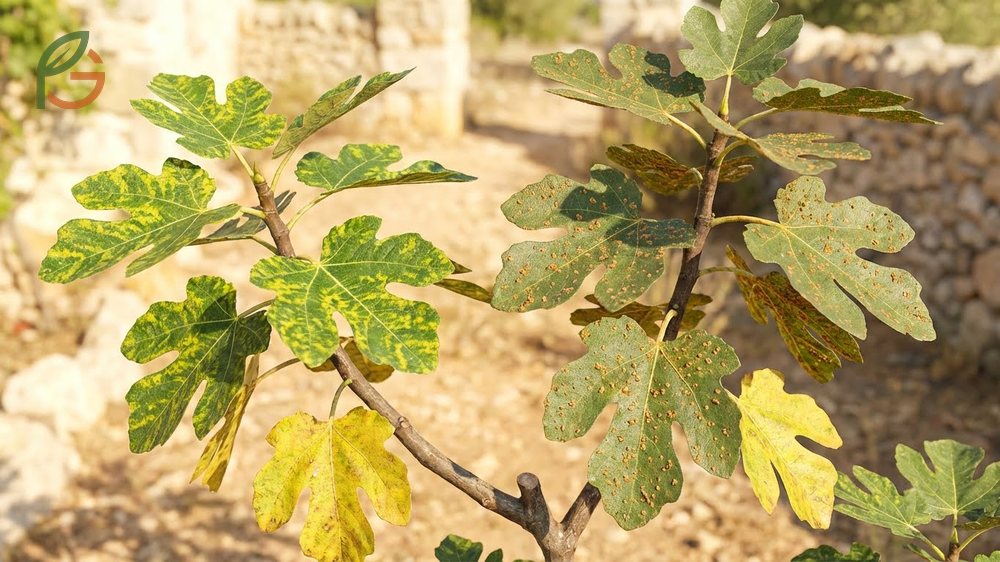
Fig trees face two primary diseases that cause yellow leaves: fig mosaic virus and fig rust fungus. These diseases create distinctive patterns that help differentiate them from watering or nutrient issues. Current research indicates most fig trees have been exposed to fig mosaic virus, which may display symptoms differently across varieties[6].
Disease symptoms often worsen during environmental stress. High summer temperatures exacerbate fig mosaic symptoms, while humid conditions favor fig rust development. Understanding the specific appearance of each disease helps target appropriate treatments.
Unlike nutrient deficiencies that affect the whole plant uniformly, viral and fungal diseases create localized patterns. Mosaic virus produces distinct yellow spots scattered across leaf surfaces. Fig rust creates rust-colored spots typically on lower, older leaves first before spreading upward.
Fig Mosaic Virus Symptoms
Fig mosaic virus creates light-green-to-yellow mosaic patterns that contrast sharply with normal green foliage. The margins of yellow spots blend gradually from light yellow into dark green healthy tissue[6]. As the season progresses, these mosaic spots turn to brown or black necrotic lesions.
The virus is transmitted by eriophyid mites—microscopic pests only 0.003 to 0.005 inches long with pale yellow, wedge-shaped bodies. Infected trees show slowed growth and reduced fruit yield. Premature fruit drop occurs in certain cultivars, with Black Mission figs suffering more severe damage than Kadota or Calimyrna varieties[6].
Recent studies reveal 11 other viruses and three viroids associate with mosaic symptoms. It’s unclear whether these are synergistic with fig mosaic virus or coincidentally present. High summer temperatures worsen symptoms—leaves become more distorted and mosaic patterns intensify during heat waves.
- No cure exists for fig mosaic virus once trees are infected
- Remove and destroy severely infected trees to prevent mite spread
- Control eriophyid mites with horticultural oil applications in early spring
- Choose resistant varieties like Ficus palmata for new plantings
- Maintain tree vigor through proper watering and fertilization
- Avoid propagating cuttings from infected trees
Fig Rust Fungus
Fig rust appears as rust-colored spots on leaves, typically starting on lower, older foliage before spreading upward. The fungal disease thrives in warm, humid conditions and spreads through wind-dispersed spores. Infected leaves turn yellow then brown before falling prematurely, reducing the tree’s photosynthetic capacity.
During fall, brown spots on fig leaves often indicate rust—a natural occurrence that accelerates leaf yellowing and drop. This seasonal rust isn’t cause for concern as trees will send out healthy growth the following spring. However, severe rust infections during the growing season compromise fruit quality and tree health.
Copper-based fungicides provide the most effective treatment for fig rust. Spray the tree and surrounding soil every 2-3 weeks during dormancy[7]. Starting treatment during dormancy helps prevent recurrence the following season, though it’s often too late for treatment after spotting rust on leaves.
This table compares symptoms, timing, severity, and treatment approaches for fig mosaic virus versus fig rust fungus across four key characteristics
| Characteristic | Fig Mosaic Virus | Fig Rust Fungus |
|---|---|---|
| Leaf Pattern | Yellow mosaic spots blending into green tissue[6] | Rust-colored spots on lower leaves spreading upward[7] |
| Transmission | Eriophyid mites (0.003-0.005 inches long)[6] | Wind-dispersed fungal spores in humid conditions |
| Seasonal Impact | Worsens in high summer heat, affects fruit production year-round | Common in fall, accelerates natural leaf drop |
| Treatment | No cure; remove infected trees, control mites | Copper fungicides every 2-3 weeks during dormancy[7] |
- Remove and burn infected leaves immediately to reduce spore reservoirs
- Prune trees to improve air circulation and reduce humidity around foliage
- Avoid overhead irrigation that keeps leaves wet and promotes spore germination
- Apply mulch around trees but keep it away from trunk to prevent moisture buildup
- Monitor trees regularly for early rust detection during humid weather
Pests Causing Fig Tree Yellow Leaves
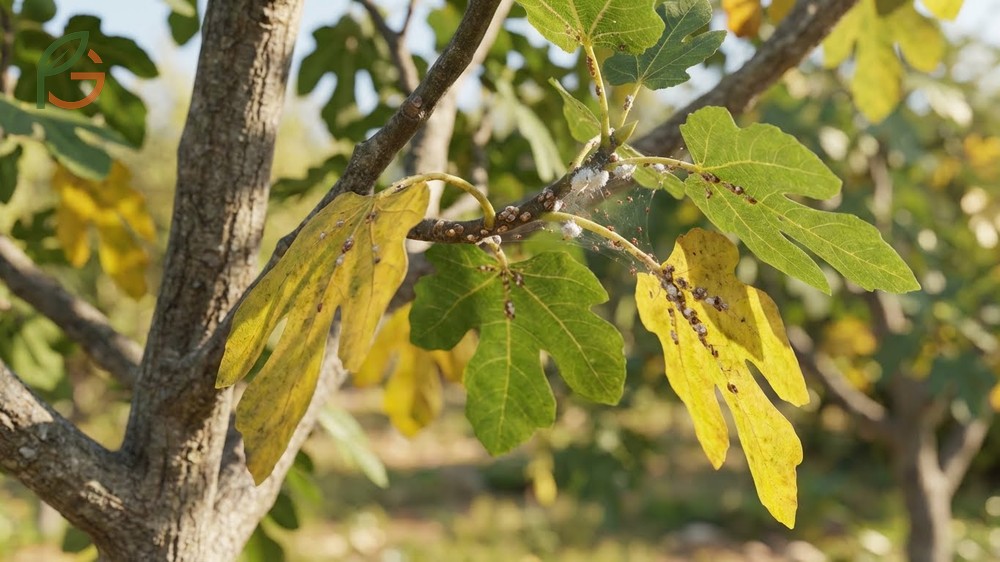
Insect infestations rarely cause yellow leaves on healthy fig trees, but scale insects, spider mites, and mealybugs can damage foliage enough to trigger yellowing and leaf drop[1]. These pests feed on plant sap, weakening trees and creating stress that manifests as yellow leaves. Early detection and treatment prevent serious damage.
Scale insects and mealybugs are among the most difficult pests to control on fig trees. They progress from egg to nymph to adult, with newly hatched crawlers being the most vulnerable stage. Crawlers lack waxy coatings and are susceptible to insecticides, making timing crucial for effective control.
Mealybugs like Ceroplastes rusci feed on phloem and produce honeydew that attracts ants and causes sooty mold. Sugar-loving ants protect mealybugs from natural predators and may transport them to new growth. This symbiotic relationship makes mealybug control challenging without addressing ant populations simultaneously.
Pest Management Tip: Inspect undersides of fig leaves weekly during the growing season. Early detection of small bugs, webbing, or sticky honeydew allows treatment before populations explode and cause widespread yellowing.
- Apply insecticidal soap or neem oil to control mealybugs and spider mites
- Use horticultural oil sprays in early spring to suffocate scale insects
- Target crawler stage for maximum insecticide effectiveness
- Control ant populations with baits to reduce mealybug protection
- Encourage beneficial insects like ladybugs and lacewings
- Prune heavily infested branches and dispose of them away from garden
- Reapply treatments every 7-14 days for several weeks to eliminate all life stages
Do Fig Trees Lose Their Leaves
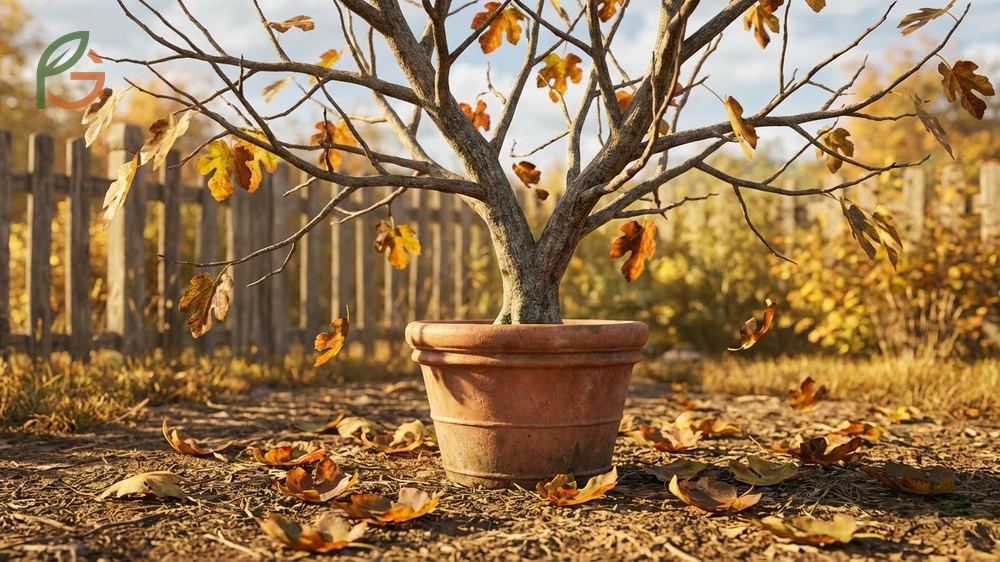
Fig trees are deciduous, meaning they naturally lose their leaves in winter regardless of health. This normal process often worries new fig growers who see yellow leaves in fall. When solar energy diminishes during autumn, fig trees can’t maintain chlorophyll production—leaves turn yellow, then brown, then fall[8].
Fig trees grow best in USDA hardiness zones 7-12, with some extra-hardy varieties like Chicago Hardy surviving zone 6. Most established fig trees tolerate temperatures down to 15-20°F (-9 to -7°C)[8]. Even if cold winters kill top growth, roots usually survive and send up new shoots in spring.
Don’t confuse natural fall leaf drop with stress-induced yellowing during the growing season. Fall yellowing happens uniformly across the tree as temperatures cool. Stress yellowing occurs on specific leaves or sections even during warm weather. Context matters—yellow leaves in October are normal; yellow leaves in June signal problems.
From My Experience: My cousin in Puebla, Mexico grows three Brown Turkey fig trees planted in March 2023. His trees lost all leaves by late November despite healthy summer growth, which initially worried him. The trees leafed out vigorously the following April with no issues—confirming this was normal deciduous behavior, not disease or stress.
- Fall leaf yellowing: gradual, uniform across entire tree, occurs as temperatures drop below 50°F (10°C)
- Stress yellowing: sudden, patchy, occurs during growing season with normal temperatures
- Winter dormancy: all leaves drop by late fall; branches remain alive and green under bark
- Spring regrowth: new bright green leaves emerge from buds in early to mid-spring
- Cold damage: branches turn brown/black; bark peels; no green tissue visible under bark
Conclusion
The evidence is clear: fig tree leaves turning yellow stems from identifiable, fixable causes in most cases. Research demonstrates that proper watering schedules, adequate nitrogen levels, and disease prevention keep fig trees vibrant and productive. Check soil moisture before adjusting irrigation, conduct soil tests before adding fertilizer, and monitor for pests during weekly inspections.
Current guidance emphasizes preventive care over reactive treatments—consistent watering, yearly fertilization, and good air circulation prevent most yellowing problems. FruitGarden synthesizes agricultural research to help you maintain healthy fig trees through science-backed practices rather than guesswork.
Frequently Asked Questions
Why is my fig tree leaves turning yellow?
Fig tree leaves turn yellow primarily due to improper watering (too much or too little), nitrogen deficiency, or diseases like fig rust. Studies show overwatering causes pale green leaves without drooping, while underwatering produces drooping yellow leaves. Nitrogen deficiency creates generalized chlorosis throughout the entire plant.
What causes fig tree fruit turning black and falling off?
Fig fruit turns black and falls prematurely due to fig mosaic virus, which affects fruit development and causes early drop in susceptible cultivars. Fruit souring from yeast infections introduced by dried fruit beetles also causes figs to ferment, turn dark, and fall. Stress from drought or nutrient deficiency triggers fruit drop as trees prioritize survival over reproduction.
How much water does a fig tree need to prevent yellow leaves?
Fig trees need 1 to 1.5 inches of water weekly from rainfall or irrigation to prevent yellowing. Large established trees require 1-5 gallons daily during hot periods, while container trees need daily watering when temperatures exceed 85°F (29°C). Water deeply but allow soil to dry slightly between waterings to prevent root rot.
Can I fix yellow fig tree leaves or will they stay yellow?
Yellow fig leaves won’t turn green again—they must fall and be replaced by new growth after you correct the underlying problem. Research shows once chlorophyll breaks down, it doesn’t regenerate in affected leaves. Focus on preventing further yellowing through proper watering, fertilization, or pest control rather than trying to reverse existing damage.
What does fig mosaic virus look like on leaves?
Fig mosaic virus creates distinct light-green-to-yellow mosaic patterns scattered across leaf surfaces, with margins blending gradually from light yellow into dark green healthy tissue. As seasons progress, mosaic spots turn brown or black with rust-colored bands along borders. The virus is transmitted by microscopic eriophyid mites and worsens during high summer temperatures.
Do fig trees naturally lose leaves in winter?
Yes, fig trees are deciduous and naturally lose all leaves in winter as solar energy diminishes. Leaves turn yellow then brown before falling when temperatures cool—this is normal, not disease. Most fig trees tolerate temperatures down to 15-20°F (-9 to -7°C) and regrow leaves in spring even if winter kills top growth.
How do I treat small bugs on my fig tree causing yellow leaves?
Treat scale insects, mealybugs, and spider mites with insecticidal soap or neem oil applied every 7-14 days for several weeks. Target the crawler stage in spring for maximum effectiveness. Control ant populations simultaneously since ants protect mealybugs from predators. Encourage beneficial insects like ladybugs that feed on these pests naturally.





