
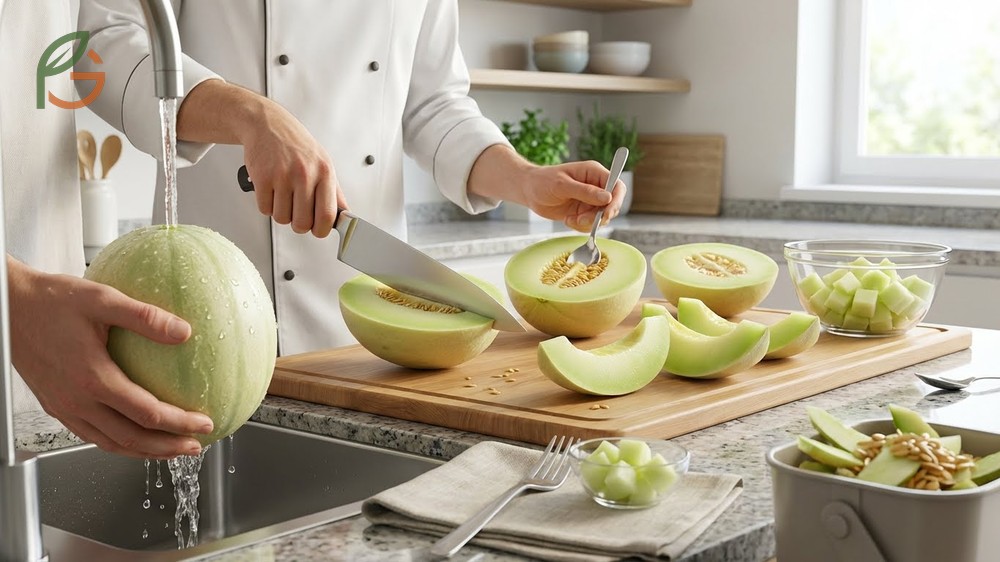
How to cut a honeydew melon? Start by rinsing the melon, slicing it in half lengthwise through the blossom end, scooping out seeds with a spoon, then cutting into wedges or cubes before removing the rind. Research shows this method preserves the most fruit and creates clean, consistent pieces for serving or storage. FruitGarden compiles techniques from professional chefs and USDA guidance to help you master this essential kitchen skill.
Quick Answer
- Rinse the melon in cool water before cutting to remove bacteria[1]
- Use a large chef’s knife or serrated knife (8-11 inches blade length works best)[2]
- Store cut honeydew in airtight containers for 3-4 days in the fridge[3]
- One cup of honeydew contains 61 calories and 34mg vitamin C[4]
How to Cut a Honeydew Melon
Cutting a honeydew doesn’t have to be difficult. The smooth, slick rind can be tricky, but the right technique makes it manageable.
Start with a ripe melon that’s slightly soft at the blossom end. You’ll need a stable cutting board—non-slip is best—and a sharp, heavy knife.
Most people find the lengthwise method easiest because it follows the melon’s natural structure. This creates a flat, stable base for additional cuts.
Preparing the Melon
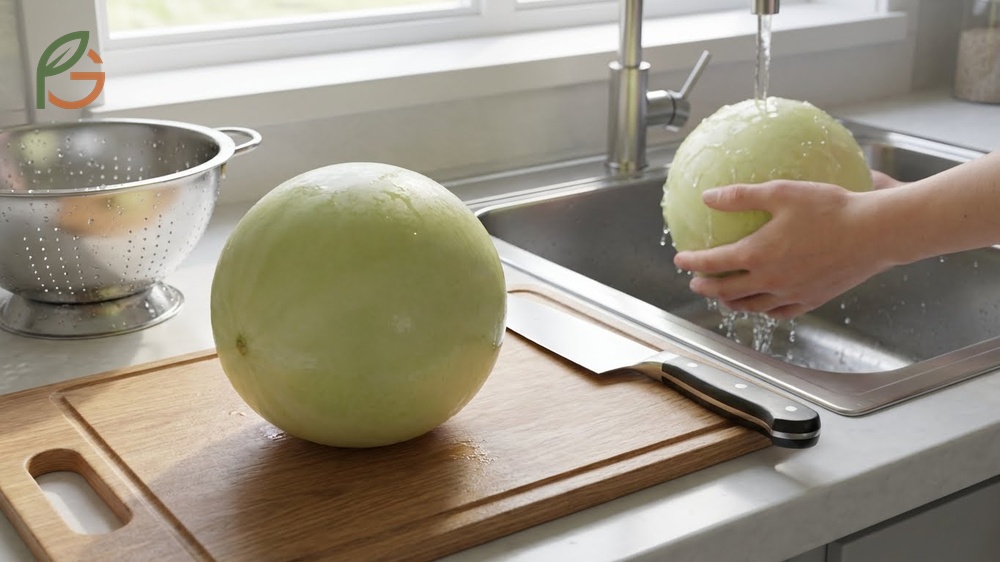
Rinse your honeydew thoroughly under cool water before cutting[1]. This removes dirt and bacteria from the surface that could transfer to the flesh.
Dry the melon with a clean towel. A wet surface makes the melon harder to grip and increases slipping risk.
From My Experience: My cousin in Guadalajara, Mexico grew honeydews last summer and taught me to tap the melon gently—a hollow sound means it’s ripe. She also checks for a sweet aroma at the blossom end, which she learned from her grandmother’s 40-year garden.
Halving and Seeding
Place the melon on your cutting board. Cut through the blossom end lengthwise with a large, sharp knife[1].
Avoid sawing motions—they squeeze out juice and create messy cuts[5]. Use steady downward pressure instead.
Scoop out the seeds and membranes with a spoon, holding each half over a bowl[1]. Remove all the stringy bits in the center cavity.
Important Note: The flat cut side creates a stable base for additional slicing. Always place this side down to prevent rolling.
Cutting into Wedges or Cubes
For wedges, cut each half lengthwise into quarters. Then slice each quarter into 2-3 wedges depending on melon size[1].
Remove the rind by sliding a paring knife between the flesh and the green outer layer. Look for where the pale flesh meets the darker green—that’s your cutting line[1].
For cubes, slice the rind off first in 1-2 inch strips from the halved melon[5]. Cut the remaining flesh into slices, then dice into cubes.
- Cut halves into quarters lengthwise for easier handling
- Slice quarters into 2-3 wedges based on melon size
- Use a paring knife to separate flesh from rind along the color change line
- For cubes, remove all rind first, then slice and dice the flesh
- Keep pieces uniform in size for even presentation and eating
Best Knife for Cutting Melon
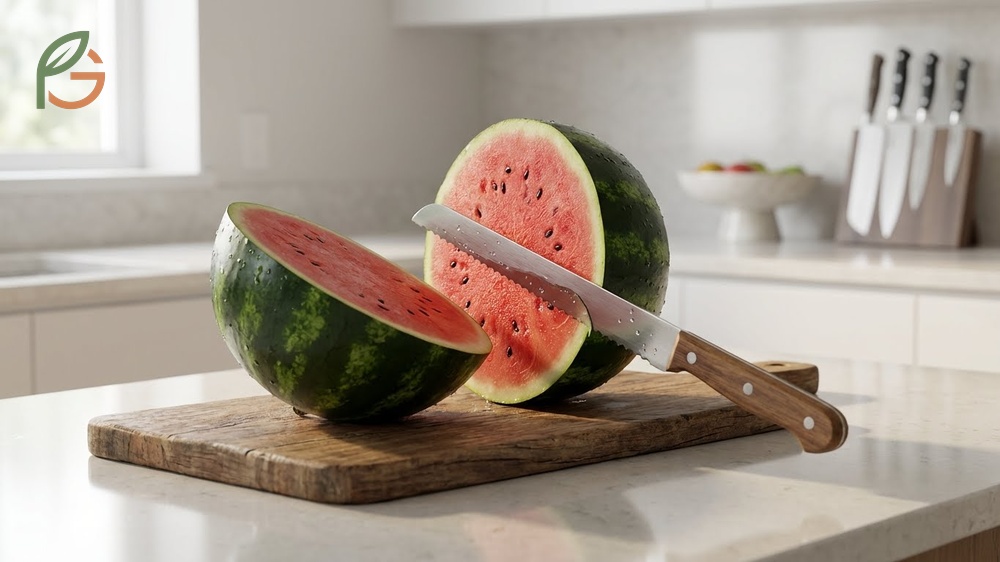
The right knife transforms melon cutting from a wrestling match to a simple task. Professional chefs recommend either serrated or chef’s knives for melons.
Blade length matters—you want 8-11 inches to cut through the entire melon in one motion. Shorter knives require multiple cuts and create uneven pieces.
Serrated vs Chef’s Knife
Serrated knives grip the tough rind without slipping. Chef Scott Swartz of The Culinary Institute of America recommends serrated edges because they work like a saw through the exterior[2].
Chef’s knives create cleaner cuts through the flesh but need more force for the rind[2]. They’re best when you’ve already removed the rind and need precision cuts.
A friend in Oaxaca, Mexico who runs a fruit stand uses both—serrated for halving, chef’s knife for cubing. He processes 30-40 melons daily using this two-knife method.
Knife Features to Look For
German stainless steel blades maintain sharpness longer than cheaper alternatives. Look for fully forged construction rather than stamped blades.
Ergonomic handles reduce hand fatigue during extended cutting sessions. This matters if you’re prepping fruit for parties or meal prep.
- 8-11 inch blade length for single-pass cuts through large melons
- Serrated edge for initial halving and quartering
- Sharp chef’s knife for precision cubing and wedge cutting
- Fully forged construction for better balance and durability
- Ergonomic handle with secure grip, especially when wet
- Rust-resistant stainless steel that holds an edge
Safety Tip: Always use a non-slip cutting board when cutting melons. The smooth rind can shift unexpectedly on regular surfaces.
How to Remove Honeydew Seeds
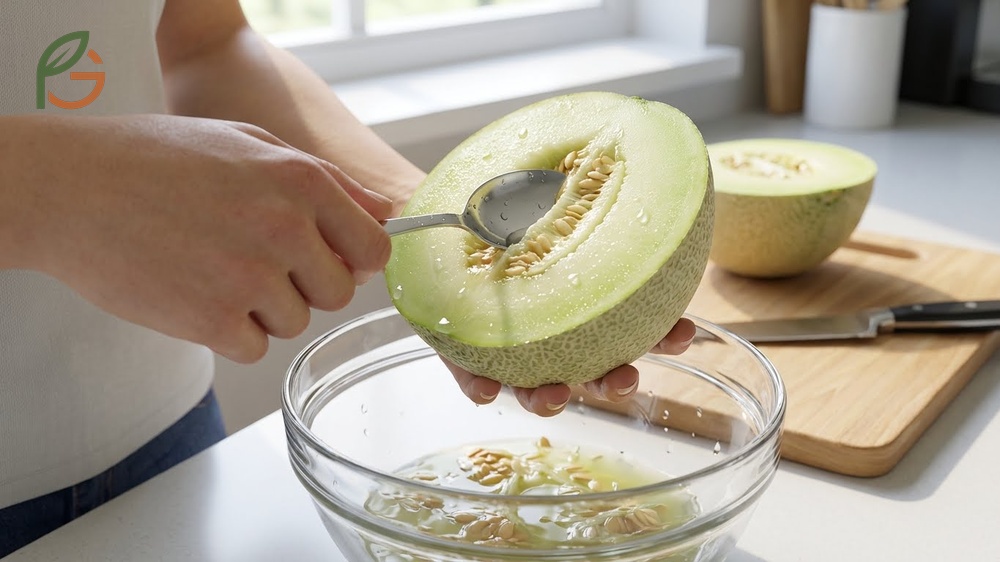
Removing honeydew seeds is straightforward once you’ve halved the melon. The seed cavity is concentrated in the center, making it easy to access.
Use a regular spoon—no special tools needed. Hold the melon half over a bowl to catch seeds and juice[1].
Scrape firmly along the cavity walls. You’re removing not just seeds but also the stringy membranes attached to them[5].
Some seeds stick to the flesh near the cavity edges. Make a second pass around the perimeter to catch these stragglers.
Don’t worry about getting every single seed—small pieces won’t affect taste or texture. Focus on removing the bulk of seeds and all visible membrane.
- Cut melon in half lengthwise to expose seed cavity
- Hold each half over a bowl, cut-side down at an angle
- Scoop out seeds with a regular tablespoon in firm strokes
- Remove all stringy membranes attached to seeds
- Make a second pass around cavity edges to catch remaining seeds
Making Melon Balls
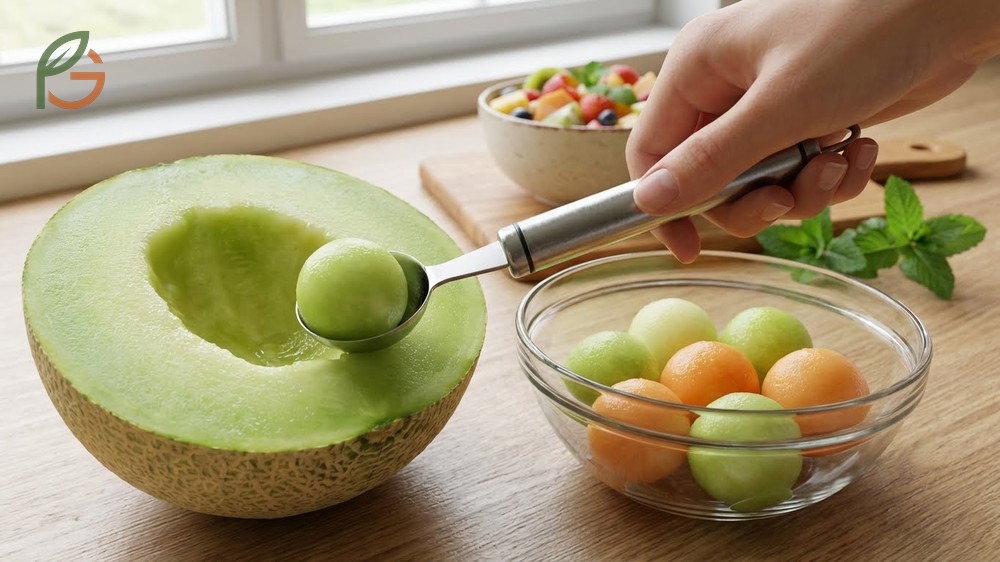
Melon balls add visual appeal to fruit salads and desserts. You’ll need a melon baller tool—a small scoop with a sharp-edged bowl and a hole in the center.
The hole in the bowl allows air and juice to flow through when scooping. This creates perfectly round balls without crushing the fruit[6].
Press the melon baller deep into the honeydew flesh. Rotate it in a complete circle to create a sphere[6].
Sharp edges on the scoop are essential for clean cuts. Metal ballers work better than plastic versions, especially for slightly firm melons[6].
Continue scooping in a grid pattern across the melon half. You’ll get 20-30 balls from a medium honeydew, depending on baller size.
Pro Tip: If you don’t have a melon baller, a small ice cream scoop or rounded measuring spoon works as a substitute.
Serving Ideas for Honeydew
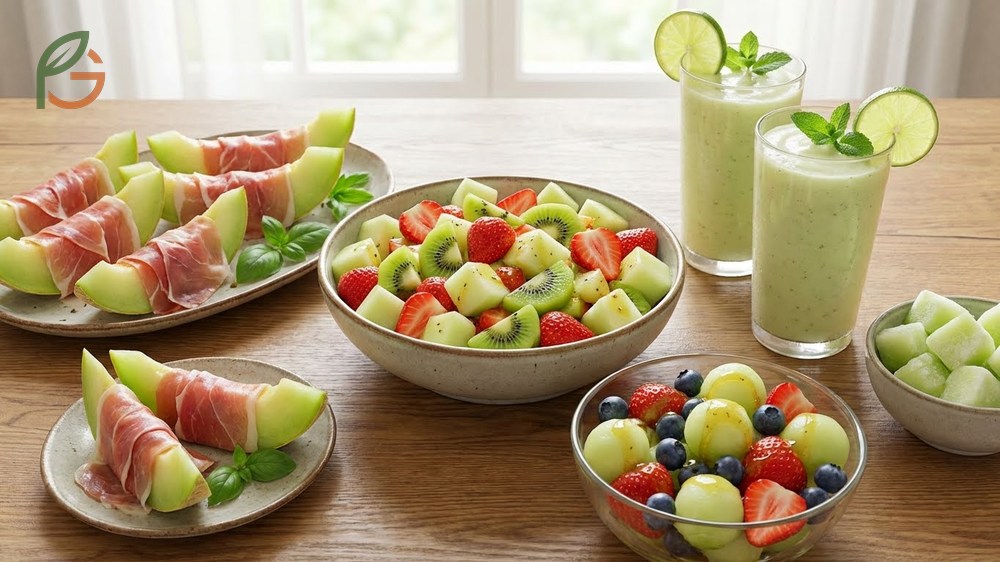
Honeydew’s mild sweetness pairs well with bold flavors. Research shows it complements acidic fruits like strawberries and kiwi in mixed salads.
Serve honeydew cubes with prosciutto for a classic Italian appetizer. The salty meat contrasts beautifully with the sweet melon.
Blend frozen honeydew chunks into smoothies for a creamy texture without dairy. Add lime juice and mint for a refreshing drink.
- Mix honeydew balls with strawberries, blueberries, and lime-honey dressing for fruit salad
- Wrap honeydew wedges with thinly sliced prosciutto as an appetizer
- Blend frozen cubes with lime juice and mint for a no-sugar-added smoothie
- Thread honeydew cubes on skewers with mozzarella and basil for caprese-style kebabs
- Dice honeydew into salsas for fish tacos—pairs well with cilantro and jalapeño
- Add honeydew chunks to overnight oats with Greek yogurt for breakfast
One cup of honeydew provides 61 calories and 34mg of vitamin C—more than half the daily recommended intake[4]. This makes it a nutrient-dense choice for snacking.
The melon also contains potassium, which supports heart health and muscle function. At 8mg per cup, it contributes to daily mineral needs[4].
Storing Cut Melon in Fridge
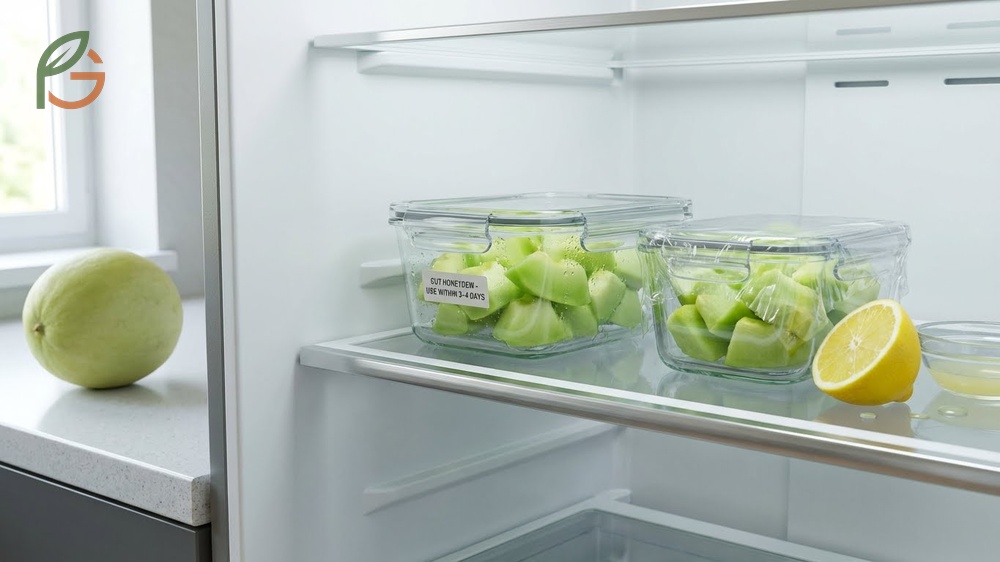
Cut honeydew stays fresh for 3-4 days when stored properly in the refrigerator[3]. After that, texture degrades and flavor fades.
Use airtight containers or wrap pieces tightly in plastic wrap. This prevents the melon from absorbing odors from other foods[3].
Sprinkle lemon juice on cut pieces to extend freshness by one extra day. The acid slows browning and maintains color[3].
Don’t store uncut honeydew in the fridge—room temperature allows the fruit to develop full sweetness. Only refrigerate after cutting.
For longer storage, freeze honeydew cubes on a tray, then transfer to freezer bags. Frozen honeydew lasts 2 months and works great in smoothies[3].
- Store cut honeydew in airtight containers to prevent odor absorption
- Refrigerate immediately after cutting—don’t leave at room temperature
- Use within 3-4 days for best flavor and texture
- Sprinkle with lemon juice to extend freshness by one day
- Freeze cubed honeydew for up to 2 months for smoothies
- Discard if melon becomes slimy or develops a sour smell
Storage Warning: Never freeze whole honeydew melons—they turn mushy when thawed. Only freeze cut, cubed pieces.
Conclusion
The evidence is clear: how to cut a honeydew melon comes down to three simple steps—rinse thoroughly, halve lengthwise through the blossom end, and remove seeds before slicing into your preferred shape. Current guidance emphasizes using sharp, appropriate knives and proper storage techniques to maximize freshness and minimize waste.
Whether you’re preparing fruit salad, making melon balls for a party, or just enjoying fresh honeydew as a snack, these techniques ensure consistent results. FruitGarden provides research-based methods to help home cooks master essential food preparation skills for all types of fresh produce.
Frequently Asked Questions
Do you peel honeydew melon before cutting?
No, you don’t peel honeydew before cutting—you cut first, then remove the rind. Halve the melon, scoop out seeds, then slice into wedges or cubes before separating the flesh from the rind with a knife. This method is safer and more efficient than trying to peel a whole, round melon.
How do you know when a honeydew melon is ripe enough to cut?
A ripe honeydew feels slightly soft at the blossom end when pressed gently and gives off a sweet, floral aroma. The rind changes from bright green to a creamy yellow-white color. Avoid melons with soft spots or cracks, which indicate overripeness.
Can you cut honeydew ahead of time for meal prep?
Yes, you can cut honeydew up to 3-4 days ahead when stored in airtight containers in the refrigerator. Sprinkle lemon juice on the pieces to maintain freshness and prevent browning. This makes honeydew perfect for weekly meal prep and grab-and-go snacks.
What’s the easiest way to cut honeydew for kids?
Cut honeydew into thick wedges with the rind still attached—kids can hold the rind like a handle and eat the flesh. Alternatively, cut small cubes and serve with toothpicks for easy handling. Melon balls also work well for younger children who might struggle with larger pieces.
Should you wash honeydew before cutting even though you remove the rind?
Yes, always wash honeydew before cutting because bacteria on the rind transfers to the flesh when your knife passes through. Rinse the entire melon under cool running water and dry with a clean towel before making any cuts.
How many servings does one honeydew melon yield?
One medium honeydew melon (about 5-6 pounds) yields approximately 8-10 one-cup servings of cut fruit. This makes it cost-effective for families and gatherings. The exact yield depends on how much rind you remove and the size of your cuts.
Can you use a mandoline slicer to cut honeydew?
It’s not recommended to use a mandoline for initial honeydew cutting due to the melon’s round shape and tough rind. However, once you’ve removed the rind and created flat surfaces, you can carefully use a mandoline for thin, uniform slices if needed for specific recipes.





