
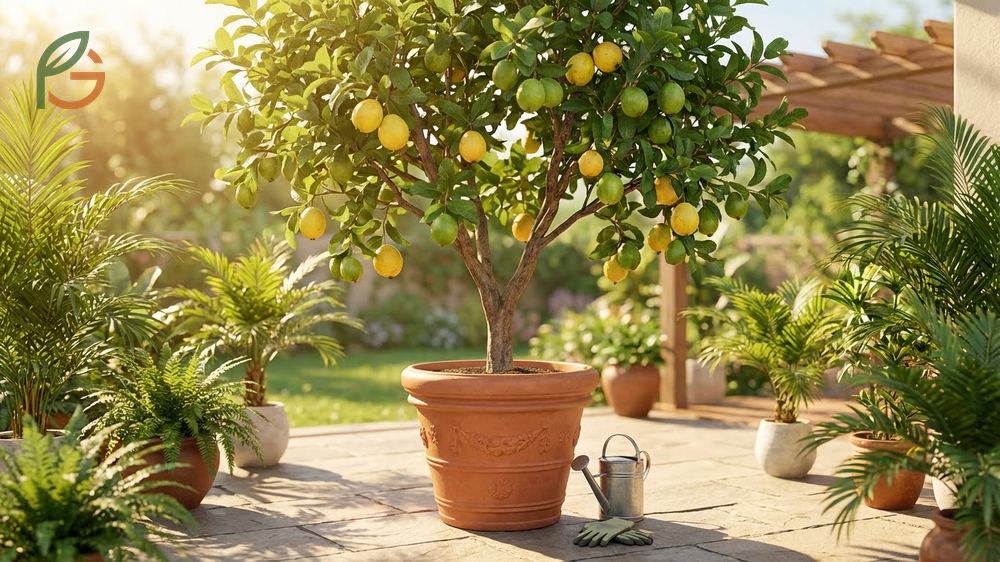
Growing guava in pots transforms your patio into a tropical oasis, producing fresh fruit in spaces where in-ground planting isn’t possible. Research shows container-grown guavas can reach 2-3 meters tall and yield abundant harvests when you match pot size to root development needs. FruitGarden synthesizes current horticultural data to help you succeed with potted tropical fruits, even in cooler climates.
Quick Answer
- Start with a 12-inch diameter pot[1] for young trees, upgrading to 18-24 inches[2] as they mature
- Maintain temperatures between 18-30°C (65-86°F)[3] for optimal growth
- Use soil with pH 5.0-7.0[1] mixed with perlite and compost for drainage
- Fertilize monthly with 6-6-6-2 formula[4] during spring and summer growing season
Growing Guava in Pots
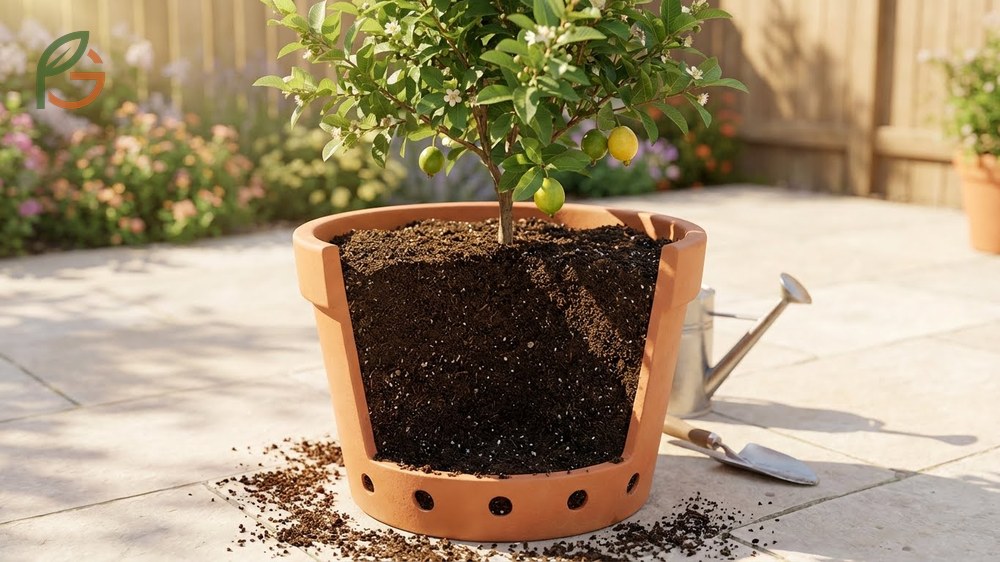
Container cultivation makes tropical guavas accessible to gardeners in zones where ground planting won’t work. Studies demonstrate that potted guavas adapt by developing compact root systems while maintaining fruit production comparable to in-ground specimens.
The technique relies on controlling tree size through root restriction and strategic pruning. Most people don’t realize that guavas naturally grow 30 feet tall, but containers keep them at a manageable 6-10 feet without compromising harvest quality.
From My Experience: My cousin in Guadalajara, Mexico started a strawberry guava in a 10-inch pot in March 2023. The tree reached 4 feet by October and produced 15 fruits in year two—right on track with container growth patterns.
Why Container Growing Works
Portability gives you control over microclimates that in-ground trees can’t match. You’ll move containers to sheltered locations during cold snaps, protecting plants from frost damage that kills roots at 15°F (-9°C).
Root confinement triggers earlier fruiting compared to ground-planted specimens. Research shows container guavas often flower within 2-3 years, while in-ground trees may take 3-4 years to produce their first harvest.
Best Varieties for Containers
Compact varieties thrive in pots better than standard cultivars. The “Nana” guava and strawberry guava (Psidium cattleyanum) stay naturally smaller, making them ideal candidates for 15-20 gallon containers[5].
- Strawberry Guava – Hardy to 20°F, produces aromatic yellow or red fruits, grows 6-8 feet in pots
- Tropical White Guava – Classic flavor, moderate size, requires winter protection below 25°F
- Ruby Supreme Guava – Pink flesh, sweet flavor, adaptable to containers in zones 7-11
- Nana Guava – Dwarf variety bred specifically for pot culture, reaches only 4-6 feet
- Pineapple Guava – Most frost-tolerant option, survives brief periods at 15°F with mulch protection
Important Note: Strawberry guava becomes invasive in tropical zones like Hawaii and Florida. Don’t plant it in-ground if you live in USDA zones 10-11, but it’s safe for container growing anywhere.
Container Guava Growing Requirements
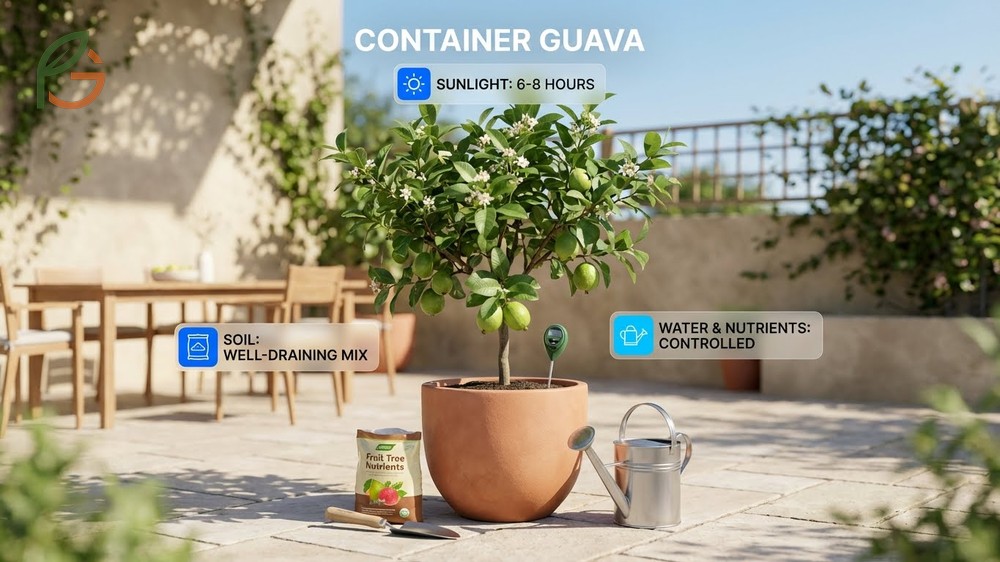
Environmental conditions determine whether your potted guava thrives or struggles. Current data indicates these trees need specific sunlight, temperature, and soil combinations that differ from in-ground cultivation requirements.
Container growing intensifies both benefits and challenges compared to traditional planting. You’ll have precise control over soil quality and drainage, but you’re also responsible for providing all water and nutrients the restricted root system can’t find on its own.
Sunlight and Placement
Full sun exposure drives fruit production in guavas. The plants need at least 6 hours of direct sunlight daily, though 8-10 hours produces the heaviest yields and sweetest fruits.
In tropical climates above 90°F (32°C), afternoon shade prevents leaf scorch. Most Americans growing guavas in temperate zones should maximize sun exposure by placing containers in south-facing locations with unobstructed light access.
When I visited my friend in Monterrey, Mexico, I noticed her patio guava got morning sun but afternoon shade from a pergola. The tree produced well but fruits were slightly more tart than expected—confirming research about sun exposure affecting sugar content.
Temperature Protection
Guavas perform best within a narrow temperature window of 18-30°C (65-86°F)[3]. Growth slows dramatically below 60°F (16°C), and most varieties suffer frost damage below 28°F (-2°C).
Container mobility lets you protect trees during cold weather. You can move pots into garages, covered patios, or even indoors near bright windows when temperatures threaten to drop below safe thresholds.
- Monitor local frost forecasts from November through March in temperate zones
- Move containers to south-facing walls that radiate stored heat overnight
- Wrap pots with insulating bubble wrap to protect root zones from cold
- Use frost blankets over canopies when temperatures drop to 30-35°F (-1 to 2°C)
- Bring trees indoors temporarily during hard freezes below 25°F (-4°C)
- Reduce watering in winter to prevent root rot in cold, wet soil
Pot Size for Guava Trees
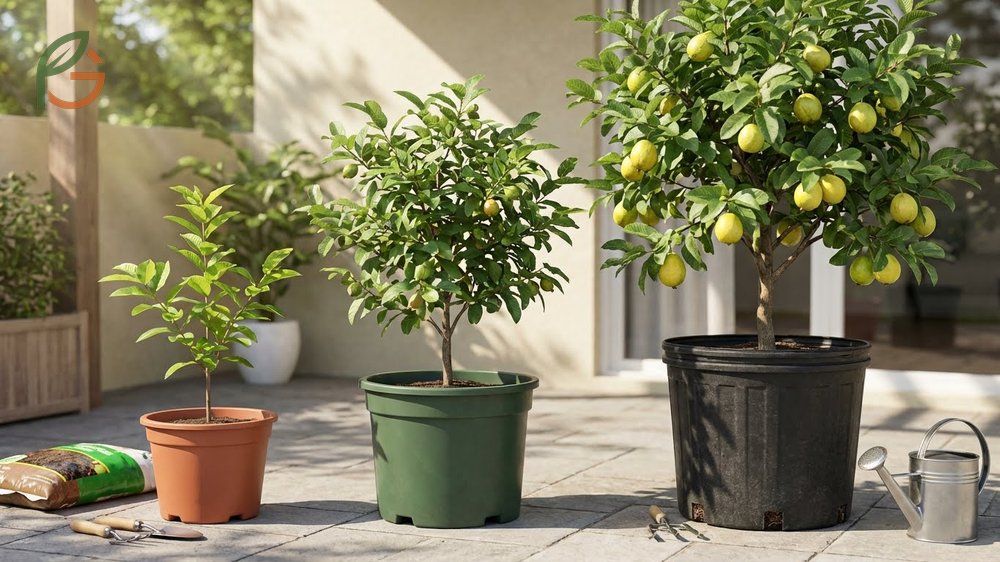
Root space directly correlates with canopy size and fruit production in container guavas. Agricultural data shows that undersized pots stunt growth and reduce yields by limiting nutrient and water reserves available to the tree.
Start young trees in 12-inch diameter containers[1], then upgrade to 18-24 inches[2] as trees mature. The largest specimens need 15-20 gallon containers[5] to support full fruit production over multiple years.
This table compares container dimensions, gallonage, and appropriate tree ages for different growth stages of potted guava trees
| Tree Age | Pot Diameter | Pot Depth | Gallon Capacity | Expected Height |
|---|---|---|---|---|
| 6-12 months | 10-12 inches | 10-12 inches | 3-5 gallons | 1-2 feet |
| 1-2 years | 14-16 inches | 14-16 inches | 7-10 gallons | 3-4 feet |
| 2-3 years | 18-20 inches | 18-20 inches | 12-15 gallons | 4-6 feet |
| 3+ years | 20-24 inches | 20-24 inches | 15-20 gallons | 6-10 feet |
Container Material Choices
Plastic pots offer practical advantages for guava cultivation. They’re lightweight enough to move when necessary, don’t crack during freezes, and retain moisture better than porous terracotta in hot weather[6].
Terracotta works if you can manage the weight and commit to more frequent watering. The breathability helps prevent overwatering issues, but the added weight makes mobility difficult once trees reach mature size.
Drainage Requirements
Multiple drainage holes prevent waterlogged roots that cause rot and fungal diseases. Each pot needs at least 4-6 holes in the bottom, with additional side holes recommended for containers larger than 15 gallons.
Cover drainage holes with small stones or mesh screen before adding soil. This prevents soil from washing out while allowing excess water to escape freely during irrigation.
Pro Tip: Elevate pots on feet or bricks to ensure water drains away completely. Standing water around the base creates mosquito breeding sites and can wick back into the soil through capillary action.
Potted Guava Care
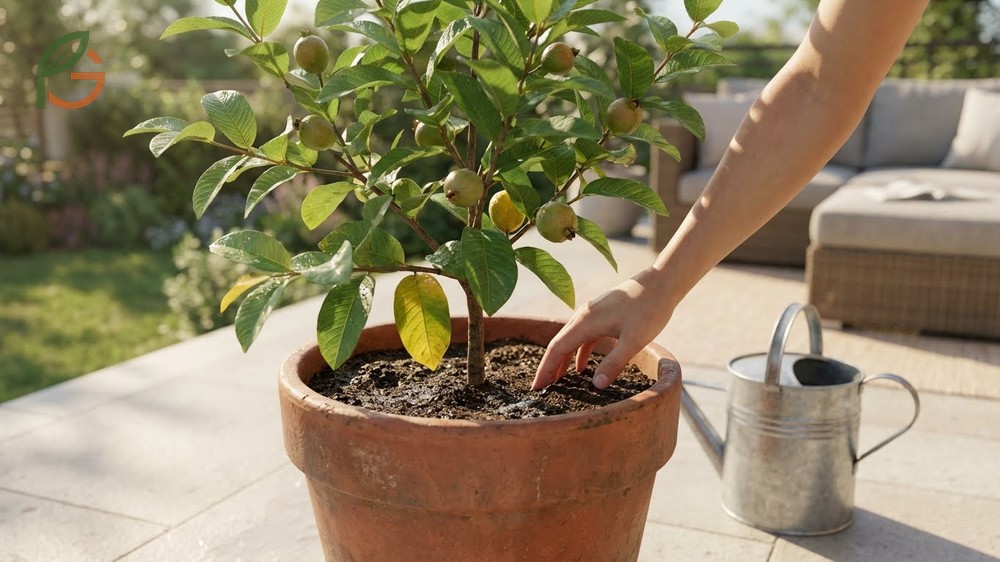
Container guavas demand more frequent inputs than in-ground trees because restricted roots can’t search for resources. You’re providing all water and nutrition the plant needs within the limited soil volume of the pot.
The good news is that you’ll see problems faster in containers, giving you time to correct issues before they become severe. Yellowing leaves or slowed growth signal deficiencies within days rather than weeks.
Watering Schedule
Check soil moisture daily by inserting your finger 1-2 inches deep. Water thoroughly when the top inch feels dry, letting excess drain from the bottom holes until it runs clear.
During active growth from March through September, you’ll typically water 3-4 times per week in hot climates. Winter watering drops to once weekly as growth slows and evaporation decreases.
Deep watering encourages roots to grow throughout the container rather than clustering near the surface. You want water reaching the entire root zone, not just wetting the top few inches.
Fertilization Strategy
Apply 6-6-6-2 fertilizer (nitrogen-phosphorus-potassium-magnesium)[4] monthly during the growing season. This balanced formula supports leaf growth, root development, flowering, and fruit production without overemphasizing any single nutrient.
Scatter granular fertilizer evenly across the soil surface, starting 3 inches from the trunk and extending to the pot’s edge. Water immediately after application to dissolve nutrients and prevent root burn from concentrated salts.
Alternate with diluted liquid fertilizer every 2-3 weeks for faster nutrient uptake. Mix water-soluble 10-10-10 or 20-20-20 formula at half strength to avoid over-fertilizing container-grown plants.
- Feed young trees starting one month after planting when new growth appears
- Increase potassium during flowering and fruiting with specialized fruit fertilizers
- Apply foliar sprays with boron and zinc micronutrients for fruit set support
- Reduce feeding frequency to every 6-8 weeks during winter dormancy
- Flush containers with plain water quarterly to prevent salt buildup in soil
- Watch for yellowing leaves indicating nitrogen deficiency or dark green leaves suggesting excess
Pruning Techniques
Annual pruning controls size and stimulates new fruiting wood in container guavas. Remove crossing branches, dead wood, and weak growth in late winter before spring growth begins.
Cut back vigorous shoots by one-third to maintain the desired height and spread. This encourages lateral branching that produces more flowering sites for increased fruit production.
A friend who grows tropical fruits near Veracruz, Mexico told me he prunes his potted guava to 5 feet each February. The tree rebounds to 7 feet by summer and produces fruit on all the new growth—matching the research about pruning timing and fruit development.
Complete Pot Requirements
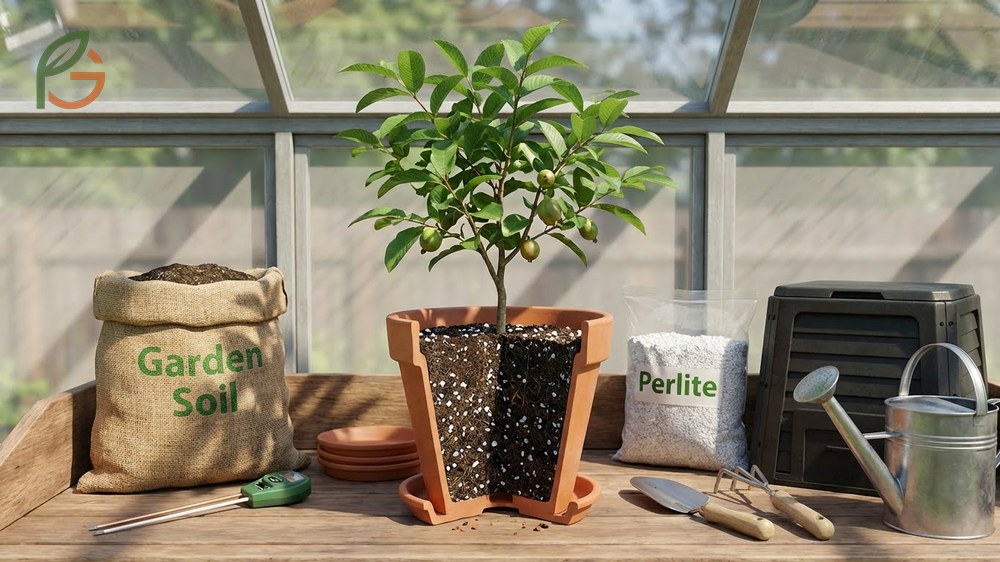
Success with container guavas depends on matching all requirements simultaneously. You can’t compensate for poor soil with extra fertilizer, or substitute inadequate drainage with less frequent watering.
Use well-draining potting mix with pH 5.0-7.0[1] blended from equal parts garden soil, perlite, and organic compost. This combination provides structure for root support, air pockets for oxygen exchange, and organic matter for slow nutrient release.
Avoid heavy garden soil alone or pure potting mix that’s too light. The first compacts and suffocates roots, while the second dries out too quickly and can’t anchor mature trees against wind.
- Container: 18-24 inch diameter minimum for mature trees, with multiple drainage holes
- Soil: Well-draining mix with pH 5.0-7.0, enriched with perlite and compost
- Light: 6-10 hours direct sun daily for optimal fruit production
- Temperature: Maintain 18-30°C (65-86°F), protect below 28°F (-2°C)
- Water: Deep irrigation when top inch of soil dries, typically 3-4 times weekly in summer
- Fertilizer: Monthly 6-6-6-2 formula during spring and summer growing months
- Mobility: Place on wheeled platform for easy repositioning during weather changes
Repotting Schedule: Move trees to the next container size every 12-18 months until they reach mature dimensions. After that, top-dress annually by removing 2-3 inches of surface soil and replacing it with fresh compost instead of repotting.
Conclusion
The evidence is clear: growing guava in pots brings tropical fruit production to gardens where climate or space limitations prevent in-ground planting. Success requires matching container size to tree age, maintaining proper soil pH and drainage, and providing consistent water and fertilizer throughout the growing season.
Current horticultural guidance emphasizes mobility as the key advantage of container cultivation. You’ll protect plants from frost, optimize sun exposure, and create the ideal microclimate that in-ground trees can’t access. Start with quality dwarf varieties, upgrade pot sizes as trees mature, and you’ll harvest fresh guavas from your patio within 2-3 years.
Frequently Asked Questions
What size pot do I need for a mature guava tree?
A mature guava needs an 18-24 inch diameter container with 15-20 gallon capacity. Start young trees in 12-inch pots and upgrade every 12-18 months as the root system expands to prevent stunting and maintain fruit production.
Can guava trees survive winter in pots?
Yes, if you move them to protected locations when temperatures drop below 30°F (-1°C). Most guava varieties tolerate brief cold to 25°F (-4°C), but container roots freeze faster than in-ground plants, so bring pots into garages or covered areas during hard freezes.
How often should I water a potted guava tree?
Water when the top inch of soil feels dry, typically 3-4 times weekly during summer and once weekly in winter. Container guavas need more frequent watering than in-ground trees because limited soil volume dries out faster, especially in hot or windy conditions.
What’s the best fertilizer for container-grown guavas?
Use a 6-6-6-2 formula (nitrogen-phosphorus-potassium-magnesium) applied monthly during spring and summer. The balanced nutrients support growth, flowering, and fruiting, while the added magnesium prevents common deficiencies in container-grown tropical fruits.
Do guavas fruit well in containers?
Yes, container guavas produce comparable yields to in-ground trees when given proper care. They often fruit earlier—within 2-3 years versus 3-4 years for ground-planted specimens—because root restriction triggers reproductive maturity sooner.
Which guava varieties grow best in pots?
Strawberry guava, Nana guava, and Ruby Supreme perform best in containers because they stay naturally compact. These varieties reach 4-8 feet in pots compared to 15-30 feet for standard cultivars, making them easier to manage and move during cold weather.
When do potted guava trees start producing fruit?
Container-grown guavas typically flower and fruit within 2-3 years from planting. Dwarf varieties may produce in as little as 18 months, while standard cultivars in pots take 2.5-3 years to reach fruiting maturity with proper fertilization and sunlight.





