
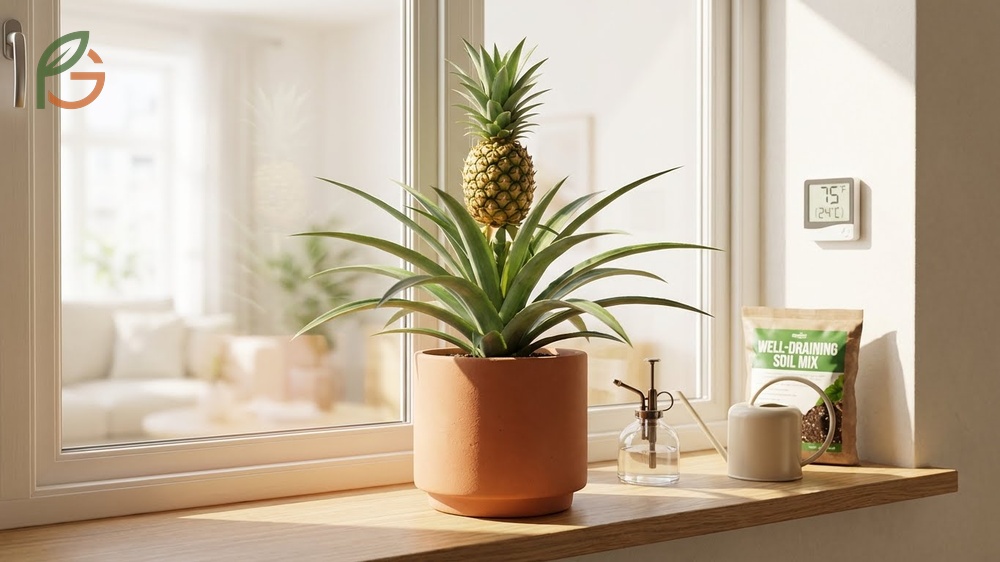
Care for a pineapple plant requires bright light, well-draining soil, and weekly watering. Research shows these tropical beauties adapt surprisingly well to indoor environments when you maintain temperatures between 68-86°F (20-30°C)[1] and provide at least six hours of daily sunlight[2]. FruitGarden synthesizes current horticultural research to help you grow thriving pineapple plants indoors. Most people don’t realize that pineapples tolerate moderate neglect better than constant attention—they’re drought-tolerant succulents that actually prefer drying out between waterings.
Quick Answer
- Place your pineapple plant where it gets 6+ hours of bright, indirect sunlight daily[2]
- Water once weekly when the top 1-2 inches of soil feels dry[2]
- Use acidic soil with pH 4.5-6.5 and excellent drainage[3]
- Feed monthly with balanced 10-10-10 fertilizer during spring and summer[4]
- Keep temperatures steady between 68-86°F (20-30°C)[1]
Care For A Pineapple Plant
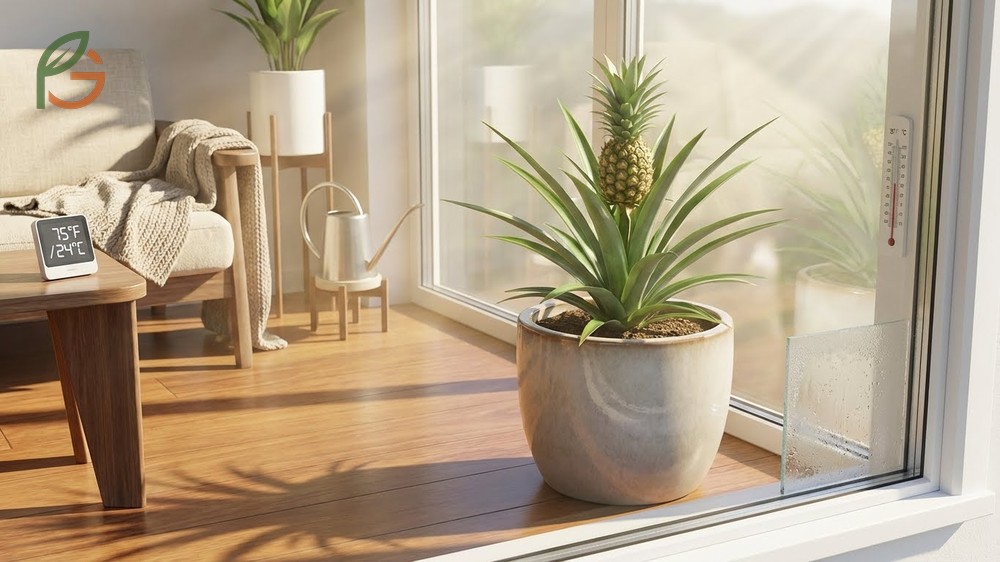
Pineapple plants (Ananas comosus) thrive in conditions that mimic their native tropical habitat. Studies demonstrate these plants adapt remarkably well to indoor cultivation when you provide consistent warmth and bright light. Unlike most houseplants, pineapples tolerate drought better than excess moisture.
You’ll want to maintain steady temperatures since growth slows significantly below 60°F (15.5°C) and above 90°F (32°C)[1]. Frost causes serious damage below 32°F (0°C), and plants rarely survive temperatures under 28°F (-2°C). If you’re growing pineapples in cooler regions, container cultivation lets you move them indoors during cold snaps.
Current horticultural data indicates pineapples grow in USDA hardiness zones 10-12[5]. Most US growers outside Florida and Hawaii treat them as container plants. The two-year growing season from planting to fruit production requires patience, but you’ll enjoy ornamental foliage throughout.
From My Experience: My cousin in Guadalajara, Mexico grows pineapples in terracotta pots on her south-facing patio. Her plants reached flowering stage in 18 months versus the typical 20-24 month range—she credits consistent morning sun exposure and never letting them sit in water.
Pineapple Plant Light Requirements
Research shows pineapple plants need at least six hours of bright, indirect sunlight each day for healthy growth[2]. South- or west-facing windows work best for indoor cultivation. While they tolerate some direct sun, intense afternoon rays can scorch leaf tips, especially when plants aren’t acclimated.
If natural light’s limited in your home, full-spectrum LED grow lights positioned 6-12 inches above the plant provide an effective alternative. You’ll need to run them for 12-16 hours daily to support optimal growth. Pale leaves signal insufficient light—plants stretch toward light sources and lose their vibrant color.
Pineapple Plant Temperature Needs
The optimal temperature range for pineapple cultivation falls between 68-86°F (20-30°C)[1]. Keep plants away from drafty windows, air conditioning vents, and heating units that create temperature fluctuations. Consistent warmth matters more than hitting the exact optimal range every day.
During winter months, even heated homes can get too cool near windows at night. Move your pineapple plant a few feet back from cold glass, or use insulating window treatments. Sudden temperature drops stress the plant and slow growth for weeks afterward.
Important Note: If temperatures in your area regularly drop below 50°F (10°C), you’ll need to bring outdoor pineapple plants inside. Even brief exposure to near-freezing conditions can cause permanent tissue damage that takes months to overcome.
Indoor Pineapple Plant Care
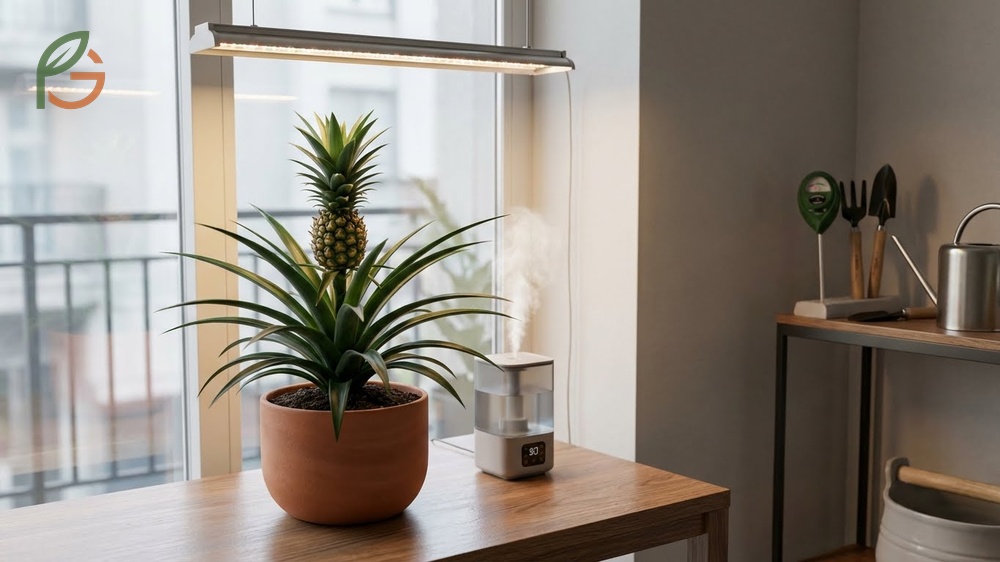
Indoor pineapple cultivation differs from tropical garden growing mainly in light intensity and humidity control. You’re creating an artificial tropical environment that supports year-round growth. The advantage of indoor growing is precise control over every environmental factor.
Container pineapples typically stay smaller than field-grown plants, which actually makes them more manageable. You won’t see the same massive leaf spread, but fruit quality remains excellent. Indoor plants also avoid many outdoor pests naturally.
Choosing the Right Location
Place your pineapple plant in the sunniest room you’ve got. Sunrooms, south-facing living rooms, and bright kitchens make ideal spots. The plant needs consistent conditions—frequent moves stress it and interrupt growth patterns.
Avoid placing pineapples near frequently opened exterior doors where cold drafts enter. The sudden temperature changes damage leaf tissue and slow photosynthesis. Similarly, don’t position them directly above heating registers where hot, dry air blasts the foliage.
Most people don’t realize that pineapples can handle some crowding. Their compact root systems don’t compete aggressively with nearby plants. You can group them with other tropicals to create a humidity-boosting microclimate.
Humidity and Air Circulation
Pineapples adapt to normal household humidity levels but perform better with moderate moisture in the air. Current growing guidelines suggest misting foliage twice daily—morning and evening—with a fine spray[6]. Don’t soak the plant; you want a light coating that evaporates within an hour.
Good air circulation prevents fungal issues and keeps the central crown from rotting. A small fan running on low speed in the growing area helps move stagnant air. This also strengthens stems and reduces pest problems naturally.
- Maintain 6+ hours of bright light daily through windows or grow lights
- Keep room temperature between 68-86°F (20-30°C) with minimal fluctuation
- Mist foliage twice daily with fine spray to boost humidity
- Provide gentle air circulation with a small fan
- Position away from cold drafts, heating vents, and AC units
- Rotate plant weekly for even light exposure on all sides
How Often to Water Pineapple Plant
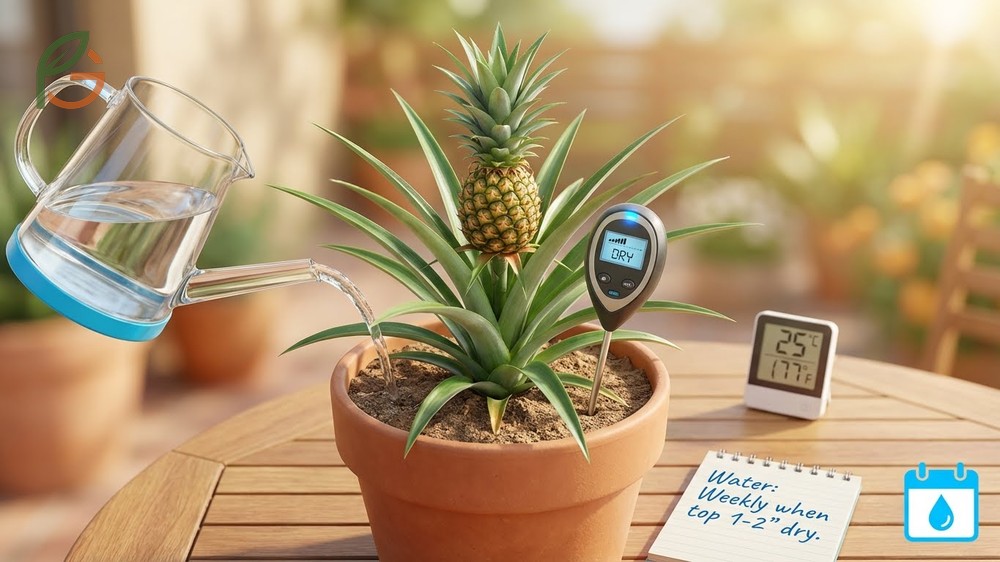
Water your pineapple plant once weekly, allowing the top 1-2 inches of soil to dry between waterings[2]. These drought-tolerant plants store water in their thick leaves, so they handle underwatering better than soggy soil. You’ll adjust frequency based on temperature, humidity, and pot size—warmer conditions mean more frequent watering.
During winter when growth slows, reduce watering to every 10-14 days. The plant enters semi-dormancy in cooler temperatures and uses less moisture. Check soil dryness with your finger before watering rather than following a rigid schedule.
My friend who grows tropical fruits near Veracruz, Mexico waters his container pineapples every five days during hot summer months, increasing to weekly when temperatures cool. He tests soil moisture three inches deep—if it feels damp, he waits another few days.
Proper Watering Technique
Water at the soil base rather than pouring directly into the central crown. Studies show base watering prevents rot and ensures even root hydration. Pour water slowly around the plant’s perimeter until it drains from the bottom holes.
You can occasionally fill the central rosette (the “tank” formed by overlapping leaves) with water, but empty it every few weeks to prevent stagnation. In nature, pineapples collect rainwater here, but indoor plants don’t need this supplemental moisture.
Signs of Overwatering
Pineapples don’t like wet soil—overwatering causes root rot and restricts nutrient uptake[7]. The first signs include yellowing lower leaves, soft mushy stems, and a sour smell from the soil. If you notice these symptoms, let the soil dry out completely before watering again.
Root rot develops quickly in soggy conditions. Check drainage holes to ensure water flows freely—if water pools on the soil surface or drains slowly, you’ll need to repot with fresh, well-draining mix.
Watering Tip: Always use room-temperature water for pineapples. Cold water shocks the roots and can damage fine root hairs that absorb nutrients. Let tap water sit overnight to reach room temperature and allow chlorine to dissipate.
Pineapple Plant Soil Mix
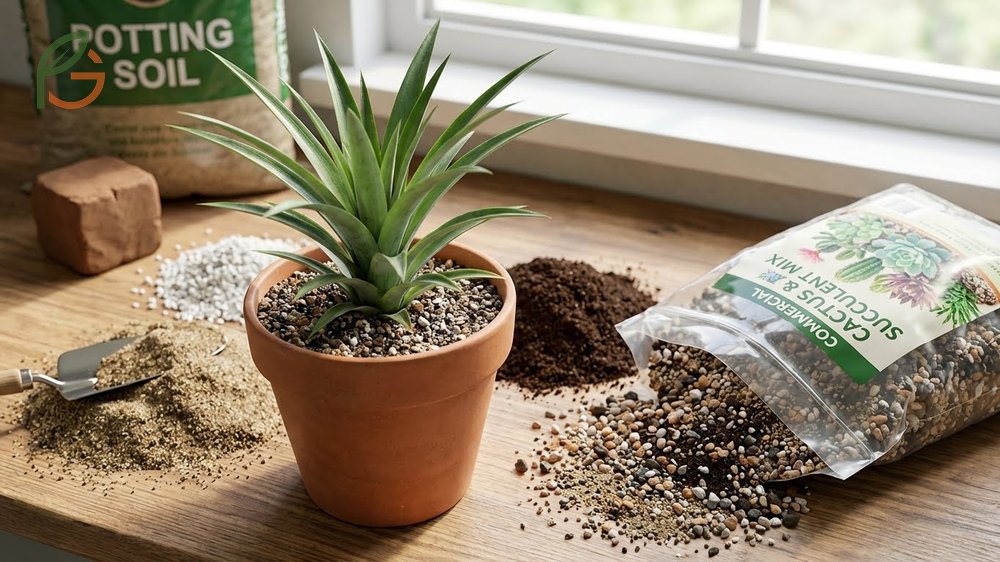
Pineapple plants require fast-draining, slightly acidic soil with pH between 4.5-6.5[3]. Commercial cactus or succulent mixes work perfectly since they’re formulated for excellent drainage. You can also create your own blend using 50% sandy soil, 25% compost, and 25% perlite or vermiculite.
Avoid heavy potting soils that retain too much moisture. Clay-based mixes suffocate pineapple roots and promote fungal diseases. The soil should feel coarse and gritty rather than smooth and dense.
A mix of orchid bark, coconut coir, and perlite provides ideal drainage and aeration[2]. This combination mimics the loose, organic matter found in tropical forest floors where pineapples naturally grow. Don’t use commercial mixes high in calcium—pineapples struggle in calcium-rich substrates.
- Use well-draining cactus/succulent mix or create custom blend
- Maintain soil pH between 4.5-6.5 for optimal nutrient uptake
- Ensure containers have multiple large drainage holes
- Add orchid bark or coconut coir to improve aeration
- Mix in 25% perlite or vermiculite to prevent compaction
- Avoid clay-heavy or moisture-retaining potting soils
- Replace soil completely every 2-3 years to refresh nutrients
This table compares three pineapple soil mix recipes including ingredient ratios and drainage characteristics for each option
| Mix Type | Ingredients | pH Range | Drainage |
|---|---|---|---|
| Commercial Cactus Mix | Pre-mixed succulent soil | 5.0-6.0 | Excellent |
| Custom Blend #1 | 50% sandy soil, 25% compost, 25% perlite[3] | 4.5-5.5 | Very Good |
| Custom Blend #2 | Orchid bark, coconut coir, perlite (equal parts) | 5.5-6.5 | Excellent |
Best Fertilizer for Pineapple Plants
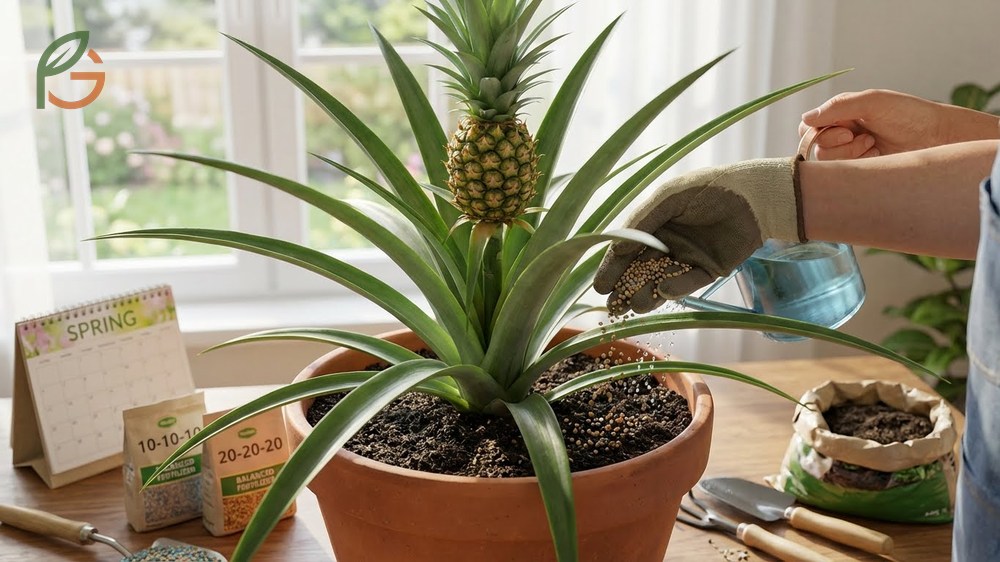
Feed your pineapple plant with balanced 10-10-10 fertilizer every other watering during spring and summer[4]. Reduce feeding to once every six weeks during fall and winter when growth naturally slows. Indoor plants need regular fertilization since container soil depletes nutrients faster than ground soil.
Balanced formulas like 20-20-20 or 10-10-10 provide the nitrogen, phosphorus, and potassium pineapples need for healthy foliage and eventual fruit production. Dilute liquid fertilizers to half strength to prevent root burn. You’ll see better results with frequent weak feedings than occasional strong doses.
After the first year, you can reduce fertilization frequency to every few months. Mature plants don’t require as much supplemental nutrition. Watch for pale new growth—that signals it’s time to resume regular feeding.
- Apply balanced 10-10-10 or 20-20-20 fertilizer during active growth
- Fertilize every other watering in spring and summer months
- Reduce to every six weeks during fall and winter
- Dilute liquid fertilizers to half the recommended strength
- Choose organic options like fish emulsion or compost tea
- Look for formulas with added iron to prevent leaf chlorosis
- Stop fertilizing two months before expected flowering
Fertilizer Warning: Don’t overfeed pineapple plants—excess nitrogen causes lush foliage growth but delays or prevents fruiting. If you’re growing for fruit production rather than ornamental value, reduce nitrogen levels after the plant reaches 12-18 months old.
How to Repot a Pineapple Plant
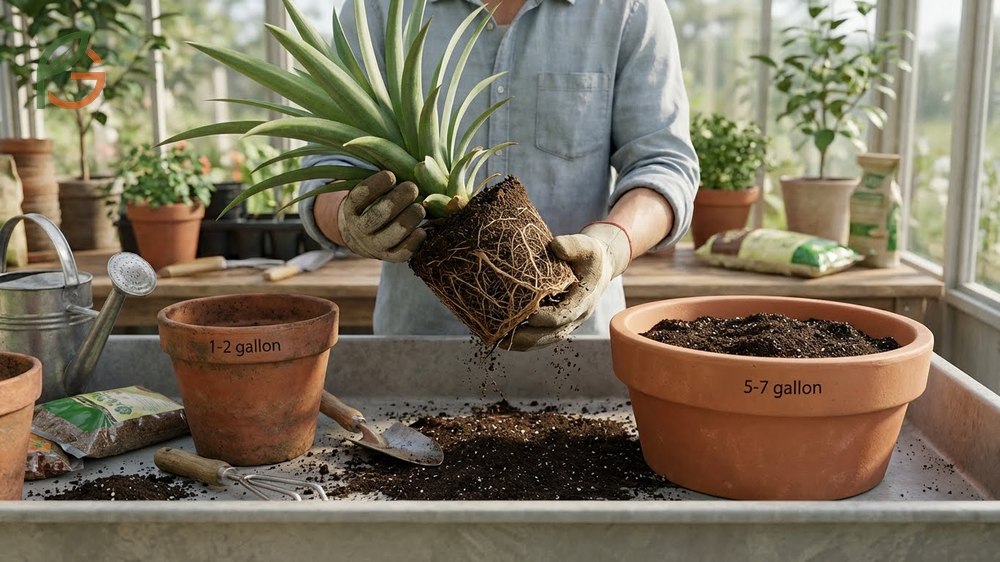
Start young pineapple plants in 1-2 gallon pots, then move them to 5-7 gallon containers as they mature. Pineapple roots spread wide and shallow rather than growing deep, so choose containers that are broader than they are tall. You’ll typically repot once every 2-3 years as the plant outgrows its current pot.
Repot in early spring before the active growing season begins. Gently remove the plant from its current container and shake off old soil from the roots. Trim any black, mushy roots with sterile scissors—healthy roots appear white or tan and feel firm.
Place fresh soil mix in the new container and position the plant at the same depth it was growing previously. Don’t bury the stem deeper than before, as this can cause crown rot. Firm soil gently around roots, water thoroughly, and keep the plant in bright indirect light for a week while it adjusts.
The first few weeks after repotting, you’ll notice slower growth as the plant recovers from transplant shock. This is normal—resist the urge to fertilize during this recovery period. Wait at least four weeks before resuming your regular feeding schedule.
When my aunt in Oaxaca, Mexico repotted her five-year-old pineapple last spring, the root spread measured 16 inches wide but only 8 inches deep—matching the shallow root pattern described in cultivation guides. She switched to a wider, shallower container and the plant responded with vigorous new growth within six weeks.
Pineapple Plant Leaves Turning Yellow
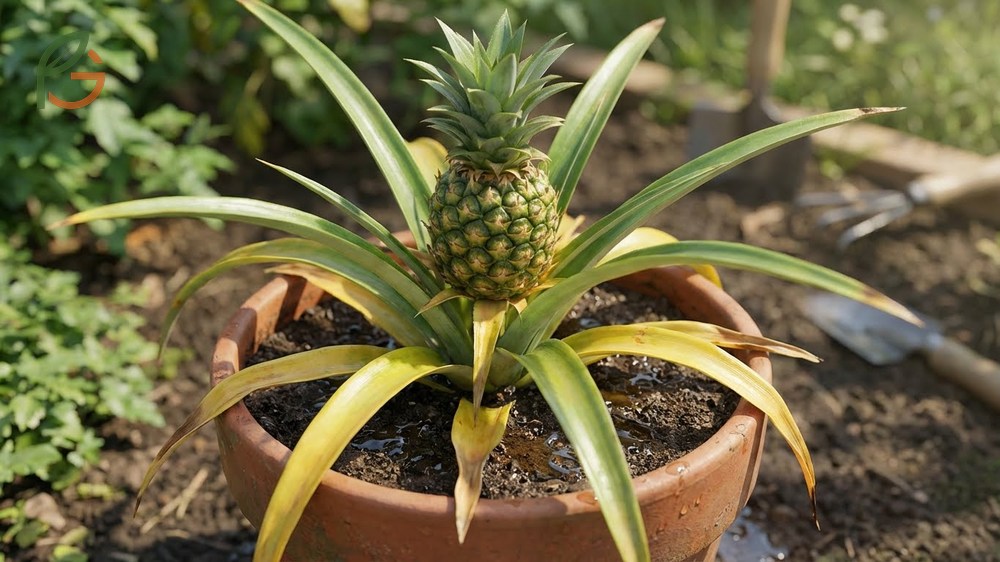
Yellow leaves on pineapple plants usually indicate watering issues, nutrient deficiencies, or temperature stress. Lower leaves naturally yellow and die as plants age, but widespread yellowing signals a problem. You’ll need to identify the cause before treatment works.
Overwatering is the most common cause of yellowing foliage. Soggy soil suffocates roots and prevents nutrient uptake, causing leaves to fade from vibrant green to pale yellow. Check if soil feels constantly wet and reduce watering frequency immediately.
Nutrient deficiencies, particularly nitrogen and iron, also cause yellowing. Nitrogen-deficient plants show uniform pale color across all foliage, while iron deficiency appears as yellowing between leaf veins with green veins remaining visible. Resume regular fertilization to correct these issues.
- Overwatering—let soil dry out completely before resuming lighter watering schedule
- Underwatering—increase frequency if leaves yellow and curl
- Temperature stress from cold drafts or heat—move to stable environment
- Nitrogen deficiency—apply balanced fertilizer diluted to half strength
- Iron deficiency—use fertilizer with added micronutrients
- Pest damage from mealybugs or spider mites—treat with insecticidal soap
- Root rot from poor drainage—repot in fresh well-draining soil
Pests like spider mites, mealybugs, and scale insects suck sap from leaves, causing yellowing and eventual browning. Check the underside of leaves for tiny insects or sticky residue. Treat infestations with insecticidal soap or neem oil spray applied weekly until pests disappear.
Diagnostic Tip: If only the oldest, lowest leaves turn yellow while new growth stays green, that’s normal aging. But if yellow spreads to middle and upper leaves within a few weeks, you’ve got an environmental or cultural problem that needs immediate attention.
Conclusion
The evidence is clear: care for a pineapple plant successfully by providing bright light, well-draining acidic soil, and moderate watering. You’ll get the best results when you maintain temperatures between 68-86°F (20-30°C) and feed monthly during the growing season. Indoor pineapples adapt remarkably well to container cultivation when you recreate their preferred tropical conditions.
Current horticultural guidance emphasizes patience—these plants take 18-24 months to flower and another six months to produce ripe fruit. FruitGarden recommends focusing on consistent care rather than trying to force faster growth. With proper attention to light, water, and soil requirements, you’ll enjoy both ornamental foliage and the eventual reward of homegrown tropical fruit.
Frequently Asked Questions
How Much Sun Does a Pineapple Plant Need?
Pineapple plants need at least six hours of bright, indirect sunlight daily for healthy growth. South- or west-facing windows provide ideal light levels for indoor plants. If natural light’s insufficient, supplement with full-spectrum LED grow lights positioned 6-12 inches above the foliage for 12-16 hours daily.
Can Pineapple Plants Survive Winter Indoors?
Yes, pineapple plants thrive indoors during winter as long as you maintain temperatures above 60°F (15.5°C). Keep them away from cold windows and drafts, reduce watering frequency, and continue providing bright light. Growth slows naturally in winter but resumes vigorously when spring arrives.
When Should I Repot My Pineapple Plant?
Repot pineapple plants every 2-3 years or when roots grow through drainage holes and circle the pot’s interior. Early spring before active growth begins is the ideal time. Move young plants from 1-2 gallon pots to 5-7 gallon containers as they mature, using fresh well-draining soil mix.
What Causes Pineapple Plant Leaves to Turn Brown at the Tips?
Brown leaf tips typically result from low humidity, fluoride in tap water, or fertilizer salt buildup. Mist foliage twice daily to increase humidity, use distilled or rainwater instead of tap water, and flush soil monthly with plain water to remove accumulated salts from fertilizers.
How Do You Propagate Pineapple Plants?
Propagate pineapples by twisting off the leafy crown from a ripe fruit, removing the bottom leaves to expose the stem, and letting it dry for 2-3 days. Plant the crown 2-3 inches deep in well-draining soil, keep it warm with bottom heat, and roots develop within 4-8 weeks.
Do Pineapple Plants Need High Humidity?
Pineapple plants adapt to normal household humidity levels but perform better with moderate moisture in the air. They’re more drought-tolerant than most tropicals and don’t require the high humidity needed by orchids or ferns. Light misting twice daily or a nearby humidifier helps but isn’t essential.
How Long Does It Take for a Pineapple Plant to Produce Fruit?
Pineapple plants typically take 18-24 months from planting to flowering, then another six months for fruit to develop and ripen. Total time from crown propagation to ripe fruit averages 2-3 years. Consistent care with proper light, temperature, and fertilization speeds up this timeline.





