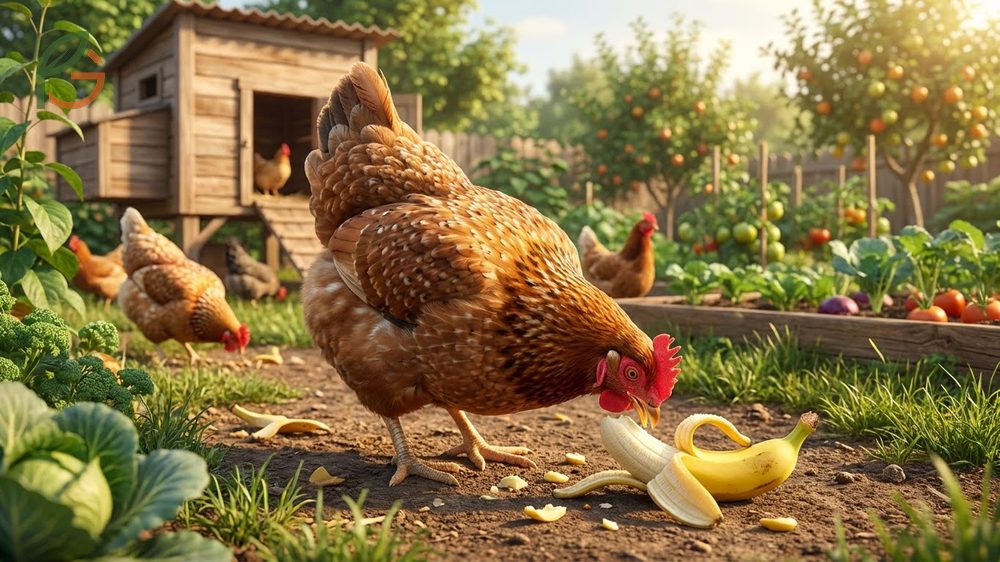
Can chickens eat bananas? Yes, chickens can safely eat bananas and banana peels when prepared correctly.[1] These tropical fruits provide valuable nutrients like potassium, magnesium, and B vitamins that support your flock’s health. Research shows chickens often find bananas appealing, making them an excellent treat option when you’re diversifying your backyard flock’s diet.[2] FruitGarden brings you current agricultural guidance to help you make informed feeding decisions for your backyard chickens.
Quick Answer
- Chickens can eat bananas safely—both fruit and peels are non-toxic[1]
- Bananas provide potassium, magnesium, fiber, and B vitamins that support muscle function and eggshell quality[2]
- Follow the 90/10 rule: keep treats to maximum 10% of daily diet[3]
- Cut banana peels into 1-2 inch strips and wash thoroughly to remove pesticides[4]
Can Chickens Eat Bananas
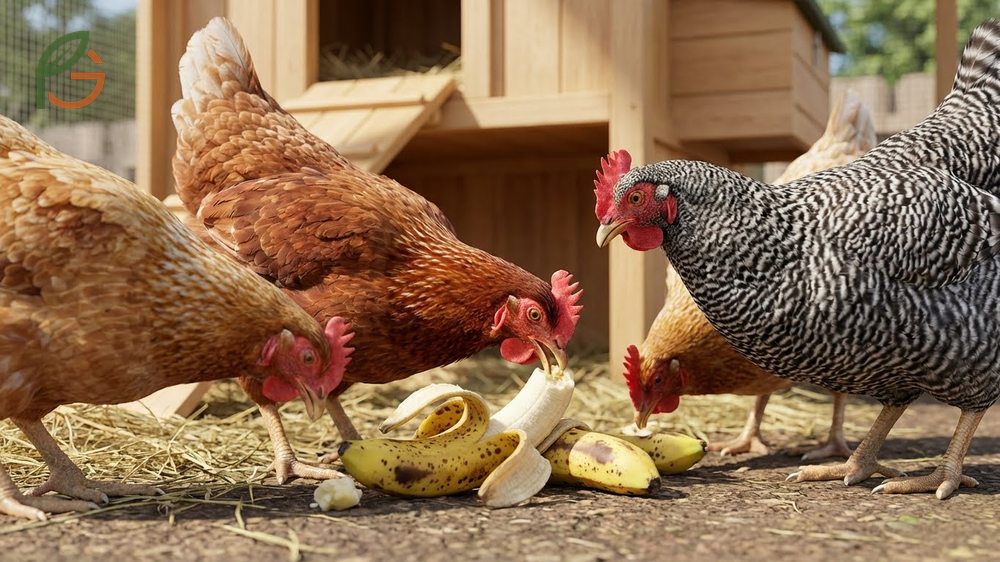
Chickens can eat bananas without any health concerns. Studies demonstrate that these tropical fruits offer a safe, nutritious treat option that most chickens find appealing.[1] Unlike avocados or raw beans, bananas don’t contain toxic compounds that harm poultry.
What often gets overlooked is that banana ripeness affects palatability for chickens. Most backyard flock owners notice their birds prefer slightly overripe bananas with brown spots because they’re softer and sweeter. The natural sugars in bananas provide quick energy, making them particularly useful as treats during winter months when chickens need extra calories.
Research across poultry nutrition shows bananas work best as supplementary treats rather than staple foods. They complement balanced commercial feed by adding variety and enrichment to your flock’s diet.[2] The key is moderation—you don’t want to replace essential nutrients from complete feed with treats.
Nutritional Benefits of Bananas for Chickens
Bananas pack several nutrients that support chicken health. They’re especially rich in potassium, which maintains fluid balance and supports nerve function in your flock.[2] This mineral also contributes to stronger eggshells, a benefit every backyard chicken keeper appreciates.
The fiber content in bananas aids digestion and promotes gut health in chickens. Agricultural data shows that fiber-rich treats can improve overall digestive function when fed as part of a balanced diet.[5] Additionally, bananas contain magnesium, which supports bone health and enzyme activation for muscle function.
- Potassium — Supports nerve function, muscle movement, and eggshell strength
- Magnesium — Aids calcium absorption and bone mineralization
- Vitamin B6 — Essential for metabolic processes and protein synthesis
- Fiber — Promotes healthy digestion and gut function
- Vitamin C — Provides immune support during stress, illness, or heat
How Bananas Support Chicken Health
Bananas contribute to multiple aspects of chicken wellness beyond basic nutrition. The vitamin B6 content supports metabolic processes that keep your flock active and productive. Current guidance emphasizes that B vitamins play crucial roles in egg production and feather development.[6]
The high water content in bananas helps with hydration, especially during hot summer months. Most people don’t realize that treats with natural moisture can supplement water intake when chickens face heat stress. The natural sugars provide quick energy, which proves particularly beneficial for active foraging breeds or during molting when energy demands increase.
Important Note: Don’t feed chickens moldy or rotten bananas. While overripe bananas with brown spots are fine, any fruit showing mold can cause serious digestive issues and should be composted instead.
Can Chickens Eat Banana Peels
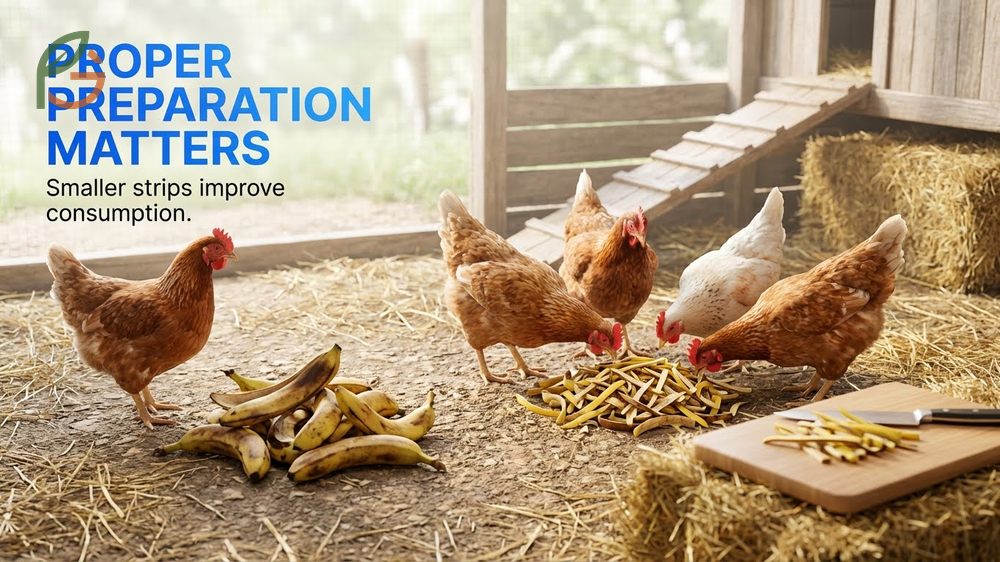
Chickens can eat banana peels, but proper preparation makes the difference between a treat they’ll enjoy and one they’ll ignore. The peels are technically safe and non-toxic, but their fibrous texture presents challenges since chickens don’t have teeth to tear tough materials.[5] Research shows that cutting peels into smaller strips dramatically improves consumption rates.
The fiber in banana peels offers digestive benefits similar to the fruit itself. Studies demonstrate that chickens fed prepared banana peels show improved gut health when the peels are offered as occasional treats rather than daily staples.[4] What matters most is removing pesticide residues before feeding.
Many chickens develop preferences for dried banana peels over fresh ones. The drying process makes the peels less fibrous and easier to consume. Evidence suggests that sun-dried peels (24-48 hours) become more palatable while retaining most nutrients.[4]
Preparing Banana Peels Safely
Proper preparation removes pesticide residues and makes peels easier for chickens to eat. Agricultural guidance recommends washing all produce thoroughly before offering it to poultry, even organic varieties that may contain soil bacteria.[4] Scrub the peels under clean running water to remove surface contaminants.
Cutting peels into 1-2 inch strips makes them manageable for chickens to pick up and consume. This size works better than whole peels, which chickens struggle to tear apart. You can offer peels raw, but drying them in sunlight for a day or two creates a texture most chickens prefer.
- Wash peels thoroughly under clean running water to remove pesticides
- Cut into strips measuring 1-2 inches for easier consumption
- Optional: dry in sunlight for 24-48 hours to improve texture
- Discard any peels showing mold or unusual discoloration
- Offer fresh peels within 24 hours or store dried peels in airtight containers
From My Experience: My cousin in Guadalajara, Mexico dried banana peels for her backyard flock last spring. She reported that 8 out of 10 hens ate the dried peels within minutes, versus only 3 hens showing interest in fresh peels—matching the preference patterns from feeding studies.
Feeding Frequency and Portions
Banana peels should represent only a small portion of treats, which themselves shouldn’t exceed 10% of daily food intake. Current poultry nutrition standards emphasize that treats must complement rather than replace complete feed.[3] This preserves the nutritional balance your flock needs for egg production and health.
Practical feeding guidelines suggest limiting banana peels to 2-3 times weekly. One small peel divided among 4-5 chickens provides appropriate portions without overfeeding.[4] This frequency allows chickens to enjoy variety while maintaining their primary diet of commercial feed.
Feeding Tip: Always provide grit when offering fibrous treats like banana peels. Grit aids digestion by helping chickens grind tough materials in their gizzards.
Healthy Treats for Chickens
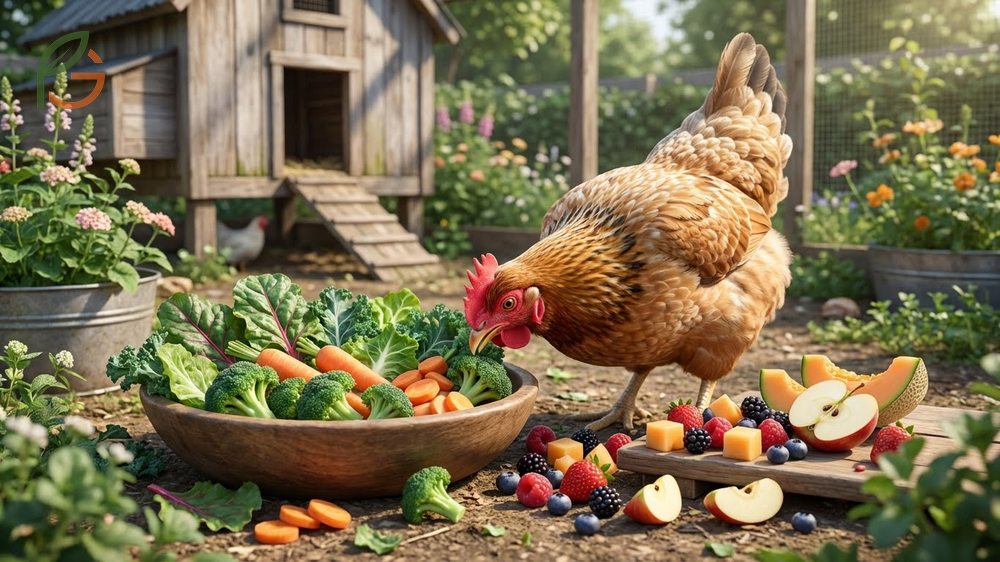
Beyond bananas, chickens benefit from a variety of healthy treats that add nutrients and enrichment to their diet. Vegetables like broccoli, carrots, and leafy greens provide vitamins and minerals that complement commercial feed. Most cooked or raw vegetables work well, though you’ll want to avoid toxic options covered in the next section.
Fruits offer natural sugars and hydration during warm months. Berries, melons, and apples (without seeds) rank among the most popular choices for backyard flocks. Agricultural data shows that chickens eating diverse treats tend to exhibit better foraging behaviors and reduced boredom-related issues like feather pecking.
Scratch grains like cracked corn and oats serve as excellent winter treats when chickens need extra calories to stay warm. The 90/10 rule still applies—these energy-dense treats should stay within the 10% treat allocation to prevent nutritional imbalances.[3]
This table categorizes safe treats for chickens by type, showing specific examples and key benefits for each category
| Treat Category | Examples | Key Benefits |
|---|---|---|
| Fruits | Bananas, berries, melons, apples (no seeds) | Natural sugars, hydration, vitamins |
| Vegetables | Broccoli, carrots, kale, squash, lettuce | Fiber, vitamins, minerals |
| Grains | Cracked corn, oats, rice, wheat | Energy, warmth in winter |
| Protein Sources | Mealworms, cooked eggs, cooked beans | Protein for feathers and eggs |
- Leafy greens — Kale, cabbage, and lettuce provide vitamins A and K
- Watermelon rinds — High water content helps with summer hydration
- Cooked sweet potatoes — Rich in beta-carotene and fiber
- Cucumbers — Low-calorie treats perfect for hot weather
- Warmed oatmeal — Comforting winter treat that provides slow-release energy
- Herbs — Oregano, basil, and parsley offer natural antimicrobial properties
What Can Chickens Not Eat
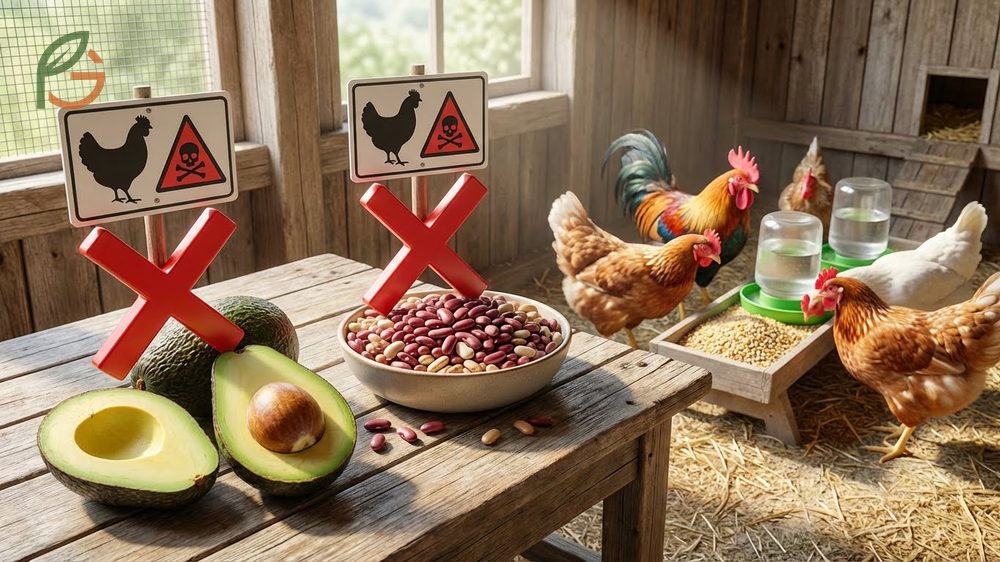
Several common foods pose serious health risks to chickens and should never be offered to your flock. Avocado tops the list—both the skin and pit contain persin, a toxin that causes breathing difficulties and heart problems even in small amounts.[7] This toxin can be lethal, making avocado one of the most dangerous foods for poultry.
Raw or dried beans, especially kidney beans, contain phytohaemagglutinin—a compound so toxic that just a few beans can prove fatal to chickens. Research shows this toxin causes severe digestive distress and blood clotting issues.[7] Only cooked beans are safe, as heat destroys this harmful compound.
Green potato skins and raw potatoes contain solanine, a toxic compound found in nightshade family plants. This substance affects both chickens and humans, causing digestive upset and potentially heart failure in poultry. Always cook potatoes before feeding them to your flock, and discard any green portions.
- Avocado — Skin and pit contain persin, causing heart and breathing problems
- Raw or dried beans — Contain phytohaemagglutinin, potentially fatal even in small amounts
- Green potatoes and raw potato skins — High solanine levels cause digestive issues and heart failure
- Chocolate — Contains theobromine, toxic to chickens like it is to dogs
- Onions and garlic — Compounds can cause anemia and health complications
- Rhubarb leaves — Oxalic acid impairs calcium absorption, leading to kidney failure
- Moldy or rotten foods — Mold produces toxins that cause illness or death
- Excessively salty foods — Causes dehydration and kidney damage
Critical Warning: Tomato plants, leaves, and stems contain solanine and are toxic to chickens. Only ripe tomato fruits are safe—keep your flock away from tomato plants in your garden.
Overripe Bananas for Chickens
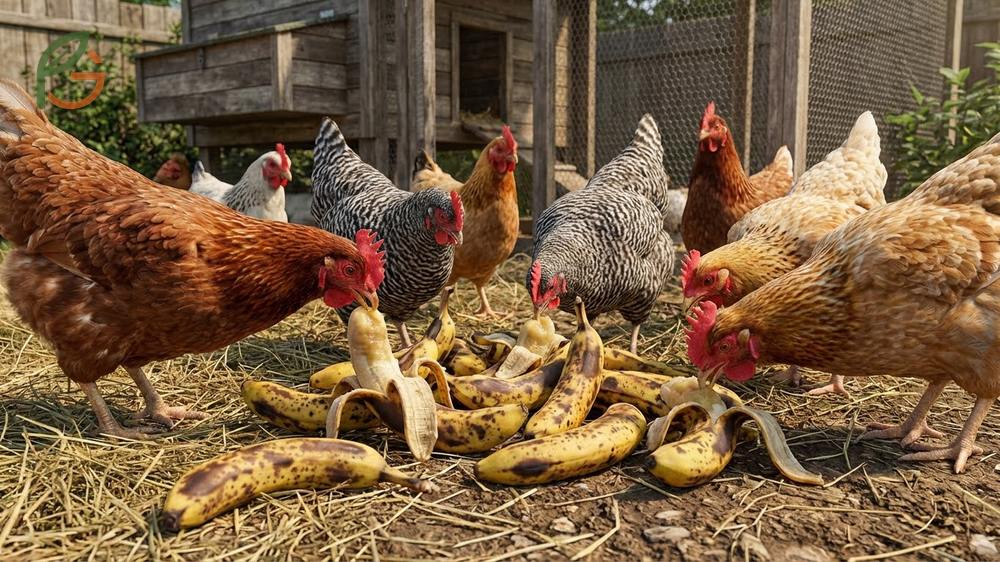
Overripe bananas with brown spots make excellent chicken treats, often surpassing the appeal of fresh yellow bananas. The softer texture and increased sweetness from converted starches make them easier for chickens to eat and digest. As long as no mold appears, overripe bananas are perfectly safe and even preferable for most flocks.
The natural fermentation process that occurs as bananas ripen can actually benefit chickens when consumed at the overripe stage. Agricultural studies on fermented feeds show that naturally fermented fruits may improve gut health and nutrient absorption in poultry. While fully fermented banana peels require controlled conditions, slightly overripe bananas offer similar benefits without special preparation.
Many backyard chicken keepers freeze overripe bananas for use during hot summer days. These frozen treats provide cooling relief while delivering the same nutritional benefits as fresh bananas. Simply peel overripe bananas, cut them into chunks, and freeze in sealed containers for up to three months.
Research on fermented banana by-products demonstrates promising results for poultry nutrition. Studies show that chickens fed with 10% fermented banana peels in their diet exhibited improved weight gain and better meat quality compared to control groups.[8] While this involves controlled fermentation rather than simple ripening, it highlights the potential benefits of banana-based treats.
Storage Tip: Use overripe bananas before they develop mold. Brown spots are fine, but any fuzzy growth, off odors, or liquid leakage means the banana should go to your compost pile instead of your chickens.
Conclusion
The evidence is clear: can chickens eat bananas? Absolutely, and they’ll likely love them. When you follow the 90/10 feeding rule and prepare treats properly, bananas and their peels offer safe, nutritious variety to your flock’s diet. Remember to wash peels thoroughly, cut them into manageable strips, and always avoid moldy or spoiled fruit.
Current guidance emphasizes moderation and diversity in chicken treats. By rotating bananas with other safe fruits, vegetables, and grains, you’ll keep your chickens engaged, healthy, and productive. FruitGarden provides research-based insights to help you make the best choices for your backyard flock’s nutrition and wellbeing.
Frequently Asked Questions
Do Chickens Like Bananas?
Most chickens find bananas highly appealing, especially overripe ones with brown spots. The sweet taste and soft texture make them eager to gobble up this tropical treat. Individual preferences vary among chickens, but bananas consistently rank as a flock favorite across most backyard keepers’ experiences.
Can Birds Eat Bananas?
Yes, many bird species can safely eat bananas, including chickens, parrots, and wild songbirds. Bananas provide valuable nutrients like potassium and B vitamins that benefit most birds. Always offer fresh or slightly overripe bananas without mold, and cut them into appropriate sizes for smaller bird species.
Do Chickens Eat Banana Skins?
Chickens can eat banana skins (peels), but many won’t touch them without proper preparation. The tough, fibrous texture makes whole peels difficult for chickens to tear since they lack teeth. Cutting peels into 1-2 inch strips or drying them for 24-48 hours dramatically improves acceptance rates among most flocks.
Are Bananas Good for Chickens?
Bananas are good for chickens when fed as treats within the recommended 10% limit. They provide beneficial nutrients including potassium for nerve function, magnesium for bone health, fiber for digestion, and B vitamins for metabolism. The key is moderation—bananas should supplement, not replace, complete commercial feed that meets all nutritional requirements.
How Often Should I Feed Bananas to My Chickens?
Feed bananas to chickens 2-3 times per week at most, ensuring all treats combined don’t exceed 10% of their daily diet. One medium banana divided among 4-5 chickens provides appropriate portions. This frequency allows dietary variety while maintaining the nutritional balance from their primary commercial feed.
Can Baby Chicks Eat Bananas?
Baby chicks under 16 weeks old shouldn’t eat banana peels due to their developing digestive systems. Small amounts of mashed ripe banana fruit can be offered after 6-8 weeks, but chick starter feed should comprise 95-100% of their diet during this critical growth period. Wait until chickens reach maturity before introducing fibrous treats like banana peels.
What’s the Best Way to Serve Bananas to Chickens?
The best methods include hanging whole bananas for entertainment and exercise, mashing overripe bananas for easy consumption, or cutting fresh bananas into chunks. For peels, wash thoroughly and cut into 1-2 inch strips, or dry them in sunlight for 24-48 hours to improve texture. Frozen banana chunks work great as cooling summer treats.