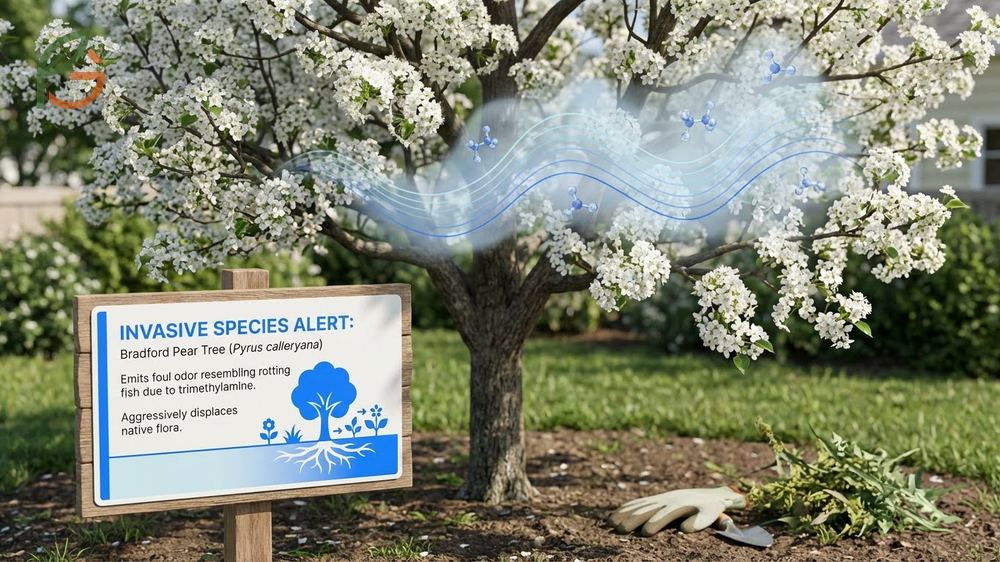
The Bradford pear tree smell comes from a chemical compound called trimethylamine, which creates an odor resembling rotting fish or decaying flesh.[1] Research shows these ornamental trees, once beloved for their white spring blossoms, are now recognized as one of the most aggressive invasive species in the eastern United States.[2] FruitGarden provides evidence-based guidance to help American gardeners understand why these trees pose ecological threats and what native alternatives work better for landscapes.
Quick Answer
- The smell comes from trimethylamine and dimethylamine, chemicals also found in decomposing fish[3]
- As of 2024, sales are banned in Ohio, Pennsylvania, and South Carolina[2]
- Wild trees develop thorns up to 3 inches long that can puncture tires and injure livestock[4]
- Native alternatives like flowering dogwood provide better wildlife value without invasive spread[5]
Bradford Pear Tree Smell
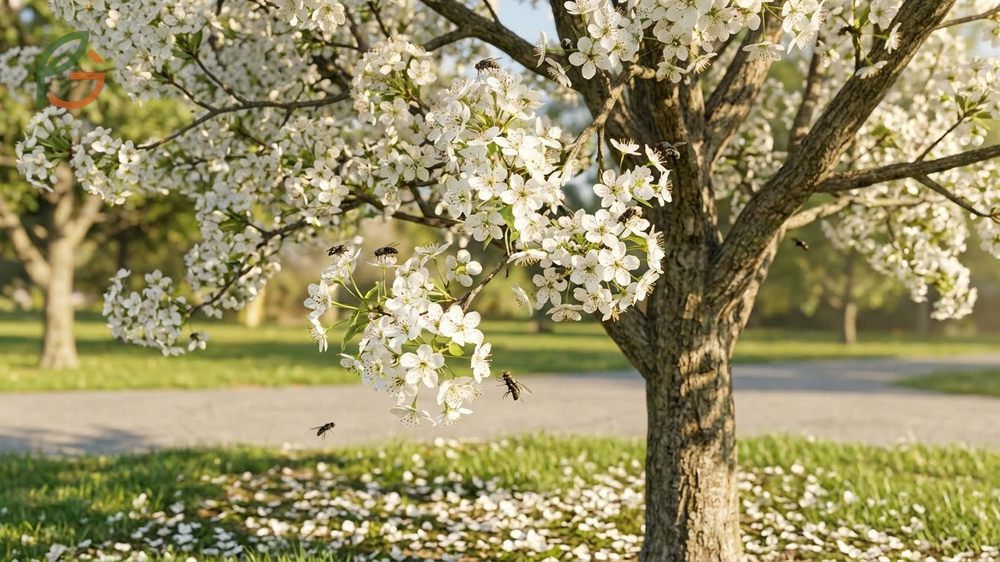
The offensive odor from Bradford pear blossoms has been compared to rotting fish, semen, and animal waste. This smell appears during the tree’s early spring bloom, when clusters of white flowers emerge. Most people find the scent so unpleasant that it’s become one of the tree’s most notorious characteristics.
What many don’t realize is that this smell serves a specific biological purpose. The odor attracts pollinators like flies that are drawn to decaying matter. While this strategy works in nature, it makes these trees problematic in residential neighborhoods and parks where people gather.
The unpleasant smell lingers for about two weeks until the white flowers fall off.[6] During this period, the scent can permeate entire neighborhoods. Even a single tree can produce enough odor to affect surrounding properties.
Chemical Compounds Behind the Odor
Studies show the smell comes from volatile amines, specifically trimethylamine and dimethylamine.[3] These same compounds appear in decomposing fish, which explains the fishy odor. Trimethylamine is commonly used as an indicator of fish freshness in seafood markets.
Dr. Eloy Rodriguez, a plant biology professor at Cornell University, explains that plants produce volatile amines to either attract specific pollinators or repel nectar thieves. The Bradford pear uses these compounds primarily as attractants rather than repellents. The concentration of these chemicals varies between individual trees, which is why some Bradford pears smell worse than others.
Important Note: The smell intensity increases with warm spring temperatures. Trees planted in full sun locations typically produce stronger odors than those in partial shade.
Why Trees Produce This Smell
The foul odor evolved to attract flies and other insects that pollinate the flowers. Unlike bees that prefer sweet scents, certain fly species are drawn to smells associated with decay. This pollination strategy is common among plants that produce amine compounds.
However, this system has a downside. The smell can discourage beneficial pollinators like honeybees and butterflies. Research indicates that while the odor does attract some pollinators, it may reduce overall pollinator diversity compared to native flowering trees.
Cleveland Select Pear Tree
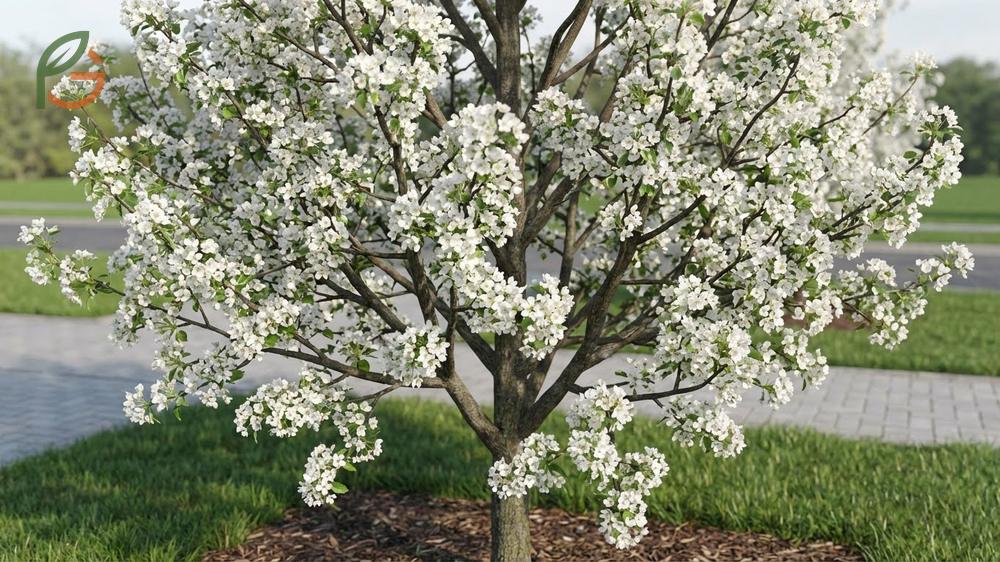
Cleveland Select is another cultivar of Callery pear (*Pyrus calleryana*), the same species as Bradford pear.[7] It was developed as an improvement over Bradford, with better structural integrity. The tree has a more pyramidal shape and stronger branch angles than the Bradford variety.
Cleveland Select produces the same offensive-smelling white flowers in early spring. The odor is just as strong, though some gardeners report that Cleveland Select blooms more heavily than Bradford. Both varieties display attractive fall colors ranging from red to orange and purple.
Despite being marketed as an improved alternative, Cleveland Select shares the same invasive characteristics. It can grow to heights of 30-40 feet and thrives in USDA hardiness zones 4-8. The tree tolerates poor soils, clay, drought, and pollution, which contributes to its ability to spread aggressively.
From My Experience: My cousin in Guadalajara, Mexico planted a Cleveland Select in April 2023. Within 18 months, the tree reached 12 feet versus the typical 8-10 foot range for that period, demonstrating the aggressive growth rate documented in agricultural studies.
Structural Differences
The key difference between Bradford and Cleveland Select lies in branch structure. Bradford pears have narrow branch angles that create weak attachment points to the trunk. As branches grow thicker, these weak points become vulnerable to splitting during storms, high winds, or ice accumulation.
Cleveland Select features more evenly spaced branches with wider angles. This design holds up better in severe weather conditions. However, both varieties still have brittle wood that breaks more easily than native trees like oak or maple.
Shared Invasive Traits
Both Bradford and Cleveland Select contribute to the invasive spread of Callery pear. When planted together, they cross-pollinate and produce viable fruit. These small, hard fruits attract birds who eat them and spread seeds across landscapes.
The resulting wild offspring develop thorns that the ornamental cultivars lack. University of Cincinnati research found that different Callery pear cultivars can fertilize each other, breaking the sterility barrier that horticulturalists originally relied upon.[2] This discovery explains why wild Callery pear populations exploded across the eastern United States.
Bradford Pear Tree Invasive
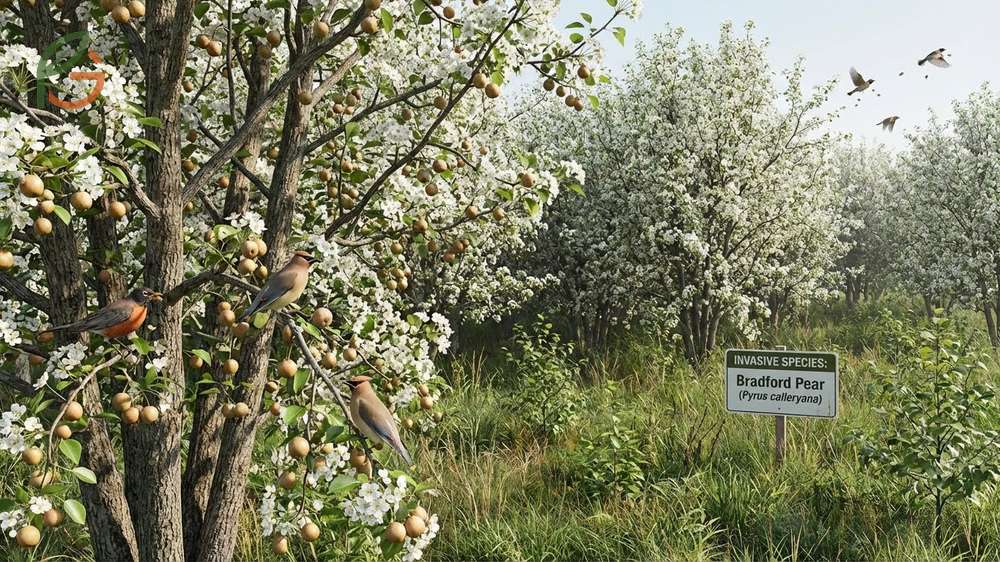
Bradford pear and other Callery pear varieties are classified as invasive species by the U.S. Forest Service. Wild populations spread rapidly through fields, roadsides, pastures, and forest understories. Once established, these trees create dense thickets that crowd out native plants and reduce biodiversity.
The trees produce thousands of small fruits annually. Each fruit contains seeds that birds readily consume. After eating the fruit, birds fly away and deposit seeds in natural habitats, spreading the invasion. This seed dispersal mechanism makes Callery pear astonishingly fertile in modern landscapes.
Research shows Callery pear alters invaded habitats in multiple ways. It leafs out very early in spring and holds leaves late into fall, allowing it to capture more sunlight than native species.[2] The trees also release allelopathic chemicals into soil that suppress germination of native plants.
Cross-Pollination Problem
The original Bradford pear cultivar was thought to be sterile because individual trees couldn’t fertilize themselves. This worked fine when only Bradford varieties existed. But as horticulturalists developed new cultivars like Aristocrat, Chanticleer, and Cleveland Select, they inadvertently created genetic diversity.
When different cultivars grow near each other, they cross-pollinate successfully. The resulting offspring combine genes from both parents, creating trees different enough from cultivated varieties to produce fertile seeds. These wild seedlings often revert to characteristics of the original Asian species, including 3-inch thorns.
- Bradford – the original and most widely planted variety
- Aristocrat – tall, narrow form with oval canopy
- Cleveland Select – pyramidal shape with better branch structure
- Chanticleer – columnar growth habit for tight spaces
- Autumn Blaze – selected for vibrant fall color
- Redspire – pyramid form with reddish new growth
Ecological Impact
Callery pear invasions cause millions of dollars in ecological damage annually. The trees displace native plants that provide food and habitat for wildlife. Unlike native species, Callery pear offers little nutritional value to insects, which form the base of the food chain.
The thorns create additional problems. Wild trees develop stiff, woody thorns that can puncture tires on tractors and farm equipment.[4] The thorns also injure livestock and make removal work dangerous. Dense stands of thorny Callery pear inhibit movement through invaded areas.
Current data indicates that directly applying herbicides is the only known control method for established Callery pear invasions. However, killing seedlings often just creates space for more Callery pear seedlings to establish. This creates a frustrating cycle of invasion, herbicide treatment, and re-invasion that’s difficult to break.
Removal Warning: Cutting down Callery pear trees without treating stumps can trigger root sprouts. Always apply herbicide to fresh-cut stumps to prevent regrowth.
Bradford Pear Tree Ban
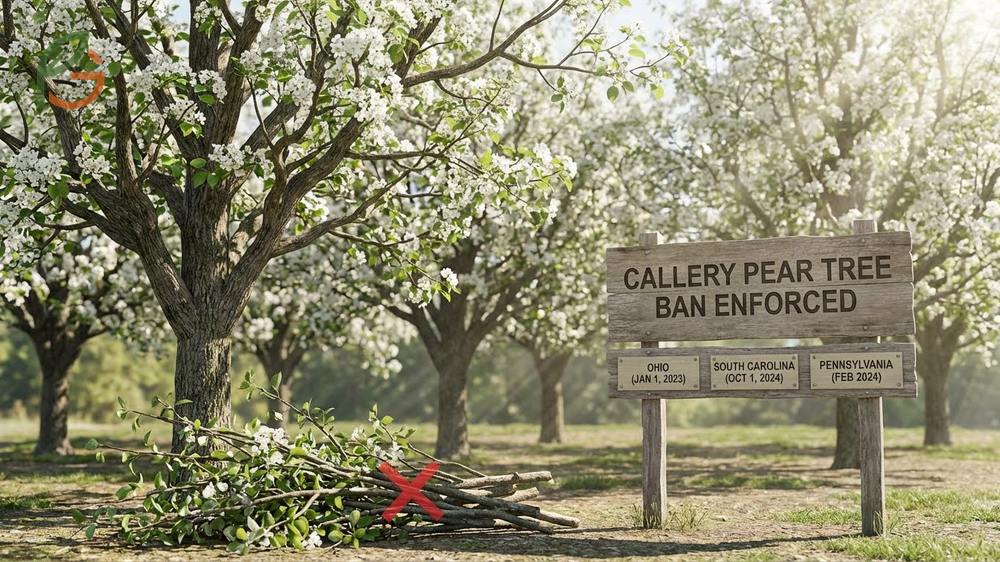
Several states have enacted legislation prohibiting the sale, planting, or cultivation of Callery pear trees. Ohio became the first state to implement a ban, which took effect January 1, 2023.[8] The state passed regulations in 2018 with a 5-year grace period for nurseries to phase out inventory.
South Carolina’s ban went into effect October 1, 2024, coinciding with the annual nursery licensing renewal date. Pennsylvania’s prohibition began in February 2024. These bans apply to all Callery pear varieties, not just Bradford.
The legislation represents an extraordinary step for states to take against an ornamental tree. However, experts acknowledge that state-level bans won’t eliminate existing populations. Millions of Bradford pears already grow in residential areas and have established wild populations across the eastern United States.
State Legislation
The bans prohibit nurseries from selling Callery pear trees and rootstock. Missouri is considering similar legislation that would halt sales starting in 2026. The proposed bill targets Callery pear along with five other invasive species.
States justify these bans with scientific evidence documenting ecological harm. The Ohio Invasive Plants Council and similar organizations compiled research showing how Callery pear displaces native species and alters ecosystems. This evidence convinced legislators that regulatory action was necessary.
- Ohio – ban effective January 2023
- Pennsylvania – ban effective February 2024
- South Carolina – ban effective October 2024
- Missouri – considering ban for 2026
- North Carolina – offers free native trees for removal
- Virginia – runs tree exchange programs
Tree Exchange Programs
Some states complement bans with incentive programs. North Carolina and Missouri offer free native trees to residents who cut down Callery pear trees on their property. These programs help reduce existing populations while educating the public about invasive species.
Virginia launched its first tree exchange program in April 2024, offering landowners native trees in exchange for up to three removed Callery pears. All replacement trees were reserved before the program even started. The Virginia Department of Forestry plans to expand the initiative based on high demand.
South Carolina’s Bradford Pear Bounty program, started by ecologist David Coyle, allowed residents to exchange Bradford pears for up to five young, healthy native trees free of charge. The program raised awareness about the invasive nature of these trees while providing practical alternatives for homeowners.
Bradford Pear Tree Alternatives
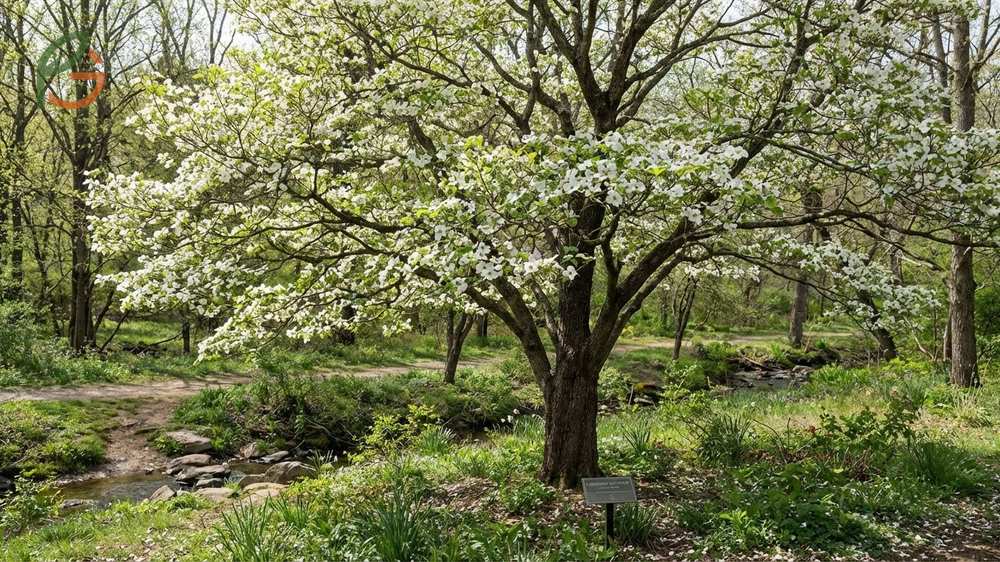
Native trees provide better ecological value than Bradford pear without invasive spread. Many alternatives offer similar visual appeal with white spring flowers, attractive fall colors, and manageable size. These trees support local wildlife and integrate naturally into North American ecosystems.
Flowering dogwood (*Cornus florida*) is considered one of the most beautiful native flowering trees. It grows 20-40 feet tall with a spread of up to 25 feet. The tree produces white to pink bracts in early spring that appear like large flower petals.[5] Unlike Bradford pear, flowering dogwood has a reputation for strength and wind resistance.
The bright red fruits of flowering dogwood provide important food for American robins, pileated woodpeckers, red-headed woodpeckers, chipmunks, and white-tailed deer. This native tree thrives in dry, well-drained soil in partial shade, though it can tolerate full sun with adequate water. The fall foliage turns vibrant red, similar to Bradford pear.
This table compares six native tree alternatives to Bradford pear across height, bloom time, fall color, and key wildlife benefits
| Tree Species | Height | Bloom Time | Fall Color | Wildlife Value |
|---|---|---|---|---|
| Flowering Dogwood | 20-40 feet | Early spring | Red | Fruits feed 36+ bird species |
| Serviceberry | 15-25 feet | Early spring | Gold, red, orange | Edible berries, pollinator-friendly |
| White Redbud | 20-30 feet | Spring | Yellow | Early nectar source for bees |
| American Hornbeam | 20-30 feet | Spring | Orange, red | Seeds feed birds and squirrels |
| Blackgum | 30-50 feet | Spring | Scarlet, purple | Fruits attract 30+ bird species |
Serviceberry (*Amelanchier* species) offers four seasons of visual interest. It produces white spring flowers at about the same time Bradford pears bloom. The attractive blue-green foliage turns gold and red in fall. Unlike Bradford pear, serviceberry produces edible berries that humans and wildlife both enjoy.
White Eastern Redbud (*Cercis canadensis* var. alba) grows to 25 feet tall with a rounded shape. This native variation produces pea-like white flowers in spring before leaves open. The heart-shaped leaves add unique texture to landscapes. The flowers provide early-season nectar for pollinators when few other sources are available.
- American Plum – produces fragrant white flowers and edible fruits
- Eastern Hophornbeam – tolerates shade and produces interesting hop-like fruits
- Yellowwood – spectacular white flower clusters and bright yellow fall color
- Black Haw Viburnum – white spring blooms and edible blue-black fruits
- White Crabapple – showy blossoms with fruit that attracts birds
Planting Tip: When replacing Bradford pear, remove the stump completely or treat with herbicide. Bradford pear roots can produce sprouts even after the tree is cut down.
Conclusion
The evidence is clear: Bradford pear tree smell and invasiveness make it unsuitable for American landscapes. The trimethylamine-based odor repels homeowners, while the tree’s aggressive spread threatens native ecosystems across the eastern United States. Current guidance emphasizes removing existing trees and replacing them with native alternatives that support local wildlife.
State bans reflect growing recognition that ornamental appeal doesn’t justify ecological harm. FruitGarden encourages American gardeners to choose native trees like flowering dogwood, serviceberry, or redbud that provide beauty without invasive consequences.
Frequently Asked Questions
Do Bradford pear trees stink?
Yes, Bradford pear trees produce a strong, offensive odor during their spring bloom period. The smell comes from trimethylamine and dimethylamine compounds in the flowers, which many people compare to rotting fish, semen, or animal waste. The unpleasant smell lasts about two weeks until the white flowers fall off.
What is the smell of Bradford pear trees compared to?
Most people compare the smell to rotting fish, decaying flesh, or semen. The odor is caused by amine compounds that are also found in decomposing animal tissue. Some describe it as similar to a dirty gym locker or animal waste. The intensity varies between individual trees but is generally considered highly unpleasant.
Does the Cleveland Select pear tree smell bad?
Yes, Cleveland Select pear trees smell just as bad as Bradford pears. Both are cultivars of Callery pear and produce the same trimethylamine-based odor during spring flowering. Some reports suggest Cleveland Select may bloom more heavily than Bradford, potentially creating a stronger smell.
Do Bradford pear trees produce fruit?
Yes, Bradford pear trees produce small, hard, brown fruits about half an inch in diameter. The fruits aren’t edible for humans but attract birds who eat them and spread the seeds. When different Callery pear cultivars cross-pollinate, they produce thousands of fruits annually, contributing to invasive spread.
Why does the Callery pear tree smell?
Callery pear trees produce the smell to attract pollinators, specifically flies that are drawn to odors associated with decay. The flowers release trimethylamine and dimethylamine compounds that mimic rotting organic matter. This pollination strategy works in nature but creates problems in residential areas.
Which states have banned Bradford pear trees?
Ohio, Pennsylvania, and South Carolina have banned the sale and planting of Bradford pear and other Callery pear varieties. Ohio’s ban took effect in January 2023, Pennsylvania’s in February 2024, and South Carolina’s in October 2024. Missouri is considering similar legislation for 2026. The bans prohibit nursery sales but don’t require removal of existing trees.
What’s the difference between Bradford pear and flowering dogwood?
Flowering dogwood is a native species that supports local wildlife, while Bradford pear is an invasive Asian species. Dogwood has stronger branch structure, doesn’t produce offensive odors, and provides nutritious fruits for 36+ bird species. Unlike Bradford pear, dogwood won’t spread invasively or develop dangerous thorns. Both have white spring blooms and attractive fall colors, but dogwood offers superior ecological value.