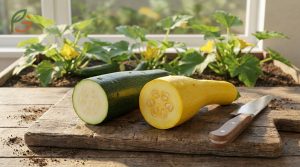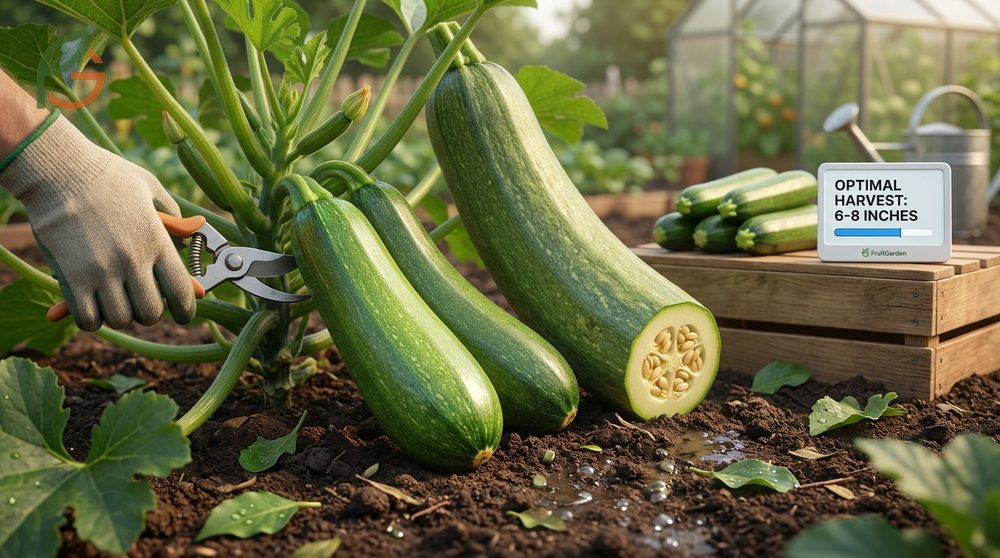
When to harvest zucchini? Research shows the optimal harvest window is 6 to 8 inches long for tender, flavorful fruit[1]. Most people don’t realize that waiting just one extra day can turn tender squash into tough, watery vegetables with oversized seeds. FruitGarden synthesizes current horticultural research and university extension data to help home gardeners maximize their zucchini harvests with proper timing strategies.
Quick Answer
- Harvest zucchini at 6-8 inches long and 1-2 inches in diameter for peak tenderness[1]
- Fruit matures rapidly—just 3-4 days after flowers open during warm weather[2]
- Check plants daily during peak season to avoid oversized fruit[3]
- Expect first harvest 45-60 days after planting depending on variety[4]
When to Harvest Zucchini
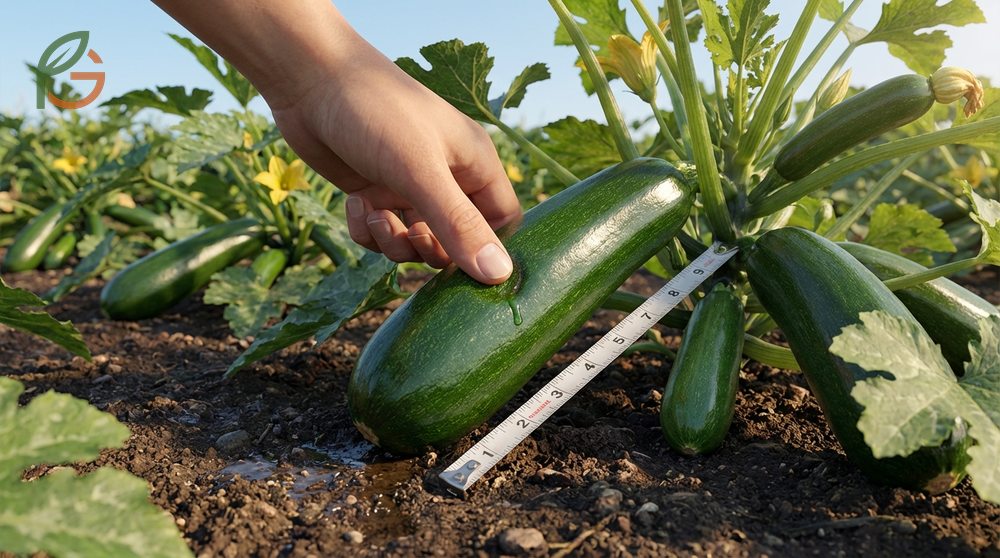
University research demonstrates that zucchini harvested between 6 and 8 inches delivers the best combination of tender texture, mild flavor, and minimal seeds[1]. At this size, you can pierce the skin easily with your thumbnail—a reliable field test for tenderness[5].
Zucchini size increases dramatically during warm weather, often doubling in a single 24-hour period. This rapid growth means you can’t check every few days—daily monitoring prevents fruit from exceeding the ideal harvest window[3].
The best time of day to harvest is early to mid-morning when plants are fully hydrated and fruits are crisp[6]. This timing reduces stress on both the plant and the harvested fruit.
From My Experience: My cousin in Guadalajara, Mexico grew Black Beauty zucchini last summer. She checked her plants every morning around 7 AM—fruit that measured 5 inches on Monday hit 8 inches by Wednesday, matching the typical growth rate from studies.
Ideal Harvest Timeline
Most zucchini varieties mature 45 to 60 days after planting, though some cultivars need up to 75 days[4][7]. After flowers appear, fruit develops quickly—you’ll see harvestable zucchini within 3 to 4 days of bloom during sunny, warm conditions[2].
Peak production lasts 2 to 3 weeks per planting. For continuous harvest throughout summer, plant new successions every 2 weeks starting in late spring[2].
Visual Maturity Indicators
Ripe zucchini displays glossy, bright skin with consistent color from stem to blossom end. Dull or matte finish indicates the fruit is past its prime[5].
The blossom often remains attached until fruit reaches harvestable size, then drops off naturally. Once you notice the blossom has disappeared, check that fruit for size—it’s likely ready[5].
- Glossy, bright skin without dull patches or discoloration
- Firm texture when gently squeezed—not hard, not soft
- Consistent color throughout the entire fruit length
- Skin that can be pierced with a thumbnail without excessive force
- Blossom end has naturally dropped off or easily detaches
Important Note: Zucchini often hides under large leaves. Check behind foliage daily during harvest season to avoid missing fruit that quickly outgrows the ideal size range[3].
Ideal Zucchini Size for Different Uses
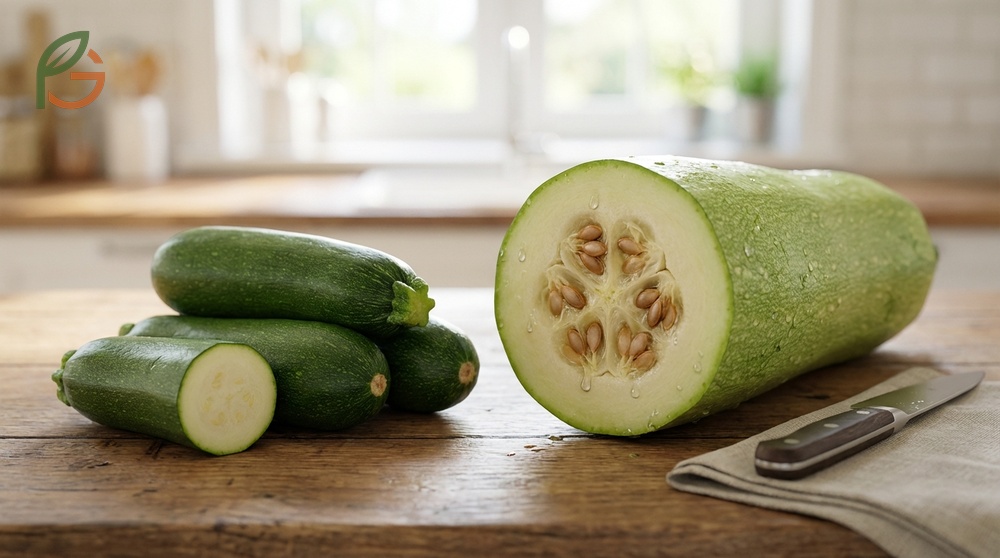
Different recipes benefit from specific zucchini sizes. Studies show that as zucchini grows beyond 8 inches, the flesh becomes increasingly watery, seeds enlarge significantly, and skin toughens[1]. This doesn’t make larger fruit unusable—it just changes how you should prepare them.
Research demonstrates that smaller zucchini contain more concentrated flavor compounds and maintain better texture after cooking compared to oversized specimens. The seed cavity remains minimal until fruit exceeds 10 inches in length.
Small Zucchini (4-6 Inches)
Young zucchini at 4 to 6 inches work perfectly for grilling whole, roasting, or eating raw in salads. At this stage, seeds are barely developed and the entire fruit is tender[6]. Many gardeners prefer this size for its delicate, almost buttery flavor.
Small zucchini also work well for pickling and quick sautés where you want vegetables that cook rapidly without releasing excessive moisture.
Medium Zucchini (6-8 Inches)
Medium-sized fruit represents the sweet spot for most cooking applications. Extension services across multiple states identify 6 to 8 inches as the ideal harvest size for maximum versatility[1][8].
This size range provides enough flesh for substantial portions while maintaining tender texture and concentrated flavor. Seeds remain small and soft enough to eat without removal.
- Slicing for sautés, stir-fries, and pasta dishes
- Spiralizing into zucchini noodles with firm texture
- Cubing for soups and stews without excessive softening
- Slicing lengthwise for grilling or roasting
- General cooking applications requiring consistent texture
Large Zucchini (8-10 Inches and Beyond)
Zucchini that grows beyond 10 inches develops characteristics that limit its culinary applications. The skin toughens, sometimes developing bitter compounds that require peeling before use. Seeds enlarge to full size and the flesh becomes watery with diluted flavor.
However, oversized zucchini aren’t wasted. Shredding them for baking works well—excess moisture actually benefits bread and cake recipes. You’ll need to scoop out the seed cavity before shredding[1].
Large fruits also excel for stuffing since they provide more interior space once seeds are removed. The increased water content doesn’t negatively impact stuffed recipes where the zucchini serves as a vessel rather than the primary flavor component.
Zucchini Maturity Indicators
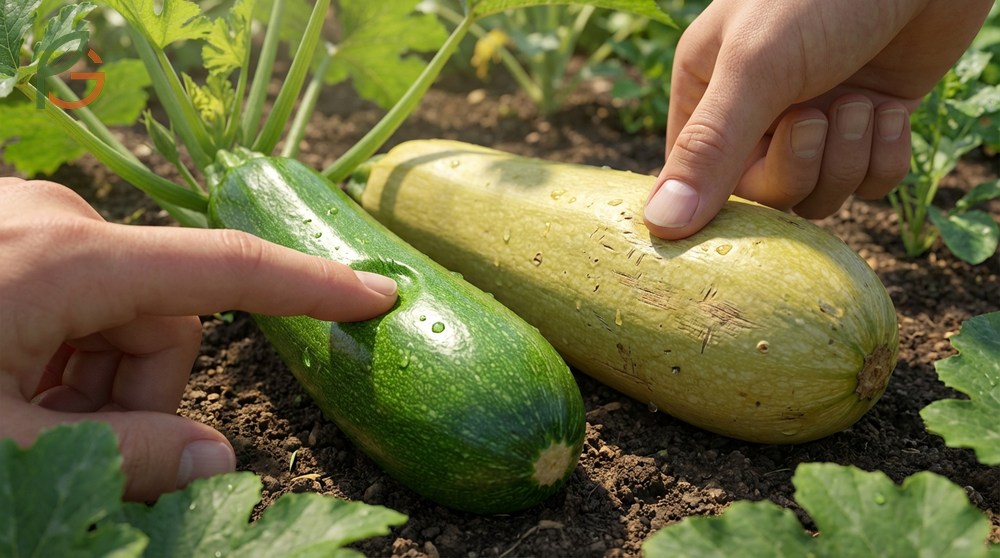
Beyond size measurements, several physical tests confirm whether zucchini has reached peak harvest condition. The thumbnail test remains the most reliable field method—gently press your thumbnail against the skin. If it pierces easily leaving an indentation, the fruit is tender and ready[5].
Skin that resists thumbnail pressure with wood-like hardness indicates overmaturity. At this stage, you’ll need to peel the zucchini and remove seeds before cooking.
Color provides another maturity clue. Most varieties develop their deepest, most vibrant color at peak ripeness—typically dark green for standard cultivars, bright yellow for golden varieties[5]. Pale streaks or faded areas suggest the fruit isn’t quite ready.
- Thumbnail easily pierces skin without excessive force
- Fruit feels firm but gives slightly under gentle pressure
- Skin displays glossy sheen rather than matte finish
- Color remains consistent without pale or faded patches
- Stem attachment point shows no signs of rot or softening
- Blossom has dropped naturally or detaches with light touch
Timing Tip: Track when flowers open on individual plants. In warm weather with adequate soil moisture, you can predict harvest exactly 3 to 4 days later[2]. This system helps prevent checking too early or missing the ideal window.
Proper Harvesting Technique
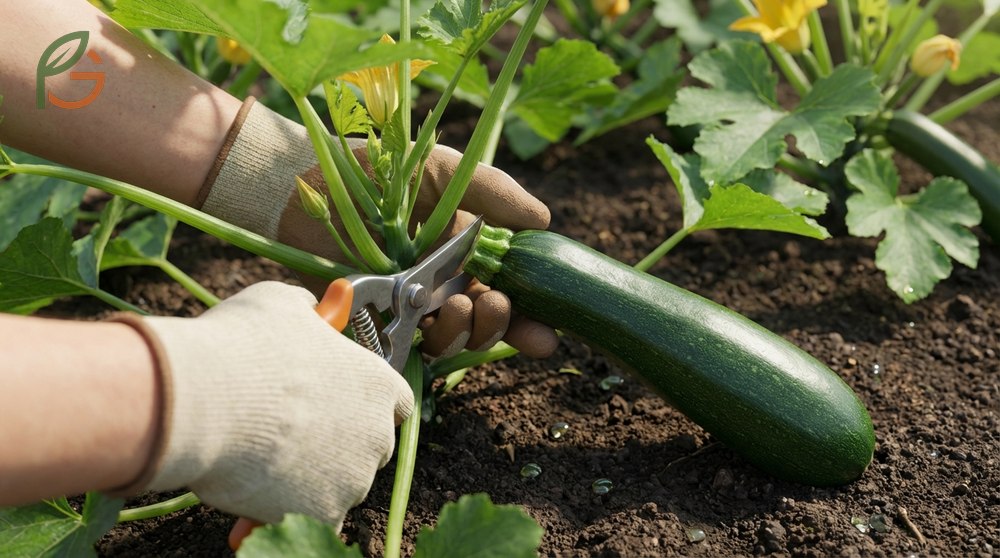
Research shows that improper harvesting damages both fruit and plants, potentially reducing total season yield. Never twist or pull zucchini off the vine with your hands—this stresses the plant and can tear the stem end of the fruit[3].
Instead, use sharp garden shears, pruners, or a knife to cut the stem cleanly, leaving 1 to 2 inches attached to the fruit[6]. This clean cut prevents disease entry points and allows the plant to continue producing.
Harvest in the morning after dew has dried but before afternoon heat stresses plants. Avoid harvesting when foliage is wet from rain or irrigation—working with wet plants spreads foliar diseases throughout your garden[7].
Handle harvested fruit gently to prevent bruising, scratches, and fingernail punctures. Use containers with smooth sides rather than wire baskets that can damage tender skin[2].
- Check plants in early morning after dew dries, when fruit is fully hydrated
- Identify fruit measuring 6 to 8 inches with glossy skin and firm texture
- Use clean, sharp cutting tool sanitized between plants if disease is present
- Cut stem 1 to 2 inches above fruit rather than twisting or pulling
- Place harvested fruit gently in smooth-sided containers to prevent bruising
- Remove any oversized fruit even if you won’t use it—this signals the plant to keep producing
- Store unwashed zucchini in refrigerator for up to one week for best quality
Productivity Warning: Leaving oversized fruit on the vine signals the plant that seed production is complete, dramatically reducing new flower and fruit formation[7]. Remove all large fruit regularly to maintain continuous production.
Specialty Variety Timing
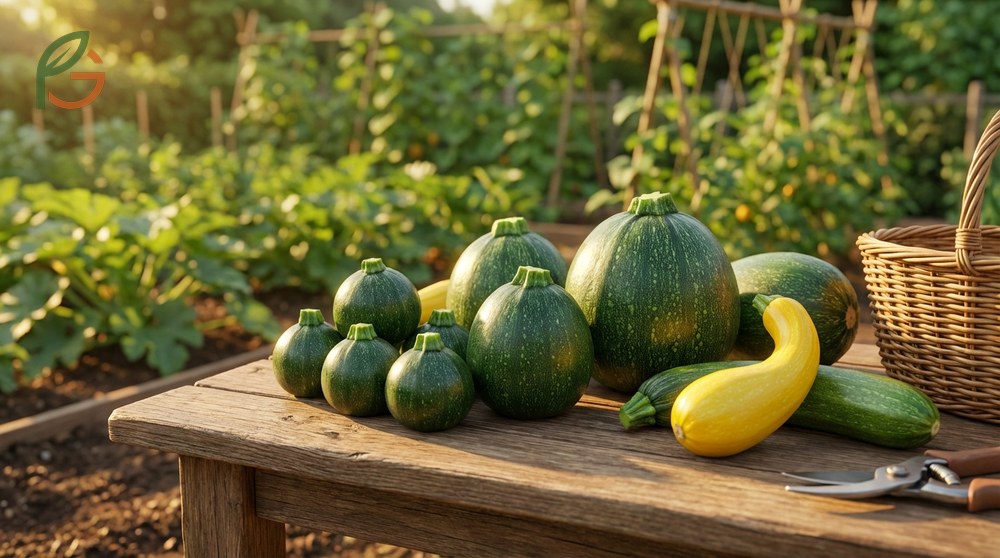
Different zucchini types require modified harvest timing based on their growth patterns and intended uses. Round varieties like Eight Ball produce spherical fruits harvested at 2 to 6 inches in diameter rather than length[6].
For grilling or roasting, harvest round types at 2 to 3 inches across. If you plan to stuff them, allow fruit to reach 4 to 6 inches in diameter to provide adequate interior space.
Crookneck and straightneck zucchini develop slightly different characteristics than standard varieties. These cultivars produce curved or straight yellow fruits with mild, nutty flavor. Harvest crookneck types at 4 to 6 inches in length before skin toughens and develops a woody texture[6].
Pattypan squash, while technically not zucchini, follows similar harvest principles. Pick these scalloped varieties when they measure 2 to 4 inches across for tender texture. Larger pattypan develops tough, fibrous flesh.
- Round varieties (Eight Ball, Piccolo): 2-3 inches diameter for grilling, 4-6 inches for stuffing
- Crookneck/straightneck: 4-6 inches long before skin becomes woody
- Pattypan squash: 2-4 inches across for optimal tenderness
- Yellow zucchini: Same 6-8 inch length as green varieties
- Cousa/Lebanese types: 4-6 inches for traditional preparation methods
Conclusion
The evidence is clear: when to harvest zucchini depends primarily on size, with 6 to 8 inches representing the optimal range for tender texture, concentrated flavor, and culinary versatility. Daily monitoring during peak production prevents fruit from exceeding this window, while proper cutting technique preserves plant health and encourages continued fruiting throughout the season.
Current horticultural guidance emphasizes harvesting frequency over perfection—removing fruit slightly early or slightly late both work better than letting oversized specimens signal the plant to stop production. FruitGarden recommends establishing a morning harvest routine during summer months when zucchini plants enter their most productive phase.
Frequently Asked Questions
How big should zucchini be before picking?
Zucchini reaches ideal harvest size at 6 to 8 inches long and 1 to 2 inches in diameter[1]. At this size, the flesh remains tender, seeds stay small, and flavor stays concentrated. You can harvest smaller (4-6 inches) for more delicate texture or wait until 8-10 inches for stuffing recipes, but anything beyond 10 inches develops tough skin and watery flesh.
Can you pick zucchini when it’s small?
Yes, picking zucchini at 4 to 6 inches delivers excellent results for grilling, pickling, and raw applications[6]. Smaller fruit contains more concentrated flavor and zero noticeable seeds. Harvesting small also encourages the plant to produce more fruit faster, potentially increasing total season yield compared to letting every fruit reach maximum size.
What happens if you pick zucchini too late?
Oversized zucchini develops several problems: seeds enlarge to full size, flesh becomes watery with diluted flavor, and skin toughens significantly—sometimes turning bitter[1]. You’ll need to peel the skin, scoop out seeds, and adjust recipes for extra moisture. More importantly, leaving large fruit on the plant signals it to stop producing new flowers and fruit.
How many days after flowering is zucchini ready to harvest?
Zucchini reaches harvestable size just 3 to 4 days after flowers fully open, especially during warm, sunny weather with adequate soil moisture[2]. This rapid development means you should track flower opening dates and check those specific fruits within a week. Cooler temperatures slow growth, potentially extending this window to 5-7 days.
Should you harvest zucchini every day?
Daily harvesting is recommended during peak production when warm weather accelerates fruit growth[3]. Zucchini can grow from ideal size to oversized within 24 hours during summer heat. If daily checking isn’t possible, harvest every other day as a minimum—but expect some fruit to exceed the optimal 6-8 inch range.
How do you know when zucchini is too old to pick?
Zucchini is past its prime when skin feels hard and resists piercing with your thumbnail, color looks dull rather than glossy, and the fruit exceeds 12 inches in length[5]. At this stage, you’ll find large seeds inside, watery flesh, and potentially bitter skin. While still edible after peeling and seeding, these oversized fruits work better in baked goods than fresh preparations.
What’s the best time of day to harvest zucchini?
Early to mid-morning provides optimal harvest conditions once dew has dried but before afternoon heat stresses plants[6]. At this time, fruit remains fully hydrated and crisp, and plant tissues are turgid, making clean cuts easier. Avoid harvesting when foliage is wet from rain or irrigation, as this spreads foliar diseases throughout the garden.