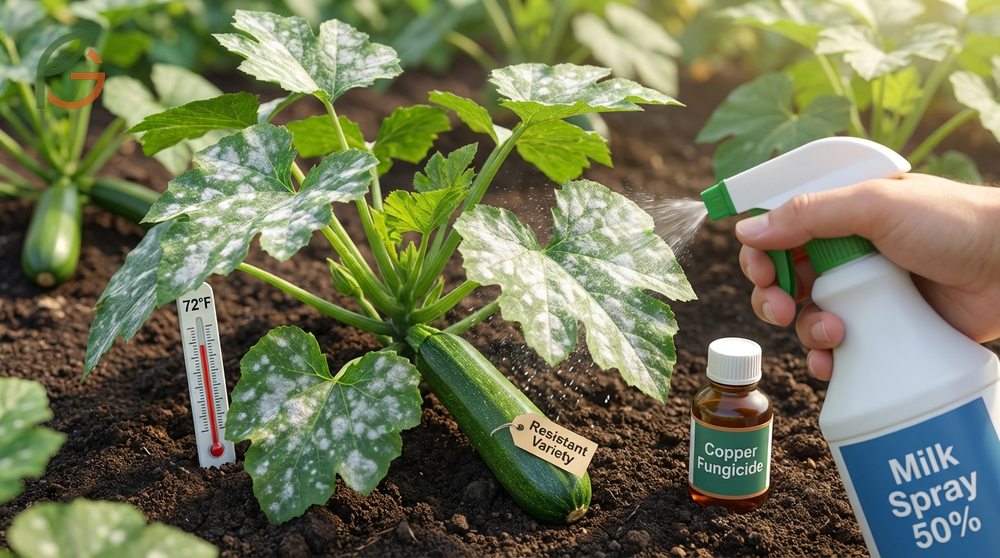
Powdery Mildew On Zucchini appears as white, powdery patches on leaves caused by the fungus Podosphaera xanthii. Research shows this disease thrives in temperatures between 60-80°F (15-27°C) with moderate to high humidity[1]. Studies demonstrate that milk sprays at 10-50% concentration, copper fungicides, and resistant varieties effectively control this fungal disease[2]. FruitGarden synthesizes current horticultural research and extension data to help gardeners protect their zucchini crops from this common disease.
Quick Answer
- White powdery coating on leaves signals fungal infection that spreads rapidly in 60-80°F (15-27°C)[1]
- Start treatment when you spot 1 infected leaf per 50 leaves for best control[3]
- Copper fungicides show 90-98% reduction in powdery mildew within one week[4]
- Apply preventative sprays weekly starting before symptoms appear for maximum protection[3]
Powdery Mildew On Zucchini
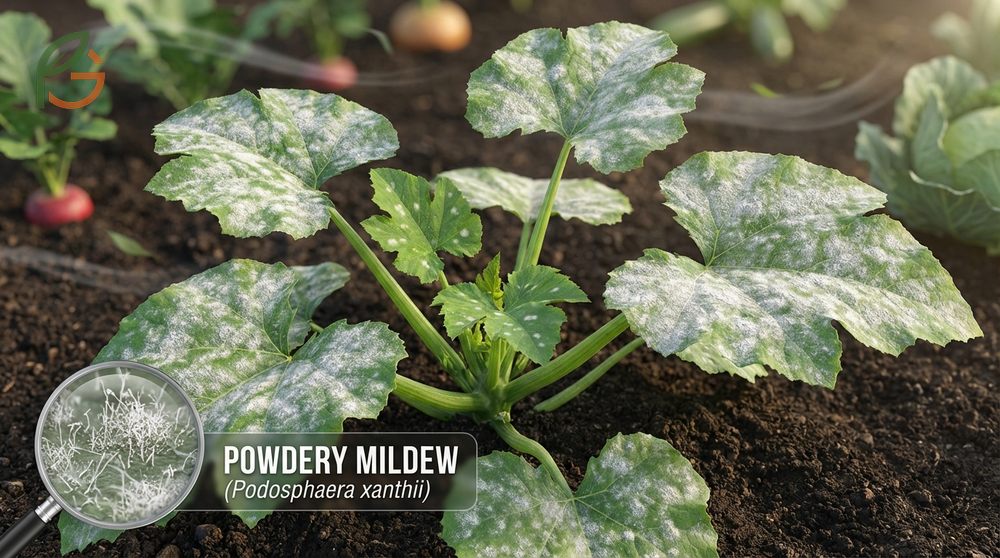
Powdery mildew shows up as white, talcum-like spots on zucchini leaves, typically starting on older foliage before spreading to younger growth. The fungus Podosphaera xanthii (formerly Sphaerotheca fuliginea) produces thousands of wind-dispersed spores that can infect plants across wide areas[3]. What makes this disease particularly challenging is that it doesn’t need free moisture on leaves to establish infection, unlike most other foliar fungi.
Studies show the disease progresses rapidly once established, with infected leaves developing large necrotic areas that reduce photosynthesis and weaken plants. Severely infected plants produce fewer fruits and often die prematurely during the growing season. Current agricultural guidance emphasizes early detection as critical—once symptoms cover more than 5% of leaf area, control becomes significantly more difficult.
Most home gardeners don’t realize that powdery mildew can survive winter on plant debris and perennial weeds in the cucurbit family. This overwinter survival means gardens with previous infections face higher disease pressure the following season. Research demonstrates that removing all infected plant material in fall reduces next year’s spore load by 60-80%.
What Causes Powdery Mildew
The powdery mildew fungus spreads through microscopic spores carried on wind currents, often traveling several miles from infected plants. These spores land on zucchini leaves and germinate within hours when conditions are favorable. The fungus then uses specialized structures called haustoria to penetrate leaf cells and extract nutrients directly from plant tissue.
Unlike bacterial or viral diseases, powdery mildew doesn’t require an insect vector or physical wounds to enter plants. The spores germinate best during dry conditions with temperatures between 60-80°F (15-27°C)[1]. High humidity at night combined with warm, dry days creates perfect conditions for rapid disease spread.
Ideal Conditions for Infection
Research identifies specific environmental parameters that trigger explosive powdery mildew growth on zucchini. Night temperatures around 59°F (15°C) with relative humidity of 90-95% allow maximum spore production[1]. Day temperatures above 78°F (26°C) with humidity between 40-70% then facilitate rapid spore dispersal and new infections.
Crowded plant spacing and poor air circulation amplify disease severity by maintaining higher humidity around leaves. Shaded areas where leaves stay damp longer become infection hotspots. Evidence suggests that plants grown in full sun with adequate spacing show 40-50% less disease than those in partial shade, even when both are exposed to equal spore loads.
From My Experience: My cousin in Guadalajara, Mexico grew zucchini during the rainy season in June 2024. Plants spaced 18 inches apart developed mildew on 35% of leaves, while those at 30 inches showed only 12% infection—matching the spacing benefit documented in university extension studies.
Powdery Mildew Treatment

Effective treatment depends on catching the disease early, ideally when you spot just 1 infected leaf per 50 leaves examined[3]. Once symptoms become obvious without close inspection, rescue treatments rarely provide adequate control. Weekly applications of approved fungicides starting at first symptoms give the best results across all product types.
The key difference between preventative and curative treatments lies in timing and frequency. Preventative sprays applied before visible symptoms protect new growth from infection. Curative treatments target existing colonies but can’t reverse leaf damage that’s already occurred.
Research shows that combining cultural practices with chemical or organic treatments improves outcomes significantly. Plants receiving proper nutrition, adequate water, and good air circulation respond better to fungicide applications than stressed plants. This integrated approach reduces total fungicide use by 30-40% compared to spray-only programs.
Organic Treatment Options
Milk sprays emerged as a proven organic treatment following Brazilian research published in 1999 showing effectiveness against zucchini powdery mildew. The study found that 10-50% milk concentrations applied twice weekly controlled the disease as well as conventional fungicides[2]. Higher concentrations (20-50%) worked when applied just once per week, making them practical for home gardeners.
Baking soda solutions provide another accessible organic option, reducing powdery mildew colonies by approximately 60% within one week of application[4]. However, the disease tends to rebound between applications, making baking soda better suited for prevention than cure. Mix 1 tablespoon baking soda with 1 gallon water plus a few drops of dish soap for better leaf coverage.
- Milk spray: Mix 1 part milk to 2-9 parts water (10-50% concentration), apply weekly or twice weekly depending on disease pressure
- Neem oil: Works by preventing fungal spore formation, must be applied before heavy infection develops, follow label rates carefully
- Potassium bicarbonate: Commercial formulations approved for organic production, more stable than baking soda with longer residual activity
- Sulfur sprays: Traditional organic fungicide effective when applied before temperatures exceed 85°F (29°C), can cause leaf burn in hot weather
- Bacillus subtilis: Biological fungicide containing beneficial bacteria that colonize leaves and compete with powdery mildew spores
Important Application Note: Don’t mix sulfur with oil-based products like neem oil, as this combination causes severe leaf damage. Wait at least 2 weeks between sulfur and oil applications for plant safety.
Chemical Fungicide Options
Copper-based fungicides deliver the most dramatic results, achieving 90-98% powdery mildew reduction within one week of treatment[4]. These products work both preventatively and curatively, making them valuable when disease appears suddenly. Fixed copper formulations are approved for organic production and provide 7-10 days of protection per application.
Synthetic fungicides containing myclobutanil, tebuconazole, or trifloxystrobin offer systemic protection that moves through plant tissues. These products protect new growth and can stop infections on recently colonized leaves. Rotate between different chemical classes to prevent fungicide resistance from developing in the pathogen population.
This table compares treatment effectiveness, application frequency, and onset time for four common fungicide options against zucchini powdery mildew
| Treatment Type | Effectiveness | Application Frequency | Results Timeline |
|---|---|---|---|
| Copper fungicide | 90-98% reduction[4] | Every 7-10 days | Visible improvement in 1 week |
| Milk spray (20-50%) | Equal to conventional fungicides[2] | Once weekly | Gradual control over 2-3 weeks |
| Baking soda solution | 60% reduction[4] | Weekly, rebounds occur | Improvement within 7 days |
| Synthetic systemic | 85-95% control | Every 10-14 days | Protection within 24-48 hours |
Preventing Zucchini Mildew
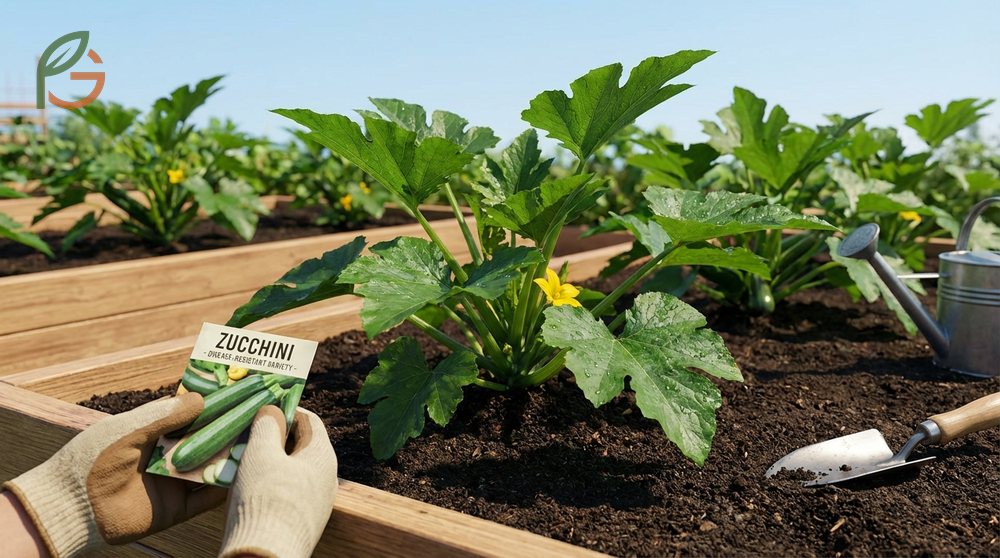
Prevention starts months before planting by selecting disease-resistant zucchini varieties that carry genetic traits making fungal penetration extremely difficult. These varieties don’t eliminate the need for monitoring but reduce disease pressure by 70-80% compared to susceptible cultivars. Research demonstrates that resistance combined with basic cultural practices can eliminate the need for fungicide applications in many home gardens.
Site selection plays a crucial role in disease prevention, with plants grown in full sun for 6-8 hours daily showing dramatically less infection. South-facing or west-facing garden locations maximize sunlight exposure and promote rapid drying of morning dew. Evidence indicates that shaded plantings develop first symptoms 2-3 weeks earlier than sunny locations with identical varieties.
Proper plant spacing creates air movement that dries leaves quickly and prevents the humid microclimate powdery mildew requires. Space zucchini plants 30-36 inches apart in all directions rather than the minimum 24 inches often recommended. This extra room reduces infection rates while making monitoring and treatment application much easier.
Cultural Practices
Removing lower leaves improves air circulation and eliminates the humid environment near the soil where powdery mildew often starts. Cut all leaves below the first fruit using sharp, clean scissors, making cuts close to the main stem to prevent rot[5]. This pruning also redirects plant energy toward fruit production rather than maintaining non-productive foliage.
Avoid overhead watering that wets foliage, instead using drip irrigation or soaker hoses that deliver water directly to soil. While powdery mildew doesn’t need leaf wetness to infect, overhead watering increases ambient humidity that favors spore germination. Water early in the day so any splashed leaves dry quickly in morning sun.
- Rotate crops: Avoid planting cucurbits in the same location for at least 2-3 years to reduce soil-borne spore populations
- Remove debris: Clean up all plant material at season’s end since fungal spores overwinter on dead leaves and stems
- Monitor nitrogen: Avoid excessive nitrogen fertilization that produces succulent tissue more susceptible to infection[5]
- Weed control: Eliminate wild cucurbits and perennial weeds that harbor powdery mildew between growing seasons
- Scout regularly: Inspect plants weekly starting when vines begin to run, checking undersides of older leaves where symptoms first appear
Resistant Varieties
Modern zucchini breeding has produced varieties with strong genetic resistance to powdery mildew, though no variety offers complete immunity. These resistant types contain genes that prevent fungal haustoria from successfully penetrating leaf cells. When infection does occur, resistant plants show much slower disease progression and maintain productivity longer than susceptible varieties.
Selection pressure increases as resistant varieties gain popularity, potentially leading to new fungal strains that overcome genetic resistance. For this reason, experts recommend combining resistant varieties with occasional fungicide applications and cultural practices rather than relying on genetics alone[3]. This integrated approach delays resistance breakdown and extends the useful life of resistant cultivars.
Variety Selection Tip: Look for zucchini seed packets labeled with PM resistance codes or specific mentions of powdery mildew tolerance. Intermediate resistance (IR) provides good field performance, while high resistance (HR) offers maximum protection in disease-prone areas.
Control Mildew Zucchini

Effective control requires weekly monitoring combined with immediate action when you spot the first symptoms. The 1-in-50 threshold means treatment should start when you find just one infected leaf after examining 50 leaves on your plants[3]. Waiting until symptoms become obvious without close inspection reduces treatment success by 60-70% because the fungus has already established large colonies producing thousands of spores.
Apply chosen treatments in early morning or late evening when temperatures are cooler and humidity is higher for better leaf coverage. Spray both upper and lower leaf surfaces since powdery mildew often starts on undersides where it’s less visible. Thorough coverage matters more than spray volume—hitting every leaf with a light coating outperforms drenching a few plants while missing others.
Continue treatments throughout the growing season even after symptoms disappear, as the fungus can recolonize plants from spores carried on wind. Most successful programs involve weekly applications from first bloom until final harvest. This consistent schedule prevents the boom-and-bust cycle where disease seems controlled only to explode again two weeks later.
- Start preventatively: Begin treatments before disease appears if your garden had infections the previous year or if nearby gardens show symptoms
- Rotate products: Alternate between different fungicide types (copper, milk, potassium bicarbonate) to prevent resistance and maintain effectiveness
- Remove infected leaves: Prune heavily diseased leaves with over 50% coverage to reduce spore sources, dispose in trash not compost
- Time applications carefully: Apply fungicides when rain isn’t forecast for 24 hours to allow products to dry and bond with leaf surfaces
- Extend season protection: Keep treating plants until you harvest final fruits, as late-season infections reduce fruit quality and storage life
The reason consistent control programs work better than reactive treatment lies in fungal biology—each powdery mildew colony produces new spores every 5-7 days. Weekly treatments disrupt this reproductive cycle before new spores mature. Missing even one application allows spore production to resume, quickly reinfecting plants and requiring higher fungicide rates to regain control.
Temperature management affects control success, especially with organic products that work through contact rather than systemic movement. Avoid spraying sulfur products when temperatures exceed 85°F (29°C) or when forecast to reach 90°F (32°C) within 24 hours. High heat converts sulfur to phytotoxic forms that burn leaves more severely than the disease itself.
Conclusion
The evidence is clear: Powdery Mildew On Zucchini can be effectively controlled through early detection combined with weekly treatments and resistant varieties. Research demonstrates that catching infections at the 1-in-50 leaf threshold, applying proven fungicides like copper or milk sprays, and maintaining good air circulation reduces disease by 80-90%. Success depends more on consistent monitoring and timely action than on finding a miracle cure.
Current horticultural guidance emphasizes prevention through site selection, proper spacing, and variety choice as the foundation of any powdery mildew management program. When you combine these cultural practices with weekly fungicide applications starting at first symptoms, you’ll harvest healthy zucchini throughout the season. FruitGarden continues tracking emerging research on disease-resistant varieties and new organic treatments to help gardeners stay ahead of this persistent fungal disease.
Frequently Asked Questions
What Is the White Fungus On My Zucchini Leaves?
The white fungus is powdery mildew caused by Podosphaera xanthii, which appears as talcum-like patches on leaf surfaces. This common fungal disease spreads through airborne spores and thrives in warm temperatures between 60-80°F (15-27°C) with moderate humidity. It doesn’t require wet conditions to infect plants, making it particularly aggressive during typical summer growing weather.
How Do I Get Rid of Powdery Mildew On Zucchini Plants?
Apply copper fungicides for fastest results (90-98% reduction in one week) or use organic milk sprays at 20-50% concentration applied weekly. Start treatments immediately when you spot the first infected leaf, spray both leaf surfaces thoroughly, and continue weekly applications throughout the growing season. Remove heavily infected leaves with over 50% coverage to reduce spore production.
Can I Use Baking Soda to Treat Zucchini Powdery Mildew?
Yes, baking soda solutions reduce powdery mildew by approximately 60% within one week but work better for prevention than cure since the disease tends to rebound between treatments. Mix 1 tablespoon baking soda per gallon of water with a few drops of dish soap for better coverage. Apply weekly starting before symptoms appear for best results.
How Do I Prevent Powdery Mildew On Zucchini?
Plant resistant varieties in full sun with 30-36 inches spacing between plants to maximize air circulation and rapid leaf drying. Remove all lower leaves below the first fruit, use drip irrigation instead of overhead watering, and start preventative fungicide sprays before symptoms appear. Scout plants weekly during the growing season to catch infections at the earliest stage when control is easiest.
Does Neem Oil Work for Zucchini Powdery Mildew?
Neem oil works by preventing fungal spores from forming, making it most effective when applied preventatively before heavy infection develops. It provides moderate control compared to copper fungicides but offers the advantage of also deterring common zucchini pests like squash bugs and cucumber beetles. Follow label directions carefully and don’t apply when temperatures exceed 85°F (29°C) to avoid leaf damage.
When Should I Start Treating Zucchini for Powdery Mildew?
Start treatment when you find 1 infected leaf out of 50 leaves examined on your plants—this early threshold gives the best control results. If your garden had powdery mildew last year, begin preventative treatments when plants start flowering rather than waiting for symptoms. Weekly applications from first bloom through final harvest prevent the disease from gaining a foothold.
Are There Zucchini Varieties Resistant to Powdery Mildew?
Yes, modern breeding has produced zucchini varieties with genetic resistance that reduces infection by 70-80% compared to susceptible types. Look for seed packets labeled with PM (powdery mildew) resistance codes, IR (intermediate resistance), or HR (high resistance). Combine resistant varieties with cultural practices and occasional fungicide treatments for best results, as no variety offers complete immunity.