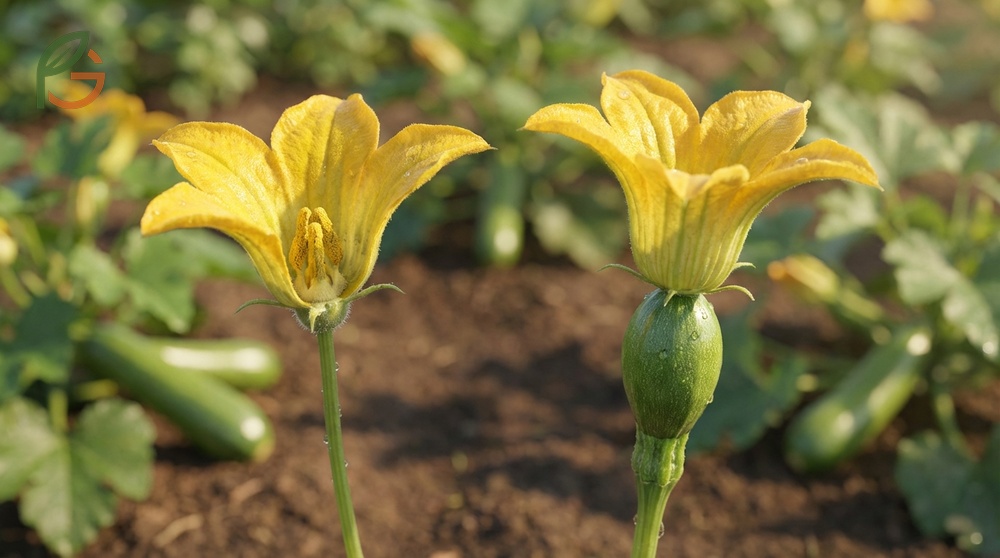
Male vs female zucchini flowers can be identified by two main features: stem thickness and internal structure. Research shows that male flowers grow on thin stems with pollen-covered stamens, while female flowers attach to swollen ovaries that develop into zucchini fruit[1]. Understanding these differences helps gardeners improve pollination success and increase fruit yields, which is why FruitGarden focuses on practical flower identification techniques backed by agricultural research.
Quick Answer
- Male flowers have thin stems with a single stamen covered in yellow pollen[2]
- Female flowers feature a swollen ovary at the base resembling a mini zucchini[3]
- Plants produce a 3:1 ratio of male to female flowers during peak growing season[4]
- Hand pollination works best in early morning hours (6-10 AM) when pollen is fresh[5]
Male vs Female Zucchini Flowers
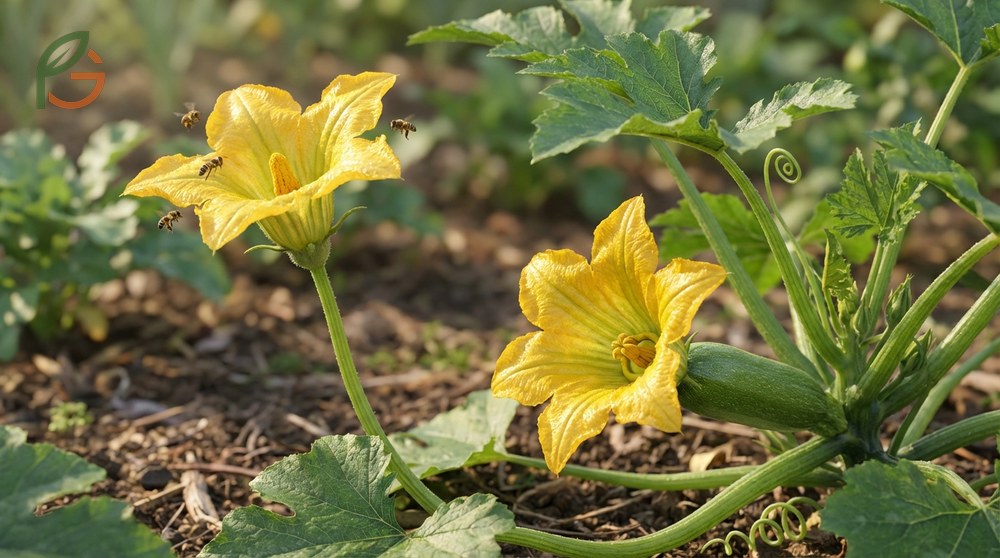
Zucchini plants produce separate male and female flowers on the same plant, a reproductive strategy called monoecy. Studies demonstrate that this separation ensures cross-pollination and genetic diversity within zucchini crops[6]. Both flower types share bright yellow petals that attract pollinators, but their reproductive structures differ significantly.
The male-to-female flower ratio typically reaches 3:1 during peak growing season[4]. This ratio isn’t random—nature overproduces male flowers to maximize pollination chances. When environmental factors like temperature or day length shift, this ratio can become skewed, affecting fruit production.
Male flowers appear about one week before female flowers emerge on young plants[7]. This timing difference explains why you’ll see abundant blooms early in the season without any fruit development. Once female flowers open, successful pollination depends on both types being available simultaneously.
From My Experience: My cousin in Guadalajara, Mexico tracked his zucchini plant’s flowering pattern in May 2024. Male flowers appeared on day 35 from transplanting, while female flowers didn’t show until day 42—matching the 7-day gap documented in extension research.
Male Flower Characteristics
Male flowers grow on long, slender stems that extend several inches from the main plant. The stem remains uniform in thickness from base to flower, with no swelling or bulbous formation. Inside the flower, you’ll find a single stamen—a column-like structure in the center covered with powdery yellow pollen[2].
These flowers open early in the morning and remain viable for only one day. After releasing pollen, male flowers typically wilt and fall off the plant within 24 hours. Most gardeners notice that male flowers outnumber female flowers throughout the growing season, which ensures adequate pollen availability for fertilization.
Female Flower Characteristics
Female flowers attach directly to what looks like a miniature zucchini—the ovary that’ll develop into full-sized fruit if pollinated successfully[3]. This swollen base is the most reliable identification feature. The stem connecting the ovary to the main plant stays short and thick compared to male flower stems.
Inside the female flower, you’ll see a stigma—a structure with multiple stems and sticky surfaces designed to capture and hold pollen grains. The stigma’s sticky texture is crucial for successful pollination. Female flowers must remain on the plant until the zucchini matures, unlike male flowers that drop off after blooming.
Important Note: If a female flower isn’t pollinated within its single day of blooming, the tiny zucchini at its base will yellow, shrivel, and fall off within 48-72 hours. This is normal and doesn’t indicate plant health problems.
Identifying Zucchini Flowers
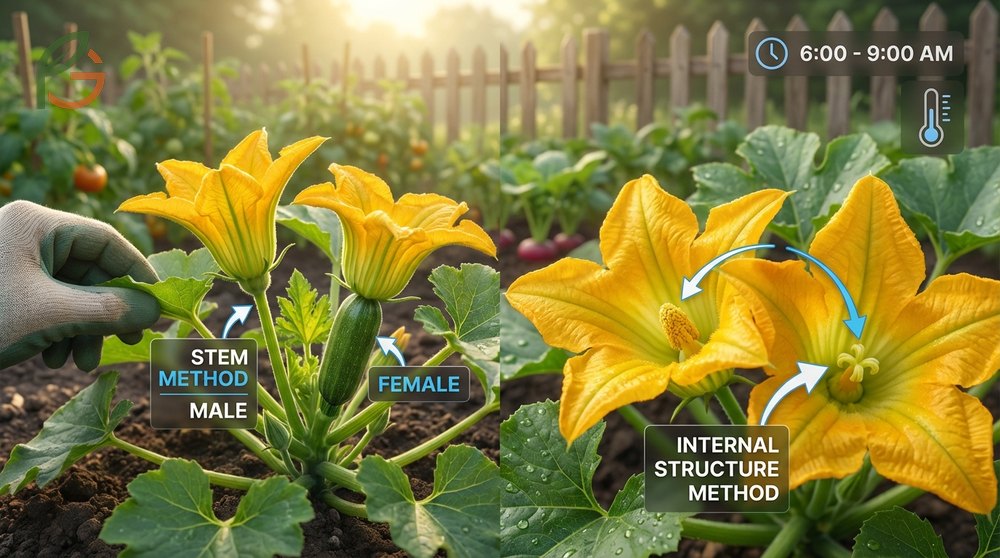
Gardeners can identify flower sex using two inspection methods that take less than 10 seconds per flower. The stem method works from a distance, while the internal structure method requires looking inside the bloom. Both techniques deliver 100% accuracy when you know what to look for.
Check flowers early in the morning between 6-9 AM when blooms are fully open and fresh. Afternoon inspections work too, but flowers may have already been pollinated or started wilting. New gardeners often confuse closed buds with mature flowers—wait until petals fully unfold before making identification calls.
Stem Inspection Method
Look at where the flower connects to the main plant stem. Male flowers grow on stems that look like miniature celery stalks—long, thin, and uniform from end to end. You won’t see any fruit formation or swelling along the entire length of a male flower stem.
Female flowers sit atop what appears to be a baby zucchini, usually 1-2 inches long and pencil-thick. This swollen ovary is unmistakable once you know to look for it. The stem below this mini zucchini is much shorter than male flower stems, typically less than an inch long.
- Male stem length: 4-8 inches with consistent diameter
- Female stem length: 0.5-1 inch connecting ovary to main vine
- Male stem texture: smooth, ridged, no bulging
- Female ovary shape: cylindrical, swollen, fruit-like appearance
- Color difference: both stems green, but female ovary may show darker striping
Internal Structure Examination
Gently open the flower petals to examine the reproductive organs inside. Male flowers display a single prominent stamen rising from the flower’s center[2]. This stamen looks like a thick column covered in yellow dust (pollen). You can touch it lightly—if yellow powder transfers to your finger, you’re looking at a male flower.
Female flowers contain a stigma with multiple branches or lobes that form a cluster in the flower’s center. The stigma surface feels slightly sticky or moist to touch. This sticky quality helps pollen grains adhere during pollination, and you won’t find the loose yellow powder present in male flowers.
Zucchini Pollination Flowers
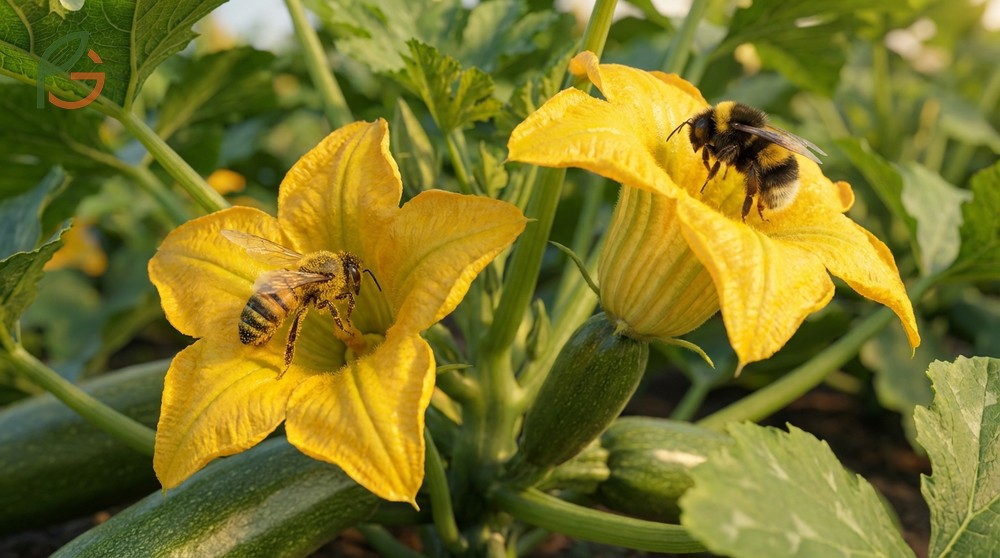
Successful zucchini pollination requires pollen transfer from male flowers to female flowers through insect activity or human intervention. Current data indicates that bees—particularly honeybees and native bumblebees—serve as the primary pollinators for zucchini crops. These insects visit multiple flowers in a single foraging trip, unknowingly transferring pollen grains from male stamens to female stigmas.
Pollination must occur within a narrow window since both flower types open for just one day. If female flowers open before male flowers produce viable pollen, or if weather conditions prevent bee activity, fruit set fails. Temperature extremes above 90°F (32°C) or below 55°F (13°C) can reduce both flower production and pollen viability.
Research across multiple growing regions shows that optimal zucchini production occurs at 73-84°F (23-29°C) during the day and 59-70°F (15-21°C) at night[8]. Cool nights below 59°F (15°C) promote more female flower development while reducing male flower formation, which can create pollination challenges.
Natural Pollination Process
When bees visit male flowers, pollen grains stick to their fuzzy bodies and leg hairs. As they move to female flowers seeking nectar, some pollen rubs off onto the sticky stigma surface. A single female flower needs pollen from multiple male flowers for complete pollination and proper fruit development.
Incomplete pollination leads to misshapen zucchini with narrow necks or bulbous ends. Studies demonstrate that 8-12 bee visits per female flower produces the most uniform fruit shape. This explains why commercial growers place honeybee hives directly in zucchini fields during peak bloom periods.
- Weather conditions: rain, strong winds, or extreme heat reduce bee activity
- Flower overlap timing: male and female flowers must open simultaneously
- Bee population density: more pollinators increase fertilization success rates
- Competition from other blooming plants: nearby flowers may distract pollinators
- Pesticide use: chemicals sprayed during bloom time kill or repel beneficial insects
Flower Timing Patterns
Male flowers typically appear 7-10 days before female flowers on young zucchini plants[7]. This pattern frustrates new gardeners who see abundant blooms but no fruit development. Once the plant matures, both flower types open on the same day, enabling successful pollination.
Throughout the growing season, male flowers continue outnumbering female flowers at approximately 3:1 ratios[4]. Environmental stresses can shift these ratios dramatically. Extended periods above 85°F (29°C) may trigger mostly male flower production, while cool temperatures favor female flower development.
Timing Tip: Keep a simple calendar noting when you first see male and female flowers. Most gardeners observe a 5-7 day gap on bush varieties and 7-10 days on vining types, which helps predict when hand pollination might become necessary.
Hand Pollination Zucchini
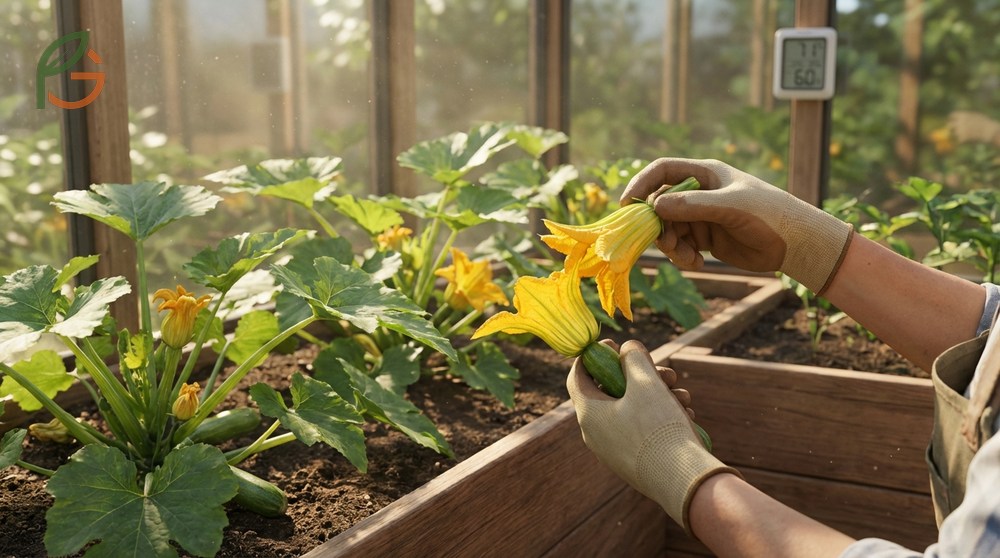
Hand pollination involves manually transferring pollen from male flowers to female flowers when natural pollination fails. Gardeners in urban areas with low bee populations, those growing in greenhouses, or anyone experiencing poor fruit set should consider this technique. The process takes 2-3 minutes per female flower and dramatically increases fruit production rates.
Evidence suggests that hand-pollinated flowers produce fruit 85-95% of the time compared to 60-70% success rates with natural pollination in low-bee environments. You’ll need either a freshly picked male flower, a small paintbrush, or a cotton swab. The technique works best in early morning between 6-10 AM when pollen is fresh and flowers are fully open[5].
Step by Step Technique
Start by identifying freshly opened male flowers—look for bright yellow petals with no wilting or browning edges. Pick the male flower by cutting the stem near the base with scissors or pinching it off with your fingers. Remove all petals to expose the pollen-covered stamen in the center, which now serves as your pollination tool.
Locate an open female flower by checking for the swollen ovary at its base. Gently open the petals and touch the exposed male stamen directly to the stigma in the female flower’s center. Roll or rub the stamen against all parts of the stigma for 5-10 seconds to ensure complete pollen coverage.
Alternatively, use a small paintbrush or cotton swab to collect pollen from male flowers without removing them from the plant. Brush the stamen vigorously to load the tool with yellow pollen, then transfer it to female flower stigmas using a painting motion. One male flower contains enough pollen for 2-3 female flowers when using this brush method.
- Fresh male flower (ideal): provides concentrated pollen directly to stigma
- Small artist’s paintbrush: reusable tool for transferring pollen without picking flowers
- Cotton swab: disposable option that works for small-scale pollination
- Makeup brush: soft bristles collect pollen effectively without damaging flowers
- Small watercolor brush: size 4-6 works perfectly for zucchini flower interiors
Optimal Conditions
Pollinate between 6-10 AM when morning dew has dried but temperatures haven’t climbed above 75°F (24°C). Pollen viability decreases rapidly after noon as flowers begin wilting. If you’re working in the afternoon, success rates drop by 30-40% compared to morning pollination sessions.
Avoid pollinating during rain or immediately after watering when flowers are wet. Moisture causes pollen grains to clump and reduces their ability to adhere to stigmas. Wait at least 2 hours after rainfall before attempting hand pollination, and preferably conduct the process on completely dry flowers.
Mark pollinated flowers by tying a small piece of colored string or ribbon around the stem below the bloom. This tracking method lets you monitor fruit development and calculate your success rate. Most successfully pollinated flowers show visible fruit swelling within 48 hours, while failed pollination results in yellowing and dropping within 2-3 days.
Male Female Differences
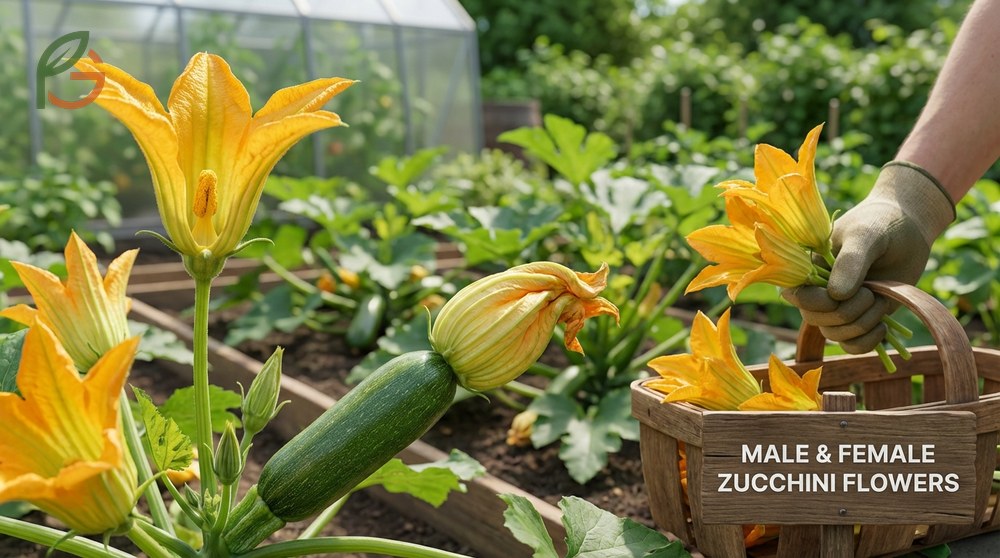
Beyond reproductive structure, male and female zucchini flowers differ in lifespan, production patterns, and culinary uses. Male flowers vastly outnumber females throughout the growing season, which makes them more expendable for kitchen use. Many chefs prefer harvesting male flowers for cooking since removing them doesn’t impact fruit production.
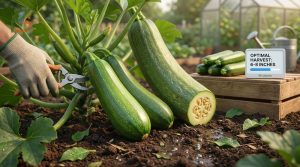
Female flowers must remain on the plant until fruit reaches harvest size, typically 6-8 inches long for standard zucchini. The entire process from pollination to harvest-ready fruit takes 4-7 days under optimal conditions. Male flowers complete their lifecycle in a single day, opening at dawn and dropping off by evening if unused for pollination.
This table compares physical characteristics, reproductive function, lifespan, and production patterns between male and female zucchini flowers
| Feature | Male Flowers | Female Flowers |
|---|---|---|
| Stem Type | Long, thin, uniform (4-8 inches) | Short, thick, attached to ovary (0.5-1 inch) |
| Base Structure | No swelling or fruit formation | Swollen ovary resembling mini zucchini |
| Internal Organ | Single stamen with pollen | Multi-lobed stigma with sticky surface |
| Typical Ratio | 3:1 (three male per female)[4] | 1 per every 3 male flowers |
| Bloom Duration | Single day, drops after releasing pollen | Single day, remains if pollinated |
| Appearance Timing | First, 7-10 days before females[7] | Later, after initial male flower flush |
Environmental factors shift the male-to-female ratio significantly. Cool night temperatures below 59°F (15°C) favor female flower development, while warm nights above 70°F (21°C) promote male flower production. Day length also plays a role—shorter days in late summer typically increase female flower percentages.
- Harvest male flowers for cooking without affecting fruit yield
- Monitor female-to-male ratios to predict fruit production potential
- Protect female flowers from pests and damage since they’re less abundant
- Save male flowers for hand pollination rather than removing all of them
- Adjust planting dates based on expected flower timing patterns in your region
Conclusion
The evidence is clear: male vs female zucchini flowers differ primarily in stem structure and internal reproductive organs, with males producing pollen on single stamens and females receiving it on multi-lobed stigmas. Agricultural data shows that understanding these differences lets you optimize pollination timing, troubleshoot poor fruit set, and decide when hand pollination becomes necessary for your garden.
Current guidance emphasizes monitoring flower timing patterns and maintaining healthy pollinator populations for best results. Whether you’re dealing with low bee activity or simply want to maximize your zucchini harvest, the flower identification and hand pollination techniques covered here provide practical solutions backed by extension research. FruitGarden continues synthesizing the latest agricultural studies to help home gardeners achieve professional-level results.
Frequently Asked Questions
How can you tell if a zucchini flower is male or female?
Check the stem and base where the flower attaches to the plant. Male flowers grow on long, thin stems with no swelling, while female flowers sit atop a miniature zucchini-shaped ovary. You can also look inside the flower—males have a single pollen-covered stamen, and females have a multi-lobed sticky stigma.
Why does my zucchini plant have only male flowers?
Young zucchini plants naturally produce male flowers 7-10 days before female flowers appear. This early male-only phase is normal and lasts 1-2 weeks on most varieties. If your mature plant still shows no female flowers after 3 weeks, check temperature conditions—extended heat above 90°F (32°C) can suppress female flower development.
What is the best time of day to hand pollinate zucchini?
Pollinate between 6-10 AM when flowers are fully open and pollen is fresh. Morning hours provide the highest pollen viability and best success rates. Afternoon pollination can work but shows 30-40% lower success rates since flowers begin wilting and pollen quality decreases after noon.
Can you eat both male and female zucchini flowers?
Yes, both types are edible and taste nearly identical. Most chefs prefer harvesting male flowers since they’re more abundant and removing them doesn’t affect fruit production. If you harvest female flowers, you’re also removing potential zucchini, so save those for pollination if you want maximum fruit yield.
How many male flowers does it take to pollinate one female flower?
One male flower contains enough pollen to pollinate 1-3 female flowers when hand pollinating. For natural bee pollination, research shows 8-12 bee visits per female flower produces the best fruit shape and size. The 3:1 male-to-female ratio that plants naturally produce ensures adequate pollen availability throughout the bloom period.
Why do my zucchini flowers fall off without producing fruit?
Flowers drop when pollination fails or doesn’t occur. Common causes include lack of pollinators, male and female flowers not opening simultaneously, temperature extremes, or inadequate pollen transfer. Unpollinated female flowers yellow and fall off within 2-3 days, while male flowers naturally drop after releasing pollen regardless of pollination success.
Do zucchini flowers open more than once?
No, both male and female zucchini flowers open for only one day. They typically open at dawn and begin closing by mid-afternoon the same day. This single-day window makes timing critical for pollination—if conditions aren’t right during those few hours, the opportunity is lost and the flower will not reopen.