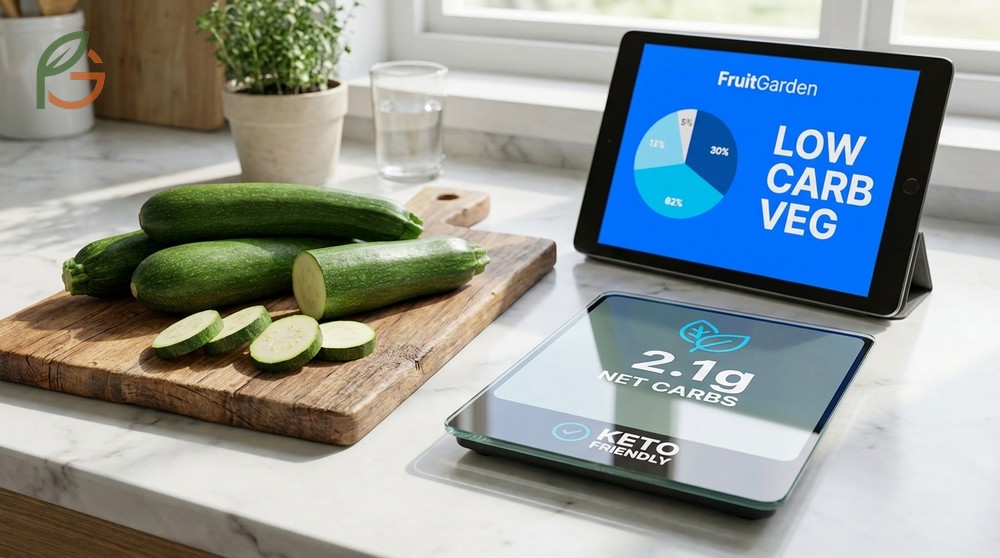
Is zucchini keto friendly? Yes, zucchini ranks among the most keto-compatible vegetables available. Studies show this summer squash contains only 2.1g net carbs per 100g[1], making it an ideal choice for maintaining ketosis while adding variety to your meals. FruitGarden synthesizes current nutritional research to help you make informed decisions about growing and consuming low-carb produce.
Quick Answer
Is Zucchini Keto Friendly
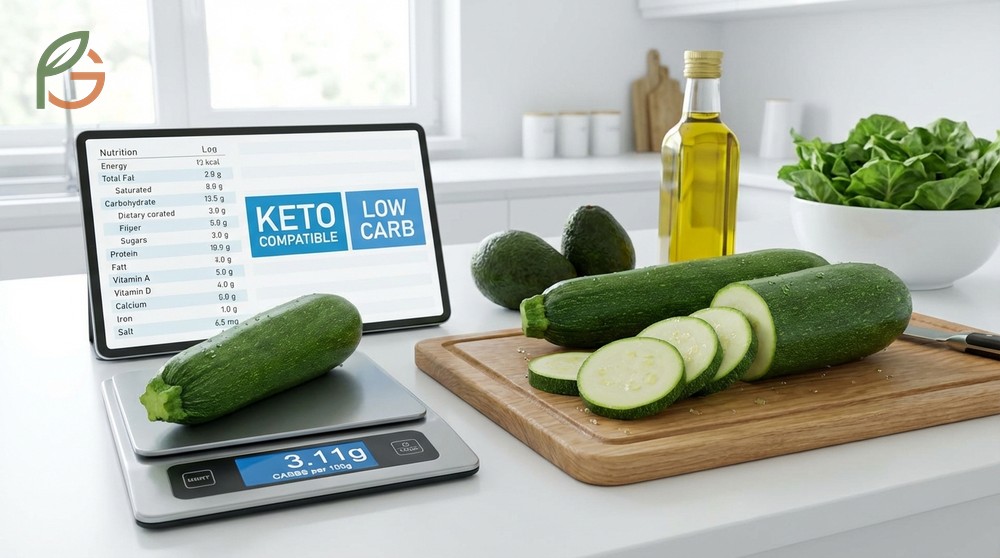
Research shows zucchini qualifies as one of the most keto-compatible vegetables you’ll find. With only 3.11g total carbohydrates per 100g[1], this summer squash fits comfortably within the standard ketogenic framework of 20-50g net carbs daily. The vegetable’s composition is 95% water[1], which explains its exceptionally low caloric density.
Current nutritional data demonstrates that zucchini delivers 21 calories per cup (124g)[4] while maintaining substantial nutrient density. The glycemic load of just 2 per serving means blood sugar remains stable after consumption. This matters because stable glucose levels support sustained ketosis.
Evidence indicates zucchini serves as a popular pasta substitute in ketogenic meal planning. The vegetable spiralizes into noodles that absorb sauces while contributing minimal carbohydrates. Most people following strict keto protocols report consuming 1-2 cups of zucchini daily without interrupting fat-burning metabolic states.
Why Zucchini Works on Keto
The macronutrient profile of zucchini aligns perfectly with ketogenic requirements. Each 100g serving provides 1g dietary fiber[1], which subtracts from total carbs to yield net carbs—the only carbohydrates that affect ketosis. This calculation reveals why zucchini doesn’t spike insulin like starchy vegetables.
Agricultural data shows summer squash varieties, including zucchini, maintain consistent carbohydrate levels across growing seasons. Unlike root vegetables that store starch, zucchini remains low-carb whether harvested young or allowed to mature. The vegetable also provides 1.5g protein per cup[4], supporting satiety without excess calories.
Important note: Cooking methods don’t significantly alter zucchini’s carb content, though oil-based preparations add fat calories that boost ketone production.
Comparing to Other Squashes
Winter squashes like pumpkin and butternut contain substantially higher carbohydrates than zucchini. Studies demonstrate pumpkin delivers 5.14g net carbs per 100g[3]—more than double zucchini’s count. This difference stems from starch accumulation in winter varieties bred for long-term storage.
The contrast becomes clearer when examining serving sizes. While you can consume 10 servings of zucchini daily[3] on keto, winter squash limits drop to just 3-4 servings[3]. This flexibility makes zucchini valuable for meal planning variety.
Zucchini Carb Content
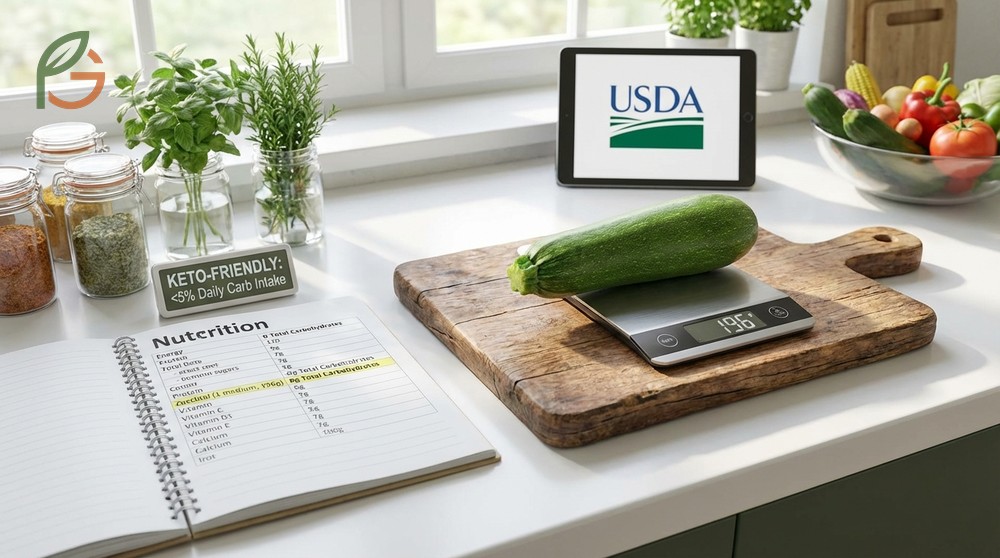
USDA nutrition databases report that one medium zucchini weighing 196g contains 6g total carbohydrates[2]. This amount represents less than 5% of the 130g carbohydrate intake recommended for standard diets. The minimal carb load allows for generous portions without compromising ketogenic goals.
Research across multiple food databases confirms consistency in zucchini’s carbohydrate content. Whether measuring by weight or volume, the vegetable maintains approximately 3-4g total carbs per standard serving[4]. This reliability helps with meal planning accuracy—you don’t need to worry about seasonal carb fluctuations like you would with fruits.
Current guidance emphasizes that raw, cooked, and frozen zucchini maintain similar carbohydrate profiles. Steaming or grilling doesn’t concentrate sugars the way roasting root vegetables does. Most preparation methods preserve the low-carb advantage that makes zucchini a keto staple.
Total vs Net Carbs
The distinction between total and net carbohydrates determines zucchini’s keto compatibility. Total carbs include all carbohydrate types—sugars, starches, and fiber—while net carbs exclude fiber because it doesn’t raise blood glucose. Zucchini’s 2g fiber per medium squash[2] significantly reduces its net carb count.
Evidence shows that 68% of zucchini’s carbohydrates qualify as net carbs[1], with the remaining 32% coming from indigestible fiber. This ratio means a 100g serving contributes only 2.11g net carbs[1] toward your daily limit. The calculation (total carbs minus fiber) becomes crucial when tracking macros for ketosis maintenance.
Fiber Breakdown
Zucchini provides both soluble and insoluble fiber types that support digestive health. The 1.2g fiber per cup[4] represents approximately 4% of the recommended daily intake. While not a high-fiber vegetable, zucchini contributes meaningful amounts when consumed in typical keto portions of 2-3 cups daily.
Studies demonstrate that zucchini’s fiber content remains concentrated in the skin and seeds. Peeling reduces fiber by roughly 30%, which slightly increases net carb impact. Most keto practitioners consume zucchini unpeeled to maximize fiber benefits and minimize carb absorption.
Pro tip: Smaller zucchini (6-8 inches) contain proportionally more fiber than oversized specimens, making them the better choice for maximizing the net carb advantage.
Net Carbs Zucchini
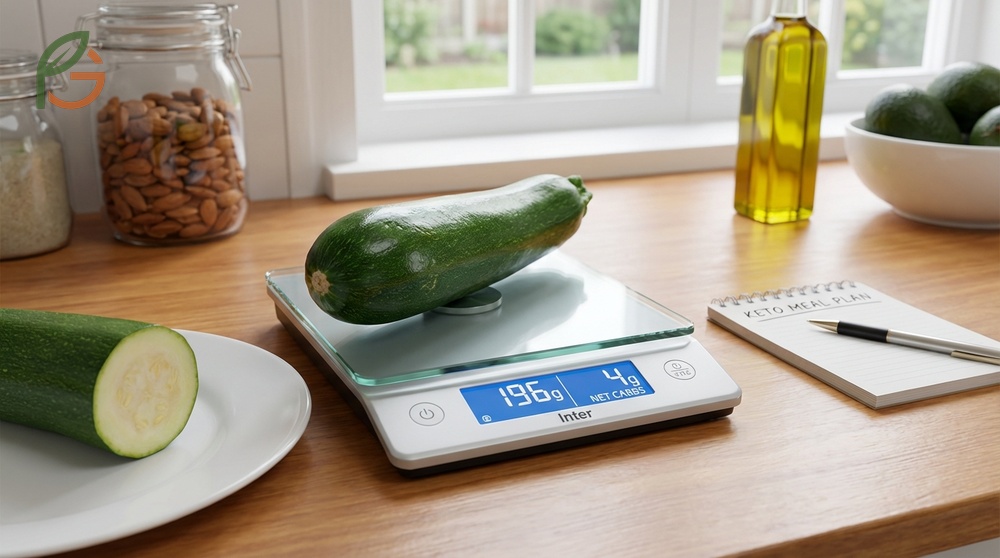
The net carb calculation for zucchini reveals why this vegetable dominates keto meal plans. One whole medium zucchini (approximately 196-200g) delivers 4g net carbs[2] after subtracting fiber. This amount represents just 8-20% of a strict keto dieter’s daily carb allowance, leaving substantial room for other nutrient sources.
Research shows that per-100g serving sizes make tracking easier for most people. At 2.1g net carbs per 100g[1], you can quickly multiply by actual consumption amounts. A 300g serving (about 1.5 medium zucchini) would contain roughly 6.3g net carbs—still comfortably within keto parameters for a single meal.
Current data indicates that preparation methods minimally affect net carb counts. Whether you spiralize zucchini into noodles, grill slices, or blend into soups, the fiber-to-carb ratio remains stable. What often gets overlooked is that cooking slightly increases digestibility but doesn’t chemically alter the carbohydrate structure.
This table compares net carbohydrates, fiber content, and calorie counts across four common zucchini portion sizes from 100g to one full medium zucchini
| Portion Size | Weight | Total Carbs | Fiber | Net Carbs | Calories |
|---|---|---|---|---|---|
| 100g serving | 100g | 3.11g[1] | 1.0g[1] | 2.11g[1] | 17 |
| 1 cup chopped | 124g | 3.9g[4] | 1.2g[4] | 2.7g | 21[4] |
| 1 medium zucchini | 196g | 6g[2] | 2g[2] | 4g[2] | 33[2] |
| 2 cups (keto meal) | 248g | 7.8g | 2.4g | 5.4g | 42 |
- Choose smaller zucchini (under 8 inches) for optimal fiber-to-carb ratios
- Keep the skin on to preserve fiber content that reduces net carbs
- Pair zucchini with high-fat ingredients like olive oil or butter to enhance ketone production
- Track net carbs rather than total carbs when planning daily macros
- Use zucchini noodles as pasta substitutes to dramatically lower meal carb counts
Keto Vegetable Options
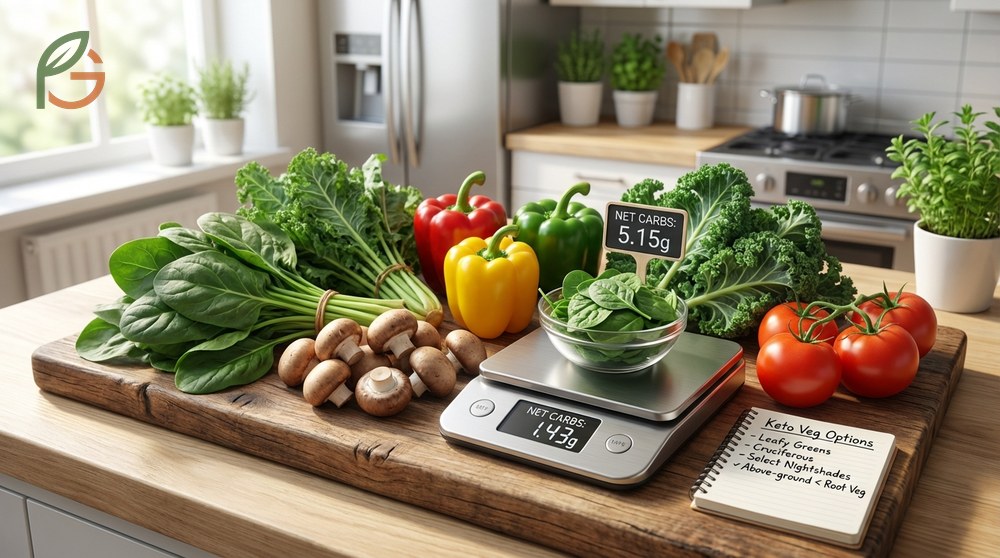
The ketogenic diet accommodates numerous low-carb vegetables beyond zucchini. Research identifies leafy greens, cruciferous vegetables, and select nightshades as compatible options. Spinach delivers only 1.43g net carbs per 100g[3], while kale provides 5.15g[3]—both fitting comfortably within daily carb limits.
Studies demonstrate that above-ground vegetables generally contain fewer carbohydrates than root vegetables. Bell peppers, mushrooms, and tomatoes work well on keto despite containing slightly more carbs than leafy greens. The key distinction lies in avoiding starchy vegetables like corn, potatoes, and sweet potatoes that can disrupt ketosis with 15-25g net carbs per serving.
Current nutritional guidance emphasizes variety in vegetable selection to ensure adequate micronutrient intake. While zucchini provides vitamin C and manganese, rotating among low-carb options delivers broader nutritional coverage. Most successful keto practitioners consume 5-7 different low-carb vegetables weekly to balance nutrition with carb restrictions.
- Watercress: 0.79g net carbs per 100g[3]—the lowest-carb leafy green
- Romaine lettuce: 1.19g net carbs[3]—ideal for wraps and salads
- Radishes: 1.8g net carbs[3]—provides satisfying crunch
- Swiss chard: 2.1g net carbs[3]—nutrient-dense leafy option
- White cabbage: 3.07g net carbs[3]—versatile for fermentation
- Cauliflower: approximately 2-3g net carbs—popular rice substitute
- Broccoli: roughly 4g net carbs per cup—high in fiber and vitamins
Vegetables to limit: Carrots (6.78g), onions (8.71g)[3], and winter squash contain moderate carbs—consume in small portions only.
Zucchini Serving Keto
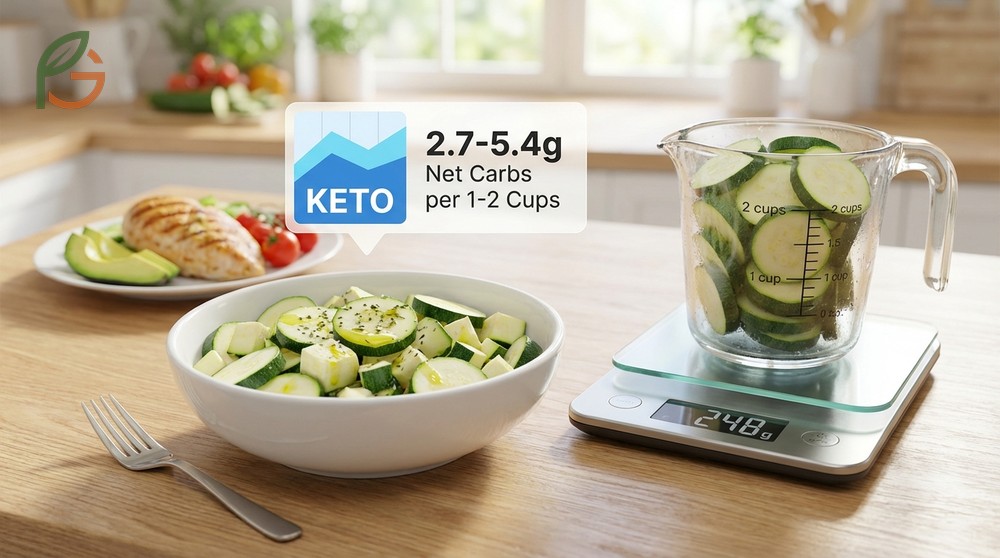
Evidence suggests you can consume substantial zucchini quantities while maintaining ketosis. The standard keto serving ranges from 1-2 cups (124-248g), delivering 2.7-5.4g net carbs. Most people following strict 20g daily carb limits allocate 5-7g net carbs per meal, making zucchini an efficient vegetable choice that leaves room for proteins and fats.
Research indicates that optimal serving sizes depend on individual carb tolerance and activity levels. Sedentary individuals maintaining ketosis typically stay below 20g net carbs daily, while active people can reach 50g without exiting fat-burning states. This flexibility means active keto dieters might consume 3-4 cups of zucchini (approximately 8-10g net carbs) spread across multiple meals.
Current data shows that meal timing with zucchini doesn’t significantly affect ketosis maintenance. Whether consumed at breakfast, lunch, or dinner, the low glycemic impact prevents insulin spikes. Many keto practitioners use zucchini noodles for dinner as a pasta replacement, consuming 2-3 cups in a single meal without metabolic disruption.
For breakfast (6-9 AM), zucchini works well when shredded into egg scrambles or frittatas. Pairing 1 cup shredded zucchini with 3 eggs and cheese creates a satisfying meal with under 5g net carbs total. This combination provides sustained energy for 4-5 hours without triggering hunger.
Lunch preparations (11 AM-2 PM) benefit from zucchini’s versatility in salads and stir-fries. Slicing 1.5 cups of raw zucchini into ribbons with mixed greens, olive oil, and grilled chicken delivers volume and satisfaction while contributing only 4g net carbs. The high water content promotes fullness without caloric excess.
Dinner servings (5-8 PM) typically accommodate larger zucchini portions because evening meals often represent the main eating occasion. Spiralized zucchini noodles (2-3 cups) topped with meat sauce or pesto provide comfort food satisfaction. The 5-7g net carbs from the vegetable base allows for rich, fatty sauces that accelerate ketone production overnight.
- Start with 1-cup servings if new to keto to assess individual carb tolerance
- Increase to 2-3 cups once fat-adapted (typically after 2-3 weeks in ketosis)
- Combine zucchini with high-fat proteins like salmon or ribeye steak for optimal macros
- Salt zucchini and drain for 10 minutes before cooking to remove excess water
- Track net carbs from all meal components, not just zucchini, for accurate daily totals
Serving tip: Raw zucchini contains slightly more volume per gram than cooked, making it appear more filling in salads. Cooking reduces water content by 10-15% but doesn’t change net carb counts.
Conclusion
The evidence is clear: is zucchini keto friendly—absolutely yes. With only 2.1g net carbs per 100g[1] and a glycemic index of 15[1], this versatile summer squash ranks among the most compatible vegetables for ketogenic diets. Current nutritional data confirms you can consume up to 10 servings daily[3] while maintaining ketosis, making zucchini an invaluable tool for meal variety.
Agricultural research compiled by FruitGarden emphasizes that growing your own zucchini ensures peak freshness and maximum nutrient retention. Summer squash thrives in warm climates with consistent watering, producing abundant harvests that support sustainable keto eating throughout the growing season.
Medical Disclaimer
Important Medical Disclaimer: This content is for informational and educational purposes only. It is not intended as a substitute for professional medical advice, diagnosis, or treatment. Always consult a qualified healthcare professional or registered dietitian before starting any new diet, including ketogenic diets, especially if you have diabetes, cardiovascular conditions, kidney disease, or other medical concerns. Individual carbohydrate tolerance varies, and what works for one person may not be appropriate for another.
Frequently Asked Questions
How many carbs are in a whole zucchini?
One medium zucchini (196g) contains 6g total carbohydrates and 2g fiber[2], resulting in 4g net carbs. This amount fits easily within the 20-50g daily net carb limit for ketogenic diets, allowing you to consume 1-2 medium zucchini per day while maintaining ketosis.
Can I eat zucchini every day on keto?
Yes, you can eat zucchini daily on keto. Research shows you can consume up to 10 servings per day[3] while staying within ketogenic parameters. Most people eat 1-3 cups daily (2.7-8.1g net carbs) as part of varied meal plans, which provides volume and nutrients without disrupting fat-burning metabolism.
Is zucchini better than cauliflower for keto?
Zucchini and cauliflower both work excellently on keto, with similar net carb counts (2-3g per 100g). Zucchini provides slightly fewer calories and works better as pasta substitutes, while cauliflower offers more versatility for rice and mashed potato replacements. Choose based on recipe needs rather than carb differences—both vegetables support ketosis equally well when consumed in typical serving sizes.
Does cooking zucchini increase its carbs?
No, cooking doesn’t increase zucchini’s carbohydrate content. Studies confirm that steaming, grilling, or sautéing removes water but doesn’t chemically alter carbs. A 100g serving contains 3.11g total carbs[1] whether raw or cooked. Cooking may concentrate carbs per cup due to water loss, so weigh zucchini raw for accurate macro tracking.
What is the lowest carb vegetable for keto?
Watercress ranks as the lowest-carb vegetable at 0.79g net carbs per 100g[3], followed by romaine lettuce at 1.19g[3]. Spinach, celery, and radishes also provide under 2g net carbs per serving. Zucchini at 2.11g[1] offers more versatility in cooking applications than ultra-low-carb leafy greens.
How much zucchini can I eat in one keto meal?
Most keto practitioners consume 1-3 cups of zucchini per meal (approximately 2.7-8.1g net carbs). Active individuals following moderate keto (30-50g daily carbs) can eat up to 4 cups in a single meal without exiting ketosis. Start with 1-2 cup servings and adjust based on your individual carb tolerance and remaining daily macro allowance from other food sources.
Should I peel zucchini for lower carbs?
No, keep the skin on. Zucchini skin contains approximately 30% of the vegetable’s fiber content, which reduces net carbs by lowering the digestible carbohydrate count. Peeling removes beneficial fiber and slightly increases the net carb impact per serving. The skin also provides antioxidants and maintains structural integrity during cooking, especially when spiralizing into noodles.