
Nutritional value in watermelon is impressive—one cup delivers just 46 calories while providing 12.3mg of vitamin C, 42.6mcg of vitamin A, and an astounding 6890mcg of lycopene[1]. Research shows watermelon’s 92% water content makes it one of summer’s most hydrating fruits while delivering essential vitamins and powerful antioxidants[1]. At FruitGarden, we synthesize current nutritional data to help home gardeners understand exactly what their harvest provides.
Quick Answer
Nutritional Value in Watermelon
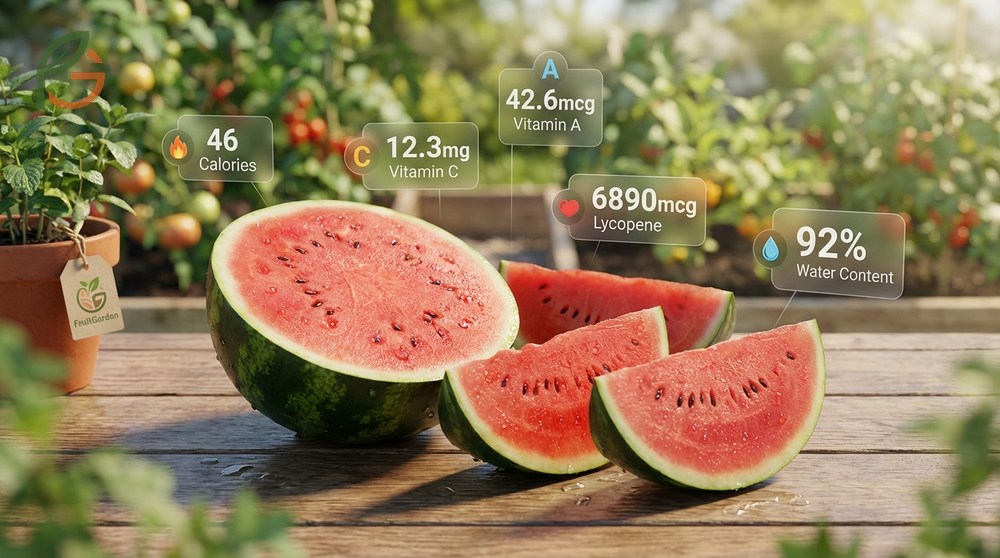
Studies demonstrate that watermelon ranks among the most nutrient-dense fruits per calorie. One cup of diced watermelon (152g) provides 46 calories, 0.9g protein, 11.5g carbohydrates, and just 0.2g fat[1]. This profile makes watermelon an ideal choice for weight management.
Current data indicates that watermelon’s low calorie density doesn’t compromise its nutritional punch. Research shows fully ripe red watermelon contains significantly higher nutrient levels than less ripe fruit[1]. This matters because ripeness directly affects vitamin and antioxidant concentration.
Evidence suggests that watermelon’s nutritional profile surpasses many other summer fruits when comparing vitamins per calorie. The fruit delivers substantial vitamin C and A without the calorie load found in tropical fruits like mangoes or bananas.
Calories in Watermelon
The caloric content in watermelon varies by serving size but remains remarkably low. One cup of diced watermelon contains approximately 46 calories[3]. A medium wedge (about one-sixteenth of a melon, or 286g) contains roughly 86 calories[1].
For those tracking macros, watermelon fits easily into most dietary plans. The high water content means you can eat satisfying portions without exceeding calorie targets. Most people find that 2 cups (about 300 calories worth) provides substantial fullness.
Macronutrient Breakdown
Watermelon’s macronutrient composition is straightforward and diet-friendly. The 11.5g of carbohydrates per cup includes 0.6g fiber and 9.4g natural sugars. Half the sugar content is fructose, with smaller amounts of glucose and sucrose.
The protein content remains minimal at 0.9g per cup, while fat is nearly negligible at 0.2g[1]. This makes watermelon essentially a carbohydrate source with exceptional micronutrient density.
Important Note: Watermelon has a glycemic index of 76, which is high. However, the glycemic load for a half-cup serving is only 4, considered low[1]. This means blood sugar impact remains minimal when eating typical portions.
What Vitamins Are in Watermelon
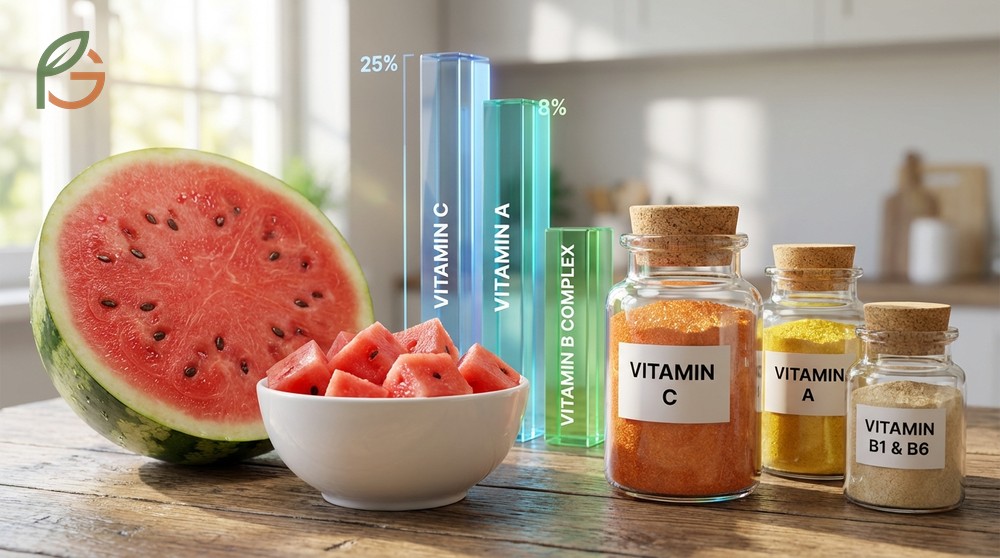
Watermelon contains a robust vitamin profile dominated by vitamins C and A. Research shows that two cups of watermelon provide 25% of your daily vitamin C requirement and 8% of vitamin A[2]. These aren’t trivial amounts—they represent meaningful contributions to daily nutritional needs.
Current nutritional analysis reveals watermelon also supplies B vitamins, though in smaller quantities. One cup provides approximately 8% of thiamin (B1) and vitamin B6, plus 6% of pantothenic acid (B5)[1]. These vitamins support energy metabolism and nervous system function.
What often gets overlooked is that vitamin content peaks when watermelon reaches full ripeness. Underripe fruit contains significantly fewer vitamins and antioxidants, which matters for home gardeners deciding when to harvest.
Vitamin C Content
Evidence indicates watermelon serves as an excellent vitamin C source without the acidity of citrus fruits. One cup delivers 12.3mg of vitamin C[1]. This matters for immune function, collagen formation, and iron absorption.
For those who can’t tolerate acidic fruits, watermelon provides vitamin C without gastric discomfort. The vitamin C content supports wound healing and acts as a powerful antioxidant, protecting cells from oxidative damage.
Vitamin A in Watermelon
Watermelon provides vitamin A primarily through beta-carotene, the pigment responsible for its red color. One cup contains 42.6mcg of vitamin A[1]. Your body converts beta-carotene into active vitamin A as needed for eye health and immune function.
Studies demonstrate that consuming watermelon juice effectively raises blood levels of both beta-carotene and vitamin A[4]. This bioavailability means your body can actually use the nutrients, not just pass them through unabsorbed.
B Vitamins and Other Nutrients
Beyond vitamins C and A, watermelon supplies a spectrum of B vitamins crucial for energy production. The fruit provides 8% of daily vitamin B6 and thiamin needs per two-cup serving[2]. Vitamin B6 supports protein metabolism and neurotransmitter synthesis.
Current data shows watermelon also contains about 7% of daily copper requirements and 5% of biotin per cup[1]. These trace nutrients play essential roles in metabolic processes often overlooked in nutritional discussions.
Watermelon Antioxidants and Lycopene
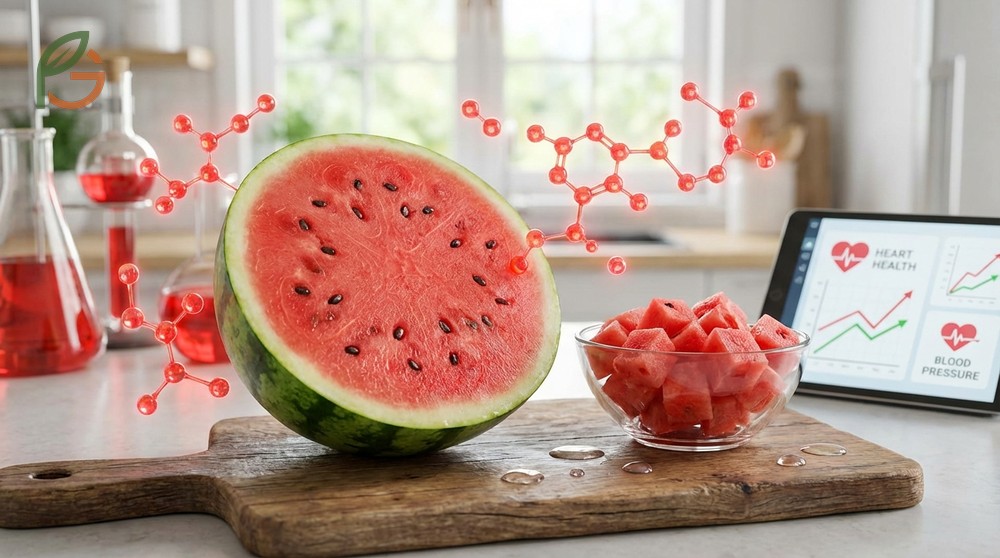
Lycopene represents watermelon’s most impressive nutritional feature. Fresh watermelon contains approximately 6890mcg of lycopene per cup[1]. This powerful antioxidant gives watermelon its characteristic red color and provides substantial health benefits.
Research shows lycopene may help reduce blood pressure and protect cardiovascular health. Studies link regular lycopene consumption to reduced risk of certain cancers and age-related macular degeneration. The compound works by neutralizing free radicals that damage cells.
What makes watermelon unique is lycopene bioavailability. Unlike tomatoes, which require cooking to release lycopene, watermelon’s lycopene is readily available in raw fruit. You don’t need to process or cook watermelon to access its antioxidant power.
Lycopene Content Comparison
Watermelon surpasses tomatoes as a lycopene source. Fresh watermelon provides 4530mcg of lycopene per 100g serving, while tomatoes contain only 2860mcg in the same amount[4]. This 58% higher concentration makes watermelon the superior choice for lycopene intake.
The lycopene advantage extends beyond quantity to absorption. Studies demonstrate that watermelon juice effectively raises blood lycopene levels, confirming your body can utilize this nutrient efficiently[4].
This table compares lycopene content in micrograms between watermelon and tomatoes across three common serving sizes
| Food Item | Per 100g | Per Cup | Advantage |
|---|---|---|---|
| Watermelon (fresh) | 4530mcg[4] | 6890mcg[1] | 58% higher than tomatoes |
| Tomatoes (raw) | 2860mcg[4] | ~4350mcg | Lower bioavailability when raw |
Antioxidant Benefits
Beyond lycopene, watermelon contains additional antioxidants including vitamin C and beta-carotene. These compounds work synergistically to combat oxidative stress throughout your body. Research links regular antioxidant intake to reduced inflammation and slower aging processes.
Studies show watermelon’s antioxidant capacity may help reduce post-exercise muscle soreness. The combination of antioxidants and amino acid citrulline supports recovery after physical activity, making watermelon popular among athletes.
Minerals, Potassium, and Citrulline
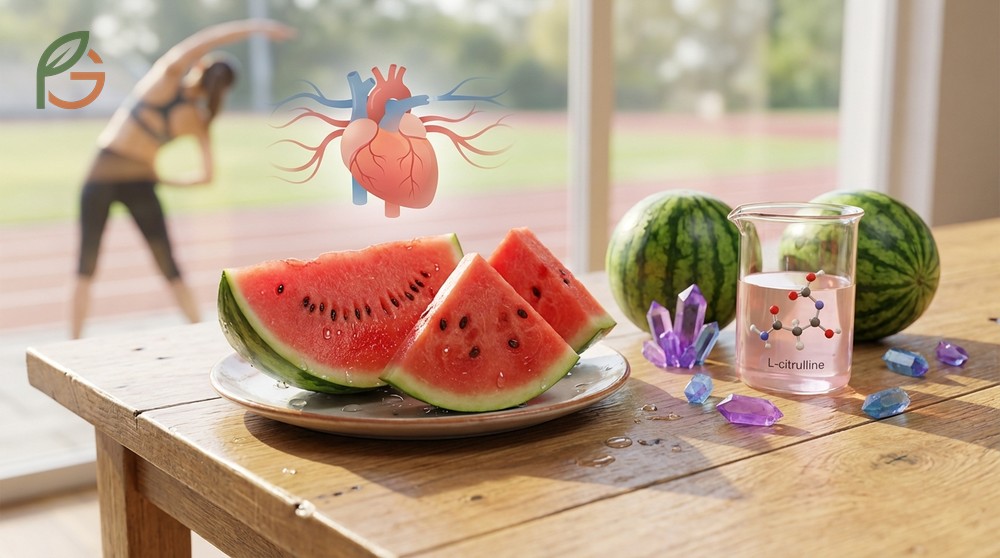
Watermelon supplies essential minerals, with potassium leading the list. Two cups provide approximately 6% of daily potassium needs[2]. This electrolyte regulates fluid balance, nerve signals, and muscle contractions throughout your body.
Current research highlights watermelon as a significant source of L-citrulline, an amino acid not commonly found in fruits. Studies suggest citrulline may improve exercise performance and support cardiovascular function[4]. Your body converts citrulline to arginine, another amino acid that produces nitric oxide.
Evidence indicates watermelon also provides magnesium (6% of daily needs) and smaller amounts of phosphorus, calcium, and iron[2]. These minerals support bone health, oxygen transport, and hundreds of enzymatic reactions.
Potassium for Electrolyte Balance
Potassium in watermelon functions as a natural electrolyte replacement. This matters during hot summer months when electrolyte loss through sweating increases. Watermelon provides potassium without the added sugars found in commercial sports drinks.
Research demonstrates that adequate potassium intake supports healthy blood pressure levels and reduces cardiovascular disease risk. For those monitoring sodium intake, watermelon’s potassium content (170mg per cup) combined with minimal sodium (1.5mg) creates an ideal ratio for heart health[1].
Citrulline Amino Acid Benefits
Citrulline represents one of watermelon’s most researched bioactive compounds. Studies show this amino acid may improve muscle protein synthesis and boost exercise performance, particularly in older adults[4]. The white rind contains even higher citrulline concentrations than the red flesh.
Evidence suggests citrulline supplementation reduces ankle blood pressure, a predictor of cardiovascular health[4]. Current research also links citrulline to improved immune function, especially in individuals with inflammatory conditions.
Gardening Tip: Don’t discard watermelon rinds. The white part between the red flesh and green skin contains the highest citrulline concentration. Some people pickle or stir-fry rinds to access these additional nutrients.
Hydration and Nutritional Benefits

Watermelon’s 92% water content makes it one of the most hydrating foods available[1]. This high water content explains why watermelon feels so refreshing on hot days. Each bite delivers hydration plus dissolved vitamins and minerals your body needs.
Research demonstrates that eating water-rich fruits like watermelon contributes meaningfully to daily hydration needs. For children or adults who struggle to drink enough plain water, watermelon offers an appealing alternative. You get essential micronutrients along with fluid intake.
Studies link watermelon consumption to improved satiety and weight management. One trial found overweight adults who ate watermelon instead of low-fat cookies felt more satisfied and showed reductions in body weight, BMI, and blood pressure[1]. The combination of high water content and low calorie density creates volume without excess calories.
Current evidence suggests watermelon’s alkaline-forming properties may help balance dietary pH. Most Americans consume acid-forming diets heavy in meat, dairy, and processed foods. Watermelon and other fresh fruits help counteract this acidity when fully ripe.
- Provides fluid equivalent to drinking water plus dissolved nutrients
- Supports electrolyte balance through natural potassium content
- Creates satiety with minimal calories due to high water volume
- Delivers antioxidants in a hydrating, low-calorie package
- Offers natural sweetness without added sugars or artificial ingredients
- Functions as post-workout recovery food combining hydration and nutrients
- Choose watermelons with a yellow ground spot indicating ripeness
- Store uncut watermelon at room temperature to continue ripening
- Refrigerate cut watermelon and consume within 5 days for best nutrition
- Eat watermelon with the rind’s white part for extra citrulline
- Pair watermelon with protein sources to slow sugar absorption
- Use watermelon as a base for smoothies to boost hydration
- Freeze watermelon cubes for a refreshing, nutrient-dense snack
Conclusion
The evidence is clear: nutritional value in watermelon extends far beyond simple hydration. With 46 calories, 12.3mg vitamin C, 6890mcg lycopene, and 92% water per cup, watermelon delivers exceptional nutrition density. Current research confirms watermelon’s role as a source of vitamins A and C, lycopene, potassium, and the unique amino acid citrulline.
For home gardeners at FruitGarden, understanding these nutritional benefits reinforces why watermelon cultivation remains worthwhile. The fruit provides measurable health benefits while requiring relatively simple growing conditions. Agricultural data shows properly ripened, home-grown watermelons often contain higher nutrient levels than prematurely harvested commercial varieties.
Medical Disclaimer
Important Medical Disclaimer: This content is for informational and educational purposes only. It’s not intended as a substitute for professional medical advice, diagnosis, or treatment. Always consult a qualified healthcare professional or registered dietitian before making significant changes to your diet, especially if you have diabetes, kidney disease, or other medical conditions. Individual nutritional needs vary based on age, activity level, and health status.
Frequently Asked Questions
Does Watermelon Have Vitamin C?
Yes, watermelon contains significant vitamin C. One cup of diced watermelon provides 12.3mg of vitamin C, which represents about 14-16% of most adults’ daily requirements[1]. This water-soluble vitamin supports immune function, collagen production, and wound healing without the acidity found in citrus fruits.
How Many Calories Are in a Whole Watermelon?
A whole watermelon’s calories depend on its size. An average 10-pound watermelon contains approximately 1,360 calories. Since one cup (152g) has 46 calories[1], and a 10-pound watermelon yields roughly 30 cups of edible fruit, most whole melons range from 1,200 to 1,500 calories depending on variety and size.
What Vitamins Does Watermelon Contain Besides Vitamin C?
Watermelon contains vitamins A, B1 (thiamin), B5 (pantothenic acid), B6 (pyridoxine), and biotin. Two cups provide 8% of daily vitamin A needs and 8% of vitamins B6 and thiamin[2]. The vitamin A comes from beta-carotene, which your body converts as needed for eye health and immune function.
Do Watermelons Have Carbohydrates?
Yes, watermelon contains carbohydrates primarily as natural sugars. One cup has 11.5g total carbohydrates, including 9.4g sugars and 0.6g fiber[1]. The sugars consist of fructose (50%), glucose (25%), and sucrose (less than 25%). Despite the sugar content, watermelon’s low calorie density and high water content mean the glycemic load remains low at 4 per half-cup serving.
Is Watermelon High in Lycopene?
Yes, watermelon ranks as the best fresh fruit source of lycopene. One cup contains 6890mcg of this powerful antioxidant[1]. Fresh watermelon provides 58% more lycopene than raw tomatoes (4530mcg vs 2860mcg per 100g)[4]. Unlike tomatoes, watermelon’s lycopene is bioavailable without cooking or processing.
What Minerals Are Found in Watermelon?
Watermelon contains potassium, magnesium, phosphorus, copper, calcium, and iron. Two cups provide 6% of daily potassium needs, 6% of magnesium, and 8% of copper requirements[2]. The potassium content (approximately 170mg per cup) supports electrolyte balance and heart health, while copper aids in energy production and connective tissue formation.
How Does Watermelon Support Hydration?
Watermelon supports hydration through its 92% water content combined with natural electrolytes[1]. Research shows eating water-rich fruits contributes meaningfully to daily fluid intake. The combination of water, potassium, and magnesium makes watermelon an effective natural alternative to commercial sports drinks, providing hydration plus nutrients without added sugars or artificial ingredients.





