
Is watermelon keto friendly? Yes, but only in controlled portions. Research shows one cup of diced watermelon contains 10.9g net carbs[1]—nearly half the standard 20-25g daily keto limit. What most people don’t realize is that watermelon’s high water content (91%) creates a misleading sense of low impact, but carbs add up fast. FruitGarden synthesizes current nutritional research to help you navigate fruit choices while maintaining ketosis.
Quick Answer
- One cup (152g) contains 10.9g net carbs[1] and 9.4g sugar[1]
- Safe keto portion: 50-70g (2-3 small cubes) = 3.5-5g net carbs[2]
- Keto diet limit: 20-50g net carbs daily[3]
- High glycemic index (72-80)[4] but low glycemic load (4-5) per serving[1]
- Better alternatives: avocados (2g net carbs), raspberries (7g per cup)[5]
Is Watermelon Keto Friendly
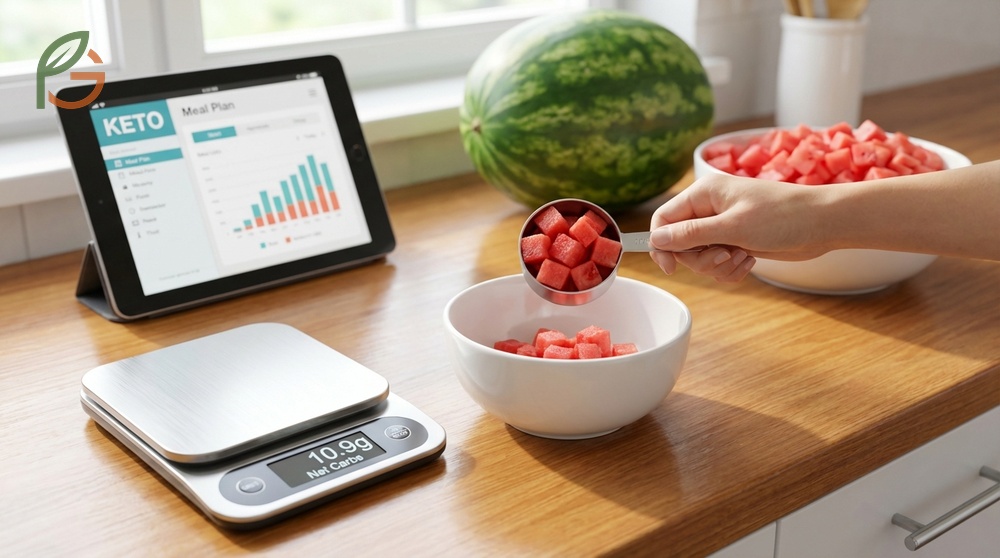
Watermelon can fit into a ketogenic diet, but it requires careful portion control. Studies demonstrate that standard serving sizes quickly consume your daily carb allowance. A single cup delivers nearly 11g of net carbs[1], which represents 44-55% of the strict 20-25g keto threshold[3].
Most keto practitioners find success by limiting watermelon to 50-70g servings (about 2-3 bite-sized cubes)[2]. This portion provides 3.5-5g net carbs, leaving room for vegetables, proteins, and other nutrient-dense foods. Unlike berries or avocados, watermelon doesn’t offer significant fiber or healthy fats to offset its sugar content.
The key difference between watermelon and truly keto-friendly fruits lies in nutrient density per carb gram. While raspberries deliver 7g net carbs per full cup with substantial fiber and antioxidants[5], watermelon provides mainly water and simple sugars. If you’re following strict keto (under 20g daily), watermelon becomes impractical.
Understanding Net Carbs
Net carbs represent the carbohydrates your body actually digests and converts to glucose. Current nutritional guidance calculates net carbs by subtracting fiber and certain sugar alcohols from total carbohydrates[6]. This formula matters because fiber passes through your digestive system without raising blood sugar.
Watermelon contains minimal fiber—just 0.6g per cup[1]—making its net carb count nearly identical to total carbs. For comparison, raspberries pack 8g fiber per cup, dropping their net carbs to 7g despite 15g total carbs. This stark contrast explains why some fruits work better for keto than others.
Important note: Always use a food scale for watermelon portions. Visual estimates typically undercount by 30-40%, which can unknowingly kick you out of ketosis.
Glycemic Impact
Watermelon has a high glycemic index of 72-80[4], indicating rapid blood sugar elevation. However, its glycemic load (GL) tells a different story—a half-cup serving scores just 4 on the GL scale[1], which is considered low. This happens because watermelon is 91% water[4], diluting the carb concentration per serving.
The GI-GL distinction matters for keto success. A food can spike blood sugar quickly (high GI) but deliver relatively few carbs per serving (low GL). For ketosis maintenance, you’re more concerned with total carb intake throughout the day. Even with a modest GL, eating 2-3 cups of watermelon would still provide 22-33g net carbs—exceeding most people’s keto limits.
Watermelon Carb Content
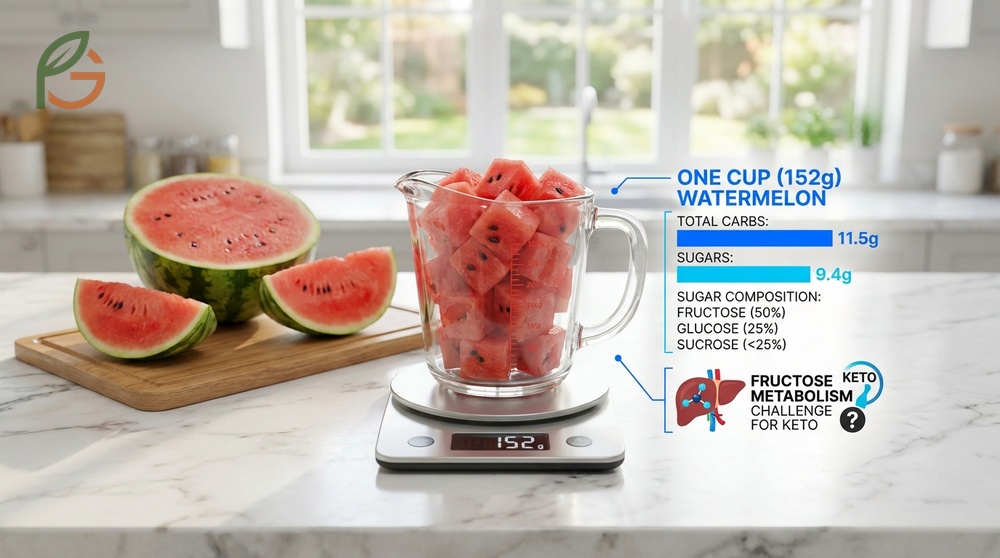
Evidence shows watermelon’s carbohydrate profile is dominated by simple sugars. One cup (152g) contains 11.5g total carbohydrates, with 9.4g coming from sugars[1]. The sugar composition includes roughly 50% fructose, 25% glucose, and less than 25% sucrose[1].
This high fructose content creates challenges for keto dieters. Unlike glucose, fructose is metabolized primarily in the liver and doesn’t provide immediate energy. For people with fructose malabsorption, watermelon’s high FODMAP status can trigger digestive discomfort[4]. The minimal fiber (0.6g per cup)[1] means you’re getting almost pure sugar without the digestive benefits that make other fruits more keto-compatible.
Nutrition Breakdown
One cup of diced watermelon delivers 46 calories with 0.9g protein and just 0.2g fat[1]. The fruit provides 12.3mg vitamin C and significant lycopene, but these micronutrients don’t offset the carb burden for strict keto followers. At 30 calories per 100g[4], watermelon is indeed low-calorie, but keto prioritizes macros over calories.
The sodium content is negligible at 1.5mg per cup[1], which won’t help with electrolyte balance—a common keto concern. Compared to avocados (which provide 15g healthy fats and 10g fiber per cup), watermelon offers minimal nutritional justification for its carb cost on a ketogenic eating plan.
Portion Sizes
Portion control becomes critical when you’re including watermelon in keto. Research-backed serving recommendations show vast differences in carb impact based on portion size. A medium wedge (286g) contains 21.6g total carbs and 21g net carbs[1]—completely blowing a strict 20g daily limit.
For practical keto integration, stick to these portion guidelines: a 20g cube provides 1.4g net carbs, while 50-70g (2-3 cubes) delivers 3.5-5g net carbs[2]. Many practitioners use watermelon as a post-workout treat when insulin sensitivity is higher and glucose uptake is more efficient. This timing strategy can minimize ketosis disruption.
This table compares net carb content, sugar amounts, and keto compatibility across five common watermelon serving sizes from small cubes to medium wedges
| Serving Size | Weight | Net Carbs | Sugar | Keto Status |
|---|---|---|---|---|
| 1 small cube | 20g | 1.4g[2] | 1.3g | Acceptable |
| 2-3 cubes | 50-70g | 3.5-5g[2] | 3.2-4.6g | Safe limit |
| 1 cup diced | 152g | 10.9g[1] | 9.4g | Challenging |
| 1/2 cup | 76g | 5.5g | 4.7g | Moderate |
| Medium wedge | 286g | 21g[1] | 17.7g | Not recommended |
Net Carbs Watermelon
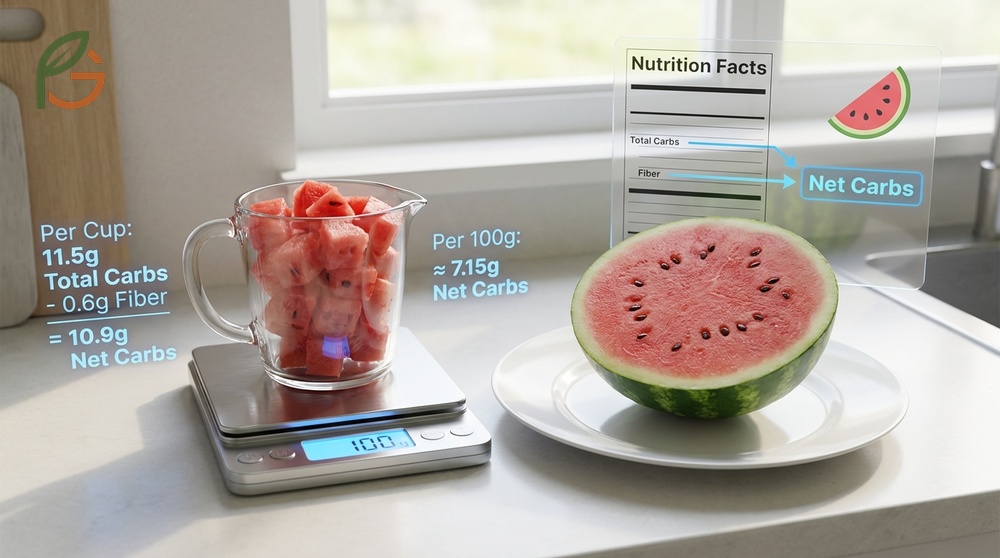
Calculating net carbs for watermelon is straightforward due to its minimal fiber content. The formula subtracts fiber from total carbohydrates: 11.5g total carbs minus 0.6g fiber equals 10.9g net carbs per cup[1]. This small 0.6g fiber reduction means watermelon’s net carb count barely differs from its total carb count—unlike fiber-rich fruits where the gap is significant.
Per 100g serving, watermelon contains approximately 7.15g net carbs[2]. This metric helps when you’re weighing portions with a food scale. If you’re following the standard keto target of 20-50g net carbs daily[3], a single cup of watermelon represents 22-55% of your entire day’s allowance.
Current data indicates that successful keto practitioners typically keep individual snacks or treats under 5g net carbs. This guideline allows for 4-5 eating occasions throughout the day while maintaining ketosis. Watermelon requires aggressive portion control to meet this standard—making it less practical than berries, which deliver more volume and nutrients per carb gram.
Pro tip: Freeze small watermelon cubes for a refreshing treat that takes longer to eat. The extended consumption time can help with satiety while keeping portions in check.
Keto Melon Options
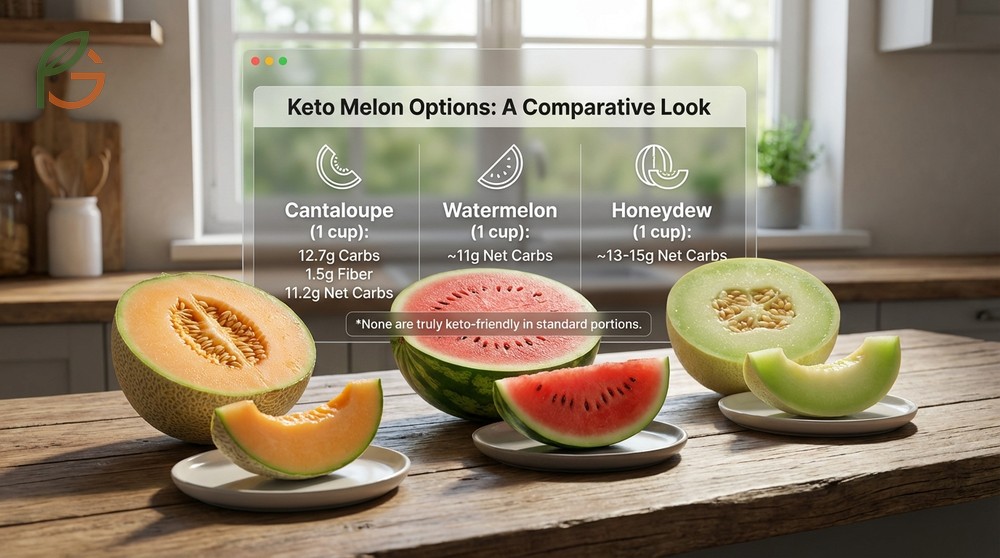
Among melons, cantaloupe presents a slightly better carb profile than watermelon. One cup (156g) of cantaloupe provides 12.7g carbs with 1.5g fiber[7], resulting in 11.2g net carbs—comparable to watermelon but with triple the fiber. The added fiber slows glucose absorption and improves satiety.
Honeydew melon falls into a similar category as watermelon and cantaloupe, delivering roughly 13-15g net carbs per cup. None of these melons qualify as truly keto-friendly in standard portions. If you’re craving melon flavor, your best strategy is limiting servings to 40-60g and pairing them with high-fat foods like full-fat Greek yogurt or nuts. This combination blunts the glycemic response.
Studies demonstrate that when comparing melons to non-melon fruits, the carb gap widens dramatically. While a cup of watermelon has 10.9g net carbs, the same volume of strawberries contains just 8-9g net carbs with substantially more fiber and antioxidants. For keto practitioners, melons should be occasional treats rather than dietary staples.
- Watermelon: 10.9g net carbs per cup, minimal fiber (0.6g), high GI
- Cantaloupe: 11.2g net carbs per cup, moderate fiber (1.5g), better nutrient density
- Honeydew: 13-15g net carbs per cup, similar fiber to watermelon
- Strawberries (comparison): 8-9g net carbs per cup, high fiber (3g), rich in antioxidants
- Raspberries (comparison): 7g net carbs per cup, exceptional fiber (8g), lowest carb berry option
Watermelon Sugar Content
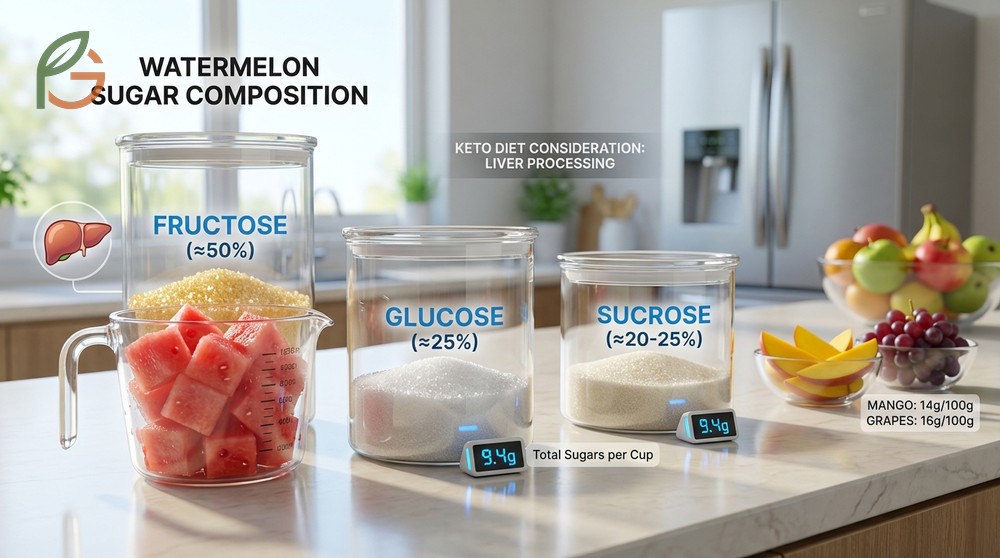
Watermelon’s sugar composition presents unique metabolic challenges for keto dieters. Research shows that one cup contains 9.4g total sugars[1], with approximately 50% fructose, 25% glucose, and 20-25% sucrose[1]. This fructose-heavy profile means the sugar is primarily processed in your liver rather than immediately available for cellular energy.
Per 100g, watermelon contains 6.2g sugar[4]. While this seems modest compared to fruits like mangoes (14g per 100g) or grapes (16g per 100g), the problem is volume. Most people don’t stop at 100g of watermelon—they eat 200-400g in a sitting, rapidly accumulating 12-25g of sugar. The fruit’s high water content and low calorie density encourage overconsumption.
Agricultural data shows the natural sugar variation in watermelon can range ±15% depending on ripeness and variety. A fully ripe watermelon may contain 10-11g sugar per cup versus 8-9g in less ripe fruit. For strict keto (under 20g carbs daily), even this variation matters. You can’t reliably count on consistent carb totals across different watermelons.
- Contains 82% simple sugars relative to total carbs (9.4g sugars from 11.5g carbs)
- High fructose content (50% of sugars) requires liver metabolism
- Zero added sugars—all carbs are naturally occurring
- Ripeness affects sugar content by 10-15% between varieties
- Low fiber means rapid sugar absorption without digestive buffering
- No fat or protein to slow glucose release into bloodstream
Low Carb Fruits
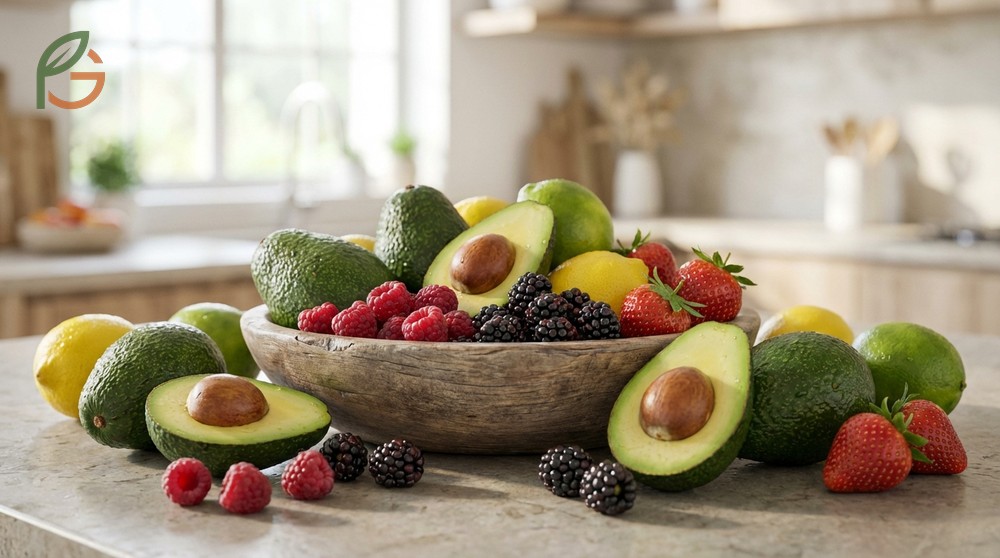
Evidence indicates several fruits work far better for ketogenic diets than watermelon. Avocados top the list with just 2g net carbs per fruit[5], plus they deliver 15g healthy fats and 10g fiber. Raspberries provide 7g net carbs per cup[5] with exceptional antioxidant content and 8g fiber to slow digestion.
Blackberries deliver just 4g net carbs per 100g serving[5], making them one of the most keto-compatible fruits available. Strawberries, lemons, and limes also fit comfortably into most keto meal plans. A medium lemon contains approximately 4g net carbs[5], though you’d typically use just a wedge or juice serving.
For people transitioning from standard diets to keto, berries offer the best fruit experience without derailing ketosis. Unlike watermelon’s water-and-sugar composition, berries pack vitamins C, K, and manganese alongside substantial fiber. Current guidance emphasizes choosing fruits that provide at least 2g fiber per 10g carbs—a ratio watermelon fails dramatically with its 0.6g fiber to 11.5g carbs.
| Fruit | Serving Size | Net Carbs | Fiber | Key Benefit |
|---|---|---|---|---|
| Avocado | 1 medium | 2g[5] | 10g | 15g healthy fats |
| Raspberries | 1 cup | 7g[5] | 8g | High antioxidants |
| Blackberries | 100g | 4g[5] | 5g | Vitamin C, K |
| Strawberries | 1 cup | 8-9g | 3g | Vitamin C |
| Lemon | 1 medium | 4g[5] | 2g | Digestive aid |
- Choose berries over melons for better fiber-to-carb ratios and nutrient density
- Use avocados in smoothies for creamy texture with minimal carbs and high fat content
- Add lemon or lime juice to water for flavor without significant carb impact
- Mix small portions (30-40g) of higher-carb fruits with full-fat dairy or nuts
- Time fruit consumption post-workout when insulin sensitivity is elevated
- Track portions with a food scale rather than relying on visual estimates
Conclusion
The evidence is clear: watermelon is keto friendly only when consumed in strictly controlled portions of 50-70g (2-3 small cubes). While it’s technically compatible with ketogenic diets, it requires more vigilance than truly low-carb alternatives like raspberries, blackberries, or avocados. The high water content and minimal fiber make overconsumption easy, and a single standard cup consumes nearly half your daily carb allowance on strict keto.
Current guidance emphasizes choosing fruits that deliver substantial nutrients per carb gram. For most keto practitioners, watermelon works best as an occasional treat rather than a dietary staple. FruitGarden synthesizes agricultural research and nutritional data to help you make informed decisions about fruit cultivation and consumption while maintaining your health goals.
Medical Disclaimer
Important Medical Disclaimer: This content is for informational and educational purposes only. It’s not intended as a substitute for professional medical advice, diagnosis, or treatment. Always consult a qualified healthcare professional or registered dietitian before making any changes to your diet, especially if you have diabetes, metabolic disorders, or other medical conditions. The ketogenic diet may not be appropriate for everyone, and individual carbohydrate tolerance varies significantly. Never disregard professional medical advice or delay seeking it because of information you’ve read here.
Frequently Asked Questions
Can I eat watermelon on keto every day?
You can eat watermelon daily on keto if you limit portions to 50-70g (2-3 small cubes), which provides 3.5-5g net carbs. However, this uses 18-25% of a strict 20g daily limit, leaving less room for nutrient-dense vegetables and proteins. Most keto practitioners find better success rotating between lower-carb fruits like berries.
How much watermelon will kick me out of ketosis?
Consuming more than 150-200g (about 1 cup) of watermelon can disrupt ketosis for most people following strict keto under 20g net carbs daily. A single medium wedge (286g) contains 21g net carbs—exceeding the entire day’s limit. Individual tolerance varies based on metabolic health, activity level, and total daily carb intake.
What’s better for keto: watermelon or cantaloupe?
Cantaloupe is marginally better, offering 11.2g net carbs per cup versus watermelon’s 10.9g, but with triple the fiber (1.5g versus 0.6g). The added fiber slows glucose absorption and improves satiety. However, both melons require strict portion control on keto, and berries like raspberries (7g net carbs per cup with 8g fiber) remain superior choices.
Does watermelon’s high glycemic index matter on keto?
Watermelon’s glycemic index of 72-80 indicates rapid blood sugar spikes, but its low glycemic load (4-5 per half-cup serving) suggests minimal impact in small portions. For keto, total net carbs matter more than GI. However, the quick glucose release can be problematic if you’re trying to maintain stable ketosis—pairing watermelon with fats or proteins helps blunt the spike.
What are the best keto-friendly fruits to replace watermelon?
Avocados (2g net carbs per fruit), raspberries (7g per cup), blackberries (4g per 100g), and strawberries (8-9g per cup) all work better than watermelon. These fruits provide substantially more fiber, healthy fats (avocados), and antioxidants per carb gram. Lemons and limes also add flavor with minimal carbs—one lemon contains just 4g net carbs.
How do I calculate net carbs in watermelon accurately?
Subtract fiber from total carbohydrates: watermelon contains 11.5g total carbs minus 0.6g fiber equals 10.9g net carbs per cup (152g). Use a food scale for accuracy since visual estimates typically undercount by 30-40%. Per 100g, watermelon has 7.6g total carbs minus 0.4g fiber, equaling 7.2g net carbs.
Can I eat watermelon after a workout on keto?
Post-workout timing can work for small watermelon servings (50-70g) because exercise increases insulin sensitivity and glycogen depletion. Your muscles absorb glucose more efficiently for 30-90 minutes after training, potentially minimizing ketosis disruption. However, this strategy works best for people following targeted or cyclical keto approaches rather than strict standard keto.





