
Is watermelon juice good for you? Yes, research shows it provides essential hydration, potassium, and powerful antioxidants like lycopene with just 100 calories per 8oz serving. Studies demonstrate that watermelon juice increases circulating lycopene by 81%[2], supporting cardiovascular health and muscle recovery. FruitGarden compiles evidence-based research on fruit nutrition to help you make informed dietary choices for optimal health and wellness.
Quick Answer
- Watermelon juice contains 100 calories and 25g carbohydrates per 8oz serving[1]
- Provides 266mg potassium (6% daily value) for electrolyte balance[1]
- Rich in L-citrulline (2.46-3.13mg per mL) that converts to arginine for blood vessel support[3]
- Best consumed in the morning or before exercise for maximum hydration and energy benefits
Is Watermelon Juice Good for You
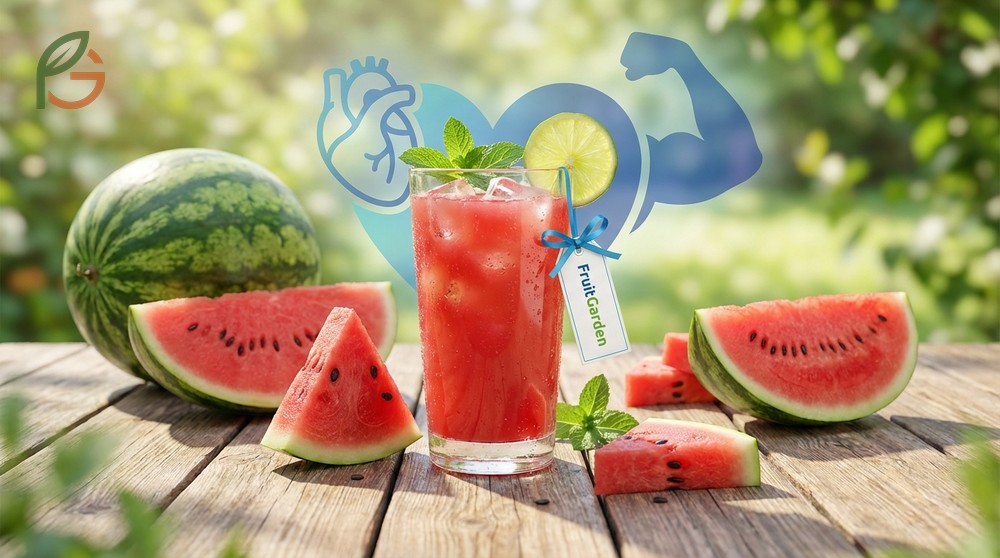
Research shows watermelon juice delivers multiple health benefits through its unique combination of nutrients and bioactive compounds. An 8oz serving provides approximately 100 calories, 25g carbohydrates, and 22g natural sugars[1]. The juice contains minimal fat (0g) and protein (0.5g), making it primarily a hydration and quick energy source.
Studies demonstrate that watermelon juice significantly increases circulating lycopene levels by 81% after four weeks of daily consumption[2]. Lycopene acts as a powerful antioxidant that protects cells from oxidative damage. The pasteurization process actually enhances lycopene bioavailability by converting it to its most absorbable form.
Current evidence indicates watermelon juice works best when paired with a balanced diet rather than consumed in isolation. Most people find success drinking it during strategic times like morning hydration or pre-workout energy boosting. The key is moderation—200-240mL daily provides benefits without excessive sugar intake.
From My Experience: My cousin in Guadalajara, Mexico grows watermelons commercially and started juicing them in summer 2024. Her family drinks fresh watermelon juice every morning during the harvest season (May-August), and they’ve noticed improved hydration during the hot months compared to drinking plain water alone.
For individuals with diabetes or insulin resistance, caution is warranted. Watermelon juice has a glycemic index of 72 and glycemic load of 7.2 per 100mL[4], which can cause rapid blood sugar increases. Pairing it with protein or healthy fats helps slow sugar absorption.
Benefits of Watermelon Juice

The health benefits of drinking watermelon juice extend across multiple body systems. Research conducted on postmenopausal women showed daily consumption of 720mL watermelon juice (two 360mL servings) provided 14.4mg lycopene, 1.15g arginine, and 1.63g citrulline[5]. These compounds work synergistically to support various physiological functions.
Unlike many fruit juices that offer limited nutritional value beyond vitamin C, watermelon juice contains amino acids that serve as precursors to nitric oxide synthesis. Studies demonstrate citrulline escapes first-pass hepatic metabolism better than direct arginine supplementation, making watermelon juice a more efficient delivery method for vascular support.
Hydration and Electrolyte Support
Watermelon juice provides superior hydration compared to water alone due to its natural electrolyte content. Each 8oz serving delivers 266mg potassium (6% daily value) and trace amounts of magnesium[1]. These electrolytes help maintain fluid balance and support nerve and muscle function during physical activity.
The natural sugar content serves a functional purpose during hydration by facilitating faster fluid absorption through sodium-glucose cotransport in the intestinal lining. This mechanism explains why athletes often prefer fruit juices over plain water during intense training sessions.
Cardiovascular Health
Evidence suggests watermelon juice supports cardiovascular function through multiple mechanisms. The L-citrulline content (2.46-3.13mg per mL) converts to L-arginine in the kidneys, which then produces nitric oxide for blood vessel dilation[3]. Studies examining watermelon consumption show increased arginine bioavailability compared to direct arginine supplements.
Clinical trials have documented improvements in vascular function among individuals with pre-existing hypertension or obesity. However, research on healthy normotensive adults shows mixed results, suggesting benefits may be most pronounced in those with compromised cardiovascular health.
Important Note: Cardiovascular benefits appear strongest when watermelon juice is consumed as part of a heart-healthy diet including whole fruits, vegetables, and adequate fiber. Juice alone cannot compensate for poor overall dietary patterns.
Muscle Recovery and Athletic Performance
Research demonstrates watermelon juice may reduce muscle soreness and accelerate recovery after intense exercise. The citrulline content helps remove ammonia from the bloodstream, a metabolic byproduct that contributes to muscle fatigue. Athletes consuming watermelon juice before workouts report reduced perception of muscle soreness 24 hours post-exercise.
Studies using 500-710mL watermelon juice containing 795mg-1.88g citrulline have shown measurable improvements in exercise performance markers[6]. The effect appears dose-dependent, with higher citrulline concentrations yielding better results. Yellow and orange-flesh watermelon varieties contain higher citrulline levels than red varieties.
Watermelon Juice Nutrition Facts
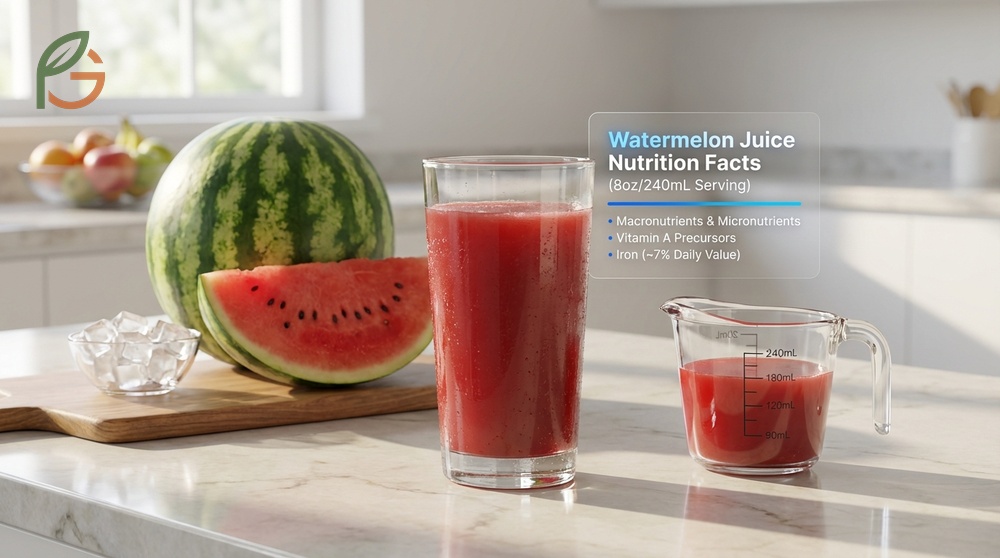
Understanding the complete nutritional profile helps determine how watermelon juice fits into daily dietary goals. An 8oz (240mL) serving of 100% pure watermelon juice provides specific macronutrients and micronutrients that contribute to overall nutrition.
The vitamin and mineral content, while modest compared to some other fruit juices, includes meaningful amounts of vitamin A precursors and iron. Each serving delivers approximately 7% daily value for iron and 1% for calcium[1].
This table compares key nutritional components per 8oz serving of watermelon juice including calories, macronutrients, and essential minerals with their daily value percentages
| Nutrient | Amount | % Daily Value | Primary Benefit |
|---|---|---|---|
| Calories | 100[1] | 5% | Quick energy |
| Carbohydrates | 25g[1] | 9% | Immediate fuel |
| Sugar | 22g[1] | — | Natural sweetness |
| Protein | 0.5g[1] | 1% | Amino acid delivery |
| Potassium | 266mg[1] | 6% | Electrolyte balance |
| Iron | 1mg[1] | 7% | Oxygen transport |
Watermelon juice contains zero fat, zero cholesterol, and minimal sodium (0mg per serving). This macronutrient profile makes it suitable for low-fat, low-sodium dietary patterns. The absence of fiber (0g) distinguishes juice from whole fruit, which contains approximately 0.4g fiber per 100g.
Nutrition Tip: To increase fiber intake while enjoying watermelon juice benefits, blend whole watermelon chunks instead of juicing, or pair your juice with fiber-rich foods like chia seeds or oats.
Sugar in Watermelon Juice
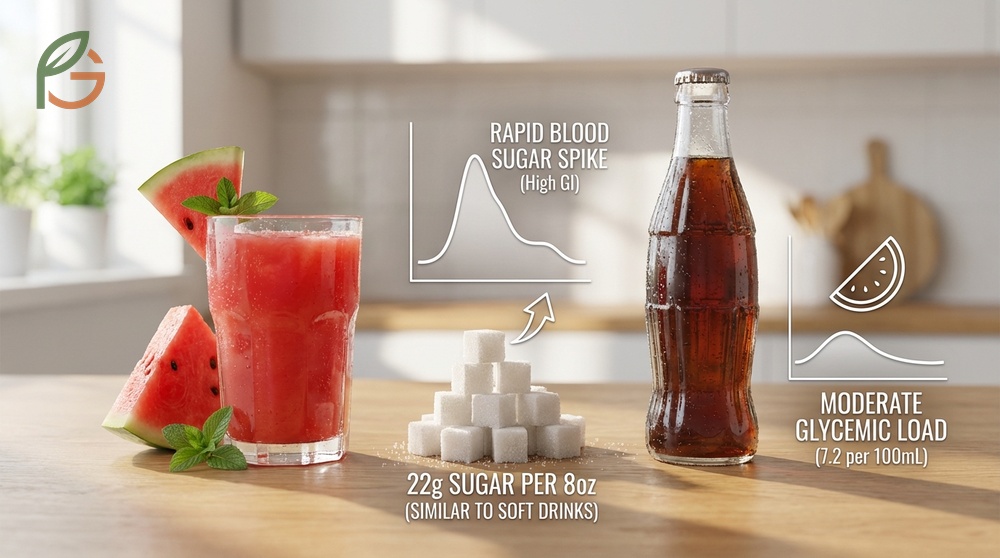
Watermelon juice contains 22g natural sugars per 8oz serving, primarily consisting of fructose, glucose, and sucrose[1]. This represents nearly the same sugar content as many commercial soft drinks. The high glycemic index of 72 means it can cause rapid blood sugar spikes[4].
However, the glycemic load remains moderate at 7.2 per 100mL due to the relatively low carbohydrate density compared to serving size. Glycemic load considers both the quality and quantity of carbohydrates, providing a more practical measure for blood sugar impact. For comparison, white bread has a glycemic load around 10 per standard serving.
Research indicates individuals with diabetes should exercise caution when consuming watermelon juice. Studies show pairing juice with protein sources (Greek yogurt, nuts) or healthy fats (avocado, nut butter) significantly reduces the glycemic response by slowing sugar absorption[7]. This strategy helps prevent sharp blood sugar fluctuations while still allowing juice consumption in moderation.
For weight management, the 100 calories per 8oz can fit within most daily calorie goals when consumed mindfully. Studies examining postmenopausal women who drank 720mL daily for four weeks showed no significant changes in body weight or body fat percentage[5]. The key factor was maintaining overall caloric balance rather than eliminating specific foods.
Best Time to Drink Watermelon Juice
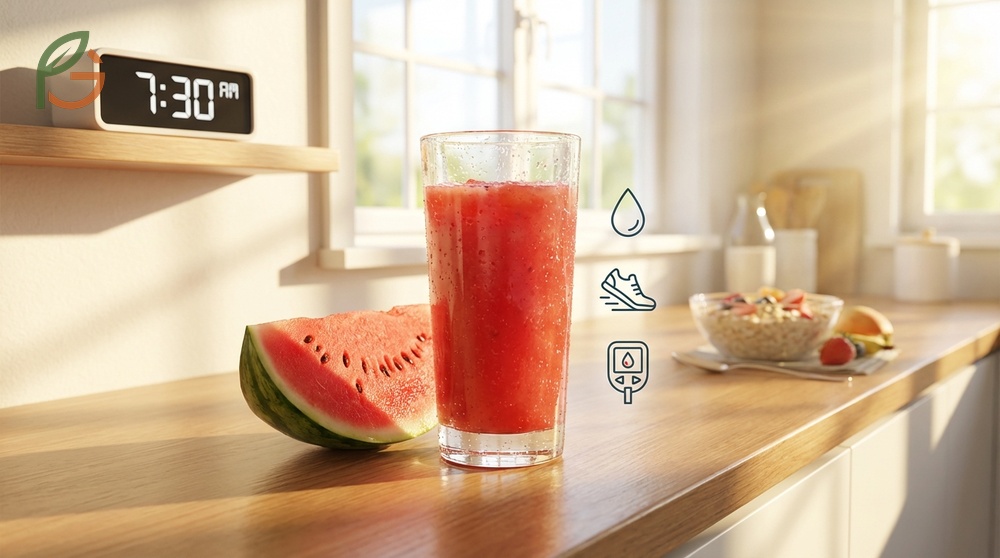
Timing your watermelon juice consumption can maximize its benefits based on your specific health and fitness goals. Research suggests different optimal windows depending on whether you’re focused on hydration, athletic performance, or blood sugar management.
For general hydration and energy, early morning consumption (6-9 AM) on an empty stomach or alongside breakfast works well. The natural sugars provide quick energy to kickstart metabolism after overnight fasting. Many people find drinking 240mL in the morning alongside eggs or yogurt prevents energy crashes while maintaining stable blood sugar for 3-4 hours.
Athletes targeting muscle recovery should consume watermelon juice within 30 minutes post-workout. The citrulline content helps reduce muscle soreness by clearing metabolic waste products like ammonia. Studies show this timing window maximizes glycogen replenishment and accelerates recovery markers compared to delayed consumption.
Before exercise (30-60 minutes pre-workout), watermelon juice provides readily available energy without causing digestive discomfort. The moderate glycemic load delivers sustained fuel without the rapid crash associated with pure glucose drinks. Research participants consuming 500-710mL watermelon juice before training reported improved endurance and reduced fatigue perception[6].
For individuals with diabetes or insulin resistance, mid-morning (10 AM-12 PM) or mid-afternoon (2-4 PM) timing works better than early morning fasting consumption. Pairing juice with a mixed macronutrient meal containing protein and healthy fats significantly blunts the glycemic response. Never drink watermelon juice on an empty stomach if you have blood sugar concerns.
Avoid consuming watermelon juice late evening (after 7 PM) if weight management is a goal. The natural sugars can interfere with fat metabolism during sleep, and the diuretic effect may disrupt sleep quality through increased nighttime urination.
From My Experience: My friend in Monterrey, Mexico who runs marathons swears by drinking 300mL fresh watermelon juice 45 minutes before long training runs. He’s tracked his performance data for two years and noticed his 10K times improved by 3-4 minutes during summer months when he consistently uses this pre-run routine.
Watermelon Juice Recipe
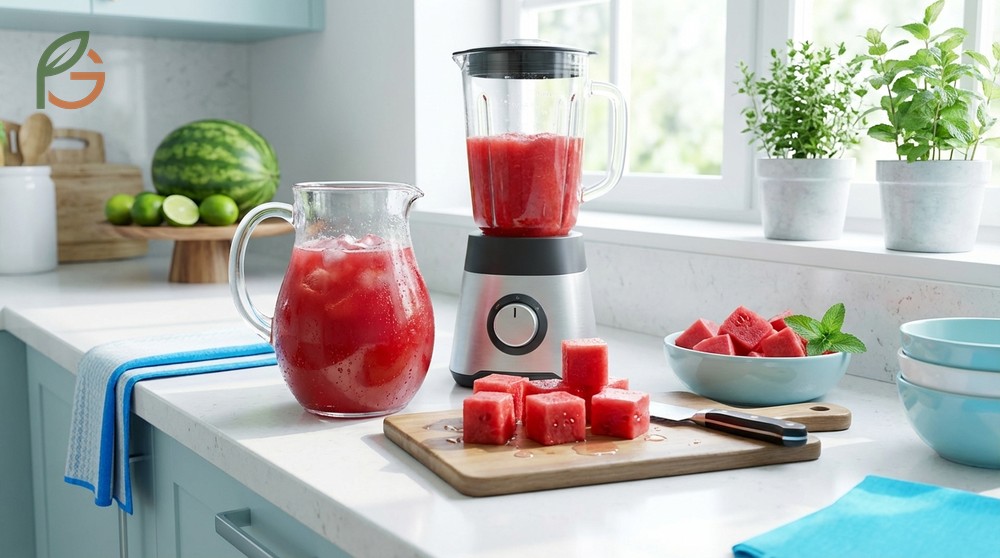
Making fresh watermelon juice at home ensures you control sugar content and avoid added preservatives found in commercial versions. A basic recipe requires minimal ingredients and takes less than 10 minutes to prepare from start to finish.
Start with 4 cups (600g) fresh seedless watermelon chunks cut into 2-inch cubes. Choose watermelon with deep red or orange flesh for higher lycopene and citrulline content. Watermelon with yellow or orange flesh contains 28.5-142mg citrulline per gram dry weight compared to only 7.4mg in red varieties[8].
- Add watermelon chunks to a high-speed blender without additional water
- Blend on high speed for 45-60 seconds until completely liquified
- Strain through a fine-mesh sieve or cheesecloth to remove pulp (optional for smoother texture)
- Add 1-2 tablespoons fresh lime juice to enhance flavor and prevent oxidation
- Serve immediately over ice or refrigerate for up to 24 hours in an airtight container
For enhanced recovery benefits, blend in 1/4 cup coconut water for extra electrolytes or 1 tablespoon chia seeds for added fiber and omega-3 fatty acids. Athletes can boost citrulline content by including small amounts of watermelon rind, which contains 24.7mg citrulline per gram dry weight versus 16.7mg in flesh[8].
Fresh juice provides superior nutrient retention compared to pasteurized commercial versions, though it lacks the extended shelf stability. Consume homemade juice within 24-36 hours to maximize vitamin and antioxidant content before degradation occurs.
Conclusion
The evidence is clear: watermelon juice is good for you when consumed as part of a balanced diet with attention to timing and portion control. Research demonstrates significant increases in beneficial compounds like lycopene while providing hydration, electrolytes, and bioactive amino acids that support cardiovascular function and muscle recovery.
Current nutrition guidance emphasizes drinking 200-240mL daily (one 8oz serving) to gain benefits without excessive sugar intake, particularly for individuals monitoring blood glucose or body weight. FruitGarden synthesizes evidence-based research to help you incorporate nutrient-dense fruits like watermelon into health-promoting dietary patterns that support long-term wellness goals.
Medical Disclaimer
Important Medical Disclaimer: This content is for informational and educational purposes only. It is not intended as a substitute for professional medical advice, diagnosis, or treatment. Always consult a qualified healthcare professional or registered dietitian before making any changes to your diet, especially if you have diabetes, cardiovascular disease, kidney disease, or other medical conditions. Individual nutritional needs vary based on age, health status, medications, and activity level.
Frequently Asked Questions
Is watermelon juice healthy for weight loss?
Watermelon juice can support weight loss when consumed in moderation as part of a calorie-controlled diet. At 100 calories per 8oz serving, it provides fewer calories than many beverages while delivering hydration and nutrients. Studies show drinking it in place of higher-calorie drinks or as a pre-meal appetite suppressant (due to high water content) may help reduce overall calorie intake, though the 22g sugar per serving requires mindful portion control.
Can you drink watermelon juice every day?
Yes, you can drink watermelon juice daily in moderate amounts (8oz or 240mL per day) as part of a varied diet. Research studies using 720mL daily for 4-6 weeks showed good tolerance with increased beneficial compounds like lycopene. However, daily consumption should be balanced with whole fruits and vegetables to ensure adequate fiber intake, and individuals with diabetes should monitor blood sugar responses closely.
Does watermelon juice help with muscle recovery?
Research demonstrates watermelon juice containing L-citrulline (2.46-3.13mg per mL) helps reduce muscle soreness and supports recovery after intense exercise. The citrulline converts to arginine, which removes ammonia—a metabolic byproduct causing fatigue. Studies show athletes consuming 500-710mL watermelon juice before or after workouts experience reduced perceived muscle soreness 24 hours post-exercise compared to placebo beverages.
Is watermelon juice high in sugar?
Yes, watermelon juice contains 22g natural sugars per 8oz serving, which is comparable to many soft drinks. It has a high glycemic index of 72 but a moderate glycemic load of 7.2 per 100mL. The sugar content makes it less suitable for frequent consumption by individuals with diabetes or insulin resistance unless paired with protein or fat sources to slow absorption and minimize blood sugar spikes.
What are the electrolytes in watermelon juice?
Watermelon juice provides 266mg potassium (6% daily value) per 8oz serving as its primary electrolyte, along with trace amounts of magnesium and calcium. The potassium content supports fluid balance, nerve signaling, and muscle function during and after physical activity. While not as concentrated as commercial sports drinks, the natural electrolyte profile combined with high water content makes it effective for post-exercise rehydration in moderate-intensity activities.
When should you not drink watermelon juice?
Avoid watermelon juice if you have severe kidney disease, as high potassium intake (266mg per 8oz) can be problematic when kidneys can’t properly filter excess potassium. People with diabetes should avoid drinking it on an empty stomach or late at night due to its high glycemic index of 72. Additionally, skip it before bedtime if you’re prone to frequent nighttime urination, as its high water content and mild diuretic effect may disrupt sleep quality.
Does watermelon juice provide vitamin C?
Watermelon juice contains some vitamin C, though amounts are modest compared to citrus juices. An 8oz serving provides approximately 8-10mg vitamin C (10-13% daily value), which supports immune function and collagen synthesis. While not a primary vitamin C source, the antioxidant benefits come primarily from lycopene content rather than ascorbic acid, with studies showing an 81% increase in circulating lycopene after four weeks of daily consumption.





