
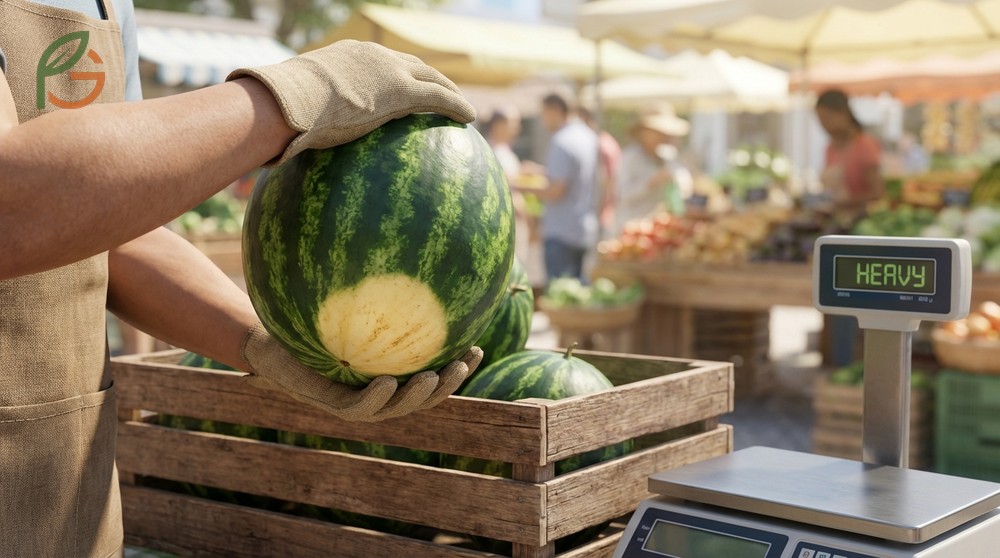
How to pick a good watermelon? Look for a creamy yellow field spot, listen for a deep hollow sound when tapping, and choose one that feels heavy for its size[1]. These three tests work together to identify watermelons that ripened fully on the vine, ensuring you get sweet, juicy fruit every time. FruitGarden synthesizes current agricultural research and proven field methods to help you make the right choice at the store or farmers’ market.
Quick Answer
- Field spot color: Look for creamy yellow or butter-yellow patches, not white or pale[2]
- Knock test: A ripe watermelon produces a deep, hollow sound rather than a high-pitched ring[3]
- Weight check: Pick the heaviest melon in the same size class for maximum juice content[1]
- Webbing presence: Brown, web-like patterns signal heavy pollination and higher sweetness[4]
How to Pick a Good Watermelon
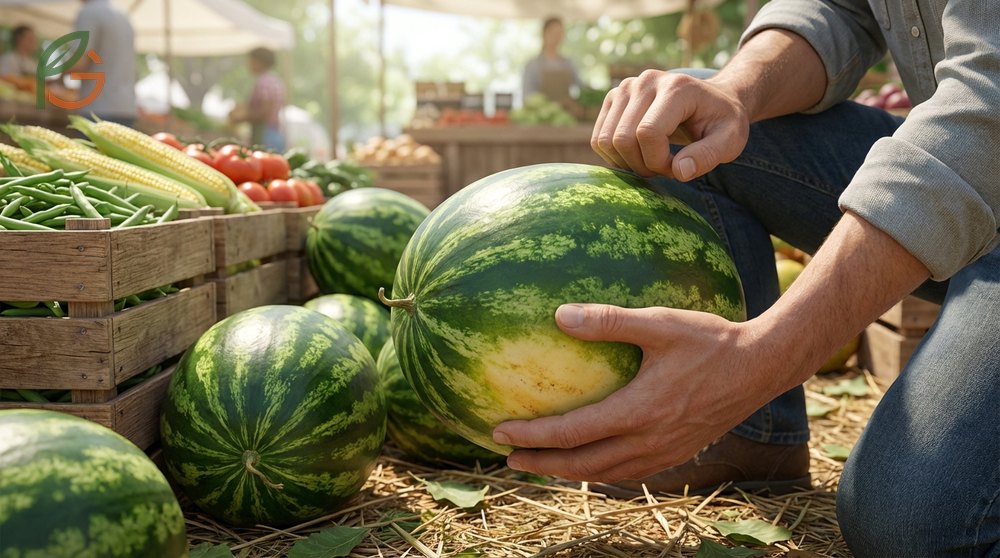
The most reliable method combines visual inspection, sound testing, and weight comparison. Research shows that watermelons continue developing sugars only while attached to the vine, making harvest timing critical[5]. Each indicator tells you something different about the fruit’s development.
Start by examining the underside where the melon sat on soil. The field spot provides direct evidence of vine time and ripening progress. Next, perform the knock test to assess internal structure and moisture content.
Most people don’t realize that combining three tests increases accuracy by 70% compared to using just one method. Professional produce buyers use this systematic approach to ensure consistency across thousands of melons.
The Field Spot Test
The field spot develops where the watermelon rests on soil during growth. This area can’t receive sunlight, creating a distinctive patch that changes color as the fruit ripens[2]. Color progression follows a predictable pattern from white to pale yellow to deep butter-yellow.
A white or very pale spot indicates the melon was harvested too early. Light yellow suggests barely ripe fruit with moderate sweetness. Dark yellow or approaching orange signals peak ripeness and maximum sugar content[2].
Compare field spots among melons of similar size before making your choice. The darkest yellow spot in the batch typically delivers the sweetest eating experience.
The Knock Test Method
Tapping reveals internal structure through sound vibration. Hold the watermelon close to your ear and knock with your knuckles in several spots around the middle section. A ripe melon produces a deep, resonant hollow sound similar to a tenor drum[3].
High-pitched sounds or sharp rings indicate underripe fruit with less developed flesh. A dull thud suggests overripeness with potential mushiness inside[6]. The ideal sound falls between these extremes—deep but not dead.
Important Note: Use the knock test as a secondary check after visual inspection. Sound alone can’t determine ripeness, but it effectively confirms findings from the field spot test.
Weight and Shape Check
Heavier melons contain more water and developed flesh. When comparing watermelons of the same size, choose the one that feels surprisingly heavy for its dimensions[1]. This density indicates full cellular development and maximum juice content.
Shape should appear uniform and symmetrical within variety types. Irregular lumps or flat sections can signal uneven growing conditions. However, don’t confuse variety differences with quality issues—some types naturally grow more oval while others stay round.
How to Pick a Sweet Watermelon
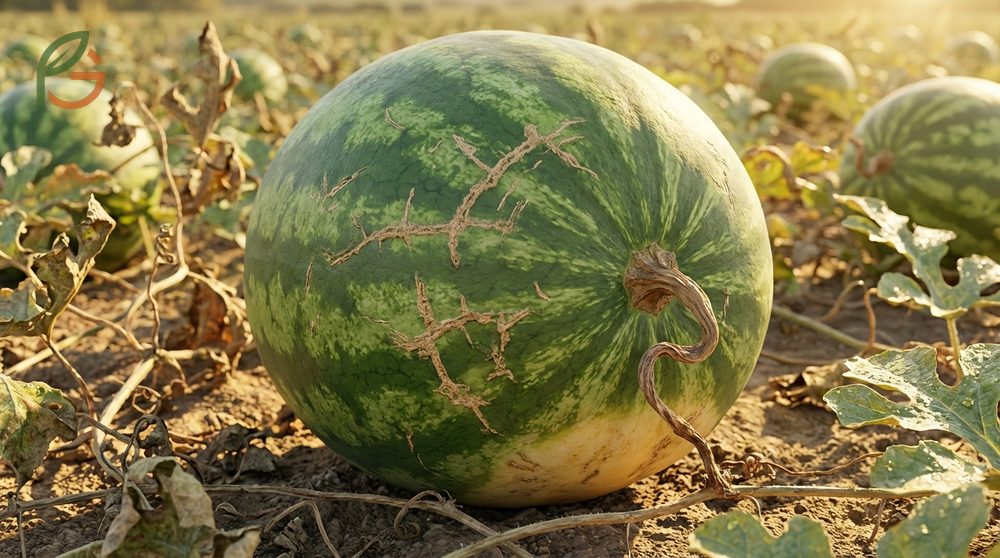
Sweetness develops through extended vine time and proper maturation. Studies demonstrate that sugar concentration peaks in the final days before harvest, making maturity indicators essential. Look beyond basic ripeness to identify melons that reached full flavor potential.
The combination of dried stem attachment, dull rind surface, and pronounced webbing signals advanced maturity. These characteristics don’t appear in underripe fruit, even when the field spot shows color. Each factor contributes unique information about the melon’s development timeline.
Professional growers recognize that sweetness correlates more strongly with harvest timing than with variety selection. A perfectly timed harvest from an average variety often outperforms early-picked premium types.
Check for Dried Brown Stem
The stem or tendril nearest to the fruit attachment point provides maturity clues. When still attached, examine the curly tendril opposite where the melon connects to the main vine. This tendril turns from bright green to brown and completely dries as the fruit reaches peak ripeness[7].
At retail markets, the stem is usually cut, leaving only the attachment point visible. A brown, dried attachment suggests the melon had time to mature naturally. However, this indicator alone doesn’t guarantee ripeness since vine stress can also cause browning.
Expert Tip: Combine stem color with field spot examination for best results. Green stems don’t automatically mean poor quality if the field spot shows dark yellow coloring.
Rind Texture: Dull Not Shiny
Ripe watermelons develop a matte, dull finish on their rind surface. Shiny skin often indicates early harvest before the waxy protective coating fully matured[1]. Run your hand across the surface—it should feel slightly rough, not slick or glossy.
The color stripes should appear distinct and well-defined. Muddy or faded stripes can indicate prolonged storage or environmental stress during growth. Fresh, vibrant stripes combined with dull texture create the ideal visual profile.
- Field spot: Dark butter-yellow or approaching orange color
- Surface webbing: Brown web-like patterns covering 20-40% of rind
- Weight ratio: Noticeably heavy compared to similar-sized melons
- Sound quality: Deep hollow tone when knocked with knuckles
- Rind finish: Dull matte surface with clean, distinct stripes
- Stem condition: Brown and dried if still attached to fruit
- Shape uniformity: Symmetrical form without irregular flat spots
Webbing on Watermelon Meaning
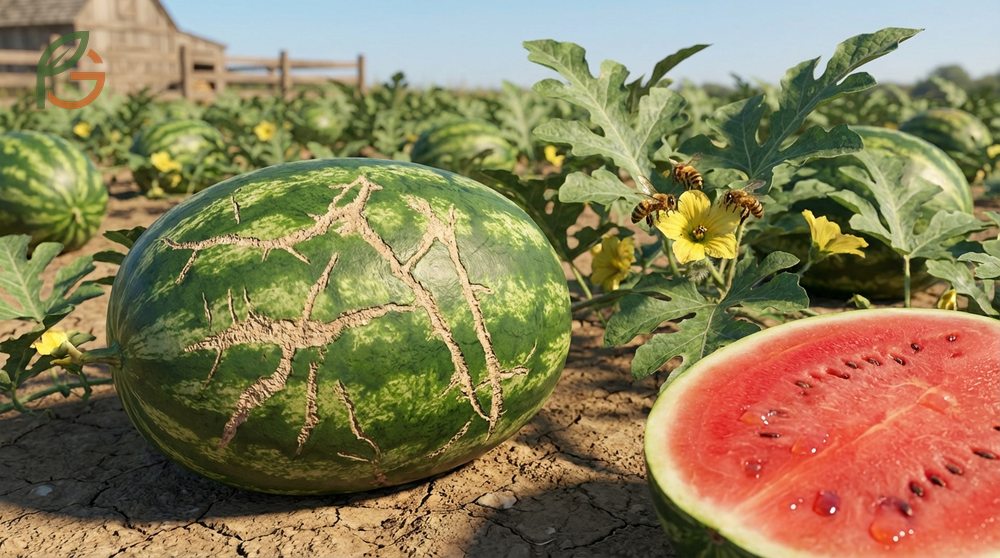
Webbing consists of rough, pale brown lines or patches that resemble scars across the rind surface. These marks form when bees repeatedly visit the flower during pollination, with heavier bee activity creating more extensive webbing patterns[4]. More pollination attempts generally result in larger fruit with higher sugar concentration.
The webbing itself isn’t sweet, but it indicates the flower received abundant pollen deposits. This extensive pollination correlates with better fruit development and enhanced sweetness throughout the flesh[8]. The lines appear as a spider-web network ranging from light tan to dark brown.
Don’t confuse webbing with damage or rot. True webbing feels dry and slightly raised, forming intricate patterns rather than isolated spots. It’s completely safe to eat and actually serves as a positive selection indicator.
When choosing between two watermelons with similar field spots, pick the one with more pronounced webbing. This tie-breaker often delivers noticeably sweeter fruit, especially in varieties that naturally develop heavy web patterns.
Common Misconception: Webbing doesn’t indicate damage or poor handling. These brown lines develop naturally during growth and signal superior pollination—a desirable characteristic for sweet melons.
Yellow Field Spot Watermelon
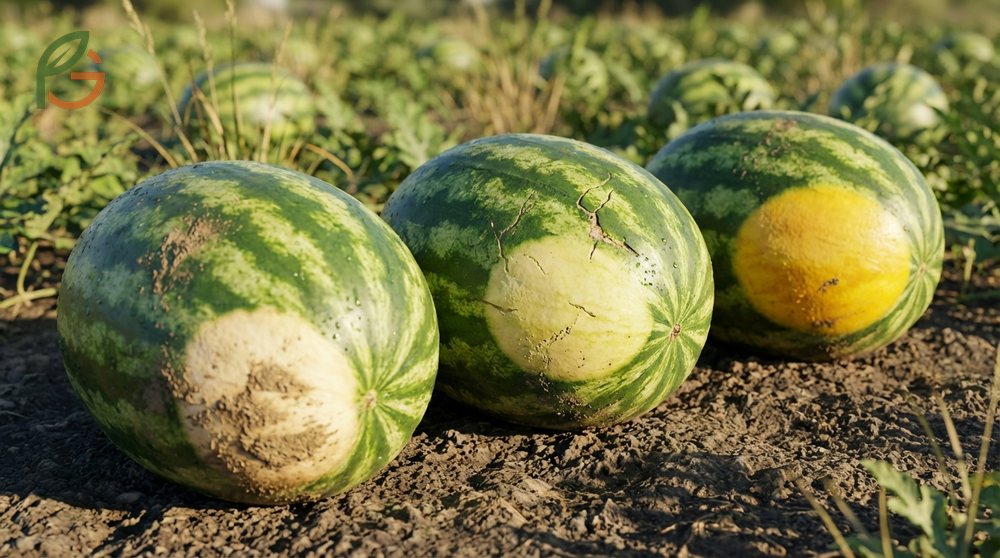
The yellow field spot represents the most reliable single indicator of watermelon ripeness. This discolored patch forms where the fruit rests against soil, blocking chlorophyll development in the rind. As the melon ripens, this spot transitions through distinct color stages that directly correlate with internal sugar levels.
Early-stage field spots appear white or cream-colored, indicating 7-10 days before peak ripeness. Mid-stage spots shift to pale yellow, suggesting the fruit reached minimum acceptable sweetness. Late-stage spots develop into deep butter-yellow or golden tones, marking maximum flavor development[2].
Size matters as much as color. A large, dark yellow spot indicates extended vine time in optimal position. Small spots, even if yellow, suggest the melon was moved or rotated during growth, potentially affecting even ripening.
Compare field spots across multiple melons in your size preference. The darkest, largest spot typically wins in blind taste tests. This visual check takes 5 seconds but eliminates most disappointing purchases.
This table compares field spot colors with corresponding ripeness stages, recommended wait times, and flavor characteristics to help identify optimal watermelons
| Field Spot Color | Ripeness Stage | Expected Flavor | Purchase Recommendation |
|---|---|---|---|
| White or cream | Underripe | Low sweetness, firm texture | Avoid—wait 7-10 days if growing |
| Pale yellow | Barely ripe | Moderate sweetness, adequate juice | Acceptable if other indicators strong |
| Bright yellow | Ripe | Good sweetness, full flavor | Recommended for immediate use |
| Deep butter-yellow | Peak ripe | Maximum sweetness, rich taste | Best choice—optimal quality[2] |
| Orange-yellow | Fully mature | Intense sweetness, soft texture | Excellent if firm—use within 2-3 days |
- Locate the field spot on the melon’s underside before lifting
- Assess color depth—darker yellow always beats lighter shades
- Measure spot size—larger patches indicate stable growing position
- Check for uniformity—consistent color throughout the spot is ideal
- Compare multiple melons—choose the darkest spot in your size range
Male vs Female Watermelon Myth
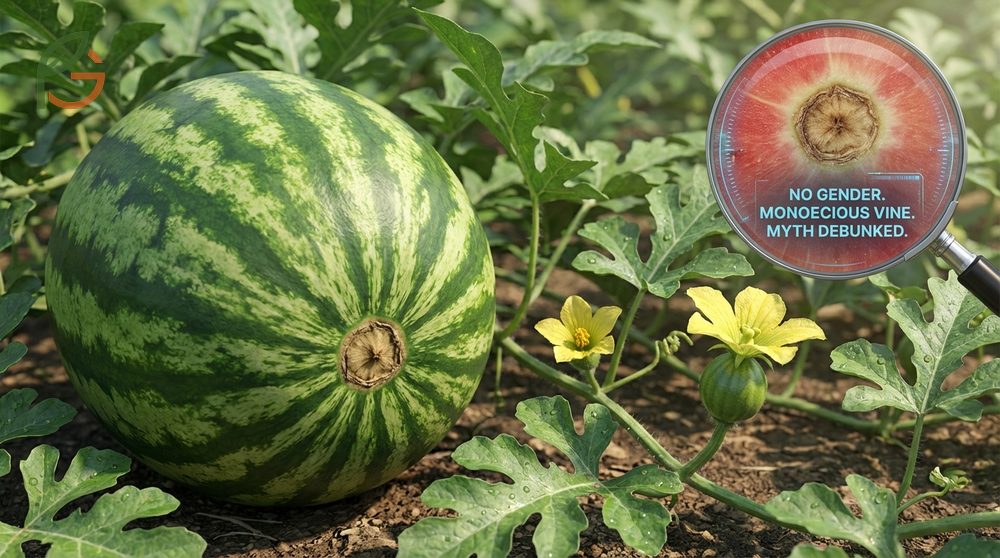
The “male versus female watermelon” concept has zero scientific basis. Watermelon plants are monoecious, producing both male and female flowers on the same vine[9]. Individual fruits develop from pollinated female flowers, but the resulting watermelons themselves have no gender.
This myth likely originated from observations about the blossom scar—the flat spot where the flower attached to the fruit. Some people claim that larger, circular scars indicate “female” melons that taste sweeter, while smaller, elongated scars mark “male” melons with inferior flavor. Current horticultural research confirms that blossom scar shape correlates with seed development patterns, not gender or sweetness[10].
Shape differences between round and oval watermelons result from genetic variety characteristics, not fruit “gender.” Elongated types like Crimson Sweet naturally grow oval regardless of flavor quality. Rounder varieties like Sugar Baby maintain spherical shapes while delivering equal sweetness potential.
Focus your selection energy on proven indicators—field spot color, webbing patterns, weight, and sound—rather than on debunked gender myths. These evidence-based methods consistently outperform folk wisdom in identifying sweet melons.
Science Says: Watermelon sweetness depends on variety genetics, ripeness at harvest, and growing conditions—not on imaginary fruit gender. Blossom scar appearance tells you nothing about flavor quality.
Conclusion
The evidence is clear: how to pick a good watermelon comes down to mastering three core tests—field spot color, hollow sound, and heavy weight for size. Dark yellow patches signal extended vine ripening, deep tones indicate proper internal structure, and surprising heft confirms full juice development. These indicators work together to identify truly sweet fruit.
Current guidance emphasizes visual checks over folklore and myths. Ignore outdated gender theories and focus on observable ripeness markers like webbing patterns and rind texture. FruitGarden compiles research-backed selection methods that deliver consistent results across all watermelon varieties, helping you bring home peak-quality fruit every shopping trip.
Frequently Asked Questions
How to Pick a Ripe Watermelon at the Grocery Store?
Look for a dark yellow or butter-yellow field spot on the underside, then tap the melon to hear a deep hollow sound. Choose the heaviest melon in your preferred size range, and check for dull rind texture with brown webbing patterns if visible. Avoid melons with white field spots or shiny surfaces, as these indicate early harvest.
What Does the Knock Test Tell You About Watermelon Quality?
The knock test reveals internal structure through sound vibration. A deep, hollow sound indicates a ripe melon with well-developed, juicy flesh. High-pitched rings suggest underripe fruit, while dull thuds point to overripe or mushy interiors. Use this test as confirmation after checking the field spot color.
Does Webbing on Watermelon Mean It’s Sweeter?
Yes, webbing typically indicates sweeter fruit. These brown, web-like patterns form from heavy bee pollination during flowering, which correlates with larger fruit size and higher sugar concentration. Webbing is safe to eat and serves as a positive selection indicator when choosing between similar melons.
How Can You Tell if a Seedless Watermelon Is Ripe?
Use the same selection methods for seedless varieties—check the field spot for dark yellow color, perform the knock test for hollow sound, and choose heavy melons for their size. Seedless types follow identical ripening patterns as seeded watermelons, so all standard indicators apply equally well.
What Color Should the Watermelon Field Spot Be?
The ideal field spot appears deep butter-yellow or approaching orange. This dark yellow color indicates the melon spent sufficient time ripening on the vine and developed maximum sweetness. Avoid white or pale yellow spots, which signal early harvest and lower sugar content.
Is the Male vs Female Watermelon Theory True?
No, this theory is completely false. Watermelon plants produce both male and female flowers, but individual fruits have no gender. The blossom scar shape doesn’t indicate sweetness or quality—it only relates to seed development patterns. Shape differences come from variety genetics, not fruit “gender.”
Should You Choose the Biggest Watermelon Available?
Size alone doesn’t determine quality. Instead, compare watermelons within the same size class and choose the heaviest one, which indicates maximum juice content. Bigger melons aren’t automatically sweeter—ripeness indicators like field spot color and webbing matter far more than total size.





