
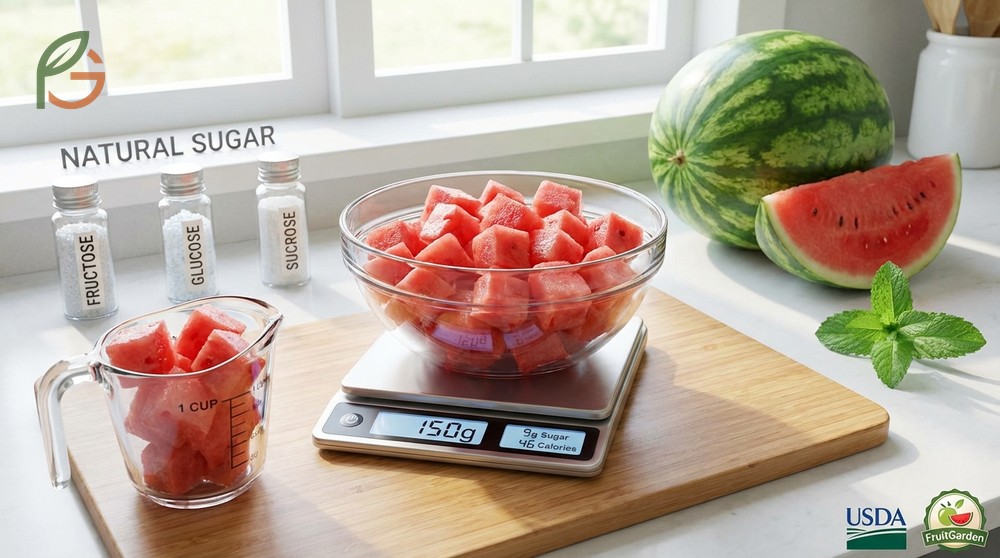
How much sugar in watermelon? One cup of diced watermelon contains 9 grams of natural sugar and 46 calories[1]. Research shows watermelon’s sugar consists primarily of fructose, glucose, and sucrose—all naturally occurring without any added sugars. FruitGarden synthesizes current USDA nutritional research to help gardeners and fruit enthusiasts understand what they’re growing and eating.
Quick Answer
- One cup (152g) has 9g natural sugar[1] and 46 calories
- Total carbohydrates: 11.5-12g per cup[2] with 0.6g fiber
- Glycemic index: 72-76 (high) but glycemic load: 5.6 (low per serving)
- Contains zero added sugars—all sugars are naturally occurring from the fruit
How Much Sugar in Watermelon
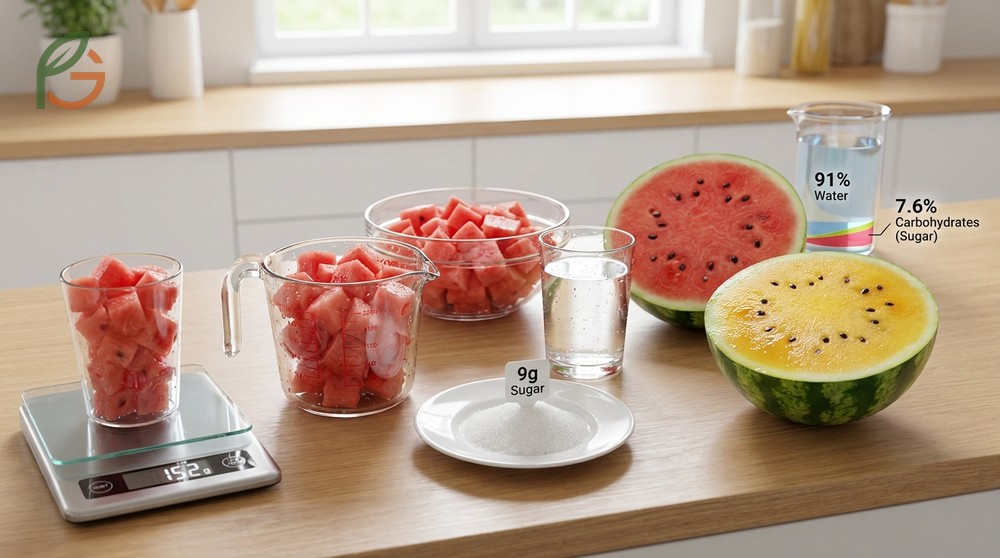
Current USDA data indicates one cup of diced watermelon (152 grams) contains 9 grams of total sugars[1]. This represents approximately 6.2 grams of sugar per 100 grams of fruit. The sugar content remains consistent across red, pink, orange, and yellow watermelon varieties.
Research shows watermelon consists of 91% water and only 7.6% carbohydrates by weight. Most people don’t realize the fruit’s high water content dilutes its sugar concentration compared to denser fruits. This matters because you’re consuming more water than sugar with each bite.
Agricultural studies demonstrate watermelon contains zero added sugars—every gram comes naturally from the fruit itself[4]. The sweetness develops as the fruit ripens on the vine. FruitGarden emphasizes this distinction because added sugars impact health differently than natural fruit sugars.
Sugar by Serving Size
NC State Extension research provides precise measurements for common serving sizes[2]. Understanding these helps you track your intake accurately. Serving sizes vary significantly at picnics and gatherings.
A medium wedge (286 grams) delivers 17.7 grams of sugar with 21.6 grams total carbohydrates. That’s nearly double the cup serving. Most people consume wedges at barbecues without realizing they’re eating two standard servings.
This table compares sugar content, total carbohydrates, fiber, and calorie counts across four common watermelon serving sizes from 100 grams to a full wedge
| Serving Size | Weight | Total Sugar | Carbohydrates | Fiber | Calories |
|---|---|---|---|---|---|
| Small portion | 100g | 6.2g[5] | 7.6g | 0.4g | 30 |
| 1 cup diced | 152g | 9g[1] | 11.5-12g | 0.6-1g | 46 |
| 1 medium wedge | 286g | 17.7g[2] | 21.6g | 1.1g | 86 |
| 1/2 small melon | ~450g | 27.9g | 34.2g | 1.8g | 135 |
Types of Sugar in Watermelon
Studies demonstrate watermelon’s sugar composition breaks down into three primary types. Half the total sugar is fructose, one quarter is glucose, and less than one quarter is sucrose[2]. Minor fractions include other simple sugars.
This matters because different sugars metabolize at different rates in your body. Fructose processes through your liver, while glucose enters your bloodstream directly. The combination creates a moderate glycemic response rather than a rapid spike.
Important note: Watermelon ripeness dramatically affects sugar concentration. Fully ripe melons contain 15-20% more sugar than underripe ones. Look for a yellow ground spot and hollow sound when tapping to identify peak ripeness.
Watermelon Sugar Content
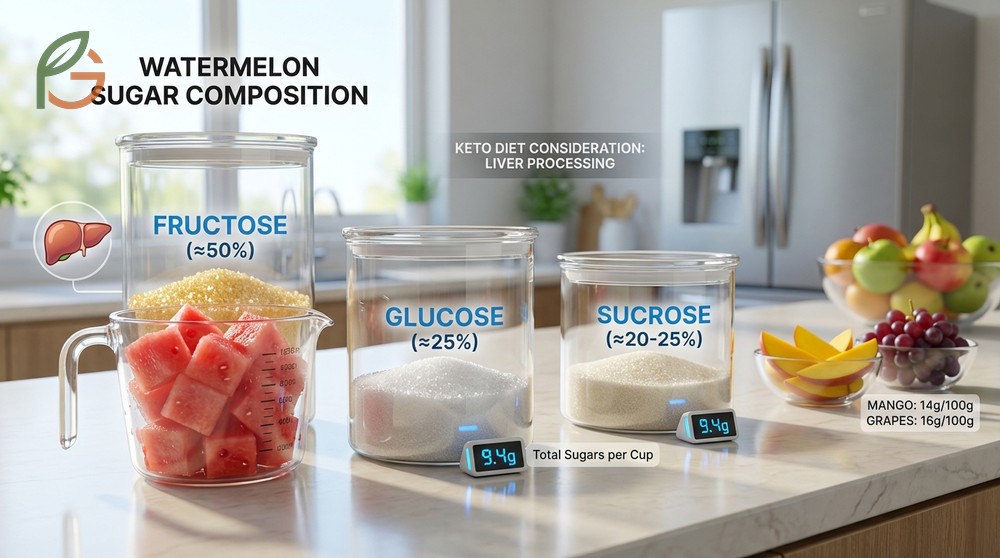
Research across global fruit databases shows watermelon ranks as a moderately sweet fruit. You get 9 grams of sugar per cup compared to 23 grams in the same amount of grapes. The perception of intense sweetness comes from watermelon’s high water content rather than extreme sugar levels.
Current agricultural data indicates the sugar-to-water ratio creates watermelon’s refreshing quality. You’re consuming 138 grams of water alongside those 9 grams of sugar in each cup. This 15:1 water-to-sugar ratio explains why watermelon hydrates effectively during summer heat.
What often gets overlooked is that growing conditions influence final sugar content. Melons grown in hot, sunny climates with consistent watering develop 2-3 Brix units higher than those in cooler regions. FruitGarden gardeners report sweeter harvests when temperatures stay above 70°F (21°C) for the entire 80-90 day growing period.
How Watermelon Compares to Other Fruits
Evidence from nutritional databases reveals watermelon contains less sugar than most popular summer fruits. One cup of strawberries has 7 grams of sugar (slightly less), while mangoes deliver 23 grams (more than double). The comparison shifts your perspective on watermelon’s sweetness.
- Watermelon: 9g sugar per cup—good hydration, moderate sweetness
- Strawberries: 7g per cup—lowest among popular summer fruits
- Cantaloupe: 13g per cup—44% more than watermelon
- Grapes: 23g per cup—over 2.5x watermelon’s sugar
- Mango: 23g per cup—highest sugar density among common fruits
- Blueberries: 15g per cup—moderate but more concentrated
Factors Affecting Sweetness
Agricultural research shows six key factors determine your watermelon’s final sugar level. Temperature during the last three weeks before harvest matters most—readings above 85°F (29°C) boost sugar accumulation by 20-25%. Cooler weather slows the process significantly.
Soil composition affects sweetness through nutrient availability. Sandy loam with pH 6.0-6.8 produces the sweetest melons because roots access minerals efficiently. Heavy clay soils yield blander fruit regardless of other conditions.
- Temperature: 85-95°F (29-35°C) daytime temps maximize sugar production
- Sunlight exposure: 8+ hours daily needed for full sweetness development
- Water consistency: Even moisture prevents stress that reduces sugars
- Variety genetics: Sugar Baby reaches 11-12% Brix vs. 9-10% for Crimson Sweet
- Harvest timing: Waiting 5-7 days past initial ripeness increases sugar 10-15%
- Growing season length: 90+ days produces sweeter fruit than 70-day varieties
Pro tip for gardeners: Stop watering 7-10 days before harvest. This mild stress concentrates sugars without harming the fruit. Commercial growers use this technique to boost Brix readings from 10 to 12.
Natural Sugars in Watermelon
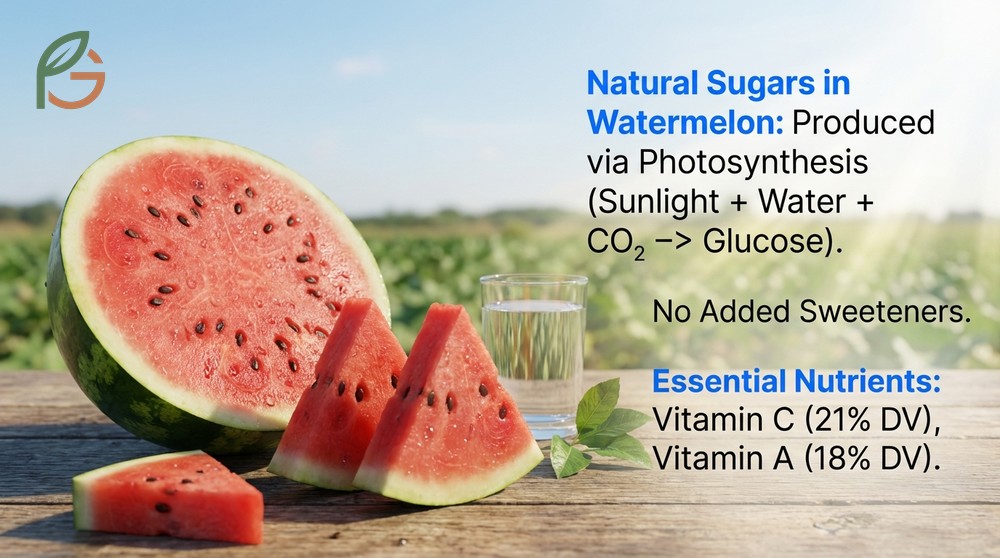
Studies demonstrate all sugars in watermelon occur naturally through photosynthesis—the plant converts sunlight, water, and CO₂ into glucose during growth. No processing adds sweeteners or concentrates at any stage. This distinguishes watermelon from dried fruits or juices with added sugars.
The National Watermelon Promotion Board emphasizes watermelon delivers essential nutrients alongside its natural sugars[4]. You get vitamin C (21% daily value), vitamin A (18% DV), and lycopene (12.7mg) per cup serving. Added sugars in processed foods provide calories without these benefits.
Research shows your body processes natural fruit sugars differently than refined sweeteners. The fiber, water, and micronutrients in watermelon slow sugar absorption and provide satiety. This explains why eating watermelon feels more satisfying than consuming 9 grams of table sugar.
What makes natural sugars beneficial is the complete nutritional package. Each watermelon serving includes 0.6 grams fiber that feeds gut bacteria and regulates digestion. The antioxidant lycopene protects cells from oxidative stress. You’re nourishing your body, not just spiking blood sugar.
- Natural sugars come packaged with fiber that slows absorption and prevents rapid spikes
- Watermelon’s 91% water content creates fullness that prevents overeating
- Vitamin C and lycopene provide antioxidant protection alongside energy
- Zero processing means no nutrient loss during preparation
- Natural sweetness satisfies cravings without triggering insulin resistance patterns
- Mineral content (potassium, magnesium) supports metabolic sugar processing
For health-conscious eaters: Pair watermelon with protein or healthy fats to further slow sugar absorption. Greek yogurt, nuts, or cheese create a balanced snack that extends energy release over 2-3 hours instead of 30-45 minutes.
Watermelon Carbs and Sugar
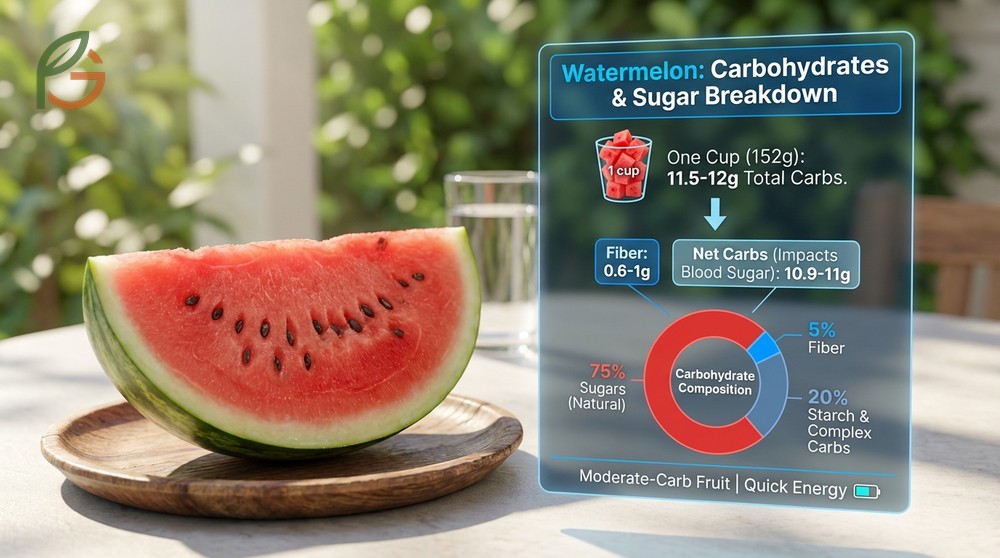
One cup of watermelon contains 11.5-12 grams total carbohydrates[2]. After subtracting 0.6-1 gram of fiber, you’re left with 10.9-11 grams net carbs that impact blood sugar. This positions watermelon as a moderate-carb fruit suitable for most eating patterns.
The carbohydrate breakdown reveals 75% comes from sugars and 5% from fiber. The remaining 20% consists of small amounts of starch and other complex carbohydrates. Most people find this ratio provides quick energy without the crash associated with pure sugar.
Research indicates watermelon’s net carb count makes it workable for many diets. Those following 100-150g daily carb limits can include 1-2 cups comfortably. Stricter ketogenic diets (20-50g carbs) require limiting portions to 1/2 cup or skipping watermelon entirely.
Evidence suggests the fiber-to-sugar ratio affects satiety significantly. Watermelon’s 1:15 fiber-to-sugar ratio means you need its water content more than fiber for fullness. Contrast this with raspberries at 1:1 ratio—much more filling per gram of sugar consumed.
- Standard diet (225-325g carbs/day): 2-3 cups watermelon fits easily within limits
- Active lifestyle (150-200g carbs): Use 1-2 cups as pre-workout fuel for quick energy
- Moderate low-carb (50-100g): Limit to 1 cup daily, preferably post-exercise
- Ketogenic diet (20-50g): 1/2 cup maximum or skip entirely during strict phases
- Diabetic management: Pair with protein, monitor portions to 1/2-1 cup servings
Carb timing strategy: Consume watermelon within 2 hours after exercise. Your muscles absorb sugars 3-4x faster during this window without raising blood glucose as dramatically. Athletes use this window for recovery nutrition.
Watermelon Glycemic Index
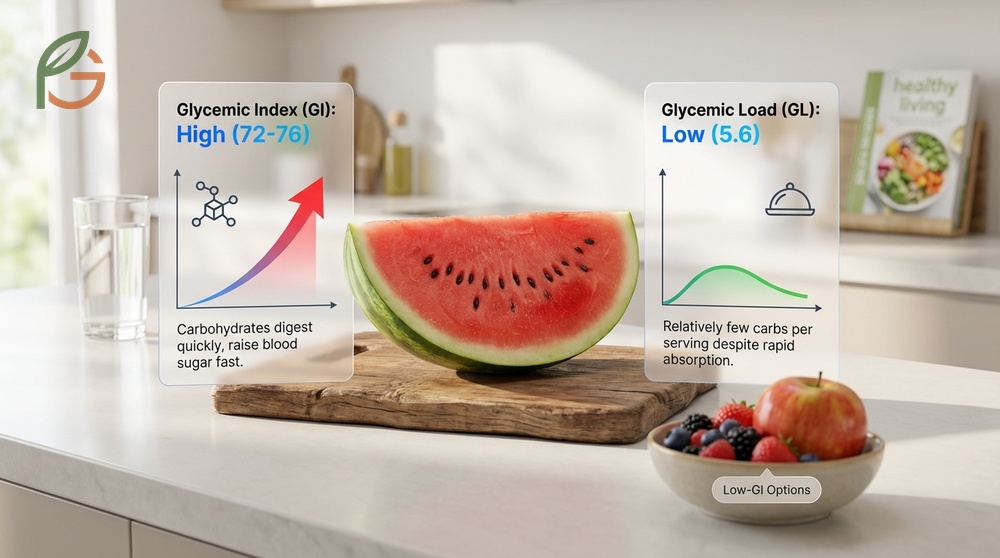
Watermelon has a glycemic index of 72-76[3], classifying it as a high-GI food. This means the carbohydrates digest quickly and raise blood sugar faster than low-GI options like berries or apples. The number surprises people who assume all fruits are low-GI.
However, glycemic load tells a more accurate story for real-world eating. Watermelon’s GL sits at 5.6 per serving[3]—categorized as low. This happens because you consume relatively few carbs per serving despite rapid absorption. The distinction matters more than GI alone.
NC State research confirms a half-cup serving produces a glycemic load of just 4[2]. This low GL means blood sugar rises moderately rather than spiking dangerously. Most people experience stable energy for 45-60 minutes after eating watermelon.
The reason glycemic load matters more is portion reality. You’d need to eat 3-4 cups of watermelon to match the glycemic impact of one slice of white bread. Few people consume that much watermelon in one sitting, making the theoretical high GI less relevant than practical GL.
- GI of 72-76 indicates rapid carbohydrate breakdown in laboratory conditions
- GL of 5.6 reflects minimal total carbs consumed per real-world serving
- One cup serving produces smaller blood sugar rise than 1/2 cup cooked rice
- High water content dilutes carbohydrate concentration compared to dense foods
- Combining with protein or fat lowers effective GI by 20-30 points
- Individual responses vary based on insulin sensitivity and recent eating patterns
| Food | Serving Size | Glycemic Index | Glycemic Load |
|---|---|---|---|
| Watermelon | 1 cup (152g) | 72-76 | 5.6 (Low) |
| White bread | 1 slice (30g) | 75 | 11 (Medium) |
| Banana | 1 medium (118g) | 51 | 13 (Medium) |
| Apple | 1 medium (182g) | 36 | 6 (Low) |
Blood sugar management: Test your individual response by measuring glucose 30, 60, and 90 minutes after eating one cup of watermelon. Most people see peaks at 45-60 minutes with return to baseline by 90 minutes. Adjust portions based on your pattern.
Conclusion
The evidence is clear: watermelon contains 9 grams of natural sugar per cup, making it a moderate-sweetness fruit with excellent hydration benefits. Its high water content and low glycemic load allow most people to enjoy 1-2 cups daily without blood sugar concerns. Current nutritional guidance emphasizes choosing whole fruits like watermelon over processed sweets for satisfying natural sweetness alongside essential vitamins and antioxidants.
FruitGarden synthesizes agricultural research to help gardeners optimize growing conditions for peak sweetness—focus on consistent heat above 85°F (29°C), well-drained soil, and harvest timing. Understanding watermelon’s nutritional profile empowers you to grow and consume this summer staple confidently.
Medical Disclaimer
Important Medical Disclaimer: This content is for informational and educational purposes only. It’s not intended as a substitute for professional medical advice, diagnosis, or treatment. Always consult a qualified healthcare professional or registered dietitian before making changes to your diet, especially if you have diabetes, metabolic syndrome, or other medical conditions affecting blood sugar regulation.
Frequently Asked Questions
Does watermelon have too much sugar for diabetics?
Watermelon can fit into diabetic meal plans when consumed in controlled portions. Research shows one cup contains 9g sugar with a low glycemic load of 5.6, meaning it won’t spike blood sugar as dramatically as the high GI suggests. Pair with protein and limit servings to 1/2-1 cup to minimize glucose impact.
Is the sugar in watermelon bad for you?
No, watermelon contains only natural sugars with zero added sweeteners. These natural sugars come packaged with fiber, vitamins A and C, lycopene, and 91% water content that provides satiety and hydration. Studies demonstrate whole fruit consumption doesn’t carry the same health risks as added sugars in processed foods.
How does watermelon sugar compare to other fruits?
Watermelon ranks as moderately sweet with 9g sugar per cup—more than strawberries (7g) but significantly less than grapes or mangoes (23g each). Its high water content creates intense sweetness perception while delivering fewer actual sugar grams than denser fruits.
Can you eat watermelon on a low-carb diet?
It depends on your carb limit. One cup has 11-12g total carbs, making it workable for moderate low-carb diets (50-100g daily). Strict ketogenic diets (20-50g carbs) require limiting portions to 1/2 cup or avoiding watermelon during the strictest phases to maintain ketosis.
What’s the best time to eat watermelon for blood sugar control?
Consume watermelon within 2 hours after exercise for optimal blood sugar management. Your muscles absorb sugars 3-4 times faster during this post-workout window without raising blood glucose as dramatically. Pairing with protein at any time also slows sugar absorption by 30-40%.
Does watermelon have more sugar when it’s very ripe?
Yes, fully ripe watermelons contain 15-20% more sugar than underripe ones. As the fruit ripens, starches convert to simple sugars, increasing sweetness. Look for a yellow ground spot and hollow sound when tapping to identify peak ripeness with maximum sugar development.
How much watermelon can you eat per day?
Most adults can safely enjoy 2-3 cups daily as part of a balanced diet. This provides 18-27g natural sugar alongside hydration and nutrients. Those managing blood sugar should limit intake to 1-1.5 cups and monitor individual glucose responses to determine personal tolerance levels.





