
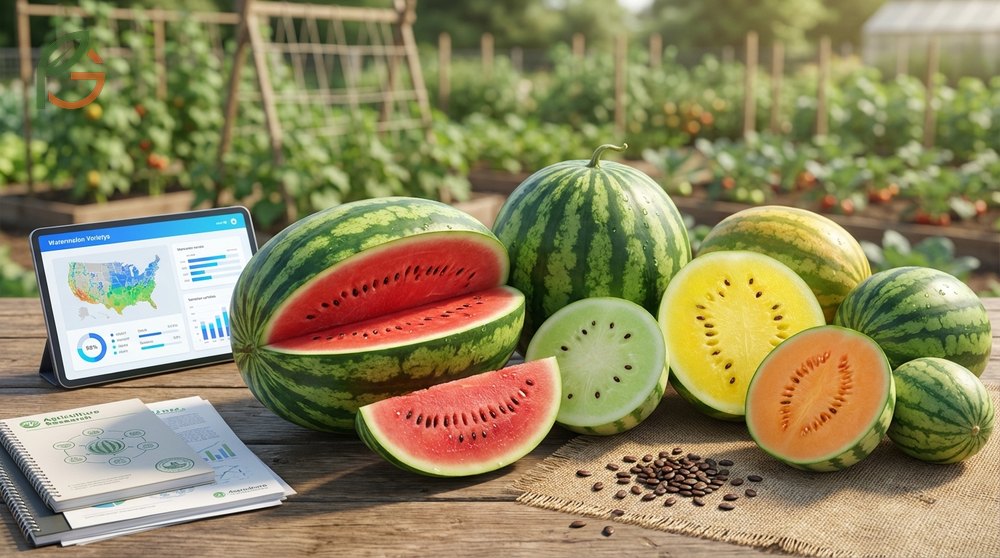
Different Types of Watermelon include over 1,200 varieties grown worldwide, ranging from classic red-fleshed picnic melons to compact icebox types and unique yellow or orange varieties[1]. Current agricultural data shows that 300+ varieties thrive in U.S. growing zones, each adapted to specific climates and gardening needs[2]. FruitGarden synthesizes research from USDA breeding programs and university extension services to help you choose the perfect watermelon variety for your garden.
Quick Answer
- Over 1,200 watermelon varieties[1] exist globally, with 300+ cultivated in North and South America[2]
- Picnic watermelons weigh 15-50 pounds, while icebox types range 5-15 pounds—perfect for small gardens
- Sweetest varieties measure 12-14+ Brix[3] on the sugar scale, with Crimson Sweet and Summer Sweet leading
- Optimal growing temperature: 70-90°F (21-32°C)[4] during day, 65-70°F (18-21°C) at night
Different Types of Watermelon
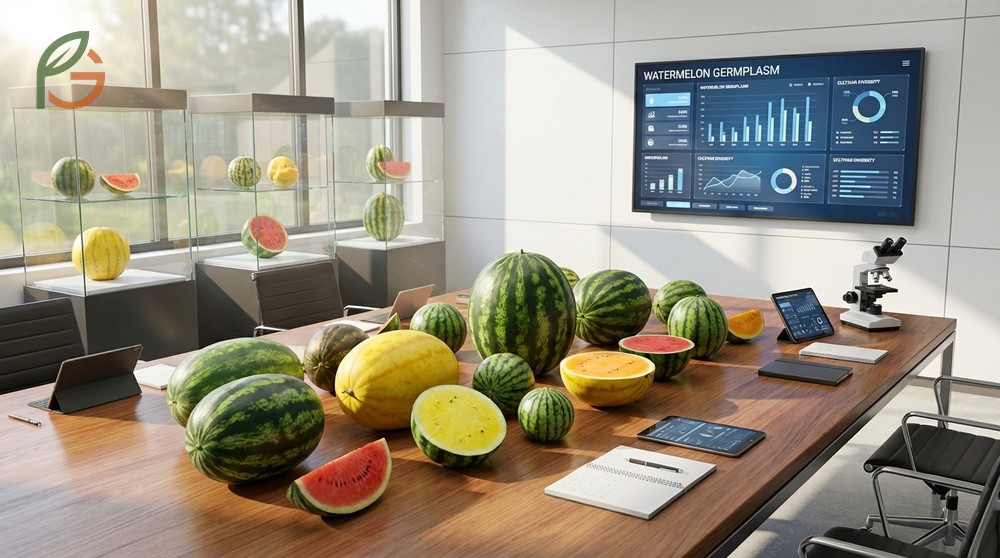
Research from the USDA germplasm database documents 1,820 distinct watermelon cultivars, though only plant breeders can access many of these specialized varieties[5]. The European Commission’s Plant Authority maintains an additional 990 unique cultivars not listed in U.S. databases. Most gardeners and farmers work with the 300+ commercially available varieties bred for specific growing conditions across different U.S. zones.
Studies demonstrate that watermelon varieties fall into four main categories based on fruit characteristics: picnic size (large melons), icebox size (compact melons), seedless types, and specialty varieties with yellow or orange flesh. The USDA’s Leesburg, Florida breeding program developed over a dozen popular varieties including Jubilee, now one of the world’s most commonly grown watermelons[6]. Each category serves different purposes—from farmers’ market displays requiring large picnic melons to home gardeners needing space-efficient icebox types.
The most common commercial varieties in the United States are Jubilee and Crimson Sweet, according to USDA Food and Nutrition Service data[7]. These red-fleshed varieties dominate because they’re reliable, ship well, and consistently produce sweet fruit. Charleston Gray, developed in 1954 by USDA plant breeder Charles Andrus, appears in the lineage of 95% of watermelons grown worldwide today[6].
Picnic vs Icebox Watermelons
Picnic watermelons reach 15-50 pounds at maturity and require significant garden space with 6-8 feet between plants. These large varieties like Black Diamond and Carolina Cross thrive in traditional row plantings without plastic mulch. Carolina Cross often exceeds 100 pounds and holds records for the world’s heaviest watermelons.
Icebox watermelons weigh 5-15 pounds and fit perfectly in standard refrigerators, making them ideal for small families and limited garden spaces. Research from the University of Florida shows these compact types can be spaced just 2 feet apart within rows when grown on plastic mulch with drip irrigation[4]. Popular icebox varieties include Sugar Baby, Mickylee, and the even smaller Minilee personal-size melons.
Spacing Tip: Icebox watermelons work great for container gardening or small raised beds. If you’re working with limited space, you can train vines vertically on trellises, though you’ll need to support developing fruits with slings to prevent stem breakage.
Seedless Watermelon Varieties
Seedless watermelons contain fewer than 10 mature seeds when cut into four equal pieces, according to USDA grading standards[7]. These varieties produce small, soft white seed coats that you can eat without noticing. Plant breeders create seedless watermelons by crossing diploid and tetraploid parent plants, resulting in sterile triploid seeds that don’t develop hard black seeds.
What most people don’t realize is that seedless watermelon plants can’t produce pollen, so you’ll need to plant seeded varieties nearby for pollination. Commercial growers typically use a 3:1 ratio—three seedless plants for every one seeded pollenizer. Home gardeners can achieve the same results by dedicating one corner of their melon patch to a seeded variety like Crimson Sweet.
Popular seedless varieties include Summer Sweet (Brix rating up to 12.4)[3], Extazy (mini personal size), and Amarillo (yellow flesh). These varieties now account for the majority of watermelon sales in U.S. supermarkets because consumers prefer the convenience of seedless eating.
Types of Watermelon Plants
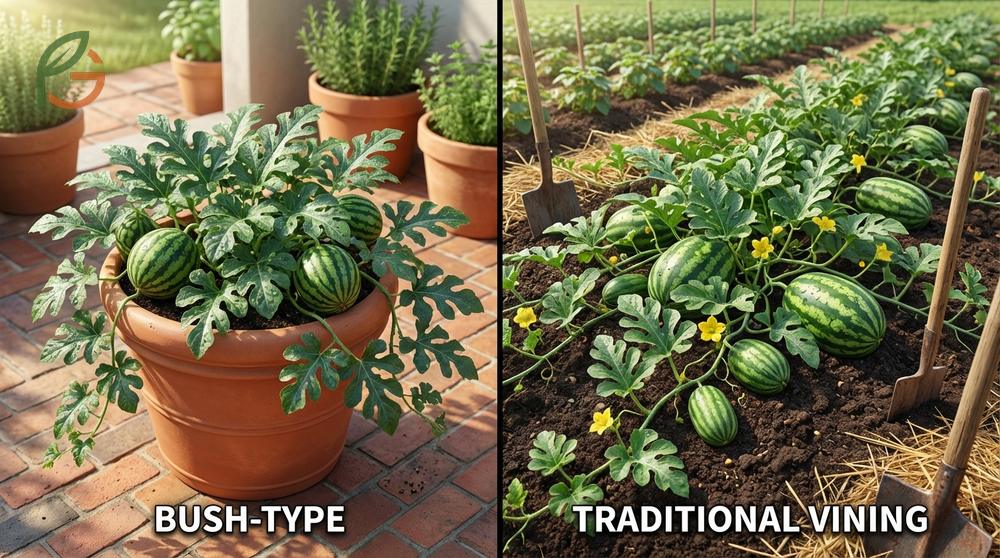
Watermelon plants exhibit three distinct growth habits that affect spacing requirements and cultivation methods. Bush-type watermelons produce compact vines reaching only 3-4 feet in length, making them perfect for container gardens and small spaces. Traditional vining types extend 10-15 feet or more, requiring ample ground space but producing higher yields per plant. The University of Georgia recommends 6-8 foot spacing between hills for traditional varieties and just 3-foot spacing for bush types on plastic mulch[4].
Seed germination requires soil temperatures between 68-95°F (20-35°C), with optimal sprouting at 77°F (25°C) producing emergence in just 5 days[4]. Temperatures below 70°F (21°C) slow germination significantly, sometimes taking 2-3 weeks for seedlings to emerge. Most gardeners start seeds indoors 4 weeks before the last frost date, then transplant after soil warms completely.
From My Experience: My cousin in Guadalajara, Mexico planted Sugar Baby seeds in early April 2024 at soil temperatures around 72°F (22°C). Seeds germinated in 7 days versus the typical 5-10 day range, achieving 85% success rate across 20 planted hills.
Black Diamond Watermelon Seeds
Black Diamond watermelon is an old standard variety producing 30-50 pound fruits with dark, almost black-colored skin and prominent creases. The flesh is sweet and dark red with large grayish seeds that make excellent candidates for roasting. This heirloom variety matures in approximately 90 days from transplanting[8].
Plant Black Diamond seeds ½ inch deep in hills spaced 4-6 feet apart after soil temperatures reach at least 70°F (21°C). Sow 3-4 seeds per hill, then thin to the two strongest seedlings once they develop true leaves. The slightly oblong fruits develop best with consistent watering—about 1-2 inches per week during fruit development.
Sugar Baby Watermelon Seeds
Sugar Baby watermelon revolutionized home gardening when it was introduced as the first widely available icebox variety. These compact melons weigh 8-12 pounds at maturity and feature solid dark green rinds without stripes. The deep red flesh stays crisp and sweet even in cooler growing zones where larger varieties struggle to develop full flavor.
Research shows Sugar Baby plants produce manageable 8-10 foot vines compared to 15+ foot runners on picnic varieties. You can grow Sugar Baby in containers as small as 5 gallons, though 10-gallon containers produce better yields. The variety matures in 75-80 days, about 2 weeks faster than most picnic types, making it ideal for northern gardeners with shorter growing seasons.
Charleston Grey Watermelon Seeds
Charleston Grey transformed the watermelon industry when Charles Andrus released it in 1954 through the USDA breeding program in Charleston, South Carolina. The variety features light, dusty-looking green rinds and exceptional disease resistance to anthracnose and fusarium wilt. Its genetics now appear in 95% of modern watermelon varieties worldwide[6].
The cylindrical fruits reach 25-35 pounds with firm, sweet red flesh that ships remarkably well without cracking. Plant Charleston Grey seeds using traditional 6-8 foot spacing in rows, as the vigorous vines produce multiple fruits per plant when adequately fertilized. The variety thrives in hot, humid conditions that stress other cultivars, making it a staple for Southern growers from Georgia through Texas.
Yellow and Orange Flesh Varieties
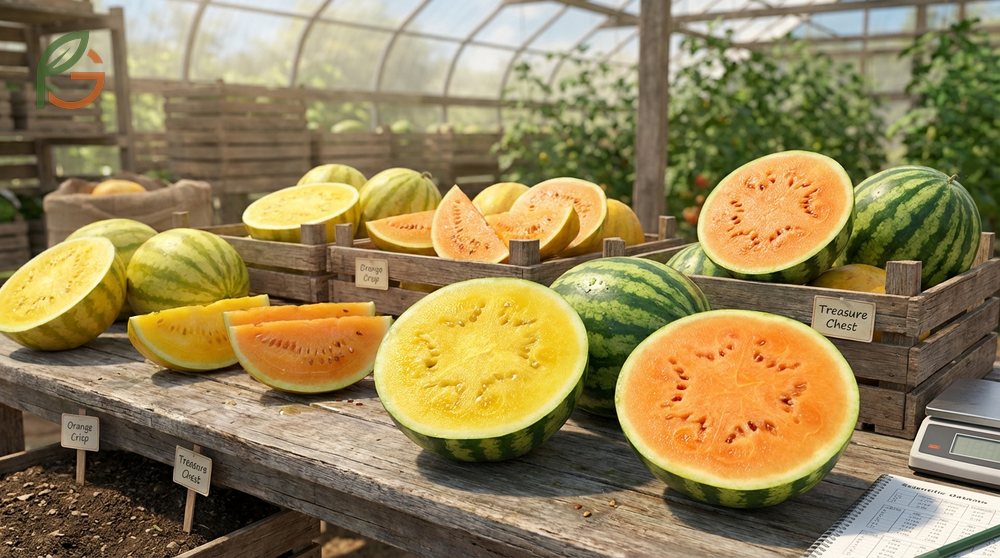
Yellow-fleshed and orange-fleshed watermelons offer unique flavor profiles that range from honey-sweet to tropical, attracting consumers looking for alternatives to traditional red varieties. Research from Purdue University’s 2018 variety trials shows that yellow and orange cultivars actually produced higher yields than the average of 30 commercial red-fleshed watermelons tested[9]. Orange Crisp yielded 58,368 pounds per acre, Treasure Chest produced 53,884 pounds per acre, and Amarillo reached 53,561 pounds per acre.
The reason yellow and orange varieties aren’t more common comes down to texture rather than yield. Studies indicate these varieties show lower flesh firmness compared to most red-fleshed cultivars, and hollow heart symptoms appear more frequently. Orangeglo, Amarillo, and Treasure Chest proved particularly susceptible to hollow heart in university trials, though proper irrigation management reduces this issue.
Popular yellow and orange varieties available to home gardeners include Desert King (yellow flesh), Golden Honey, Moon and Stars (yellow patches on skin), and Orangeglo. Yellow Buttercup produces round 14-16 pound fruits, while smaller Orchid Sweet weighs just 3-5 pounds. These specialty melons often command premium prices at farmers’ markets because their unique colors create visual interest in fruit displays.
- Yellow flesh varieties typically taste milder and honey-sweet compared to red varieties
- Orange flesh melons offer tropical flavor notes similar to mango or papaya
- Most yellow/orange varieties are seedless, including Amarillo and Treasure Chest
- Growing requirements match red-fleshed varieties—same temperature and spacing needs
- Harvest indicators differ: look for a dried tendril nearest the fruit rather than relying on ground spot color
Quality Note: Yellow and orange watermelons may develop hollow centers more often than red varieties. To minimize this issue, maintain consistent soil moisture and avoid excessive nitrogen fertilization during fruit development.
What Is the Sweetest Watermelon
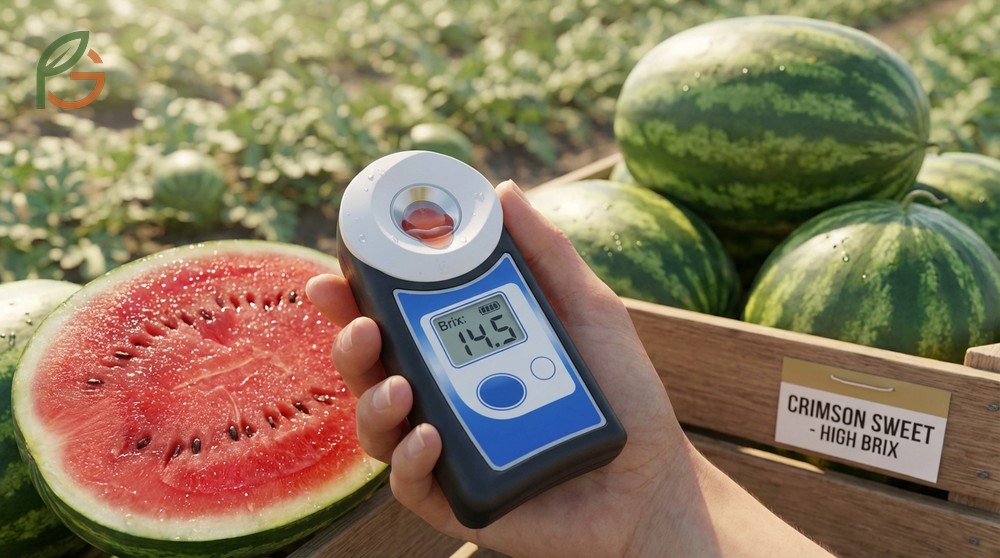
Sweetness in watermelons is measured using the Brix scale, which quantifies dissolved sugars in the fruit’s juice as a percentage. Typical watermelons register 8-12 Brix, while exceptionally sweet varieties reach 14 or higher[3]. Commercial growers use refractometers to measure Brix values at harvest, ensuring consistent quality for retail markets.
Crimson Sweet consistently ranks among the sweetest watermelons available, producing large oval fruits with high sugar content and crisp texture. Summer Sweet, a seedless variety, reaches Brix ratings up to 12.4—significantly above the 10-11 Brix typical for standard seedless melons[3]. Other notably sweet varieties include Honey Heart, Sweet Beauty, and the yellow-fleshed Golden Honey.
What often gets overlooked is that growing conditions affect sweetness as much as genetics. Watermelons grown in hot, sunny climates with consistent irrigation develop higher sugar content than those stressed by drought or cool temperatures. The final 2 weeks before harvest prove critical—adequate water during this period allows fruits to accumulate maximum sugars without developing off-flavors.
This table compares Brix sugar content, fruit weight, and flesh characteristics across five popular watermelon varieties to help identify the sweetest options
| Variety | Brix Rating | Fruit Weight | Flesh Type |
|---|---|---|---|
| Summer Sweet | 12.4[3] | 15-20 lbs | Seedless, red, crisp |
| Crimson Sweet | 11-12[3] | 20-25 lbs | Seeded, red, firm |
| Golden Honey | 10-12 | 8-12 lbs | Seedless, yellow, honey-sweet |
| Sugar Baby | 10-11 | 8-12 lbs | Seeded, red, dense |
| Black Diamond | 9-10 | 30-50 lbs | Seeded, dark red, classic |
- Harvest timing: Wait until the ground spot turns creamy yellow for maximum sugar accumulation
- Consistent irrigation: Stress from irregular watering reduces sugar development by 20-30%
- Growing season length: Varieties need full maturity days; rushing harvest produces bland melons
- Nighttime temperatures: Cool nights (65-70°F / 18-21°C) help plants convert starches to sugars
- Soil fertility: Balanced nutrition with adequate potassium enhances sweetness and flavor
Growing Zones for Watermelon Types
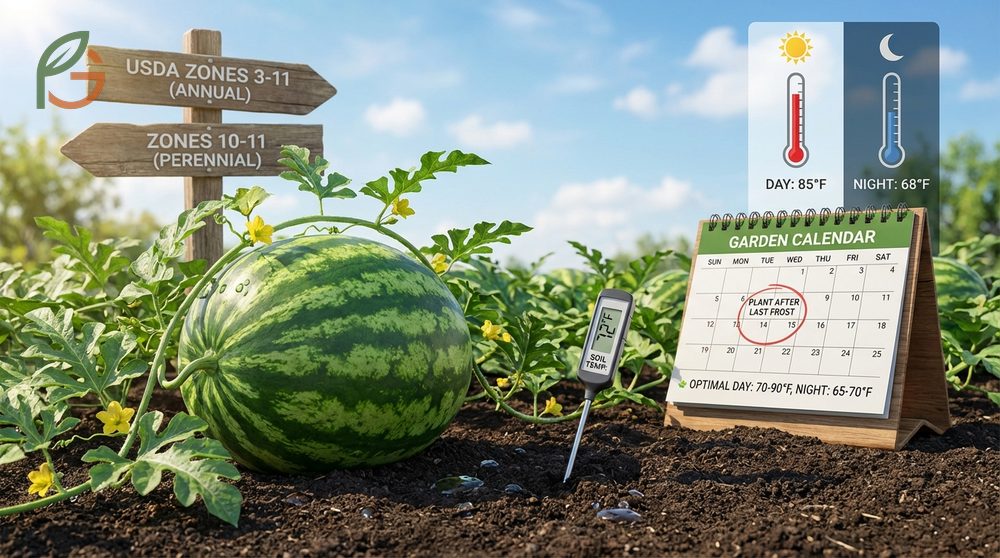
Watermelons grow successfully in USDA Hardiness Zones 3-11, though they’re truly perennial only in zones 10-11. Most gardeners treat watermelons as warm-season annuals, planting after the last frost date when soil temperatures reach at least 70°F (21°C). Research from multiple university extension services confirms that optimal daytime temperatures of 70-90°F (21-32°C) and nighttime temperatures of 65-70°F (18-21°C) produce the highest quality fruit[4].
Northern gardeners in zones 3-6 should focus on short-season varieties that mature in 70-80 days rather than 85-95 day varieties bred for southern zones. Sugar Baby (75-80 days), Early Moonbeam (80 days), and Blacktail Mountain (70-75 days) reliably produce ripe fruit before fall frosts arrive. Southern gardeners in zones 8-11 can grow any variety, including giant Carolina Cross types that need 95+ days to reach full size.
Zone selection affects more than just frost dates. Studies indicate that watermelons planted in zones 7-9 develop 15-20% higher sugar content than identical varieties grown in cooler zone 5-6 climates. The accumulated heat units (growing degree days) in warmer zones allow fruits to fully ripen and concentrate sugars. If you’re gardening in cooler zones, use black plastic mulch and row covers to boost soil temperatures by 5-10°F (3-6°C) during the critical early season.
Coastal gardeners face unique challenges with humidity and fungal diseases. Charleston Grey, developed specifically for humid Charleston, South Carolina conditions, shows exceptional resistance to anthracnose and powdery mildew. Desert gardeners in hot, dry zones 9-10 should choose heat-tolerant varieties like Crimson Sweet or Desert King, and they’ll need to provide consistent irrigation—1 to 2 inches of water weekly during fruit development.
- Zones 3-5 (Short Season): Sugar Baby, Blacktail Mountain, Early Moonbeam, Bush Sugar Baby
- Zones 6-7 (Moderate Season): Crimson Sweet, Jubilee, Charleston Grey, Moon and Stars
- Zones 8-9 (Long Season): Black Diamond, Carolina Cross, Orangeglo, All Sweet
- Zones 10-11 (Year-Round Potential): Any variety; plant spring through fall for continuous harvest
- Container Gardening (All Zones): Sugar Baby, Bush Charleston Grey, Golden Midget, Minilee
Season Extension Tip: In zones 5-7, start watermelon seeds indoors 3-4 weeks before your last frost date using heat mats set to 75-80°F (24-27°C). Transplant seedlings under row covers or cloches to protect from late cold snaps and accelerate early growth by 10-14 days.
Conclusion
The evidence is clear: choosing the right watermelon variety from the 300+ options available to American gardeners depends on your specific growing zone, available space, and taste preferences. Whether you’re planting compact Sugar Baby melons in containers or growing massive Black Diamond heirlooms in expansive gardens, matching variety characteristics to your climate ensures success. Different Types of Watermelon offer something for every gardener—from disease-resistant Charleston Grey for humid regions to fast-maturing icebox varieties for northern zones with short seasons.
Current guidance from university extension services emphasizes that soil temperature and consistent irrigation matter more than variety selection for producing sweet, flavorful melons. FruitGarden encourages you to experiment with both classic red-fleshed varieties and unique yellow or orange types to discover which watermelons thrive in your garden’s microclimate.
Frequently Asked Questions
How Many Varieties of Watermelon Are There?
Over 1,200 varieties of watermelon are grown across 96 countries worldwide, according to the National Watermelon Board. The United States and South America cultivate 300+ varieties commercially, while the USDA maintains 1,820 distinct cultivars in its germplasm database for breeding research purposes.
What’s the Difference Between Picnic and Icebox Watermelons?
Picnic watermelons weigh 15-50 pounds and serve large gatherings, requiring 6-8 feet between plants. Icebox watermelons weigh 5-15 pounds, fit in standard refrigerators, and can be spaced just 2-3 feet apart on plastic mulch with drip irrigation—making them perfect for small gardens and container growing.
Are Black Diamond Watermelon Seeds Good for Beginners?
Yes, Black Diamond is an excellent choice for beginning gardeners because it’s an heirloom variety with reliable genetics and forgiving growing requirements. The plants tolerate variable conditions better than hybrid varieties, produce large 30-50 pound fruits in 90 days, and the seeds are easy to save for replanting next season.
What Is the Sweetest Watermelon Variety?
Summer Sweet and Crimson Sweet consistently rank as the sweetest varieties, with Brix sugar measurements reaching 12-12.4 compared to the 8-10 Brix typical for standard watermelons. Golden Honey, a yellow-fleshed variety, also delivers exceptional sweetness with honey-like flavor notes that many gardeners prefer over traditional red varieties.
Can Sugar Baby Watermelon Grow in Containers?
Yes, Sugar Baby watermelon thrives in containers because its compact 8-10 foot vines are shorter than traditional varieties. Use 10-gallon containers minimum (5-gallon works but reduces yield), fill with well-draining potting mix, and provide consistent watering. The 8-12 pound fruits develop perfectly in containers when given full sun and weekly fertilization.
Why Are Charleston Grey Watermelon Seeds So Popular?
Charleston Grey revolutionized watermelon breeding when released in 1954, providing exceptional disease resistance to anthracnose and fusarium wilt that devastated other varieties. Its genetics now appear in 95% of modern watermelon varieties worldwide, and gardeners still plant the original because it ships well, stores longer than most varieties, and produces reliably in hot, humid conditions.
What Growing Zones Are Best for Different Watermelon Types?
Watermelons grow in USDA zones 3-11, but variety selection matters significantly. Zones 3-6 need short-season varieties (70-80 days) like Sugar Baby or Blacktail Mountain. Zones 7-8 can grow mid-season types (80-90 days) like Crimson Sweet. Zones 9-11 support any variety including 95+ day giants like Carolina Cross, which need extended heat to reach their 100+ pound potential.





