
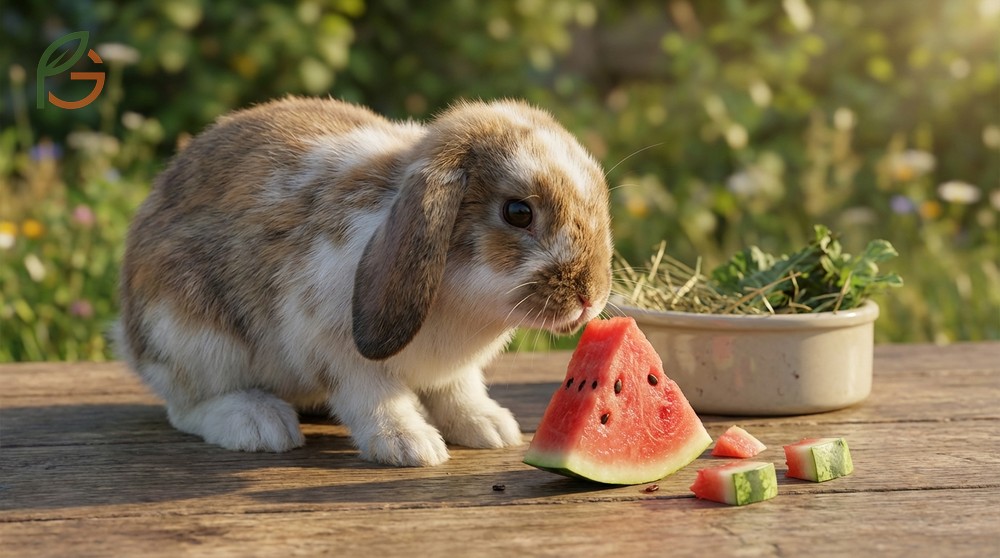
Can rabbits eat watermelon? Yes, rabbits can safely eat watermelon in small amounts as an occasional treat, but it shouldn’t become a daily food. Research shows watermelon contains 9.4 grams of sugar per cup with minimal fiber, which can disrupt your rabbit’s delicate digestive system if overfed[1]. FruitGarden synthesizes current veterinary guidance and nutritional research to help you make informed decisions about your rabbit’s diet.
Quick Answer
- Watermelon is safe for rabbits but only as a 1-2 times per week treat in tiny portions[2]
- One serving equals a 1-inch cube or less—about the size of one grape cut in half[2]
- Remove all seeds completely as they’re choking hazards that can cause digestive blockages[3]
- The rind is debated—some vets say it’s fibrous and beneficial, while others warn it’s tough to digest
Can Rabbits Eat Watermelon
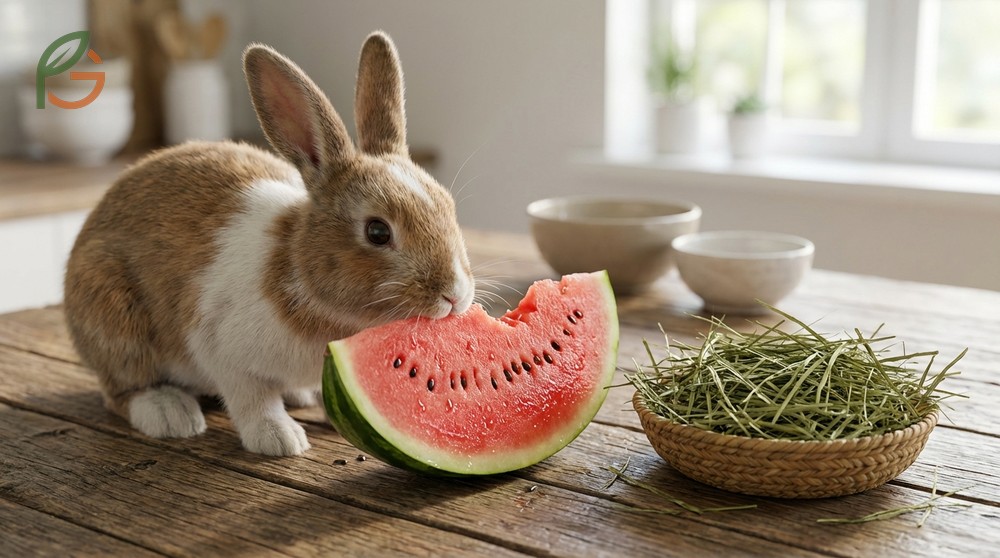
Studies demonstrate that watermelon isn’t toxic to rabbits and can provide hydration on hot days. The flesh contains about 92% water, making it refreshing but nutritionally sparse. Most rabbits will eagerly eat watermelon because of its natural sweetness.
Current veterinary guidance emphasizes that watermelon lacks the fiber rabbits need for healthy digestion. Watermelon provides only 0.4-0.6 grams of fiber per 100 grams[1], which is insufficient compared to hay. Your rabbit’s diet should consist of 80-90% hay to support their continuously growing teeth and digestive health.
The key is moderation. Veterinarians recommend treating watermelon like candy for rabbits—enjoyable but limited. Always wash the watermelon thoroughly and remove every seed before offering it to your bunny.
Why Watermelon Works as a Treat
Watermelon’s high water content can help keep rabbits hydrated, especially during summer months. It also contains vitamins A and C, though rabbits typically get these nutrients from their regular diet of hay and leafy greens. The soft texture makes it easy for rabbits to chew and digest in small amounts.
Most pet rabbits have a sweet tooth and find watermelon irresistible[4]. This makes it useful as a training reward or a way to bond with your rabbit. You can also use tiny watermelon pieces to encourage rabbits to eat hay by placing a small amount near their hay pile.
The Sugar Problem
Research shows watermelon contains significant sugar—approximately 9.4 grams per cup[1]. This sugar consists mainly of fructose, glucose, and sucrose. Rabbits evolved to eat fibrous plants with minimal sugar, not sweet fruits.
The high sugar content can disrupt your rabbit’s gastrointestinal tract and microbiome[3]. Dr. Christine Austin, a shelter veterinarian at House Rabbit Society, notes that ingesting too much watermelon or fruit daily can lead to obesity. Unlike humans, rabbits can’t regulate their sugar intake well.
Important Note: Rabbits will often choose sugary fruits over healthier hay and vegetables when given the option. Don’t let your rabbit fill up on watermelon at the expense of their primary diet.
Can Rabbits Eat Watermelon Rind
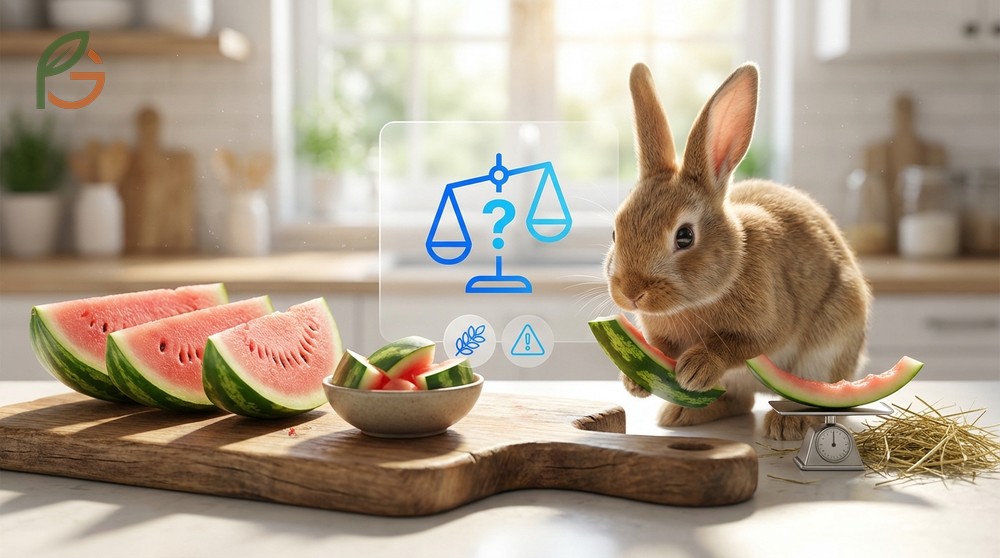
The watermelon rind question divides experts. Some rabbit care specialists suggest the rind offers fiber benefits, while others caution against it. The truth lies somewhere in between, depending on your individual rabbit’s digestive system.
What’s certain is that the rind contains less sugar than the pink flesh. It also has a crunchier texture that some rabbits enjoy gnawing on. However, you’ll need to weigh the potential benefits against the risks for your specific pet.
The Fiber Benefit Perspective
Some sources indicate watermelon rind contains more fiber than the flesh, particularly in the white part between the green skin and pink fruit. This fibrous material can support digestive health. The rind also contains citrulline, an amino acid that may benefit cardiovascular health.
The crunchy texture of watermelon rind can help wear down rabbit teeth, which grow continuously throughout their lives. Many rabbits enjoy chewing on the firm rind. If you decide to offer rind, start with a small piece and monitor your rabbit’s response over 24 hours.
The Digestive Risk Perspective
Veterinarians including Dr. Austin state that watermelon rind offers little to no nutritional value and should be fed in moderation, if at all[3]. The rind’s tough texture can be challenging for some rabbits to digest properly. It may cause stomach upset or blockages in rabbits with sensitive digestive systems.
The safest approach is to stick with small amounts of the pink flesh only. If you’re uncertain about your rabbit’s ability to handle rind, consult your exotic animal veterinarian. Every rabbit is different, and what works for one might cause problems for another.
Warning: Never feed your rabbit the tough green outer skin of watermelon. This part is too hard to digest and may contain pesticide residues even after washing.
Can Rabbits Eat Watermelon Skin
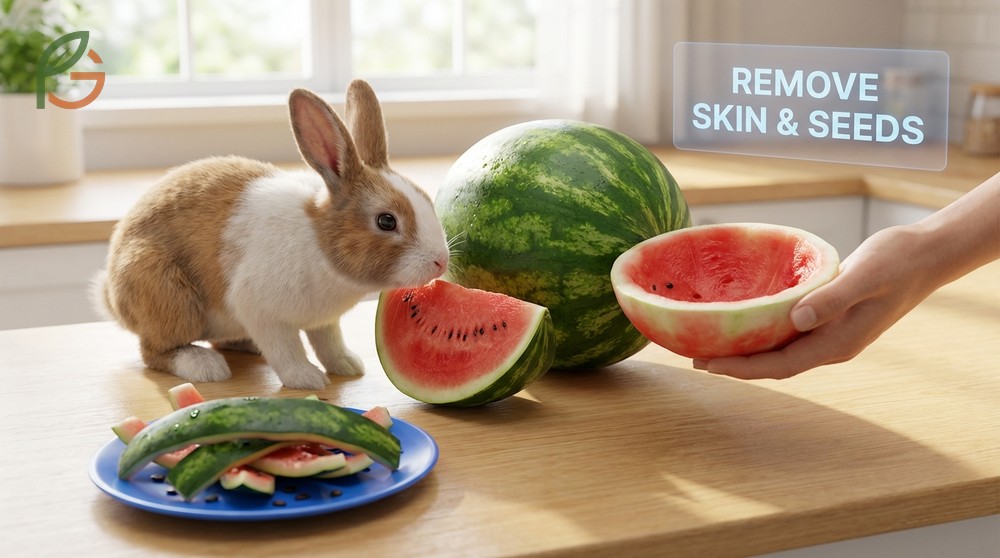
The green outer skin of watermelon isn’t recommended for rabbits. This tough exterior is difficult for rabbits to break down and digest. Unlike the rind (the white part), the green skin provides no nutritional benefit.
The outer skin may also harbor bacteria or pesticide residues that washing doesn’t completely remove. Even organic watermelons can have dirt or contaminants on the exterior. Always remove both the green skin and seeds before offering any watermelon to your rabbit.
If your rabbit accidentally ingests a small piece of green skin, it likely won’t cause harm. However, larger amounts could lead to digestive upset. Monitor for signs of discomfort like reduced appetite or abnormal droppings.
- Pink flesh: Safe in small amounts as an occasional treat
- White rind: Debated—some experts say it’s okay, others advise against it
- Green skin: Not recommended—too tough and potentially contaminated
- Seeds: Must be removed—choking hazard and blockage risk
- Seedless varieties: Best choice, but still check for occasional seeds
Digestive Issues Rabbits Watermelon
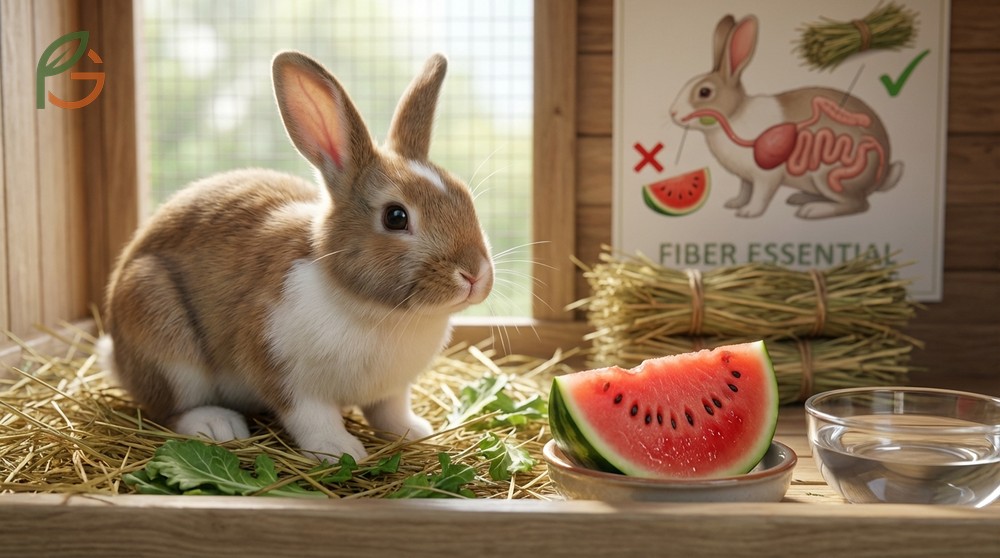
Evidence from peer-reviewed studies shows that acute episodes of GI stasis and dysbiosis are common in rabbits after ingesting large volumes of high-carbohydrate treats[5]. Watermelon’s high sugar and water content combined with low fiber creates the perfect storm for digestive problems. Some rabbits have more sensitive stomachs than others.
The water-rich nature of watermelon isn’t part of a rabbit’s natural diet. In the wild, rabbits eat fibrous plants, not juicy fruits. Too much watermelon can lead to soft poop or diarrhea because it disrupts the balance of bacteria in your rabbit’s gut.
Cecal dysbiosis—an imbalance in your rabbit’s gut flora—is a serious concern with high-sugar foods. This condition can cause decreased appetite and abnormal cecotrophs (the soft pellets rabbits normally re-ingest). While sugary foods don’t typically cause fatal enterotoxemia in adult pet rabbits, they can lead to obesity and chronic digestive discomfort.
Signs Your Rabbit Ate Too Much
If your rabbit consumes too much watermelon, watch for these symptoms over the next 12-24 hours. Changes in droppings are usually the first indicator of digestive upset. Normal rabbit pellets should be firm, round, and consistent in size.
- Soft poop or diarrhea: Loose, mushy droppings instead of firm pellets
- Decreased appetite: Refusing hay or pellets within hours of eating watermelon
- Uneaten cecotrophs: Soft, sticky droppings stuck to fur under the tail
- Lethargy: Less active than usual or sitting in a hunched position
- Bloating: Visibly distended stomach or signs of discomfort when touched
- Reduced water intake: Not drinking normally because of excess water from fruit
If you notice any of these symptoms, remove all treats immediately and offer only hay and water. Most rabbits recover within 24 hours once they return to their normal diet. Contact your veterinarian if symptoms persist beyond 24 hours or if your rabbit stops eating entirely.
Baby Rabbits and Watermelon
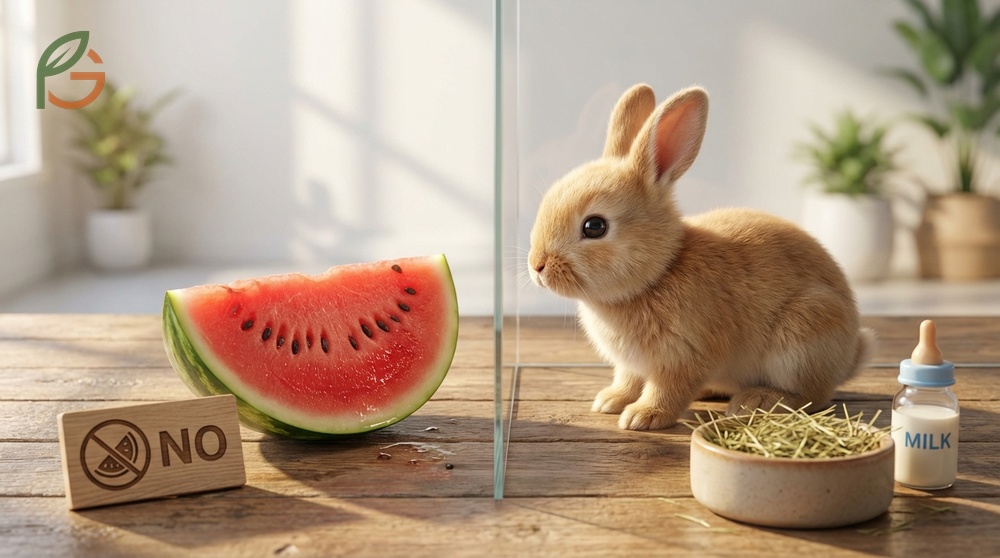
Baby rabbits shouldn’t eat watermelon or any treats. Their digestive systems are still developing and extremely sensitive to dietary changes. The naturally high sugar content in watermelon can cause GI upset and diarrhea in young rabbits[3].
Young rabbits under 12 weeks old need a diet focused on mother’s milk (if still nursing), unlimited alfalfa hay, and gradually introduced leafy greens starting around 12 weeks. Their cecal microflora—the beneficial bacteria in their digestive tract—is still establishing itself. Introducing sugary foods too early can permanently disrupt this delicate balance.
Wait until your rabbit is at least 6 months old before introducing any fruit treats. Even then, start with tiny portions—smaller than you’d give an adult rabbit. Monitor their droppings closely for any changes over the following day.
Important: Rabbits with a history of digestive issues should avoid watermelon entirely, regardless of age. The risk of triggering GI stasis isn’t worth the brief enjoyment.
Rabbit Diet Fruit Portion
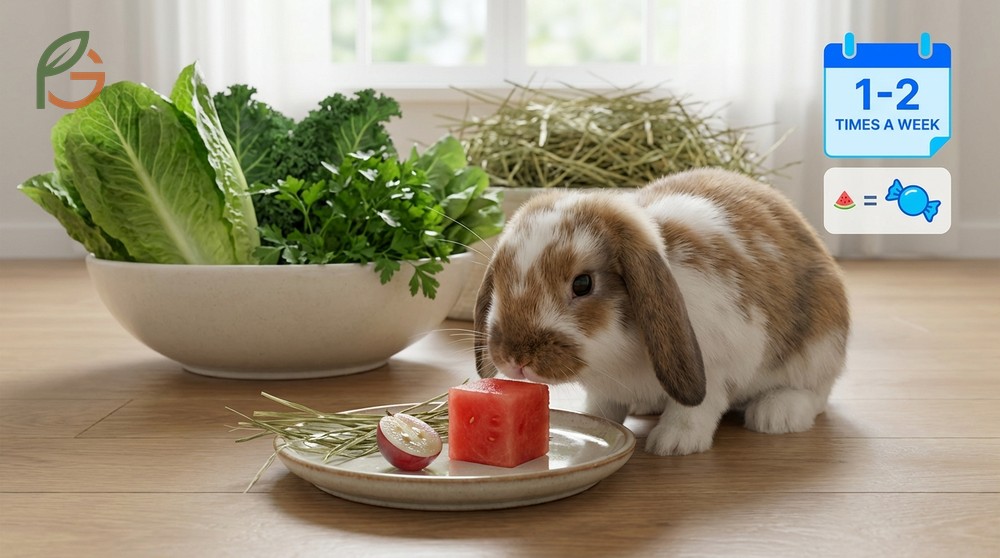
Current veterinary guidelines recommend limiting fruit to 1-2 times per week for healthy adult rabbits[2]. Each serving should be kept very small to prevent obesity and digestive problems. Think of fruit as you would candy for a child—an occasional special treat, not a regular meal component.
For watermelon specifically, one serving equals approximately a 1-inch cube[2]. This is about the same size as one grape cut in half. It might seem tiny, but it’s enough to give your rabbit the taste experience without overwhelming their digestive system.
The ideal rabbit diet consists of 80-90% hay, 10-15% fresh leafy greens, and only 5% treats including fruit and root vegetables. Overweight rabbits should receive less fruit or none at all until they reach a healthy weight. Always prioritize hay—it’s the foundation of rabbit health.
This table breaks down the ideal rabbit diet by food type, showing recommended percentages, daily amounts, and specific examples for a healthy adult rabbit
| Food Type | Percentage | Daily Amount | Examples |
|---|---|---|---|
| Hay | 80-90% | Unlimited | Timothy, orchard grass, meadow hay |
| Leafy Greens | 10-15% | 1-2 cups per 4 lbs body weight | Romaine, cilantro, parsley, basil |
| Pellets | 5% | 1/4 cup per 5 lbs body weight | Timothy-based pellets (adult formula) |
| Fruit & Treats | 5% | 1-2 times per week only | Watermelon, apple, banana (1-inch cube) |
Remember that treats add up quickly. If you give your rabbit a piece of watermelon one day, skip other high-sugar treats like carrots or banana that same week. This prevents excessive sugar intake while still providing variety.
Safe Vegetables and Fruits for Rabbits
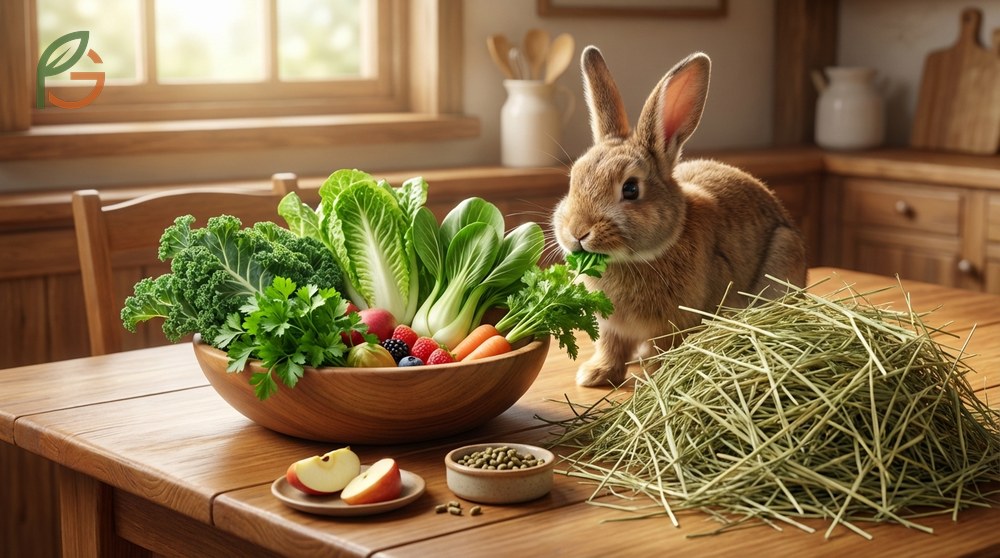
Research shows that rabbits at low risk for digestive issues are those fed diets of unlimited high-fiber grass hay, moderate amounts of fresh leafy greens, minimal pellets, and only occasional treats[5]. Variety in vegetables and fruits keeps your rabbit interested in eating while providing different nutrients. However, not all produce is equally safe.
Leafy greens should make up the bulk of your rabbit’s fresh food. These can be fed daily without the risks associated with fruit. Darker greens generally contain more nutrients than lighter varieties like iceberg lettuce, which offers little nutritional value.
- Romaine lettuce: High in vitamins and safe for daily feeding
- Cilantro: Aromatic herb most rabbits love
- Parsley: Nutrient-dense but limit due to calcium content
- Basil: Safe and flavorful addition to meals
- Arugula: Peppery green that adds variety
- Bok choy: Crunchy and nutritious leafy vegetable
- Dandelion greens: Wild and cultivated varieties both work
When it comes to fruit, variety also matters. Different fruits offer different vitamin profiles, though all should be limited due to sugar content. Berries tend to have slightly less sugar per serving than tropical fruits like watermelon and mango.
- Blueberries: 2-3 berries maximum per serving
- Strawberries: One medium berry, top removed
- Apple slices: 1-inch square, seeds removed
- Pear: Small wedge, seeds removed
- Banana: 1/4-inch slice only
- Raspberries: 2-3 berries per serving
Caution: Never feed avocados, rhubarb, or fruit seeds to rabbits. These are toxic and can cause serious health problems or death.
Conclusion
The evidence is clear: can rabbits eat watermelon—yes, but only as a carefully controlled treat rather than a dietary staple. Current veterinary guidance emphasizes that watermelon’s high sugar content and low fiber make it unsuitable for regular feeding, despite its appeal to rabbits’ sweet tooth. Limit portions to a 1-inch cube no more than twice weekly, always remove seeds, and prioritize hay as the foundation of your rabbit’s diet.
If you’re uncertain about introducing watermelon or notice any digestive changes after feeding it, consult an exotic animal veterinarian. FruitGarden continues to monitor emerging research on optimal rabbit nutrition to help you make evidence-based decisions for your pet’s health.
Medical Disclaimer
Important Veterinary Disclaimer: This content is for informational and educational purposes only. It is not intended as a substitute for professional veterinary advice, diagnosis, or treatment. Always consult a qualified exotic animal veterinarian before making any changes to your rabbit’s diet or health routine, especially if your rabbit has a history of digestive issues, obesity, or other medical conditions. Individual rabbits may react differently to foods, and what’s safe for one may cause problems for another.
Frequently Asked Questions
How much watermelon can I give my rabbit at one time?
You should give your rabbit no more than a 1-inch cube of watermelon per serving, which is roughly the size of one grape cut in half. This tiny portion provides the taste experience without overwhelming their digestive system with sugar and water. Even this small amount should only be offered 1-2 times per week maximum, not daily.
Do I need to remove watermelon seeds before feeding my rabbit?
Yes, you must remove all watermelon seeds before offering it to your rabbit. Black watermelon seeds are choking hazards and can cause digestive blockages. Even seedless watermelon varieties occasionally contain small white seeds, so always double-check before feeding. It’s safer to err on the side of caution and inspect each piece carefully.
Is watermelon rind better for rabbits than the pink flesh?
The rind contains less sugar than the pink flesh, but expert opinions are divided on whether it’s beneficial or risky. Some sources note the rind’s fiber content may help digestion and teeth, while veterinarians caution that it’s tough and offers little nutritional value. If you choose to offer rind, start with a small piece and monitor your rabbit for 24 hours for any digestive upset.
Can watermelon cause diarrhea in rabbits?
Yes, too much watermelon can cause soft poop or diarrhea in rabbits due to its high sugar and water content combined with low fiber. The excess sugar disrupts the balance of beneficial bacteria in your rabbit’s gut, leading to cecal dysbiosis. Some rabbits have more sensitive stomachs than others and may experience digestive upset even from small amounts. If you notice loose droppings after feeding watermelon, discontinue it immediately and return to hay-only diet.
At what age can rabbits start eating watermelon?
Rabbits should be at least 6 months old before you introduce any fruit treats, including watermelon. Baby rabbits have developing digestive systems that are extremely sensitive to dietary changes, and the high sugar content can cause GI upset and diarrhea. Even after 6 months, start with portions smaller than you’d give an adult rabbit and monitor their droppings closely for any changes.
What should I do if my rabbit ate too much watermelon?
If your rabbit consumed excessive watermelon, remove all treats immediately and offer only unlimited hay and fresh water. Watch for signs of digestive upset including soft poop, decreased appetite, lethargy, or bloating over the next 12-24 hours. Most rabbits recover within a day once they return to their normal high-fiber diet. Contact your exotic animal veterinarian if symptoms persist beyond 24 hours or if your rabbit stops eating entirely, as GI stasis is a medical emergency.
Are there better fruit treats than watermelon for rabbits?
Berries like blueberries and strawberries contain slightly less sugar per serving than watermelon and provide more antioxidants. However, all fruits should be limited to 1-2 times per week regardless of type. The best “treats” for rabbits are actually fresh herbs like cilantro, basil, and parsley, which can be fed daily without the sugar risks. These provide variety and nutrition without disrupting digestive health.





