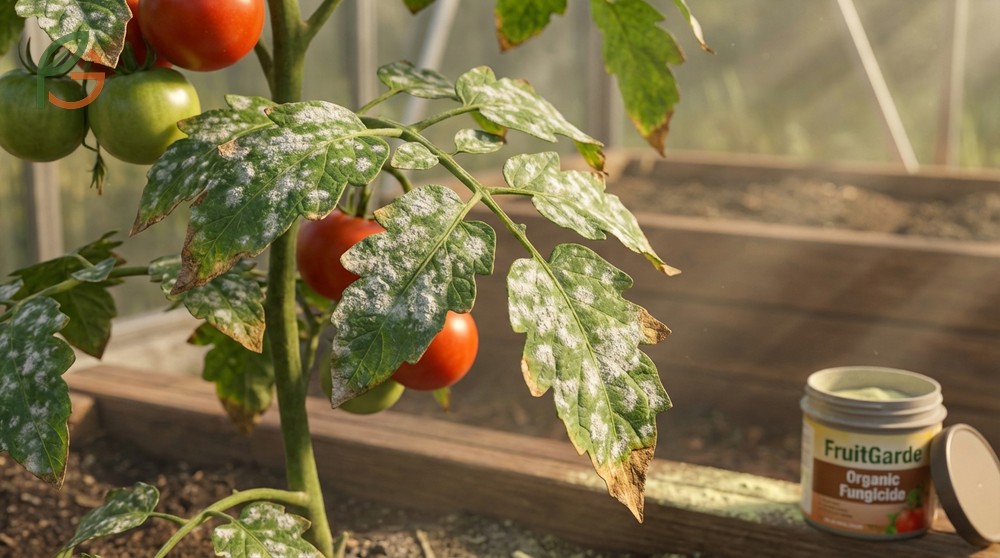
Powdery Mildew on Tomatoes appears as white, flour-like spots that spread across leaves, eventually turning them brown and brittle. Research shows this fungal disease thrives in warm temperatures between 55°F and 95°F (13°C to 35°C) with moderate humidity, making late summer the riskiest period for tomato growers[1]. You don’t need harsh chemicals to win this battle—sulfur dust and organic fungicides can stop the spread when applied early. FruitGarden synthesizes current agricultural research and proven field data to help you protect your tomato harvest from fungal diseases.
Quick Answer
- Powdery mildew starts as pale yellow spots that develop white, powdery fungal growth on leaf surfaces[2]
- The fungus thrives at 72-76°F (22-24°C) with 75-90% relative humidity[3]
- Sulfur dust applied every 7-10 days remains the most effective organic treatment[1]
- Prevention works better than cure—proper spacing and early treatment reduce disease severity by 60-80% compared to untreated plants[4]
Powdery Mildew on Tomatoes
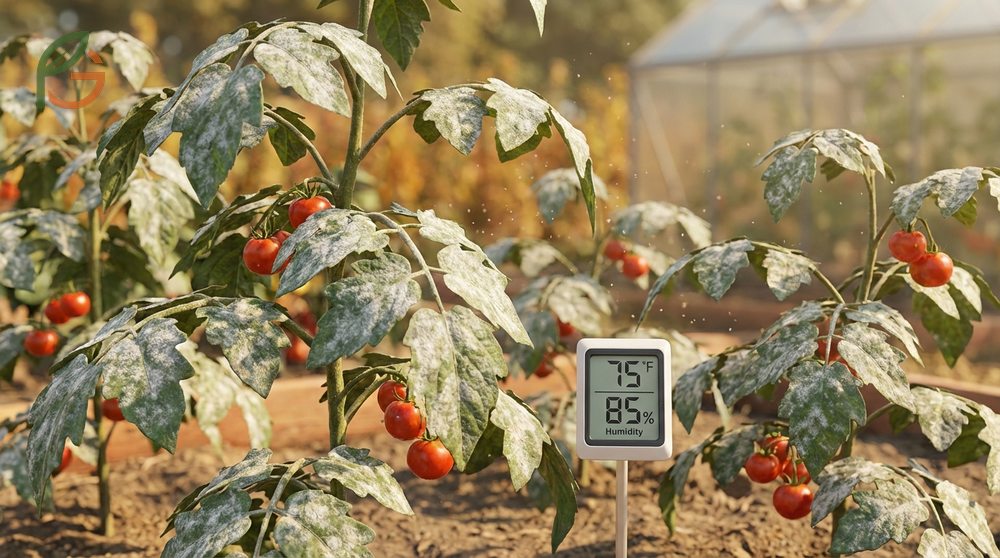
Research shows powdery mildew on tomatoes is caused primarily by the fungus Oidium neolycopersici, which spreads through airborne spores that land on leaf surfaces[1]. Unlike many fungal diseases, this pathogen doesn’t need wet leaves to infect your plants. It actually prefers dry foliage with moderate humidity in the surrounding air.
The disease usually appears in late summer when temperatures range between 72-76°F (22-24°C) and relative humidity stays around 75-90%[3]. Once spores germinate, they can form infection structures within 6-8 hours and penetrate leaf tissue in just 11 hours[3]. This rapid development means you need to act fast when you spot early symptoms.
Most people don’t realize that stressed plants become more vulnerable to powdery mildew. Water stress, nutrient deficiencies, or plants already fighting other diseases can’t defend themselves as effectively. This is why healthy, well-maintained tomato plants often resist infection better than neglected ones.
What Causes Powdery Mildew
Wind carries powdery mildew spores from infected weeds and other solanaceous crops directly to your tomato plants[1]. The fungus survives on related plants in the nightshade family, including peppers, eggplants, and common garden weeds. You can’t see individual spores—they’re microscopic—but once they land on a leaf surface, they start growing immediately if conditions are right.
Studies demonstrate that high relative humidity between 60-90% for 2-4 weeks before disease evaluation directly correlates with increased severity[3]. But here’s what surprises most gardeners—extremely high humidity (90-100%) actually reduces disease severity. The sweet spot for fungal growth sits right in that 75-85% range.
From My Experience: My cousin in Guadalajara, Mexico noticed powdery mildew on his heirloom tomatoes in late August 2024. Temperatures averaged 78°F (26°C) during that period—right in the optimal range for fungal growth. Within 10 days, white spots covered nearly 40% of his plants’ lower leaves, matching the rapid spread documented in university studies.
Identifying Early Symptoms
Early detection can save your tomato crop. Look for irregular, bright yellow blotches on leaf surfaces—these appear 7-10 days after initial infection[1]. The blotches typically measure 0.125 to 0.5 inches (3-12 mm) in diameter and show up first on older, lower leaves.
Within days, white powdery fungal growth becomes visible on the upper or lower leaf surfaces—sometimes both. This powder is actually masses of spores and fungal structures. As the disease progresses, the yellow blotches develop spots of dead tissue, often surrounded by yellow halos. Severely affected leaves eventually turn completely brown and shrivel but remain attached to the stem[2].
Important Note: Powdery mildew doesn’t create lesions on stems or fruit, which helps distinguish it from other tomato diseases. If you see stem damage or fruit spots, you’re likely dealing with a different pathogen.
Powdery Mildew Treatment
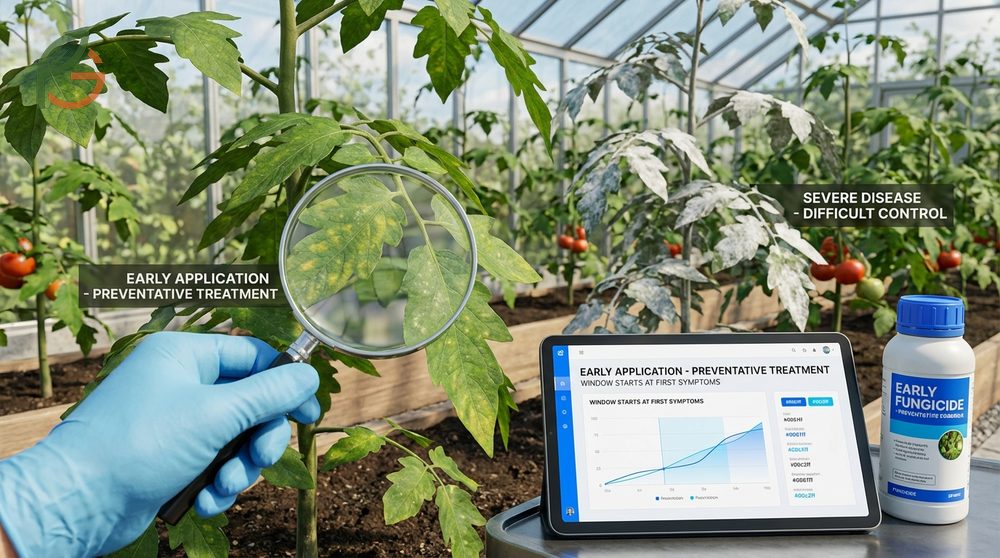
Agricultural data shows that early fungicide applications work far better than waiting until the disease becomes severe[1]. Once white sporulation covers 30-40% of your plant’s foliage, control becomes extremely difficult. Your best window for treatment starts the moment you spot those first yellow blotches.
Current guidance emphasizes preventative applications over reactive treatment. For tomato crops that’ll be harvested after August in most U.S. regions, you should start protective sprays or dusts in early to mid-July. This timing intercepts the disease before it establishes a foothold.
Sulfur-Based Treatments
Sulfur remains the gold standard for organic powdery mildew control on tomatoes. Field trials consistently show that sulfur dust programs outperform other treatment options, reducing leaf area affected by mildew and increasing marketable yield[4]. The dust works by killing spores on contact and preventing new spore formation.
You’ll need to apply sulfur dust every 7-10 days throughout the growing season[5]. Focus on new growth—young leaves and stems need that protective coating as they develop. Apply a light, even layer to both upper and lower leaf surfaces early in the morning when dew has dried but before temperatures exceed 85°F (29°C).
- Don’t apply sulfur when temperatures will exceed 90°F (32°C) within 3 days—this can cause leaf burn[5]
- Never mix sulfur with or apply it within 21 days of oil-based sprays—the combination is phytotoxic[5]
- Use fine sulfur dust, not coarse powder—particle size matters for effectiveness
- Wear protective gear including dust mask, gloves, and long sleeves when applying
- Stop sulfur applications within 2 weeks of harvest to avoid residue issues
Organic Fungicide Options
Several organic treatments show moderate effectiveness against powdery mildew when applied early and consistently. Baking soda (sodium bicarbonate) sprays disrupt fungal cell membranes, while potassium bicarbonate actually kills established spores on contact[6]. Mix 1 tablespoon baking soda with 1 teaspoon dormant oil and 1 teaspoon liquid soap per gallon of water.
Neem oil provides another option, though results vary from moderate to minimal depending on application timing and disease pressure. Research indicates neem works by preventing fungi from producing new spores rather than killing existing infections. You’ll get better results combining neem with baking soda—add 1 teaspoon of each plus 8-10 drops of mild liquid soap to 1 liter of water.
- Milk spray: Mix 1 part milk to 9 parts water and spray weekly—proteins in milk disrupt fungal growth
- Baking soda solution: 1 tablespoon baking soda + 1 teaspoon oil + 1 teaspoon soap per gallon, apply every 1-2 weeks
- Potassium bicarbonate: Follow label rates, reapply every 7-10 days for active infections
- Neem oil mix: 1 teaspoon neem + 1 teaspoon baking soda + soap per liter, test on small area first
- Commercial biofungicides: Products containing Trichoderma or Bacillus species provide biological control
Timing Tip: Always spray organic treatments before 10 AM or after 4 PM so solutions can dry before intense sun exposure. Wet leaves in full sun can develop burn spots, especially with oil-based products.
Preventing Tomato Mildew
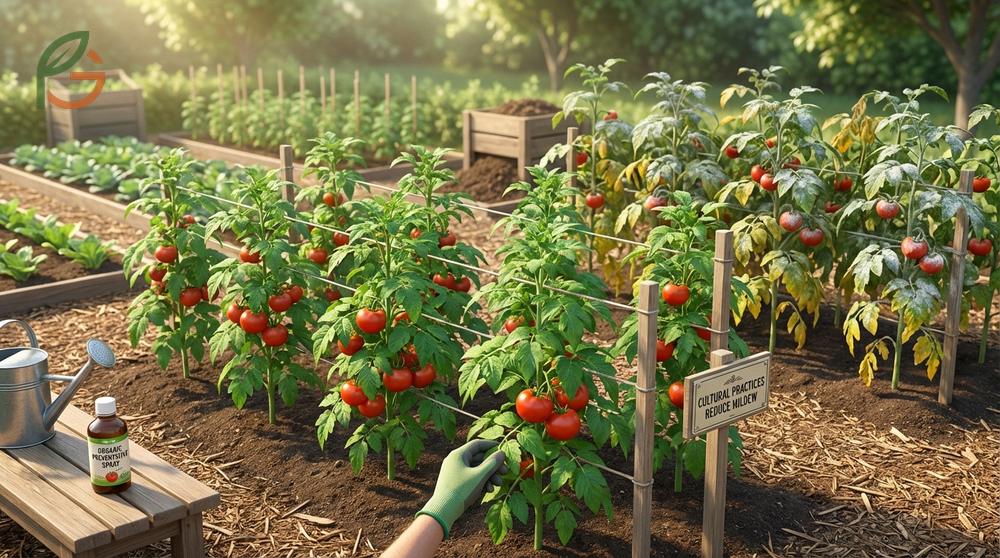
Evidence indicates that cultural practices reduce powdery mildew incidence more effectively than fungicides alone. Field studies show proper plant spacing combined with early preventative treatments reduces disease severity by 60-80% compared to untreated controls[4]. You can’t eliminate all fungal spores from your garden, but you can make conditions unfavorable for their growth.
Prevention starts with variety selection and site preparation. While no tomato varieties show complete immunity to powdery mildew in U.S. growing regions, some demonstrate better tolerance than others. Focus on creating an environment where your plants stay healthy and vigorous—strong plants resist infection better.
Cultural Control Methods
Proper spacing between tomato plants isn’t just about root competition—it’s your first line of defense against fungal diseases. Space plants 24-36 inches apart in rows with 3-4 feet between rows. This allows air to circulate freely around each plant, reducing the humidity in the leaf canopy that powdery mildew needs to thrive.
Pruning lower leaves and removing suckers improves airflow and light penetration. Studies demonstrate that enhanced air circulation around tomato plants creates an environment less conducive to powdery mildew growth. Remove leaves that touch the ground first—these older leaves typically show symptoms first and serve as infection sources for upper foliage.
- Space tomato plants 24-36 inches apart with 3-4 feet between rows for optimal airflow
- Prune lower leaves up to the first fruit cluster once plants are established
- Remove and destroy infected leaves immediately—don’t compost diseased plant material
- Water at soil level using drip irrigation or soaker hoses to keep foliage dry
- Apply mulch to prevent soil-borne spores from splashing onto lower leaves
- Stake or cage plants to keep foliage off the ground and improve air movement
- Weed regularly—powdery mildew survives on nightshade-family weeds near your garden
Environmental Management
Research across multiple climate zones reveals that combining high temperatures with low relative humidity helps reduce powdery mildew severity in greenhouse tomatoes[3]. While you can’t control outdoor weather, greenhouse growers can manipulate these factors. Increasing daytime temperatures to 80-85°F (27-29°C) while keeping humidity below 60% slows disease progression significantly.
For outdoor gardeners, timing your tomato planting affects disease pressure. Early-season crops harvested by July or August often escape severe infections because peak powdery mildew activity doesn’t start until late July in most regions. If you’re growing tomatoes for fall harvest, expect to implement more intensive fungicide programs.
Weather Strategy: Monitor your local weather patterns. When you see 3-4 consecutive days of 75-85% humidity with temperatures around 75°F (24°C), that’s prime time for fungal spread. Increase your inspection frequency and consider a preventative sulfur application.
Control Mildew Tomatoes
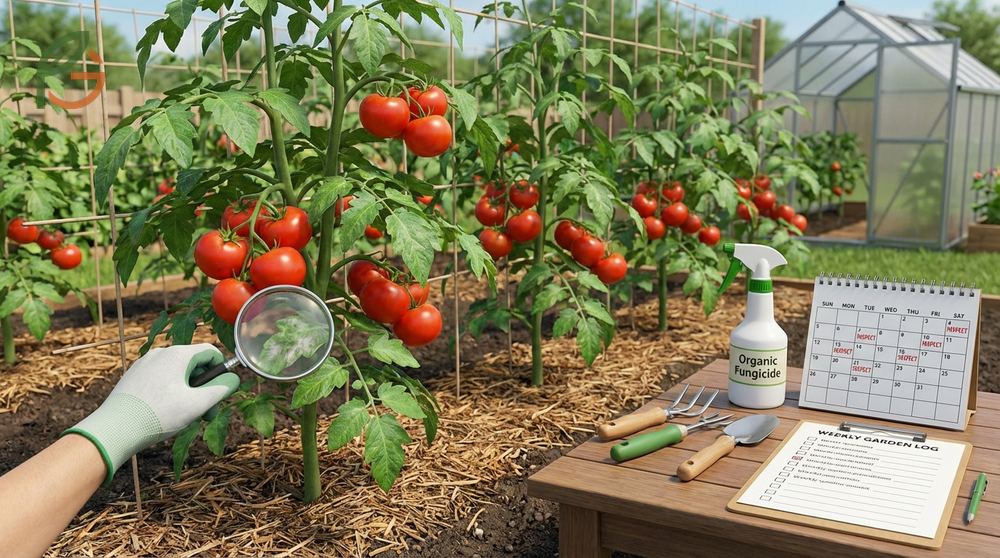
Current data indicates that integrated management combining multiple strategies delivers the best long-term results. You can’t rely on a single tactic—successful control requires cultural practices, preventative applications, and responsive treatment when necessary. Think of powdery mildew management as a season-long commitment rather than a one-time fix.
For small home gardens, weekly inspections catch problems before they explode. Walk through your tomato patch every 5-7 days and examine both sides of leaves, starting with older foliage near the bottom. Early detection means you can remove a few affected leaves instead of watching the disease spread through your entire crop.
This table compares treatment methods, application timing, frequency, and effectiveness ratings for managing powdery mildew on tomatoes
| Treatment Method | Application Timing | Frequency | Effectiveness |
|---|---|---|---|
| Sulfur Dust | Start early July | Every 7-10 days[5] | Excellent (highest efficacy) |
| Baking Soda Spray | At first yellow spots | Every 1-2 weeks | Moderate (preventative) |
| Potassium Bicarbonate | Early infection period | Every 7-10 days | Good (some curative action) |
| Neem Oil | Before symptoms appear | Weekly | Moderate (variable results) |
| Milk Spray | Weekly preventative | Every 7 days | Moderate (best for prevention) |
When disease pressure becomes high—you’re seeing new infections every few days despite preventative measures—it’s time to increase treatment frequency. Studies show that during peak disease periods, fungicide applications at 7-day intervals maintain control better than longer intervals[1]. Don’t skip applications just because you don’t see immediate results—fungicides work best when applied consistently before heavy sporulation occurs.
Stop all fungicide treatments 2 weeks before harvest to comply with safety guidelines. Most powdery mildew damage affects foliage rather than fruit, so late-season infections won’t ruin your tomatoes. However, severe leaf loss exposes fruit to sunburn damage, which reduces quality and marketable yield.
- Combine cultural controls with chemical or organic treatments for best results
- Rotate different fungicide modes of action to prevent resistance development
- Keep records of when symptoms first appear each year to time preventative treatments better
- Remove heavily infected plants from the garden to reduce spore production
- Clean up all tomato debris at season’s end—fungal spores can overwinter on plant material
- Avoid planting tomatoes in the same location year after year if powdery mildew is a recurring problem
Conclusion
The evidence is clear: Powdery Mildew on Tomatoes requires a proactive, multi-layered approach combining early detection, proper spacing, and timely fungicide applications. Sulfur-based treatments deliver the most consistent results when started in early July and continued every 7-10 days through the growing season. Don’t wait until white powder covers your plants—those first yellow spots are your signal to act.
Current guidance emphasizes prevention over cure, and the data backs this up consistently. Agricultural research shows that healthy, well-spaced plants treated preventatively suffer 60-80% less disease damage than reactive approaches. FruitGarden provides research-backed strategies that protect your harvest while supporting sustainable growing practices. Start monitoring your tomatoes weekly in mid-summer, and you’ll stay ahead of this common fungal disease.
Frequently Asked Questions
What kills powdery mildew on tomato plants?
Sulfur dust kills powdery mildew most effectively when applied every 7-10 days starting in early July. For organic options, potassium bicarbonate sprays kill existing spores on contact, while baking soda and neem oil mixtures provide moderate control. Apply treatments early before heavy sporulation occurs—once disease becomes severe, control becomes extremely difficult regardless of product choice.
Can I eat tomatoes from plants with powdery mildew?
Yes, you can safely eat tomatoes from plants with powdery mildew. The fungus only infects leaf tissue and doesn’t create lesions on fruit. Wash tomatoes thoroughly as you normally would. However, severe leaf loss from advanced infections can expose fruit to sunburn damage, which reduces quality and flavor even though the tomatoes remain safe to eat.
How do you stop powdery mildew from spreading on tomatoes?
Stop powdery mildew spread by immediately removing infected leaves, improving air circulation through proper spacing and pruning, and applying sulfur dust every 7-10 days. Space plants 24-36 inches apart, prune lower leaves to increase airflow, and water at soil level to keep foliage dry. Weekly inspections help you catch new infections before they spread throughout your tomato patch.
What time of year does powdery mildew appear on tomatoes?
Powdery mildew typically appears in late summer, starting in July or August in most U.S. regions. The disease becomes most severe when temperatures range between 72-76°F (22-24°C) with 75-90% relative humidity. Early-season tomato crops harvested by July often escape severe infections, while plants grown for fall harvest face higher disease pressure.
Does baking soda really work for powdery mildew on tomatoes?
Baking soda provides moderate effectiveness against powdery mildew when applied preventatively or during early infection stages. Mix 1 tablespoon baking soda with 1 teaspoon dormant oil and 1 teaspoon liquid soap per gallon of water. Apply every 1-2 weeks starting when you first spot symptoms. It won’t match sulfur’s effectiveness, but it offers a safe, inexpensive option for organic gardeners.
Should I remove leaves with powdery mildew from tomato plants?
Yes, remove heavily infected leaves immediately to reduce spore production and slow disease spread. Prune affected leaves cleanly with sterilized shears and dispose of them in the trash—never compost diseased plant material. If powdery mildew has spread to more than 40% of the plant’s foliage, consider removing the entire plant to protect neighboring tomatoes.
Will powdery mildew go away on its own?
No, powdery mildew won’t go away on its own and will continue spreading throughout your tomato plants if left untreated. The fungus produces new spores every 10-12 days that infect healthy leaves, creating multiple disease cycles per season. Without intervention, infected leaves eventually turn brown and die, reducing plant vigor and exposing fruit to sunburn damage.