
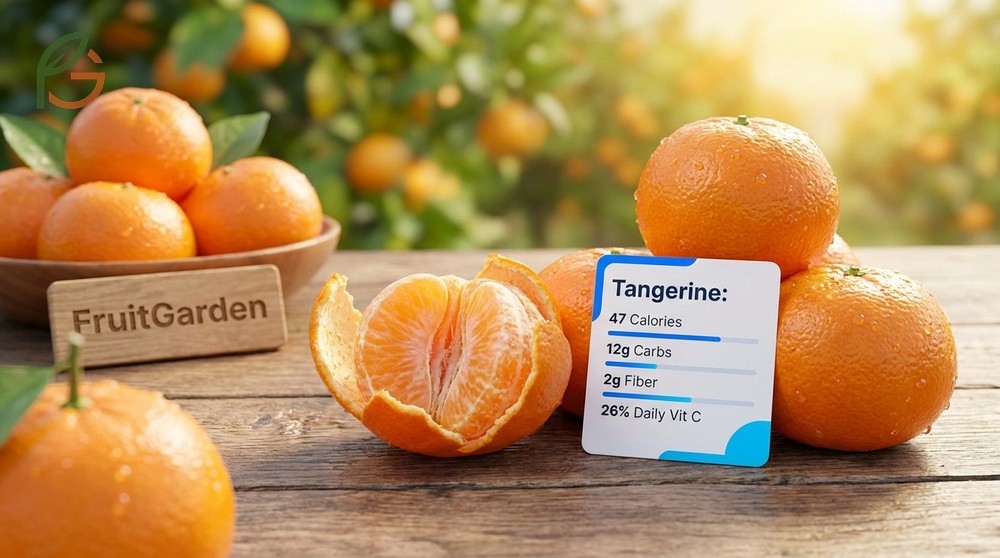
How many calories in a tangerine? A medium tangerine contains 47 calories with 12g of carbohydrates and 2g of fiber. Research shows that tangerines provide 26% of your daily vitamin C needs[1] while delivering natural sweetness at just under 50 calories per fruit. At FruitGarden, we synthesize current nutritional research to help you understand what you’re growing and eating.
Quick Answer
- A medium tangerine has 47 calories[1] with 12g carbs and 2g fiber[1]
- Cuties contain 35 calories[2] per fruit, Halos have 45 calories[3] per serving of two fruits
- Tangerines have a low glycemic index of 30-42[4], making them diabetic-friendly
- Each fruit provides 23mg vitamin C[1] and 209% more vitamin A[5] than oranges
How Many Calories in a Tangerine

A medium tangerine weighing 88g delivers 47 calories[1] with 12g of carbohydrates. Studies show the macronutrient breakdown is 90% carbs, 5% fat, and 5% protein[1].
What matters most isn’t just the calorie count. It’s the nutrient density that makes tangerines valuable for your fruit garden harvest.
Current nutritional data indicates that tangerines provide vitamin C, fiber, and potassium at under 50 calories per serving. The low calorie density of 53 calories per 100g makes them an efficient snack choice.
Calories by Tangerine Size
Tangerine sizes vary significantly across varieties. Small fruits weigh around 74g, medium fruits average 88g, and large specimens reach 98g or more.
This table compares calories and carbohydrates across three tangerine sizes from small to large
| Size | Weight | Calories | Carbohydrates |
|---|---|---|---|
| Small | 74g | 40 cal[2] | 10g |
| Medium | 88g | 47 cal[1] | 12g |
| Large | 98g | 52 cal[1] | 13g |
Cuties and Halos Nutrition Facts
Cuties (clementine mandarins) contain 35 calories per fruit[2] with 8.9g total carbs. These branded mandarins are typically smaller than standard tangerines, making portion control simpler.
Halos mandarins provide 45 calories per serving of two fruits[3] (176g total). One Halos fruit averages 35-40 calories, comparable to Cuties.
Important Note: Both Cuties and Halos are mandarin varieties marketed for sweetness and ease of peeling. Don’t confuse serving sizes—Halos list nutrition per two fruits, while Cuties show single-fruit data.
Nutrition Facts on Tangerines
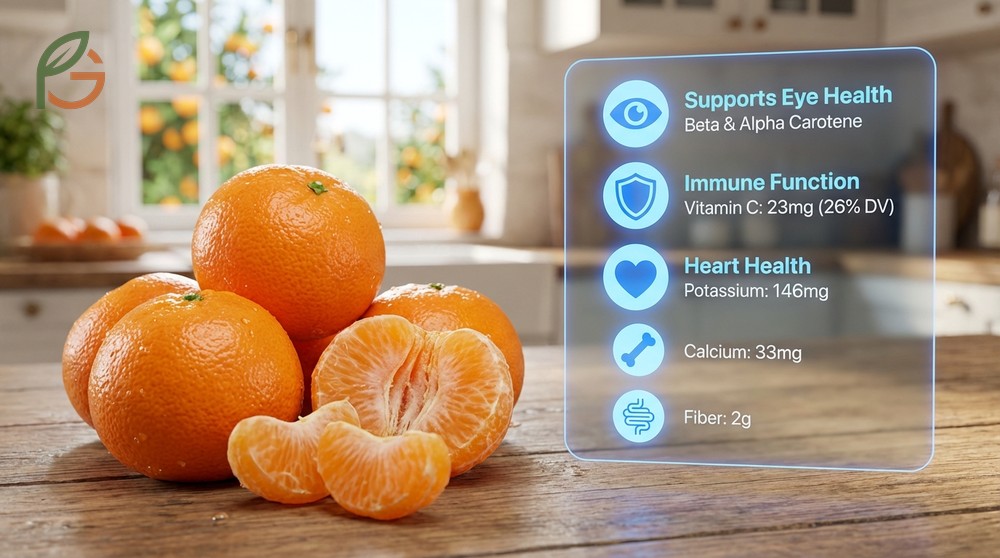
Research shows that a medium tangerine provides more than just calories. You get 26% of your daily vitamin C[1], 146mg potassium[1], and 33mg calcium[1] per fruit.
Evidence suggests that the antioxidant profile includes beta carotene and alpha carotene. These carotenoids convert to vitamin A in your body, supporting eye health and immune function.
- Vitamin C: 23mg per medium fruit (26% DV)
- Fiber: 2g per fruit supporting digestive health
- Potassium: 146mg helping regulate blood pressure
- Vitamin A: 599 IU from beta and alpha carotene
- Folate: 14μg (4% DV) important for cell growth
- Thiamine (B1): 0.1mg supporting energy metabolism
Carbs in Tangerine
A medium tangerine contains 12g total carbohydrates[1] with 2g fiber. This leaves 10g net carbs that affect blood sugar levels.
Current data shows that tangerines provide 4% of your daily carbohydrate needs. Most carbs come from natural sugars—9g per fruit—rather than starch.
Sugar and Fiber Content
Each medium tangerine holds 9g of sugar[1] broken down into 5g sucrose, 2g glucose, and 2g fructose. The fiber content of 2g per fruit slows sugar absorption.
Evidence indicates that this fiber-to-sugar ratio helps moderate blood glucose response. The 2g fiber represents 6% of your daily fiber needs, contributing to satiety and digestive health.
Fiber Benefits: The soluble and insoluble fiber in tangerines supports gut bacteria while preventing constipation. Eating the white pith under the peel increases your fiber intake.
Are Tangerines Good for You

Tangerines deliver multiple health benefits through their vitamin C, fiber, and antioxidant content. Research demonstrates that citrus fruits support immune function and reduce inflammation markers.
Studies show that the flavonoids in tangerines—hesperidin and nobiletin—have anti-inflammatory properties. These compounds protect cells from oxidative stress and may reduce chronic disease risk.
Most people benefit from adding 1-2 tangerines daily to their diet. The low calorie density and high nutrient content make them ideal for snacking between meals.
- Immune support: Vitamin C enhances white blood cell function and antibody production
- Skin health: Antioxidants protect against UV damage and support collagen synthesis
- Digestive health: Fiber feeds beneficial gut bacteria and promotes regularity
- Heart health: Potassium and fiber help regulate blood pressure and cholesterol
- Eye health: Vitamin A from beta carotene supports retinal function
Vitamin C in Tangerines
A medium tangerine provides 23mg of vitamin C[1], representing 26% of the recommended daily value. This water-soluble vitamin acts as a powerful antioxidant in your body.
Current research emphasizes vitamin C’s role in collagen formation, iron absorption, and immune cell function. Two medium tangerines provide about half your daily vitamin C needs.
Tangerine vs Orange Nutrition
Oranges contain 69% more vitamin C than tangerines[5]—45mg versus 26.7mg per 100g. However, tangerines have 209% more vitamin A[5] due to higher carotenoid content.
Evidence suggests that tangerines are easier to peel and typically sweeter. Oranges provide more fiber per fruit—3.1g versus 2g—making them slightly better for digestive health[5].
Are Tangerines Good for Diabetics
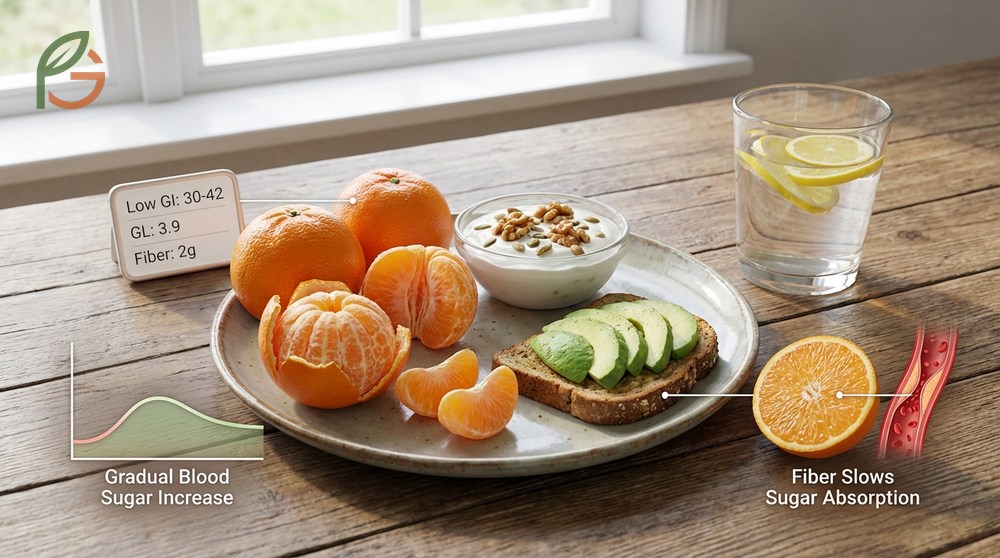
Tangerines work well for diabetics because of their low glycemic index of 30-42[4] and glycemic load of 3.9. Research shows that low-GI fruits cause gradual blood sugar increases rather than sharp spikes.
Studies demonstrate that the fiber content in tangerines—2g per fruit—slows sugar absorption. This fiber-sugar combination helps stabilize blood glucose levels when eaten as part of balanced meals.
Evidence indicates that pairing tangerines with protein sources improves glycemic control. Eating a tangerine with a handful of almonds or Greek yogurt minimizes blood sugar fluctuations.
- Low glycemic index: GI of 30-42 prevents blood sugar spikes
- Moderate carbs: 10g net carbs per fruit fits most diabetic meal plans
- Fiber content: 2g fiber slows glucose absorption into bloodstream
- Portion control: Small size makes serving measurement simple
- Natural sugars: No added sugars or high-fructose corn syrup
Diabetic Tip: Eat tangerines with meals rather than alone on an empty stomach. This strategy further reduces glycemic impact and provides sustained energy.
Are Tangerines Good for Weight Loss

Tangerines support weight loss through their low calorie density and high water content. At 47 calories per medium fruit, they satisfy sweet cravings without derailing calorie deficits.
Research shows that fruits with high fiber-to-calorie ratios increase satiety. The 2g fiber in tangerines helps you feel full longer, reducing overall calorie intake throughout the day.
Current data indicates that replacing processed snacks with whole fruits like tangerines leads to better weight management outcomes. Most people can eat 2-3 tangerines daily while losing weight.
Evidence suggests that the natural sugars in tangerines don’t trigger the same metabolic responses as added sugars. Your body processes fruit sugars more efficiently when they’re bound with fiber.
- Low calories: 47 calories per fruit allows multiple servings within calorie budgets
- High water content: 88% water by weight increases volume without calories
- Fiber satisfaction: Promotes fullness reducing snacking between meals
- Natural sweetness: Curbs sugar cravings without processed ingredients
- Portable: Easy to pack for on-the-go healthy snacking
- No preparation: Peel-and-eat convenience prevents grabbing junk food
Eating Too Many Tangerines Side Effects

Consuming excessive tangerines—more than 4-5 daily—can cause digestive discomfort. The fiber and citric acid may trigger bloating, gas, or loose stools in sensitive individuals.
Research indicates that very high vitamin C intake from fruits rarely causes problems. However, exceeding 2,000mg daily from all sources may lead to stomach upset or kidney stone risk.
Evidence suggests that the natural sugars in multiple tangerines still count toward your total carbohydrate intake. Diabetics need to account for cumulative carb loads when eating several fruits.
- Digestive issues: Excess fiber causes cramping, bloating, or diarrhea
- Acid reflux: Citric acid may worsen heartburn in susceptible people
- Blood sugar impact: Multiple fruits add up to significant carbohydrate loads
- Tooth enamel: Frequent citrus exposure can erode dental enamel over time
- Rare allergies: Some individuals show citrus sensitivity with skin reactions
Moderation Matters: Most adults tolerate 2-3 tangerines daily without issues. Space them throughout the day rather than eating multiple fruits at once.
Conclusion
The evidence is clear: how many calories in a tangerine depends on size, but medium fruits deliver 47 calories with impressive nutrient density. Current nutritional guidance emphasizes whole fruits like tangerines for their vitamin C, fiber, and low glycemic impact.
Whether you’re growing tangerines in your home orchard or buying them fresh, these citrus fruits offer versatile nutrition for weight management and diabetic diets. FruitGarden helps you understand the science behind what you’re cultivating and eating.
Medical Disclaimer
Important Medical Disclaimer: This content is for informational and educational purposes only. It’s not intended as a substitute for professional medical advice, diagnosis, or treatment. Always consult a qualified healthcare professional or registered dietitian before making any changes to your diet, medication, or health routine, especially if you have diabetes, kidney conditions, or other medical concerns.
Frequently Asked Questions
How Many Calories Are in One Cutie Tangerine?
One Cutie tangerine contains approximately 35 calories[2] with 8.9g total carbohydrates. Cuties are smaller than standard tangerines, making them a convenient 35-40 calorie snack that fits most dietary plans.
How Much Vitamin C Is in a Tangerine Compared to an Orange?
Tangerines contain 26.7mg of vitamin C per 100g, while oranges have 45mg—approximately 69% more[5]. However, tangerines compensate with 209% more vitamin A than oranges due to higher carotenoid levels.
What Is the Glycemic Index of Tangerines?
Tangerines have a low glycemic index of 30-42[4] and a glycemic load of 3.9. Research shows this low-GI classification means tangerines cause gradual blood sugar increases, making them suitable for diabetic diets.
Can You Eat Tangerines on a Keto Diet?
Tangerines aren’t ideal for strict keto diets because they contain 10g net carbs per fruit. Most keto plans limit total daily carbs to 20-50g, so one tangerine consumes 20-50% of your carb allowance. Lower-carb berries work better for ketogenic eating.
How Many Tangerines Should You Eat Per Day?
Most adults can safely eat 2-3 tangerines daily as part of a balanced diet. This provides significant vitamin C, fiber, and antioxidants without excessive sugar or calories. Diabetics should monitor blood glucose response and adjust portions accordingly.
Are Tangerine Peels Edible and Nutritious?
Tangerine peels are edible and contain concentrated flavonoids, vitamin C, and essential oils. The peels have more antioxidants than the fruit flesh. You can grate dried peels as zest or steep them in tea, but eat them in moderation due to their intense flavor and fiber.
Do Tangerines Help With Weight Loss?
Tangerines support weight loss through their low calorie density (47 calories per fruit), high fiber content (2g), and natural sweetness that curbs cravings. Studies show that replacing processed snacks with whole fruits improves weight management outcomes by increasing satiety while reducing overall calorie intake.





