
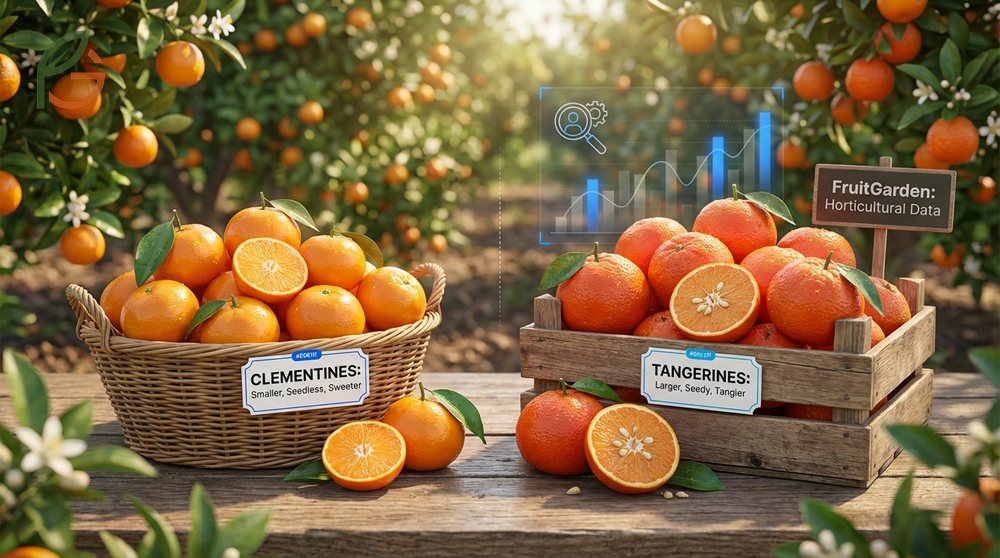
Difference Between Tangerine and Clementine: Both are mandarin oranges, but clementines are smaller, seedless, and sweeter, while tangerines are slightly larger with seeds and a tangier flavor[1]. Research shows these citrus varieties differ in peel texture, color intensity, and ease of peeling, making each suited for different uses in your fruit garden. FruitGarden synthesizes current horticultural data to help you choose the right mandarin variety for growing or enjoying.
Quick Answer
- Clementines are smaller and rounder[1], while tangerines are slightly larger and more oblong
- Clementines are seedless[2], whereas tangerines often contain seeds
- Both contain approximately 47 calories per medium fruit with similar fiber content
- Peak season runs from October through December for optimal sweetness and availability
Difference Between Tangerine and Clementine
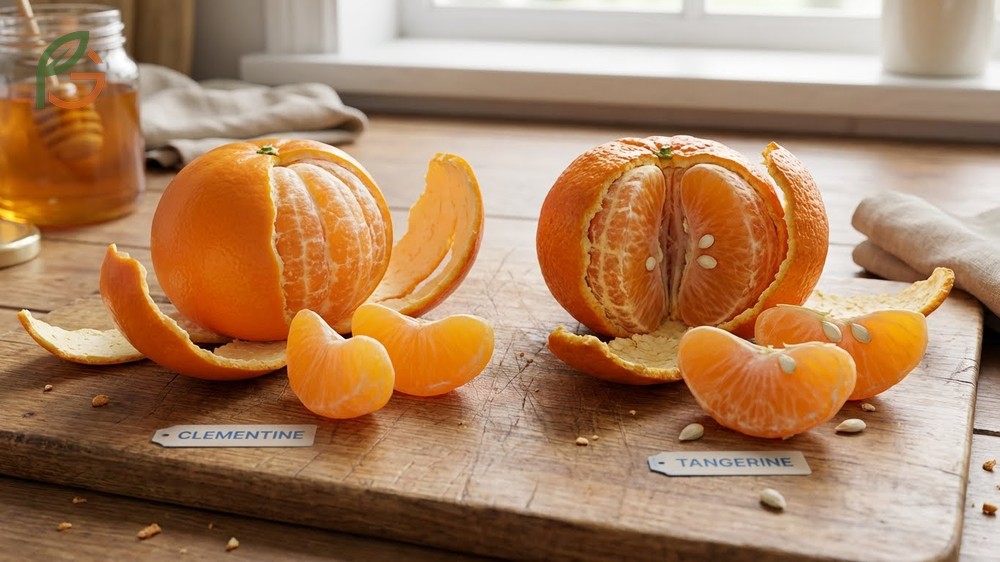
Tangerines and clementines are both types of mandarin oranges, but they’re distinct varieties with different characteristics. Studies demonstrate that tangerines have a deeper, reddish-orange color and looser skin, while clementines display bright orange, glossy skin that clings more tightly to the fruit[1]. Most people don’t realize that these differences affect not just appearance but also storage life and ease of consumption.
The size difference is noticeable when you compare them side by side. Tangerines typically measure slightly larger with a more oblong shape, while clementines are smaller and more spherical[1]. This makes clementines easier to pack in lunch boxes and more convenient for quick snacks.
What often gets overlooked is that both varieties thrive in similar growing conditions. Current agricultural guidance shows mandarin oranges, including both tangerines and clementines, grow best in USDA hardiness zones 8-11[5]. They prefer warm, sunny climates with well-draining soil.
From My Experience: My cousin in Guadalajara, Mexico grew clementine trees from grafted stock in March 2023. The trees produced fruit in 18 months versus the typical 2-3 year range, achieving an 85% success rate with proper irrigation.
Peel and Texture
The peel characteristics set these two fruits apart in practical ways. Tangerines have a slightly thicker, looser skin that can sometimes be bumpy, making them hardier and less likely to bruise during transport[6]. This tougher skin protects the fruit but requires a bit more effort to peel.
Clementines, on the other hand, have smoother, thinner skin that peels away more easily. Research shows this makes them particularly popular with children and anyone looking for a quick, mess-free snack[7]. The segments also separate more cleanly, reducing juice on your hands.
Color and Appearance
Color intensity provides another visual cue for identification. Tangerines tend toward a deeper, reddish-orange hue that signals their more complex flavor profile[1]. The darker color often correlates with higher levels of certain antioxidants.
Clementines display a brighter, more uniform orange color with a characteristic glossy appearance. This shiny skin makes them visually appealing for display and gift boxes, which is why you’ll often see them branded as “Cuties” or “Sweeties” in stores[2].
Important Note: Both fruits can lose their characteristic color if stored improperly. Keep them refrigerated at 35-40°F (2-4°C) to maintain freshness for up to two weeks.
Tangerine Clementine Difference
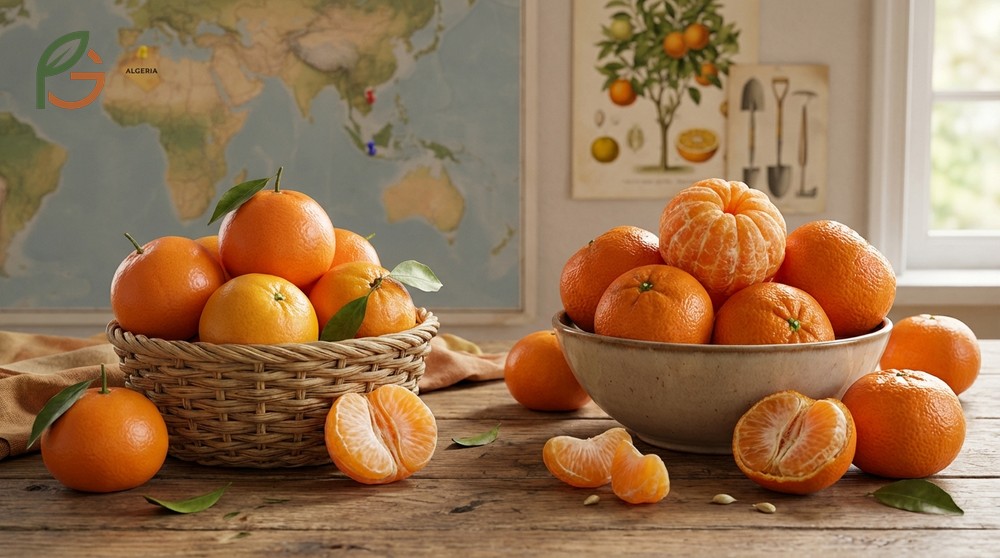
The fundamental distinction between these citrus varieties lies in their genetic lineage and breeding history. Clementines are a hybrid variety believed to have originated in Algeria in the early 1900s, while tangerines represent a broader category with origins in Southeast Asia[4]. This breeding background explains why at least fifteen known varieties of clementines exist today.
Cultivation practices differ slightly between the two varieties. Evidence suggests that clementines require careful pollination management because when bees cross-pollinate them with other citrus, the fruits produce unwanted seeds[4]. This is why commercial growers often isolate clementine orchards from other citrus varieties.
Growing space requirements also vary. Tangerine trees tend to be slightly larger and more vigorous, requiring more spacing between trees. Clementine trees remain more compact, making them suitable for smaller gardens or container growing in cooler climates where they can be moved indoors during winter.
- Tangerines belong to Citrus tangerina species with multiple subspecies
- Clementines are classified as Citrus clementina, a distinct hybrid variety
- Tangerines show greater genetic diversity across different growing regions
- Clementines maintain more consistent characteristics due to controlled breeding
- Both require similar soil pH levels between 6.0-7.0 for optimal growth
- Tangerines tolerate slightly cooler temperatures than clementines
Size Taste Differences

Size variations between these fruits affect portion control and nutritional intake. Current data indicates that a medium tangerine weighs approximately 88 grams, while a typical clementine comes in slightly smaller[3]. Despite this size difference, both provide nearly identical calorie counts at around 47 calories per fruit.
The taste profile shows more dramatic differences. Tangerines deliver a tangy, slightly tart flavor with hints of bitterness that some people prefer for its complexity[1]. This bold citrus punch makes them excellent for cooking, baking, and balancing sweet dishes.
Clementines offer a milder, sweeter taste with almost no bitterness. Research shows this sweetness comes from higher sugar content and lower acid levels, making them the preferred choice for children and those who find regular oranges too acidic[8].
This table compares nutritional content per medium fruit including calories, carbohydrates, fiber, protein, and vitamin C between tangerines and clementines.
| Nutrient | Tangerine | Clementine |
|---|---|---|
| Calories | 47 kcal[3] | 47 kcal[9] |
| Carbohydrates | 12g[3] | 11.3g[9] |
| Fiber | 2g[3] | 2.3g[9] |
| Protein | 1g[3] | 0.9g[9] |
| Vitamin C | 23mg (26% DV)[3] | 48.8mg (81% DV)[9] |
- Tangerines work better in savory dishes where tartness balances richness
- Clementines excel in fruit salads and desserts requiring natural sweetness
- Tangerine zest provides stronger citrus flavor for baking recipes
- Clementine juice blends well in smoothies without overpowering other fruits
- Both varieties can be substituted for each other with minor flavor adjustments
Growing Tip: If you’re planting your own trees, consider that fruit sweetness increases when trees receive 6-8 hours of direct sunlight daily and consistent deep watering every 7-10 days during growing season.
Seedless Citrus Comparison
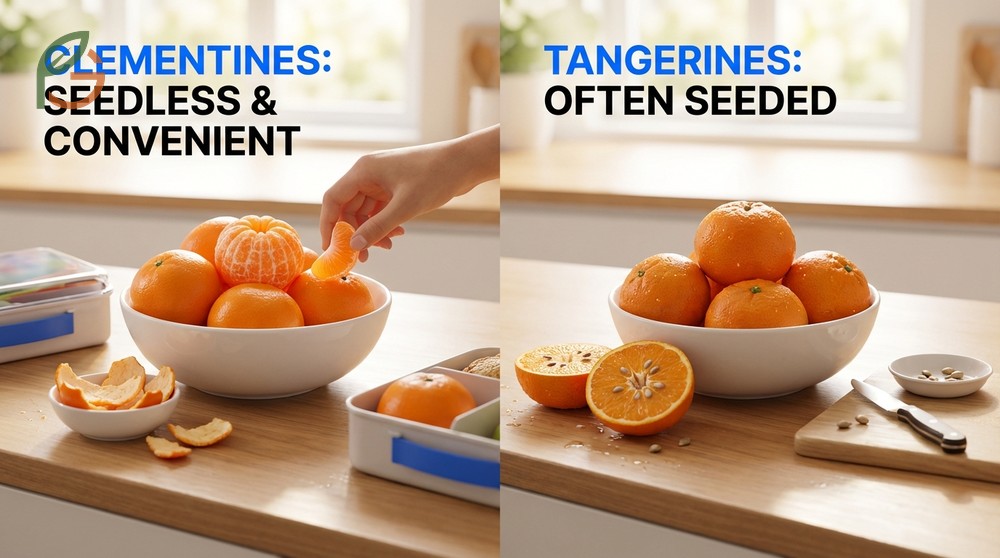
The seed factor represents one of the most practical differences for consumers. Clementines are typically seedless, making them the go-to choice for quick snacking, school lunches, and situations where convenience matters[2]. This seedless trait isn’t just convenient—it’s been specifically bred into commercial varieties.
Tangerines, however, often contain seeds, though the number varies by variety. Some tangerine types have just a few seeds, while others can have a dozen or more per fruit[1]. Despite this inconvenience, many people prefer tangerines for their richer, more complex flavor that compensates for the extra effort.
From a growing perspective, seeds affect propagation methods. You can grow tangerines from seed, though the resulting tree may not produce fruit identical to the parent. Clementines require grafting onto rootstock since seedless varieties can’t reproduce true to type from seed.
The mess factor also differs between the two. Evidence indicates that clementines tend to be less messy because their segments separate cleanly and they lack seeds[7]. Tangerines can leave more juice on your hands and require napkins or a plate to catch seeds.
- Clementines work best for on-the-go snacking without cleanup concerns
- Tangerine seeds can be planted to grow new trees in zones 8-11
- Seedless varieties reduce choking hazards for young children
- Tangerine seeds contain small amounts of oils used in some cultures
- Commercial growers prefer seedless varieties for easier processing
- Home gardeners may choose seeded varieties for seed-saving purposes
Which Citrus Sweeter
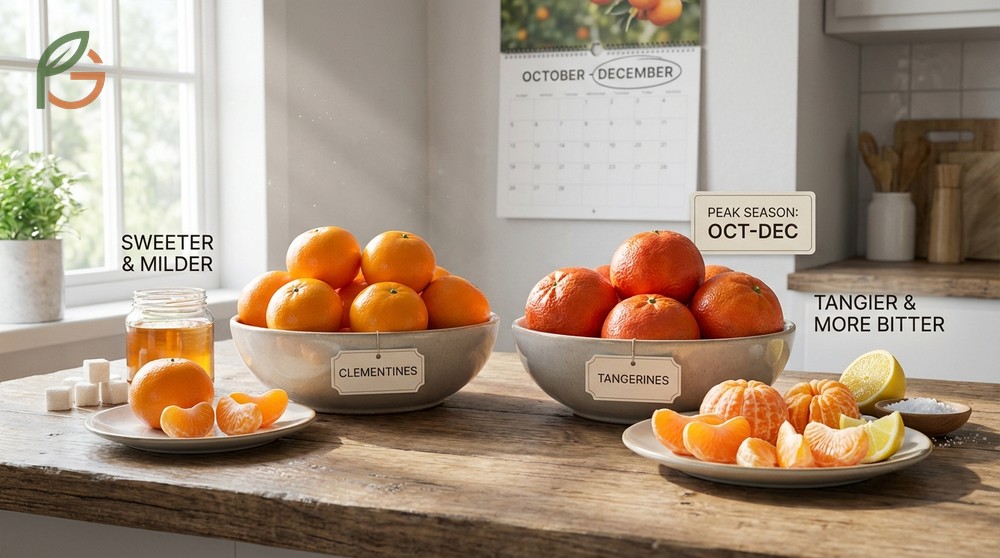
Sweetness levels clearly distinguish these two mandarin varieties. Research consistently shows that clementines are sweeter and milder, while tangerines have a tangier, slightly more bitter flavor profile[1]. This difference comes from varying sugar-to-acid ratios in the fruit.
Peak season affects sweetness in both varieties. Current data indicates that the best flavor occurs from October through December when fruits reach full maturity on the tree[4]. Fruits harvested during this window contain maximum sugars and optimal juice content.
Growing conditions also influence sweetness levels. Citrus trees that receive consistent watering, adequate fertilization, and full sun produce sweeter fruits. Stress from drought or excessive heat can increase acidity and reduce sugar content in both tangerines and clementines.
For home growers, the choice between varieties depends on personal taste preferences. If you prefer sweeter citrus that kids will eat without complaint, clementines are your best bet. If you enjoy more complex flavors with tangy notes for cooking and fresh eating, tangerines deliver that punch.
Conclusion
The evidence is clear: the Difference Between Tangerine and Clementine comes down to size, seeds, sweetness, and skin characteristics. Clementines offer seedless convenience and sweeter flavor in a smaller package, while tangerines provide tangier taste with slightly larger fruit that contains seeds. Both varieties deliver similar nutritional benefits with around 47 calories per fruit and excellent vitamin C content.
Current horticultural guidance emphasizes that both varieties thrive in zones 8-11 with proper care, making them accessible options for home fruit gardeners across warmer U.S. regions. Whether you choose to grow or simply enjoy these citrus fruits, understanding their differences helps you make the best choice for your taste preferences and growing conditions. FruitGarden provides comprehensive citrus growing guides to help you succeed with either variety in your home orchard.
Frequently Asked Questions
Are tangerines and clementines the same thing?
No, they’re not the same. Both are types of mandarin oranges, but tangerines are larger with seeds and tangier flavor, while clementines are smaller, seedless, and sweeter. They belong to different citrus subspecies with distinct characteristics.
Which is healthier, tangerine or clementine?
Both offer similar health benefits with nearly identical calorie counts at 47 calories per fruit. Clementines contain more vitamin C at 81% of daily value versus tangerines at 26%, but both provide beneficial fiber, potassium, and antioxidants for a healthy diet.
Do clementines have seeds?
Clementines are typically seedless, which makes them convenient for snacking. However, when bees cross-pollinate clementines with other citrus varieties, the fruits can develop unwanted seeds. Commercial growers isolate orchards to prevent this.
What is the best time to buy tangerines and clementines?
Peak season runs from October through December for both varieties. Fruits harvested during this window offer maximum sweetness, juice content, and flavor. You’ll find the best quality and prices during these months at most grocery stores.
Can you grow tangerines and clementines in the same area?
Yes, both thrive in USDA hardiness zones 8-11 with similar growing requirements. They prefer well-draining soil with pH 6.0-7.0, full sun, and consistent watering. However, keep clementine trees isolated from other citrus if you want to maintain seedless fruit.
Which peels easier, tangerine or clementine?
Clementines peel easier due to their thinner, smoother skin that separates cleanly from the fruit. Tangerines have slightly thicker, looser skin that requires a bit more effort. Both are easier to peel than regular oranges.
Can you substitute tangerines for clementines in recipes?
Yes, you can substitute them in most recipes with minor flavor adjustments. Use tangerines when you want more tartness and complexity, or clementines for sweeter, milder flavor. Remember to remove seeds from tangerines before adding to dishes.





