
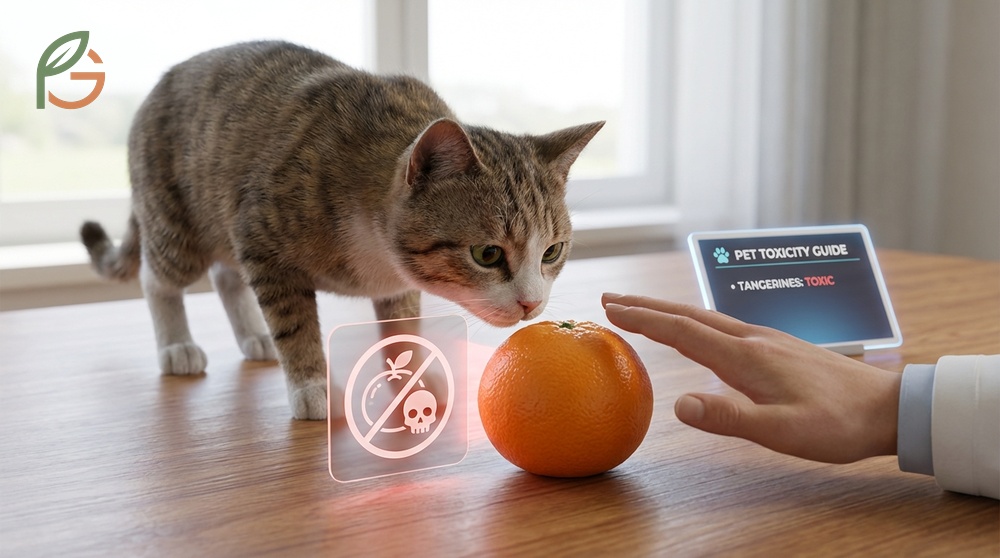
Can cats eat tangerines? No, cats can’t eat tangerines because they’re toxic to felines.[1] Research shows that tangerines and all citrus fruits contain essential oils and psoralens that cats can’t metabolize properly, leading to poisoning symptoms ranging from mild digestive upset to serious neurological issues.[2] FruitGarden synthesizes current veterinary research to help you understand what’s safe—and what’s dangerous—for your cat’s diet.
Quick Answer
- Tangerines are toxic to cats due to essential oils (limonene and linalool) and psoralens[1]
- Even small amounts can cause vomiting, diarrhea, drooling, weakness, and tremors[3]
- The peel, seeds, and white pith contain the highest concentration of toxic compounds[3]
- Safe alternatives include blueberries, bananas, and apples (in moderation)[4]
Can Cats Eat Tangerines
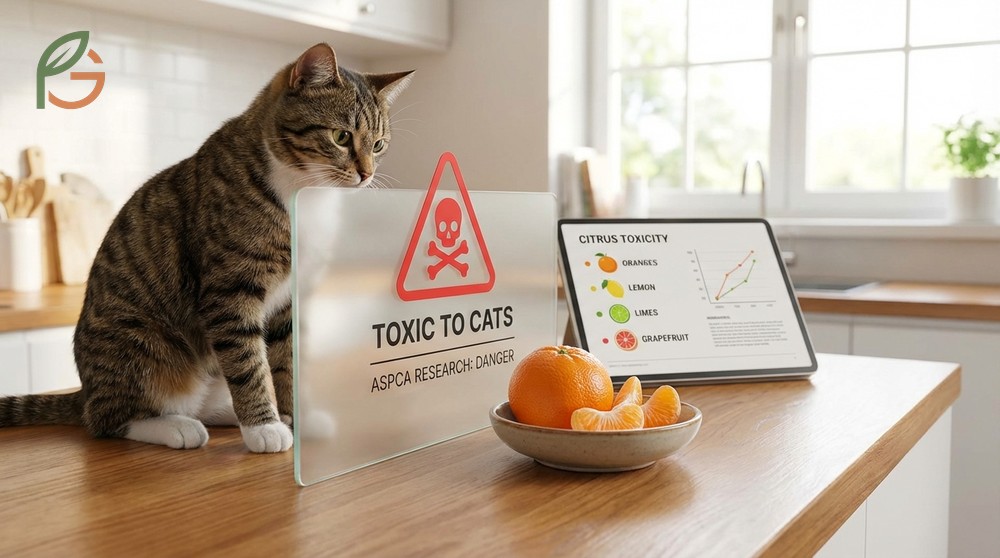
Research from veterinary toxicology confirms that tangerines pose serious health risks to cats.[1] The ASPCA classifies all citrus fruits—including tangerines, oranges, lemons, limes, and grapefruits—as toxic to cats, dogs, and horses. Unlike humans who benefit from vitamin C and fiber in citrus, cats experience adverse reactions even from small amounts.
Cats are obligate carnivores, which means their bodies evolved to digest meat-based proteins rather than fruits. They lack specific liver enzymes called glucuronyl transferase that help break down citrus compounds.[5] Without these enzymes, toxic substances accumulate in their system instead of being safely eliminated.
Most cats naturally avoid citrus fruits because the strong scent repels them. Studies show that felines have an innate aversion to citrus odors, which is why orange peels are sometimes used as natural cat deterrents. However, curious kittens or cats attracted to juice residue might still attempt to lick or nibble tangerine pieces, putting themselves at risk.
Why Tangerines Are Toxic to Cats
Tangerines contain three primary toxic components that affect feline health. The essential oils limonene and linalool are concentrated throughout the fruit, especially in the peel and oil glands.[1] These compounds irritate a cat’s digestive system and can damage their liver when absorbed.
Psoralens represent the second toxic element in tangerines. These naturally occurring chemicals make feline skin extremely sensitive to light after ingestion, potentially causing photosensitivity reactions. The white pith between the peel and fruit flesh contains high concentrations of both psoralens and essential oils, making it particularly dangerous.
The fruit’s citric acid content creates additional problems for cats. While not as toxic as essential oils, citric acid causes stomach irritation and can trigger immediate vomiting or diarrhea. The seeds also pose choking hazards for smaller cats and contain trace amounts of cyanide compounds.
Essential Oils and Psoralens Explained
Limonene and linalool are absorbed quickly through a cat’s skin, respiratory system, or digestive tract. Research demonstrates that these compounds accumulate in feline tissues because cats can’t efficiently metabolize them.[5] Even inhaling citrus oil vapors from essential oil diffusers can harm cats over time.
Psoralens work differently by bonding to DNA molecules when activated by ultraviolet light. In cats who’ve ingested tangerine, sunlight exposure can trigger severe skin inflammation, particularly on areas with less fur like ears, nose, and belly. This photosensitivity can persist for several days after ingestion.
Important Note: Never use citrus-based cleaners, essential oils, or home remedies around cats. Indirect exposure through paw contact or grooming can still cause toxicity even if your cat doesn’t eat citrus fruit directly.
Symptoms of Citrus Poisoning in Cats

Clinical signs of tangerine poisoning typically appear within 2-6 hours of ingestion. The severity depends on how much your cat consumed and which parts of the fruit they ate. Veterinary data shows that peel exposure causes more severe reactions than flesh alone due to higher essential oil concentration.[3]
Early warning signs are often digestive in nature. You’ll notice behavioral changes as your cat becomes uncomfortable or lethargic. Some cats hide when feeling unwell, making it crucial to monitor them closely after any suspected citrus exposure.
Immediate Digestive Symptoms
The first symptoms usually affect the gastrointestinal system. Vomiting occurs in most cases within 1-3 hours, sometimes containing visible tangerine pieces or orange-colored liquid. Excessive drooling or hypersalivation happens because citrus oils irritate the mouth and throat tissues.
Diarrhea typically follows within 3-8 hours of ingestion. The stool may appear watery or contain mucus due to intestinal inflammation. Loss of appetite is common as abdominal discomfort discourages eating. Some cats show signs of nausea by repeatedly licking their lips or smacking their mouth.
- Excessive drooling or foaming at the mouth
- Vomiting (single episode or repeated)
- Diarrhea or loose stools
- Loss of appetite lasting 12+ hours
- Abdominal pain (hunched posture, reluctance to move)
- Lip licking or pawing at mouth
Neurological Warning Signs
More serious cases involve the central nervous system. Essential oils in tangerines can cross into a cat’s brain, affecting coordination and muscle control.[3] Weakness or lethargy that seems disproportionate to digestive upset suggests neurological involvement.
Tremors or muscle twitching indicate moderate to severe poisoning. These involuntary movements often start in the legs or face before spreading. Ataxia—uncoordinated or wobbly walking—results from essential oils disrupting nerve signals. In extreme cases, seizures can occur, though this is rare with tangerine ingestion alone.
Depression or unresponsiveness represents another red flag. Affected cats may not react to their name, refuse to stand, or have difficulty maintaining normal posture. If you observe any neurological symptoms, immediate veterinary care is essential.
Emergency Warning: Contact your veterinarian immediately if your cat shows tremors, seizures, extreme weakness, or doesn’t respond to stimulation. These symptoms require urgent medical intervention.
Safe Fruit Alternatives for Cats

While cats don’t need fruit in their diet, certain options are safe in moderation for occasional treats. Current veterinary guidance emphasizes that fruits should never exceed 2% of a cat’s daily caloric intake.[4] The nutritional benefits are minimal since cats can’t absorb many plant-based nutrients efficiently.
Fruit serves better as mental enrichment or training rewards rather than a health supplement. If you’re curious about sharing human food with your cat, stick to proven safe options that won’t trigger digestive issues or toxicity. Always introduce new foods gradually—one small piece at a time—to watch for individual sensitivities.
Best Fruits for Cats
Blueberries rank among the safest fruit choices for felines. These berries contain antioxidants and fiber without toxic compounds, and their small size makes them easy to portion.[4] Offer 2-3 berries at a time, fresh or frozen (thawed to prevent choking).
Bananas provide potassium and support heart function when given sparingly. However, their high sugar content means you should limit servings to a few small slices weekly. Overweight or diabetic cats should avoid bananas entirely due to the carbohydrate load.
Apples work well if you remove the seeds and core completely, as apple seeds contain cyanide compounds toxic to cats. The flesh offers fiber and vitamins A and C. Cut apples into kibble-sized pieces to prevent choking, and always serve them raw rather than cooked with added sugars.
- Blueberries—2-3 berries per serving, rich in antioxidants
- Bananas—small slices only, high potassium but also high sugar
- Apples—remove seeds/core, serve raw in tiny pieces
- Cantaloupe—remove skin and seeds, slice into small wedges
- Strawberries—remove leaves, cut in half or quarters
- Watermelon—seedless variety preferred, provides hydration
- Pumpkin—cooked and pureed, excellent for digestive health
Feeding Guidelines
Portion control is critical when offering fruit to cats. A serving should be no larger than a single piece of regular cat kibble. For an average 10-pound cat, this translates to roughly 1/4 teaspoon of fruit per treat. Frequency matters too—limit fruit treats to once or twice weekly at most.
Preparation ensures safety and digestibility. Always wash fruits thoroughly to remove pesticides, then remove all potentially dangerous parts like seeds, pits, stems, and thick skins. Cut fruit into pieces small enough that your cat can’t choke, especially for firm varieties like apples or carrots.
Monitor your cat for 24 hours after introducing any new food. Watch for digestive changes, behavioral shifts, or signs of discomfort. Some cats have sensitivities to specific fruits even when they’re generally considered safe, so individual reactions vary.
This table compares nutritional benefits, serving sizes, and preparation requirements for six common cat-safe fruits
| Fruit | Key Benefits | Serving Size | Preparation |
|---|---|---|---|
| Blueberries | Antioxidants, fiber | 2-3 berries | Wash thoroughly, serve whole or halved |
| Bananas | Potassium, B vitamins | 2-3 thin slices | Peel, cut into kibble-sized pieces |
| Apples | Fiber, vitamin C | 1-2 small cubes | Remove core/seeds, dice finely |
| Cantaloupe | Vitamins A, B, C | 1-2 small wedges | Remove skin/seeds, cut into bite-size |
| Strawberries | Vitamin C, fiber | Half a berry | Remove leaves, cut in half |
| Pumpkin | Digestive support | 1 teaspoon | Cook and puree (no spices) |
What to Do if Your Cat Eats Tangerine

Time-sensitive action can minimize harm if your cat consumes tangerine. First, remove any remaining fruit from your cat’s reach to prevent continued ingestion. Don’t try to induce vomiting at home unless specifically instructed by a veterinarian, as this can cause additional complications.
Contact your veterinarian or the ASPCA Animal Poison Control Center immediately. Have information ready about how much tangerine your cat ate, which parts (peel, flesh, or seeds), and when the ingestion occurred. Note any symptoms you’ve observed, even if they seem minor.
If possible, bring a sample of the tangerine or its packaging to your vet appointment. This helps medical professionals assess the specific citrus variety and concentration of toxic compounds. While waiting for guidance, offer your cat fresh water but withhold food for 2-3 hours to reduce additional stomach upset.
- Remove all citrus fruit from cat’s access immediately
- Contact veterinarian or ASPCA Poison Control (888-426-4435)
- Document amount consumed and symptoms observed
- Provide fresh water but withhold food temporarily
- Monitor closely for 12-24 hours even if symptoms seem mild
- Never induce vomiting without veterinary guidance
Treatment typically involves supportive care. Your veterinarian may administer activated charcoal to bind toxins, IV fluids to maintain hydration, and anti-nausea medication to control vomiting. Most cats recover fully within 24-48 hours if treated promptly, though severe cases involving large quantities of peel may require longer hospitalization.
Prevention is always easier than treatment. Store citrus fruits in closed containers or refrigerators where cats can’t access them. Clean up juice spills immediately, and be cautious about citrus-scented cleaning products or air fresheners that might attract curious cats.
Conclusion
The evidence is clear: can cats eat tangerines has a definitive answer—no, they can’t safely consume any citrus fruit. The toxic compounds in tangerines pose serious health risks that outweigh any potential nutritional benefits. While most cats naturally avoid citrus due to its strong scent, accidental ingestion requires immediate veterinary attention.
Current veterinary guidance emphasizes prevention through proper food storage and awareness of household hazards. FruitGarden recommends focusing on cat-appropriate nutrition centered on high-quality protein sources rather than experimenting with human foods that carry toxicity risks. When you want to offer treats, stick to proven safe alternatives like blueberries or small amounts of cooked chicken.
Medical Disclaimer
Important Medical Disclaimer: This content is for informational and educational purposes only. It’s not intended as a substitute for professional veterinary advice, diagnosis, or treatment. Always consult a qualified veterinarian before making any changes to your cat’s diet or if you suspect your pet has ingested toxic substances. If your cat shows signs of poisoning, seek emergency veterinary care immediately.
Frequently Asked Questions
Are tangerines toxic to cats?
Yes, tangerines are toxic to cats. They contain essential oils (limonene and linalool) and psoralens that cats can’t properly metabolize, leading to symptoms ranging from digestive upset to neurological issues. The ASPCA classifies all citrus fruits as toxic to cats.
What happens if my cat licks tangerine juice?
Even small amounts of tangerine juice can irritate your cat’s mouth and digestive system. Your cat may experience drooling, nausea, or mild stomach upset. While a tiny lick is unlikely to cause severe poisoning, monitor your cat for 12-24 hours and contact your vet if symptoms develop.
Can cats eat other citrus fruits like oranges or lemons?
No, cats can’t safely eat any citrus fruits including oranges, lemons, limes, grapefruits, or clementines. All citrus varieties contain the same toxic compounds that affect feline health. The concentration may vary slightly, but all should be avoided completely.
Is the tangerine peel more dangerous than the fruit flesh?
Yes, tangerine peels contain significantly higher concentrations of essential oils and psoralens than the flesh, making them more toxic. However, even the flesh and juice pose risks to cats. The white pith between the peel and fruit also contains high levels of toxic compounds.
What are safe fruit alternatives for cats?
Safe alternatives include blueberries, bananas (in moderation), apples (without seeds or core), cantaloupe, strawberries, and watermelon. These should only be offered as occasional treats in small, kibble-sized portions, as cats are obligate carnivores who don’t require fruit in their diet.
How long after eating tangerine will my cat show symptoms?
Most cats develop symptoms within 2-6 hours of ingesting tangerine. Digestive signs like vomiting and diarrhea typically appear first, followed by lethargy or weakness. Neurological symptoms may take longer to manifest. Monitor your cat for at least 24 hours after any suspected citrus exposure.
Can citrus essential oils harm cats even without eating fruit?
Yes, citrus essential oils used in diffusers, cleaners, or topical products can harm cats through inhalation or skin contact. Cats lack the liver enzymes needed to metabolize these compounds, so even indirect exposure poses risks. Avoid using citrus-based products in homes with cats.





