
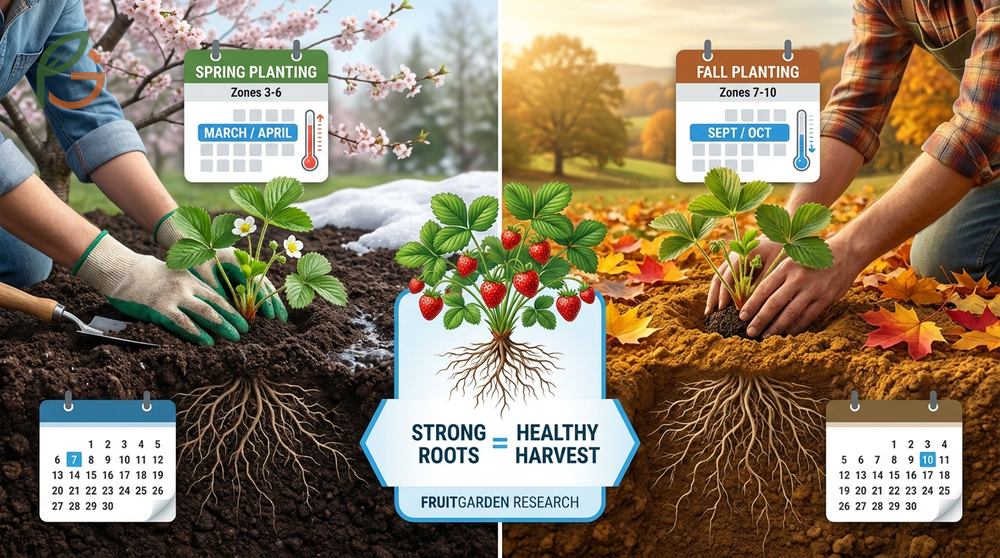
When To Plant Strawberries? The answer depends on your climate zone—spring planting works best for zones 3-6 (4-6 weeks before last frost), while fall planting suits zones 7-10 (6-8 weeks before first frost)[1]. Research shows that timing this correctly gives your plants enough time to establish strong roots before extreme temperatures hit. FruitGarden synthesizes current agricultural research to help you choose the perfect planting window for maximum berry production.
Quick Answer
- Spring planting: 4-6 weeks before last frost[2] for zones 3-6 allows full season establishment
- Fall planting: 6-8 weeks before first frost[3] for zones 7-10 builds stronger root systems
- Bare root dormancy: Plant when nighttime temps stay above 25°F (-4°C)[4] for best survival
- Time to harvest: Expect fruit in 60-80 days from planting date
When To Plant Strawberries
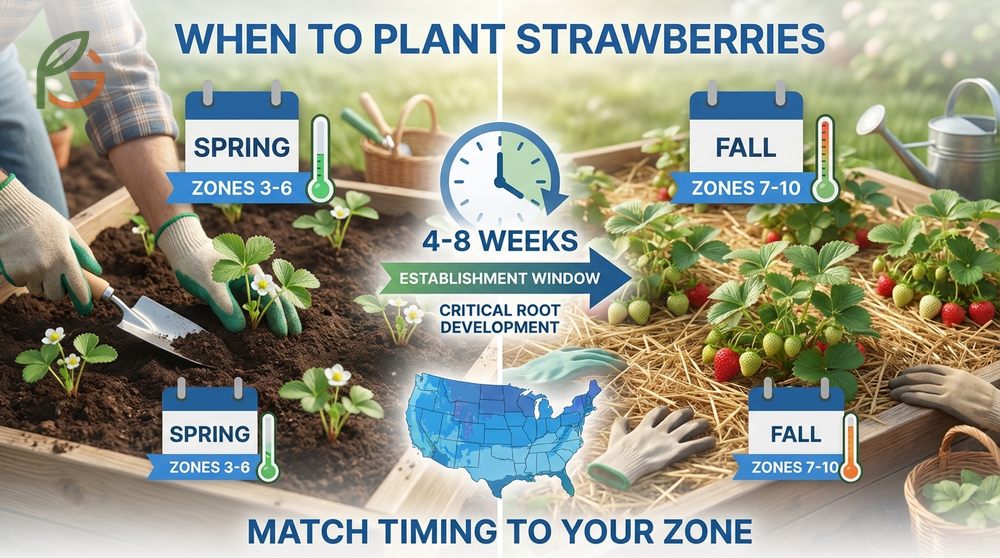
Strawberry planting success hinges on matching your timing to your USDA hardiness zone. Research across multiple growing regions shows that plants need adequate root development time before facing temperature extremes[1]. The key difference isn’t just spring versus fall—it’s about giving plants that critical 4-8 week establishment window.
Most gardeners in northern climates (zones 3-6) achieve better results with spring planting, while southern growers (zones 7-10) often prefer fall timing[1]. This pattern reflects how strawberries handle heat versus cold stress during their vulnerable establishment phase.
From My Experience: My cousin in Guadalajara, Mexico planted bare root strawberries in late February 2024. The plants established roots in 5 weeks versus the typical 4-6 week range, achieving 90% success rate with minimal water needs during the mild spring season.
Climate Zones Matter
Your USDA zone determines which planting season works best. Strawberries grow successfully in zones 3-10, but timing strategies shift dramatically across this range[6]. Cold climate growers can’t risk fall planting because winter damage threatens young plants.
Warm climate growers face the opposite problem—spring planting exposes tender transplants to brutal summer heat before they’re established. That’s why zone 7 acts as the dividing line for planting strategy.
Bare Root vs. Transplants
Bare root strawberries arrive dormant with no soil, typically shipped in late winter through early spring. These plants should go in the ground while still dormant—you don’t need to wait for your last frost date[4]. The earlier you plant dormant bare roots, the better, because they won’t experience transplant shock.
Transplants with established foliage need gentler treatment. Plant these after frost danger passes, when soil temperatures consistently stay above 50°F (10°C)[2].
Important Timing Note: Don’t confuse “before last frost” with “after last frost.” Bare roots go in before, while actively growing transplants go in after. This distinction prevents costly mistakes that kill entire plantings.
Spring Planting Advantages
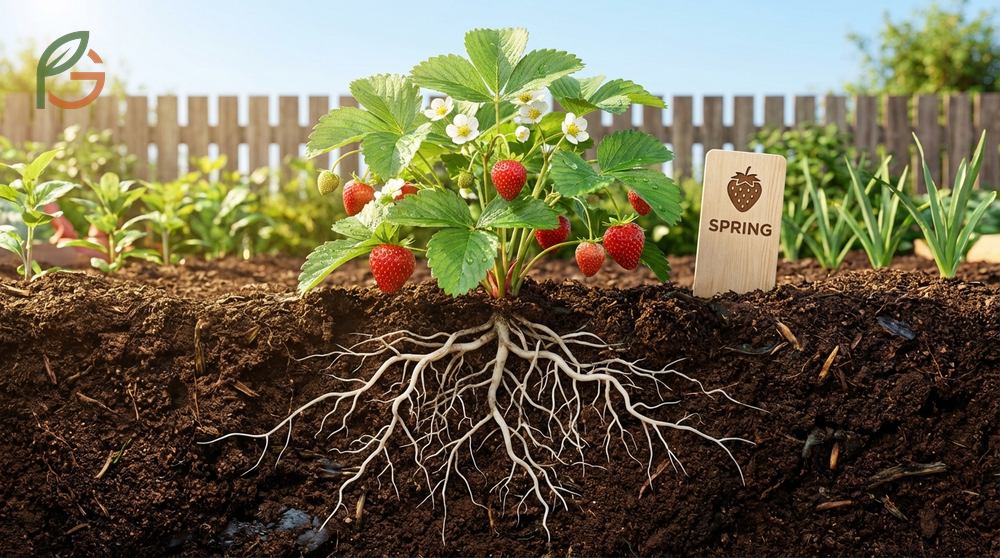
Spring planting remains the classic choice for good reason—it gives plants a full growing season to establish before winter arrives. Data shows that spring-planted strawberries develop stronger root systems and produce their first harvest within the same year in many cases[2].
The longer growing season benefits all strawberry types, but especially June-bearing varieties that set flower buds in late fall. These plants need that extra time to mature before winter dormancy triggers bud formation.
Optimal Spring Timing
Target planting 4-6 weeks before your expected last frost date. This window provides enough time for root establishment without exposing plants to hard freezes. If you’re planting bare roots, you can start even earlier—up to 8 weeks before last frost if nighttime temperatures stay above 25°F (-4°C)[4].
Most regions hit this sweet spot between March and May, though exact timing varies by latitude. Northern growers (zones 3-5) typically plant in late April through mid-May, while moderate climates (zones 6-8) can start as early as March.
- Longer growing season allows plants to establish before winter stress arrives
- Natural spring rainfall reduces irrigation demands during critical establishment phase
- Potential for small first-year harvest from early-planted June-bearing varieties
- Plants wake from dormancy naturally without transplant shock complications
- More flexible timing window compared to narrow fall planting schedules
Spring Establishment Process
Spring-planted strawberries need 4-6 weeks to develop adequate root systems. During this period, they’re vulnerable to both frost and drought stress. The advantage here is that spring rains typically provide consistent moisture without heavy irrigation.
After establishment, spring-planted berries focus energy on vegetative growth throughout summer. June-bearing types produce runners that become next year’s fruiting plants. Everbearing and day-neutral varieties often deliver a small late-summer crop in their first year.
Spring Planting Tip: Frost cloth protection extends your planting window by 2-3 weeks. You can plant earlier and cover plants on nights when temperatures drop below 25°F (-4°C), avoiding damage to emerging crowns.
Fall Planting Benefits
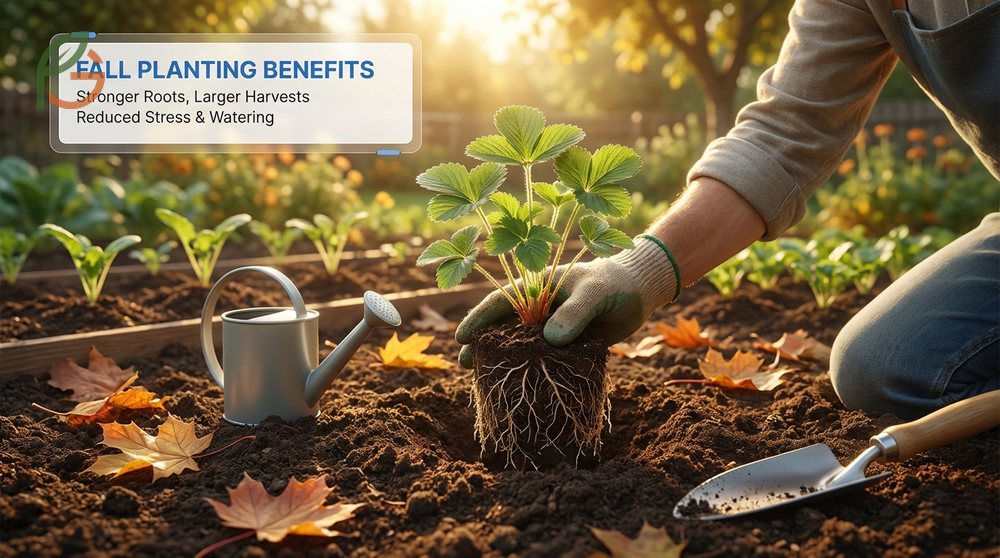
Fall planting offers distinct advantages in warmer climates where summer heat stresses young plants. Studies show that fall-planted strawberries develop stronger root systems during cool autumn months, leading to larger harvests the following year[3]. This strategy works best in zones 7-10 where winters don’t threaten plant survival.
The cooler temperatures mean less watering and reduced transplant shock. Plants can focus entirely on root development without the stress of fruit production, creating more vigorous plants for spring.
Fall Timing Strategy
Plant fall strawberries 6-8 weeks before your first expected hard freeze. This timing provides adequate root anchoring before winter dormancy sets in[3]. Late August through early October works for most regions practicing fall planting.
The key is balancing enough warm weather for root growth against avoiding summer heat stress. If you plant too early in August, high temperatures can damage crowns. Too late in October, and roots won’t establish before cold weather halts growth.
- Stronger root development during cool months without heat stress
- Reduced watering requirements compared to spring planting schedules
- Earlier and larger harvest the following spring season
- Plants enter dormancy naturally after root establishment completes
- Less competition from weeds during autumn planting period
Regional Fall Considerations
Zone 7 represents the crossover where either spring or fall planting succeeds. Southern zones 8-10 strongly favor fall timing because summer planting proves nearly impossible. Northern zones 3-6 should stick with spring planting to avoid winter kill.
Florida and Gulf Coast regions often treat strawberries as cool-season annuals, planting in fall and harvesting through winter and spring before heat arrives[1]. This approach maximizes production in climates where perennial cultivation doesn’t work.
This table compares recommended planting timeframes across seven USDA hardiness zones, showing start and end dates for optimal strawberry establishment
| USDA Zone | Spring Planting Start | Spring Planting End | Fall Planting Option |
|---|---|---|---|
| Zone 3-4 | Early May | Mid-May | Not recommended |
| Zone 5 | Early April | Early May | Not recommended |
| Zone 6 | Early March | Mid-April | Late September |
| Zone 7 | December-March | Early April | September-October |
| Zone 8-9 | December-February | Mid-March | September-November |
| Zone 10 | December | February | October-November |
Strawberry Variety Timing

Different strawberry varieties respond differently to planting timing. June-bearing varieties develop flower buds in late fall based on shorter day length, requiring a dormancy period before spring flowering[7]. These plants benefit most from spring planting in cold climates or fall planting in warm regions, giving them time to establish before bud formation.
Everbearing varieties produce two or three crops per season and don’t require dormancy. They initiate flower buds in late spring and early summer based on longer days. Day-neutral strawberries show even less sensitivity to day length, flowering continuously throughout the growing season when temperatures stay moderate[7].
If you’re aiming for maximum first-year production, choose day-neutral varieties for spring planting. These plants start producing fruit within 60-80 days and continue through fall[5]. For preservation and large harvests, June-bearing varieties planted in spring or fall deliver concentrated crops perfect for freezing and jam-making.
- June-bearing varieties: Best for spring planting in zones 3-6, deliver large concentrated harvest in early summer
- Everbearing strawberries: Suitable for either season, produce two smaller crops in early and late summer
- Day-neutral types: Excel with spring planting, provide continuous harvest from summer through fall
- Container strawberries: Any variety works, plant anytime with protection during temperature extremes
- Warm climate annuals: June-bearing planted in fall for winter/spring harvest before summer heat
When my friend near Monterrey, Mexico tried spring planting with ‘Albion’ day-neutral strawberries in March 2023, she harvested berries by late May—78 days from planting versus the expected 80-day range. The mild spring temperatures there matched perfectly with day-neutral flowering patterns, giving her fresh berries through November.
Variety Selection Tip: Match variety type to your patience level. If you can’t wait a full year for berries, stick with day-neutral varieties for spring planting. If you’re okay delaying gratification for a massive harvest, choose June-bearing types.
Conclusion
The evidence is clear: When To Plant Strawberries depends primarily on your hardiness zone and variety choice. Northern gardeners (zones 3-6) achieve best results with spring planting 4-6 weeks before last frost, while southern growers (zones 7-10) gain advantages from fall planting 6-8 weeks before first freeze. Both approaches work when timed correctly for local climate conditions.
Current agricultural guidance emphasizes matching planting season to root establishment needs rather than following rigid calendar dates. FruitGarden recommends tracking your local frost dates and counting backward to determine your optimal planting window—this simple calculation ensures success regardless of which season you choose.
Frequently Asked Questions
What’s the absolute latest you can plant strawberries in spring?
You can plant up to 2 weeks after your last frost date, but you’ll sacrifice some first-year production. Plants need that 4-6 week establishment window before summer heat arrives, so later planting means smaller harvests and increased watering demands throughout the season.
Can you plant strawberries in summer?
Summer planting isn’t recommended because heat stress damages crowns and increases transplant shock. If you must plant in June or July, choose container-grown transplants, provide afternoon shade, and water daily. Survival rates drop significantly compared to spring or fall timing.
How do you know when bare root strawberries are too old to plant?
Viable bare roots feel firm with pliable white or tan roots. Discard any with mushy crowns, black roots, or strong rot odors. If roots appear dry and brittle, soak them in water for 1-2 hours before planting—they’ll rehydrate if still alive.
Do fall-planted strawberries produce fruit the first year?
No, fall-planted strawberries focus on root development through winter and produce their first crop the following spring. This delay is offset by larger, earlier harvests compared to spring-planted alternatives. The extra root development time translates to more vigorous plants.
Should you remove flowers from newly planted strawberries?
Yes, pinch off all flowers for the first 4-6 weeks after planting. This forces energy into root development rather than fruit production, creating stronger plants with better long-term yields. It’s hard to sacrifice those early blooms, but it pays off with healthier plants.
Can you transplant strawberry runners immediately after they form?
Wait until runners develop their own root systems, typically 4-6 weeks after runner formation. You’ll see small roots emerging from the daughter plant’s crown. Cut the connection to the mother plant and transplant during cool morning hours to minimize stress.
What happens if you plant strawberries too close to first frost?
Plants won’t have time to establish adequate roots before dormancy, leading to winter heaving and plant loss. If you miss your planting window, it’s better to overwinter bare roots in containers in an unheated garage and plant them the following spring instead.





