
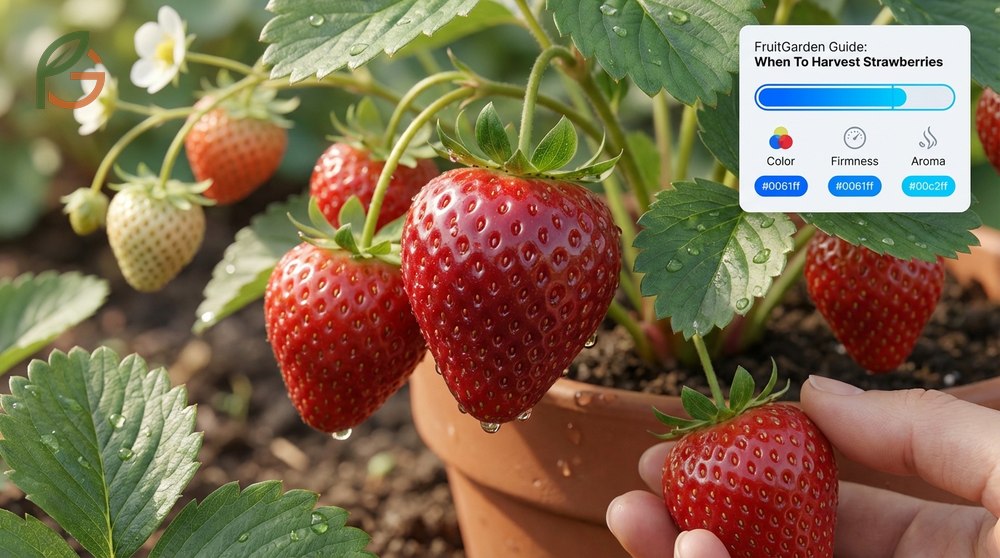
When To Harvest Strawberries? Research shows strawberries reach optimal harvest maturity when deep red color covers at least 75% of the fruit surface[1] for U.S. Grade No. 1 quality. This typically occurs 4-6 weeks after blossoming[2] and about 30 days after fertilization when sugar levels peak[3]. FruitGarden synthesizes current agricultural research to help you identify the perfect moment for harvest based on color development, firmness, and aroma.
Quick Answer
When To Harvest Strawberries
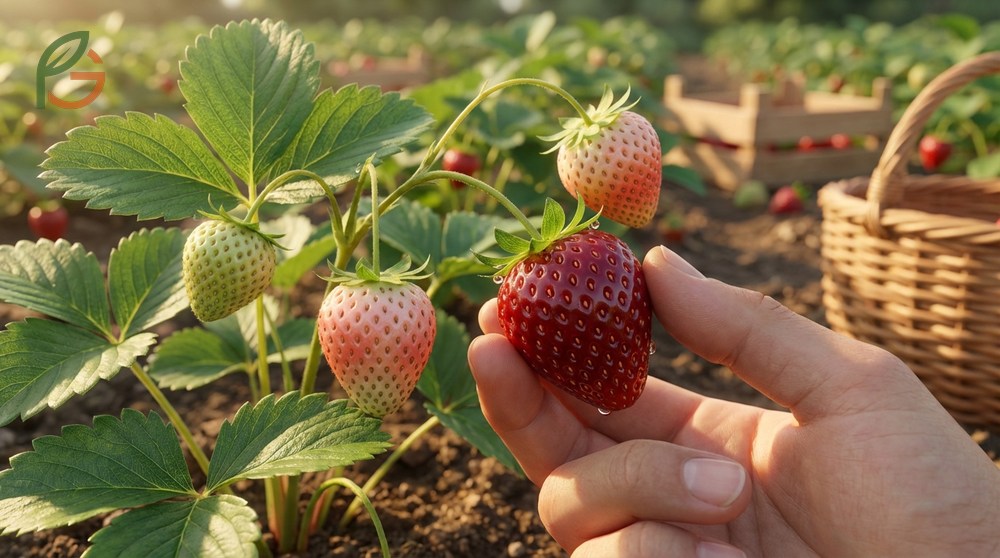
Strawberries reach harvest maturity when deep red color covers more than 75% of the fruit surface[1] for premium U.S. Grade No. 1 classification. This critical threshold ensures optimal sugar development and flavor concentration. Berries harvested before reaching this color percentage often taste sour and lack the characteristic sweetness consumers expect.
Research demonstrates that strawberries stop ripening the moment they’re picked, unlike tomatoes or bananas that continue developing after harvest[5]. This means you can’t salvage underripe berries by letting them sit at room temperature. What you pick is exactly what you get in terms of sweetness and flavor.
Most varieties need 4-6 weeks from initial blossoming to reach full maturity[2], though this timeline varies with temperature, irrigation, and cultivar characteristics. June-bearing varieties produce a concentrated 3-6 week harvest window[6], while day-neutral types fruit continuously from July through October until frost.
Color Development Stages
Strawberry fruits progress through distinct color phases during ripening. They start green, transition to white, then gradually develop pink before achieving full red maturity. The tip of the berry typically colors first, so check that the shoulders and stem end have also turned red.
Agricultural studies confirm that berries with 50% red coverage are considered half-ripe—these have lower sugar content and higher acidity that creates an unpleasant tart taste. Berries showing 100% red or pink development are classified as over-ripe and face approximately 50% postharvest loss within ten days due to accelerated decay.
- Green stage: Immature fruit, no harvest readiness, continues cell division
- White stage: Transitional phase, still developing sugars and acids
- 50% red (half-ripe): Insufficient sweetness, high acidity, not recommended for fresh consumption
- 75% red (optimal): Best balance of sweetness, firmness, and shelf life for U.S. Grade No. 1[1]
- 90-100% red: Peak flavor but reduced storage potential, best for immediate consumption
Important Note: Avoid berries with white or green tips—they won’t develop additional sweetness after picking and will remain disappointingly tart regardless of storage conditions.
Timing from Flowering to Harvest
The journey from flower to ripe fruit takes approximately 30 days after pollination when sugar levels reach their maximum[3]. This 4-week window can extend to 6 weeks during cooler spring conditions or shorten to 3.5 weeks during heat waves. Temperature plays the dominant role in ripening speed.
Successful pollination is essential—each strawberry flower contains hundreds of stigmas that must receive pollen to produce properly shaped fruit. Incomplete pollination results in misshapen berries with uneven ripening patterns. Bees and other pollinators typically handle this work in outdoor gardens.
From My Experience: My cousin in Guadalajara, Mexico grew June-bearing strawberries from transplants in March 2024. First berries reached 75% red color in exactly 28 days after flowering versus the typical 30-day average, thanks to warm spring temperatures that accelerated development.
Ripe Strawberry Signs
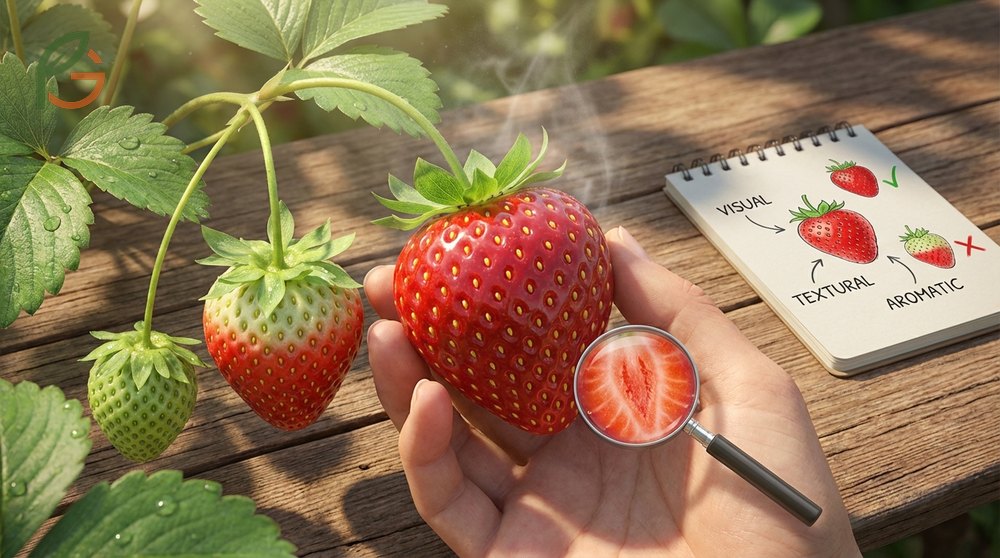
Identifying ripe strawberries requires assessing multiple indicators beyond surface color alone. Research shows that combining visual, textural, and aromatic cues provides the most reliable harvest decision framework. A truly ripe berry demonstrates uniform characteristics across all three sensory categories.
The most common mistake gardeners make is harvesting too early based solely on partial redness. This eagerness results in berries that look appealing but deliver disappointing flavor. Learning to recognize the complete set of ripeness signals prevents this frustration.
Visual Indicators
Ripe strawberries should be uniformly red without any white or green areas, even on the shoulders near the stem[3]. The surface should have a natural glossy shine rather than a dull matte appearance. Check the tip—if it’s completely red, the entire berry has typically reached maturity.
Color measurement studies using spectrometers track parameters like chroma, lightness, and hue as strawberries ripen. However, manual visual assessment of red color coverage remains the standard commercial practice. Most growers estimate coverage percentage by eye rather than using instruments.
- Deep red color covering at least 75% of the surface for premium quality
- Glossy, bright appearance indicating fresh, turgid cells
- No white shoulders or green patches near the calyx
- Uniform coloring from tip to stem end
- Seeds (achenes) that have turned from yellow to brown or red
Texture and Aroma Cues
Ripe strawberries feel firm but not hard when gently squeezed—they should yield slightly under pressure without feeling mushy. Overripe berries become soft and develop a slippery texture that indicates cellular breakdown. Underripe berries feel rock-hard and resist compression.
A noticeable strawberry scent is one of the most reliable ripeness indicators[3]. If you can smell the characteristic sweet fragrance before picking, the berry has developed adequate volatile compounds that contribute to flavor. Berries lacking aroma often taste bland even when fully colored.
Pro Tip: Harvest strawberries on sunny afternoons when possible—the warmth concentrates sugars and intensifies flavor compared to berries picked during cool, cloudy conditions.
Strawberry Harvest Timing
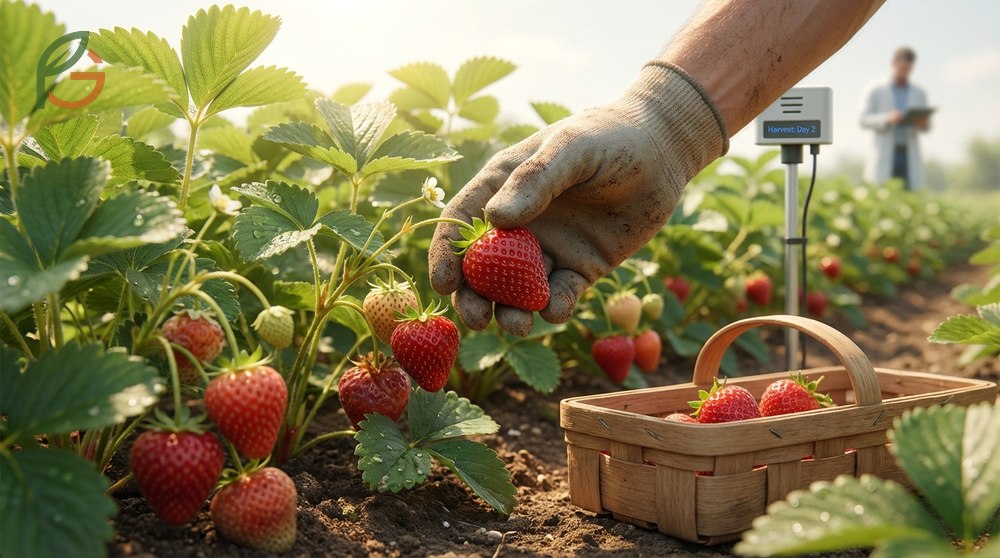
Current agricultural data shows that harvesting strawberries every 2-3 days[4] during peak season maintains fruit quality and prevents overripening on the plant. This frequency becomes critical during warm weather when berries develop rapidly. Delaying harvest by even one extra day can push berries past optimal maturity.
University of Minnesota Extension research found that picking every 1-2 days rather than every 3 days reduces spotted wing drosophila infection and increases marketable yield[6]. More frequent harvesting also decreases the likelihood of botrytis gray mold and other fruit rots. The tradeoff is increased labor investment for commercial operations.
Harvest Frequency Guidelines
June-bearing strawberries require intensive picking during their concentrated 3-6 week harvest window in mid-June through mid-July[6]. This period demands every-other-day monitoring at minimum. Hot spells may necessitate daily checks to catch berries at peak ripeness.
Day-neutral varieties spread the harvest from early July through October, requiring ongoing attention throughout the growing season. These types need picking every 1-3 days depending on temperature. Cool fall weather slows berry development, allowing slightly longer intervals between harvests.
Plants receiving proper irrigation and fertilization through fertigation or granular applications produce higher daily yields as fruit ripens faster and berries grow larger. This accelerated development pattern requires more frequent monitoring to avoid missing the optimal harvest window.
- Peak summer heat (above 85°F): Check daily for rapid ripening
- Moderate spring weather (65-75°F): Harvest every 2 days for balanced quality
- Cool fall temperatures (55-65°F): Pick every 3 days as development slows
- After rainfall: Inspect within 24 hours to prevent splitting and mold
- During pest pressure: Increase frequency to every 1-2 days to minimize losses
Best Time of Day
Morning harvests during cool temperatures extend shelf life by reducing field heat in the berries. Studies show that strawberries picked in early morning maintain firmness longer during storage compared to those harvested during afternoon heat. The berries are also more turgid and less prone to bruising damage.
However, if you’re eating strawberries immediately rather than storing them, sunny afternoon picking offers a flavor advantage. The warmth concentrates sugars and aromatic compounds, creating more intense taste[7]. Choose your timing based on whether shelf life or maximum flavor is your priority.
Avoid picking in wet conditions after rain or heavy dew. Moisture on berries dramatically increases the risk of mold development during storage. Wait until foliage and fruit surfaces dry completely before starting your harvest.
Timing Strategy: For home gardens, harvest your “eat today” berries in the afternoon when flavor peaks, but pick your “store for later” berries in the morning when they’re cool and firm.
Picking Strawberries Guide
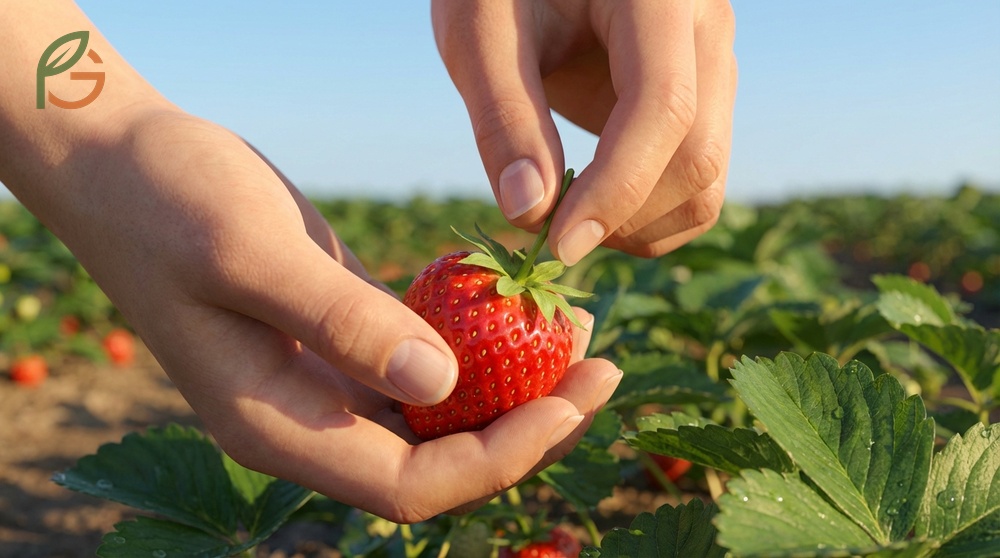
Proper picking technique prevents plant damage and maintains berry quality. Grip the stem about half an inch above the berry between your thumbnail and index finger while cradling the fruit in your palm[5]. Sever the stem with gentle pressure from your thumbnail while slightly twisting. This leaves the green cap (calyx) attached to the berry.
Never pull berries directly from the plant without pinching the stem first. This rough handling can damage the crown and reduce future production. The plant itself is more valuable than any single berry, so protect it by using correct harvesting motions.
Use shallow containers like clamshells or cardboard flats rather than deep buckets. Strawberries bruise easily under their own weight, and overfilling containers crushes the bottom layer. Handle filled containers gently—rough jostling creates pressure points that lead to soft spots and rapid deterioration.
- Pinch stems cleanly about ¼ inch above the calyx using thumbnail pressure
- Keep the green cap attached—it extends shelf life and indicates freshness
- Place berries gently in containers, don’t drop or toss them
- Avoid touching the berry flesh with fingers—handle by stem and cap only
- Sort out damaged or overripe berries immediately to prevent spreading decay
- Refrigerate harvested berries within 2 hours to maintain quality
- Don’t wash berries until ready to eat—moisture accelerates spoilage
For maximum shelf life, harvest strawberries in the cool morning hours and refrigerate immediately. Whole strawberries stored properly in breathable containers can last 3-7 days. Check refrigerated berries daily and remove any showing signs of mold before it spreads to neighboring fruit.
This table compares three strawberry picking approaches showing timing advantages, quality outcomes, and ideal usage scenarios for home gardeners
| Picking Method | Best Timing | Quality Advantage | Ideal For |
|---|---|---|---|
| Morning Harvest (6-9 AM) | Cool temperatures, after dew dries | Extended shelf life, 3-7 days[3] refrigerated | Storage, preserving, farmers market sales |
| Afternoon Harvest (2-5 PM) | Sunny conditions, full warmth | Peak flavor concentration and aroma | Immediate fresh eating, desserts |
| Evening Harvest (after 6 PM) | Cooled from day heat | Balanced firmness and decent flavor | Next-day consumption, short-term storage |
Conclusion
The evidence is clear: When To Harvest Strawberries depends on achieving 75% or greater red color coverage, firm texture, and sweet aroma—all indicators that sugar development has peaked. Picking every 2-3 days during your variety’s harvest window ensures you catch berries at optimal maturity before they become overripe or attract pests.
Current agricultural guidance emphasizes that strawberries don’t ripen after picking, making harvest timing absolutely critical for flavor quality. Whether you’re growing June-bearing varieties for an intensive 3-week harvest or day-neutral types for season-long production, monitoring color progression and maintaining consistent picking schedules delivers the best results. FruitGarden provides research-based cultivation strategies that help home gardeners achieve professional-quality harvests.
Frequently Asked Questions
How do you know when strawberries are ready to pick?
Strawberries are ready when deep red color covers at least 75% of the surface, they feel firm but yield slightly to gentle pressure, and they emit a noticeable sweet strawberry scent. The entire berry including the tip and shoulders should show uniform red coloring without white or green patches.
What happens if you pick strawberries too early?
Strawberries picked too early won’t develop additional sweetness after harvest because they stop ripening the moment they’re removed from the plant. Early-picked berries with less than 75% red coverage typically taste sour due to high acidity and low sugar content, disappointing consumers who expect characteristic strawberry sweetness.
How often should you harvest strawberries during peak season?
Harvest strawberries every 2-3 days during peak production to catch berries at optimal maturity. Research shows that more frequent picking every 1-2 days reduces pest damage and fruit rot while increasing marketable yield, though this requires more labor investment for commercial growers.
How long does it take for strawberries to ripen after flowering?
Strawberries typically reach harvest maturity 4-6 weeks after blossoming, or approximately 30 days after pollination when sugar levels peak. This timeline varies with temperature—warm conditions accelerate ripening to 3.5 weeks while cool spring weather can extend development to 6 weeks.
Should you pick strawberries in the morning or afternoon?
Pick strawberries in the morning when cool temperatures help maintain firmness and extend shelf life by 3-7 days during refrigerated storage. However, if you’re eating berries immediately, afternoon harvesting during sunny conditions concentrates sugars and creates more intense flavor.
Can strawberries ripen after being picked?
No, strawberries cannot ripen after being picked. Unlike tomatoes or bananas that continue developing after harvest, strawberries stop all ripening processes the moment they’re removed from the plant. This makes harvesting at the correct maturity stage absolutely critical for achieving good flavor.
What’s the difference between June-bearing and day-neutral strawberry harvest timing?
June-bearing strawberries produce one concentrated harvest lasting 3-6 weeks from mid-June to mid-July, requiring intensive picking during this window. Day-neutral varieties fruit continuously from early July through October until frost, spreading the harvest across months but requiring ongoing monitoring every 1-3 days throughout the season.





