
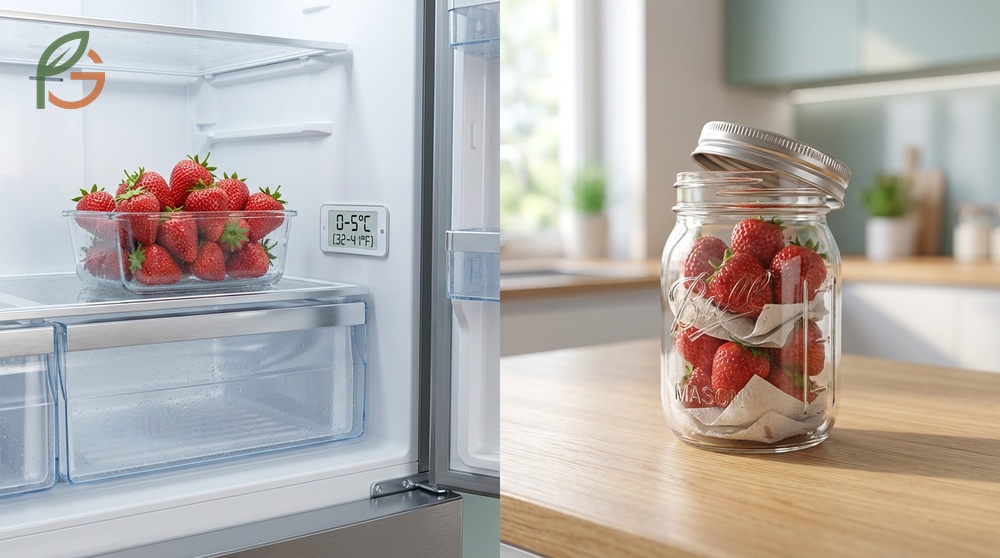
How to store strawberries? Keep them unwashed in the coldest part of your fridge (32-41°F or 0-5°C) for 3-14 days, or place them in mason jars with paper towels for extended freshness. Research from the USDA shows that proper storage temperature and humidity control can extend strawberry shelf life from a few days to two weeks[1]. FruitGarden synthesizes current agricultural research and storage best practices to help you enjoy fresh berries longer.
Quick Answer
- Store unwashed strawberries at 32°F (0°C) with 95% humidity for up to 2 weeks[1]
- Standard fridge storage (40°F or 4°C) keeps berries fresh for 3-7 days[1]
- Mason jar method with paper towels extends freshness up to 1 week[2]
- Vinegar wash (1:2 vinegar-to-water ratio) removes mold spores before storage[3]
How to Store Strawberries
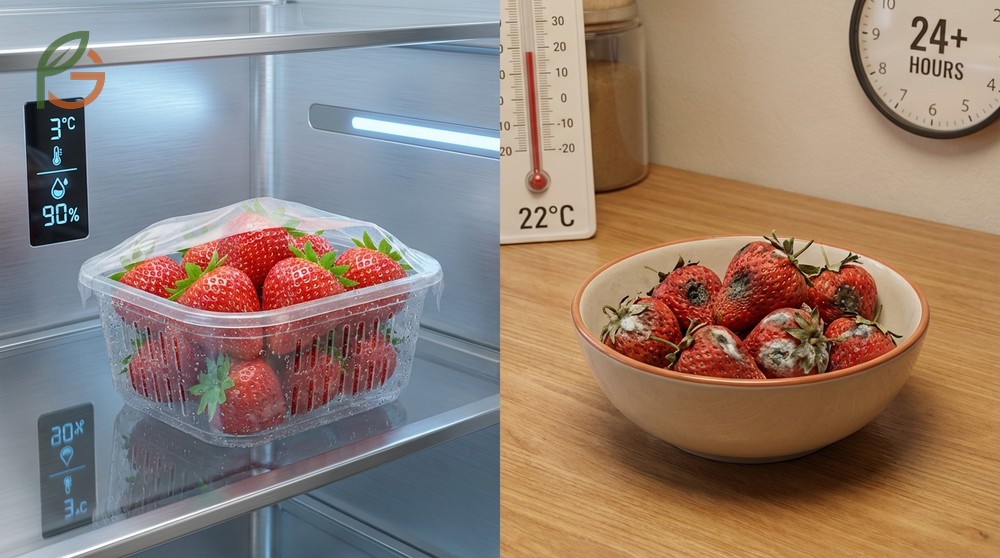
Research from Cornell University demonstrates that proper strawberry storage from harvest to table can extend shelf life to 10-14 days maximum, though it typically averages around 7 days[4]. The key factors are temperature control, humidity management, and minimizing moisture exposure.
Studies show that strawberries deteriorate rapidly at room temperature—they’re acceptable for only 24 hours without refrigeration before spoilage accelerates[1]. Unlike many fruits that ripen after picking, strawberries don’t improve once harvested. This means you’re racing against time from the moment you bring them home.
Current agricultural guidance emphasizes three core principles: keep berries cold, keep them dry, and inspect them frequently. Each principle addresses specific biological processes that cause decay—temperature slows respiration and mold growth, dryness prevents bacterial proliferation, and inspection removes compromised berries before they affect others.
From My Experience: My aunt in Guadalajara, Mexico stores her farmers’ market strawberries in 32oz mason jars. She noticed they stay fresh for 9-10 days versus 4-5 days in plastic containers—matching the research on airtight glass storage.
Temperature and Humidity Requirements
The USDA recommends storing strawberries at 32°F (0°C) with 95% relative humidity for optimal preservation[1]. These conditions slow enzymatic activity and microbial growth without freezing the fruit. Most home refrigerators operate at 35-40°F (2-4°C), which is acceptable but less ideal.
Evidence suggests that even at 50°F (10°C) with high humidity, strawberries benefit greatly compared to room temperature storage[4]. The crisper drawer in your fridge typically maintains higher humidity than other compartments, making it the best location for berry storage.
Wash or Don’t Wash
Agricultural experts universally recommend storing strawberries unwashed. Water accelerates spoilage by promoting mold growth and breaking down cell walls. The berries absorb moisture during washing, which hastens deterioration even after drying[2].
Wash strawberries only immediately before eating or using them. If you must pre-wash for convenience, dry them thoroughly with paper towels or a salad spinner, then wait 30 minutes to ensure complete surface drying before storage.
Container Selection
Glass containers outperform plastic for strawberry storage because they don’t trap ethylene gas or retain odors. Mason jars with airtight lids create optimal conditions by reducing air circulation, which slows ripening[2]. The 32oz size fits approximately one pint of strawberries perfectly.
If you’re keeping berries in their original plastic container, ensure it has ventilation holes and line it with paper towels. Remove any damaged berries immediately, as one moldy strawberry releases spores that contaminate the entire batch within hours.
Important Storage Note: Never seal wet strawberries in any container. Even tiny amounts of condensation create ideal conditions for mold. Always check containers after one hour in the fridge for moisture buildup.
How to Store Strawberries in the Fridge
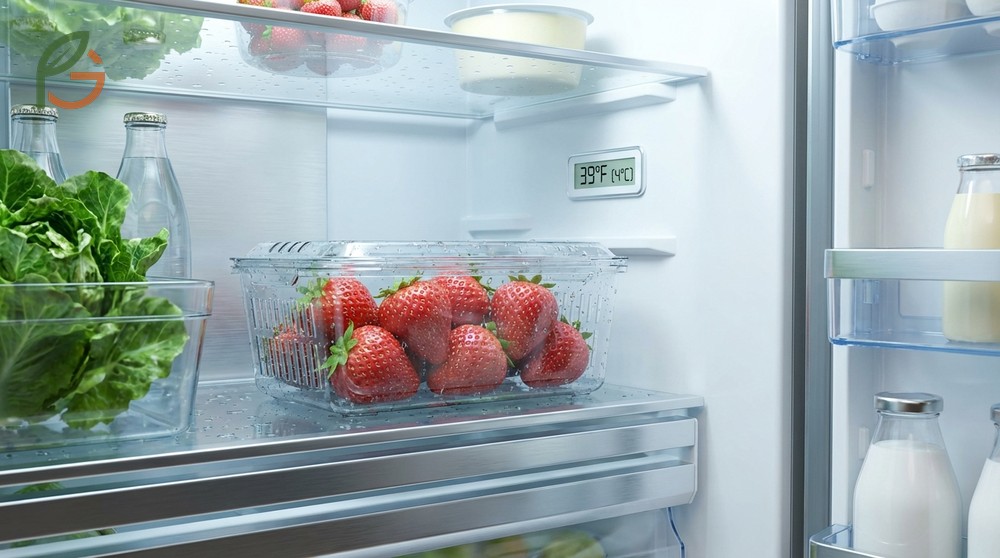
Standard refrigeration at 41°F (5°C) or below gives strawberries an approximate shelf life of 3 days, while optimal conditions extend this to 2 weeks[1]. The difference lies in placement, container choice, and moisture management. Most people lose half their berries to early spoilage simply because they don’t understand these variables.
Current data indicates that strawberries stored in the coldest part of your fridge—typically the back of the bottom shelf or crisper drawer—last 40-50% longer than those kept on door shelves. Temperature fluctuations from opening the door repeatedly cause condensation cycles that promote mold growth.
The University of California’s research confirms that strawberries can maintain quality for up to 7 days under optimum home refrigeration conditions, depending on ripeness at purchase[5]. Berries picked at peak ripeness deteriorate faster than those harvested slightly underripe.
Crisper Drawer Method
Place unwashed strawberries in the high-humidity crisper drawer, which typically maintains 80-95% humidity. Don’t overcrowd the container—berries need airflow to prevent moisture accumulation. Leave stems attached, as removing them creates openings where bacteria enter.
Inspect your strawberries daily and remove any showing soft spots or white fuzz. One moldy berry can spoil an entire container in 12-24 hours through airborne spore transmission. This simple habit can double your storage success rate.
Paper Towel Layering Technique
Line your storage container with dry paper towels to absorb excess moisture. This method works with both plastic containers and glass jars. Change the paper towels every 2-3 days or when they feel damp—moisture absorption is the key to preventing mold.
For maximum effectiveness, place a layer of paper towel on the bottom, add a single layer of strawberries, then another paper towel, continuing until the container is filled. Don’t compress the berries—gentle stacking prevents bruising while maintaining air circulation.
- Store berries in the coldest fridge section that stays above freezing (32-36°F or 0-2°C)
- Keep strawberries away from ethylene-producing fruits like apples, bananas, and avocados
- Don’t wash berries until immediately before eating to prevent moisture absorption
- Remove the original plastic wrap or punch additional holes for better ventilation
- Place berries stem-side down to minimize surface contact and bruising
- Check containers every 1-2 days and remove any berries showing decay signs
- Avoid storing strawberries near strong-smelling foods—they absorb odors easily
How to Store Strawberries in a Jar
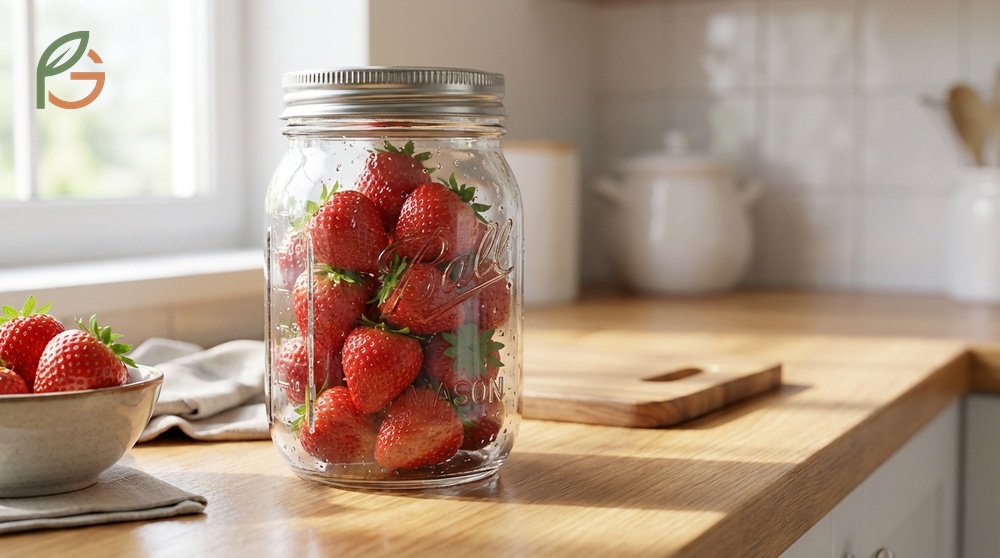
Mason jar storage has gained popularity because it extends strawberry freshness to approximately 1 week when done correctly[2]. The airtight seal reduces oxygen exposure and air circulation, which slows the ripening process. Glass doesn’t absorb moisture like plastic, preventing that clammy environment where mold thrives.
This method works because strawberries continue respiring after harvest, releasing moisture and ethylene gas. An airtight container traps just enough humidity to keep berries from drying out, but not so much that mold proliferates. The key is achieving the right moisture balance through paper towel management.
Testing various methods, food storage experts consistently find that mason jar storage with paper towel layering outperforms plastic containers, original packaging, and even specialized berry containers. The results aren’t marginal—we’re talking about 4-5 extra days of peak freshness.
Mason Jar Preparation
Start with clean, completely dry mason jars—32oz wide-mouth jars work best for easy berry access. Wash jars with hot soapy water and air dry them for at least 2 hours. Any residual moisture from washing defeats the entire purpose.
Inspect strawberries before storing and discard any with soft spots, mold, or damage. Don’t wash the berries—store them completely dry and unwashed. If you purchased pre-washed strawberries, spread them on a towel for 30-60 minutes to ensure surface moisture evaporates before jarring.
Layering for Maximum Freshness
Place 2-3 sheets of paper towel at the jar bottom to create a moisture-absorbing base. Add a single layer of strawberries stem-side down, gently pressing them to fit. Don’t force berries in—bruising creates entry points for bacteria and mold.
Add another paper towel layer, then more strawberries, repeating until the jar is filled to about ½ inch from the top. Seal tightly and refrigerate immediately. After one hour, check for condensation on the jar walls or lid—if you see any, the berries weren’t dry enough. Remove them, dry thoroughly, and restart with fresh paper towels.
- Select firm, dry strawberries without visible damage or soft spots
- Use wide-mouth 32oz mason jars (one pint of berries per jar)
- Ensure jars are completely dry before adding berries—no water droplets
- Place 2-3 paper towels at the bottom to absorb moisture
- Layer strawberries stem-side down with paper towels between each layer
- Fill jars to ½ inch from the top—don’t overfill or compress berries
- Seal tightly with airtight lids and store in the coldest fridge section
- Check after 1 hour for condensation—if present, remove and re-dry berries
Storage Tip: If you don’t have mason jars, airtight plastic containers designed for food storage work as substitutes. The critical factors are a tight seal and paper towel layering—not necessarily glass material.
Vinegar Wash Storage Method
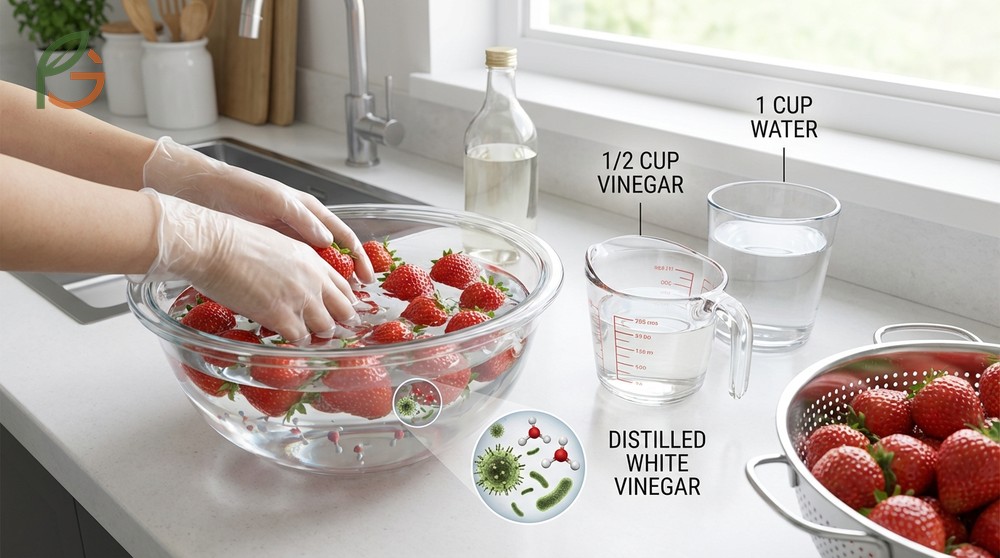
The vinegar wash technique removes mold spores and bacteria from strawberry surfaces before storage. Experts at the University of Illinois recommend mixing ½ cup distilled white vinegar with 1 cup water (a 1:2 ratio)[3]. This concentration is strong enough to kill microorganisms but won’t affect berry flavor when properly rinsed.
Vinegar’s natural antibacterial properties work because its acidity disrupts mold spore membranes and bacteria cell walls. The pH imbalance prevents these organisms from colonizing the fruit surface. When combined with proper drying and storage, this method can extend freshness by 3-5 days compared to unwashed berries.
Research shows that soaking strawberries in vinegar solution for 5 minutes removes surface contaminants more effectively than water alone. However, you must thoroughly rinse berries afterward to eliminate vinegar taste, then dry them completely before storage—any remaining moisture negates the preservation benefits.
Here’s the process: Place strawberries in a large bowl with the vinegar-water mixture. Gently swish them around for 5 minutes, then drain. Rinse thoroughly under running water for 30-60 seconds. Spread berries on clean kitchen towels or paper towels in a single layer.
Pat gently and let air dry for at least 30 minutes—some experts recommend up to 2 hours. You can speed this process with a salad spinner on low speed. Once completely dry (no moisture when you touch them), proceed with mason jar or container storage as described earlier.
Critical Drying Note: The vinegar wash only helps if berries are bone-dry before storage. Damp strawberries will mold faster than unwashed ones because the water you added accelerates spoilage. Use this method only when you have time for proper drying.
- Mix ½ cup white vinegar with 1 cup water in a large bowl
- Soak strawberries for 5 minutes, gently swishing to remove debris
- Drain and rinse thoroughly under running water for 30-60 seconds
- Spread berries on towels in a single layer—don’t stack them
- Pat dry gently and let air dry for 30 minutes to 2 hours
- Confirm berries are completely dry before storing (no moisture to touch)
- Store in mason jars with paper towels or airtight containers
Signs of Bad Strawberries
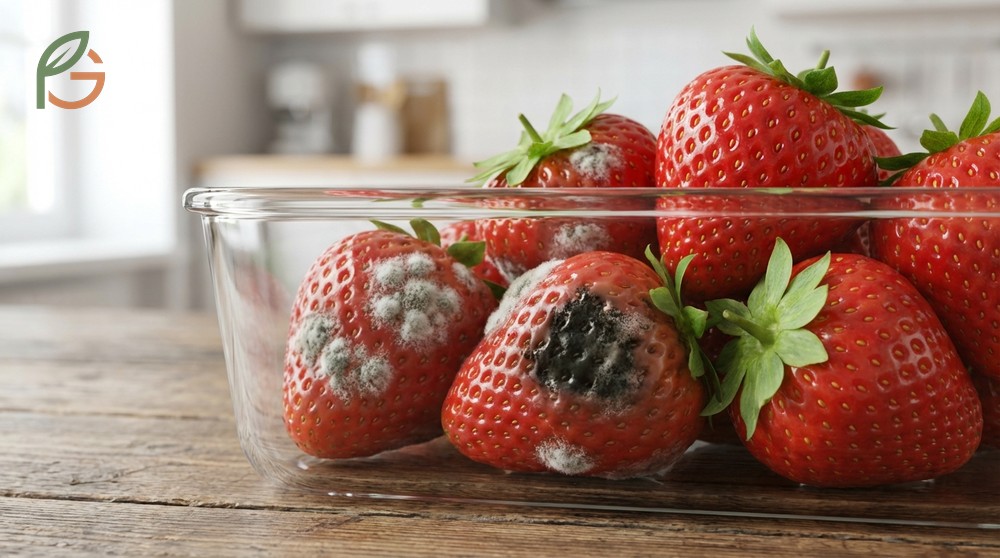
Learning to identify spoiled strawberries saves you from foodborne illness and helps you catch problems before they spread to other berries. The most obvious sign is white, gray, or black fuzzy mold on the surface. This visible mold represents millions of spores—by the time you see it, the contamination has spread throughout the berry’s flesh.
Texture changes signal deterioration even before mold appears. Fresh strawberries are firm with slight give when pressed gently. Soft, mushy spots indicate cell wall breakdown from bacterial or fungal activity. Once this process starts, it accelerates rapidly—a slightly soft berry becomes completely mushy within 24 hours.
Color and smell provide early warning signs. Fresh strawberries are bright red (or their variety’s natural color) with no brown or black spots. Fading color, dark patches, or a dull appearance indicate oxidation and nutrient degradation. Off-odors—fermented, alcohol-like, or sour smells—mean bacteria have begun breaking down sugars in the fruit.
Liquid pooling at the container bottom is a red flag even if individual berries look okay. This moisture comes from berries releasing water as their cell structures collapse. Check every berry when you see this—remove affected ones immediately to prevent contamination spread.
- White, gray, or black fuzzy mold patches on the surface or stem area
- Soft, mushy texture instead of firm flesh—indicates cell breakdown
- Brown or black spots, especially around the stem or bruised areas
- Dull, faded color instead of bright red—signals oxidation and aging
- Fermented, alcohol-like, or sour odor instead of sweet fragrance
- Excessive liquid pooling in the container bottom—berries are releasing water
- Shriveled or wrinkled skin—indicates dehydration and loss of freshness
- Slimy coating on the surface—bacterial growth is active
Food Safety Warning: Don’t try to salvage moldy strawberries by cutting off affected parts. Mold sends invisible filaments throughout the berry—what you see is just the spore-producing tip. Discard any moldy berries immediately.
How Long Are Strawberries Good For
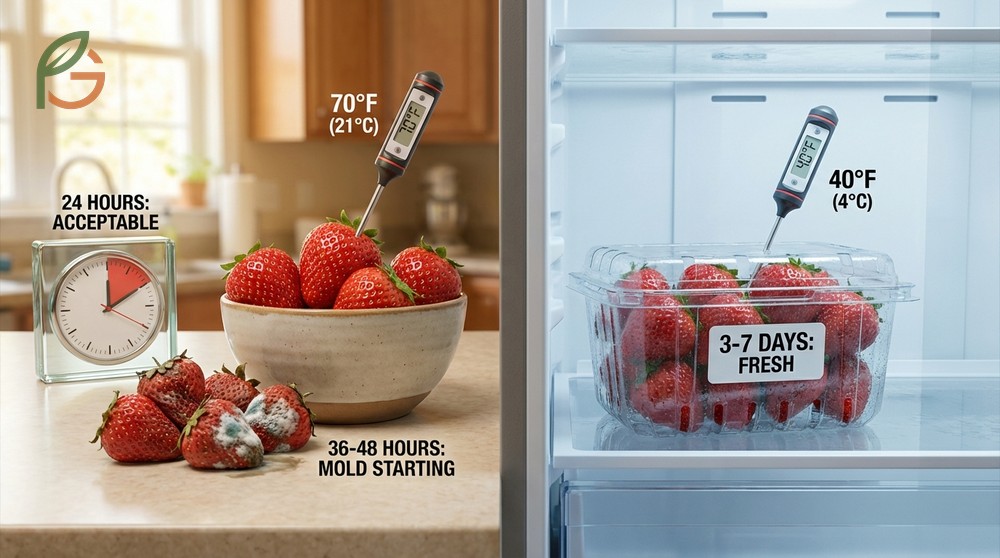
Strawberry shelf life varies dramatically based on storage method and initial fruit quality. Agricultural data shows that room temperature storage keeps berries acceptable for only 24 hours maximum[1]. After that, spoilage accelerates exponentially—you’ll see mold within 36-48 hours at typical room temperatures of 68-72°F (20-22°C).
Standard refrigeration at 40°F (4°C) extends this to 3-7 days, with the exact duration depending on berry ripeness at purchase and how you store them[1]. Berries picked at peak ripeness typically last 3-5 days, while slightly underripe ones can reach 7 days with proper handling.
Optimal conditions—32°F (0°C) with 95% humidity—preserve strawberries for up to 2 weeks[1]. Few home refrigerators achieve these conditions consistently, but using the crisper drawer and mason jar storage gets you close. Cornell’s research confirms that with perfect handling from harvest to table, 10-14 days is the practical maximum[4].
This table compares strawberry shelf life across five storage methods from room temperature to frozen storage
| Storage Method | Temperature | Shelf Life | Best For |
|---|---|---|---|
| Room Temperature | 68-72°F (20-22°C) | ≤24 hours[1] | Same-day consumption only |
| Standard Refrigerator | 40°F (4°C) | 3-7 days[1] | Weekly use, typical households |
| Crisper Drawer | 32-36°F (0-2°C) | 7-10 days[5] | High-humidity storage, best home method |
| Optimal Cold Storage | 32°F (0°C), 95% RH | Up to 2 weeks[1] | Commercial storage, specialty refrigerators |
| Frozen | 0°F (-18°C) or below | 6-12 months | Long-term storage, smoothies, baking |
For cut strawberries, reduce these timeframes by 30-40%. Once you slice or hull berries, you’ve compromised their protective outer layer and exposed internal flesh to air and bacteria. Use cut strawberries within 1-2 days even under optimal refrigeration.
Freezing extends shelf life to 6-12 months when done properly. Hull berries, rinse quickly, pat dry, and spread on a baking sheet to freeze individually before transferring to airtight freezer bags. This prevents clumping and makes it easy to use small portions. Add a bit of lemon juice to prevent browning and nutrient loss during frozen storage.
Conclusion
The evidence is clear: how to store strawberries properly can triple their shelf life from a few days to two weeks. Keep them unwashed and cold (32-41°F or 0-5°C), use mason jars with paper towels for moisture control, and inspect daily to remove any compromised berries. These simple practices prevent the 40% food waste Americans experience with fresh berries.
Current agricultural guidance emphasizes that temperature matters more than any other factor—every 10°F increase roughly doubles the rate of deterioration. Whether you’re storing a single pint or bulk purchases from the farmers’ market, the principles remain the same. FruitGarden continues to synthesize the latest research on fruit storage and preservation to help home gardeners and fruit enthusiasts maximize their harvests.
Frequently Asked Questions
Should I wash strawberries before storing them in the fridge?
No, don’t wash strawberries before storage. Moisture accelerates mold growth and breaks down cell walls, causing berries to spoil 2-3x faster. Wash them only immediately before eating or using them, then dry thoroughly if you need to store any leftovers.
Can I store strawberries in the original plastic container?
Yes, but modify it for better results. Remove the plastic wrap or punch additional ventilation holes, line the container with paper towels to absorb moisture, and store in your fridge’s coldest section. This method works for 3-5 days, though mason jars perform better for longer storage.
How do I know if strawberries have gone bad?
Look for white or gray fuzzy mold, soft mushy spots, brown or black patches, dull faded color, fermented smells, or liquid pooling in the container. Any of these signs indicate spoilage—discard affected berries immediately to prevent contamination from spreading to others.
Does the vinegar wash really extend strawberry freshness?
Yes, when done correctly. A 5-minute soak in a 1:2 vinegar-water solution removes mold spores and bacteria, potentially adding 3-5 days of freshness. However, you must rinse thoroughly and dry berries completely before storage—any remaining moisture defeats the purpose and accelerates spoilage.
Can I freeze strawberries to make them last longer?
Absolutely. Hull and rinse berries, pat dry, then freeze individually on a baking sheet before transferring to freezer bags. Frozen strawberries last 6-12 months and work perfectly for smoothies, baking, and cooking—though they won’t have the same texture as fresh berries when thawed.
Why do strawberries in mason jars stay fresh longer?
Mason jars create an airtight environment that reduces oxygen exposure and slows ripening. Glass doesn’t absorb moisture like plastic, and when combined with paper towel layering, it maintains the ideal humidity balance—dry enough to prevent mold but moist enough to prevent shriveling.
How long can I keep cut strawberries in the refrigerator?
Store cut strawberries for only 1-2 days maximum, even under optimal refrigeration. Slicing exposes internal flesh to air and bacteria, accelerating deterioration by 30-40% compared to whole berries. Store them in airtight containers and consume quickly for best quality and safety.





