
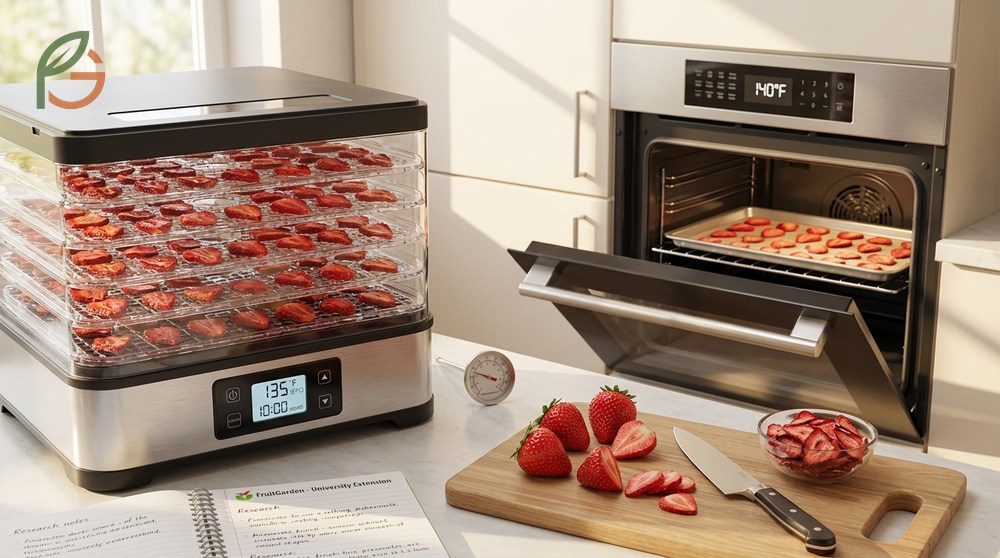
How To Dehydrate Strawberries requires maintaining 135-140°F (57-60°C) for 7-15 hours in a dehydrator or 2-3 times longer in an oven set to 140°F[1][2]. Research shows that controlling temperature and air circulation prevents mold growth while preserving the fruit’s natural sweetness and nutrients. FruitGarden synthesizes agricultural research from university extension programs to help home gardeners preserve their strawberry harvests effectively.
Quick Answer
- Optimal dehydrator temperature: 135-140°F (57-60°C)[2]
- Slice strawberries 1/4 inch thick for even drying in 7-15 hours[2]
- Oven method takes 2-3 times longer than dehydrator due to less air circulation[1]
- Store dried strawberries in airtight containers for 6-12 months at room temperature or 1-2 years refrigerated[3]
How To Dehydrate Strawberries

Dehydrating strawberries concentrates their natural sugars while removing approximately 90-95% of their water content[2]. The process requires precise temperature control between 135-140°F (57-60°C) to prevent mold growth without cooking the fruit. Studies demonstrate that temperatures below 90°F (32°C) allow mold development, while temperatures above 170°F (77°C) cause case hardening where the outside dries too quickly and traps moisture inside[2].
Current agricultural guidance emphasizes controlling both temperature and air circulation for successful dehydration. What often gets overlooked is that strawberry ripeness affects drying time—fully ripe berries contain more sugar and dry faster than underripe fruit. Most people don’t realize that maintaining consistent temperature throughout the drying process matters more than the initial temperature spike.
Preparing Strawberries for Dehydration
Research shows proper preparation significantly impacts drying efficiency and final product quality. Wash strawberries thoroughly in cold water, then hull them by removing the green tops and any remaining stem portions. The key step involves slicing berries into uniform 1/4-inch thick pieces to ensure even drying[2].
Excess moisture on the fruit surface prolongs drying time and wastes energy. After washing, spread strawberries in a single layer on kitchen towels and allow them to dry completely before slicing. This simple step can reduce overall dehydration time by 15-20%.
- Select fully ripe strawberries without soft spots or mold
- Wash berries in cold water with optional vinegar splash (2:1 water to vinegar ratio)
- Remove hulls and any green or white parts near the stem
- Pat dry thoroughly with clean kitchen towels
- Slice into uniform 1/4-inch thick pieces for consistent drying
- Arrange slices in single layers without touching on dehydrator trays
Important Note: Don’t stack strawberry slices on top of each other. Air needs to circulate freely around each piece for proper dehydration. Overlapping slices create moisture pockets that extend drying time and may result in uneven texture.
Temperature and Timing Essentials
Agricultural extension research confirms that dehydrator temperature settings between 135-140°F (57-60°C) produce optimal results[1][2]. Sliced strawberries typically require 7-15 hours in a dehydrator, while whole berries need 24-36 hours depending on size[2]. For dehydrators without built-in thermostats, place an accurate thermometer on the bottom tray to monitor temperature throughout the process.
Lower temperatures around 125°F (52°C) reduce browning on strawberry edges but extend drying time by 2-3 hours[4]. This trade-off works well when appearance matters for gift-giving or selling dried strawberries. The slower process preserves more vibrant red color compared to faster, higher-temperature methods.
Dehydrating Fresh Strawberries
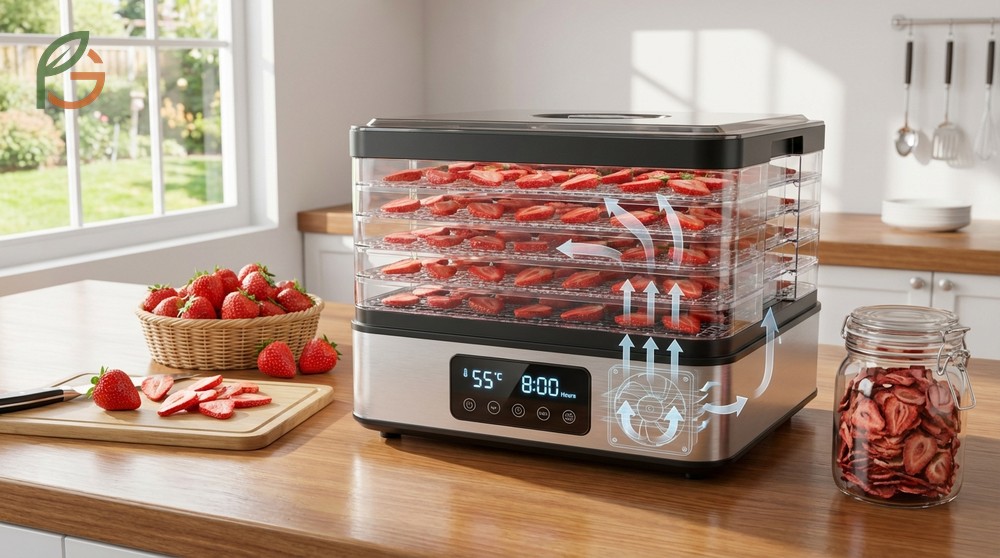
Electric food dehydrators provide the most reliable method for drying strawberry slices because they maintain consistent temperature and airflow. University research demonstrates that dedicated dehydrators produce more uniform results than oven methods[1]. The built-in fan circulates air evenly across all trays, ensuring berries on top and bottom dry at similar rates.
Most dehydrators accommodate 4-9 trays, allowing you to process 2-4 pounds of fresh strawberries in a single batch. Rotate trays every 3-4 hours by moving bottom trays to the top position for even drying. This simple rotation step prevents overdrying on bottom trays while ensuring complete dehydration on upper levels.
From My Experience: My aunt in Guadalajara, Mexico dehydrated 5 pounds of strawberries in her 9-tray dehydrator last June. The sliced berries finished in 11 hours at 138°F versus the typical 7-15 hour range, achieving excellent texture without any browning.
Using a Food Dehydrator
Set your dehydrator to 135-140°F (57-60°C) according to manufacturer recommendations[2]. Arrange prepared strawberry slices in single layers on each tray with approximately 1/4-inch spacing between pieces. The gaps allow heated air to flow freely around each slice, promoting even moisture removal.
Check strawberries after 6 hours for thinner slices and 10 hours for thicker pieces. Drying times vary based on strawberry water content, slice thickness, ambient humidity, and dehydrator efficiency. Berries harvested during rainy periods contain more moisture and require longer drying times compared to fruit picked during dry weather.
- Preheat dehydrator to 135-140°F (57-60°C) for 10 minutes before loading trays
- Place strawberry slices cut-side up in single layers without overlapping
- Leave 1/4-inch space between slices for optimal air circulation
- Rotate trays every 3-4 hours for even drying across all levels
- Check for doneness starting at 6-7 hours for 1/4-inch slices
- Remove dried strawberries when they feel leathery with no visible moisture
Testing for Dryness
Properly dehydrated strawberries should feel leathery and pliable rather than brittle or crispy[2]. Remove several pieces from the dehydrator and let them cool for 5 minutes at room temperature before testing. Cut or tear a cooled piece in half—you shouldn’t see any moisture beads or feel dampness inside.
The center of the strawberry slice provides the most accurate indicator of complete dehydration. If moisture appears when you tear the piece, return all trays to the dehydrator for another 1-2 hours. Under-dried fruit develops mold during storage, while over-dried strawberries become brittle and lose flavor quality.
Expert Tip: It’s better to slightly over-dry strawberries than risk under-drying them. Brittle strawberries still taste good and rehydrate well in recipes, but moldy fruit must be discarded entirely. When in doubt, continue drying for an additional hour.
Oven Dried Strawberries
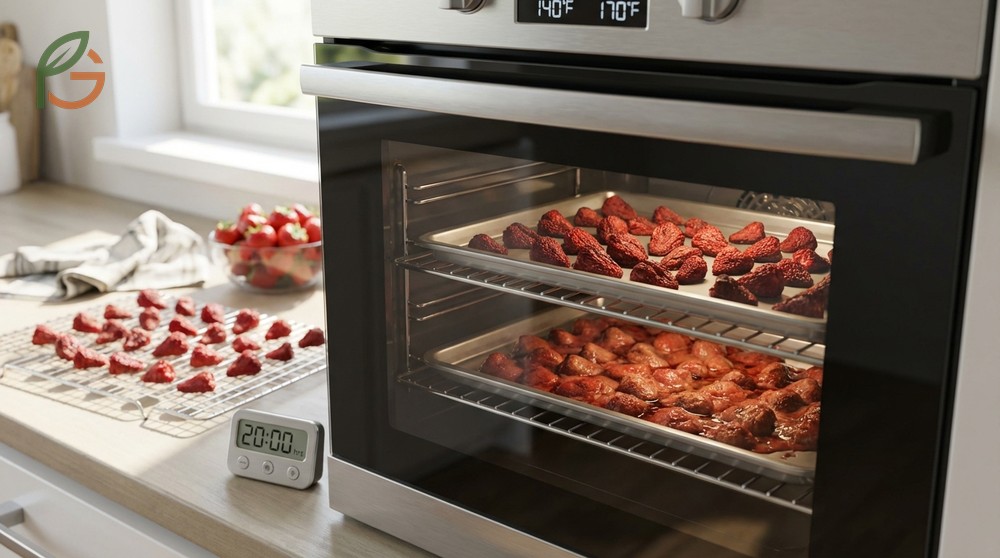
Oven drying works as an alternative when you don’t own a dedicated dehydrator, but requires an oven that maintains temperatures as low as 140°F (60°C)[1]. Most conventional ovens don’t drop below 170°F, which cooks strawberries rather than dehydrating them properly. Check your oven’s minimum temperature setting before attempting this method.
Oven drying takes 2-3 times longer than dehydrator methods because regular ovens lack built-in fans for air circulation[1]. Expect 14-24 hours total drying time for 1/4-inch strawberry slices at 140°F. The extended process increases energy costs and requires more monitoring compared to set-and-forget dehydrator operation.
Arrange strawberry slices on baking sheets lined with parchment paper, leaving space between each piece. Prop the oven door open 2-4 inches using a wooden spoon to allow moisture to escape. Without adequate ventilation, steam builds up inside the oven and prevents proper dehydration.
Convection vs Regular Ovens
Convection ovens perform significantly better for strawberry dehydration because their built-in fans circulate hot air similar to electric dehydrators[1]. Set convection ovens to 140°F (60°C) and reduce drying time by approximately 30-40% compared to regular ovens. The fan eliminates hot and cool spots, producing more evenly dried strawberries across all baking sheets.
Regular ovens without convection fans create uneven drying patterns. Strawberries near heating elements dry faster and may scorch, while berries in cooler zones remain moist. Rotate baking sheets every 2-3 hours and swap their positions from top to bottom racks for consistent results.
- Verify your oven maintains 140°F (60°C) using an oven thermometer
- Line baking sheets with parchment paper or silicone mats
- Arrange strawberry slices in single layers with 1/2-inch spacing
- Prop oven door open 2-4 inches for moisture ventilation
- Rotate and flip strawberry slices every 3-4 hours
- Expect 14-24 hours total drying time for 1/4-inch slices
- Use convection setting if available to reduce time by 30-40%
Dried Strawberry Recipe
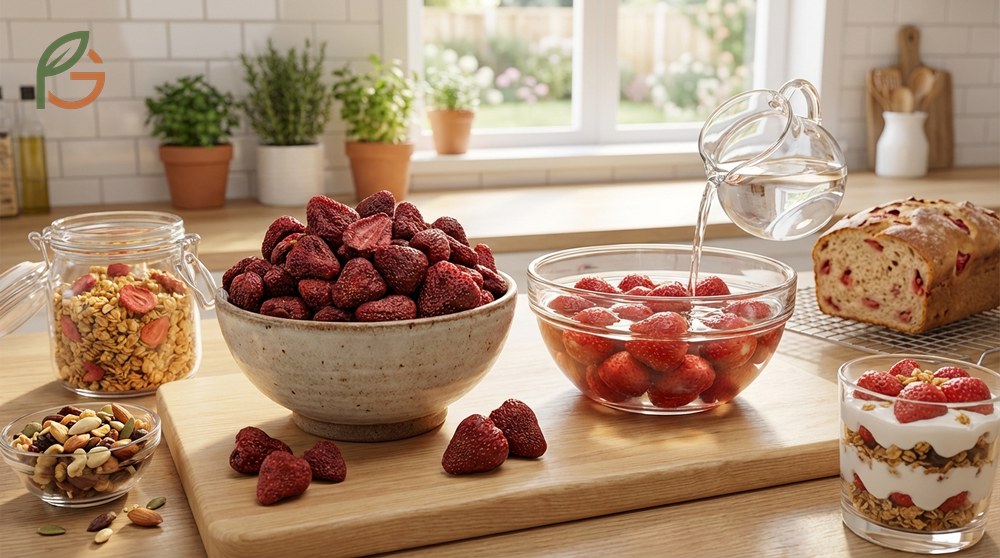
Dried strawberries work beautifully in trail mixes, granola, yogurt parfaits, and baked goods. Their concentrated sweetness eliminates the need for added sugar in most recipes. Research shows that dehydrated strawberries retain significant amounts of vitamin C, fiber, and antioxidants despite water removal[5].
Rehydrate dried strawberries by soaking them in warm water for 15-20 minutes before using in smoothies or baking. The berries absorb liquid and plump up to approximately 70% of their original size. Reserve the soaking liquid—it contains concentrated strawberry flavor perfect for adding to pancake batter or oatmeal.
For strawberry powder, process completely dried slices in a high-speed blender or food processor until they reach fine powder consistency. One cup of fresh strawberries yields approximately 2-3 tablespoons of strawberry powder. Use the powder to flavor frosting, smoothies, or homemade fruit leather without adding extra moisture.
- Add to morning oatmeal or overnight oats for natural sweetness
- Mix into homemade granola or energy bar recipes
- Blend into smoothies for concentrated strawberry flavor
- Chop and fold into muffin or scone batter
- Combine with nuts and dark chocolate for trail mix
- Grind into powder for naturally flavored beverages or frosting
This table compares dehydrator versus oven methods for drying strawberries across temperature, time, energy efficiency, and result quality
| Method | Temperature | Drying Time | Energy Efficiency | Result Quality |
|---|---|---|---|---|
| Electric Dehydrator | 135-140°F (57-60°C)[2] | 7-15 hours for slices[2] | High (uses 300-500W) | Excellent uniformity |
| Convection Oven | 140°F (60°C)[1] | 14-18 hours for slices[1] | Moderate (uses 2000-3000W) | Good with rotation |
| Regular Oven | 140°F (60°C)[1] | 21-30 hours for slices[1] | Low (uses 2000-3000W continuously) | Variable, needs monitoring |
Storage and Shelf Life

Proper storage extends dried strawberry shelf life from 6-12 months at room temperature to 1-2 years when refrigerated[3]. Store completely cooled strawberries in airtight glass jars, vacuum-sealed bags, or food-grade plastic containers. Exposure to moisture, oxygen, and light degrades quality and shortens shelf life significantly.
Condition dried strawberries before long-term storage by placing them in sealed containers for 7-10 days. Shake containers daily and check for condensation inside. If moisture appears, return strawberries to the dehydrator for additional drying. This conditioning process redistributes any remaining moisture evenly throughout the batch.
Label containers with the drying date and strawberry variety. Store containers in cool, dark locations like pantries or cupboards away from heat sources. Refrigerated storage works best for batches you plan to keep longer than 6 months. Frozen dried strawberries maintain quality indefinitely when stored in airtight, freezer-safe containers[3].
- Cool dried strawberries completely to room temperature before storing
- Use airtight glass jars with tight-fitting lids or vacuum-sealed bags
- Condition in sealed containers for 7-10 days, checking for moisture
- Store in cool, dark locations away from direct sunlight and heat
- Refrigerate for 1-2 year shelf life or freeze for indefinite storage
- Discard any strawberries showing mold, off-odors, or discoloration
Storage Warning: Check stored strawberries weekly during the first month. Any moisture appearing in containers indicates incomplete drying. Re-dehydrate affected batches immediately to prevent mold growth and spoilage.
Conclusion
The evidence is clear: How To Dehydrate Strawberries successfully depends on maintaining 135-140°F (57-60°C) with adequate air circulation for 7-15 hours in a dehydrator or 2-3 times longer in an oven. Current agricultural guidance from university extension programs emphasizes temperature control and proper preparation techniques for preserving strawberries’ nutritional value and natural sweetness.
Whether you choose a dedicated food dehydrator or convection oven method, consistent monitoring and proper storage practices ensure your dried strawberries remain flavorful for months. FruitGarden provides research-backed techniques to help home gardeners maximize their strawberry harvests through effective preservation methods.
Frequently Asked Questions
What temperature should I dehydrate strawberries at?
Set your dehydrator between 135-140°F (57-60°C) for optimal results. Research from university extension programs confirms this temperature range prevents mold growth while avoiding case hardening that occurs at higher temperatures above 170°F.
How long does it take to dehydrate strawberry slices?
Strawberry slices cut to 1/4-inch thickness require 7-15 hours in an electric dehydrator. Oven drying takes 2-3 times longer, typically 14-24 hours, because conventional ovens lack the consistent air circulation that dehydrators provide.
Can you dehydrate strawberries in a regular oven?
Yes, but only if your oven maintains temperatures as low as 140°F (60°C). Most conventional ovens don’t drop below 170°F, which cooks strawberries rather than dehydrating them properly. Convection ovens work better due to built-in fans that circulate air more effectively.
How do you know when dehydrated strawberries are done?
Remove several pieces and let them cool for 5 minutes. Cut or tear a cooled slice in half—properly dried strawberries should feel leathery with no visible moisture inside. The center provides the most accurate indicator of complete dehydration.
How long do dried strawberries last?
Dried strawberries stored in airtight containers last 6-12 months at room temperature, 1-2 years refrigerated, or indefinitely when frozen. Store containers in cool, dark locations away from moisture, oxygen, and direct sunlight to maximize shelf life.
Should strawberries be sliced before dehydrating?
Yes, slicing strawberries into uniform 1/4-inch pieces significantly reduces drying time and ensures even dehydration. Whole strawberries require 24-36 hours compared to 7-15 hours for slices, making slicing the more efficient choice for most home food preservation.
Do dehydrated strawberries retain their nutritional value?
Studies show dehydrated strawberries retain significant amounts of vitamin C, fiber, and antioxidants despite water removal. The concentration effect means dried strawberries contain higher nutrient density per gram compared to fresh berries, though some water-soluble vitamins decrease slightly during the drying process.





