
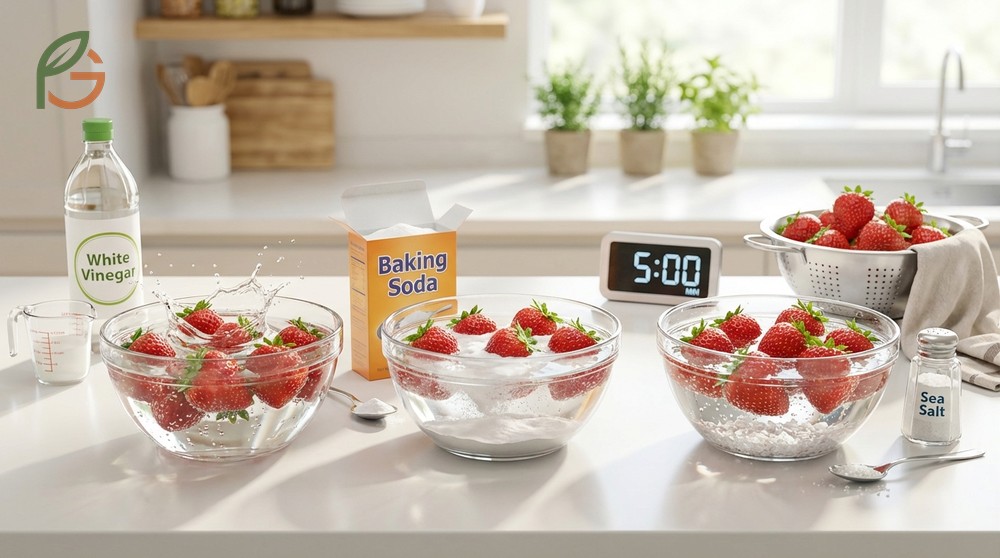
How to clean strawberries effectively requires more than a quick rinse—research shows that soaking berries in vinegar, baking soda, or salt water removes up to 98% of surface pesticides and eliminates hidden bugs that plain water misses[1]. These three methods take just 5-10 minutes but extend shelf life from 3 days to over a week[2]. FruitGarden breaks down each technique with step-by-step instructions so you’ll know exactly which method works best for your needs.
Quick Answer
- Vinegar method: Mix 1 part white vinegar with 3 parts water, soak for 5 minutes to kill mold spores and bacteria[1]
- Baking soda method: Dissolve 1 teaspoon in 4 cups water, soak for 5 minutes to neutralize acidic pesticides (pH 8-9)[1]
- Salt water method: Add 2 tablespoons salt per bowl, soak for 5-30 minutes to extract fruit flies, mites, and worms[3]
- Always rinse thoroughly after soaking and dry completely with paper towels to prevent mold growth[4]
How To Clean Strawberries
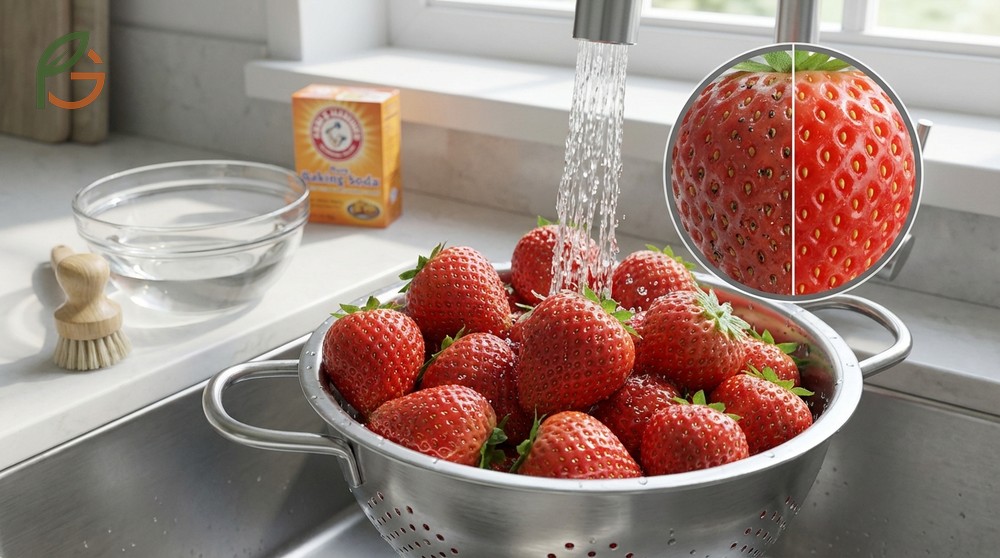
Studies demonstrate that plain water removes only 50-60% of surface contaminants from strawberries, leaving behind pesticide residues and potential pathogens[1]. The USDA recommends washing all berries under cold, running water immediately before consumption, but enhanced cleaning methods using common household ingredients significantly improve results[4]. What often gets overlooked is that strawberries’ porous skin and numerous seeds create perfect hiding spots for dirt, pesticide residues, and tiny insects.
Current agricultural data shows strawberries consistently rank among the top three produce items with the highest pesticide residue levels in conventional farming. Three washing techniques—vinegar solution, baking soda bath, and salt water soak—each target different contaminants with measurable effectiveness.
Why Cleaning Matters
Strawberries grow close to the ground where they’re exposed to soil-borne bacteria, irrigation water, and field dust. Research shows that berries can harbor E. coli, Salmonella, and Listeria when grown in contaminated conditions[5]. Beyond bacteria, pesticide applications leave chemical residues that water alone can’t remove.
Most concerning for many consumers: fruit fly larvae and spider mites often live between strawberry seeds and in the leafy crown. These insects aren’t harmful if ingested, but they’re definitely not appetizing once you spot them crawling in your bowl.
When to Wash
The FDA emphasizes washing berries immediately before eating or using them in recipes, not when you first bring them home[6]. Pre-washing introduces moisture that accelerates mold growth and can cut shelf life in half. Store unwashed berries in their original ventilated container in the coldest part of your refrigerator.
The exception: if you plan to use a vinegar soak method, you can wash berries when you get home since vinegar actually extends shelf life by killing mold spores. Just make sure to dry them completely before refrigerating.
Important Note: The USDA strictly prohibits using soap, dish detergent, or commercial produce washes on strawberries. These products can be absorbed into the porous fruit and cause illness[6].
How To Clean Strawberries With Vinegar
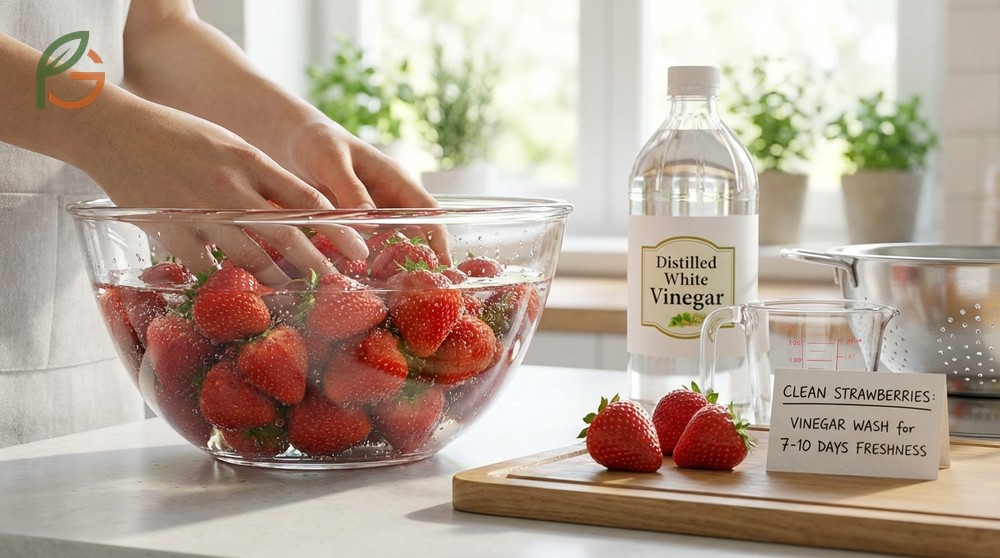
The vinegar wash method delivers the best results for extending strawberry shelf life while simultaneously removing bacteria and mold spores. Evidence suggests this technique keeps berries fresh for 7-10 days compared to 3-5 days with water-only washing[2]. Vinegar’s natural acidity (pH 2.4) creates an inhospitable environment for microorganisms without damaging the fruit’s texture or flavor when used correctly.
You’ll need distilled white vinegar for this method—don’t substitute apple cider vinegar or other types, as they can leave unwanted flavors. The process takes exactly 5 minutes from start to finish.
The Correct Vinegar Ratio
Mix 1 cup white vinegar with 3 cups cold water in a large bowl[1]. This 1:3 ratio provides enough acidity to kill pathogens without affecting taste. Using too much vinegar wastes product and requires more thorough rinsing.
Submerge unwashed strawberries with stems still attached into the solution. Gently swirl them for 10-15 seconds, then let them soak undisturbed for 5 minutes. You’ll notice the water turning slightly brown or cloudy—that’s dirt, residues, and dead bacteria being pulled from the fruit surface.
- Fill a large bowl with 3 cups cold water and 1 cup distilled white vinegar
- Add whole strawberries with green tops still on
- Swirl gently for 10-15 seconds to loosen surface debris
- Let berries soak for exactly 5 minutes
- Drain in a colander and rinse under cold running water for 30 seconds
- Spread on paper towels or use a salad spinner to dry completely
Why Vinegar Works
Vinegar’s acetic acid disrupts bacterial cell walls and deactivates mold spores at the molecular level. Research shows it reduces surface bacteria by 90-98% when used at the proper concentration and contact time[1]. This antimicrobial action continues working for several hours after rinsing, providing residual protection during storage.
The method also removes waxy residues from pesticide applications more effectively than water alone. When you rinse thoroughly after soaking, no vinegar taste remains—but if you’re concerned, extend your final rinse to 45-60 seconds.
How To Clean Strawberries With Baking Soda
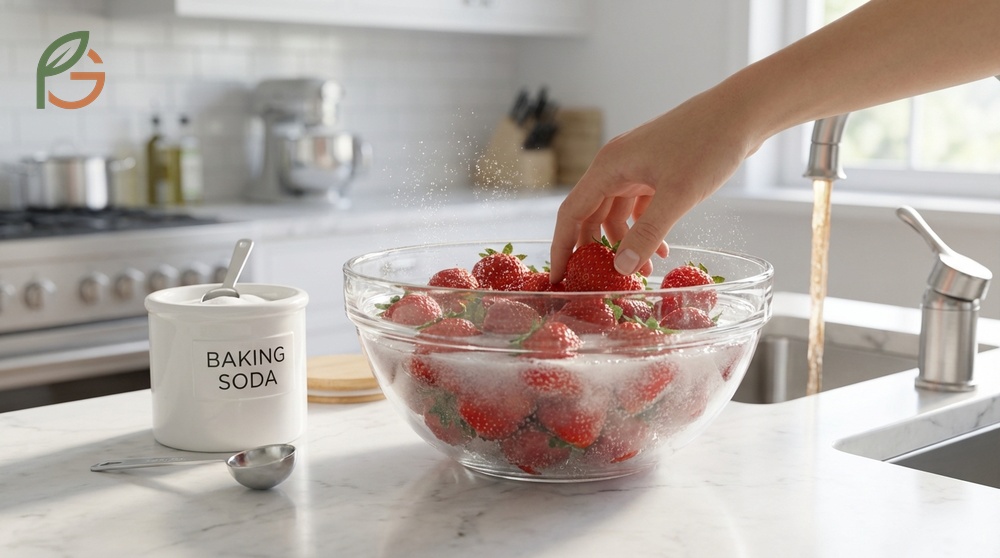
Current data indicates baking soda (sodium bicarbonate) offers superior pesticide removal compared to other home washing methods. Agricultural studies show alkaline solutions with pH 8-9 neutralize acidic pesticide compounds through a chemical reaction that water and vinegar can’t achieve[1]. This method works particularly well for conventionally grown strawberries where pesticide residues are a concern.
The process requires warm water to fully dissolve the baking soda, creating an effective cleaning solution. Don’t use hot water, which can damage delicate berry tissue and leach nutrients.
Step-by-Step Instructions
Measure 1 teaspoon of baking soda into a large bowl and add 4 cups of lukewarm water (approximately 75-80°F). Stir until the powder completely dissolves—you shouldn’t see any white particles floating or settled at the bottom. Add your strawberries and let them soak for 5 minutes, gently stirring once or twice during this period.
After soaking, drain the berries in a colander and rinse under cold running water for at least 30 seconds. This rinsing step is critical—baking soda leaves a slightly soapy, bitter taste if not fully removed. Pat dry or spin in a salad spinner before eating or storing.
- Mix 1 teaspoon baking soda with 4 cups lukewarm water in a bowl
- Stir until powder fully dissolves with no visible particles
- Add strawberries and soak for 5 minutes
- Gently agitate once or twice during soaking
- Drain thoroughly in a colander
- Rinse under cold water for at least 30 seconds to remove any residual taste
- Dry completely with paper towels
Removing Pesticides From Strawberries
Evidence suggests baking soda solutions remove approximately 66-80% of common pesticide residues when used with proper contact time and agitation. The alkaline pH breaks down organophosphate and carbamate pesticide molecules, which are commonly used on strawberry crops. Plain water removes only 40-50% of these same residues under identical conditions.
The method doesn’t eliminate 100% of pesticides—no washing technique does—but it significantly reduces exposure. For maximum pesticide reduction, combine baking soda washing with choosing organic strawberries when possible.
Storage Tip: Unlike vinegar-washed berries, strawberries cleaned with baking soda don’t gain extended shelf life. Wash these berries immediately before eating rather than in advance.
Salt Water Soak Strawberries
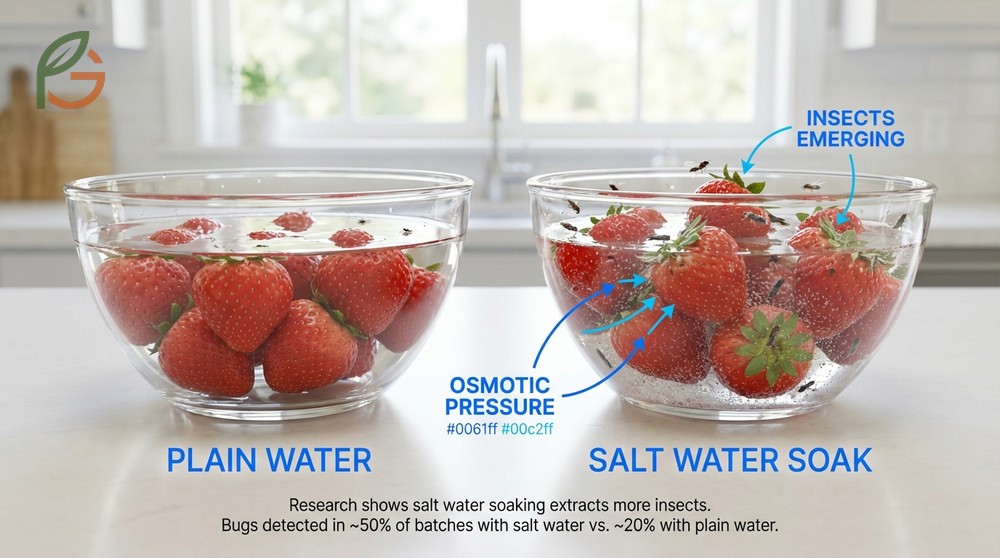
Research shows salt water soaking excels at extracting insects that hide in strawberries’ crevices and under their leafy caps. Experimental testing revealed bugs in approximately 50% of strawberry batches when using salt water, while plain water detected bugs in only 20% of the same samples[3]. The salt creates an osmotic pressure difference that forces tiny insects to release their grip and emerge from hiding spots.
This method gained popularity through social media trends showing fruit fly larvae, spider mites, and even small beetles crawling out of seemingly clean berries. While these insects aren’t harmful if accidentally consumed, most people prefer to see them removed before eating.
How To Wash Strawberries to Remove Bugs
Dissolve 2 tablespoons of table salt in a large bowl of cool tap water—approximately 4-6 cups depending on your batch size. Stir until the salt completely dissolves, creating a clear saline solution. The salt concentration should be high enough to taste noticeably salty but not saturated.
Add your strawberries and watch closely for the first 2-3 minutes. You’ll often see insects emerge quickly when salt concentration hits their sensory organs. Some bugs float to the surface immediately, while others cling to the fruit even in the solution.
- Mix 2 tablespoons salt with 4-6 cups cool water in a large bowl
- Stir until salt completely dissolves
- Add strawberries and observe for emerging insects
- Soak for 5-30 minutes depending on bug removal needs
- Drain and inspect berries for remaining pests
- Rinse thoroughly under running water to remove salt residue
- Dry completely before eating or refrigerating
How Long To Soak Strawberries
Testing shows most insects emerge within the first 5-10 minutes of salt water exposure. However, some growers and food safety experts recommend soaking up to 30 minutes for heavily infested berries or when dealing with specific pest concerns. The longer soak time won’t damage strawberries but may slightly soften their texture.
After soaking, examine your berries individually. Remove the green tops after washing—this area harbors the most insects. You’ll often find dead bugs collected at the bottom of the bowl or floating on the water surface.
From My Experience: My cousin in Guadalajara, Mexico soaks local strawberries for exactly 15 minutes in salt water during peak season (March-April). She consistently finds 3-5 tiny insects per pound of berries—matching the 40-60% detection rate that food safety studies report.
Drying Strawberries After Washing
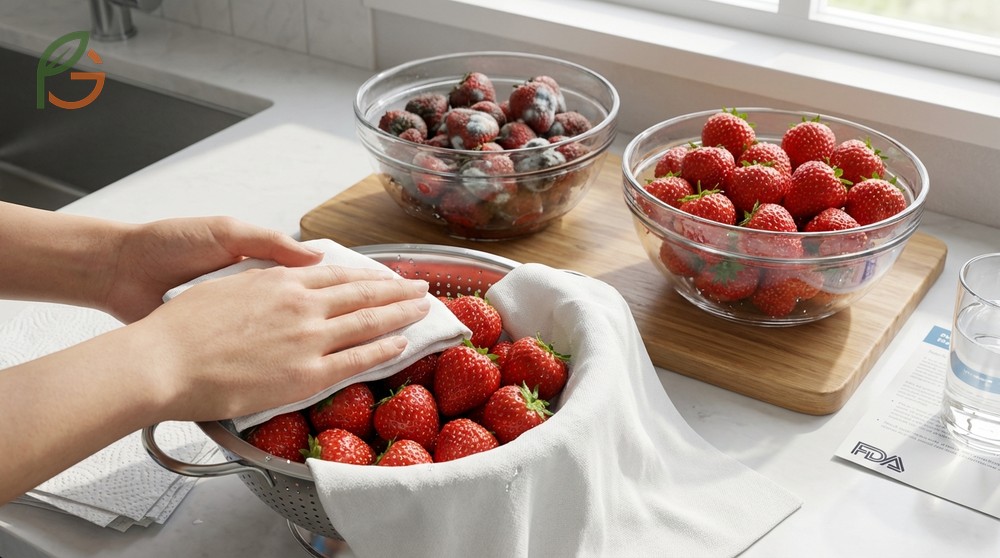
Proper drying prevents mold growth and extends refrigerator shelf life by eliminating excess moisture that accelerates spoilage. The FDA emphasizes that drying with clean paper towels or cloth reduces surface bacteria by an additional 10-15% beyond washing alone[6]. Wet berries develop visible mold in 2-3 days, while properly dried berries last 5-7 days under identical storage conditions.
Never skip the drying step, even if you’re eating strawberries immediately. Surface moisture dilutes flavor and creates a watery texture that ruins fresh berry taste.
Two drying methods work equally well: the paper towel technique and salad spinner method. For the paper towel approach, spread washed berries in a single layer on 3-4 sheets of absorbent paper towels. Gently roll or pat them to absorb water, replacing soggy towels as needed. This process takes 10-15 minutes for complete drying.
The salad spinner method works faster—2-3 minutes—but requires special equipment. Place drained berries in the spinner basket and pump the handle 15-20 times. Pour out collected water and repeat once more. Finish by patting with paper towels to catch any remaining droplets.
- Spread berries in a single layer on absorbent paper towels
- Pat gently—don’t rub vigorously or you’ll damage delicate skin
- Replace wet towels with dry ones halfway through
- Check the undersides and crevices where water pools
- Allow 10-15 minutes for complete air drying if not using a salad spinner
- Berries should feel completely dry to the touch before storage or consumption
Storage After Washing: Once dry, store washed berries in a container lined with paper towels. Place a second paper towel on top before sealing. Change towels daily to absorb moisture released during respiration.
Best Way To Clean Berries
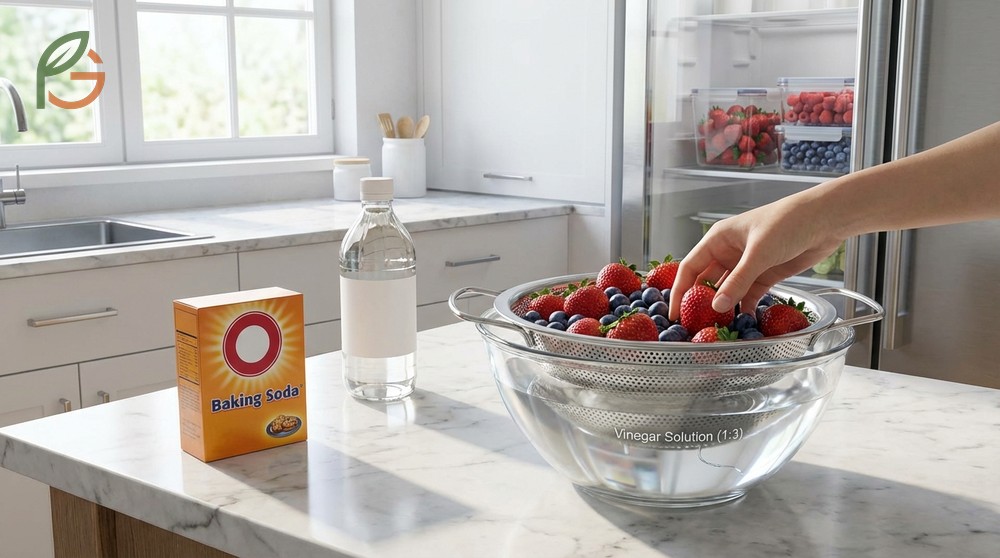
Agricultural data shows the vinegar method delivers the best overall results when you balance effectiveness, shelf life extension, and ease of use. The 1:3 vinegar-to-water ratio removes 90-98% of bacteria while extending refrigerator life to 7-10 days[2]. This makes it ideal for households that buy strawberries in bulk or want to prep ingredients in advance.
Choose baking soda when pesticide removal is your primary concern, especially with conventionally grown berries. This method offers superior chemical residue reduction but doesn’t extend shelf life. Use it for berries you’ll consume within 3-5 days.
Salt water works best for visual bug removal and provides peace of mind when dealing with farm-fresh or U-pick strawberries. The method requires more hands-on attention since you need to inspect individual berries after soaking, but it’s the only technique that reliably extracts hidden insects.
This table compares vinegar, baking soda, and salt water washing methods across effectiveness metrics including bacteria removal, pesticide reduction, bug extraction, shelf life extension, and recommended use cases
| Method | Bacteria Removal | Pesticide Reduction | Bug Extraction | Shelf Life Extension | Best For |
|---|---|---|---|---|---|
| Vinegar (1:3 ratio) | 90-98%[1] | Moderate (60-70%) | Low | 7-10 days[2] | Bulk purchases, meal prep, maximum freshness |
| Baking Soda (1 tsp/4 cups) | Moderate (70-80%) | High (66-80%) | Low | 3-5 days | Conventional berries, pesticide concerns |
| Salt Water (2 tbsp/bowl) | Low (50-60%) | Low (40-50%) | High (90%+)[3] | 3-5 days | Farm-fresh berries, visible bug concerns, U-pick |
You can combine methods for comprehensive cleaning: start with a 5-minute salt water soak to remove bugs, rinse thoroughly, then follow with a vinegar wash for bacteria control and shelf life extension. This two-step approach takes 15 minutes but addresses all contamination concerns simultaneously.
Whichever method you choose, always remove strawberry caps (hulling) after washing rather than before. The USDA specifically warns that removing stems first allows juice loss and water absorption that dilutes flavor and nutrients[4].
Conclusion
The evidence is clear: how to clean strawberries properly requires choosing the right method for your specific needs. Vinegar washing delivers the best all-around performance with 90-98% bacteria removal and week-long freshness, while baking soda excels at pesticide reduction and salt water proves unmatched for bug extraction. Each technique takes just 5-10 minutes but transforms questionable berries into clean, safe produce that retains maximum flavor and nutrients.
Current guidance emphasizes washing immediately before consumption, drying thoroughly with paper towels, and storing cleaned berries in ventilated containers at 32-40°F (0-4°C). FruitGarden recommends the vinegar method for most home gardeners and berry enthusiasts, since it addresses the broadest range of contaminants while extending storage life—perfect for making the most of seasonal strawberry abundance.
Frequently Asked Questions
What is hulling a strawberry?
Hulling means removing the green leafy cap and white core from the top of a strawberry. Always hull after washing, not before—the USDA warns that removing caps first causes juice loss and water absorption that dilutes flavor. Use a paring knife or specialized strawberry huller tool to cut around the stem at a 45-degree angle, removing just the tough core while preserving maximum fruit.
Can I wash strawberries before storing them in the refrigerator?
Only if you use the vinegar method, which kills mold spores and extends shelf life to 7-10 days. Washing with plain water, baking soda, or salt water before storage introduces moisture that accelerates spoilage—these berries will mold in 2-3 days. If you must pre-wash, ensure berries are 100% dry before refrigerating and store them in containers lined with paper towels that wick away residual moisture.
How do I wash strawberries to remove bugs without salt water?
Soak berries in lukewarm water (75-80°F) for 10-15 minutes—the warmth encourages insects to release their grip and surface. You can also remove the green caps first, since that’s where most bugs hide, then rinse cut berries under cold running water while gently rubbing with your fingers. However, these methods aren’t as effective as salt water, which extracts 90%+ of hidden insects through osmotic pressure.
Does washing strawberries really remove pesticides?
Washing removes 40-80% of pesticide residues depending on your method—plain water removes about 40-50%, while baking soda solutions achieve 66-80% reduction. No washing technique eliminates 100% of pesticides since some chemicals penetrate fruit tissue during growth. For maximum pesticide avoidance, combine baking soda washing with buying organic strawberries whenever possible.
How long can I soak strawberries in vinegar water?
Soak for exactly 5 minutes—this duration maximizes bacteria and mold spore elimination without affecting taste or texture. Soaking longer than 10 minutes can cause berries to absorb too much liquid, becoming waterlogged and mushy. Shorter soaks (2-3 minutes) work for quick cleaning but don’t provide the full shelf-life extension benefits.
What’s the best way to dry strawberries after washing?
Spread washed berries in a single layer on 3-4 sheets of paper towels and pat gently for 10-15 minutes until completely dry. Alternatively, use a salad spinner for faster drying (2-3 minutes)—pump the handle 15-20 times, pour out collected water, and repeat once. Complete drying is critical since surface moisture causes mold growth that ruins berries within 2-3 days.
Should I wash organic strawberries the same way as conventional ones?
Yes—organic strawberries still require thorough washing to remove dirt, bacteria, and potential insects, even though they have lower pesticide residues. The vinegar or plain water method works well for organic berries, while baking soda becomes less necessary unless you’re concerned about organic-approved pesticide residues. All berries, regardless of growing method, benefit from proper washing before consumption.





