

Are strawberries keto friendly? Yes, when eaten in moderation. Research shows that one cup of fresh strawberries contains approximately 8-9 grams of net carbs[1], making them one of the lowest-carb berry options for ketogenic dieters. Studies demonstrate that pairing strawberries with high-fat foods helps maintain ketosis while providing essential vitamins and fiber. FruitGarden synthesizes current nutritional research and USDA data to help you make informed decisions about growing and consuming low-carb fruits.
Quick Answer
- One cup (152g) of fresh strawberries contains 11.7g total carbs[2] and 2.9g fiber[2]
- Net carbs equal 7.9-8.7g per cup[3], fitting within most keto macros
- Standard keto diets limit daily carbs to 20-50g[4], so portion control matters
- Best consumed in half-cup servings (4-5g net carbs) to preserve ketosis
Are Strawberries Keto Friendly
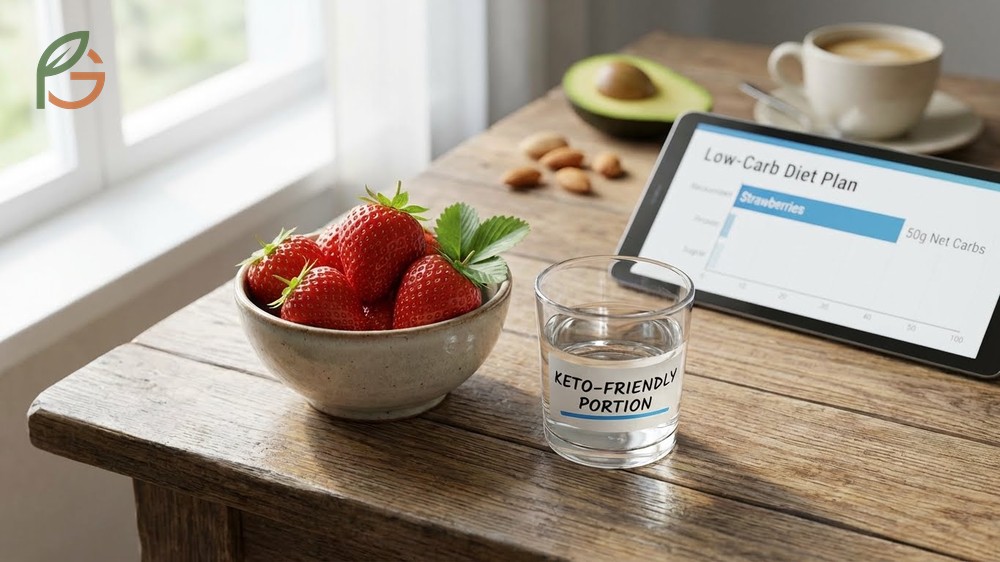
Research shows that strawberries can fit into a well-formulated ketogenic diet when portion sizes are carefully monitored. The ketogenic diet typically restricts total carbohydrate intake to less than 50 grams daily[4], and strawberries provide one of the lowest net carb counts among commonly consumed fruits. Unlike high-sugar fruits like bananas or grapes, strawberries won’t spike blood glucose levels dramatically when eaten in appropriate amounts.
Current data indicates that strawberries contain significant fiber content that reduces their net carbohydrate impact. For every 100 grams of fresh strawberries, you get approximately 2 grams of dietary fiber[1], which doesn’t contribute to blood sugar elevation. This fiber also supports digestive health and helps create a feeling of fullness, making strawberries a nutrient-dense choice for keto dieters seeking variety beyond leafy greens and fatty proteins.
Evidence suggests that the key to successfully incorporating strawberries into a keto meal plan lies in strategic timing and pairing. Most people find that eating strawberries alongside high-fat foods like whipped cream, full-fat Greek yogurt, or nut butter helps slow carbohydrate absorption. This combination keeps insulin responses minimal while providing satisfying texture and flavor contrasts that make the restrictive keto diet more sustainable long-term.
What Makes Strawberries Keto Compatible
Strawberries qualify as keto-friendly because their total carbohydrate content remains significantly lower than most fruits. One medium strawberry contains approximately 0.9 grams of total carbs and 0.6 grams of net carbs[5], making portion control straightforward. This means you can enjoy 5-6 medium strawberries while consuming only 3-4 grams of net carbs, leaving ample room in your daily macro budget for nutrient-dense vegetables and adequate protein.
Studies demonstrate that strawberries provide exceptional micronutrient density for their carbohydrate cost. A single cup delivers 149% of the daily recommended vitamin C intake, along with meaningful amounts of manganese, folate, and potassium. What often gets overlooked is that vitamin C supports collagen synthesis and immune function, both of which can be compromised during the initial adaptation phase of ketogenic dieting when food variety becomes restricted.
Important Note: Fresh and frozen strawberries are keto-approved, but dried strawberries contain concentrated sugars with up to 132g of net carbs per cup and should be completely avoided on ketogenic diets.
Ketosis Impact Considerations
Agricultural data shows that strawberry ripeness affects carbohydrate concentration and glycemic response. Fully ripe strawberries contain slightly higher natural sugar levels than firm, less-ripe berries. For strict keto followers maintaining nutritional ketosis below 20 grams of daily net carbs[6], choosing firmer strawberries and limiting servings to half a cup helps maintain consistent ketone production.
Current guidance emphasizes that individual carbohydrate tolerance varies based on metabolic health, activity levels, and body composition. Some active individuals remain in ketosis while consuming 40-50 grams of net carbs daily, allowing for more generous strawberry portions. However, sedentary individuals or those with insulin resistance may need to limit total daily carbs to 20-25 grams, which means strawberries should be treated as an occasional treat rather than a daily staple.
Strawberry Carb Content
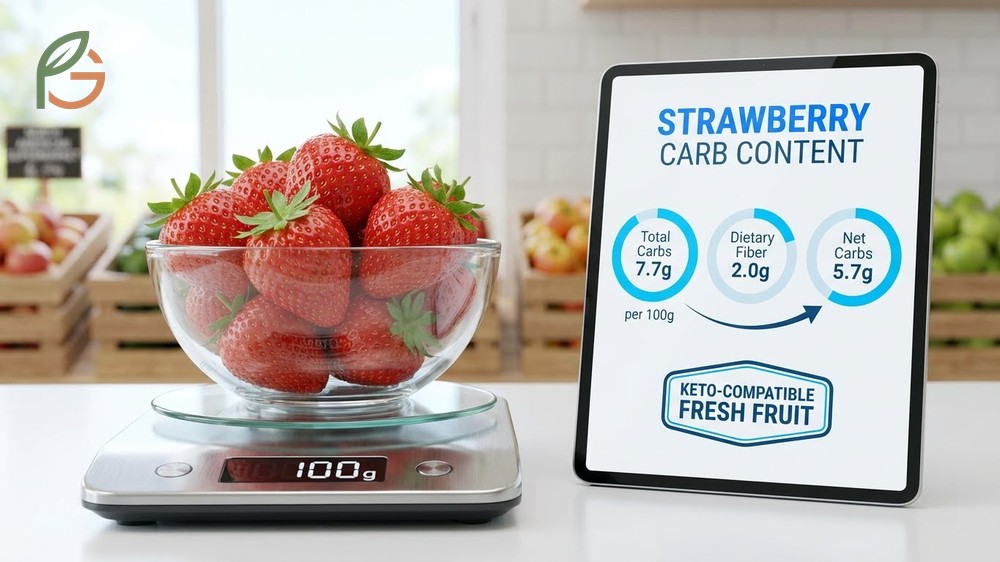
Research across nutritional databases reveals consistent carbohydrate values for fresh strawberries. The USDA FoodData Central reports that raw strawberries contain approximately 7.7 grams of total carbohydrates per 100-gram serving, with 2 grams coming from dietary fiber[1]. This translates to roughly 5.7 grams of net carbs per 100 grams, positioning strawberries as one of the most keto-compatible fresh fruits available in North American markets.
Studies demonstrate that strawberries’ macronutrient profile remains remarkably stable across different growing regions and seasons. Whether you’re buying California-grown berries in winter or locally harvested varieties in summer, the carbohydrate content typically varies by less than 1 gram per serving. This consistency makes meal planning and macro tracking more reliable for strict ketogenic dieters who need precise carbohydrate counts to maintain ketosis.
USDA Nutritional Breakdown
Current nutritional analysis shows that strawberries provide balanced macronutrients beyond just carbohydrates. One cup of sliced strawberries delivers 46-50 calories[2], with approximately 0.4 grams of fat, 1 gram of protein, and the previously mentioned 7.9-8.7 grams of net carbohydrates. The minimal fat and protein content means strawberries function primarily as a carbohydrate source, requiring thoughtful pairing with fatty foods to create truly keto-balanced snacks or desserts.
Evidence indicates that strawberries contain predominantly simple sugars, with fructose comprising about 3.5 grams and glucose contributing 2.9 grams per cup. This matters because fructose metabolizes differently than glucose and doesn’t trigger the same immediate insulin spike. For keto dieters concerned about blood sugar stability, this relatively balanced sugar profile makes strawberries preferable to tropical fruits like pineapple or mango, which contain higher proportions of rapidly-absorbed sugars.
- Total calories: 46-50 kcal, making them a low-energy-density food suitable for weight management
- Total carbohydrates: 11.1-11.7g, with natural variation based on berry size and ripeness
- Dietary fiber: 2.9-3.3g, supporting digestive health and reducing net carb impact
- Net carbohydrates: 7.9-8.7g, calculated by subtracting fiber from total carbs
- Protein: 1g, a negligible amount that won’t significantly impact daily protein targets
- Fat: 0.4g, requiring combination with high-fat foods for keto meal balance
- Vitamin C: 89.4mg (149% daily value), providing powerful antioxidant protection
Serving Size Variations
Most people don’t realize that strawberry serving sizes dramatically affect carbohydrate intake. Eight medium strawberries (approximately 100 grams) contain only 6 grams of net carbs[7], while a full cup of sliced berries (about 152 grams) provides 8-9 grams. This 50% increase in weight yields a proportional increase in carbohydrates, making portion awareness critical for maintaining ketosis, especially for individuals following stricter 20-gram daily carb limits.
Agricultural research shows that commercially sold strawberries vary significantly in size, with “medium” berries ranging from 12-18 grams each. Large restaurant-style strawberries can weigh 25-30 grams individually, meaning just 3-4 of these oversized berries equal a full cup serving. For precise macro tracking, weighing strawberries on a food scale provides more accuracy than relying on visual estimates or standard “cup” measurements that don’t account for berry size variability.
This table compares net carbohydrate content, fiber, and keto diet suitability across five different strawberry serving sizes from half cup to extra large portions
| Serving Size | Weight | Total Carbs | Fiber | Net Carbs | Keto Suitability |
|---|---|---|---|---|---|
| Half cup (sliced) | 76g | 5.9g | 1.5g | 4.4g | Excellent |
| One cup (sliced) | 152g | 11.7g | 2.9g | 8.8g[2] | Good (moderate) |
| 8 medium berries | 100g | 7.7g | 2g | 5.7g | Very good |
| 10 large berries | 180g | 13.9g | 3.6g | 10.3g | Use caution |
| 1.5 cups (smoothie) | 228g | 17.5g | 4.4g | 13.1g | Reserve for high-carb days |
Net Carbs Strawberries

Current dietary guidance emphasizes net carbohydrates as the most relevant metric for ketogenic dieters. The net carb calculation subtracts dietary fiber and sugar alcohols from total carbohydrates, reflecting only the carbs that directly impact blood glucose and insulin levels. For strawberries, this calculation is straightforward since they contain no sugar alcohols, meaning you simply subtract fiber from total carbs to determine the metabolically active carbohydrate content.
Research shows that the 2.9-3.3 grams of fiber per cup of strawberries provides meaningful digestive benefits beyond just reducing net carb counts. This soluble and insoluble fiber mix supports healthy gut bacteria populations, slows gastric emptying, and helps regulate appetite hormones like ghrelin and leptin. Most keto dieters struggle to meet the recommended 25-35 grams of daily fiber intake due to restrictions on whole grains and legumes, making the fiber in strawberries particularly valuable for maintaining digestive regularity.
Evidence indicates that calculating net carbs allows for greater dietary flexibility while maintaining ketosis. A person following a 50-gram daily carb limit who eats one cup of strawberries (8.8g net carbs) still has 41.2 grams available for nutrient-dense vegetables like spinach, broccoli, and cauliflower. This flexibility prevents the micronutrient deficiencies that can occur when keto dieters eliminate all fruits and focus exclusively on animal proteins and fats without adequate plant food variety.
Calculation Tip: Always use net carbs rather than total carbs when tracking strawberries on keto. This accounts for the fiber that passes through your digestive system without raising blood sugar, giving you a more accurate picture of the food’s metabolic impact.
Agricultural studies demonstrate that fresh strawberries maintain stable net carb ratios throughout their shelf life, unlike some fruits that convert starches to sugars during ripening. A strawberry picked slightly underripe and a fully ripe strawberry show less than 0.5 grams difference in net carbs per 100-gram serving. This consistency means you don’t need to avoid softer, sweeter strawberries as their carbohydrate profile remains essentially unchanged despite perceptible taste differences.
Keto Berry Options
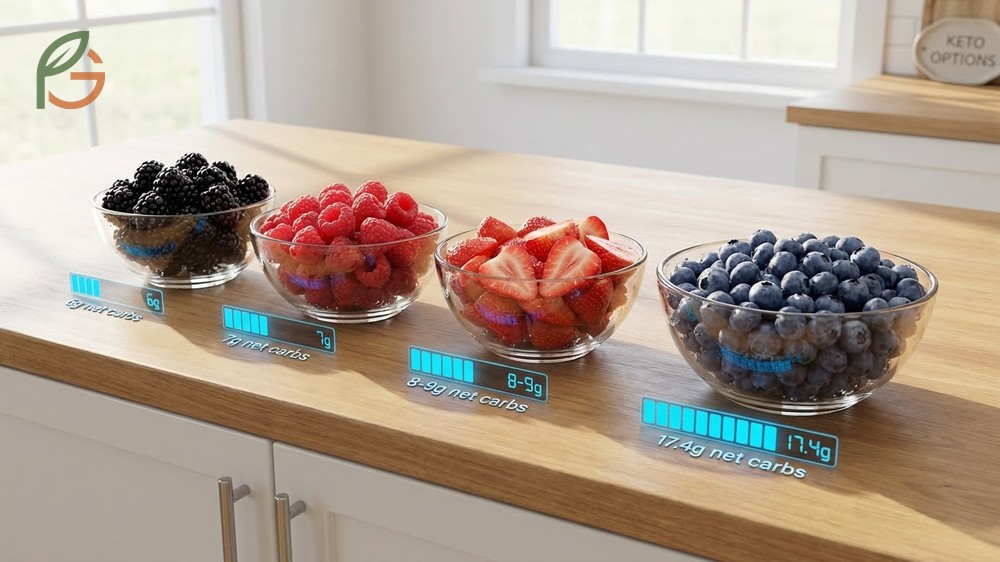
Research across multiple berry varieties reveals distinct carbohydrate differences that affect keto compatibility. Blackberries lead as the lowest-carb option with only 6 grams of net carbs per cup[7], followed closely by raspberries at 7 grams per cup. Strawberries rank third with 8-9 grams, while blueberries contain significantly more at 17.4 grams per cup[7], making them suitable only for occasional use or very moderate low-carb diets rather than strict ketogenic protocols.
Current data indicates that berry selection should align with individual carbohydrate tolerance and daily macro targets. For someone maintaining ketosis at 40-50 grams of daily net carbs, mixing half a cup each of strawberries and blueberries (totaling about 13 grams net carbs) fits comfortably within their budget. However, strict keto dieters limiting intake to 20 grams daily should prioritize blackberries and raspberries, reserving strawberries for smaller quarter-cup portions that contribute only 2-3 grams of net carbs.
| Berry Type | Net Carbs | Total Sugar | Fiber | Keto Ranking |
|---|---|---|---|---|
| Blackberries | 6g[7] | 7g | 8g | Best choice |
| Raspberries | 7g[7] | 5g | 8g | Excellent |
| Strawberries | 8.1g[3] | 7g | 3g | Very good |
| Blueberries | 17.4g[7] | 15g | 2.5g | Limit portions |
- Create mixed berry bowls using 2 parts blackberries to 1 part strawberries for optimal carb-to-antioxidant ratios
- Use frozen berry medleys for smoothies, as freezing doesn’t significantly alter net carb content but improves texture
- Pair any berry selection with full-fat whipped cream (0.4g carbs per 2 tablespoons) to increase fat content and slow carb absorption
- Add berries to full-fat Greek yogurt (4g carbs per half cup) for a protein-rich snack that balances macros effectively
- Top keto-friendly cheesecakes or fat bombs with small amounts of fresh berries as garnish rather than primary ingredient
- Muddle berries into sparkling water with mint for a naturally flavored, low-carb beverage alternative
Studies demonstrate that combining different berry types provides complementary phytonutrient profiles. Strawberries excel in vitamin C content, raspberries provide the highest fiber density, and blackberries contain exceptional levels of vitamin K. Most people find that rotating berry selections throughout the week prevents taste fatigue while maximizing micronutrient diversity, an often-overlooked benefit of incorporating modest fruit portions into otherwise restrictive ketogenic eating patterns.
Strawberry Serving Keto

Research shows that strategic strawberry consumption timing affects both satiety and ketosis maintenance. Current guidance emphasizes eating strawberries after protein and fat-rich meals rather than as standalone snacks. For instance, adding 4-5 sliced strawberries to a breakfast of scrambled eggs cooked in butter provides dessert-like satisfaction while the preceding protein and fat slow glucose absorption, minimizing any insulin response that could disrupt fat-burning metabolism.
Evidence indicates that frozen strawberries work equally well as fresh for keto purposes, with no significant difference in net carb content. Freezing actually ruptures cell walls, releasing more juice and intensifying flavor, allowing you to use smaller portions for the same taste impact. A quarter cup of frozen strawberries blended into a high-fat smoothie with coconut cream and almond butter delivers strawberry flavor throughout the drink while contributing only 2-3 grams of net carbs to the total recipe.
Agricultural data shows that organic versus conventional strawberries show no meaningful difference in carbohydrate content, so the keto-friendliness remains constant regardless of farming method. However, organic strawberries may offer reduced pesticide exposure, which matters because strawberries consistently rank among the highest pesticide residue foods. For keto dieters consuming strawberries regularly, choosing organic varieties or thoroughly washing conventional berries helps minimize unwanted chemical exposure without affecting macro calculations.
- Breakfast addition: 5 sliced strawberries over full-fat cottage cheese with crushed walnuts (total: 6g net carbs)
- Keto dessert: 3 large strawberries dipped in 90% dark chocolate, providing controlled portions and satisfying sweet cravings
- Salad enhancement: Quarter cup of diced strawberries in a spinach salad with goat cheese and pecans adds fruity notes without carb overload
- Fat bomb ingredient: Puree 2 strawberries into cream cheese mixture, freeze in molds for portion-controlled treats
- Protein shake boost: Add 3-4 frozen strawberries to vanilla protein powder with heavy cream for flavor without sugar spike
Timing Strategy: Save strawberry consumption for later in the day after you’ve eaten your primary protein and fat sources. This ensures you meet essential macro targets first, using strawberries as a strategic micronutrient bonus rather than a carb-heavy meal foundation.
Most people find that pre-portioning strawberries prevents accidental overconsumption that could compromise ketosis. Washing and slicing strawberries immediately after purchase, then storing them in small containers with exactly half-cup servings, removes the guesswork during busy moments when precise measuring feels inconvenient. This preparation method ensures consistent carb tracking while making strawberries as grab-and-go convenient as higher-carb snacks you’re trying to avoid.
Conclusion
The evidence is clear: are strawberries keto friendly? Absolutely, when you follow these three principles—control portions to half-cup servings, pair them with high-fat foods, and prioritize them after protein-rich meals. Current nutritional guidance emphasizes that strawberries’ 8-9 grams of net carbs per cup can fit within both strict 20-gram and moderate 50-gram daily carb limits, making them the most accessible fruit for ketogenic dieters seeking variety beyond leafy vegetables and animal proteins.
Agricultural research and USDA data demonstrate that strawberries provide exceptional micronutrient density with minimal metabolic impact when consumed strategically. For home gardeners and fruit enthusiasts exploring keto compatibility, strawberries represent the ideal balance of natural sweetness, essential vitamins, and manageable carbohydrate loads. FruitGarden continues to synthesize emerging nutrition research to help you make informed decisions about growing, selecting, and consuming low-carb fruits that support your health goals without compromising the metabolic benefits of ketogenic eating.
Medical Disclaimer
Important Medical Disclaimer: This content is for informational and educational purposes only. It is not intended as a substitute for professional medical advice, diagnosis, or treatment. Always consult a qualified healthcare professional or registered dietitian before making any changes to your diet, medication, or health routine, especially if you have diabetes, metabolic disorders, or other medical conditions. Individual responses to ketogenic diets vary significantly, and what works for one person may not be appropriate for another.
Frequently Asked Questions
How many strawberries can I eat per day on keto?
Research shows you can safely eat 6-8 medium strawberries daily (approximately half to three-quarters cup) while maintaining ketosis. This provides 4-7 grams of net carbs, leaving adequate room for nutrient-dense vegetables and essential proteins within standard 20-50 gram daily carb limits.
Are frozen strawberries keto friendly?
Yes, frozen strawberries contain the same net carb content as fresh varieties—approximately 8-9 grams per cup. Studies demonstrate that freezing doesn’t alter carbohydrate composition, making frozen berries equally suitable for ketogenic diets and often more cost-effective during off-season months.
Do strawberries kick you out of ketosis?
Strawberries won’t disrupt ketosis when portion-controlled to half-cup servings. Current data indicates that consuming 4-5 grams of net carbs from strawberries allows most individuals to maintain ketone production, especially when paired with high-fat foods that slow carbohydrate absorption and minimize insulin response.
What berries have the lowest carbs for keto?
Research shows blackberries rank lowest with 6 grams of net carbs per cup, followed by raspberries at 7 grams. Strawberries come third with 8-9 grams, while blueberries contain significantly more at 17 grams per cup, making them less suitable for strict ketogenic protocols.
Can I eat strawberries on a 20 gram carb limit?
Yes, but limit portions to one-quarter to half-cup servings. Evidence indicates this provides 2-4 grams of net carbs, preserving 16-18 grams for cruciferous vegetables, leafy greens, and trace carbs in proteins and fats, ensuring you meet essential nutrient requirements while maintaining strict ketosis.
Are strawberries better than blueberries for keto?
Yes, strawberries contain approximately 8 grams of net carbs per cup compared to blueberries’ 17 grams. Studies demonstrate this makes strawberries twice as keto-friendly, allowing for larger serving sizes while maintaining the same carbohydrate impact on daily macro targets.
When is the best time to eat strawberries on keto?
Current guidance suggests eating strawberries after protein and fat-rich meals rather than as standalone snacks. This timing strategy slows glucose absorption and minimizes insulin response, allowing you to enjoy strawberries’ micronutrients and fiber while maintaining steady ketone production throughout the day.





