
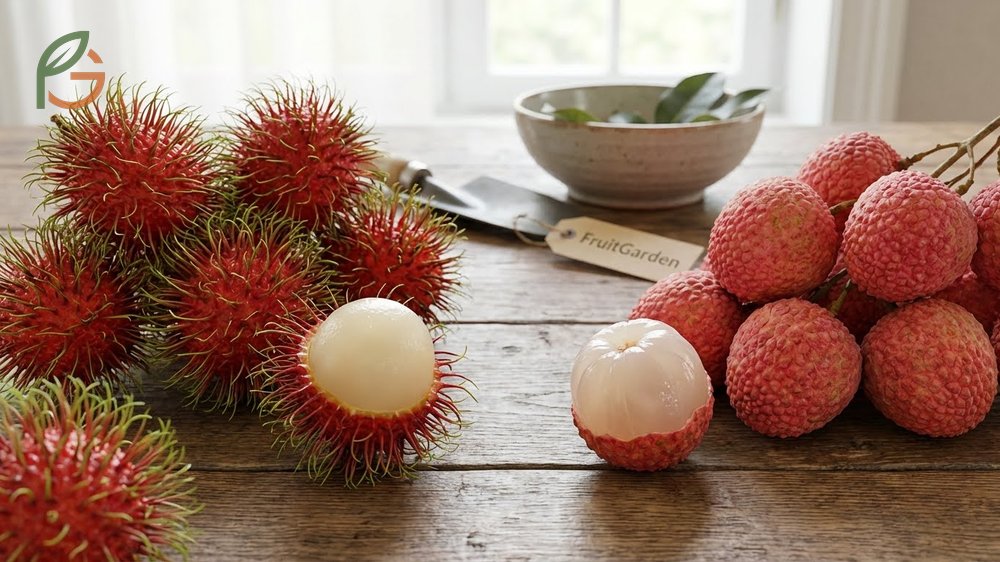
Rambutan Vs Lychee Fruit are distinct tropical fruits with notable differences in appearance, taste, and nutrition. Research shows rambutan has hairy red skin and sweeter, creamier flesh, while lychee features bumpy pink-red skin with floral, crisper texture[1]. FruitGarden synthesizes current horticultural research and market data to help gardeners understand these exotic fruits for potential home cultivation.
Quick Answer
- Rambutan is larger (golf ball-sized) with hairy red skin, while lychee is half the size with bumpy shell[1]
- Lychee contains 66 calories per 100g versus rambutan’s 82 calories (canned in syrup)[1]
- Rambutan thrives in 71-86°F (21-30°C), requiring 13+ hours daily sunlight[2]
- US retail prices: rambutan costs $10.70-$13.08/kg versus lychee at $6.39-$15.43/kg[3][4]
Rambutan Vs Lychee Fruit
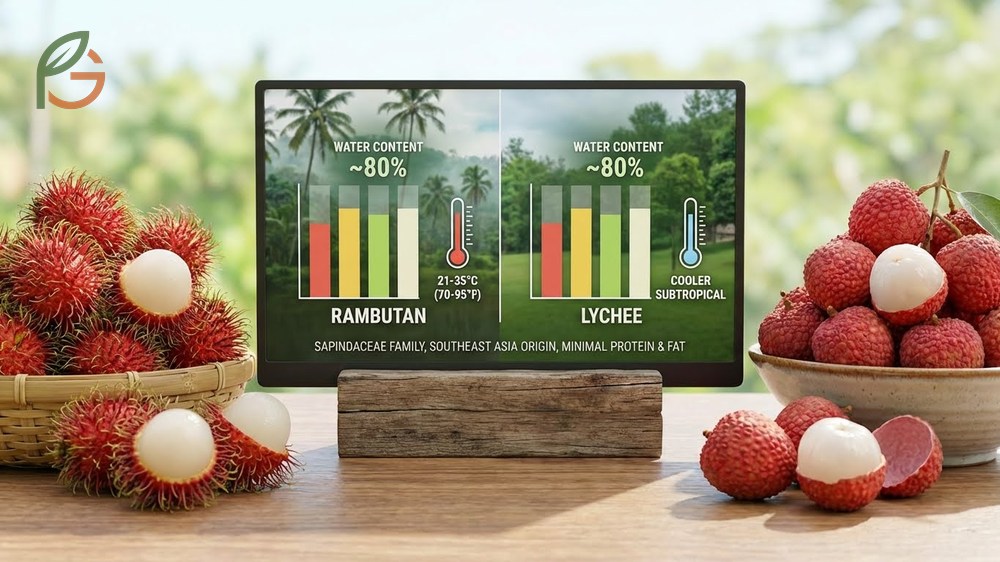
Both fruits belong to the Sapindaceae family and originate from Southeast Asia, sharing similar white translucent flesh and brown seeds. Rambutan grows best in lowland humid tropics below 600 meters elevation, while lychee adapts to slightly cooler subtropical climates. Studies demonstrate both fruits contain approximately 80% water content with minimal protein and fat[1].
Current agricultural data shows rambutan requires temperatures within 21-35°C (70-95°F) range, tolerating extremes of 10-42°C (50-108°F)[5]. Most US gardeners find success in USDA zones 10-11, particularly southern Florida where humidity levels support tropical fruit production. What often gets overlooked is that grafted rambutan trees can fruit in their second year, while seedlings take 6-8 years to produce first crops.
From My Experience: My cousin in Guadalajara, Mexico grew rambutan from grafted stock in March 2023. The tree produced its first small crop in 18 months versus the typical 2-year range, achieving fruit set during the second rainy season.
Botanical Relationship
Rambutan (Nephelium lappaceum) and lychee (Litchi chinensis) share the same botanical family but evolved in different regions. Lychee originated in southern China over 2,000 years ago, while rambutan developed in Malaysia and Indonesia. Both fruits spread throughout tropical Asia through trade routes.
The genetic relationship explains their similar internal structure—both have jellylike flesh surrounding a glossy brown seed. However, their environmental adaptations led to distinct external features that help them survive in different microclimates.
Size and Structure
Rambutan measures approximately the size of a golf ball, while lychee is roughly half that dimension[1]. This size difference affects yield calculations for home gardeners—a mature rambutan tree produces 50-60 pounds annually, while lychee trees can yield 100-200 pounds due to smaller individual fruit size.
Both fruits grow in clusters on evergreen trees reaching 40-80 feet at maturity. The fruiting pattern differs slightly, with rambutan producing panicles of 10-25 fruits, while lychee forms denser clusters of 20-40 fruits per panicle.
- Rambutan peel thickness: 2-3mm with flexible hair-like protrusions (spinterns) up to 2cm long
- Lychee peel thickness: 1-2mm with rigid bumpy tubercles creating rough texture
- Rambutan seed: oval-shaped, sometimes adhering to flesh, requiring careful eating technique
- Lychee seed: smoother, more easily separated from flesh for cleaner eating experience
- Both fruits contain single seed occupying 15-20% of total fruit volume
Important Growing Note: Neither fruit tolerates temperatures below 50°F (10°C) for extended periods. Cold damage appears as leaf browning and fruit drop, requiring frost protection in marginal zones.
Difference Between Lychee and Rambutan
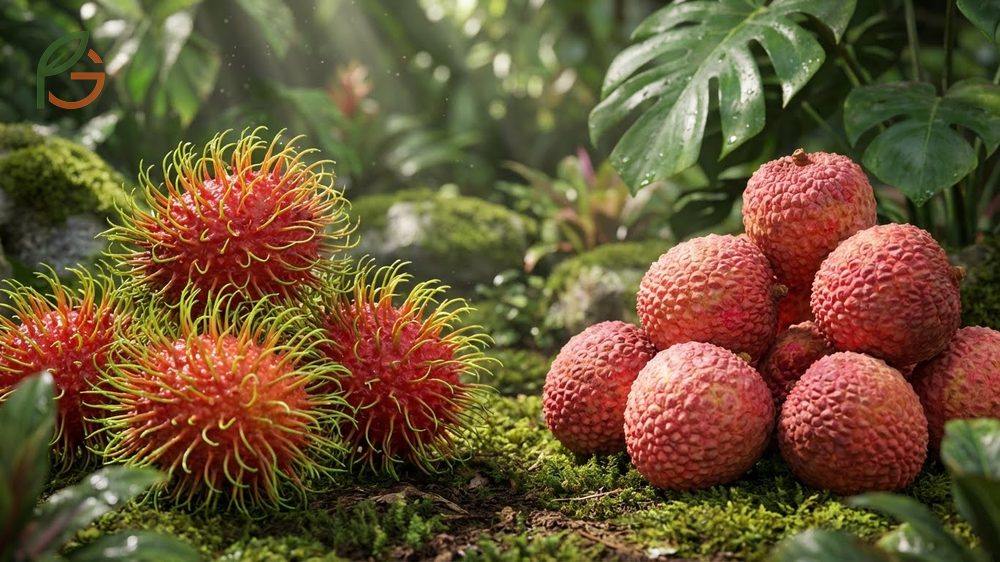
The most obvious distinction appears in the exterior covering—rambutan displays vibrant red skin with soft, flexible hair-like spines colored between neon green and orange. Lychee features a pinkish-red shell covered in small, scaly bumps creating a rough, leather-like texture[6]. These differences evolved as adaptations to their native environments—rambutan’s hairs may deter certain pests in Malaysian rainforests.
The coloring intensity varies with ripeness. Fresh rambutan transitions from green to yellow-orange to bright red when fully ripe, while lychee shifts from green-brown to pink-red. Most US markets import both fruits at peak ripeness for optimal flavor.
Exterior Characteristics
Rambutan’s name derives from the Malay word “rambut,” meaning hair, referencing its distinctive spiny covering. These spinterns feel soft and pliable, posing no risk when handling. Fresh specimens show bright, turgid hairs, while aging fruits display browning, dried spines indicating declining quality.
Lychee’s bumpy shell breaks easily with gentle pressure, revealing the edible flesh beneath. The shell becomes brittle as the fruit ages, turning darker brown—a sign of dehydration rather than spoilage. Proper storage at 40-45°F (4-7°C) extends shelf life to 2-3 weeks for both fruits.
Interior Flesh
Both fruits reveal translucent white flesh with jellylike appearance when peeled. Rambutan flesh tends toward creamier, softer consistency, while lychee maintains firmer, more fibrous texture[1]. The flesh-to-seed ratio favors lychee slightly, offering more edible portion per fruit weight.
Color variations can occur—some rambutan varieties display pale pink tones in the flesh, while lychee remains consistently white to translucent. This difference doesn’t affect nutritional content but can influence consumer preference in specialty markets.
- Rambutan exterior: Red with 1-2cm soft hair-like protrusions covering entire surface
- Lychee exterior: Pink-red with small raised bumps creating rough, scaled appearance
- Rambutan shell removal: Twist and pull apart at equator, or use knife for clean cut
- Lychee shell removal: Squeeze gently at stem end, peel away in sections
- Shelf life when refrigerated: Rambutan 7-10 days, lychee 10-14 days at optimal humidity
Rambutan vs Lychee Taste
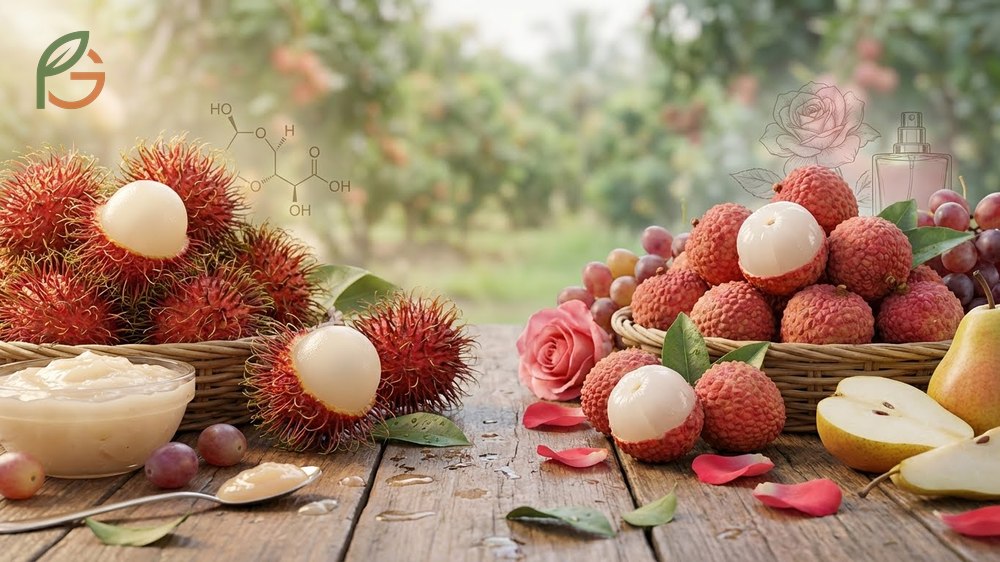
Rambutan delivers a sweet, creamy flavor profile with subtle sour hints, often compared to a combination of grapes and lychee. The taste remains milder and less complex than lychee, with softer sweetness that appeals to those preferring less assertive fruit flavors. Evidence suggests rambutan’s sweeter profile results from slightly higher simple sugar content.
Lychee offers a more distinct floral taste reminiscent of rose water combined with grape and pear notes[6]. The crisp texture enhances the eating experience, providing more juice release with each bite. Lychee’s brighter, more tart finish makes it popular in cocktails and desserts requiring pronounced fruit character.
Ripeness significantly impacts both fruits’ flavor intensity. Underripe specimens taste bland with astringent notes, while overripe fruits develop fermented, wine-like flavors. US consumers typically encounter optimally ripe imports, though home growers can experiment with harvest timing.
This table compares flavor characteristics, texture properties, and typical culinary uses between rambutan and lychee fruits
| Characteristic | Rambutan | Lychee |
|---|---|---|
| Primary Flavor | Sweet, creamy, mild grape-like | Sweet, floral, rose-like with tart finish |
| Texture | Soft, creamy, jelly-like consistency | Crisp, firm, fibrous with more juice |
| Sweetness Level | Moderately sweet with occasional sour hints | Bright sweetness balanced with tartness |
| Aromatic Intensity | Subtle, less pronounced fragrance | Strong floral aroma, highly aromatic |
| Best Culinary Use | Fresh eating, fruit salads, mild desserts | Cocktails, sorbets, Asian savory dishes |
- Serve both fruits chilled (40-45°F) to enhance sweetness and refresh palate
- Pair rambutan with coconut milk or vanilla for tropical dessert applications
- Combine lychee with mint, lime, or ginger to complement its floral notes
- Use rambutan in smoothies where creamier texture blends seamlessly
- Reserve lychee for applications requiring fruit to maintain shape after preparation
Tasting Tip: Allow refrigerated fruits to sit at room temperature for 10-15 minutes before eating. This practice enhances aromatic compounds and reveals fuller flavor complexity in both varieties.
Nutritional Comparison Rambutan Lychee
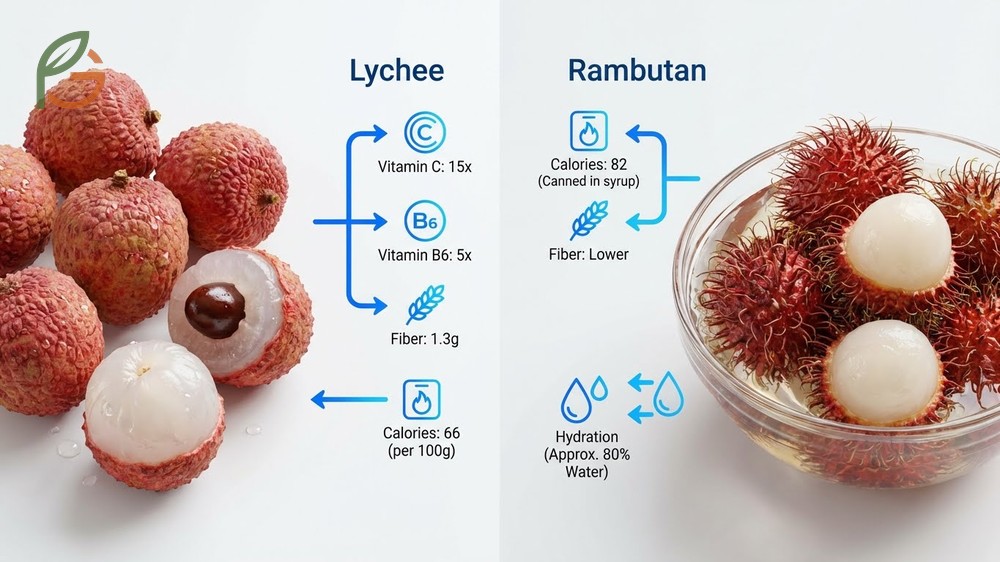
Lychee provides superior nutritional density, containing 15 times more vitamin C than rambutan, along with 5 times more vitamin B6[1]. Current data indicates lychee delivers 66 calories per 100g serving versus rambutan’s 82 calories (canned in syrup), making lychee the lower-calorie option. Lychee also contains more dietary fiber—1.3g versus rambutan’s lower fiber content.
Research shows both fruits consist of approximately 80% water, making them hydrating snacks for hot climates. Rambutan holds advantage in vitamin B3 content, though lychee wins in most other micronutrient categories including copper, manganese, and folate. Neither fruit contains significant amounts of protein or fat—both provide less than 1g per 100g serving.
The glycemic index differs between the fruits. Lychee registers at 48 (low GI), while rambutan scores 59 (medium GI), making lychee the better choice for blood sugar management[1]. This difference matters for gardeners growing fruit for health-conscious consumers or personal dietary goals.
This table compares calories, macronutrients, key vitamins, minerals, and glycemic index values per 100 gram serving of rambutan and lychee
| Nutrient | Rambutan (canned) | Lychee (fresh) |
|---|---|---|
| Calories | 82 kcal[1] | 66 kcal[1] |
| Carbohydrates | 20.9g | 16.5g |
| Dietary Fiber | 0.9g | 1.3g[1] |
| Vitamin C | 4.9mg | 71.5mg (15x more)[1] |
| Glycemic Index | 59 (medium)[1] | 48 (low)[1] |
- Lychee’s high vitamin C content supports immune function and collagen production
- Both fruits provide antioxidants including epicatechin and polyphenols for cellular health
- Rambutan’s vitamin B3 supports energy metabolism and nervous system function
- Lychee contains more copper and manganese, essential for bone health and metabolism
- Neither fruit provides significant protein or fat, requiring pairing with other foods for balanced nutrition
How to Tell Lychee and Rambutan Apart
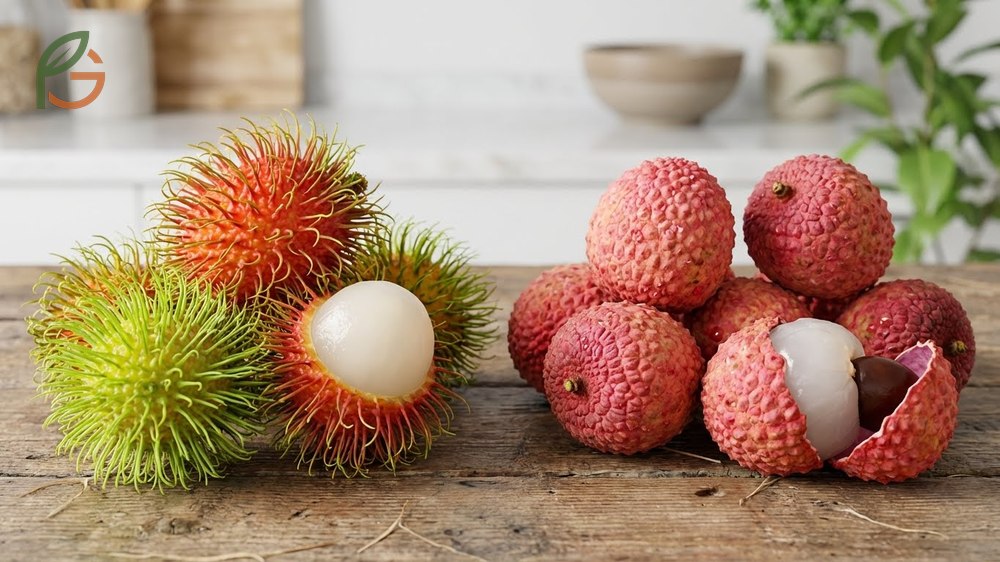
Visual identification becomes simple once you know the signature features. Rambutan’s hair-like spines provide instant recognition—no other common fruit displays this characteristic. The spines feel soft and flexible, ranging from bright green on younger fruits to orange-red on fully ripe specimens. Lychee’s rough, bumpy shell resembles a small pink-red dragon egg with raised tubercles creating textured surface.
Size provides another reliable indicator when comparing fruits side by side. Rambutan’s golf ball dimensions dwarf lychee’s smaller profile, roughly half the volume. Weight difference follows proportionally—expect rambutan to weigh 35-50g per fruit versus lychee’s 15-20g average.
Color patterns differ between species. Rambutan displays uniform red coloring across the entire surface when ripe, sometimes with yellow or orange zones. Lychee shows more variation, with pink-red shells that may have green-brown patches, especially near the stem attachment point. Neither color variation indicates quality issues—both patterns represent normal ripeness indicators.
- Touch test: Rambutan feels hairy and soft-spined; lychee feels rough and bumpy with no hairs
- Size check: Rambutan measures 3-4cm diameter; lychee measures 2-3cm diameter
- Shell texture: Rambutan peels reveal flexible skin; lychee shells crack with brittle texture
- Stem appearance: Rambutan shows thicker stems; lychee displays thinner, more delicate stem attachments
- Market labeling: Both fruits typically appear labeled correctly, but visual confirmation prevents confusion
Shopping Tip: Choose fruits with bright, vibrant colors and intact skins. Avoid specimens with brown, dried spines (rambutan) or dark brown, brittle shells (lychee), which indicate age and declining freshness.
Price Difference Rambutan Lychee
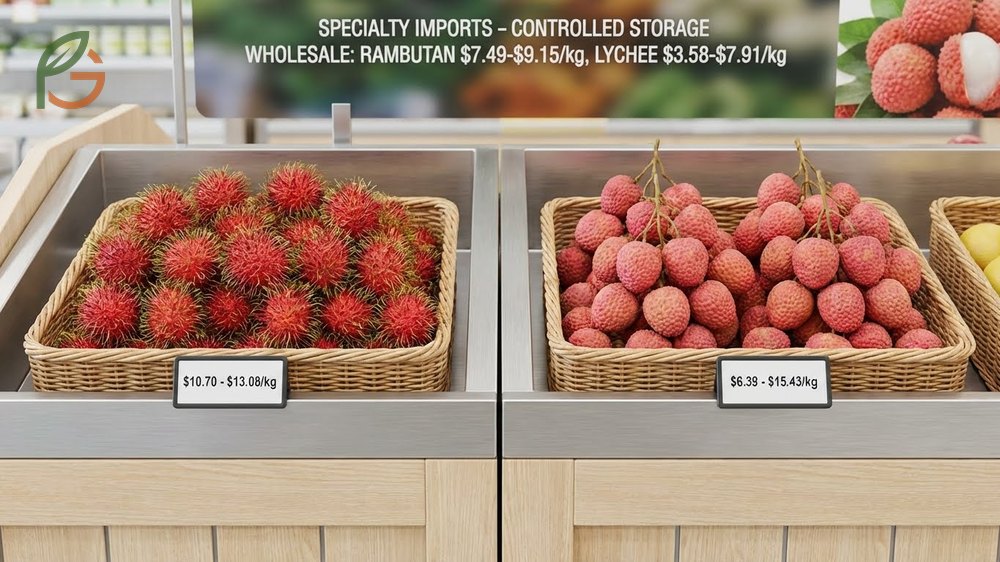
Current US market data shows rambutan retailing between $10.70-$13.08 per kilogram ($4.85-$5.93 per pound)[3]. Lychee prices demonstrate wider variation, ranging from $6.39-$15.43 per kilogram depending on season and origin[4]. The price overlap occurs because both fruits qualify as specialty imports requiring rapid transport and controlled storage.
Wholesale prices run lower, with rambutan at $7.49-$9.15 per kilogram and lychee at $3.58-$7.91 per kilogram for importers. These wholesale figures influence retail availability—higher import costs in certain seasons reduce market presence, especially for rambutan which has shorter harvest windows in primary growing regions.
Seasonal fluctuations affect pricing significantly. Peak season for Thai rambutan (May-September) brings lower prices, while off-season imports command premium rates. Lychee from multiple origins (China, Mexico, Florida) creates more consistent year-round availability, though prices still peak during domestic US shortages in late fall and winter months.
Home cultivation eliminates these costs for gardeners in suitable zones. A mature rambutan tree producing 50-60 pounds annually would save $240-350 in retail equivalent value, while a productive lychee tree yielding 100-200 pounds represents $300-1,500 in produce value. Initial investment in grafted trees ($50-150 per tree) pays back within 3-5 years for serious home growers.
- Import logistics: Both fruits require air freight for freshness, increasing costs compared to hardier fruits
- Storage requirements: Temperature-controlled facilities at 40-45°F add to distribution expenses
- Seasonality: Limited harvest windows create supply constraints driving prices up during scarcity
- Market demand: Growing US interest in exotic fruits supports higher price points at specialty retailers
- Growing zones: Limited domestic production (mainly southern Florida) keeps most supply import-dependent
Cost-Saving Strategy: Purchase both fruits during peak import seasons (summer months) when prices drop 30-40%. Freeze peeled, seeded fruits in airtight containers for up to 6 months to extend enjoyment beyond fresh season.
Conclusion
The evidence is clear: Rambutan Vs Lychee Fruit comparison reveals distinct advantages for each species. Rambutan offers sweeter, creamier taste with larger fruit size, while lychee provides superior nutrition, lower glycemic index, and more pronounced floral flavor. Current horticultural guidance emphasizes selecting varieties suited to your specific growing conditions—both fruits require tropical to subtropical climates but adapt to different temperature ranges and humidity levels.
For US gardeners in zones 10-11, both species offer rewarding cultivation opportunities with proper site selection and care. FruitGarden compiles ongoing research from agricultural extensions and commercial growers to help home fruit enthusiasts succeed with these exceptional tropical species.
Frequently Asked Questions
Can You Grow Rambutan and Lychee in the United States?
Yes, both fruits grow successfully in USDA zones 10-11, particularly southern Florida, southern California, and Hawaii. Rambutan requires more heat and humidity, thriving in temperatures of 71-86°F (21-30°C), while lychee tolerates slightly cooler subtropical conditions. Both trees need protection from temperatures below 50°F (10°C) and require full sun with at least 13 hours of daily light during growing season.
Which Fruit Tastes Better, Rambutan or Lychee?
Taste preference varies individually. Rambutan offers sweeter, creamier flavor with grape-like notes and softer texture, appealing to those who prefer mild fruit. Lychee delivers more complex floral taste with rose water notes, crisp texture, and brighter tartness. Most tropical fruit enthusiasts recommend trying both to determine personal preference.
What’s the Main Nutritional Difference Between Rambutan and Lychee?
Lychee provides significantly more nutritional value, containing 15 times more vitamin C than rambutan (71.5mg versus 4.9mg per 100g), along with higher fiber, vitamin B6, copper, and folate. Lychee also has fewer calories (66 versus 82 per 100g for canned rambutan) and a lower glycemic index (48 versus 59), making it better for blood sugar management.
How Long Do Rambutan and Lychee Trees Take to Fruit?
Grafted trees of both species can produce fruit in 2-3 years after planting, while seed-grown trees require 6-8 years to reach bearing age. Grafted specimens provide more reliable fruiting and maintain cultivar characteristics, making them the preferred choice for home gardeners. Both trees reach peak production at 10-15 years of age with proper care and conditions.
Are Rambutan and Lychee Related to Longan?
Yes, all three fruits belong to the Sapindaceae family and share similar characteristics including white translucent flesh and single central seeds. Longan (Dimocarpus longan) is the smallest of the three with brown skin and tarter flavor. The three species evolved in different Southeast Asian regions, developing distinct external appearances while maintaining similar internal structures.
Why Is Rambutan More Expensive Than Lychee in US Markets?
Rambutan prices ($10.70-$13.08/kg) often exceed lychee prices due to more limited import sources, shorter shelf life, and higher transport sensitivity. Lychee benefits from multiple growing regions including domestic Florida production and imports from China, Mexico, and other countries, creating more competitive pricing. Both fruits require expensive air freight and temperature-controlled storage, contributing to premium pricing.
How Can You Tell When Rambutan and Lychee Are Ripe?
Ripe rambutan displays bright red color with flexible green-to-orange spines that remain turgid and fresh-looking. Ripe lychee shows pink-red shell color without extensive brown patches. Both fruits should feel firm but yield slightly to gentle pressure. Avoid fruits with dried, brown spines (rambutan) or dark brown, brittle shells (lychee), which indicate over-ripeness and declining quality.





