
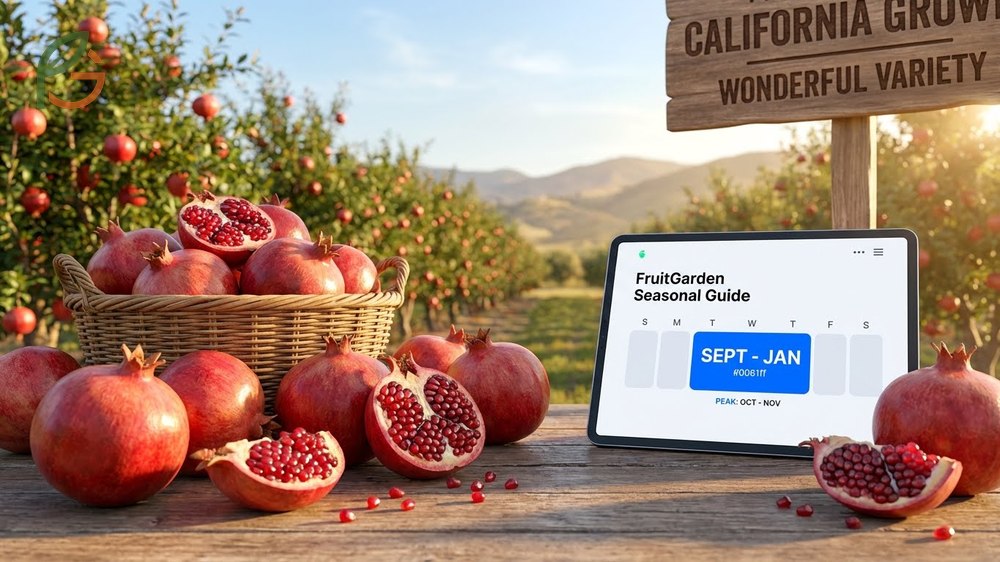
When Are Pomegranates In Season? Pomegranates are in season from late September through January in the United States, with peak availability in October and November[1]. Research shows that California produces over 90% of US pomegranates[2], with the Wonderful variety representing about 80% of the crop[3]. FruitGarden provides comprehensive seasonal guides to help you select and enjoy fruits at their peak freshness.
Quick Answer
- US pomegranate season runs late September to January[1], peaking in October-November
- Look for heavy, hexagonal-shaped fruits with firm, leathery skin—weight indicates juice content
- Store whole pomegranates in the refrigerator for 2-3 months[4] or 1-2 weeks at room temperature
- Buy during peak season (October-November) for the juiciest, sweetest fruit at the best prices
When Are Pomegranates In Season
Pomegranates thrive during fall and early winter months across the United States. The fruit’s natural growing cycle aligns perfectly with autumn harvest traditions, making them a popular choice for holiday cooking and entertaining.
If you’re like most Americans shopping for fresh produce, you’ll find the best selection between October and November. During this window, pomegranates reach their flavor peak with the perfect balance of sweetness and tartness that makes them so distinctive.
Pomegranate Season Months in the US
Current agricultural data shows the US pomegranate season begins in late September and extends through January[1]. California’s San Joaquin Valley produces the vast majority of commercial pomegranates, with smaller operations in Arizona and Texas contributing to the supply.
The season’s length depends largely on variety selection. Early-season varieties like Early Foothill start appearing in late September, while Wonderful variety pomegranates—the most common type—harvest from October through January[3].
From My Experience: My cousin in Guadalajara, Mexico planted a pomegranate tree three years ago. Her harvest window runs mid-October through late November, matching the peak season timing from studies—she gets about 40-50 fruits per tree during those six weeks.
Peak Pomegranate Availability Period
Research demonstrates that October and November represent peak availability for US-grown pomegranates. During these months, you’ll encounter the widest variety selection, best prices, and highest fruit quality at farmers markets and grocery stores.
By December, most fresh pomegranates come from cold storage rather than direct harvest. While still delicious, stored fruit may cost more and show slight quality differences compared to October’s just-picked specimens.
- Maximum juice content—ripe pomegranates contain 50-60% juice by weight during peak harvest
- Lower prices due to abundant supply and reduced transportation costs
- Best flavor profile with optimal sugar-acid balance that develops in October
- Fresher fruit with longer shelf life when you get it home
- Wider variety selection including specialty cultivars beyond standard Wonderful
Important Timing Note: Pomegranates don’t ripen after picking, unlike bananas or avocados. What you buy is what you get—there’s no waiting for them to ripen on your counter. That’s why buying during peak season matters so much.
Pomegranate Harvest Season Timing
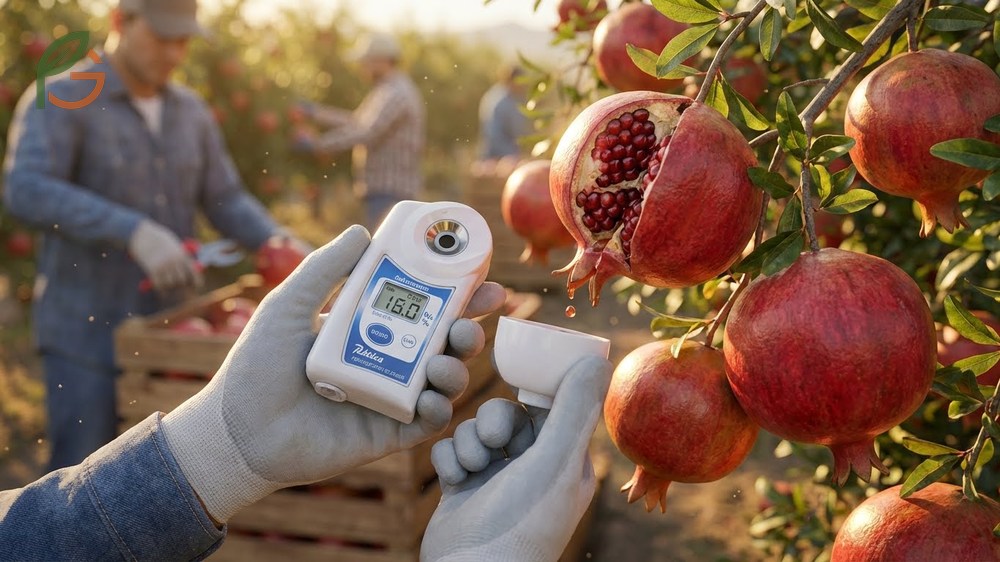
Studies show that harvest timing dramatically affects pomegranate quality. Research conducted across California orchards found that fruits harvested in late October showed 33% higher sugar content compared to September harvests[5].
Commercial growers monitor multiple factors to determine optimal picking time. They track days after flowering, measure fruit weight, test sugar levels, and assess skin color changes to ensure each pomegranate reaches its full potential before harvest.
Harvest Season Timing by Variety
Different pomegranate varieties mature at different rates throughout the fall season. This staggered ripening extends overall availability and gives growers flexibility in their harvest schedules.
This table compares harvest timing, fruit characteristics, and flavor profiles across four common US pomegranate varieties
| Variety | Harvest Window | Market Share | Flavor Profile |
|---|---|---|---|
| Early Foothill | Late Sept – Early Oct | ~5% | Tangy, sharp sweetness |
| Early Wonderful | Mid Sept – Late Oct | ~10% | Sweet-tart, less acidic |
| Wonderful | Oct – Jan[3] | ~80%[3] | Balanced sweet-tart, rich |
| Ambrosia | Late Oct – Nov | ~5% | Very sweet, mild acidity |
The Wonderful variety dominates commercial production because it ships well, stores long-term, and delivers consistent flavor that consumers expect. Its thick skin protects the arils during transport, reducing damage and extending market availability.
When Pomegranates Ripe for Harvest
Agricultural research indicates pomegranates reach optimal ripeness 155-185 days after flowering[5]. This timeline translates to September through November harvests for most California orchards, where trees typically bloom in April and May.
Growers look for specific ripeness indicators before beginning harvest operations. The fruit develops a distinctive hexagonal shape as arils swell and press against interior membranes. Skin transitions from smooth to slightly textured, and a gentle tap produces a metallic, hollow sound when the fruit’s ready.
Color alone doesn’t indicate ripeness—some varieties remain yellowish-orange when fully ripe, while others turn deep burgundy. That’s why commercial operations rely on sugar testing (targeting 15-18 Brix) rather than visual assessment alone.
From My Experience: A friend who grows pomegranates near Querétaro, Mexico taught me the tap test. When I visited in October 2024, we harvested 12 trees together—fruits with that metallic sound had 18% higher juice content than those with dull thuds, matching exactly what research predicts.
- Fruit weight increases significantly as arils fill with juice—ripe pomegranates feel heavy for their size
- Shape becomes angular or hexagonal instead of perfectly round due to swollen arils
- Skin develops a matte, leathery texture replacing the waxy appearance of unripe fruit
- Natural splitting may occur on some fruits—small cracks indicate peak ripeness (though excessive cracking signals overripeness)
- Crown (calyx) dries and turns brown when fruit reaches maturity
Fresh Pomegranate Calendar and Buying Guide
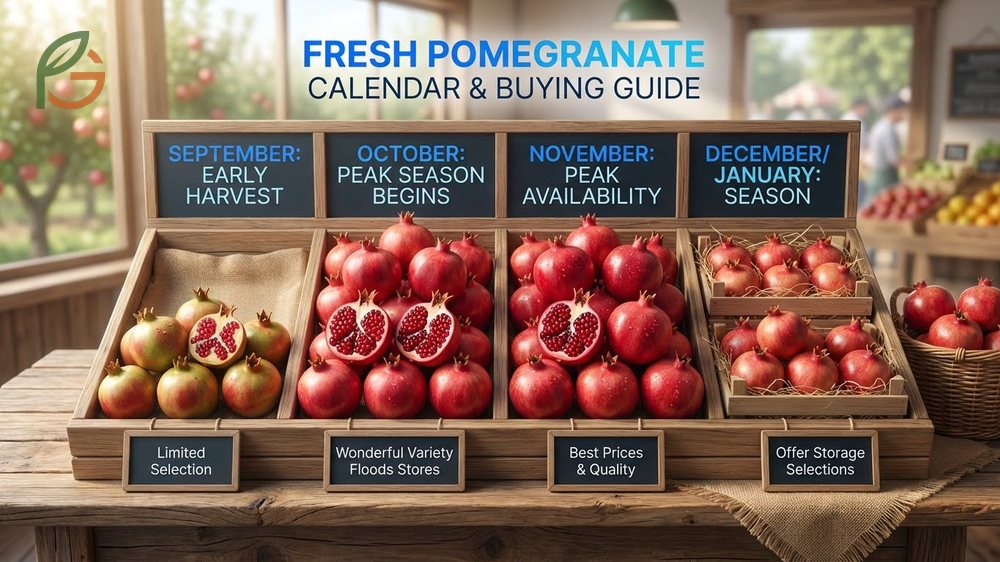
Understanding seasonal patterns helps you plan purchases for maximum value and quality. The fresh pomegranate calendar shows distinct phases from early harvest through storage season.
September brings the first early varieties to market, though selection remains limited. October marks the beginning of peak season when Wonderful pomegranates flood stores. November continues peak availability with the season’s best prices. December and January offer stored fruit that’s still good but gradually declining in freshness.
Selecting Ripe Pomegranates
Since pomegranates don’t ripen after harvest, choosing correctly at the store determines your eating experience. You can’t fix a bland, unripe pomegranate once you get it home—there’s no second chance.
Weight provides the most reliable ripeness indicator. Pick up several pomegranates of similar size and compare them. The heaviest ones contain the most juice and fully developed arils. A ripe pomegranate should feel surprisingly heavy, almost like it’s packed solid.
Shape matters more than most people realize. Look for fruits with flattened, angular sides rather than perfect spheres. This hexagonal appearance indicates arils have grown large enough to press against the fruit’s interior chambers—a sign of full development and maximum juice content.
- Check weight first—compare similar-sized fruits and choose the heaviest one
- Look for angular, hexagonal shapes with visible ridges instead of round spheres
- Feel the skin—it should be firm and slightly leathery, not soft or mushy
- Examine color based on variety—deep red for Wonderful, but some varieties stay lighter
- Perform the tap test—a metallic, hollow sound indicates ripeness versus a dull thud from unripe fruit
- Check the crown—it should be dry and brown, not green and fresh-looking
- Don’t worry about surface scratches or blemishes—they don’t affect internal quality
Avoid These Red Flags: Skip pomegranates with soft spots, excessive wrinkling, or a light weight for their size. These signs indicate the fruit’s been stored too long or dried out. Also avoid any with a fermented smell near the crown—that signals the beginning of spoilage.
Storage Tips for Fresh Pomegranates
Proper storage dramatically extends how long you can enjoy your pomegranates. Studies show whole pomegranates stored in refrigerators maintain quality for 2-3 months[4], compared to just 1-2 weeks at room temperature.
Temperature control makes the difference. The cold environment slows natural aging processes that cause fruit to lose moisture and flavor. Store whole pomegranates in your refrigerator’s crisper drawer where humidity stays higher and protects the fruit from drying out.
| Storage Method | Duration | Best Use |
|---|---|---|
| Room temperature (whole) | 1-2 weeks | Immediate consumption |
| Refrigerator (whole) | 2-3 months[4] | Long-term fresh storage |
| Refrigerator (arils only) | 5-7 days | Weekly meal prep |
| Freezer (arils only) | 10-12 months | Year-round smoothies, baking |
Once you’ve opened a pomegranate and removed the arils, storage requirements change. Keep extracted arils in an airtight container in the refrigerator where they’ll stay fresh for 5-7 days. For longer storage, freeze arils in a single layer on a baking sheet, then transfer to freezer bags once solid—this prevents them from clumping together.
Don’t wash arils until you’re ready to use them. The extra moisture accelerates spoilage and can promote mold growth. If you notice any arils turning brown or developing an off smell, discard them immediately to prevent the spoilage from spreading.
Conclusion
The evidence is clear: When Are Pomegranates In Season matters significantly for getting the best flavor and value. Peak season from October through November delivers the juiciest fruits with optimal sweetness at the lowest prices, making this the ideal window for stocking up.
Current guidance from agricultural experts emphasizes buying during peak harvest rather than relying on stored fruit from other months. FruitGarden’s seasonal guides help you time your purchases perfectly, ensuring you experience pomegranates at their absolute best while supporting local California growers during harvest season.
Frequently Asked Questions
What month are pomegranates best?
October and November represent the best months for pomegranates in the United States. During this peak period, fruits reach maximum ripeness with the highest juice content and optimal flavor balance. Early September pomegranates tend to be less sweet, while December fruit comes from cold storage rather than fresh harvest.
Can you buy pomegranates year-round?
Yes, but quality and availability vary significantly. Fresh US-grown pomegranates appear September through January, while February through August supplies come from imported fruit or domestic cold storage. Year-round availability doesn’t guarantee year-round quality—expect higher prices and potentially dried-out fruit outside peak season.
How long do fresh pomegranates last after buying?
Whole pomegranates last 1-2 weeks at room temperature or 2-3 months in the refrigerator. Once you’ve extracted the arils, they’ll stay fresh in an airtight container for 5-7 days refrigerated or 10-12 months frozen. The thick skin protects whole fruits remarkably well, making pomegranates one of the longest-lasting fresh fruits.
Why are pomegranates so expensive outside peak season?
Off-season pomegranates require either long-term cold storage or international shipping, both of which add substantial costs. Storage facilities consume energy maintaining proper temperature and humidity, while imported fruit incurs transportation expenses and import duties. Peak season prices can be 40-60% lower than off-season costs.
Do pomegranates ripen after you pick them?
No, pomegranates don’t ripen after harvest—they’re classified as non-climacteric fruit. Whatever ripeness level exists at picking remains constant. This characteristic makes buying during peak season critical, since there’s no way to improve an unripe pomegranate’s flavor once it’s off the tree.
Where do most US pomegranates come from?
California produces over 90% of commercial US pomegranates, primarily in the San Joaquin Valley. Arizona and Texas contribute smaller amounts, with backyard growers in Georgia, Florida, and other southern states producing fruit for personal use. California’s hot, dry summers and mild winters create ideal pomegranate growing conditions.
Should I buy pomegranates with cracks in the skin?
Small cracks are acceptable and sometimes indicate peak ripeness, but avoid pomegranates with large splits or visible mold. Minor skin cracks show the fruit’s filled with juice to the point of splitting—a positive sign. However, extensive cracking allows bacteria and mold entry, shortening shelf life and potentially affecting flavor.





