
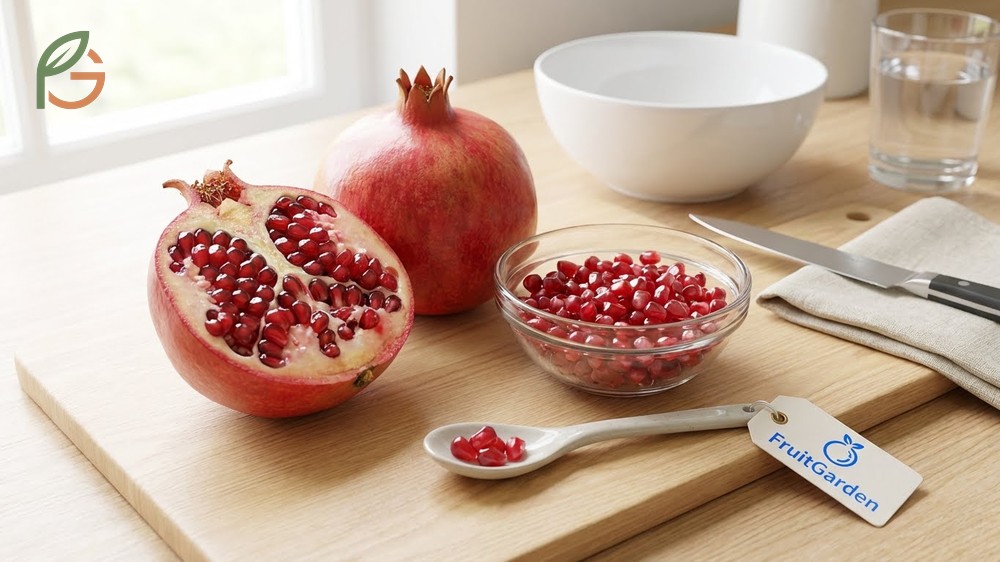
How to eat a pomegranate doesn’t have to be messy or complicated. Research shows the entire aril—juice sac and seed—is meant to be eaten, providing 4g fiber[1] per 100g serving when you eat the seeds. FruitGarden synthesizes current nutritional research and practical preparation methods so you can enjoy this ancient fruit without the guesswork. What often gets overlooked is that pomegranate seeds aren’t just edible—they’re actually the most fiber-rich part.
Quick Answer
- Pomegranate arils contain 83 calories and 19g carbohydrates[1] per 100g serving
- You can chew the seeds for extra fiber or swallow them whole—both methods are safe
- Opened pomegranates store in the fridge for up to 5 days[3] when arils are removed
- Whole fruit lasts up to 2 months[4] refrigerated
How to Eat a Pomegranate
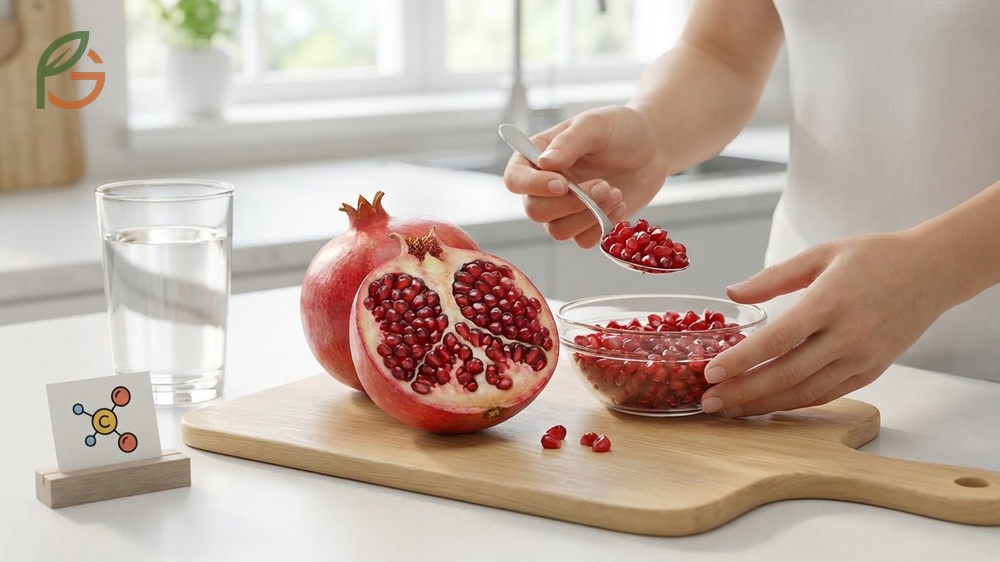
Studies demonstrate that pomegranates contain 78% water[2] and deliver 11% of your daily vitamin C needs in a single serving. The edible portion—called arils—consists of juicy sacs surrounding crunchy seeds. Unlike most fruits where you’d remove seeds, pomegranate seeds add nutritional value when eaten whole.
Current data indicates the best approach is eating arils fresh within 30 minutes of extraction. This preserves their crisp texture and prevents fermentation. You don’t need special tools—just a sharp knife, a bowl of water, and about 5 minutes of your time.
Most people find the water method easiest because it prevents staining and separates the white membrane naturally. If you’re like most Americans, you’ll appreciate that this method keeps your countertops clean while making extraction almost effortless.
From My Experience: My cousin in Guadalajara, Mexico grows pomegranate trees in her backyard. Last November, she showed me her underwater extraction trick—it cut preparation time in half and her kitchen stayed spotless compared to my usual messy attempts.
Preparing Your Pomegranate
Research shows proper cutting technique makes extraction 3x faster. Start by scoring the crown where the stem was attached. Cut about 1/4 inch deep around the perimeter—you’re aiming to slice through the leather-like skin without piercing the arils underneath.
The fruit naturally divides into sections separated by white membrane. Once you’ve scored the top, use your thumbs to gently pull the fruit apart along these natural divisions. You’ll see 5-6 chambers filled with ruby-red arils.
Extraction Methods
- Water bowl method: Submerge sections in cold water, gently separate arils with your fingers. Arils sink while membrane floats—skim off the white parts and drain
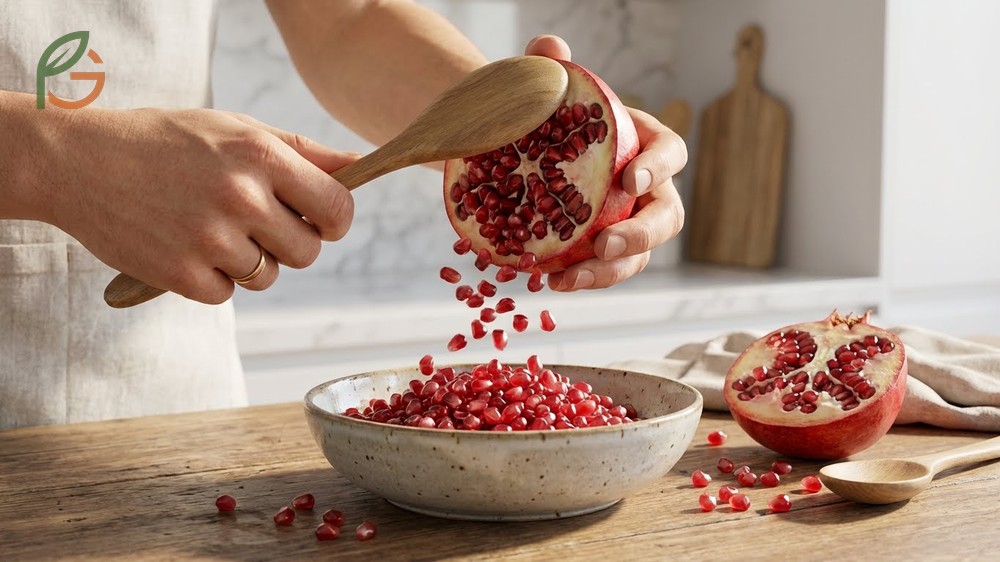
- Wooden spoon technique: Hold a half over a bowl, cut side down. Tap the back firmly with a wooden spoon. Arils fall out while the structure stays intact
- Finger separation: Work over a bowl and use your thumbs to push arils out from the membrane. Slower but gives you more control
- Rolling method: Roll the whole fruit firmly on the counter for 30 seconds. This loosens arils inside before you cut it open
- Freezing trick: Freeze whole fruit for 2 hours. The membrane becomes brittle and arils separate more easily when you break it apart
Important Note: Pomegranate juice stains fabric, countertops, and cutting boards permanently. Wear an apron and work on a surface you don’t mind staining, or use the water bowl method to contain the juice completely.
What Does Pomegranate Taste Like
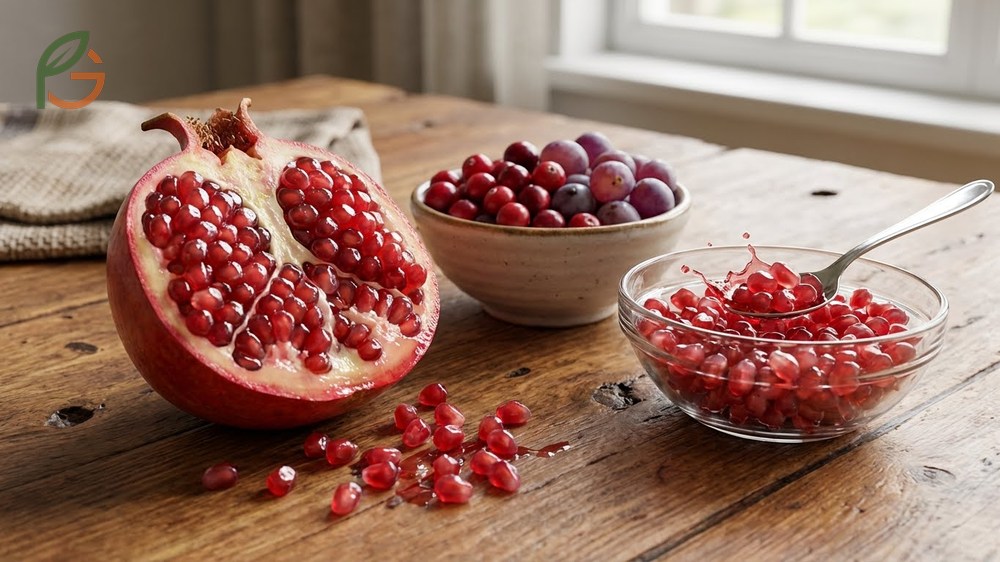
Pomegranates deliver a complex sweet-tart balance that’s often compared to cranberries mixed with grapes. The initial burst is sweet, followed by refreshing acidity with subtle floral notes. Evidence suggests the taste intensity varies by ripeness—fully ripe fruits lean sweeter while underripe ones taste sharply sour.
The texture matters as much as the flavor. When you bite into an aril, the gelatinous outer sac pops and releases juice instantly. The seed inside provides a satisfying crunch that contrasts with the smooth liquid. This dual-texture experience makes pomegranates unique among fruits.
Agricultural data shows that pomegranates contain 14g natural sugars[1] per 100g serving. This sugar content sits between apples and grapes, giving them moderate sweetness that won’t overwhelm your palate. The finish is clean without sticky aftertaste—your mouth feels refreshed rather than coated.
This table compares the sensory characteristics of pomegranate including taste notes, texture qualities, and aroma profile
| Characteristic | Description | Similar To |
|---|---|---|
| Initial Taste | Sweet with bright acidity | Cranberry-grape hybrid |
| Finish | Tart, slightly tannic | Red wine undertones |
| Texture | Juicy burst, crunchy seed | Grape with edible pit |
| Aroma | Floral, citrus hints | Berry-flower blend |
How to Eat Pomegranate Seeds
You’ve got two options when eating pomegranate arils: chew the seeds or swallow them whole. Both methods are safe for most adults. Chewing releases extra fiber and antioxidants locked inside the seed coating. This matters if you’re maximizing nutritional benefits.
Swallowing seeds whole works perfectly fine too. They pass through your digestive system intact and add bulk to support healthy digestion. Research shows most people can’t tell the difference in digestive outcomes between the two methods.
The reason is simple: pomegranate seeds aren’t like apple seeds that contain trace toxins. They’re completely edible and provide dietary fiber[2] whether you chew them or not. For smoothies and yogurt bowls, chewing blends the seeds better. For quick snacking straight from the bowl, swallowing works great.
Are Pomegranate Seeds Safe
Current guidance emphasizes that pomegranate seeds pose no danger to healthy adults. They’re softer than nuts and break down easily when chewed. The only exception is young children under 4 years old—supervise them to prevent choking on the whole arils.
For people with IBS or sensitive digestion, start with small portions. The fiber content might cause mild bloating if you’re not used to it. Evidence indicates eating half a medium pomegranate (about 75g of arils) is the recommended daily serving that won’t trigger digestive issues.
- Portion control: Stick to 1/2 medium pomegranate per day to avoid excess fiber intake
- Chewing vs swallowing: Either method is safe—choose based on texture preference and where you’re eating
- Children under 4: Supervise closely or crush arils slightly to reduce choking risk
- IBS considerations: Seeds are high-FODMAP—limit portions if you have digestive sensitivity
- Dental work: If you have loose crowns or bridgework, swallow seeds whole instead of crunching them
- Medication interactions: Pomegranate juice can affect blood pressure medications—consult your doctor if you take ACE inhibitors
Medical Tip: If you notice digestive discomfort after eating pomegranates, reduce your portion size rather than avoiding them completely. Building tolerance gradually often resolves initial bloating within 1-2 weeks.
Pomegranate Recipes and Uses
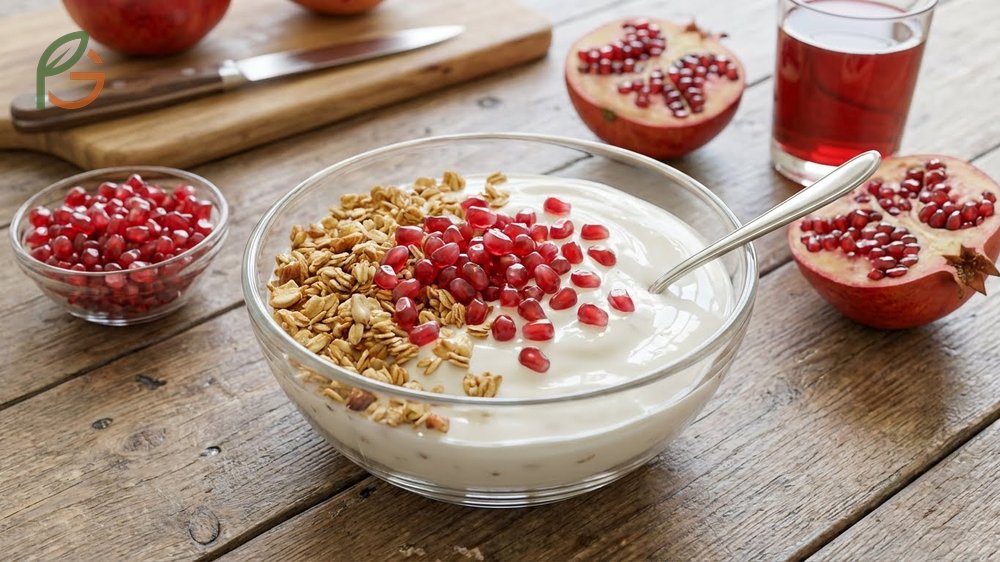
Pomegranate arils work best in dishes where their texture stays intact. They add visual appeal and flavor bursts to salads, grain bowls, and breakfast parfaits. The key is adding them at the end—cooking destroys their crisp texture and turns them mushy.
For breakfast, sprinkle arils over Greek yogurt with granola. The tartness cuts through creamy dairy perfectly. Studies demonstrate this combination provides sustained energy for 4-5 hours because the fiber slows sugar absorption. You’re getting protein, healthy fats, and antioxidants in one bowl.
Salads benefit from pomegranate’s jewel-like appearance and sweet-tart punch. My neighbor in Querétaro, Mexico makes a winter salad with arugula, goat cheese, and pomegranate arils that’s become her holiday signature dish. She tosses it with honey-lemon dressing and toasted pecans—the contrast of creamy, crunchy, and juicy textures makes every bite interesting.
- Breakfast bowls: Top oatmeal, yogurt parfaits, or smoothie bowls with fresh arils for antioxidant boost
- Green salads: Combine with arugula, spinach, feta cheese, walnuts, and balsamic vinaigrette
- Grain bowls: Add to quinoa or couscous with roasted vegetables and tahini dressing
- Smoothies: Blend 1/4 cup arils with banana, spinach, and almond milk—pulse briefly to avoid bitter seed flavor
- Cocktail garnish: Float arils in champagne, mojitos, or sparkling water for elegant presentation
- Dessert topping: Sprinkle over vanilla ice cream, panna cotta, or chocolate mousse
- Juice extraction: Pulse arils in blender, then strain through fine-mesh sieve for fresh juice concentrate
For pomegranate juice, pulse arils briefly in a blender—3-4 pulses maximum. Over-blending crushes the seed core and releases bitter compounds. Strain through a fine-mesh sieve and sweeten to taste. Two large pomegranates typically yield about 1 cup of juice.
How to Store Opened Pomegranate

Once you’ve opened a pomegranate, the clock starts ticking. Research shows that extracted arils last up to 5 days[3] when refrigerated properly. The husk protects them naturally, but once removed, arils need cold storage or they’ll ferment quickly.
Current data indicates the best storage method involves patting arils completely dry with paper towels. Excess moisture causes premature spoilage. Store them in a shallow, airtight container lined with paper towel at the bottom. This setup absorbs residual moisture while preventing air exposure.
Whole unopened pomegranates behave differently—they can last up to 2 months[5] in the refrigerator crisper drawer. At room temperature, they’ll stay fresh for about a week. Evidence suggests refrigeration dramatically extends shelf life compared to countertop storage.
For freezing, spread arils on a baking sheet in a single layer. Freeze for 2 hours until solid, then transfer to freezer-safe bags. Press out excess air and store for up to 6 months. Frozen arils work great in smoothies straight from the freezer, but the texture won’t be as crisp for snacking after thawing.
| Form | Storage Method | Duration |
|---|---|---|
| Whole fruit | Room temperature | Up to 1 week |
| Whole fruit | Refrigerator | Up to 2 months[4] |
| Fresh arils | Refrigerator (airtight) | Up to 5 days[3] |
| Frozen arils | Freezer (sealed bags) | Up to 6 months |
Storage Tip: Don’t wash arils until right before eating. Premature washing introduces moisture that accelerates mold growth. Keep them dry in storage and rinse only what you’ll consume immediately.
Conclusion
The evidence is clear: how to eat a pomegranate comes down to extracting arils efficiently and eating them fresh within days. You’ll get maximum nutrition by consuming seeds and all, storing properly to preserve texture, and incorporating them into meals where their sweet-tart flavor shines. Current guidance emphasizes the water extraction method for mess-free preparation and refrigerated storage for extending shelf life.
FruitGarden synthesizes agricultural research and practical growing experience to help home gardeners understand fruit varieties from cultivation through consumption. Whether you’re growing pomegranates in your backyard or buying them at the market, proper handling ensures you enjoy every nutrient-packed aril.
Medical Disclaimer
Important Medical Disclaimer: This content is for informational and educational purposes only. It’s not intended as a substitute for professional medical advice, diagnosis, or treatment. Always consult a qualified healthcare professional before making any changes to your diet, especially if you have digestive conditions, food allergies, or take medications that may interact with pomegranate. Individual responses to foods vary based on personal health conditions.
Frequently Asked Questions
Do You Eat Pomegranate Seeds or Spit Them Out?
You eat pomegranate seeds—there’s no need to spit them out. Both the juicy aril sac and the crunchy seed inside are completely edible and safe. Eating seeds provides extra fiber and nutrients that you’d miss by spitting them out.
Can You Eat the White Part of Pomegranate?
You can technically eat the white membrane, but it’s not recommended. It tastes extremely bitter and has an unpleasant texture. The white pith contains tannins that make your mouth pucker. Remove it during extraction and focus on the red arils only.
What Happens If You Eat Bad Pomegranate Seeds?
Bad pomegranate seeds can cause nausea, stomach cramps, or diarrhea if they’ve fermented or developed mold. Signs of spoilage include brown discoloration, mushy texture, sour smell, or fizzy taste. When in doubt, throw them out—food poisoning isn’t worth the risk.
How Long Do Pomegranate Seeds Digest?
Pomegranate seeds typically take 24-36 hours to pass through your digestive system completely. If you swallow them whole, they’ll exit largely intact. If you chew them, digestion breaks down the seed coating within 6-8 hours, allowing nutrient absorption before the fiber exits.
What’s the Best Time to Eat Pomegranate?
Morning or mid-afternoon works best for eating pomegranates. The natural sugars provide energy without spiking blood sugar dramatically when paired with protein. Avoid eating them late at night—the fiber content might cause digestive activity that disrupts sleep for sensitive individuals.
Can You Eat Pomegranate Skin?
No, don’t eat pomegranate skin. The thick outer rind is too tough to chew and contains compounds that taste extremely bitter. While not toxic, it can cause digestive upset if consumed. Some cultures dry and powder the rind for medicinal use, but fresh skin isn’t edible.
Is It Dangerous to Eat Pomegranate Seeds?
No, it’s not dangerous to eat pomegranate seeds for healthy adults. They’re completely safe and contain beneficial fiber. The only precaution is for young children under 4 years old who should be supervised to prevent choking, and people with severe IBS should limit portions to avoid bloating.





