
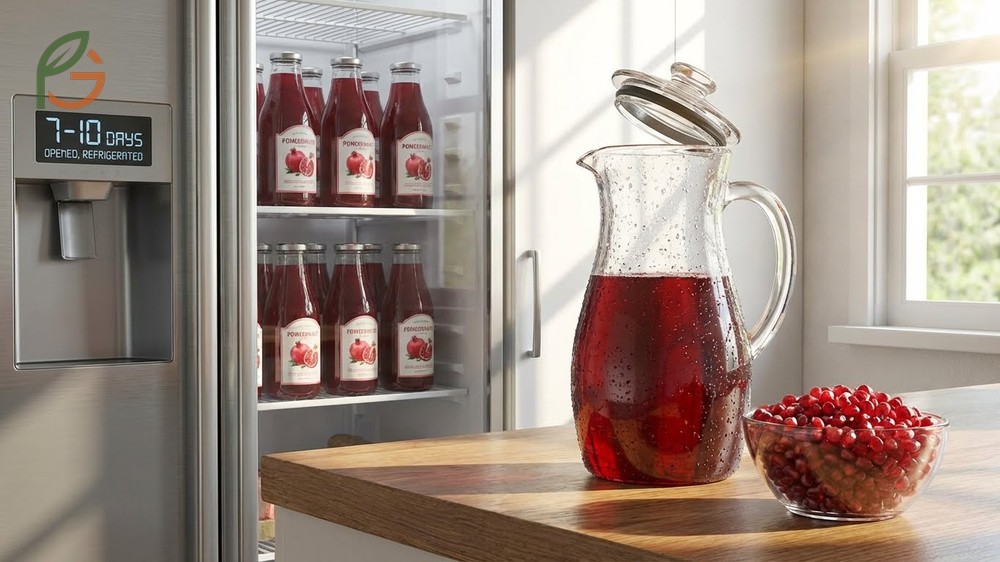
Does Pomegranate Juice Go Bad? Yes, it does. Research shows that opened pomegranate juice stays fresh for 7-10 days when refrigerated continuously[1], while unopened bottles can last 18-24 months[2]. Storage conditions dramatically affect how long your juice maintains its flavor, color, and nutritional benefits. FruitGarden compiles current agricultural research and food safety data to help you maximize freshness and avoid waste.
Quick Answer
- Opened pomegranate juice lasts 7-10 days[1] in the fridge at 40°F (4°C) or below[3]
- Unopened store-bought juice stays good for 18-24 months[2] when stored properly
- Fresh homemade juice keeps only 2-3 days[2] refrigerated
- Frozen pomegranate juice maintains quality for up to 1 year[4] in airtight containers
Does Pomegranate Juice Go Bad
Pomegranate juice goes bad when exposed to bacteria, yeast, or oxidation. Once you open a bottle, you’re introducing oxygen and potential contaminants that accelerate spoilage. The juice’s natural sugars create an ideal environment for microbial growth if it’s not refrigerated properly.
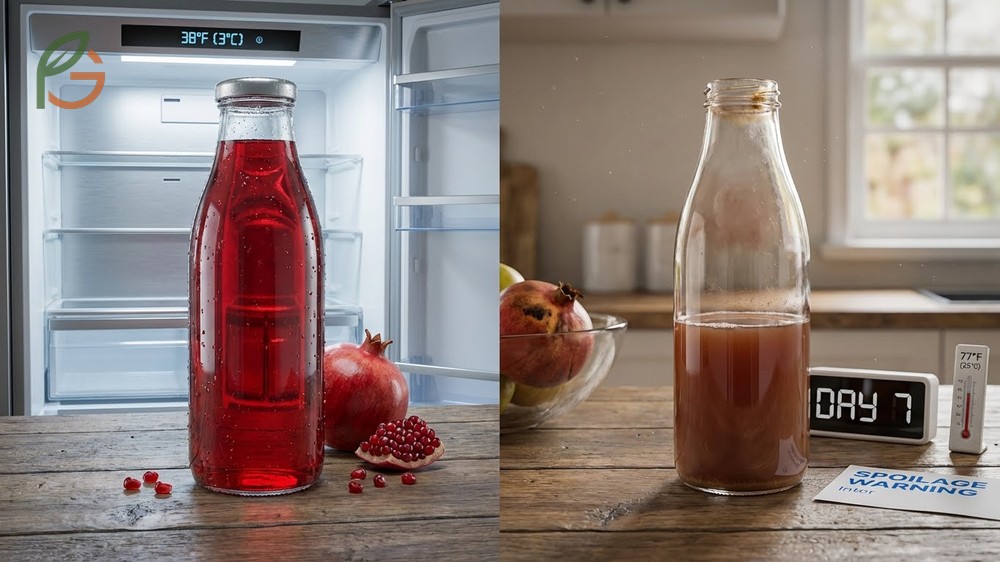
Studies demonstrate that storage temperature plays the primary role in preventing browning and color loss[5]. Juice stored at 77°F (25°C) becomes unacceptable after just 7 days, while refrigerated juice at 41°F (5°C) maintains quality for 90 days or longer[5]. Temperature control isn’t optional—it’s the difference between fresh juice and fermented liquid.
Most people don’t realize that even unopened juice can degrade over time. Light exposure breaks down the anthocyanins that give pomegranate juice its vibrant red color. That’s why amber-colored glass bottles perform better than clear plastic for long-term storage[6].
Factors Affecting Spoilage
Several conditions determine how quickly your pomegranate juice spoils. Temperature fluctuations stress the juice more than consistent cold storage. Every time you leave the bottle on the counter for 30 minutes, you’re cutting its shelf life by hours.
Oxygen exposure triggers enzymatic browning and nutrient degradation. Research confirms that juices stored in containers with minimal headspace retain more antioxidants[7]. Transfer leftover juice to smaller bottles to reduce air contact.
- Temperature above 40°F (4°C) allows rapid bacterial growth
- Light exposure degrades anthocyanins and causes color fading
- Oxygen contact accelerates oxidation and nutrient loss
- Container contamination introduces spoilage microorganisms
- Extended storage beyond recommended timeframes increases fermentation risk
Pasteurized vs Fresh Juice
Pasteurized juice undergoes heat treatment that eliminates harmful bacteria and extends shelf life significantly. Store-bought brands typically use high-temperature short-time pasteurization at 161-167°F (72-75°C) for 15-30 seconds[7]. This process keeps unopened bottles shelf-stable for months.
Fresh unpasteurized juice contains active enzymes and higher microbial counts. You’ll get more vibrant flavor, but it’ll only last 2-3 days refrigerated[2]. Think of fresh juice like cut fruit—it’s perishable from the moment you make it.
Important Note: Even if you’re freezing fresh juice immediately, it won’t kill existing bacteria. Freezing only pauses microbial growth. Always start with properly washed pomegranates to minimize contamination before juicing.
How Long Does Pomegranate Juice Last
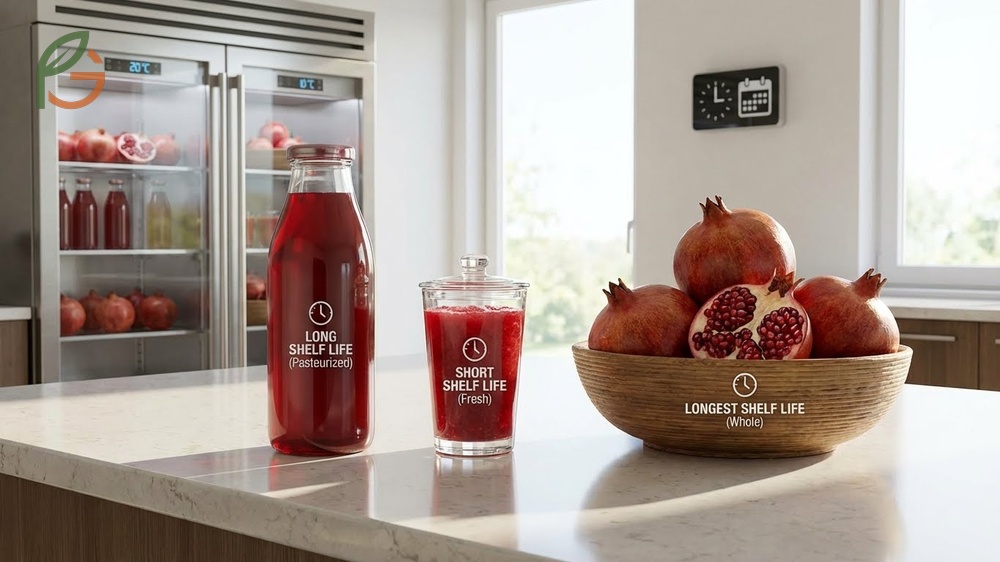
Shelf life varies dramatically based on processing method and storage conditions. Current data indicates that pasteurized juice lasts 50 times longer than fresh juice when stored properly. Understanding these timelines helps you buy the right quantities and avoid waste.
Whole pomegranates outlast extracted juice by a significant margin. The fruit’s thick rind acts as nature’s protective barrier against moisture loss and contamination[8]. You’re better off storing whole fruit and juicing small batches as needed.
Unopened Juice Timeline
Store-bought pomegranate juice in sealed bottles maintains quality for 18-24 months from the packaging date[2]. Keep it in a cool, dark pantry away from heat sources. The “best by” date printed on the bottle provides a reliable quality indicator.
What often gets overlooked is that unopened doesn’t mean immortal. After 2 years, you’ll notice flavor degradation even if the juice is technically safe. The vibrant tartness fades into a flat, metallic taste as organic acids break down.
- Dark pantry at 60-70°F (15-21°C) – ideal for maximum shelf life
- Refrigerator at 40°F (4°C) or below – extends quality beyond printed date
- Kitchen cabinet away from stove – acceptable if temperature stays stable
- Garage or basement – only if climate-controlled year-round
- Near windows or appliances – avoid due to temperature fluctuations and light
Opened Juice Timeline
Once opened, pomegranate juice lasts 7-10 days when refrigerated continuously[1]. Major manufacturers like POM Wonderful recommend consuming within 2 weeks or by the expiration date, whichever comes first[9]. Don’t push these limits—microbial growth accelerates after day 10.
Fresh homemade juice follows stricter rules. It’ll stay good for 2-3 days maximum[2]. This shorter window reflects the absence of pasteurization and preservatives that commercial brands use.
This table compares storage durations for pomegranate juice types across different conditions including refrigerated opened, refrigerated unopened, room temperature, and frozen storage
| Juice Type | Refrigerated (Opened) | Refrigerated (Unopened) | Room Temperature | Frozen |
|---|---|---|---|---|
| Store-bought Pasteurized | 7-10 days[1] | 18-24 months[2] | Not recommended | 12 months[4] |
| Fresh Homemade | 2-3 days[2] | N/A | Few hours only | 12 months[8] |
| Whole Pomegranates | N/A | 2 months[8] | 1-2 weeks[10] | Not recommended |
| Pomegranate Seeds (Arils) | 5-7 days[8] | N/A | Not recommended | 12 months[4] |
Storing Pomegranate Juice
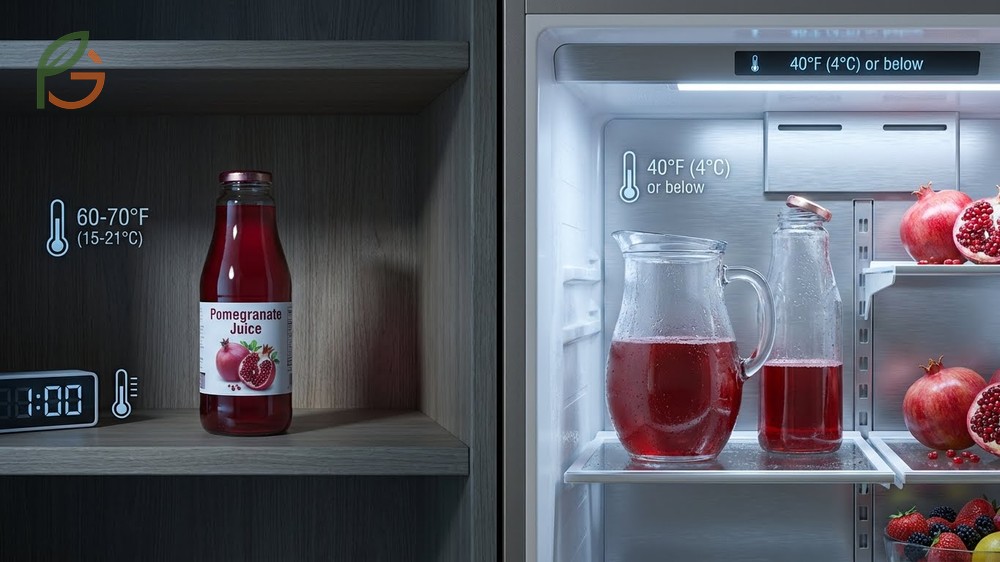
Proper storage starts the moment you bring juice home or finish juicing. For unopened bottles, keep them in a cool, dark pantry at 60-70°F (15-21°C). Heat and light are the enemies—they trigger chemical reactions that degrade color and antioxidants.
Once opened, refrigeration becomes mandatory. Set your fridge to 40°F (4°C) or below[3]. Store the juice in its original bottle if it’s resealable, or transfer it to a glass container with a tight lid. Glass doesn’t absorb odors like plastic does.
Agricultural data shows that whole pomegranates maintain freshness similar to apples when stored correctly[8]. Keep them in the crisper drawer where humidity stays consistent. Don’t wash them until you’re ready to use them—moisture promotes mold growth.
- Seal containers tightly immediately after pouring to minimize oxygen exposure
- Store juice in the main fridge compartment, not the door where temperature fluctuates
- Use amber or opaque containers to protect against light degradation
- Label homemade juice with the date—it’s easy to forget when you made it
- Keep juice away from strong-smelling foods like onions or fish
- Never return unused juice from a glass back to the bottle—saliva introduces bacteria
Storage Tip: If you’ve got a half-full bottle, transfer the juice to a smaller container. Reducing headspace cuts oxidation by up to 40% and extends freshness by 2-3 days.
Freezing Pomegranate Juice
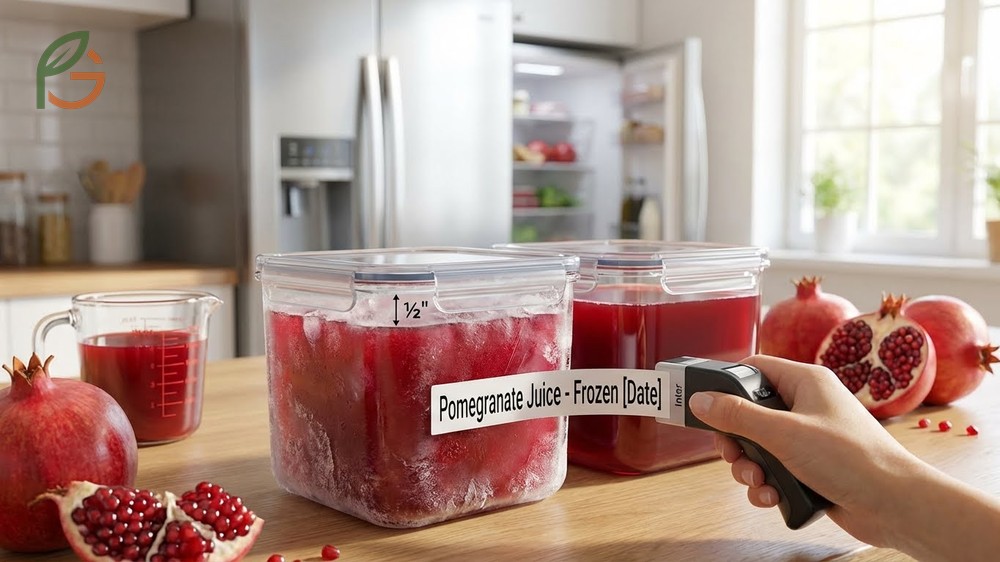
Freezing extends pomegranate juice life to 12 months while preserving 85-90% of antioxidants[4]. This method works better than canning for maintaining color and flavor. University research confirms that frozen juice retains more anthocyanins than room-temperature storage after just 2 weeks[8].
Use freezer-safe containers with ½-inch headspace at the top. Liquids expand when frozen—without this gap, you’ll end up with cracked containers or popped lids. Label each container with the freeze date so you’re tracking age accurately.
For smoothies and cooking, pour juice into ice cube trays first. Once frozen, transfer the cubes to freezer bags[2]. You’ll have pre-portioned juice ready to drop into recipes without thawing an entire container.
- Freeze juice within 24 hours of opening or making for best quality
- Store containers upright until completely frozen to prevent leaking
- Use glass jars designed for freezing—regular glass can shatter from expansion
- Thaw frozen juice in the refrigerator overnight, never at room temperature
- Shake or stir thawed juice well as separation is normal after freezing
From My Experience: My cousin in Guadalajara, Mexico froze pomegranate juice in November 2024 using silicone ice cube trays. Each cube held about 2 tablespoons—perfect for her morning smoothies. After 4 months, the cubes still tasted fresh with no freezer burn, matching the 12-month timeline from research.
Pomegranate seeds freeze exceptionally well too. Spread them on a parchment-lined baking sheet for 2-4 hours, then transfer to bags[4]. This flash-freezing technique prevents them from clumping into a solid mass. Frozen arils work great in yogurt, oatmeal, or baked goods straight from the freezer.
Signs of Bad Pomegranate
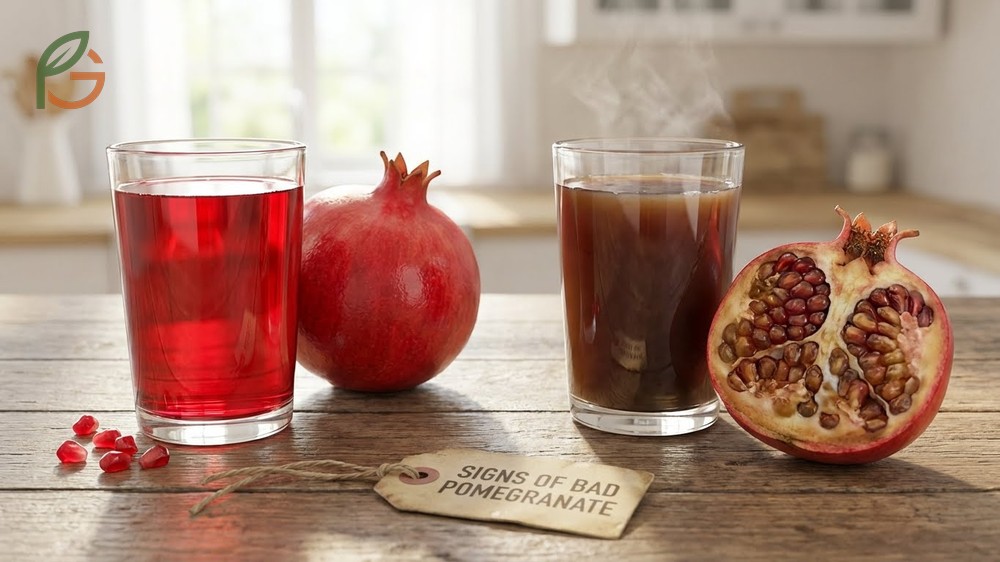
Your nose provides the first warning system. Fresh pomegranate juice smells tart and slightly sweet. If you detect sour, vinegary, or wine-like odors, fermentation has started and you should discard it immediately. These smells indicate yeast activity that’s converting sugars to alcohol and acids.
Visual changes come next. Juice that’s darkened significantly or turned brown has oxidized beyond recovery. Studies show that browning index values above 1.0 indicate unacceptable quality[5]. You’ll notice this happens within 7 days at room temperature versus 90+ days refrigerated.
Texture tells the final story. Fresh juice pours smoothly without chunks or strings. Slimy consistency or visible sediment floating throughout indicates bacterial growth. Mold appears as white or green spots on the surface—this means you’ve waited too long.
- Off smell resembling vinegar, alcohol, or ammonia
- Visible mold growth (white, green, or black spots)
- Bloated or swollen container indicating gas buildup from fermentation
- Fizzy or bubbly texture when poured
- Dramatic color change from bright red to brown or pale pink
- Slimy or unusually thick consistency
- Sour or bitter taste completely different from expected tartness
For whole pomegranates, look for soft spots, yellowing skin, or brown discoloration[11]. The fruit should feel heavy and firm. Light weight suggests it’s dried out inside. If seeds smell acrid or look shriveled when you cut it open, the fruit’s past its prime.
Safety Warning: Never taste juice that shows visible mold or extreme color changes. Some spoilage microorganisms produce toxins that aren’t destroyed by the acid in pomegranate juice. When in doubt, throw it out.
Conclusion
The evidence is clear: Does Pomegranate Juice Go Bad? Absolutely, and storage decisions you make the day you open it determine whether it lasts 3 days or 10. Temperature control matters more than any other factor—keep it at 40°F (4°C) or below, and you’ll preserve both flavor and nutrients.
Current guidance emphasizes freezing for long-term storage over canning because it maintains antioxidant levels and vibrant color better. Whether you’re working with store-bought bottles or fresh-pressed juice, understanding these timelines helps you enjoy pomegranate at peak quality while minimizing waste. FruitGarden synthesizes food science research to help you make informed decisions about fruit storage and preservation.
Frequently Asked Questions
Can pomegranate juice go bad if unopened?
Yes, unopened pomegranate juice gradually degrades over time even though it remains safe to drink. Store-bought bottles last 18-24 months from the packaging date when kept in a cool, dark place. After this period, you’ll notice flavor changes and color fading as organic compounds break down, though the juice won’t necessarily make you sick.
How long is pomegranate juice good for after opening?
Opened pomegranate juice stays fresh for 7-10 days when stored in the refrigerator at 40°F (4°C) or below. This timeline applies to pasteurized store-bought juice. Fresh homemade juice lasts only 2-3 days refrigerated because it lacks the heat treatment and preservatives that extend commercial juice shelf life.
Does pomegranate juice expire in the fridge?
Yes, pomegranate juice expires in the fridge after its recommended storage period. Refrigeration slows but doesn’t stop microbial growth and oxidation. Once opened, the juice will spoil within 7-10 days even when refrigerated continuously. Check for off smells, color changes, or fizzy texture before drinking juice that’s been open for more than a week.
How long are pomegranates good for in the refrigerator?
Whole pomegranates last up to 2 months in the refrigerator when stored in the crisper drawer. This extended shelf life occurs because the thick rind protects the seeds from moisture loss and contamination. Room temperature storage reduces this to just 1-2 weeks. Once you remove the seeds, they’ll stay fresh for 5-7 days refrigerated.
How long are pomegranate seeds good for after opening the fruit?
Pomegranate seeds stay fresh for 5-7 days after removing them from the fruit when stored in an airtight container in the refrigerator. For longer storage, freeze the seeds on a baking sheet for 2-4 hours, then transfer to freezer bags where they’ll keep for up to 12 months. Frozen seeds work perfectly in smoothies and baked goods.
Can you freeze pomegranate juice to extend its shelf life?
Yes, freezing pomegranate juice extends its shelf life to 12 months while preserving 85-90% of antioxidants. Use freezer-safe containers with ½-inch headspace to allow for expansion. For convenience, freeze juice in ice cube trays first, then transfer cubes to bags for easy portioning. Thaw frozen juice in the refrigerator overnight and shake well before using.
What happens if you drink spoiled pomegranate juice?
Drinking spoiled pomegranate juice can cause stomach upset, nausea, or diarrhea depending on the type and amount of bacteria present. Fermented juice containing yeast produces alcohol and may cause intoxication-like effects. If juice shows visible mold, discard it immediately—some molds produce toxins that survive in acidic environments and can cause serious illness.





