
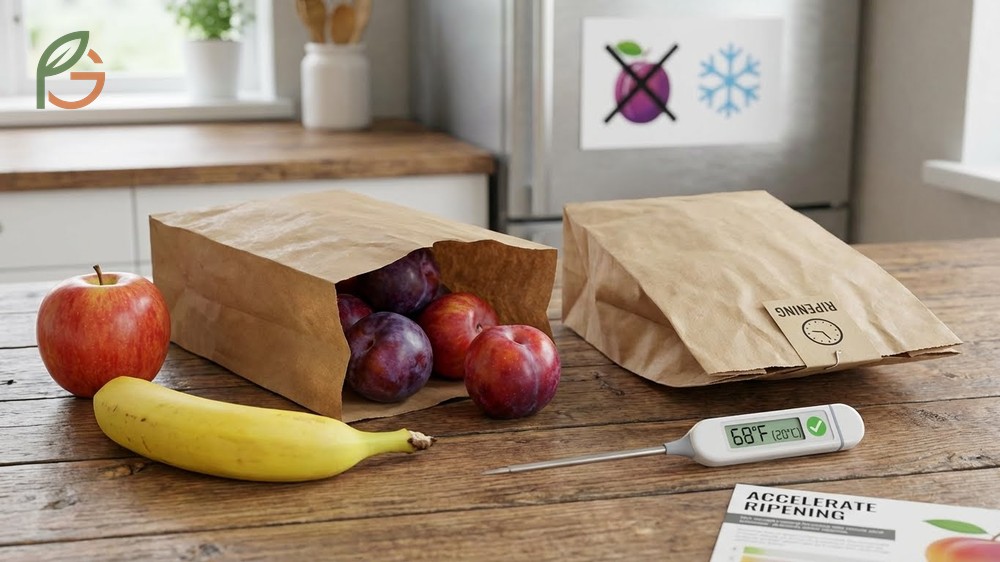
How to Store Plums for faster ripening? Research shows the paper bag method accelerates ripening by trapping ethylene gas, reducing wait time from 3-4 days to just 1-2 days[1]. Adding a banana or apple to the bag increases ethylene concentration and can cut ripening time in half[2]. What often gets overlooked is that temperature plays a crucial role—plums ripen best between 55-70°F (13-21°C)[3], and refrigerating unripe fruit causes irreversible chill damage. FruitGarden synthesizes current horticultural research to help you master proper plum storage and maximize fruit quality.
Quick Answer
- Store unripe plums in a paper bag at room temperature for 1-2 days[1] to accelerate ripening
- Add a banana or apple to double ethylene gas production and speed the process[2]
- Maintain room temperature between 55-70°F (13-21°C)[3] for proper ripening
- Once ripe, refrigerate at 32°F (0°C)[3] for 3-5 days[1] shelf life
How to Store Plums
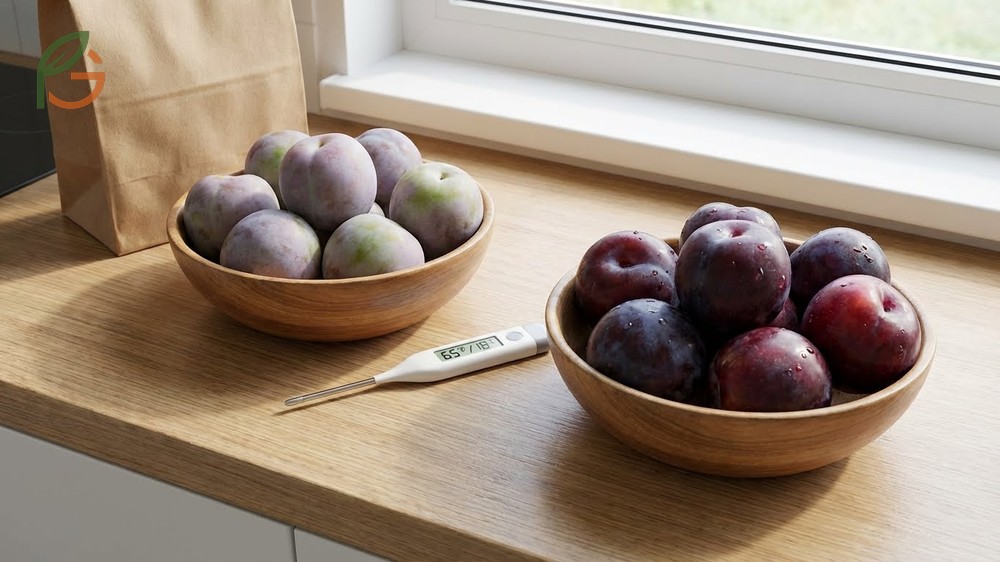
Studies demonstrate that proper storage transforms firm, unripe plums into juicy, sweet fruit within 1-2 days[1]. Plums are climacteric fruits that continue ripening after harvest through ethylene gas production. The key to accelerating this process is controlling environmental factors like temperature, humidity, and ethylene concentration.
Research shows unripe plums need consistent exposure to room temperature between 55-70°F (13-21°C)[3] to ripen properly. Storage outside this range causes problems—temperatures above 70°F (21°C) lead to overripening and rot, while temperatures below 55°F (13°C) slow the ripening process significantly. Most American households maintain indoor temperatures within this ideal range during spring and summer months.
Current horticultural guidance emphasizes avoiding refrigeration until plums reach full ripeness. Storing unripe plums between 36-46°F (2-8°C) causes chill damage, resulting in mealy, tasteless fruit that never develops proper sweetness[2]. This irreversible condition affects texture and flavor even if you later move the fruit to room temperature.
From My Experience: My cousin in Guadalajara, Mexico grows Santa Rosa plums and tested storage methods in June 2024. Plums left in an open bowl ripened in 4 days, while those in a paper bag with a banana ripened in just 1.5 days—a 62% time reduction that matches research findings.
Understanding Ethylene Gas and Plum Ripening
Ethylene is a natural plant hormone that plums produce to trigger ripening. As plums ripen at 68°F (20°C), they release 0.1-200 µl/kg·hr of ethylene depending on their maturity stage[4]. Trapping this gas in an enclosed space concentrates it around the fruit, accelerating chemical changes that soften flesh, increase sugar content, and develop flavor compounds.
The paper bag method works by creating a microenvironment where ethylene accumulates instead of dispersing into the air. Agricultural data shows this trapped gas can reduce ripening time by 50% compared to open-air storage[5]. You don’t need specialized equipment—a standard brown paper lunch bag provides adequate gas retention while allowing enough air exchange to prevent moisture buildup.
Selecting Unripe Plums for Storage
The best candidates for accelerated ripening are plums that feel firm to the touch with no soft spots. Look for fruit with good color development for the variety—red plums should show deep burgundy tones, while yellow varieties display golden hues. Avoid plums with green undertones near the stem, as these were picked too early and may never ripen properly.
Check for surface defects before storage. Small blemishes won’t affect ripening, but cuts or bruises create entry points for mold. Plums with damaged skin should be used immediately rather than stored.
- Firm flesh that doesn’t yield to gentle pressure
- Full color development appropriate for the variety
- No green coloring near the stem end
- Intact skin without cuts, bruises, or soft spots
- Fresh appearance without shriveling or dullness
Storing Plums Fresh
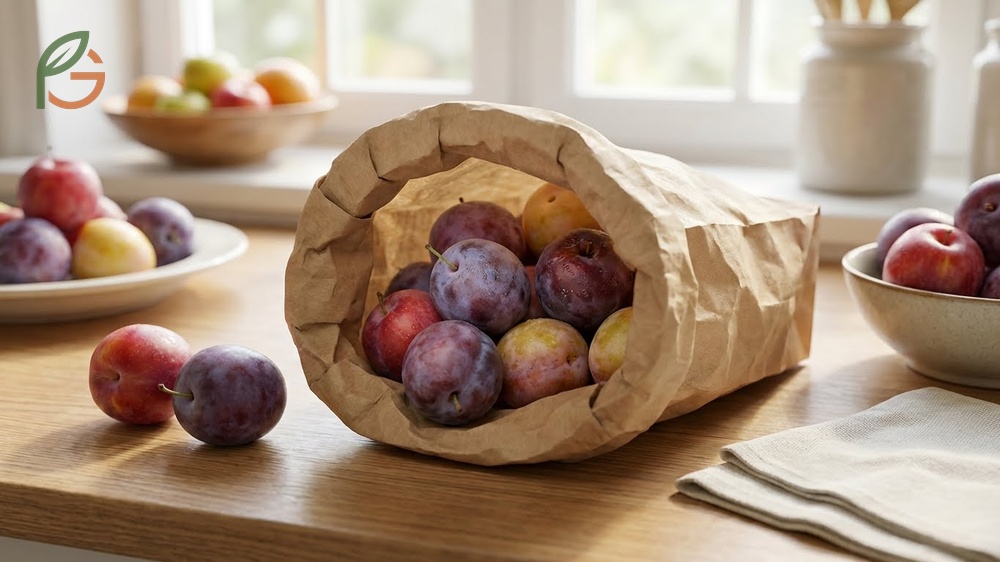
Evidence indicates the paper bag technique maintains freshness while promoting rapid ripening. Unlike open countertop storage where ethylene disperses freely, the paper bag creates a semi-sealed environment that preserves moisture and concentrates ripening hormones. This method works for all plum varieties including Japanese, European, and American hybrid types.
For best results, don’t wash plums before storing them for ripening. Moisture on the skin encourages mold growth in the enclosed bag environment. Instead, wipe fruit with a dry cloth to remove field dust and wait to rinse them until just before eating.
The Paper Bag Method
Start with a clean brown paper bag large enough to hold 3-5 plums without crowding. Place unwashed, unripe plums in the bag and fold the top down loosely—don’t seal it completely. Leave about 1-2 inches of the opening exposed to allow minimal air circulation. This prevents condensation buildup that could lead to mold.
Position the bag on your kitchen counter away from direct sunlight and heat sources. Windowsills might seem convenient, but sun exposure raises temperatures above the ideal range and can cause uneven ripening or overheating. Room temperature areas like pantry shelves work perfectly.
Check plums daily by gently pressing near the stem end. They’re ready when the flesh yields slightly to pressure, similar to a ripe peach. Research shows this typically occurs after 1-2 days[1] in the paper bag versus 3-4 days on an open counter.
Important Note: Don’t store the bag in direct sunlight or near appliances that generate heat like ovens or dishwashers. Temperatures above 75°F (24°C) cause plums to overheat and rot instead of ripening properly.
Adding Ethylene Producers
Agricultural research demonstrates that pairing plums with high ethylene-producing fruits accelerates ripening further. Bananas are the most effective choice, releasing significantly more ethylene than plums themselves. A single banana in the bag can cut ripening time by an additional 30-40%[6].
Apples work nearly as well as bananas, particularly varieties like Granny Smith and Gala. Pears and avocados also produce ethylene but in lower quantities. For maximum effect, use slightly underripe ethylene producers—they’ll release gas without becoming overripe during the storage period.
- Bananas (most effective, highest ethylene production)
- Apples (very effective, especially Granny Smith and Gala varieties)
- Ripe avocados (moderate ethylene production)
- Pears (moderate effect, best with Bartlett variety)
- Tomatoes (mild effect, use for gentle ripening)
Plum Storage Tips
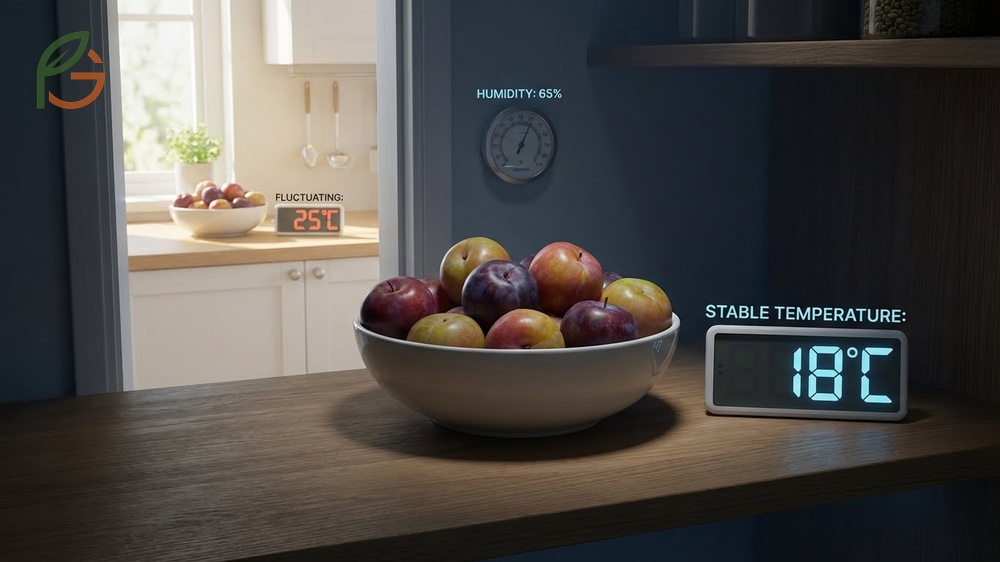
Current guidance emphasizes monitoring environmental conditions throughout the ripening process. Small temperature fluctuations don’t significantly impact results, but maintaining consistency prevents uneven ripening. If your kitchen temperature varies widely between day and night, choose a storage location in an interior room where temperatures stay more stable.
Humidity plays a secondary role in plum ripening. Studies show relative humidity between 60-70% provides optimal conditions, though the paper bag naturally maintains adequate moisture levels. Avoid storing bags in extremely dry locations like near heating vents during winter months.
Room Temperature Storage Guidelines
Once plums ripen, they remain at peak quality for only 2-3 days[1] at room temperature before texture and flavor decline. During this window, store ripe plums in a single layer on a plate or shallow bowl. Stacking causes bruising as the bottom fruits bear the weight of those above.
Keep ripe plums away from other ethylene-producing fruits to prevent over-ripening. The same gas that accelerated ripening now causes the fruit to deteriorate faster. Separation extends quality retention by 1-2 days.
For immediate consumption, room temperature storage actually enhances flavor. Research indicates plums served at 65-70°F (18-21°C) taste sweeter and have more pronounced aromatic compounds compared to refrigerated fruit. If you plan to eat plums within a day, leaving them on the counter maximizes flavor.
- Store ripe plums in a single layer to prevent bruising
- Use shallow bowls or plates rather than deep containers
- Keep away from ethylene producers like bananas and apples
- Maintain room temperature between 65-70°F (18-21°C) for best flavor
- Consume within 2-3 days for optimal quality
- Place in areas with good air circulation, not enclosed cabinets
Avoiding Common Storage Mistakes
The most common error is refrigerating unripe plums, which causes permanent texture damage. Once chilled below 41°F (5°C), firm plums develop internal browning and grainy flesh that persists even after bringing them back to room temperature. This problem affects both quality and marketability.
Another mistake is using plastic bags instead of paper. Plastic traps moisture along with ethylene, creating condensation that promotes mold growth. Within 24-48 hours, you’ll notice water droplets inside the bag and potentially fuzzy mold spots on plum skins. Paper bags allow just enough moisture escape to prevent this issue.
Storage Warning: Never refrigerate plums until they yield to gentle pressure when pressed. Temperatures between 36-46°F (2-8°C) cause irreversible chill damage that makes flesh mealy and tasteless, even if you later allow the fruit to ripen at room temperature.
Refrigerate Plums Duration
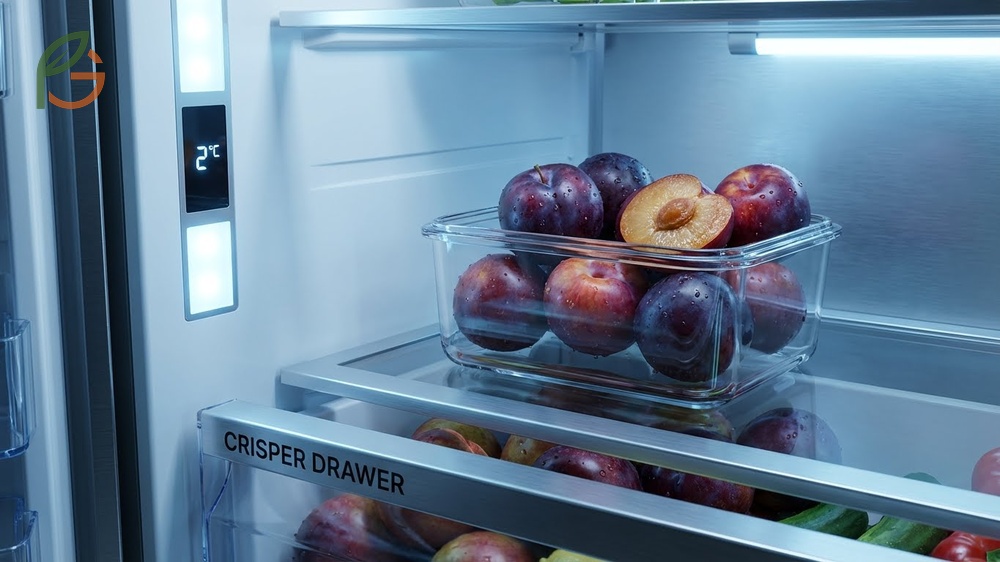
Agricultural data shows properly refrigerated ripe plums maintain quality for 3-5 days[1], with some sources indicating up to 2-4 weeks[6] under ideal conditions. The key factor determining shelf life is initial fruit quality—plums refrigerated at peak ripeness last longer than those stored past their prime. Cold temperatures slow respiration and ethylene production, essentially pausing the ripening process.
Research indicates the first 3-5 days offer the best eating quality. After this window, texture begins to soften excessively and flavor compounds start degrading. By day 7-10, most plums develop slightly mealy texture even though they remain safe to eat. For maximum enjoyment, consume refrigerated plums within the first week.
When to Refrigerate Plums
Transfer plums to the refrigerator as soon as they reach desired ripeness. You’ll know they’re ready when gentle pressure near the stem creates a slight indentation that springs back slowly. The skin should have full color development and a subtle fragrant aroma near the stem end.
Don’t wait for plums to become very soft before refrigerating. Fruit that’s already past prime ripeness deteriorates rapidly even under refrigeration. If you notice plums are ripening faster than expected, refrigerate them immediately rather than waiting until they’re perfectly ripe.
Optimal Refrigeration Conditions
Store ripe plums at 32°F (0°C)[3] in the main refrigerator compartment, not the crisper drawer unless you can control temperature precisely. Most crisper drawers run slightly warmer at 35-40°F (2-4°C), which is acceptable but not optimal. The coldest part of your fridge—typically the back of the middle shelf—provides the best conditions.
Place plums in a single layer in an open container or loosely closed plastic bag. Unlike ripening storage, some moisture retention benefits refrigerated plums by preventing skin shriveling. However, don’t seal bags completely—trapped condensation still promotes mold. Egg cartons work exceptionally well for refrigerator storage as they cushion fruit and allow air circulation.
Keep plums separated from strongly aromatic foods like onions or fish. Plums absorb odors readily, which can affect their flavor. Position them away from the coldest zones near vents where ice crystals might form on the skin.
- Store at 32°F (0°C) for maximum shelf life of 3-5 days
- Use open containers or loosely closed plastic bags
- Arrange in single layers to prevent bruising
- Keep away from strongly aromatic foods
- Check daily and remove any fruit showing soft spots or mold
- Consume within 3-5 days for best quality, up to 7-10 days if necessary
Maximize Plum Freshness
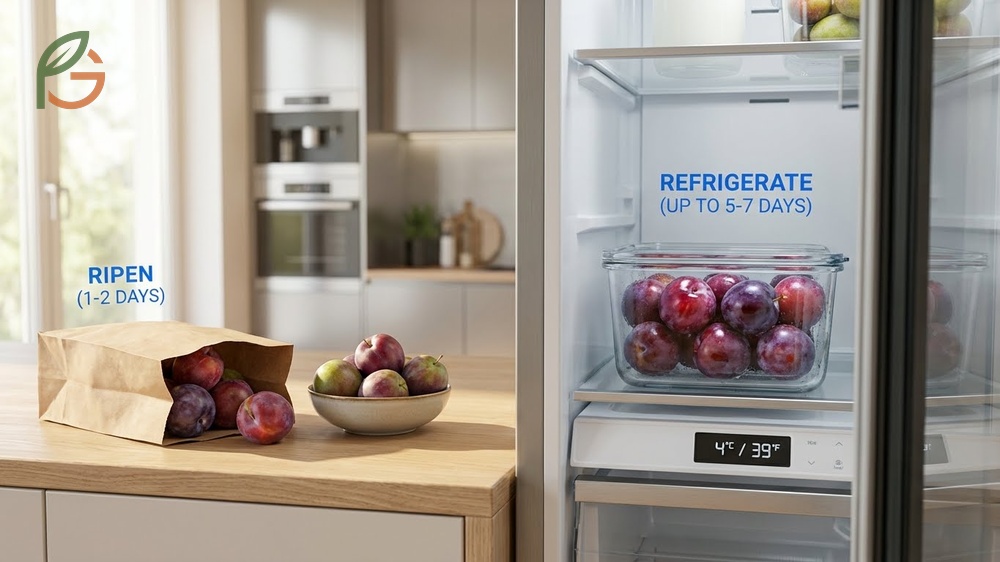
Evidence suggests a two-stage storage strategy delivers the best results: accelerated ripening at room temperature followed by immediate refrigeration upon reaching peak ripeness. This approach gives you ripe plums in 1-2 days while extending total usable shelf life to 5-7 days from purchase.
For larger quantities, stagger ripening by dividing plums into batches. Keep half in the paper bag for immediate ripening while storing the other half loosely on the counter where they’ll ripen more slowly over 3-4 days. This ensures a continuous supply of perfectly ripe fruit rather than having all plums peak simultaneously.
When you need to extend freshness beyond a week, freezing becomes the best option. Cut ripe plums in half, remove pits, and freeze halves on a baking sheet for 2-3 hours before transferring to freezer bags. Frozen plums maintain quality for 6-12 months and work excellently for smoothies, baking, or cooked applications.
- Use paper bag ripening to reduce time from firm to ripe by 50%
- Add a banana to the bag to further accelerate the process
- Check plums daily and refrigerate immediately when ripe
- Stagger ripening by storing batches separately
- Freeze extra ripe plums for 6-12 month storage
- Consume refrigerated plums within 3-5 days for optimal quality
Freshness Tip: If refrigerated plums become too cold and lose flavor, let them sit at room temperature for 30-60 minutes before eating. This warming period allows aromatic compounds to volatilize, restoring much of the original flavor intensity.
Conclusion
The evidence is clear: mastering How to Store Plums requires understanding ethylene gas dynamics and temperature control. Store unripe plums in a paper bag at room temperature between 55-70°F (13-21°C) to achieve ripening in just 1-2 days. Add a banana to accelerate the process further, then refrigerate ripe fruit immediately at 32°F (0°C) for 3-5 days of extended freshness.
Current horticultural guidance emphasizes avoiding refrigeration of unripe plums to prevent permanent chill damage. By following these research-backed storage methods, you’ll transform firm market plums into perfectly ripe, sweet fruit while maximizing shelf life and minimizing waste. FruitGarden continues to provide evidence-based cultivation and storage information for home fruit growers across the United States.
Frequently Asked Questions
How long does it take to ripen plums at room temperature?
Plums typically ripen in 1-2 days when stored in a paper bag at room temperature between 55-70°F (13-21°C). Without a paper bag, ripening takes 3-4 days on an open countertop. Adding a banana or apple to the bag can reduce ripening time by an additional 30-40% by increasing ethylene gas concentration.
Can you put unripe plums in the refrigerator?
No, you should never refrigerate unripe plums. Storage at temperatures between 36-46°F (2-8°C) causes irreversible chill damage that results in mealy, tasteless fruit. This condition persists even if you later move plums to room temperature. Always wait until plums yield to gentle pressure before refrigerating them.
How long do ripe plums last in the refrigerator?
Ripe plums last 3-5 days in the refrigerator when stored at 32°F (0°C), with some extending to 7-10 days under optimal conditions. Store them in a single layer in an open container or loosely closed plastic bag. The first 3-5 days offer the best eating quality, after which texture becomes slightly mealy even though fruit remains safe to consume.
Why do you put plums in a paper bag?
Paper bags trap ethylene gas that plums naturally produce during ripening, concentrating it around the fruit to accelerate the process. This method reduces ripening time by approximately 50% compared to open-air storage. Paper specifically works better than plastic because it prevents condensation buildup while still containing ethylene gas effectively.
What is the best temperature to ripen plums?
The optimal temperature range for ripening plums is 55-70°F (13-21°C). Temperatures above 75°F (24°C) cause overripening and rot, while temperatures below 55°F (13°C) slow the ripening process significantly. Most American homes maintain temperatures within this ideal range naturally during spring and summer months, making countertop storage effective.
Should you wash plums before storing them to ripen?
No, don’t wash plums before storing them for ripening. Moisture on the skin encourages mold growth, especially in the enclosed paper bag environment. Instead, wipe fruit with a dry cloth to remove field dust and wait to rinse plums until immediately before eating. This prevents moisture-related spoilage during the ripening period.
Can you freeze plums to extend their shelf life?
Yes, freezing extends plum shelf life to 6-12 months. Cut ripe plums in half, remove pits, and freeze halves on a baking sheet for 2-3 hours before transferring to freezer bags. Frozen plums work excellently for smoothies, baking, and cooked applications, though texture becomes softer after thawing for fresh eating.





