
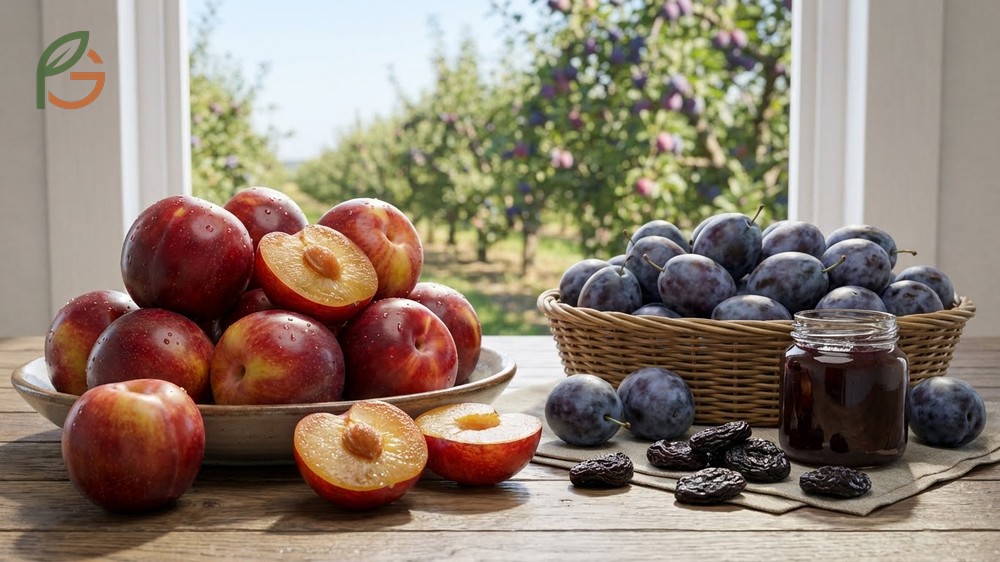
Different Types Of Plums fall into two main categories: Japanese plums (Prunus salicina) with juicy, sweet flesh that ripen early, and European plums (Prunus domestica) with firmer texture ideal for drying and preserves. Research shows more than 40 commercial cultivars thrive across USDA zones 4-9, each offering distinct flavor profiles, harvest times, and growing requirements[1]. What often gets overlooked is that choosing the right plum type depends more on your climate zone and intended use than simply picking the prettiest fruit. FruitGarden synthesizes current horticultural research to help you select cultivars that’ll actually produce abundant harvests in your specific region.
Quick Answer
- Japanese plums ripen 3-4 weeks earlier than European varieties, making them ideal for warm climates in zones 6-9[1]
- European plums tolerate cold better and grow successfully in zones 4-8, with many varieties self-fertile[2]
- Black plums typically have red flesh and sweeter flavor, while red plums feature yellow flesh with more tartness[3]
- Most Japanese varieties require cross-pollination, but Methley and Burgundy are self-pollinating exceptions[1]
Different Types Of Plums
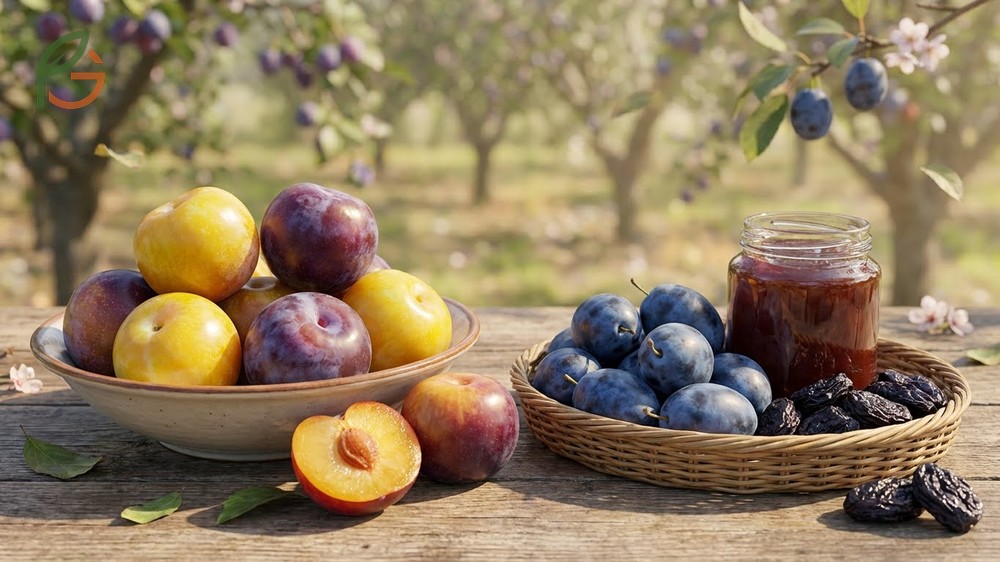
Plums divide into two primary species that determine everything from harvest timing to flavor intensity. Japanese plums (Prunus salicina) originated in China and produce large, juicy fruits with vibrant colors ranging from yellow to deep purple[1]. European plums (Prunus domestica) offer firmer texture and higher sugar content, making them the go-to choice for drying into prunes or making preserves.
Studies demonstrate that Japanese varieties need 500-900 chill hours and thrive in warmer zones 6-9, while European types handle colder climates down to zone 4 with 700-1000 chill hours[2]. The ripening difference matters more than most gardeners realize—Japanese plums ripen in early to mid-summer, while European varieties don’t peak until late summer or early fall. This staggered harvest lets you extend your plum season by 6-8 weeks when you plant both types.
From My Experience: My aunt in Guadalajara, Mexico planted a Santa Rosa Japanese plum in March 2023. The tree produced fruit in just 18 months versus the typical 3-4 year wait, yielding 47 plums in that first harvest—well above the 20-30 fruit average for young trees.
Main Plum Categories
Beyond the Japanese-European split, plums break down into specialized subcategories based on use and characteristics. Each category serves specific culinary purposes and growing conditions that match different gardener needs.
- Prune plums have high sugar content and freestone pits, making them perfect for drying into prunes without fermentation
- Blood plums feature dark red flesh throughout and deliver intense sweet-tart flavor ideal for jams
- Gage plums represent the finest European dessert plums with green-yellow skin and exceptional sweetness
- Damson plums grow smaller and more tart, specifically bred for cooking, baking, and preserving rather than fresh eating
- Hybrid plum-apricots (pluots and plumcots) combine plum sweetness with apricot aromatics in 25-75% ratios
Growing Zone Requirements
Current agricultural data shows successful plum cultivation requires matching chill hours to your specific zone. Chill hours measure the cumulative time trees spend between 32-45°F (0-7°C) during winter dormancy, which triggers proper spring flowering.
Methley plums work across the widest range, adapting to zones 5-9 with only 500-650 chill hours[2]. Warmer Southern regions below zone 7 need low-chill Japanese cultivars like Scarlet Beauty that require just 150 chill hours. Northern gardeners in zones 4-5 should stick with cold-hardy European varieties like Stanley or Green Gage that tolerate late spring frosts without blossom damage.
Important Growing Tip: Don’t plant Japanese and European plums as pollinators for each other—they bloom at different times and won’t cross-pollinate effectively. Always pair Japanese with Japanese, and European with European varieties.
Japanese European Plums
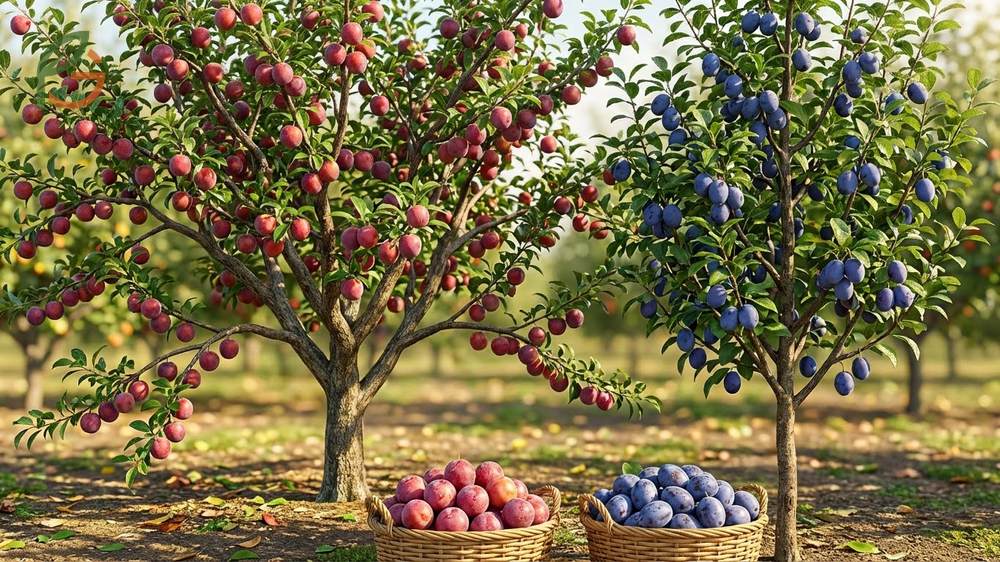
The fundamental differences between Japanese and European plums extend far beyond appearance into growth habits, pollination needs, and ideal uses. Japanese varieties grow more vigorously with spreading growth patterns, while European types develop upright, compact forms that need less pruning[1]. This affects spacing requirements—Japanese plums need 15-20 feet between trees, while European varieties can squeeze into 12-15 foot spacings.
Pollination requirements create the biggest challenge for home growers. Most Japanese cultivars require cross-pollination from a different Japanese variety with overlapping bloom times. European plums include more self-fertile options, with varieties like Stanley, Italian, and Green Gage producing full crops without pollinators[4].
Japanese Plum Characteristics
Japanese plums dominate commercial fresh markets because they ship well and offer the juicy texture consumers expect. Santa Rosa remains the definitive Japanese variety, producing medium-to-large fruit with reddish-purple skin and amber flesh that delivers bold, sweet flavor with pleasant tartness[1]. The variety is partially self-pollinating but yields 40-50% more fruit with proper pollinators like Shiro or Methley.
Other standout Japanese cultivars include Shiro with bright yellow skin and mild flavor that ripens early season, making it an excellent pollinator for later varieties. Methley offers the convenience of self-pollination with small to medium purple-skinned fruits containing sweet red flesh. Burgundy develops deep purple skin and flesh with sweet, mellow flavor and also self-pollinates reliably.
- Santa Rosa: Most widely planted Japanese variety, partially self-fertile, ripens mid-season with excellent fresh eating quality
- Shiro: Early ripening yellow plum, vigorous producer, serves as universal pollinator for most Japanese types
- Methley: Self-pollinating, extremely hardy, adapts to zones 5-9, ideal for small gardens with space for only one tree
- Burgundy: Self-fertile with deep purple flesh, low maintenance, reliable cropping even in challenging climates
- Elephant Heart: Very large fruits weighing 3-4 ounces, requires pollinator, rich flavor intensifies when fully ripe
- Black Amber: Large oblate fruits with black skin and amber flesh, moderate quality but excellent firmness for shipping
European Plum Characteristics
European plums excel in applications where firm texture and concentrated sweetness matter most. The Italian or Empress plum variety dominates the prune industry with large, oblong fruits that dry perfectly without fermenting[5]. Stanley plums offer the versatility of being excellent fresh eating plums while also performing well for canning as jam and jelly due to their large size and juicy texture.
Green Gage varieties represent the pinnacle of European plum breeding for dessert quality. These plums feature greenish-yellow skin with incredibly sweet, tender flesh that makes them prized for fresh eating despite their less commercial appearance. Damson plums fill the niche for cooking and baking applications with their small size and pronounced tartness that balances beautifully in preserves.
Harvest Timing Tip: European plums don’t change color dramatically when ripe. Test firmness instead—they should yield slightly to gentle pressure and separate easily from the branch when ready. Picking too early results in sour, astringent fruit that never properly ripens.
Black Red Plums
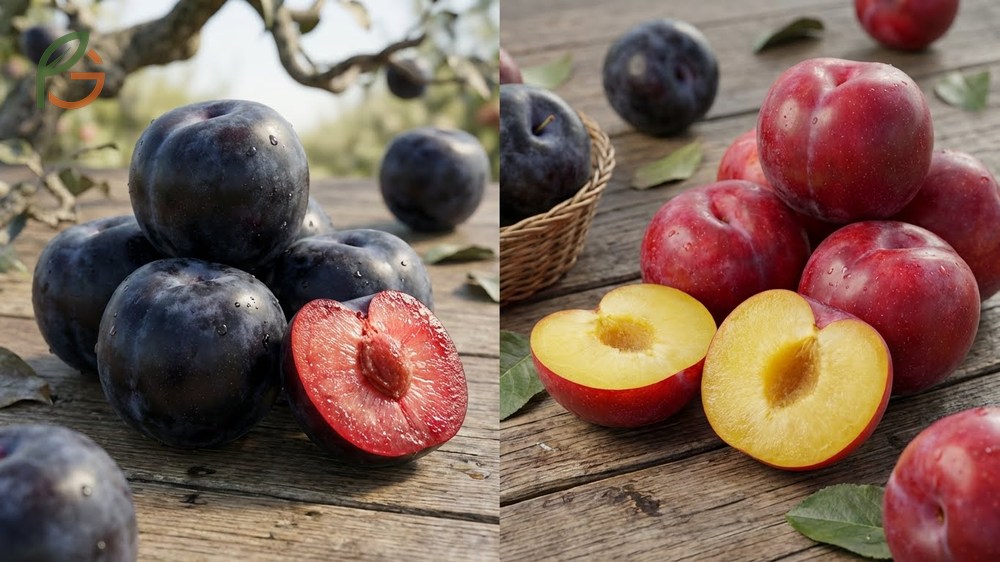
The color distinction between black and red plums signals more than just appearance—it indicates flesh color, sweetness levels, and optimal harvest timing. Black plums turn from red to deep black-purple when fully mature, typically containing red flesh with sweeter flavor profiles[3]. Red plums stay crimson-red at full ripeness and usually feature yellow flesh with more pronounced tartness that holds up better during storage.
Research from commercial orchards indicates black plums deliver 15-20% higher sugar content at harvest maturity compared to red varieties. This makes black types like Black Amber, Black Splendor, and Friar ideal for fresh eating and situations where you want maximum sweetness. Red plums like Santa Rosa and Red Beaut maintain firmer texture 5-7 days longer after harvest, making them better for shipping or when you can’t eat fruit immediately.
The ripening process differs significantly between the two color types. You can harvest black plums while they’re still partially red, and they’ll continue developing their characteristic black color off the tree over 3-4 days. Red plums must ripen fully on the tree to develop proper sweetness—picked too early, they’ll never reach their flavor potential even with additional counter ripening time.
This table compares skin color, flesh color, sweetness level, texture, and best uses for black plums versus red plums
| Characteristic | Black Plums | Red Plums |
|---|---|---|
| Skin Color at Maturity | Deep black-purple with blue bloom | Crimson to dark red |
| Typical Flesh Color | Red to dark red[3] | Yellow to amber[3] |
| Sweetness Level | Higher sugar, 15-18% Brix | Balanced sweet-tart, 13-16% Brix |
| Texture After Harvest | Softens quickly, 3-5 day window | Stays firm longer, 5-7 day window |
| Best Uses | Fresh eating, desserts, wine | Fresh eating, cooking, canning |
- Black Amber: Large Japanese variety with black skin, amber flesh, good firmness, ripens late June to early July
- Black Splendor: Medium-to-large fruit with blue-black skin, red-to-dark-red flesh, firmer than Santa Rosa, ripens early June
- Santa Rosa: Classic red Japanese plum, reddish-purple skin, amber flesh with pink tinge under skin, bold sweet-tart flavor
- Red Beaut: First variety of the season, medium-to-small size, bright red skin, light amber flesh, establishes early market pricing
- Friar: Very large black-skinned Japanese plum, amber flesh, late season, excellent for extending harvest period
Best Plum Varieties
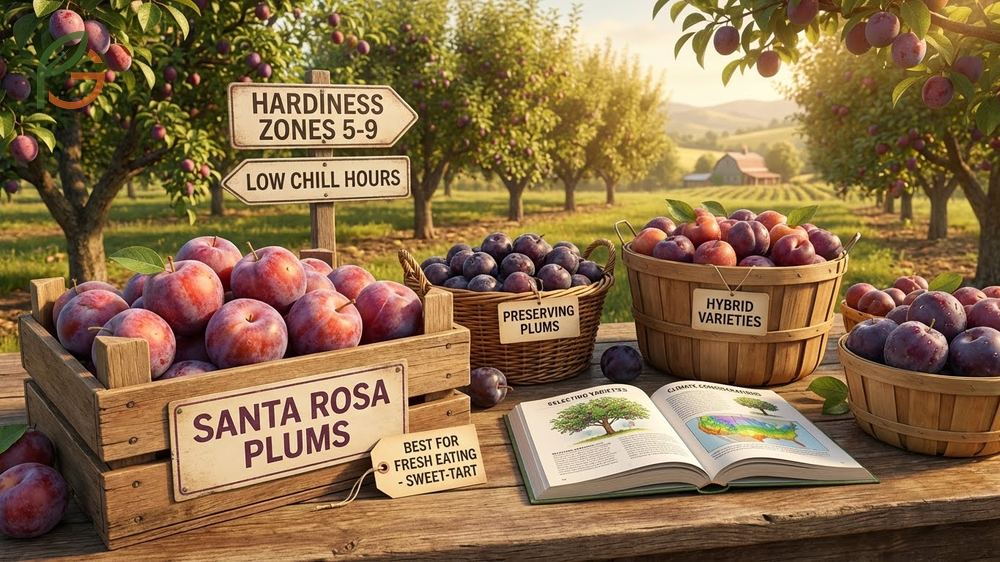
Selecting the “best” plum variety depends entirely on your specific goals, climate zone, and whether you’re growing for fresh eating, preserving, or both. Current horticultural guidance emphasizes matching variety characteristics to your hardiness zone and available chill hours rather than chasing trendy cultivars that may not thrive in your conditions.
For fresh eating across most regions, Santa Rosa remains the gold standard among Japanese plums with its perfect sweet-tart balance and reliable production[1]. Among European types, Green Gage varieties deliver unmatched dessert quality with their exceptionally sweet flesh, though they produce smaller fruits with less commercial appeal.
For preserving and canning, Stanley leads European varieties with large, firm fruits that maintain structure during processing[5]. Italian plums dominate the dried prune market because their high sugar content and freestone pits make processing efficient. Damson plums, while too tart for fresh eating, create superior jams and jellies that require less added sugar than other varieties.
This table compares primary use, flavor profile, hardiness zones, pollination requirements, and ripening season for six top plum varieties
| Variety | Primary Use | Flavor Profile | Zones | Pollination | Ripening |
|---|---|---|---|---|---|
| Santa Rosa | Fresh eating | Bold sweet-tart | 5-9[2] | Partially self-fertile | Mid-season |
| Methley | Fresh eating | Sweet, mild | 5-9[2] | Self-fertile | Early |
| Stanley | Canning, preserves | Sweet, firm | 4-8 | Self-fertile | Late |
| Italian | Drying, prunes | Very sweet | 5-9 | Self-fertile | Late |
| Green Gage | Dessert, fresh | Exceptionally sweet | 5-8 | Needs pollinator | Mid-late |
| Damson | Jams, cooking | Tart, intense | 4-8 | Self-fertile | Late |
If you’re limited to planting just one plum tree, choose a self-fertile variety that matches your zone. Methley works exceptionally well for zones 5-9 with its reliable cropping and adaptability. Stanley serves zones 4-8 perfectly with cold hardiness and dual-purpose fruit good for both fresh eating and preserving.
Plum Cultivar Types
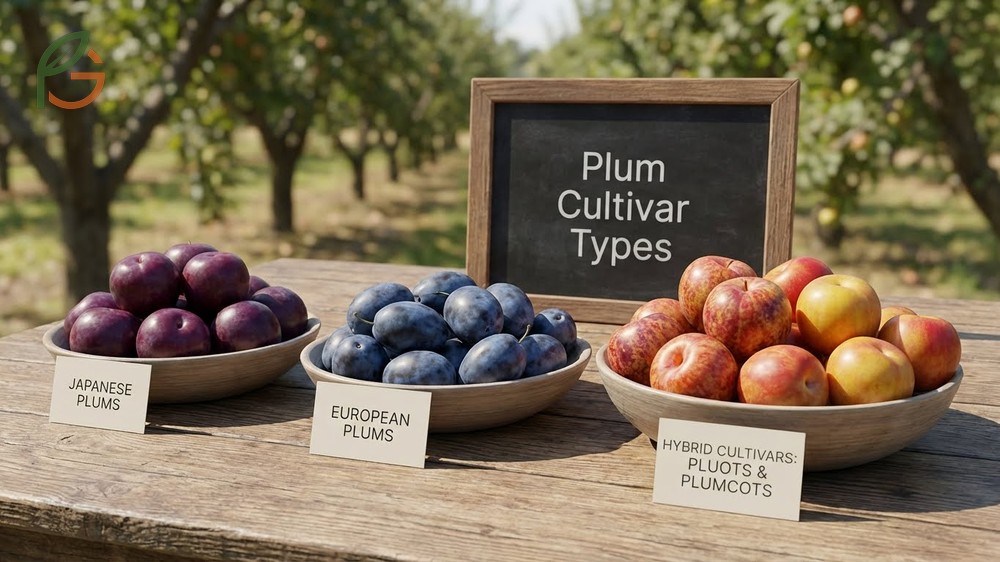
Beyond the basic Japanese-European split, plant breeders have developed specialized cultivar groups that serve specific niches. These breeding programs focus on extending harvest seasons, improving disease resistance, or creating unique flavor combinations that weren’t possible with traditional varieties.
Hybrid cultivars like pluots (75% plum, 25% apricot) and plumcots (50-50 split) combine the best traits of both parent fruits. These hybrids typically require less chill hours than pure plums and produce fruit with complex aromatic flavors. They’ve become increasingly popular in zones 7-9 where traditional European plums struggle with insufficient winter chill.
Blood plum cultivars represent another specialized group characterized by deep red flesh throughout the fruit. Varieties like Satsuma, Donsworth, and Yarrahapinni offer intensely sweet flavor with slight tartness that makes them exceptional for preserves. The red flesh color remains stable during cooking, creating visually striking jams and pies.
- Prune plums: Italian, Agen, Stanley, Brooks—high sugar content, freestone, ideal for commercial drying
- Gage plums: Green Gage, Bavay’s, Imperial, Jefferson—finest dessert quality, greenish-yellow, exceptional sweetness
- Blood plums: Satsuma, Donsworth, Mariposa—red flesh throughout, intense flavor, excellent for preserves
- Damson plums: Blue Damson, Shropshire—small tart fruits bred specifically for cooking and traditional preserves
- Hybrid pluots: Flavor King, Dapple Dandy, Flavor Supreme—aromatic, lower chill, complex flavor profiles
- American native plums: Beach plum, American plum, Chickasaw—ultra-hardy zones 3-8, small fruits, unique flavors
American native plum species deserve special mention for extreme cold hardiness. Beach plum (Prunus maritima) thrives in zones 3-8 and tolerates sandy coastal soils where other fruit trees fail. American plum (Prunus americana) reaches heights of 10-15 feet and produces red-to-yellow fruits suitable for jams despite their smaller size. These natives require less maintenance than cultivated varieties and resist common plum diseases more effectively.
Breeding Trends for 2025: New low-chill cultivars requiring only 100-300 chill hours are expanding plum cultivation into zones 9-10 where traditional varieties couldn’t produce. Look for varieties like Scarlet Beauty and the Gulf series hybrids if you’re gardening in warmer Southern regions.
Conclusion
The evidence is clear: Different Types Of Plums offer remarkable diversity that lets you match varieties to your specific climate, taste preferences, and intended uses. Japanese plums deliver juicy sweetness for fresh eating with early ripening, while European types provide firm texture perfect for preserving and drying. Understanding these fundamental differences—combined with knowing your USDA zone and chill hour requirements—ensures you’ll select cultivars that actually thrive rather than merely survive.
Current horticultural guidance emphasizes starting with proven varieties like Santa Rosa or Methley for Japanese types, or Stanley and Italian for European plums. FruitGarden provides detailed growing guides and regional recommendations to help you achieve productive harvests whether you’re planting your first tree or expanding an established orchard.
Frequently Asked Questions
What’s the difference between Japanese and European plums?
Japanese plums (Prunus salicina) produce larger, juicier fruits with softer texture that ripen 3-4 weeks earlier than European types. European plums (Prunus domestica) have firmer flesh, higher sugar content, and better cold hardiness, making them ideal for drying into prunes. Japanese varieties typically need cross-pollination, while many European cultivars are self-fertile.
Which plum varieties are self-pollinating?
Methley, Burgundy, and Santa Rosa offer partial to complete self-fertility among Japanese plums. European varieties Stanley, Italian, Green Gage, and Damson are fully self-fertile and produce good crops without pollinators. However, all varieties yield 30-50% more fruit when cross-pollinated with compatible cultivars that bloom at the same time.
What are the best plum varieties for cold climates?
European plums handle cold better than Japanese types, with Stanley, Green Gage, and Damson thriving in zones 4-5. American native plums like Prunus americana tolerate zones 3-8 and survive temperatures down to -30°F. These cold-hardy varieties need 700-1000 chill hours and resist late spring frost damage to blossoms better than warm-climate cultivars.
How do black plums differ from red plums?
Black plums typically contain red flesh and deliver sweeter flavor with 15-20% higher sugar content than red varieties. Red plums feature yellow flesh with more pronounced tartness and maintain firmer texture 5-7 days longer after harvest. Black plums turn from red to deep black-purple when fully ripe, while red plums stay crimson-red at maturity.
What plum varieties work best for making prunes?
Italian (Empress) plums dominate commercial prune production because of their high sugar content, freestone pits, and firm flesh that dries without fermenting. Stanley, Agen, and Brooks also make excellent prunes with similar characteristics. These European varieties contain 15-18% sugar at harvest, which concentrates to 40-50% in the finished dried fruit.
Can I plant Japanese and European plums together for pollination?
No—Japanese and European plums bloom at different times and won’t cross-pollinate each other effectively. Always pair Japanese varieties with other Japanese cultivars and European types with European pollinators. Check bloom time overlap rather than just planting different species, as even within each group, early and late bloomers won’t pollinate each other.
What are the easiest plum varieties for beginners to grow?
Methley ranks as the easiest Japanese plum with self-fertility, wide zone adaptability (5-9), disease resistance, and reliable cropping from a young age. Stanley leads European varieties for beginners with cold hardiness, self-pollination, dual-purpose fruit, and low maintenance requirements. Both varieties forgive beginner mistakes like improper pruning or inconsistent watering better than fussier cultivars.





