
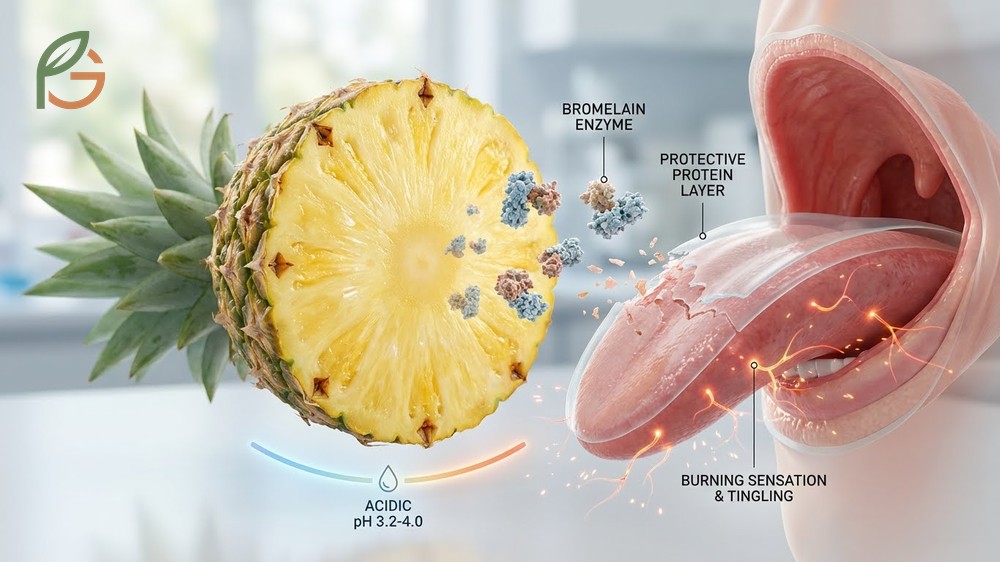
Why does pineapple hurt my mouth? Pineapple contains bromelain, a protease enzyme that breaks down the protective protein layer lining your mouth and tongue[1]. When combined with pineapple’s acidic pH of 3.2-4.0[2], this double action creates that burning, tingling sensation you’re experiencing. Research shows the enzyme literally digests mouth tissue while the acidity intensifies the irritation[3]. FruitGarden synthesizes current agricultural research and food science data to help you understand tropical fruit cultivation and consumption.
Quick Answer
- Bromelain enzyme breaks down protective mucous proteins in your mouth[1]
- Pineapple’s pH 3.2-4.0 acidity adds irritation once protective layer is compromised[2]
- Core contains the most concentrated bromelain (directly connected to stem)[4]
- Heating to 158°F (70°C) neutralizes the enzyme completely[5]
Why Does Pineapple Hurt My Mouth
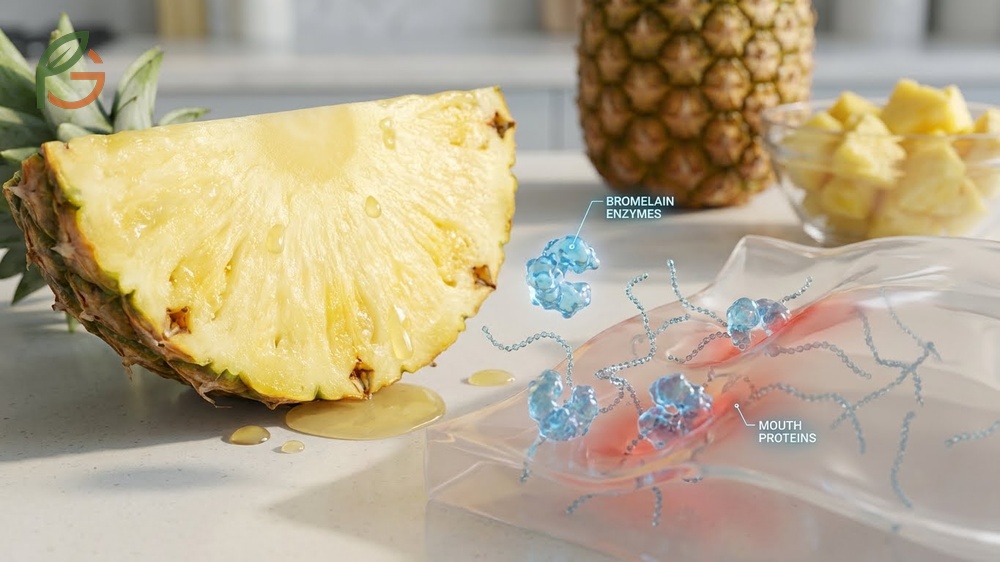
The burning sensation comes from bromelain, a complex group of protease enzymes unique to pineapples[6]. These proteases break down protein molecules by severing amino acid chains. When you eat fresh pineapple, bromelain immediately starts working on the proteins in your mouth’s protective mucous lining.
Studies show this enzyme doesn’t discriminate between meat proteins and the tissues lining your mouth, tongue, and cheeks[3]. You’re essentially being digested while you’re eating. This is why pineapple works so well as a meat tenderizer in cooking.
Most people don’t realize the dual nature of pineapple’s attack on your mouth. It’s not just one factor causing discomfort. Research demonstrates both the enzymatic action and the fruit’s natural acidity work together to create that stinging sensation[1].
The Bromelain Enzyme Mechanism
Bromelain functions as a cysteine protease, meaning it uses a cysteine amino acid in its active site to cleave protein bonds. Your mouth and tongue are coated with a protective saliva layer containing proteins. When bromelain contacts these proteins, it breaks them down systematically[3].
Once this protective barrier is compromised, the underlying tissue becomes vulnerable. The enzyme continues working on the exposed cells, which is what creates that raw, tender feeling. For some people, this can even cause minor bleeding of the gums, tongue, or inner cheeks.
Acidity Amplifies the Burn
Pineapple registers between 3.2 and 4.0 on the pH scale, making it quite acidic[2]. For context, that’s similar to orange juice. When bromelain removes your mouth’s protective mucin proteins, the acidic juice gets direct access to sensitive tissue.
This combination intensifies the burning sensation significantly. Research suggests bromelain itself has an acidic flavor component, which adds another layer to the acidic experience[3]. It’s the one-two punch that makes pineapple uniquely irritating compared to other acidic fruits.
Bromelain Enzyme Effects

Current research identifies bromelain as a complex mixture of multiple cysteine proteases rather than a single enzyme. Studies have found up to eight distinct catalytically active proteases in commercial stem bromelain preparations[6]. This explains why the enzymatic action is so potent and difficult to neutralize without proper treatment.
The enzyme remains proteolytically active throughout your digestive tract if consumed. However, the most immediate effects occur in your mouth because that’s where tissue directly contacts high concentrations. Evidence shows bromelain can modulate immune responses and break down various protein structures it encounters[6].
Where Bromelain Is Most Concentrated
Bromelain exists throughout the pineapple plant in the root, stem, and fruit. Within the fruit itself, concentration varies significantly by location. The core contains the highest levels because it connects directly to the stem[4].
If you’re cutting fresh pineapple at home, removing the entire core reduces your bromelain exposure substantially. The outer flesh contains less enzyme than the inner portions. This is why some people experience burning only when they eat closer to the core.
- Stem: Highest concentration, used for commercial bromelain extraction
- Core: Very high levels due to direct stem connection
- Inner flesh: Moderate concentration decreasing toward outer edges
- Outer flesh: Lower enzyme levels but still present
- Crown leaves: Contains bromelain with different thermal stability profile
Important note: Don’t confuse pineapple mouth burn with a true allergic reaction. While bromelain causes irritation in most people, actual pineapple allergies involve immune system responses with symptoms like hives, swelling, or breathing difficulties that require medical attention.
Individual Sensitivity Varies
Some people barely notice pineapple’s effects while others experience significant discomfort from small amounts. This variation relates to several factors including mucous membrane thickness, saliva production rate, and individual enzyme sensitivity. People with thinner oral mucosa or lower saliva production typically feel more burning.
Unripe pineapples contain higher acid levels and potentially more active enzymes, making them more irritating. As pineapples ripen, sugar content increases and acidity decreases slightly, though bromelain remains present throughout ripening.
Prevent Pineapple Burn
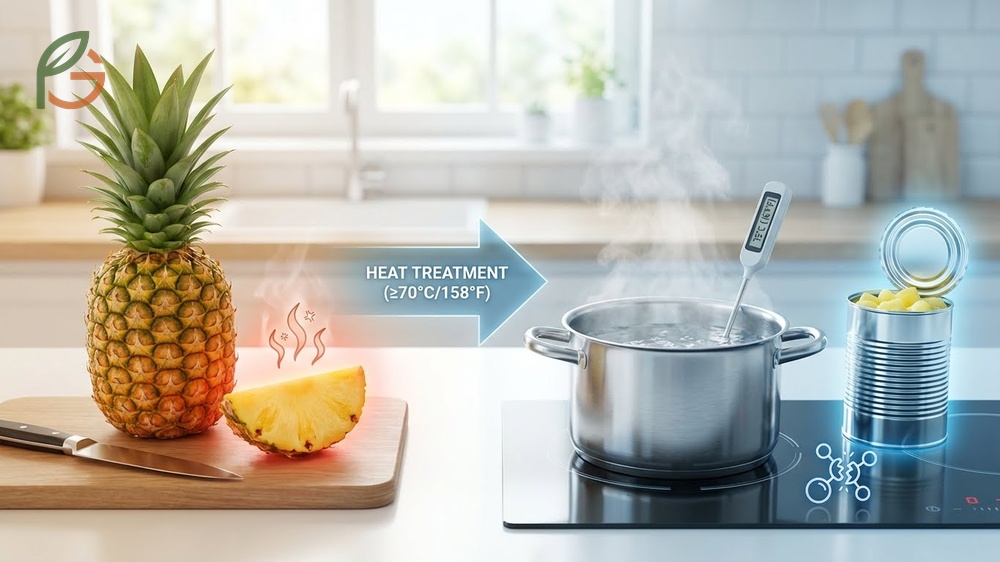
Heat treatment offers the most reliable prevention method. Exposing pineapple to temperatures at or above 158°F (70°C) denatures bromelain, rendering it inactive[5]. This is why canned pineapple never causes mouth burn. The canning process heats fruit to approximately 176°F (80°C) for sterilization, which completely destroys enzymatic activity[5].
If you want to enjoy fresh pineapple’s taste without the burn, you’ve got several science-backed options. Each method works by either denaturing the enzyme, blocking its activity, or neutralizing it with other proteins. The key is understanding which approach fits your preparation style.
Heat Treatment Methods
Grilling, roasting, or blanching fresh pineapple neutralizes bromelain effectively. You don’t need to cook it completely through. A quick exposure to high heat on the outer surfaces can reduce enzyme levels significantly while maintaining the fruit’s texture and most of its flavor.
For blanching, bring water to a boil, submerge pineapple chunks for 30-60 seconds, then immediately transfer to ice water. This quick heat treatment deactivates surface enzymes while keeping the fruit mostly raw. Grilled pineapple develops caramelized sugars that add flavor complexity while eliminating the burn completely.
- Grilling: 2-3 minutes per side over medium-high heat caramelizes and deactivates enzymes
- Roasting: 400°F (204°C) for 10-15 minutes creates sweet, burn-free fruit
- Blanching: 30-60 second boil followed by ice bath preserves texture
- Sautéing: Quick pan cooking in butter or oil neutralizes bromelain
- Microwaving: 30-45 seconds on high reduces enzyme activity without full cooking
Dairy Neutralization Technique
Pairing fresh pineapple with dairy products provides immediate protection. Milk proteins in yogurt, ice cream, or crème fraîche interact with bromelain, keeping it occupied with those proteins instead of your mouth tissue[5]. This is why pineapple smoothies made with yogurt don’t cause the same burning sensation as fresh pineapple juice.
The fat content in dairy also creates a coating effect that provides a physical barrier. Greek yogurt works particularly well because of its higher protein concentration. You can make a pineapple parfait, add chunks to cottage cheese, or simply eat a spoonful of yogurt immediately after consuming pineapple.
Quick relief tip: If your mouth is burning right now, eat something fatty like yogurt, ice cream, or even a small amount of butter. The proteins and fats neutralize remaining bromelain and provide immediate comfort.
Salt Water Pre-Treatment
Soaking fresh pineapple chunks in salt water for 30 minutes before eating activates bromelain prematurely. The salt triggers the enzyme to break down proteins in the solution rather than waiting to attack your mouth[5]. Once you rinse and eat the fruit, much of the active enzyme has been depleted.
This Caribbean technique also reduces any bitter undertones and can make pineapple taste sweeter. Use about 1 tablespoon of salt per 2 cups of water. After soaking, rinse thoroughly under cold water to remove excess salt. The fruit retains its fresh texture but causes minimal mouth irritation.
Immediate Relief When Mouth Burns

When you’re already experiencing burning, cold water provides quick numbing relief. Sip cold water and hold it in your mouth for 15-30 seconds before swallowing[4]. The low temperature numbs nerve endings while water stimulates saliva production. Fresh saliva helps wash away residual bromelain and begins rebuilding your protective mucous layer.
Bland foods like crackers, plain bread, or rice absorb pineapple juice and dilute bromelain’s impact. These starchy foods also stimulate saliva flow without adding acidity. Avoid citrus fruits, tomatoes, or other acidic foods that would irritate already-compromised tissue further.
Sucking on ice chips or frozen fruit popsicles extends the numbing effect. Watermelon chunks work particularly well because they’re high in water content and non-acidic. The discomfort typically subsides within 2-4 hours as your mouth regenerates its protective protein layer naturally.
- Cold water rinse: Hold in mouth for 30 seconds, repeat every few minutes
- Dairy products: Yogurt, milk, or ice cream provide protein buffering and fat coating
- Bland starches: Crackers, bread, or rice absorb juices and reduce irritation
- Ice chips: Numbing effect reduces pain while promoting saliva production
- Watermelon or cucumber: High water content, non-acidic relief options
- Avoid acidic foods: No citrus, tomatoes, or vinegar-based items for several hours
Conclusion
The evidence is clear: why does pineapple hurt my mouth comes down to bromelain’s protein-breaking action combined with the fruit’s natural acidity creating a dual assault on your oral tissues. You can enjoy pineapple without discomfort by using heat treatment, dairy pairing, or salt water pre-soaking methods that neutralize the enzyme before it affects you.
Current food science guidance emphasizes that this reaction is normal and temporary, not a sign of allergy in most cases. FruitGarden continues tracking research on tropical fruit enzymes and cultivation practices to help growers and consumers make informed decisions about fruit preparation and consumption.
Medical Disclaimer
Important Medical Disclaimer: This content is for informational and educational purposes only. It is not intended as a substitute for professional medical advice, diagnosis, or treatment. Always consult a qualified healthcare professional before making any changes to your diet or health routine, especially if you experience severe mouth irritation, swelling, breathing difficulties, or suspect an allergic reaction. True pineapple allergies differ from normal bromelain irritation and require medical evaluation.
Frequently Asked Questions
How long does pineapple mouth burn last?
Pineapple mouth burn typically lasts 2-4 hours after eating. Your mouth naturally regenerates the protective mucous protein layer during this time. Drinking cold water, eating dairy products, or consuming bland foods can reduce discomfort and speed recovery. Severe irritation that persists beyond 24 hours warrants medical evaluation to rule out allergic reactions.
Can you become immune to pineapple burn?
No, you can’t develop immunity to bromelain’s protein-breaking action. The enzyme works mechanically by cleaving protein bonds, not through an immune response. Some people naturally have thicker oral mucosa or higher saliva production that provides more protection, making them less sensitive to pineapple’s effects from the start.
Does canned pineapple contain bromelain?
No, canned pineapple doesn’t contain active bromelain. The canning process heats fruit to approximately 176°F (80°C) for sterilization, which completely denatures and inactivates the enzyme. This is why canned pineapple never causes mouth burn and can be used in gelatin desserts, which fresh pineapple would prevent from setting.
What part of pineapple has the most bromelain?
The core contains the most concentrated bromelain in pineapple fruit because it connects directly to the stem, which has the highest overall enzyme levels. The stem is actually used for commercial bromelain extraction. Removing the entire core when cutting fresh pineapple significantly reduces your enzyme exposure and decreases mouth irritation.
Is pineapple mouth burn dangerous?
Pineapple mouth burn from bromelain is uncomfortable but not dangerous for most people. It’s a normal mechanical reaction, not tissue damage. However, if you experience swelling, hives, breathing difficulties, or symptoms beyond localized burning, stop eating pineapple immediately and seek medical attention, as these indicate a true allergic reaction requiring professional evaluation.
Why does grilled pineapple not hurt my mouth?
Grilled pineapple doesn’t hurt your mouth because heat above 158°F (70°C) denatures bromelain, destroying its protein-breaking ability. Grilling exposes pineapple to temperatures of 400-500°F (204-260°C), which completely inactivates the enzyme. This is why grilled, roasted, or cooked pineapple tastes sweet without any burning sensation.
Does pineapple juice burn your mouth less than fresh fruit?
No, fresh pineapple juice often burns your mouth more than the fruit because it concentrates bromelain and acids in liquid form. The juice contacts more surface area of your mouth simultaneously and isn’t diluted by chewing or saliva as much. Commercial pasteurized pineapple juice is safer because heat processing inactivates the enzyme during manufacturing.





