
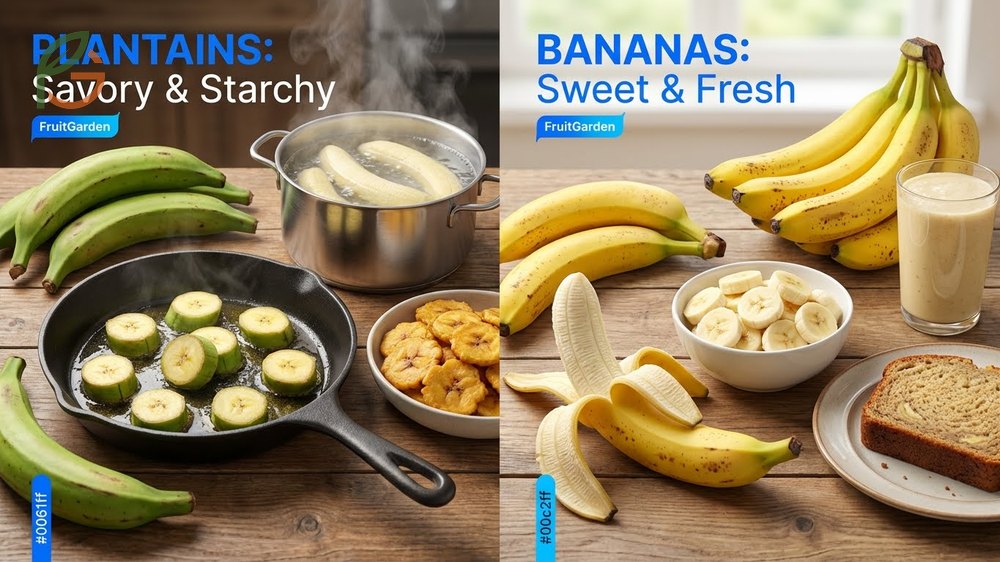
Plantains vs bananas aren’t interchangeable in the kitchen. Research shows plantains contain 32g of carbohydrates per 100g compared to bananas’ 23g, with most of that difference coming from starch rather than sugar[1]. This higher starch content makes plantains ideal for savory cooking methods like frying and boiling, while bananas work best fresh or in sweet recipes. FruitGarden brings you agricultural data and cultivation insights to help you understand these tropical fruits better.
Quick Answer
- Plantains have 8.3g more carbohydrates per 100g serving than bananas[2]
- Green plantains contain 27g resistant starch vs just 2g sugar, making them perfect for savory dishes[3]
- Plantains provide 487mg potassium per serving and aren’t typically eaten raw[4]
- Bananas taste sweet and creamy when ripe, while plantains have a starchy, potato-like flavor until cooked[5]
Plantains Vs Bananas
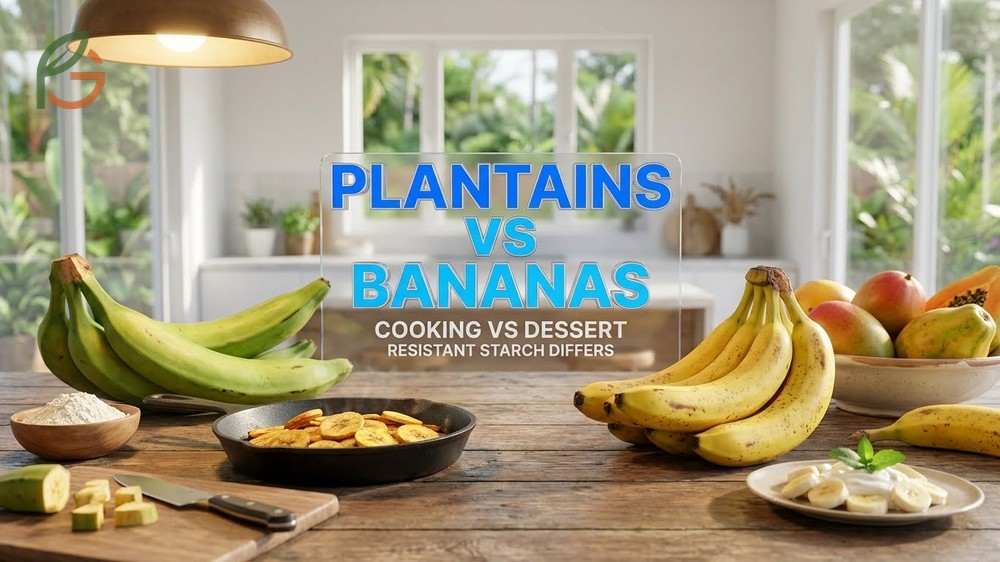
Studies demonstrate that plantains and bananas share the same genus (Musa) but serve completely different culinary purposes. Plantains are often called “cooking bananas” because they’re firmer and starchier, while regular bananas are dessert fruits eaten fresh[5]. Most people don’t realize that the texture difference comes down to resistant starch—plantains have far more of it.
Current agricultural data shows plantains account for about 85% of worldwide banana production by volume in tropical regions. They’re a dietary staple in West Africa, the Caribbean, and Central America. Unlike bananas that you’ll find in every US grocery store’s fruit section, plantains are typically stocked near specialty produce.
From My Experience: My cousin in Veracruz, Mexico grows both plantains and bananas in her backyard. She told me the plantain trees need 10-12 months to produce fruit versus 9 months for regular bananas—they’re more patient crops.
Botanical Relationship
Both fruits belong to the Musa genus, but they’ve been cultivated for different purposes over thousands of years. Plantains developed in tropical regions where starchy staples were needed. Their genetic makeup doesn’t differ dramatically from bananas, but selective breeding emphasized cooking qualities.
Research shows that plantains generally grow longer (12-15 inches) compared to bananas’ 7-9 inches. The skin thickness is another key difference—plantain peels are tougher and harder to remove when green.
Visual Differences
Plantains have thicker, more angular skins that stay rigid even when ripe. You can’t easily peel a plantain the way you’d peel a banana. When they’re green, plantains look almost like oversized, angular bananas with pronounced ridges running lengthwise.
As they ripen, plantains turn from green to yellow with black spots, and eventually to nearly all black. Unlike bananas where black skin means overripe and mushy, black plantains are at peak sweetness for dessert dishes.
Plantain Banana Difference
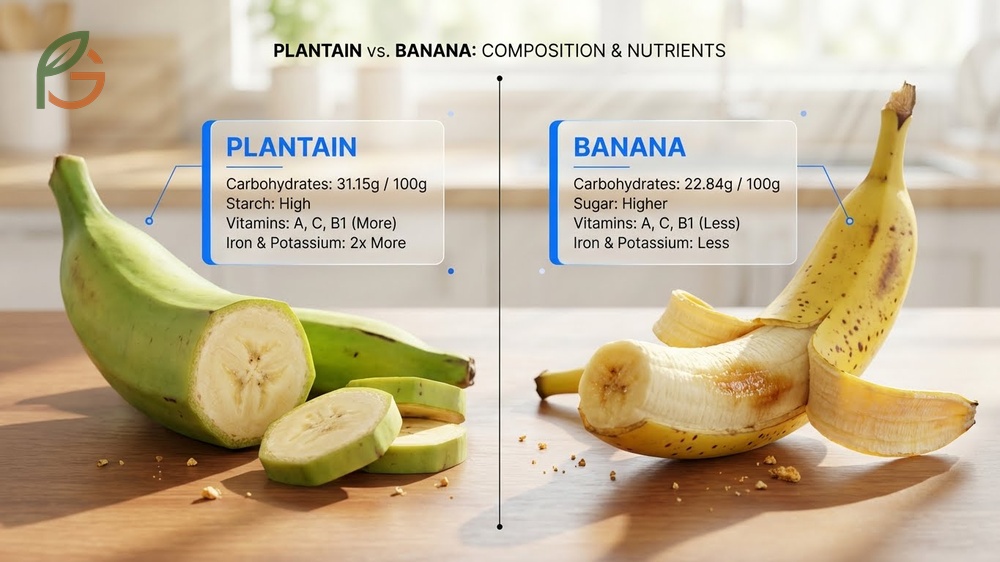
The carbohydrate composition tells you everything about why these fruits cook differently. Plantains deliver 31.15g carbohydrates per 100g serving compared to bananas’ 22.84g, and that 8.3g difference is mostly starch[2]. This matters because starch holds up to heat while sugar caramelizes and breaks down.
Evidence suggests plantains contain significantly more vitamins A, C, and B1 than bananas. They also provide 2 times more iron and higher levels of potassium[2]. That makes them more nutrient-dense overall, though bananas have 2.5 times more calcium.
Starch vs Sugar Content
Green plantains pack 27g resistant starch and only 2g sugar per serving[3]. As they ripen to yellow, this shifts to about 12g resistant starch. When they’re black and fully ripe, the ratio reverses—just 7g resistant starch and 19g sugar.
Bananas don’t follow the same pattern. They start with moderate starch levels that quickly convert to simple sugars. That’s why a ripe banana tastes like candy while a ripe plantain still needs cooking to bring out its sweetness.
Nutritional Profile
Current data from the USDA shows one medium plantain (100g) contains 136 calories, 1g protein, 1g fat, and 2g fiber[3]. Bananas come in at just 98 calories with similar protein and fiber but 0g fat.
The mineral content deserves attention—plantains provide 487mg potassium per serving, beating bananas’ already impressive potassium levels[4]. They also deliver 36mg magnesium, making them excellent for electrolyte balance.
This table compares calories, carbohydrates, fiber, potassium, and vitamin C content between plantains and bananas per 100g serving
| Nutrient | Plantains | Bananas | Difference |
|---|---|---|---|
| Calories | 136[3] | 98[3] | +38 calories |
| Carbohydrates | 31.15g[2] | 22.84g[2] | +8.3g carbs |
| Dietary Fiber | 2g[4] | 2g[3] | Equal |
| Potassium | 487mg[4] | 358mg | +129mg potassium |
| Vitamin C | 18mg[1] | 9mg[1] | 2x more vitamin C |
Cooking vs Eating Banana
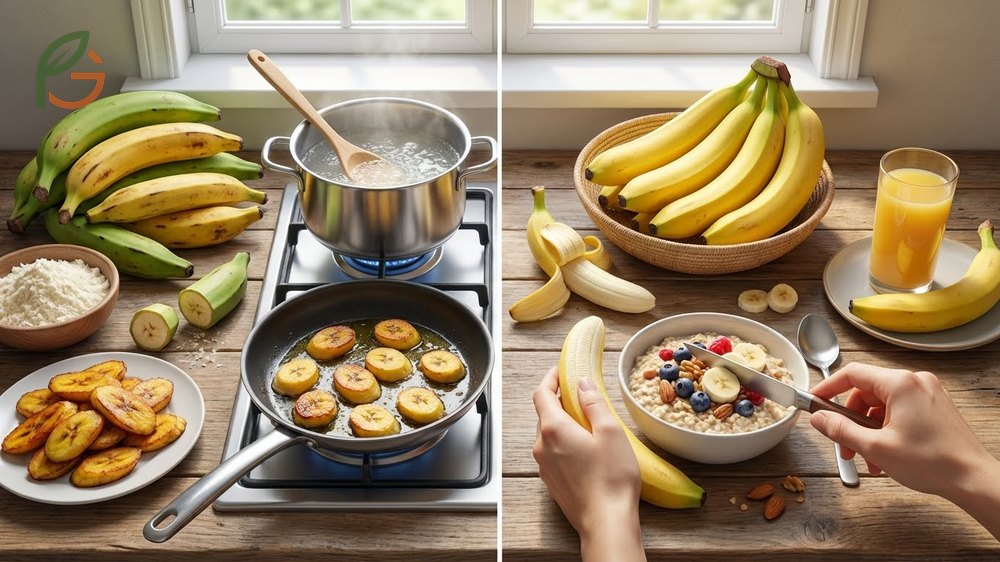
Agricultural research demonstrates that plantains require cooking at all ripeness stages, while bananas are designed for fresh consumption. The high resistant starch in plantains makes them unpalatable raw—they taste chalky and bitter. Cooking breaks down that starch into digestible carbohydrates with pleasant flavor.
Bananas can technically be cooked, but heat turns them mushy and overly sweet. You’ll find them grilled occasionally or baked into bread, but they’re not meant for the same frying, boiling, or roasting methods that work perfectly for plantains.
Cooking Methods for Plantains
Different ripeness stages call for specific cooking techniques. Green plantains work best for frying into chips (tostones) or twice-fried patties because they’re firm and hold their shape[6]. Yellow plantains have softened enough for roasting, baking, or single-fry preparations.
Black plantains become sweet enough for dessert applications—you can fry them into maduros (sweet fried plantains) or mash them into puddings. The cooking process takes 2-3 minutes per side for frying, 20-30 minutes for baking at 375°F (190°C), or about 30 minutes for boiling.
- Deep frying: Creates crispy tostones from green plantains or caramelized maduros from black plantains
- Boiling: Softens green plantains for mashing with savory dishes, typically takes 30 minutes wrapped in foil
- Baking: Works for yellow plantains, developing natural sweetness at 375°F (190°C) for 25-30 minutes
- Grilling: Adds smoky flavor to yellow-black plantains, best cut lengthwise and grilled 3-4 minutes per side
- Air frying: Modern method producing crispy results with less oil, 12-15 minutes at 400°F (200°C)
Important Note: Don’t try peeling plantains like bananas. Cut off both ends, score the skin lengthwise in 3-4 places, then pry it off in strips. This prevents wasting flesh and makes prep much easier.
How Bananas Are Consumed
Bananas shine in fresh applications where their creamy texture and natural sweetness need no enhancement. They’re perfect for smoothies, fruit salads, cereal toppings, and eating out of hand. When you do cook them, it’s usually in baked goods where their moisture content helps create tender textures.
Some cultures do fry ripe bananas for snacks or desserts, but the technique requires gentle handling since they break apart easily. You won’t see bananas used as a starchy side dish the way plantains dominate Caribbean and African cuisine.
- Fresh/raw: Most common consumption method, eaten when yellow with brown speckles for peak sweetness
- Smoothies: Frozen bananas create creamy texture without dairy, popular in breakfast blends
- Banana bread: Classic use for overripe bananas, their extra sugar and moisture improve baking results
- Dried chips: Dehydrated banana slices make portable snacks, though sugar concentrates significantly
- Ice cream substitute: Frozen then blended bananas create dairy-free “nice cream” with smooth consistency
Starchy Plantain Characteristics
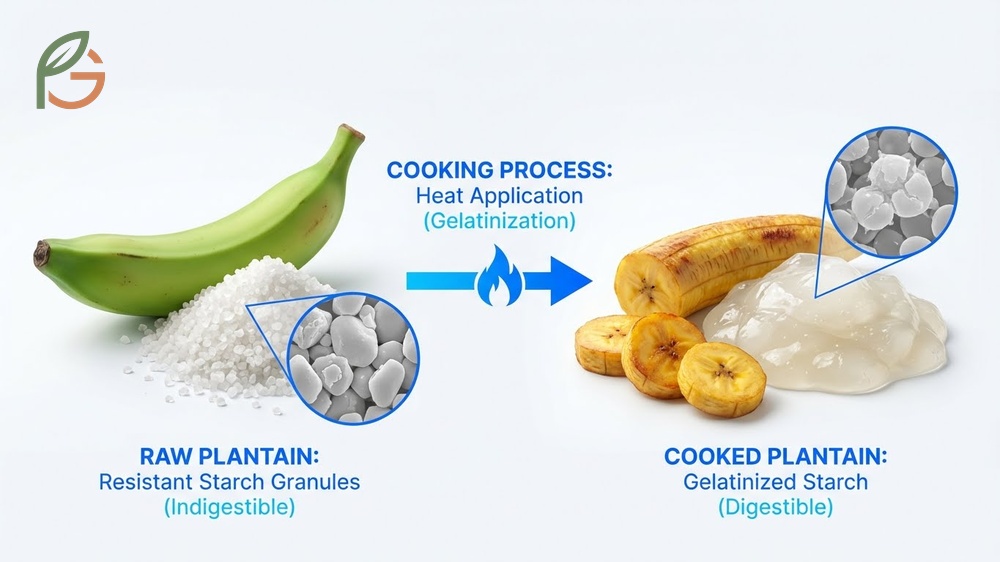
The defining feature of plantains is their exceptional starch content—more than 60% when processed into pure starch[5]. This high concentration makes them behave more like potatoes or yams than typical fruits. The starch granules are larger and more resistant to breakdown, which is why raw plantains taste terrible.
Research across tropical agriculture shows this resistant starch becomes easily digestible only after heat application. The cooking process gelatinizes the starch molecules, transforming them from indigestible crystals into smooth, energy-rich carbohydrates. That’s the science behind why green plantains must be cooked before eating.
The amylose-to-amylopectin ratio in plantain starch runs higher than most other tropical crops. This ratio affects how the starch behaves when heated—higher amylose content means firmer texture after cooking and slower digestion. It’s why plantains can be fried multiple times without completely falling apart.
Cooking Tip: If you’re substituting plantains for potatoes in recipes, use green ones and expect slightly longer cooking times. They’ll absorb less oil when frying compared to potatoes due to their dense structure.
- Firm texture: Plantains stay solid when sliced, unlike soft bananas that bruise and mush easily
- Low sugar when green: Only 2g sugar per serving in green stage, making them ideal for savory applications[3]
- Heat-stable: Can withstand high-temperature frying without disintegrating or becoming overly sweet
- Gradual ripening: Take 3-4 weeks to fully ripen from green to black, allowing extended use window[6]
- Versatile stages: Each color stage (green, yellow, black) serves distinct culinary purposes
- Thick peel: Protects the fruit during cooking and storage, requires knife assistance to remove
When to Eat Plantain
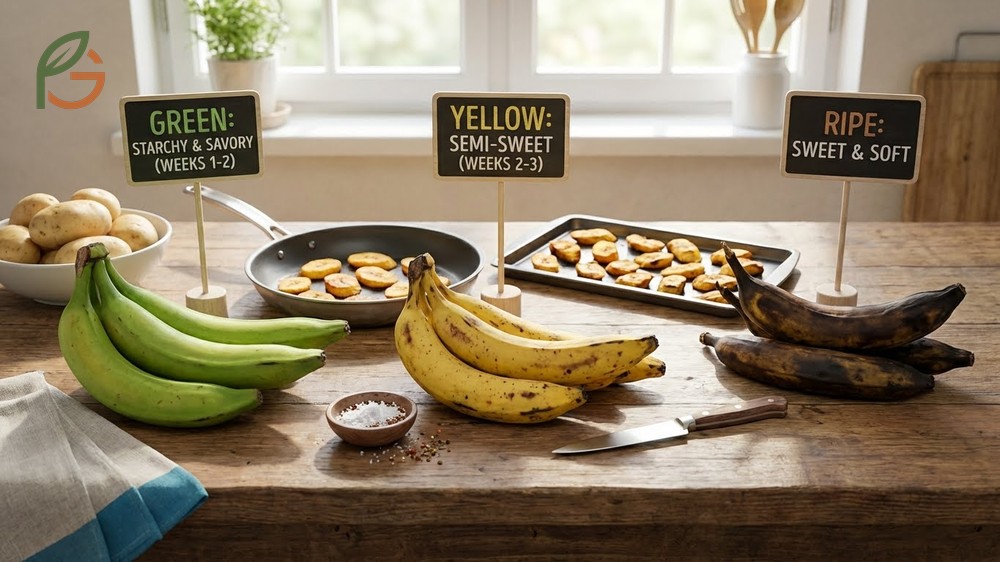
Understanding ripeness stages transforms how you use plantains in your kitchen. Agricultural guidance shows plantains go through three distinct phases, each taking about 1-2 weeks[6]. Green plantains (weeks 1-2) contain maximum starch and work exclusively in savory dishes—think of them as you would potatoes.
Yellow plantains (weeks 2-3) hit a sweet spot where starch has partially converted to sugar. They’re perfect for roasting, baking, or frying as a semi-sweet side dish. The texture softens but still holds shape, making them versatile for both savory and sweet preparations.
Black plantains (weeks 3-4) develop concentrated sweetness as resistant starch drops to 7g and sugar rises to 19g[3]. At this stage they’re dessert-ready—fry them for maduros or incorporate into sweet breads. The flesh becomes tender enough to mash easily but doesn’t turn mushy like overripe bananas.
For breakfast dishes, yellow-to-black plantains pair well with eggs and beans in traditional Latin American plates. Lunch and dinner applications favor green-to-yellow plantains as starchy sides replacing rice or potatoes. You can store green plantains at room temperature and they’ll naturally progress through all stages over 3-4 weeks.
From My Experience: My friend in Oaxaca, Mexico makes tostones every Saturday morning. She buys green plantains on Monday, lets them sit until Saturday, and they’re perfect—still green but slightly softened. She says the 5-day window works better than using them immediately.
Current data suggests the flavor profile shifts dramatically with ripeness. Green plantains taste neutral to slightly bitter, requiring salt and seasonings. Yellow plantains develop mild sweetness that complements both savory and sweet ingredients. Black plantains taste distinctly sweet with caramel notes, though less intensely sweet than ripe bananas.
Conclusion
The evidence is clear: plantains vs bananas represent two different approaches to the same botanical family. Plantains deliver 8.3g more carbohydrates, 2x the iron, and cooking versatility that bananas can’t match[2]. Choose green plantains for savory frying and boiling, yellow for roasting and baking, or black for sweet preparations.
Current agricultural guidance emphasizes using each fruit according to its strengths—plantains as cooked staples providing resistant starch and minerals, bananas as fresh snacks offering quick energy. FruitGarden continues tracking cultivation research to bring you practical insights for growing and enjoying both crops in your garden.
Frequently Asked Questions
Can you eat plantains raw like bananas?
No, you shouldn’t eat raw plantains even when they’re fully ripe and black. They contain high levels of resistant starch that remains chalky and unpalatable without cooking. The starch needs heat to break down into digestible carbohydrates with pleasant flavor and texture.
Which is healthier, plantains or bananas?
Plantains provide more nutrients overall—they contain twice the iron, more potassium (487mg vs 358mg), double the vitamin C, and 15 times more vitamin A than bananas. However, bananas are lower in calories (98 vs 136) and easier to digest raw. Your choice depends on whether you need a starchy cooked food or quick fresh energy.
What do cooked plantains taste like?
Cooked green plantains taste similar to potatoes with a mild, starchy flavor that takes on whatever seasonings you use. Yellow plantains develop subtle sweetness like sweet potatoes. Black plantains taste sweet with caramel notes but less intensely than ripe bananas—they’re more like a naturally sweetened vegetable than candy.
How long do plantains take to ripen?
Plantains take 3-4 weeks to fully ripen from green to black at room temperature. They stay green for about 2 weeks, turn yellow in week 3, and develop black skin by week 4. Unlike bananas that ripen quickly, plantains give you an extended window to use them at different stages for various recipes.
Can I substitute plantains for bananas in banana bread?
It’s not recommended because plantains stay firmer and less sweet even when black. Banana bread relies on the mushiness and concentrated sugar of overripe bananas for proper texture and flavor. Black plantains would give you denser, less sweet results that don’t match traditional banana bread.
What’s the best way to peel a plantain?
Cut off both ends with a knife, then score the skin lengthwise in 3-4 places from end to end. Slide your thumb under each strip and peel it away from the flesh. Don’t try the banana method of peeling from the stem—plantain skin is too thick and adheres to the fruit, especially when green.
Are plantains good for weight management?
Green plantains can support weight management because they’re high in resistant starch (27g per serving), which acts like fiber and promotes fullness. However, they’re calorie-dense at 136 calories per 100g, and frying adds significant fat. Boiled or baked green plantains work best if you’re watching calories.





