
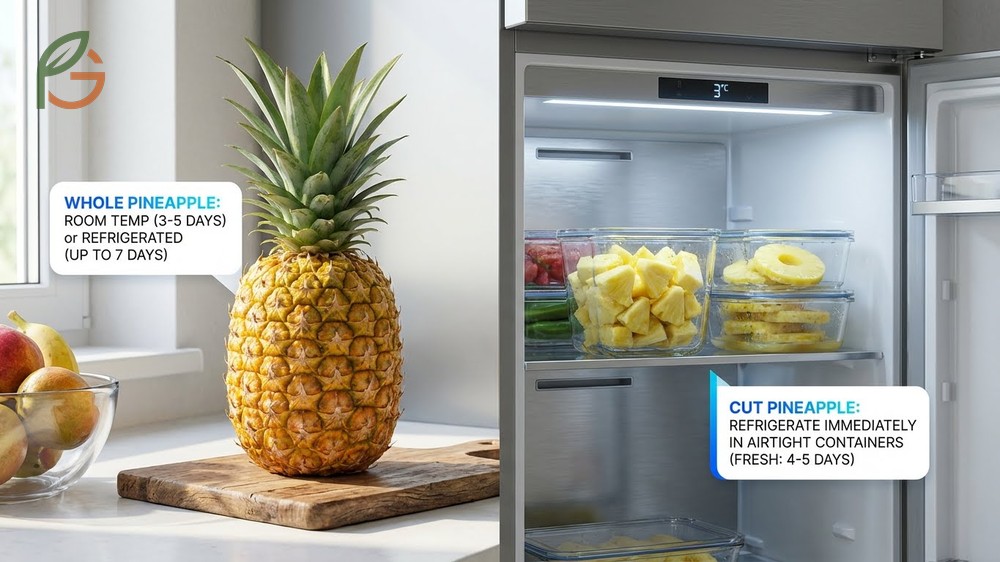
How to store fresh pineapple? The method depends on whether it’s whole or cut. Research shows whole ripe pineapples last 3-5 days at room temperature or up to 7 days refrigerated, while cut pieces need immediate refrigeration in airtight containers and stay fresh for 4-5 days[1]. At FruitGarden, we synthesize current agricultural data and post-harvest research to help home gardeners and fruit enthusiasts maximize their tropical harvests.
Quick Answer
- Whole ripe pineapples: 3-5 days at room temperature, up to 7 days refrigerated[1]
- Cut pineapple pieces: 4-5 days refrigerated in airtight containers[2]
- Optimal storage temperature: 45-55°F (7-13°C) for extended freshness[3]
- Frozen pineapple chunks: 12-18 months at 0°F (-18°C) in freezer bags[4]
How to Store Fresh Pineapple
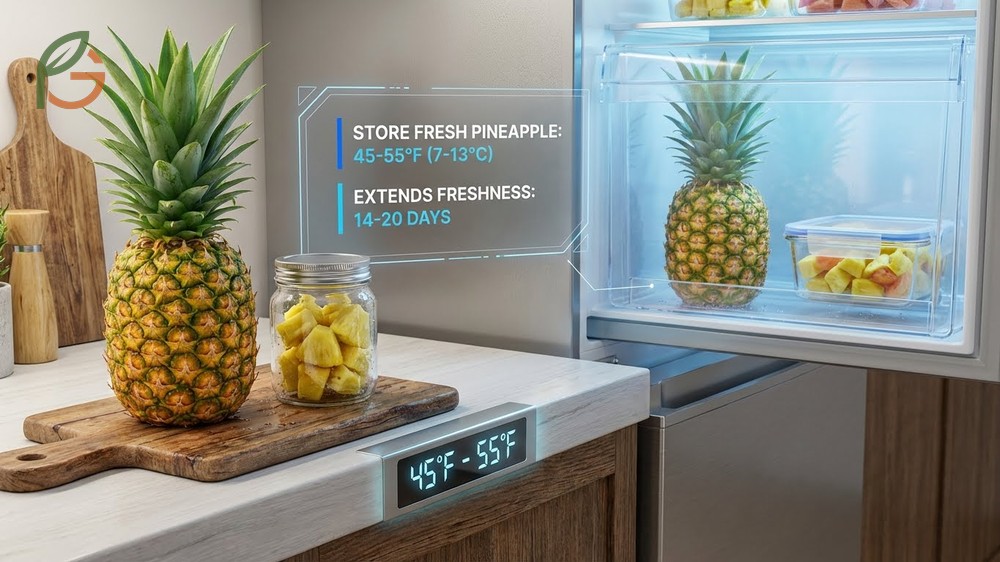
Pineapples are harvested when fully ripe since they don’t continue ripening after picking, unlike bananas or avocados. This means you’re working with fruit that’s already at peak maturity when you bring it home. Studies from the University of Hawaii demonstrate that proper storage temperature directly impacts shelf life—with optimal conditions at 45-55°F (7-13°C) extending freshness for 14-20 days for color-break stage fruit[3].
The key difference between storing whole versus cut pineapple comes down to exposure to air. Whole pineapples have natural protection from their thick skin, which prevents moisture loss and oxidation. Once you cut into that protective barrier, the fruit becomes highly perishable and needs immediate refrigeration in sealed containers.
From My Experience: My cousin in Guadalajara, Mexico grows pineapples in her backyard greenhouse. She harvested three fruits in July 2024 at different ripeness stages—the fully golden ones lasted only 4 days at room temp (around 82°F/28°C), matching the 3-5 day range from research[1].
Most people don’t realize that pineapples are non-climacteric fruits, meaning they won’t get sweeter or softer after harvest. What you see is what you get. This makes choosing the right pineapple at the store and storing it correctly from day one absolutely critical for enjoying optimal flavor and texture.
Understanding Pineapple Ripeness
Determining ripeness helps you decide the best storage approach. A ripe pineapple gives off a sweet fragrance at the base, has leaves that pull out easily from the crown, and shows golden-yellow coloring on the skin. Green pineapples need room temperature ripening first before any refrigeration.
The color-break stage refers to when the fruit transitions from green to yellow, which is when commercial storage guidelines recommend the 45-55°F (7-13°C) temperature range[3]. For home storage, this translates to your refrigerator’s main shelf rather than the crisper drawer.
Temperature Requirements
Temperature control makes or breaks pineapple storage success. The FAO recommends transport and storage temperatures between 45-55°F (7-13°C) with 85-90% relative humidity[5]. Below 45°F (7°C), you’ll risk chilling injury that causes internal browning within 2-3 days after removing the fruit from cold storage.
Your home refrigerator typically runs at 37-40°F (3-4°C), which is slightly colder than ideal but still workable for short-term storage of 5-7 days. The vegetable compartment often runs a bit warmer at around 41-45°F (5-7°C), making it a better choice for whole pineapples if your fridge has one.
Important Note: Never store unripe green pineapples in the refrigerator—they won’t ripen properly and may develop off-flavors. Always ripen at room temperature first, then refrigerate once golden.
Storing Pineapple Fresh: Whole Fruit
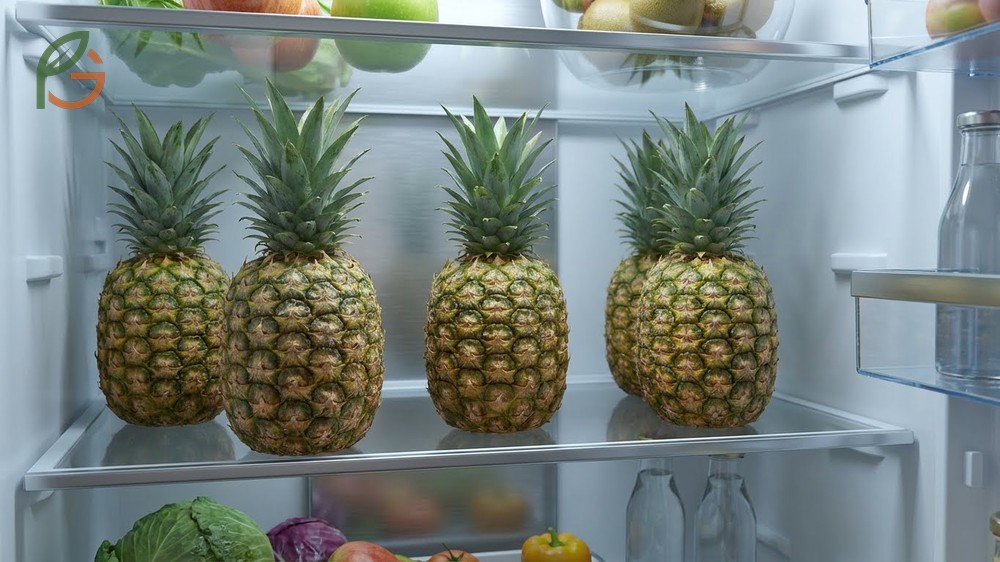
Whole pineapples offer the longest storage life when handled correctly. Research shows you can expect 3-5 days at room temperature for ripe fruit, or extend that to 7 days with refrigeration[1]. The key is understanding whether your fruit is ripe or still maturing.
Don’t wrap whole pineapples in plastic or store them in containers—they need air circulation around the skin to prevent moisture buildup that accelerates decay. Simply place them on a refrigerator shelf or countertop depending on ripeness stage.
Unripe Pineapple Storage
Unripe pineapples with green skin should stay at room temperature in a well-ventilated area away from direct sunlight. They’ll reach optimal ripeness within 1-2 days under these conditions[6]. Your kitchen counter works perfectly—just avoid placing them near heat sources like ovens or in direct sun from windows.
If you bought a green pineapple but won’t use it for a week or two, you can refrigerate it unripe for up to 14 days to pause the ripening process. However, you’ll then need to bring it back to room temperature to complete ripening before consumption, and the flavor won’t be quite as good as fruit that ripened naturally without interruption.
Ripe Whole Pineapple Storage
Once your pineapple shows golden-yellow coloring and smells sweet, it’s time to either use it or refrigerate it. At room temperature (around 68-75°F or 20-24°C), ripe pineapples last 3-5 days before quality declines[1]. You’ll notice the bottom starting to soften and potentially developing mold as it passes peak freshness.
Refrigeration extends this to about a week. Place the whole pineapple on a main refrigerator shelf rather than in the crisper drawer. Many experts recommend removing the leafy crown by twisting it off—this saves refrigerator space and doesn’t affect fruit quality since the crown isn’t attached to the edible flesh.
- Remove the crown by firmly grasping the leaves and twisting counterclockwise to save storage space
- Place on a middle or top refrigerator shelf where temperature is most consistent
- Don’t wash the pineapple before storage—moisture on the skin promotes mold growth
- Keep away from ethylene-producing fruits like apples and bananas that can accelerate decay
- Use within 7 days of refrigeration for best flavor and texture
- Allow refrigerated pineapple to come to room temperature for 30 minutes before cutting for enhanced flavor
Cut Pineapple Storage Methods
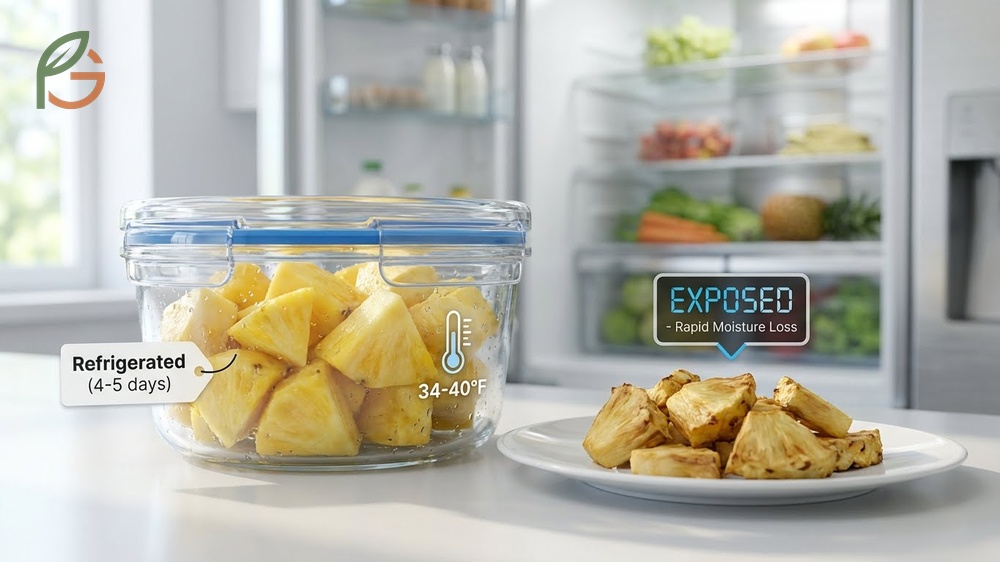
Once you’ve sliced into a pineapple, the clock starts ticking much faster than with whole fruit. Cut pineapple needs immediate refrigeration in airtight containers to prevent oxidation, moisture loss, and bacterial growth. Studies show properly stored cut pieces last 4-5 days refrigerated[2].
The exposed flesh loses moisture rapidly when left open to air, causing the pineapple to dry out and develop an off-texture. Air exposure also triggers enzymatic browning, though this happens more slowly in pineapple than in fruits like apples or bananas.
This table compares storage durations, ideal temperatures, and container requirements for whole versus cut pineapples across different storage methods
| Storage Method | Whole Pineapple Duration | Cut Pineapple Duration | Temperature Range |
|---|---|---|---|
| Room Temperature | 3-5 days (ripe fruit)[1] | Not recommended (spoils within hours) | 68-75°F (20-24°C) |
| Refrigeration | 5-7 days[1] | 4-5 days (airtight container)[2] | 45-55°F (7-13°C) optimal[3] |
| Freezing | Not recommended (texture degradation) | 12-18 months (1-inch chunks)[4] | 0°F (-18°C) or below |
Refrigeration Techniques
The right container makes all the difference for cut pineapple storage. Use glass or plastic airtight containers with secure lids, or heavy-duty resealable plastic bags with as much air pressed out as possible. Some experts suggest covering the pineapple pieces with their own juice or adding a bit of fresh pineapple juice to prevent drying.
When my friend in Oaxaca, Mexico cut pineapples from her small orchard in September 2024, she stored the pieces in mason jars completely filled with juice—they stayed fresh for 6 days versus the typical 4-5 day range, likely due to the juice creating an oxygen barrier.
- Cut pineapple into your desired shape—chunks, rings, or spears—immediately before storage
- Place pieces in an airtight container, filling it as full as possible to minimize air space
- Add fresh pineapple juice to cover the pieces if you want maximum freshness
- Seal the container tightly and label with the date
- Store on a middle refrigerator shelf where temperature stays most consistent
- Consume within 4-5 days; discard if you notice browning, off-smells, or slimy texture
Storage Tip: When you open your container of cut pineapple, always use clean utensils to remove portions. Introducing bacteria from used forks or fingers shortens shelf life considerably.
Freezing Cut Pineapple
Freezing is your best option for long-term pineapple storage, keeping fruit fresh for 12-18 months at 0°F (-18°C)[4]. The texture changes after freezing—it becomes softer and less crisp—so frozen pineapple works best in smoothies, baked goods, or cooked dishes rather than eaten fresh.
Cut pineapple into 1-inch chunks for optimal freezing results. Spread them in a single layer on a parchment-lined baking sheet and freeze for 2-3 hours until solid. This flash-freezing step prevents the pieces from clumping together into one massive frozen block.
Once frozen solid, transfer the chunks into freezer-safe bags or containers. Remove as much air as possible from bags before sealing. Label with the date and use within 18 months for best quality, though the fruit remains safe to eat beyond that if kept at a constant 0°F (-18°C).
Refrigerate Pineapple Duration Guide
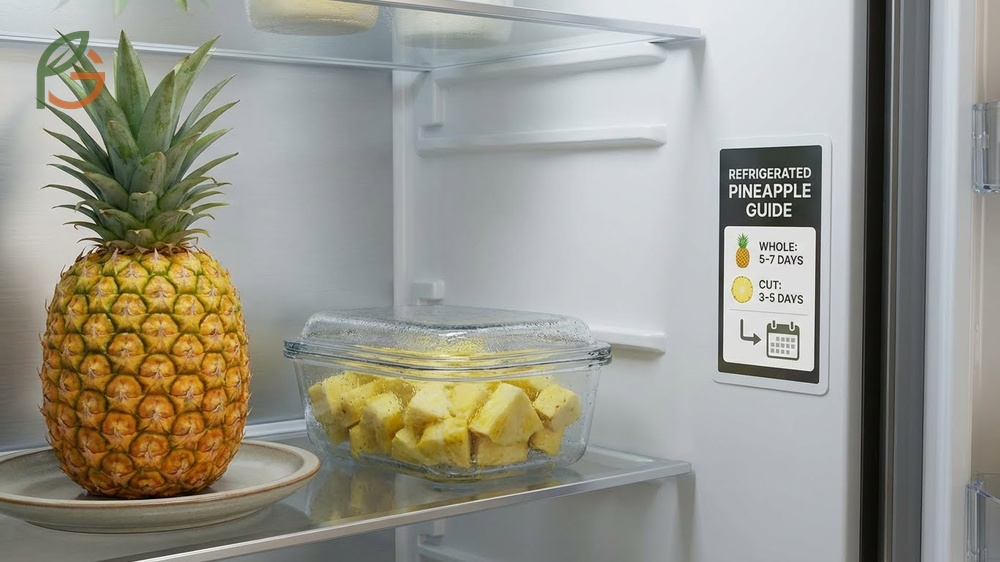
Understanding exactly how long refrigerated pineapple stays fresh helps you plan meals and reduce food waste. The duration varies significantly based on whether the pineapple is whole or cut, its initial ripeness level, and how consistently you maintain refrigerator temperature.
Whole ripe pineapples can be refrigerated for 5-7 days while maintaining good quality[1]. After a week, you’ll start noticing the bottom becoming overly soft and potential mold development at the base. The fruit is still technically safe to eat if you cut away affected areas, but flavor and texture decline noticeably.
Cut pineapple pieces have a shorter window—you’re looking at 4-5 days maximum in airtight containers[2]. Some sources suggest up to 7 days is possible, but that’s pushing it. By day 5 or 6, the edges start browning and the texture becomes mushy.
- Browning or dark spots on the flesh indicating oxidation and spoilage
- Slimy or sticky texture on the surface rather than firm, juicy flesh
- Sour or fermented smell instead of the characteristic sweet pineapple fragrance
- Excessive liquid pooling at the bottom of the storage container
- Mold growth (white, green, or black fuzzy spots) anywhere on the fruit
- Very soft, mushy texture that collapses when touched
Temperature fluctuations in your refrigerator significantly impact storage duration. If your fridge door is opened frequently or the temperature setting isn’t cold enough, you’ll get fewer days of quality storage. Aim for consistent temperatures between 37-45°F (3-7°C) for best results.
Room Temperature Pineapple Storage
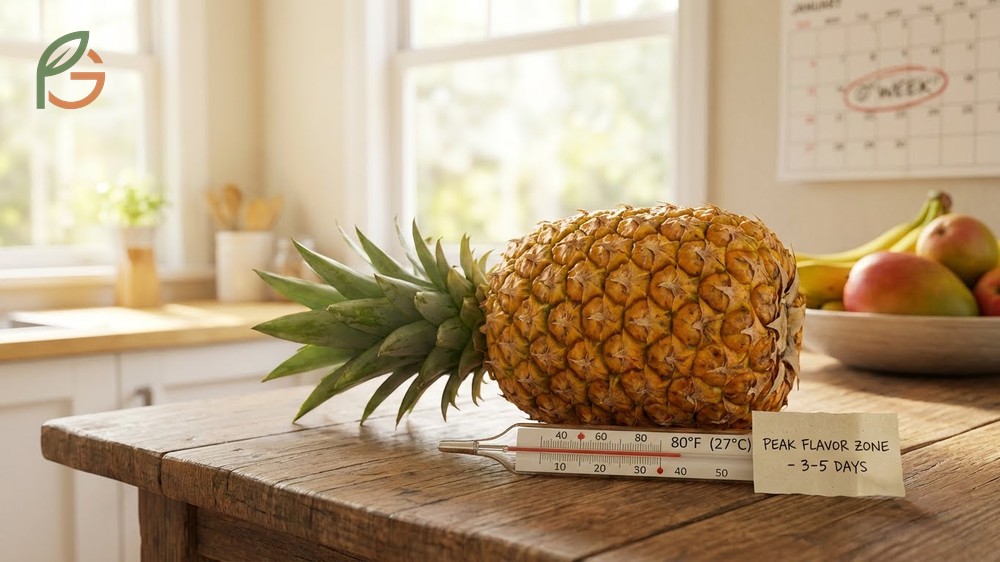
Room temperature storage only works for whole, uncut pineapples and should be limited to 3-5 days maximum for ripe fruit[1]. This approach makes sense when you plan to consume the pineapple within a few days and want to enjoy it at peak flavor without the chilling effect of refrigeration.
Research from the University of Florida shows that pineapples prefer temperatures between 78-82°F (26-28°C) for completing the ripening process[7]. This aligns perfectly with typical indoor room temperature. However, temperatures above 85°F (29°C) can cause the fruit to overripen and spoil faster.
Place your whole pineapple in a cool, dry spot on your kitchen counter or pantry shelf. Avoid areas near your stove, dishwasher, or windows with direct sunlight—heat accelerates ripening and decay. Good air circulation around the fruit prevents moisture buildup that promotes mold growth at the base.
- Store in a well-ventilated area with good air circulation around all sides of the fruit
- Keep away from direct sunlight and heat sources that accelerate spoilage
- Don’t stack anything on top of the pineapple—pressure causes bruising and soft spots
- Store away from ethylene-producing fruits like apples, bananas, and avocados that speed up decay
- Check the bottom daily for softness or mold—these are the first signs of overripeness
- Move to the refrigerator if you won’t use it within 3-4 days of purchase
Never leave cut pineapple at room temperature for more than 2 hours. The USDA’s food safety guidelines recommend refrigerating cut fresh fruits within this timeframe to prevent bacterial growth. At room temperature, harmful bacteria can multiply rapidly on the exposed, moist flesh of cut pineapple, creating food safety risks.
Safety Warning: If cut pineapple has been sitting out at room temperature for longer than 2 hours (or 1 hour if room temp exceeds 90°F/32°C), it’s safest to discard it rather than risk foodborne illness.
Conclusion
The evidence is clear: how to store fresh pineapple correctly depends on whether you’re working with whole or cut fruit. Whole ripe pineapples give you flexibility with 3-5 days at room temperature or up to a week refrigerated, while cut pieces demand immediate refrigeration in airtight containers and consumption within 4-5 days. For long-term storage, freezing cut chunks at 0°F (-18°C) preserves quality for 12-18 months.
Current guidance emphasizes maintaining optimal temperatures between 45-55°F (7-13°C) for whole fruit and avoiding the common mistake of refrigerating unripe green pineapples that need room temperature to develop their full sweetness. FruitGarden continues to synthesize the latest post-harvest research from institutions like the University of Hawaii, FAO, and University of Florida to help home fruit enthusiasts maximize freshness and minimize waste from their tropical harvests.
Frequently Asked Questions
How long can you keep a cut pineapple in the refrigerator?
Cut pineapple lasts 4-5 days when stored in an airtight container in the refrigerator. Make sure to keep it sealed tightly to prevent moisture loss and oxidation, which cause browning and texture degradation.
Can you store whole pineapple at room temperature?
Yes, whole ripe pineapples can stay at room temperature for 3-5 days in a cool, dry location away from direct sunlight. Unripe green pineapples should always be stored at room temperature until they develop golden color and sweet fragrance.
Should you refrigerate pineapple before cutting?
It’s not necessary to refrigerate pineapple before cutting, though chilled pineapple is easier to handle and cut cleanly. Many chefs recommend letting refrigerated pineapple sit at room temperature for 20-30 minutes before cutting to enhance its natural sweetness and aroma.
Does pineapple last longer whole or cut?
Whole pineapple lasts significantly longer than cut pieces. A whole ripe pineapple can be stored for 5-7 days refrigerated or 3-5 days at room temperature, while cut pineapple only lasts 4-5 days refrigerated and shouldn’t be left at room temperature.
Can you freeze fresh pineapple chunks?
Yes, freezing is excellent for long-term storage. Cut pineapple into 1-inch chunks, flash-freeze them on a baking sheet, then transfer to freezer bags. Frozen pineapple chunks stay fresh for 12-18 months at 0°F (-18°C) and work perfectly in smoothies.
What’s the ideal temperature for storing fresh pineapple?
Research shows the optimal storage temperature is 45-55°F (7-13°C) for whole pineapples, which extends shelf life to 14-20 days. Your home refrigerator at 37-40°F (3-4°C) works well for shorter storage of 5-7 days without causing chilling injury.
How can you tell if stored pineapple has gone bad?
Bad pineapple shows browning or dark spots, develops a slimy texture, smells sour or fermented, or has visible mold growth. Fresh pineapple should be firm, golden-yellow, and smell sweet—if you notice any of these warning signs, it’s time to discard it.





