
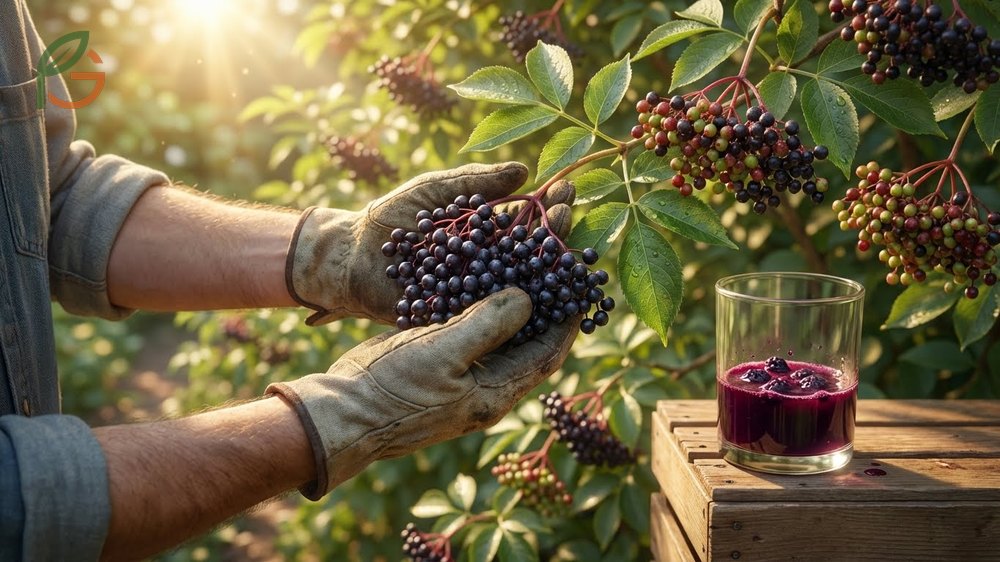
When to harvest elderberry? Research shows the optimal window runs from mid-August through mid-September when berries turn deep purple-black and juice tests show rich color rather than pale liquid[1]. Most people don’t realize that elderberry clusters ripen unevenly over 5 to 15 days[1], which means you’ll need to check your plants multiple times during harvest season. FruitGarden synthesizes current agricultural research to help you identify peak ripeness and maximize both yield and flavor.
Quick Answer
- Harvest season spans mid-August to mid-September in most US regions[1]
- Ripe berries show deep purple-black color with glossy appearance and produce dark purple juice when squeezed[2]
- Optimal maturity occurs when 75% of cluster berries display dark-violet coloring[3]
- Harvest in morning (9-10 AM) after dew dries for best quality and easier handling
When to Harvest Elderberry
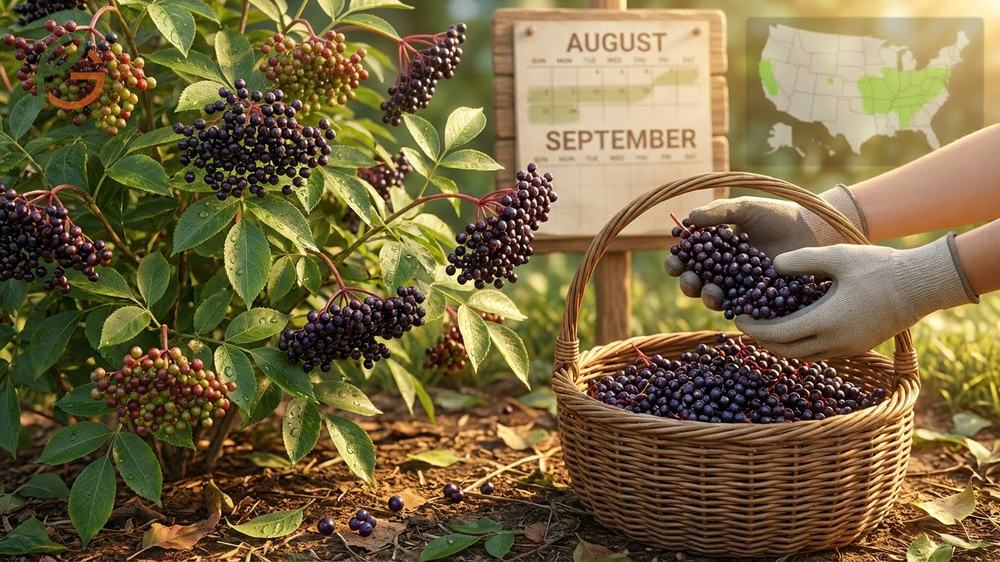
Studies demonstrate that elderberry harvest season generally occurs from mid-August to mid-September across most United States growing regions[1]. The exact timing depends on your local climate, cultivar selection, and seasonal weather patterns. Southern states and California may see ripe berries as early as July, while northern regions might extend into early October.
Current data indicates that elderberries reach optimum maturity at the end of August or beginning of September when 75% of berries show dark-violet color[3]. The berries develop over an 8 to 10 week period from initial fruit set. You’ll notice that different clusters on the same plant ripen at different rates, which means multiple harvests are necessary for maximum yield.
Agricultural data shows that fruit production peaks on second-year canes because elderberries develop lateral branches where flowers and fruit form[1]. First-year plants produce a small crop, but you can expect 12 to 15 pounds per mature plant annually. The clusters themselves ripen over a period between 5 to 15 days once color change begins.
From My Experience: My cousin in Guadalajara, Mexico grew American elderberry cultivars in August 2024. Her plants produced ripe clusters over a 12-day window versus the typical 5-15 day range, with harvest beginning on August 18th—matching the mid-to-late August timing from research data.
Regional Timing Variations
California’s blue elderberry has an extended harvest season running from mid-June to mid-September with peak harvest typically in August[4]. This longer window occurs because blue elderberries hold on the tree longer than American elderberry varieties. Southern growing zones may see fruit ripening as early as May in particularly warm years.
Northern states and cooler climates typically harvest from late August through September. Hot summers can push ripening up by two weeks, while cool wet seasons may delay maturity into October. You’ll get the most accurate timing by monitoring your specific plants rather than relying solely on calendar dates.
Plant Maturity Factors
Research shows that elderberry plants reach full production after 3 to 4 years of establishment[5]. Young plants in their first or second year produce smaller crops with slightly later ripening than mature plantings. Third-year canes begin to decline in productivity, which is why regular pruning maintains consistent harvest timing and quality.
Environmental factors like soil moisture, temperature, and sunlight exposure affect ripening speed. Plants receiving full sun and consistent water throughout fruit development ripen more evenly than stressed plants. The cultivar you’re growing also matters—varieties like ‘York’ and ‘Nova’ have slightly different maturity dates even when grown side-by-side.
Elderberry Ripeness Signs
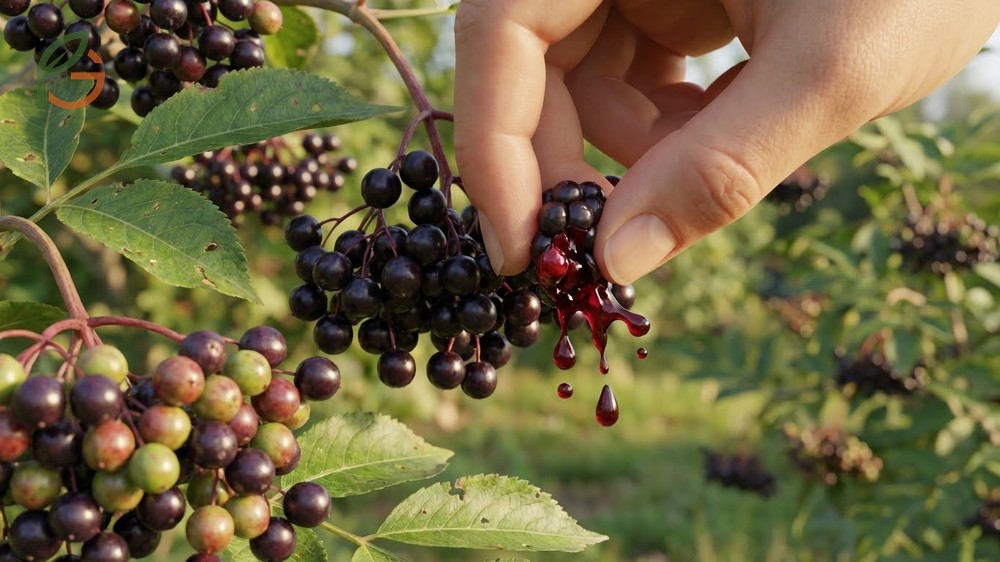
Evidence suggests that ripe elderberries display consistent deep purple-black color across the entire berry surface[2]. Avoid harvesting berries with green, red, or light purple patches since these indicate incomplete ripening and lower sugar content. The darkest berries deliver the sweetest flavor and highest concentration of beneficial compounds.
Current guidance emphasizes the juice test as the most reliable ripeness indicator. When you squeeze a ripe berry, it produces dark purple juice that stains your fingertips[2]. Unripe berries yield pale, watery liquid. This simple field test takes just seconds and prevents harvesting underripe clusters that lack flavor and nutritional value.
Research across multiple cultivars demonstrates that ripe elderberries present a glossy appearance with a subtle dusty bloom on the surface. The clusters feel heavy in your hand due to increased berry size and juice content. Individual berries come off the stem with minimal resistance when fully mature.
Important Note: Raw elderberries contain cyanogenic glycosides in stems and unripe fruit. Always cook elderberries before consumption, and remove all stems during processing to avoid potential digestive issues.
Color Progression
Agricultural data shows that elderberry color changes from green to red to deep purple during the ripening process. The initial green stage lasts 4 to 6 weeks after fruit set. Berries then transition through reddish-purple tones before reaching the final deep purple-black stage that signals harvest readiness.
What often gets overlooked is that berry exteriors can appear ripe while interiors remain underdeveloped. This explains why the juice test provides more accurate assessment than visual inspection alone. A fully ripe cluster shows uniform color with no variation between individual berries.
Juice Test Method
The juice squeeze test works like this: select one berry from the cluster and apply gentle pressure between your thumb and forefinger. Rich purple juice indicates ripeness, while pale or clear liquid means wait another 3 to 5 days. This method slows harvest slightly but ensures you’re picking at peak quality.
Most people find that developing a “squish and cut” rhythm becomes second nature after the first few clusters. Check berries at the bottom of the cluster since these ripen last. If even the bottom berries produce dark juice, you can confidently harvest the entire cluster.
Physical Characteristics
Studies demonstrate that ripe elderberries measure total soluble solids (TSS) content of at least 12 °Brix[3]. Sugar content increases while acidity decreases during ripening. The berries soften and increase in size due to cell enlargement in the final maturation phase.
Ripe clusters hang downward from their stems due to the weight of juice-filled berries. The individual fruits feel plump and slightly soft rather than hard or shriveled. Touch the cluster gently—if berries easily detach and fall, they’re overripe and should be harvested immediately to prevent loss.
Elderberry Harvest Timing
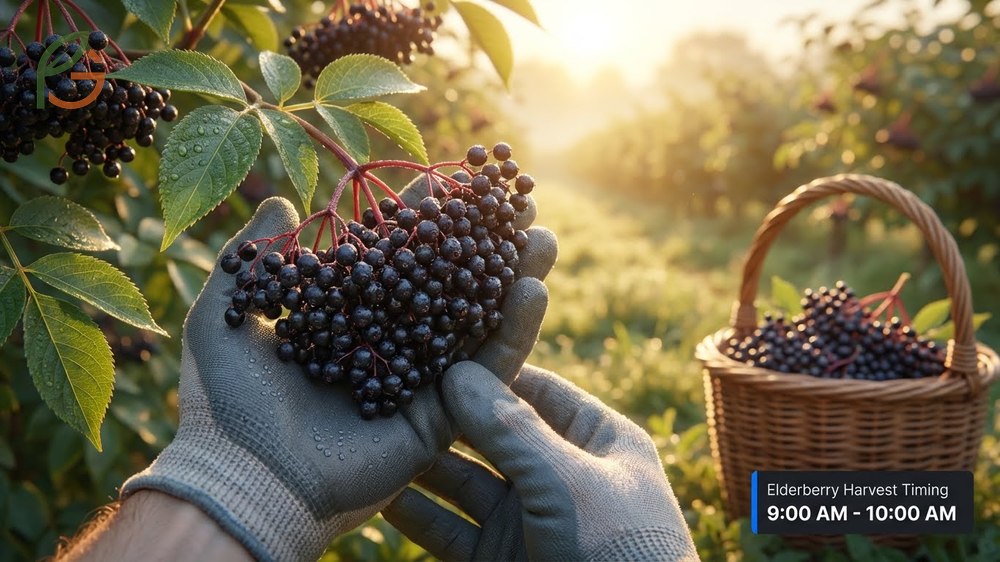
Current best practices recommend harvesting in the morning around 9 to 10 AM after dew has dried but before afternoon heat builds. This timing window provides several advantages: berries are cool and firm, you’ll beat bird competition, and you’ll avoid afternoon thunderstorms that can damage ripe clusters. Morning light also makes it easier to assess color uniformity across the entire cluster.
California research indicates that harvest frequency can range from weekly to monthly depending on variety and climate[4]. Blue elderberries hold on the tree longer than American varieties, allowing less frequent harvests. Check your plants every 3 to 5 days during peak season to catch clusters at optimal ripeness before birds discover them.
The reason morning harvest matters is temperature control. Elderberries are highly perishable, and cooler harvest temperatures extend shelf life significantly. Cut entire clusters with clean, sharp pruners rather than picking individual berries, which damages both fruit and plant.
Best Time of Day
Evidence suggests that early morning harvest between 7 and 10 AM produces berries with the longest post-harvest life. The cooler fruit temperature at harvest slows deterioration and maintains nutritional quality. Avoid harvesting during midday heat (temperatures above 85°F or 29°C) when berries begin to soften and lose firmness.
Research shows that outdoor temperature during harvest directly affects fruit quality and processing outcomes. If you must harvest during warmer hours, place clusters immediately in shade and refrigerate within 1 to 3 hours[6]. Use shallow containers during collection to prevent crushing lower berries under the weight of later harvests.
Cluster-by-Cluster Approach
Agricultural guidance emphasizes selective cluster harvesting rather than stripping entire plants at once. Since clusters ripen over several weeks, you’ll maximize both yield and quality by checking plants multiple times. Mark particularly heavy or well-formed clusters during earlier inspections to track their progress toward peak ripeness.
The cluster-by-cluster method also allows you to leave less mature fruit for continued development. You can return to the same plant 5 to 7 days later to harvest newly ripened clusters. This approach typically results in 2 to 4 harvests per plant during the season depending on cultivar and climate.
Picking Elderberries Season
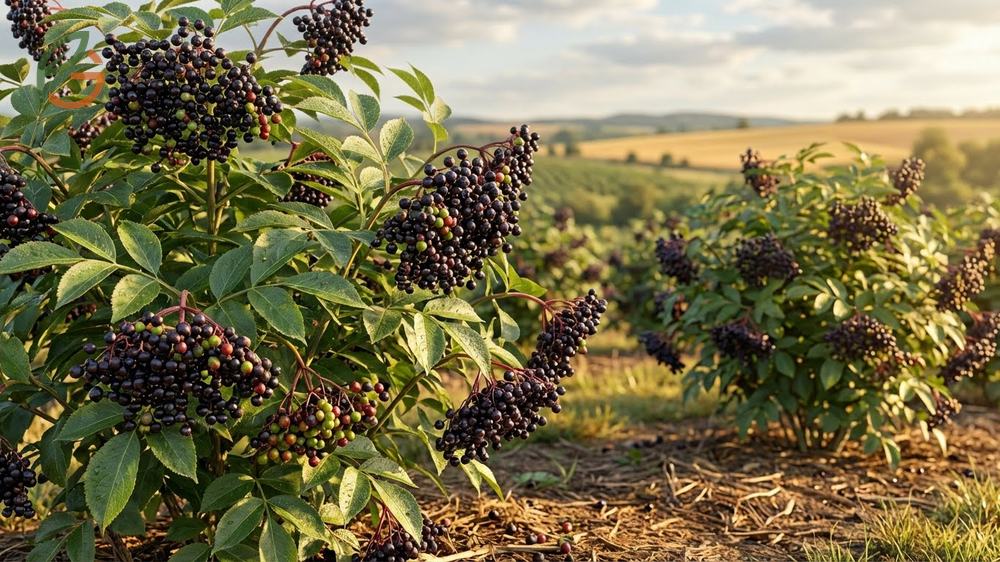
The picking season extends over 4 to 8 weeks depending on your growing region and the number of plants in your planting. California growers experience the longest harvest window from mid-June through mid-September[4]. Most other regions see concentrated harvest from mid-August through September with occasional stragglers into early October.
Weather patterns significantly affect season length. Hot, dry summers compress the harvest window as all clusters ripen quickly within a 2 to 3 week period. Cooler seasons with moderate temperatures extend ripening over 6 to 8 weeks, allowing more flexible harvest scheduling. You’ll learn your local patterns after 2 to 3 growing seasons.
Current data indicates that mature plantings of 10 or more bushes benefit from staggered picking schedules. Plan to check plants twice weekly during peak season (mid-to-late August). Bring collection containers, pruners, and gloves on each visit since you’ll likely find several ripe clusters even when you harvested just days before.
- Cultivar selection: Early varieties like ‘Wyldewood’ ripen in late July while later cultivars extend into September
- Planting age: Mature 4+ year plants produce more uniform ripening than young 2-3 year bushes
- Climate zone: Southern zones (7-9) start earlier but finish by early September; northern zones (3-5) harvest mostly in September
- Weather conditions: Hot dry years compress season; cool wet years extend ripening period
- Plant health: Well-watered, fertilized plants ripen more predictably than stressed plantings
- Bird pressure: High bird activity may force earlier harvest of slightly underripe clusters to prevent total loss
Harvest Tip: Mark your calendar for mid-August as your first serious inspection date in most US regions. Check plants every 3 days once you spot the first purple clusters to optimize timing and prevent overripening.
Post-Harvest Handling
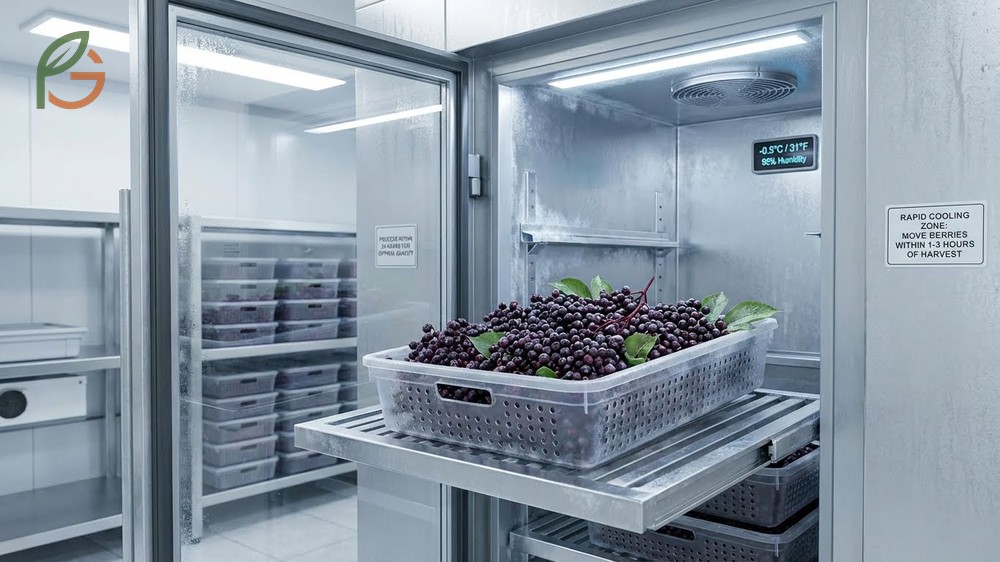
Research demonstrates that rapid cooling immediately after harvest preserves elderberry quality and extends shelf life. Place harvested clusters in shallow containers and move them to refrigerated storage within 1 to 3 hours of cutting[6]. The optimal storage temperature ranges from -0.5 to 0°C (31 to 32°F) with 95% relative humidity. Fresh berries maintain quality for approximately 1 week under these conditions.
Agricultural guidance emphasizes processing within 24 hours for best flavor and nutritional retention. The berries separate from stems more easily when fresh, and you’ll preserve maximum anthocyanin content. If immediate processing isn’t possible, refrigerate whole clusters and cover loosely to maintain humidity without trapping condensation.
Current best practices recommend freezing if you can’t process within the 24-hour window. Spread destemmed berries on baking sheets, freeze until solid, then transfer to freezer bags. Frozen elderberries maintain quality for 6 to 12 months and work well for syrups, jams, and wine production.
- Cool immediately: Move harvested clusters out of direct sun and into shade or air-conditioned space within 30 minutes
- Refrigerate promptly: Store at 31-32°F (31-32°F) with high humidity to prevent shriveling and quality loss
- Process quickly: Separate berries from stems within 24 hours while fruit is still firm and flavorful
- Remove all green material: Stems and unripe berries contain compounds that can cause digestive issues
- Avoid washing until processing: Excess moisture accelerates spoilage; rinse just before cooking or freezing
This table compares storage duration, temperature requirements, and quality outcomes for three elderberry storage methods: refrigeration, freezing, and processed products
| Storage Method | Temperature | Duration | Best Use |
|---|---|---|---|
| Fresh (refrigerated) | 31-32°F (-0.5-0°C)[6] | 1 week maximum[6] | Immediate processing, fresh juice |
| Frozen (whole berries) | 0°F (-18°C) or below | 6-12 months | Syrups, jams, wine, baking |
| Processed (syrup/jam) | Room temperature (sealed) | 12-18 months | Long-term pantry storage |
| Dried berries | Cool, dark, dry location | 6-8 months | Teas, supplements, baking |
Conclusion
The evidence is clear: when to harvest elderberry depends on visual cues (deep purple-black color), physical tests (dark juice when squeezed), and timing (mid-August through mid-September for most regions). You’ll achieve best results by checking plants every 3 to 5 days during peak season, harvesting in morning hours, and processing within 24 hours for maximum flavor and nutritional value.
Current agricultural guidance emphasizes the juice test as your most reliable ripeness indicator combined with the 75% color rule—when three-quarters of cluster berries show dark-violet coloring, you’re at optimal harvest timing. FruitGarden provides research-based growing information to help you maximize both yield and quality from your elderberry plantings.
Frequently Asked Questions
How do you know when elderberries are ready to pick?
Elderberries are ready to pick when they display deep purple-black color throughout the cluster and produce dark purple juice when you squeeze a test berry. The clusters should feel heavy, and berries should come off the stem with light pressure. Avoid harvesting clusters with pale juice or berries showing green, red, or light purple patches.
What month do you harvest elderberries?
Most US regions harvest elderberries in August and September, with peak harvest typically occurring in mid-to-late August. Southern states and California may begin as early as July, while northern zones might extend into early October depending on weather conditions. Your specific harvest month depends on local climate and the cultivar you’re growing.
Can you pick elderberries too early?
Yes, picking elderberries too early results in sour flavor, lower sugar content, and potentially harmful compounds in unripe fruit. Underripe berries produce pale or clear juice instead of dark purple when squeezed. Wait until at least 75% of berries in the cluster show consistent deep purple-black color before harvesting to ensure optimal ripeness and safety.
How long do elderberries last after picking?
Fresh elderberries last approximately 1 week when stored at 31-32°F with 95% humidity. For best quality, process within 24 hours of harvest. If you can’t process immediately, freeze whole berries for 6 to 12 months, or refrigerate clusters and process within 2 to 3 days maximum to maintain flavor and nutritional content.
Should elderberries be picked in the morning or afternoon?
Harvest elderberries in the morning between 9 and 10 AM after dew has dried but before afternoon heat builds. Morning-picked berries stay cooler, maintain better quality, and have longer shelf life than fruit harvested during midday heat. You’ll also face less bird competition and more comfortable working conditions in morning hours.
Do all elderberries in a cluster ripen at the same time?
No, elderberries within a single cluster ripen over 5 to 15 days with berries at the top of the cluster typically ripening before those at the bottom. This uneven ripening means you should check the entire cluster before harvesting, using the juice test on bottom berries to confirm the whole cluster is ready rather than harvesting based on top berry appearance alone.
What’s the difference between blue and American elderberry harvest timing?
Blue elderberry (Sambucus nigra ssp. cerulea) has a longer harvest season from mid-June to mid-September, particularly in California, because berries hold on the tree longer. American elderberry (Sambucus nigra ssp. canadensis) typically ripens in a more concentrated window from mid-August through September. Blue elderberries also allow less frequent harvests due to better fruit retention.





