
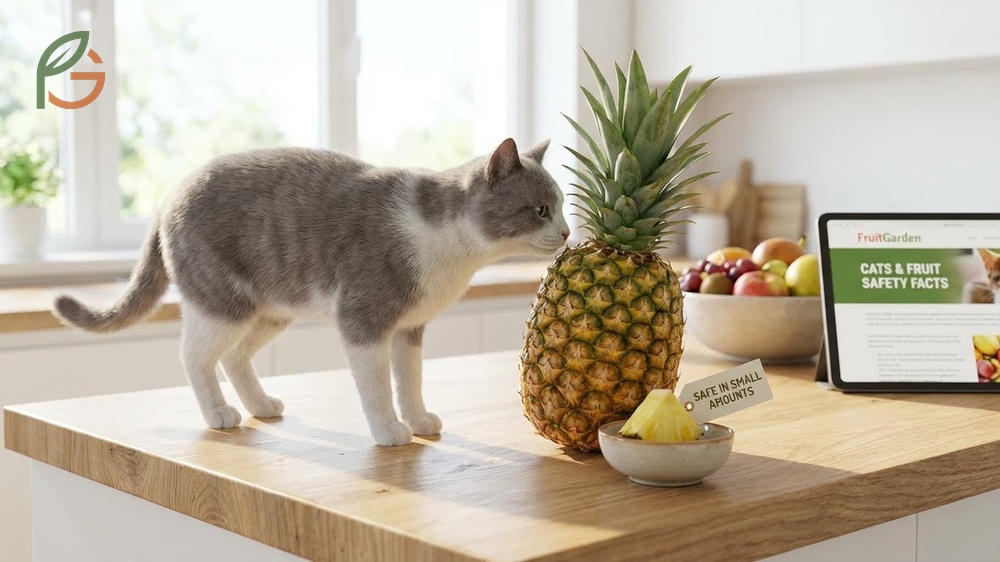
Can cats eat pineapple? Yes, cats can eat small amounts of fresh, ripe pineapple safely. Research shows pineapple isn’t toxic to cats according to veterinary sources[1], but it offers limited nutritional benefits for felines. FruitGarden synthesizes current veterinary guidance to help pet owners understand which fruits work for cats and which don’t.
Quick Answer
Can Cats Eat Pineapple
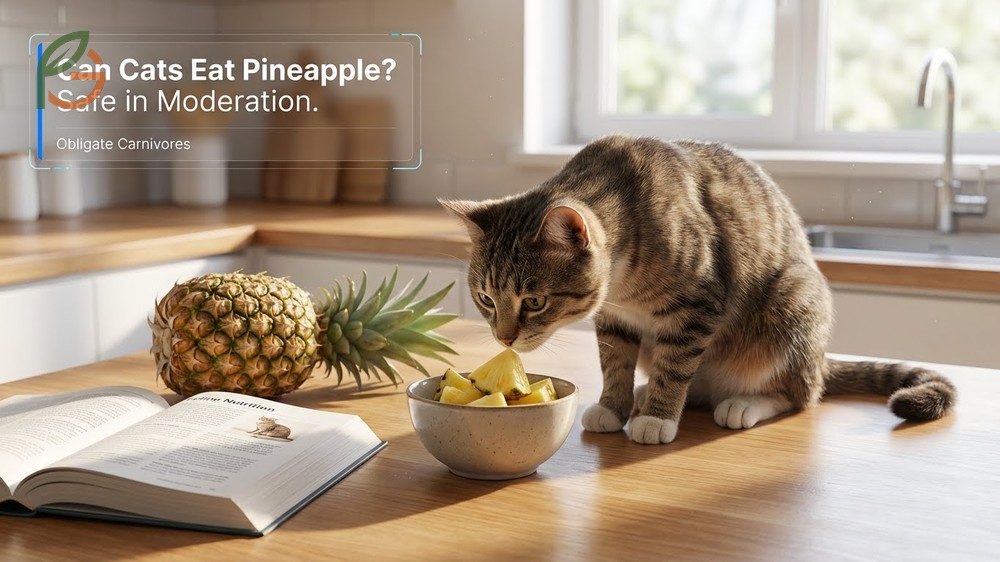
Cats can safely consume fresh pineapple in moderation without toxicity risks. Veterinary sources confirm pineapple doesn’t appear on poisonous plant lists for felines[2].
The fruit provides vitamins A, B6, C, folate, magnesium, and potassium[1]. However, cats are obligate carnivores who don’t need fruit to thrive.
Most cats won’t crave pineapple since they lack sweet taste receptors. This works out well because their digestive systems handle only small amounts.
Important Note: If your cat has diabetes or weight issues, avoid pineapple entirely due to its high natural sugar content. Always consult your veterinarian before introducing new foods.
Is Pineapple Safe for Cats
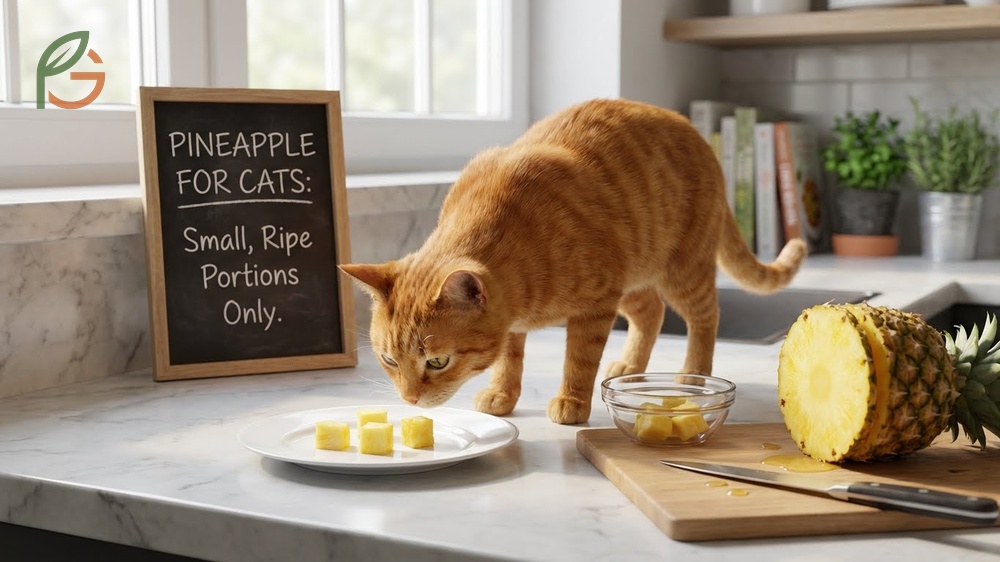
Fresh, ripe pineapple is safe for cats when prepared correctly. The key is removing all inedible parts and serving tiny portions.
Safety depends on three factors: ripeness, portion size, and frequency. Unripe pineapple can cause severe vomiting and diarrhea due to higher acidity.
Nutritional Content
Pineapple contains several nutrients that sound beneficial. Research shows it’s high in fiber and vitamin C[1].
Cats produce their own vitamin C internally, so external sources don’t add much value. The potassium and manganese content offers minimal benefits compared to their meat-based diet requirements.
This table shows nutrients found in pineapple and whether cats benefit from each component
| Nutrient | Present in Pineapple | Benefit for Cats |
|---|---|---|
| Vitamin C | High | Minimal (cats produce internally) |
| Fiber | Moderate | May help with constipation |
| Sugar | High | Risk factor (obesity, diabetes) |
| Bromelain | Present | May irritate digestion |
Bromelain Enzyme Effects
Pineapple contains bromelain, a protein-digesting enzyme that creates a tingling sensation. Studies show bromelain didn’t provide significant anti-inflammatory benefits in cats[3].
This enzyme can irritate your cat’s sensitive digestive system when consumed in larger amounts. What seems like a small piece to you might contain enough bromelain to upset their stomach.
Are Pineapple Leaves Toxic to Cats
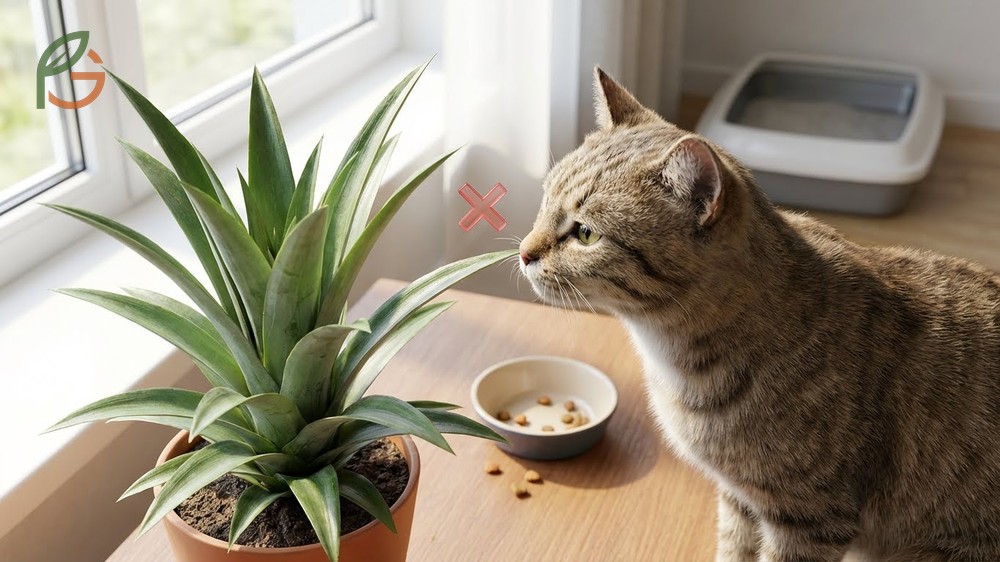
Pineapple leaves aren’t toxic but they’re not recommended for cats to eat. Veterinary experts confirm leaves won’t poison your cat if they take a bite[4].
The leaves have a waxy, rubbery composition that’s almost entirely indigestible. Cellulose in small amounts can help with hairballs, but pineapple leaves offer no such benefits.
If your cat overindulges on leaves, they risk gastrointestinal blockages. Watch for warning signs like vomiting, changes in bowel movements, or loss of appetite.
- Leaves and crown (indigestible, choking hazard)
- Skin and rind (too tough, may cause intestinal blockage)
- Core (hard texture, difficult to digest)
- Unripe fruit (high acidity, causes severe stomach upset)
- Canned pineapple (added sugars and preservatives)
Warning: If your cat chews on pineapple plants frequently, move the plant out of reach. While not poisonous, repeated consumption of leaves can lead to digestive problems or blockages requiring veterinary intervention.
Can Cats Have Pineapple Juice
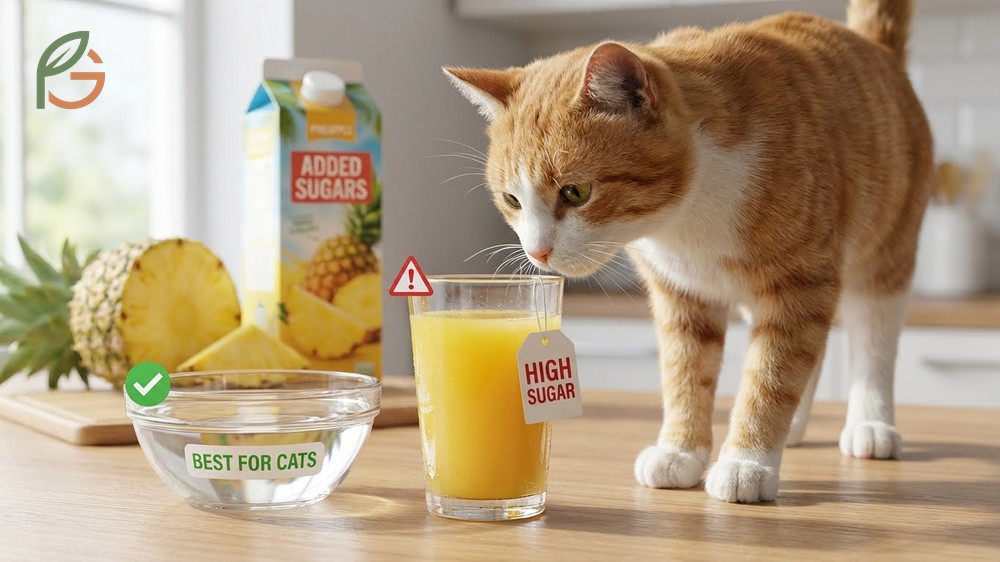
Pineapple juice isn’t recommended for cats due to concentrated sugar levels. Even fresh-squeezed juice removes the fiber that helps slow sugar absorption.
Commercial pineapple juice often contains added sugars and preservatives that harm cats. Studies link high sugar intake to feline obesity and diabetes[5].
The acidity in pineapple juice can also irritate your cat’s stomach lining. Stick to fresh water as the primary beverage for your feline.
How to Serve Pineapple Safely
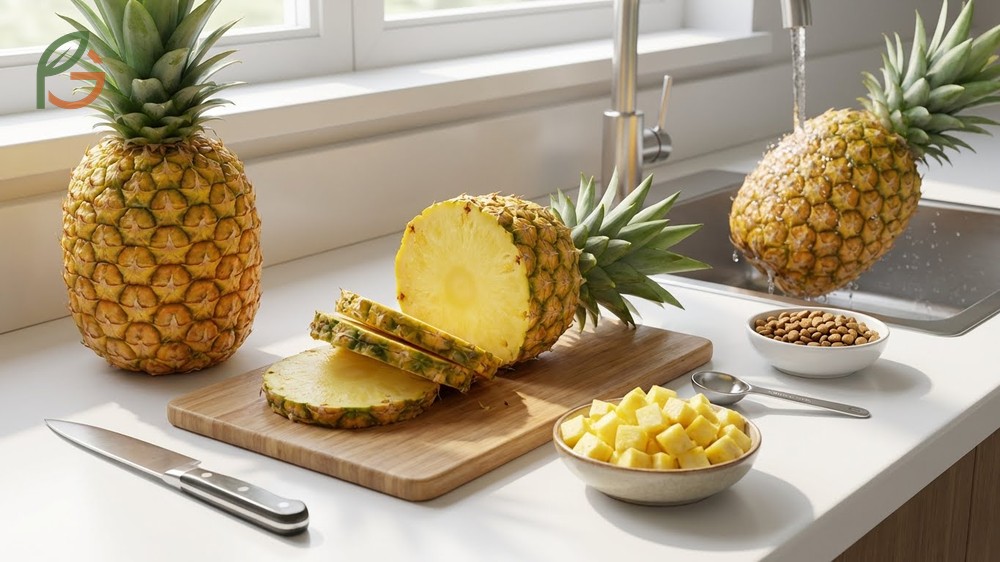
Proper preparation determines whether pineapple becomes a safe treat or a health risk. Start by selecting only ripe, fresh pineapple—never canned varieties.
Wash the fruit thoroughly even though you’ll remove the skin. Cut away all outer skin, leaves, and the tough core before slicing.
Dice the flesh into pieces no larger than your cat’s kibble. This prevents choking and makes digestion easier.
- Choose ripe, fresh pineapple with golden-yellow color
- Wash the exterior under running water
- Remove all skin, crown, leaves, and spiky exterior
- Cut out the hard inner core completely
- Dice remaining flesh into kibble-sized pieces (about 1/4 inch)
- Serve only 1-2 small pieces as a trial
- Monitor your cat for 24 hours for digestive upset
- Store leftover pineapple in the fridge, not for your cat
Don’t add any toppings, seasonings, or mix-ins. Plain pineapple only—nothing else.
Keep treats to less than 10% of your cat’s daily calorie intake[1]. For most cats, this means just one or two tiny pieces once or twice a week maximum.
When Pineapple Is Bad for Cats
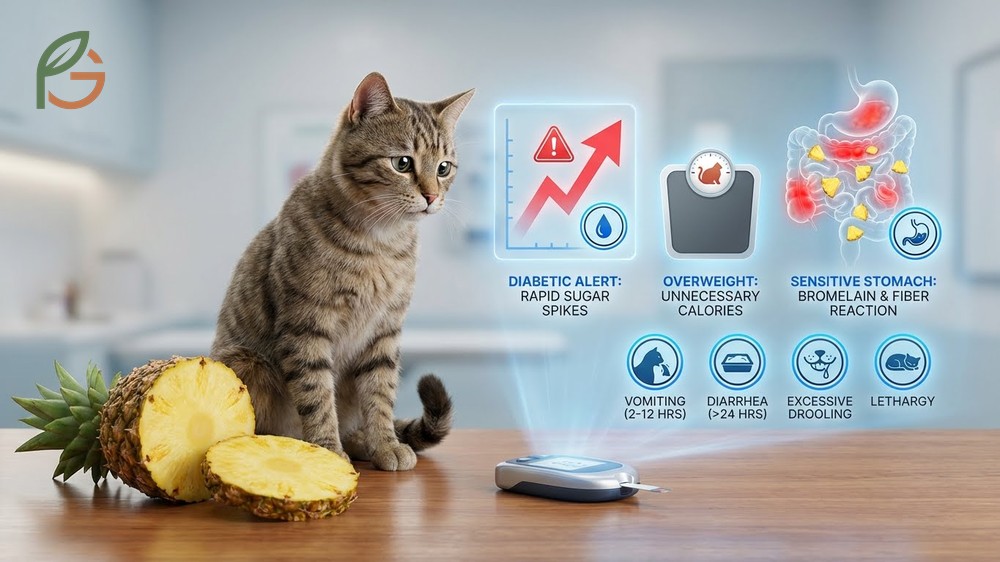
Several situations make pineapple dangerous for cats. Diabetic cats should never receive pineapple due to rapid blood sugar spikes.
Overweight cats don’t need the extra calories from fruit sugar. Cats with sensitive stomachs or inflammatory bowel disease may react poorly to bromelain and fiber.
- Vomiting within 2-12 hours of consumption
- Diarrhea or loose stools lasting more than 24 hours
- Excessive drooling or mouth discomfort
- Lethargy or unusual tiredness
- Loss of appetite for regular meals
- Bloating or visible abdominal discomfort
Contact your veterinarian immediately if symptoms persist beyond 24 hours or worsen. Severe vomiting or diarrhea can lead to dehydration requiring medical treatment.
| Cat Condition | Recommendation | Reason |
|---|---|---|
| Diabetes | Never feed | High sugar causes blood glucose spikes |
| Obesity | Avoid completely | Unnecessary calories hinder weight loss |
| IBD or sensitive stomach | Consult vet first | Fiber and acidity may trigger flare-ups |
| Kittens under 6 months | Not recommended | Developing digestive system too sensitive |
Conclusion
The evidence is clear: can cats eat pineapple safely in tiny amounts, but it’s not a necessary part of their diet. Current veterinary guidance emphasizes meat-based nutrition for obligate carnivores like cats.
If you choose to offer pineapple, keep portions minimal and frequency rare. FruitGarden recommends prioritizing high-quality cat food over experimental fruit treats for optimal feline health.
Medical Disclaimer
Important Medical Disclaimer: This content is for informational and educational purposes only. It is not intended as a substitute for professional veterinary advice, diagnosis, or treatment. Always consult a qualified veterinarian before making any changes to your cat’s diet or health routine, especially if your cat has diabetes, obesity, digestive issues, or other medical conditions. Individual cats may react differently to new foods.
Frequently Asked Questions
Is pineapple toxic to cats?
No, pineapple is not toxic to cats according to the ASPCA and veterinary sources. However, it should only be fed in small, bite-sized pieces with all skin, core, and leaves removed to prevent choking or digestive issues.
How much pineapple can I give my cat?
Limit pineapple to 1-2 small pieces (about 1/4 inch cubes) once or twice a week maximum. All treats combined should represent less than 10% of your cat’s daily calorie intake, with the remaining 90% coming from complete cat food.
Can cats eat canned pineapple?
No, avoid canned pineapple for cats. Canned varieties typically contain added sugars, syrups, and preservatives that are harmful to feline health and can contribute to obesity and diabetes.
What happens if my cat ate pineapple leaves?
Pineapple leaves aren’t toxic but they’re indigestible. If your cat ate a small amount, monitor for vomiting, loss of appetite, or changes in bowel movements. Contact your vet if symptoms appear or if your cat consumed a large quantity, as leaves can cause intestinal blockages.
Is pineapple good for cats with digestive issues?
Not necessarily. While pineapple contains fiber that might help with constipation, the bromelain enzyme and acidity can irritate sensitive digestive systems. Cats with inflammatory bowel disease or chronic digestive problems should avoid pineapple unless your veterinarian specifically recommends it.
Can diabetic cats eat pineapple?
No, diabetic cats should never eat pineapple. The high natural sugar content can cause dangerous blood glucose spikes that complicate diabetes management. Stick to veterinarian-approved diabetic cat foods and treats only.
What fruits are safer alternatives to pineapple for cats?
Research shows blueberries, cantaloupe, and watermelon (seedless) are safer low-sugar options. These fruits have lower acidity and fewer digestive enzymes than pineapple. Always serve in tiny portions and remove seeds, rinds, and skin before offering to your cat.





