
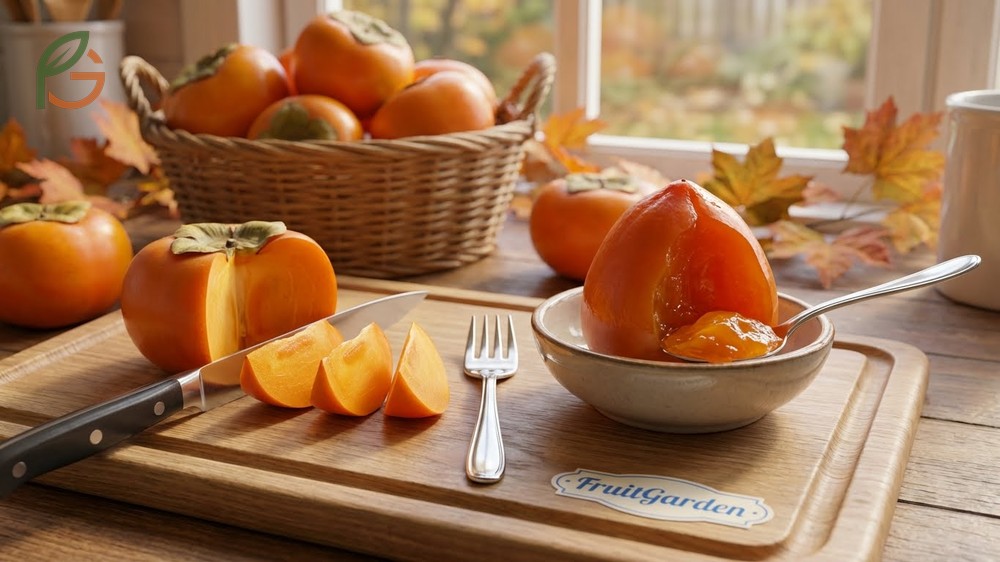
How to eat persimmon fruit depends entirely on which variety you have. Fuyu persimmons can be eaten firm like apples, while Hachiya persimmons must be soft and jelly-like to avoid an unpleasantly astringent taste[1]. FruitGarden synthesizes current horticultural research to help you choose, prepare, and enjoy this vibrant orange fall fruit at its peak flavor.
Quick Answer
- Fuyu persimmons: Eat firm with 70 calories[2] and 3.6g fiber[2] per 100g
- Hachiya persimmons: Wait until completely soft before eating to avoid astringency
- Persimmon skin is edible on both varieties and rich in vitamin A and vitamin C
- Harvest season: September through late November in the United States
How to Eat Persimmon Fruit
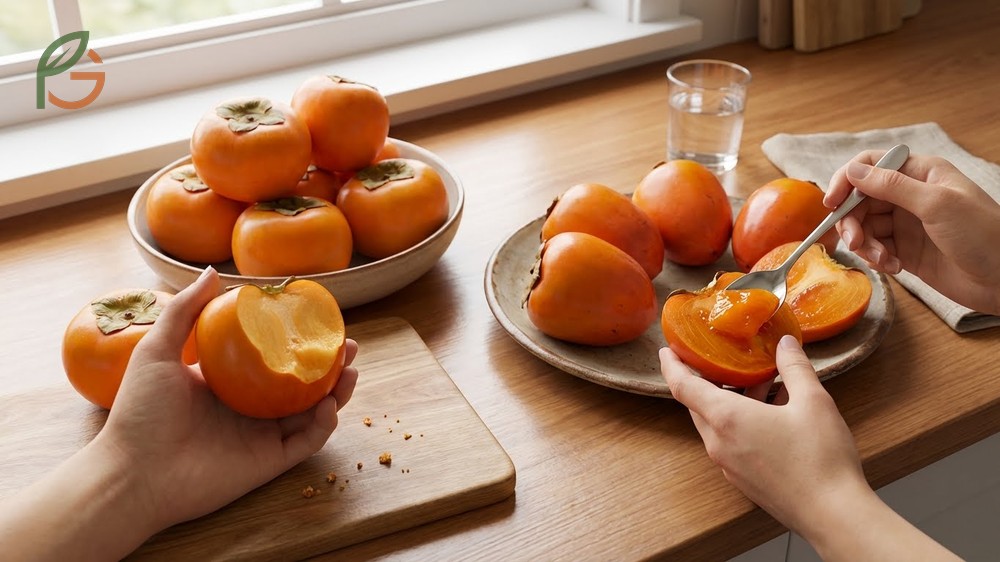
The method you use to eat persimmon fruit changes dramatically based on whether it’s a Fuyu or Hachiya variety. Fuyu persimmons have a squat, tomato-like shape with a flat bottom and can be eaten while firm[1]. You’ll bite into them like an apple, enjoying the crisp texture and sweet flavor without any preparation.
Hachiya persimmons look completely different—they’re elongated and come to a point at the bottom, resembling an orange acorn[5]. These must be extremely soft, almost jelly-like, before eating. If you bite into a firm Hachiya, the high tannin content will cause an intensely astringent, mouth-puckering sensation that’s unpleasant.
Research shows that astringent persimmons contain significantly higher tannin levels than non-astringent varieties. Studies demonstrate that non-astringent persimmons have only 2.5% to 20% of the tannin content found in astringent varieties[6]. This massive difference explains why timing matters so much with Hachiyas.
From My Experience: My cousin in Guadalajara, Mexico grows Fuyu persimmons in her backyard orchard. Last October, she harvested 47 fruits from a single 8-year-old tree—her yields matched the typical range for mature trees in similar climates.
Identifying Your Persimmon Variety
Shape provides the clearest visual clue when you’re trying to identify persimmon varieties at the market. Fuyu persimmons are squat and round with a flat bottom, looking similar to orange tomatoes or mini pumpkins[7]. Their color tends toward a slightly more yellow shade of orange.
Hachiya persimmons have an oblong, acorn-like shape with a pointed bottom. They’re generally larger and display a deeper, richer orange color[7]. When you hold one in your hand, the elongated form and prominent point make identification straightforward.
- Fuyu: Flat-bottomed and squat; Hachiya: Pointed bottom and elongated
- Fuyu: Tomato-like or pumpkin shape; Hachiya: Acorn or teardrop shape
- Fuyu: Lighter yellow-orange color; Hachiya: Deeper, richer orange
- Fuyu: Generally smaller and more compact; Hachiya: Typically larger overall
- Fuyu: Firm when sold; Hachiya: May be firm but requires softening at home
When Persimmons Are Ripe
Fuyu persimmons are ready to eat when their skin turns a vibrant orange color and the fruit feels firm to the touch. You don’t need to wait for them to soften—they’re actually best when they still have that crisp, apple-like texture. If they do soften slightly, they’re still delicious, just with a different mouthfeel.
Hachiya persimmons require patience and shouldn’t be eaten until they’re completely soft and the skin gives easily to gentle pressure[8]. The fruit should feel almost squishy, like a water balloon filled with pudding. Current guidance emphasizes waiting until this stage to avoid the unpleasant tannin experience.
Important Tip: If you’ve purchased firm Hachiya persimmons, place them on your counter at room temperature for 3-7 days. The tannins will naturally polymerize and become insoluble as the fruit ripens, reducing astringency and making them perfectly sweet.
What Do Persimmons Taste Like
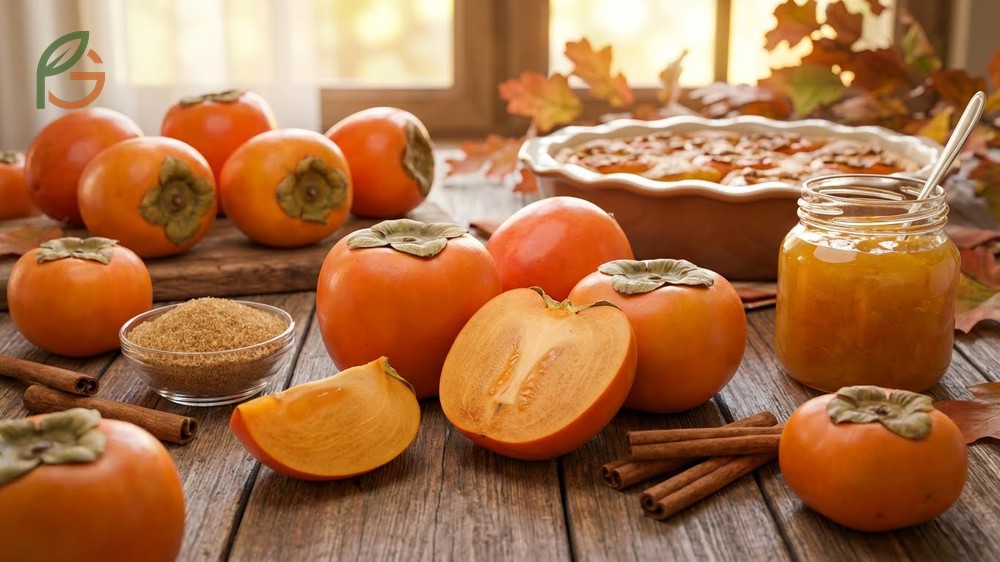
Persimmons deliver a unique flavor profile that combines sweetness with subtle spice notes. Current tasting analyses describe both varieties as having hints of cinnamon and brown sugar, making them perfect for fall recipes[7]. The sweetness comes from the fruit’s natural sugar content of approximately 12.5g per 100g[2].
The texture matters just as much as the taste when it comes to persimmon enjoyment. What often gets overlooked is that ripeness dramatically affects not just sweetness but also the overall eating experience. A firm persimmon eaten at the wrong ripeness stage can ruin your first impression of this fruit entirely.
Fuyu Persimmon Flavor
Firm Fuyu persimmons offer a crisp, crunchy texture similar to apples or firm pears. The flavor is mildly sweet with a clean finish that doesn’t overwhelm your palate. Research shows they’re less astringent than other varieties, making them approachable for first-time persimmon eaters.
When Fuyu persimmons soften slightly, their texture shifts to something between an apricot and a plum[9]. The sweetness intensifies at this stage. You’ll notice the flavor becomes richer and more complex, though some people still prefer the firm, crisp version.
Hachiya Persimmon Flavor
Fully ripe Hachiya persimmons deliver an incredibly sweet, honey-like taste that’s more intense than Fuyu varieties[8]. The texture becomes custard-like or pudding-like when properly ripened. This makes them ideal for baking applications where you need a sweet, smooth base ingredient.
The flavor transformation from unripe to ripe Hachiya is dramatic. Unripe Hachiyas taste chalky and astringent due to soluble tannins that bind with saliva proteins[10]. Once fully soft, these tannins polymerize and become insoluble, eliminating the astringency completely.
- Firm Fuyu: Crisp and mildly sweet, similar to a sweet apple with cinnamon notes
- Soft Fuyu: Richer sweetness with a plum-apricot texture and deeper flavor
- Unripe Hachiya: Extremely astringent, chalky, and unpleasant—avoid eating
- Ripe Hachiya: Intensely sweet like honey, with smooth custard-like consistency
- Both varieties: Natural hints of cinnamon, brown sugar, and warm spice flavors
How to Cut a Persimmon
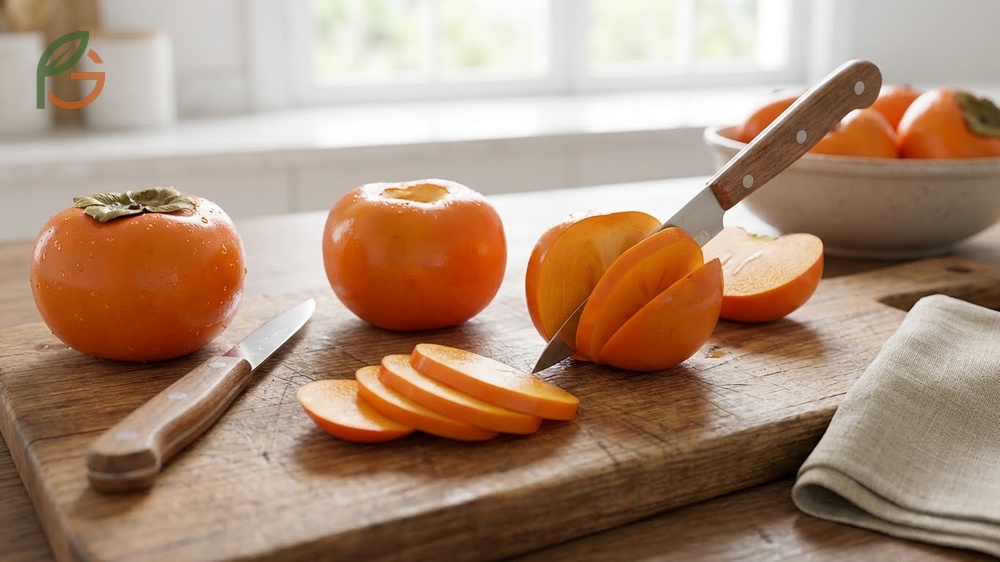
Cutting a Fuyu persimmon follows the same approach you’d use for an apple or tomato. Start by washing and drying the fruit thoroughly. Use a paring knife to cut around the leafy top, removing it along with about 1/4 to 1/2 inch of the core area[11].
After removing the top, you’ve got several cutting options depending on how you’ll use the persimmon. Place it cut-side down on your cutting board for stability. Slice it in half through the center, then cut each half into thin wedges for salads or snacking[11].
For round slices that look beautiful on platters, start from the bottom of the persimmon and slice horizontally in 1/8 to 1/4 inch rounds. If you need diced persimmon for recipes, cut your wedges in half or thirds. The skin is edible, so you don’t need to peel Fuyu persimmons unless you prefer the texture without it.
Hachiya persimmons require a different technique because they’re so soft when ripe. Remove the leafy stem, then cut the fruit in half from top to bottom. Make a shallow V-shaped cut around where the stem was attached to remove any tough core[12]. Use a spoon to scoop out the soft, jelly-like flesh, or carefully separate the flesh from the skin with a knife if you’re using it for baking.
- Step 1: Wash persimmon thoroughly under cool water and pat completely dry
- Step 2: Remove leafy top with paring knife, cutting 1/4-1/2 inch deep around stem
- Step 3: For Fuyu, place cut-side down and slice in half vertically for stability
- Step 4: Cut into wedges (1/8 inch thick), rounds, or dice as needed for your recipe
- Step 5: For Hachiya, cut lengthwise and make V-cut around stem area to remove core
- Step 6: Scoop soft Hachiya flesh with spoon or gently separate from skin with knife
Pro Cutting Tip: For incredibly thin persimmon slices perfect for garnishing desserts or charcuterie boards, you can slice Fuyu persimmons as thin as one-fifth of a centimeter. A sharp knife and steady hand make all the difference.
Fuyu vs Hachiya Persimmon Eating
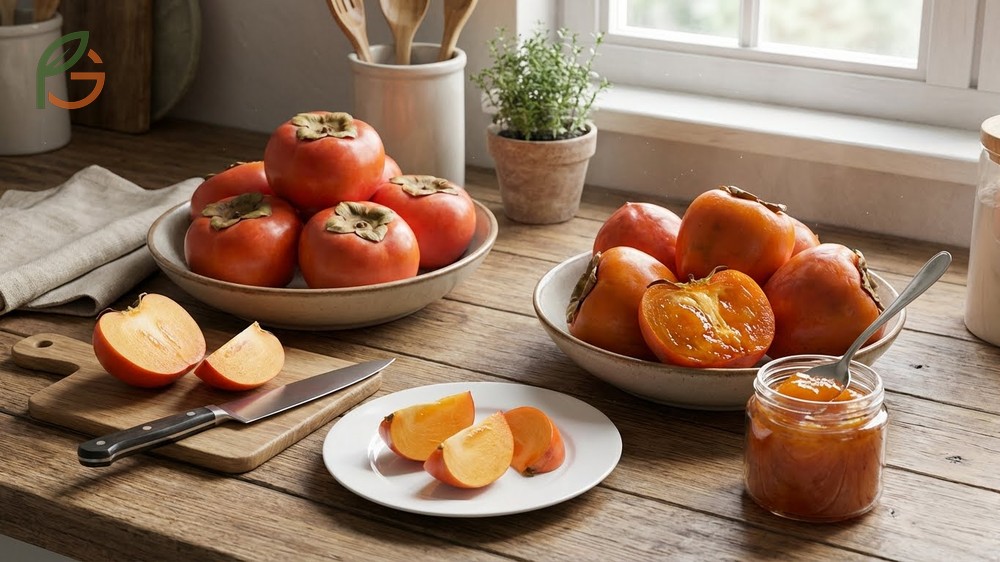
The fundamental difference between these two persimmon varieties comes down to their astringency levels and when they’re edible. Fuyu persimmons are classified as non-astringent, which means they contain minimal tannins and can be eaten while firm[5]. Hachiya persimmons are astringent fruits that require complete ripening before consumption.
This distinction affects every aspect of how you buy, store, and prepare these fruits. Most people find Fuyu persimmons more convenient because they’re ready to eat immediately after purchase. Hachiyas demand patience but reward you with that intensely sweet, unique flavor once they’ve properly ripened.
This table compares eating readiness, texture, best uses, ripeness indicators, and tannin content between Fuyu and Hachiya persimmon varieties
| Characteristic | Fuyu Persimmon | Hachiya Persimmon |
|---|---|---|
| Eating Readiness | Eat firm or soft—ready when purchased | Must be extremely soft and jelly-like |
| Texture When Ripe | Crisp like apple, or soft like apricot | Pudding-like, custard consistency |
| Best Eaten | Raw, sliced in salads, as snacks | Scooped with spoon, used in baking |
| Ripeness Indicator | Vibrant orange color, firm to touch | Very soft skin that gives to pressure |
| Tannin Content | Low—2.5% to 20%[6] of astringent types | High when unripe—requires ripening |
Storage needs differ significantly between these varieties too. Fuyu persimmons will keep for several weeks without getting mushy, maintaining their firm texture longer[1]. Hachiya persimmons need countertop ripening for 3-7 days if purchased firm, and once soft, they’ll only last another 1-2 days before becoming overripe.
[3]. Studies demonstrate that persimmon skin concentrates vitamin A and vitamin C, making it a nutrient-dense addition to your diet[3]. Eating the whole fruit maximizes your intake of these beneficial compounds while reducing food waste.
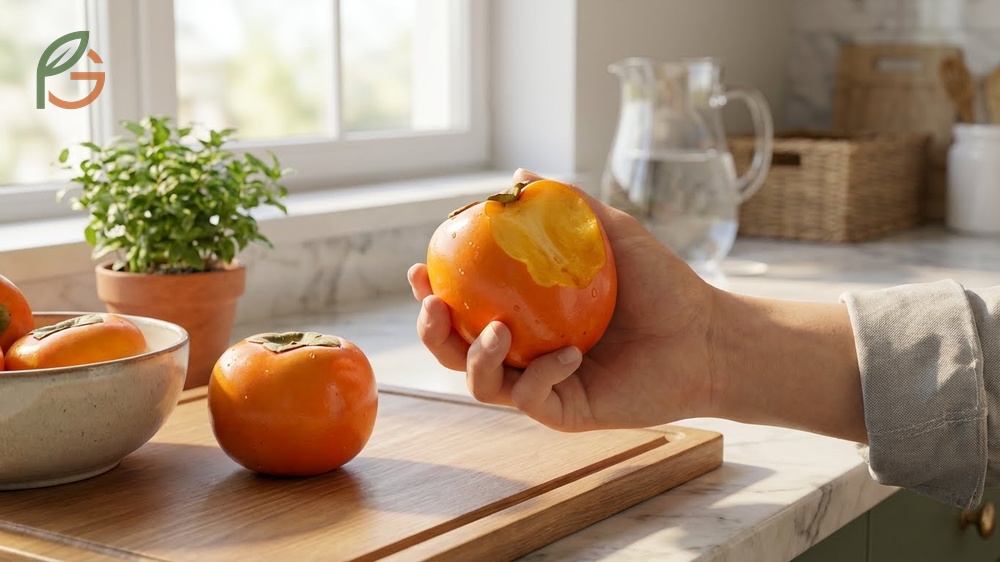
Fuyu persimmons are ideal for eating with the skin on because they stay firm and the skin remains tender. You’ll bite into them exactly like you would an apple. Hachiya persimmon skin becomes very thin and delicate when the fruit is fully ripe, though some people still prefer to scoop out just the flesh and leave the skin behind.
The only consideration with persimmon skin is personal preference regarding texture. Some people notice a slightly tougher or more bitter quality to the skin, especially if the fruit isn’t fully ripe. If you’re not sure, try it both ways—eat half with the skin and peel the other half to compare.
- Edible and safe: Both Fuyu and Hachiya persimmon skins can be consumed
- Nutrient boost: Skin contains concentrated fiber, vitamin A, and vitamin C
- Digestive support: Additional fiber from skin promotes fullness and aids digestion
- Eco-friendly choice: Eating whole fruit reduces waste and maximizes nutrition
- Texture preference: Skin may be slightly bitter or tough on underripe fruits
Persimmon Recipes and Serving Ideas
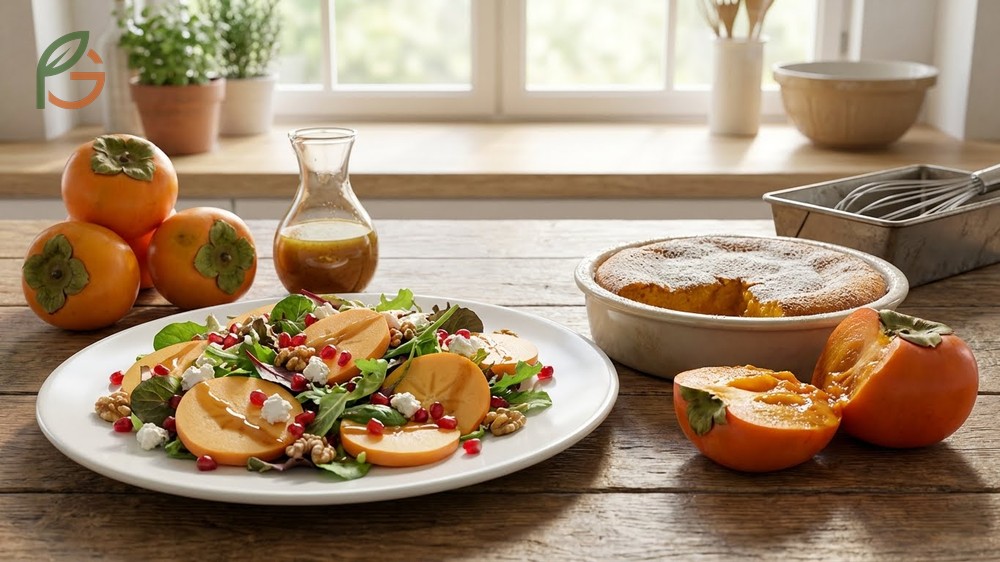
Persimmons shine in both raw preparations and cooked applications, depending on which variety you’re working with. Fuyu persimmons work brilliantly in fresh salads where their firm texture and mild sweetness complement mixed greens, nuts, and tangy cheese. Research shows they pair especially well with pomegranate seeds, goat cheese, and maple vinaigrette dressings[13].
Hachiya persimmons excel in baking applications where their pudding-like consistency adds moisture and natural sweetness. Home bakers use them for persimmon puddings, tarts, scones, and quick breads. The soft flesh blends easily into batters without requiring much processing.
For breakfast, try slicing firm Fuyu persimmons over yogurt or oatmeal for a burst of color and nutrients. The 3.6g of fiber[2] per 100g helps keep you full throughout the morning. Pairing persimmons with protein sources like Greek yogurt or nuts creates a balanced meal that provides sustained energy.
- Fresh salads: Slice Fuyu persimmons thin and toss with mixed greens, nuts, and cheese
- Smoothie additions: Blend soft Hachiya flesh with yogurt, cinnamon, and banana
- Breakfast toppings: Add Fuyu slices to oatmeal, yogurt bowls, or whole-grain toast
- Baked goods: Use Hachiya puree in muffins, breads, scones, and puddings
- Cheese boards: Arrange Fuyu wedges alongside aged cheddar or creamy brie
- Roasted preparations: Halve Fuyus, drizzle with honey, and roast at 375°F for 20 minutes
- Salsas and chutneys: Dice firm Fuyu persimmons with jalapeños, lime, and cilantro
The natural sweetness of persimmons means you can reduce added sugars in many recipes. Current guidance shows that the 12.5g of natural sugars[2] per 100g provides enough sweetness for most applications. You’ll find they satisfy dessert cravings while delivering beneficial nutrients that refined sugar doesn’t offer.
Recipe Storage Tip: If you’ve made persimmon puree from ripe Hachiya fruits, freeze it in ice cube trays for later use. Each cube equals about 2 tablespoons, making it easy to add to smoothies or thaw exactly what you need for baking.
Conclusion
The evidence is clear: knowing how to eat persimmon fruit correctly transforms this fall fruit from confusing to delicious. Choose Fuyu persimmons when you want something crisp and immediately ready to eat, or select Hachiyas when you’re planning baking projects and can wait for them to ripen. Both varieties deliver impressive nutrition with only 70 calories per 100g and over 3g of fiber.
Current guidance emphasizes that persimmon season from September through November offers the perfect opportunity to explore these versatile fruits. Whether you’re slicing them into salads, scooping them from the skin, or baking them into holiday desserts, persimmons bring unique flavor and valuable nutrients to your table. Visit FruitGarden for more research-based fruit guides that help you make the most of seasonal produce.
Frequently Asked Questions
Can You Eat Persimmons Raw?
Yes, you can eat both Fuyu and Hachiya persimmons raw. Fuyu persimmons are best eaten raw while firm, with a crisp texture similar to apples. Hachiya persimmons should be completely soft before eating raw—the flesh becomes jelly-like and intensely sweet when properly ripened.
What Happens If You Eat an Unripe Persimmon?
Eating an unripe persimmon, especially a Hachiya variety, causes an extremely unpleasant astringent sensation due to high tannin content. The soluble tannins bind with saliva proteins in your mouth, creating a dry, chalky, puckering feeling. This won’t harm you but it’s intensely uncomfortable and the fruit tastes terrible.
How Do You Know When a Persimmon Is Ready to Eat?
Fuyu persimmons are ready when they’re vibrant orange and firm to the touch—you can eat them immediately. Hachiya persimmons must be so soft that the skin gives easily to gentle pressure, feeling almost like a water balloon. If a Hachiya still feels firm anywhere, wait another day or two.
Should You Refrigerate Persimmons?
Don’t refrigerate Hachiya persimmons until they’re fully ripe, as cold temperatures slow the ripening process. Store them at room temperature until soft. Fuyu persimmons can be refrigerated when ripe to extend their shelf life by about a week, though they’ll also keep well on the counter for several weeks.
What’s the Best Way to Ripen Persimmons Quickly?
Place firm Hachiya persimmons in a paper bag with a ripe banana or apple to speed ripening. The ethylene gas these fruits produce accelerates the process, reducing wait time from 7 days to about 3-4 days. Keep the bag at room temperature and check daily for softness.
Can You Freeze Persimmons?
Yes, you can freeze both persimmon varieties successfully. For Hachiya, scoop out the soft pulp and freeze it in airtight containers or ice cube trays for up to 6 months. Fuyu persimmons can be sliced and frozen on a baking sheet, then transferred to freezer bags for use in smoothies or baking.
Are Persimmon Seeds Edible?
Persimmon seeds are not toxic but they’re not typically eaten because they’re hard, bitter, and offer no pleasant flavor. Most people remove them while eating the fruit or spit them out. If you’re using persimmon pulp for recipes, strain it through a fine-mesh sieve to remove all seeds easily.





