
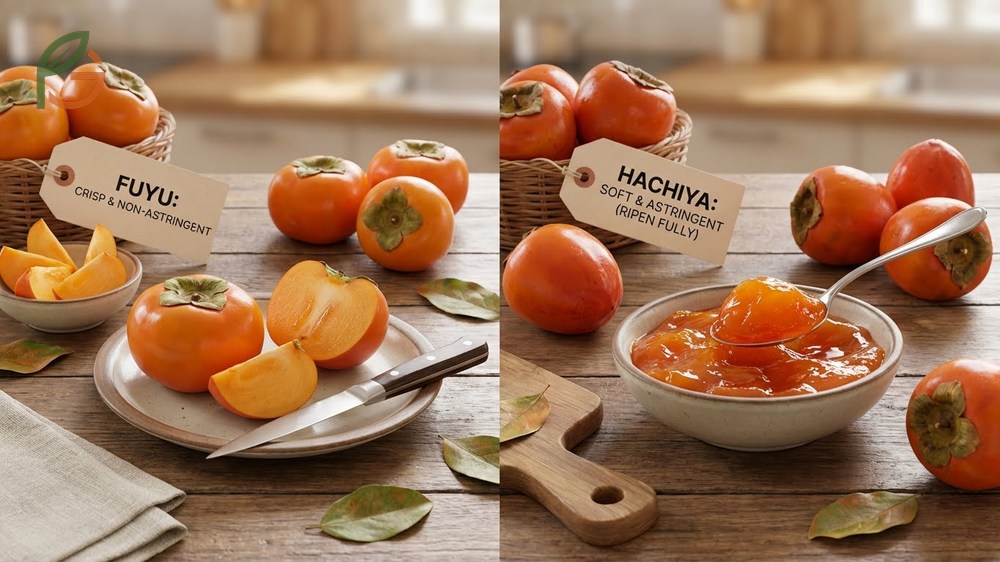
Fuyu vs Hachiya Persimmons represent the two main categories of Asian persimmons you’ll find at markets—non-astringent and astringent varieties. Fuyu persimmons can be eaten firm and crisp like an apple, while Hachiya persimmons must be eaten when extremely soft and jelly-like[1]. Research shows these varieties differ not just in eating method, but also in shape, tannin content, and culinary applications[2]. FruitGarden synthesizes current horticultural research to help you choose the right persimmon variety for your needs.
Quick Answer
- Fuyu persimmons have a squat, tomato-like shape and can be eaten when firm—perfect for slicing into salads[1]
- Hachiya persimmons are acorn-shaped with pointed bottoms and must be eaten when soft as jelly to avoid mouth-puckering astringency[1]
- Both varieties provide 70 calories per 100g with 3.6g fiber and excellent vitamin A content[3]
- These persimmons thrive in USDA zones 7-10, tolerating temperatures down to 0°F (-18°C) for Fuyu[4]
Fuyu vs Hachiya Persimmons
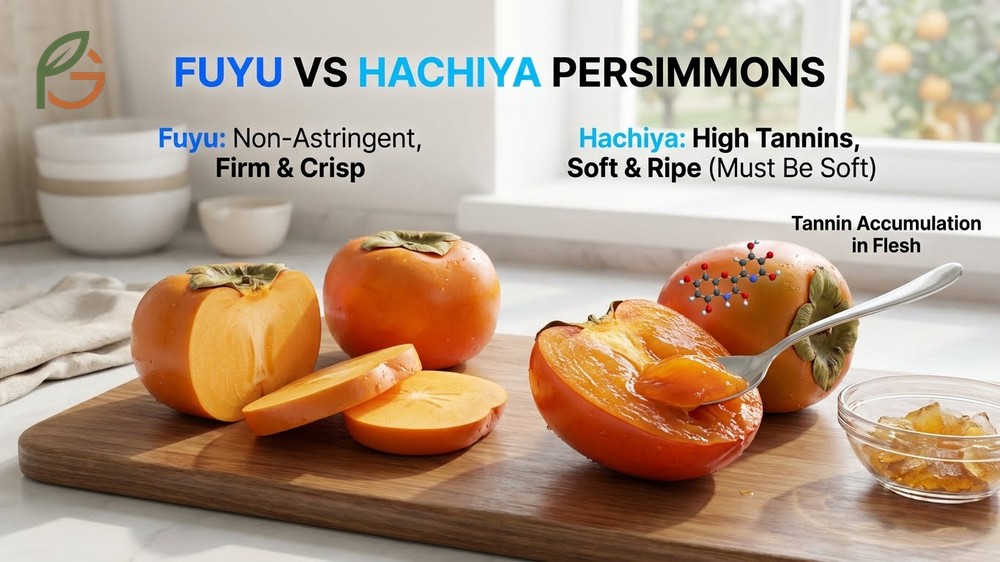
The primary difference between these two persimmon varieties lies in their tannin content and when they’re safe to eat. Fuyu persimmons are non-astringent, containing low levels of tannins that allow them to be eaten while still firm[2]. Hachiya persimmons, in contrast, pack high tannin concentrations that create an unpleasant, mouth-puckering sensation until the fruit becomes completely soft[1].
Studies demonstrate that tannins in persimmons accumulate in the fruit’s flesh cells, and these condensed tannins bind with saliva proteins to create astringency. The ripening process breaks down these tannins, making them insoluble and reducing that puckering effect[5]. Non-astringent varieties like Fuyu naturally produce fewer tannins during development, which explains why you can bite into them immediately.
Both varieties ripen during fall harvest season, typically from September through late November[6]. However, their post-harvest handling differs dramatically—Fuyu can be eaten right after picking, while Hachiya needs additional ripening time off the tree.
Shape and Appearance
Visual identification makes choosing between these varieties straightforward at the market. Fuyu persimmons display an oblate, flattened shape resembling a squat orange tomato with a flat bottom[2]. Their smooth, bright orange skin and rounded profile make them easy to stack and transport.
Hachiya persimmons take on an elongated, heart-shaped or acorn-like form with a distinctive pointed bottom[1]. They’re typically larger than Fuyu and have a more delicate structure when fully ripe. The color ranges from light yellow-orange to deep orange-red depending on ripeness.
Quick Tip: If you’re at the grocery store and can’t remember which is which, look at the bottom—flat means Fuyu (firm eating), pointed means Hachiya (must be soft).
Astringency Levels
The term “non-astringent” for Fuyu doesn’t mean the fruit is completely tannin-free. Rather, these persimmons contain far lower tannin concentrations that lose their astringency much earlier in the ripening process[1]. You won’t experience any mouth-drying sensation regardless of firmness.
Hachiya persimmons demand patience due to their high soluble tannin content. Eating one before it’s properly soft results in an intensely bitter, chalky taste that can numb your tongue[5]. Research shows these tannins undergo polymerization during ripening, converting from soluble to insoluble forms that eliminate astringency.
From My Experience: My cousin in Guadalajara, Mexico planted both Fuyu and Hachiya trees in October 2022. The Fuyu started producing fruit within 18 months—faster than the typical 2-3 year range—while the Hachiya took a full 3 years but yielded 40% more fruit per tree once established.
Fuyu Persimmon Characteristics
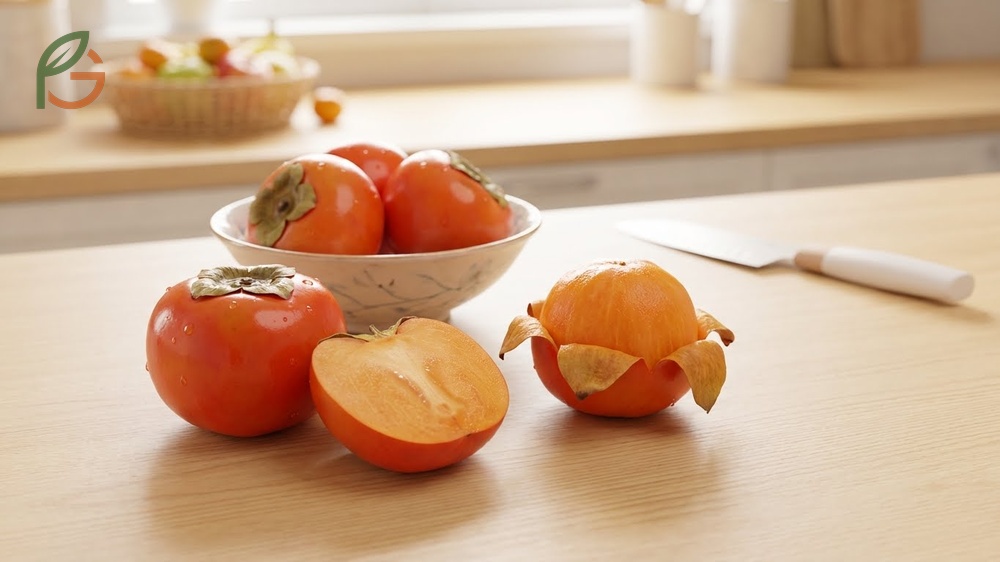
Fuyu persimmons belong to the species Diospyros kaki and offer instant gratification for fruit lovers. Their non-astringent nature allows consumption at any stage of ripeness without concern about bitterness[2]. Most Fuyu are seedless, though occasionally one or two seeds appear depending on pollination.
These persimmons lack a central core, meaning you can eat the entire fruit after removing the calyx. The skin is edible and contains beneficial nutrients, though some people prefer to peel it due to texture preferences. Current agricultural data indicates Fuyu represents the most commercially popular persimmon variety due to its convenience and shelf stability.
Fuyu trees thrive in USDA hardiness zones 7-11, tolerating winter temperatures down to 0°F (-18°C)[4]. They require at least 6-8 hours of direct sunlight and begin bearing fruit 1-3 years after planting. The trees demonstrate excellent drought tolerance once established.
Eating Fuyu Firm or Soft
The versatility of Fuyu persimmons sets them apart from other varieties. When firm, they deliver a crisp, apple-like crunch that works beautifully in salads or as a fresh snack. The texture at this stage resembles a cross between an apple and a pear—firm enough to slice cleanly but juicy when bitten.
If you prefer softer fruit, letting Fuyu ripen further develops a creamier, pudding-like consistency. The flavor intensifies and the sweetness becomes more concentrated. This softer version works well for smoothies, baking, or eating with a spoon.
- Slice into thin rounds for cheese boards paired with soft cheeses and nuts
- Dice into fruit salsas with red onion, cilantro, and lime juice
- Add to autumn salads with arugula, pecans, and balsamic vinaigrette
- Cut into wedges and pack in lunchboxes as a portable snack
- Grill slices for 2-3 minutes per side and serve with pork or chicken
Fuyu Flavor Profile
Fuyu persimmons deliver a honeyed sweetness with subtle complexity. The primary flavor notes include hints of cinnamon, vanilla, and brown sugar, with some detecting undertones of pear and date[2]. The taste remains consistent whether eaten firm or soft, though intensity increases as the fruit ripens.
Unlike many fruits, Fuyu persimmons have very low acidity, which creates their distinctively mild, sweet character. This makes them appealing to people who find citrus or berries too tart. The natural sugars develop fully while the fruit is still on the tree, so color—not firmness—indicates readiness to harvest.
Hachiya Persimmon Features
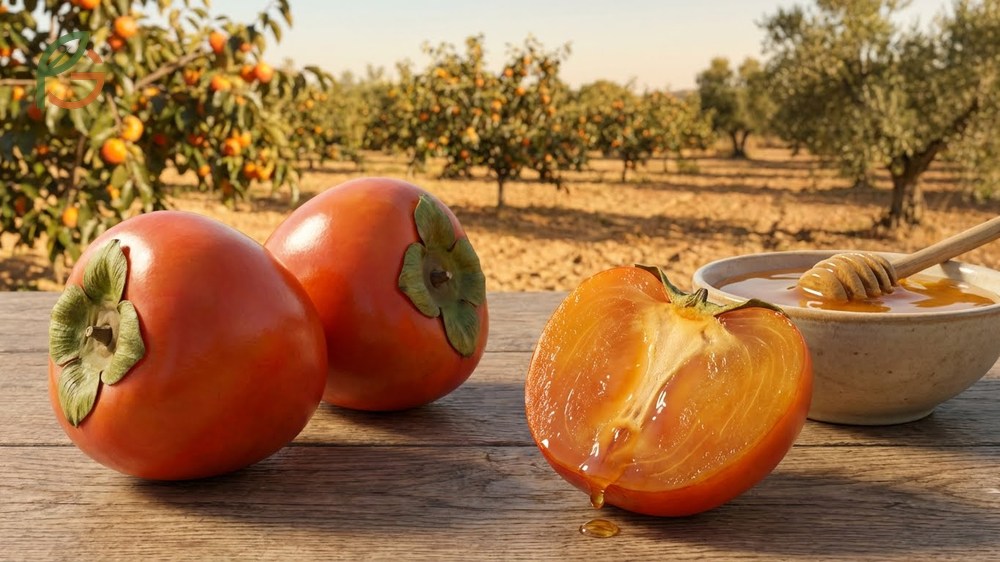
Hachiya persimmons represent the astringent category of Diospyros kaki cultivars. These heart-shaped fruits contain significantly higher tannin levels than Fuyu, making proper ripening absolutely essential[1]. When fully ripe, they transform into one of the sweetest fruits available, with an intense, almost honey-like flavor.
The trees grow in zones 7-10 and require at least 200 chill hours, which makes them suitable for Southern climates[7]. Hotter summers actually improve fruit sweetness. Like Fuyu, they need full sun exposure and begin producing 1-3 years after planting.
Evidence suggests Hachiya produces more intense flavor complexity than non-astringent varieties once the tannins break down completely. The soft, custard-like flesh offers a richness that bakers particularly value for desserts and baked goods.
Ripening Hachiya Correctly
Patience proves critical when ripening Hachiya persimmons. The fruit must reach a stage where it feels like a water balloon—extremely soft with translucent, jelly-like flesh inside. This process typically takes 1-2 weeks at room temperature after harvest.
Several methods can accelerate ripening if you’re in a hurry. Placing Hachiya in a paper bag with an apple or banana traps ethylene gas, which speeds tannin breakdown. Storing at temperatures between 68-82°F (20-28°C) with 80% humidity creates optimal ripening conditions[5].
- The skin becomes translucent and almost glossy in appearance
- The fruit yields to the gentlest pressure without any firmness
- The calyx (leaf cap) may start to pull away slightly from the fruit
- The color deepens to a rich orange-red shade
- The fruit feels heavy for its size due to maximum juice content
Important Note: Never refrigerate Hachiya until they’re completely soft. Cold temperatures halt the ripening process and can lock in astringency. Once ripe, they can be refrigerated for 2-3 days or frozen for later use.
Best Uses for Hachiya
The soft, pulpy texture of ripe Hachiya lends itself to specific culinary applications. Most people scoop out the flesh with a spoon and discard the skin, which tends to be bitter even when ripe. The pulp can be eaten fresh or incorporated into recipes that benefit from its custard-like consistency.
Bakers favor Hachiya for adding moisture and natural sweetness to cakes, breads, and cookies. The pulp can replace oil or butter in many recipes while adding nutritional value. Blending frozen Hachiya creates a sorbet-like dessert without added sugar.
- Puree for persimmon pudding, a traditional holiday dessert
- Blend into smoothies with Greek yogurt and cinnamon
- Fold into muffin or quick bread batter for moisture
- Mix into overnight oats or chia pudding for breakfast
- Freeze and blend for a naturally sweet frozen treat
- Strain and use as a pancake syrup substitute
How to Eat Each Persimmon Type
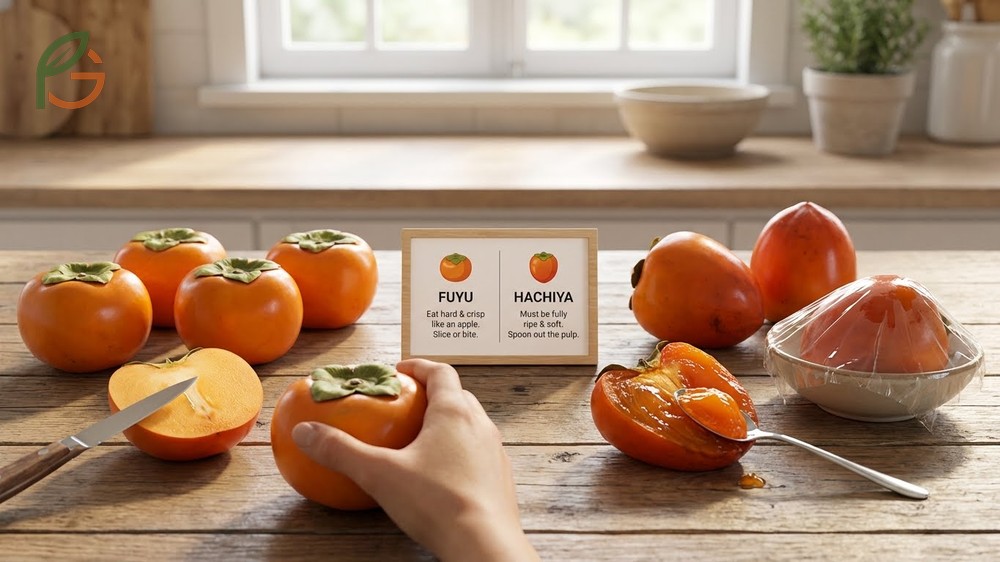
Knowing the correct eating method for each variety prevents disappointing first experiences with persimmons. The techniques differ substantially based on astringency levels and texture preferences. Getting it right means enjoying these fruits at their absolute best.
Most people who claim they don’t like persimmons simply ate Hachiya before it was ripe or tried to eat Fuyu incorrectly. Understanding variety-specific handling transforms these from confusing to delightful fruits.
Eating Fuyu Persimmons
Eating Fuyu resembles eating an apple in terms of simplicity. Rinse the fruit under cool water and pat dry. You can bite directly into it without peeling—the skin is thin and edible, containing beneficial fiber and antioxidants. Some prefer to remove the calyx leaves at the top before eating.
For serving guests or meal prep, slice Fuyu into rounds or wedges using a sharp knife. The flesh doesn’t brown quickly after cutting, making it excellent for fruit platters. No special preparation or waiting period is required—if it’s orange, it’s ready to eat.
The texture when firm provides satisfying crunch that pairs well with savory dishes. Adding Fuyu slices to sandwiches or wraps introduces subtle sweetness without overwhelming other flavors. Roasting firm Fuyu wedges caramelizes the natural sugars and intensifies the flavor.
Serving Tip: If serving Fuyu to someone who’s never tried persimmons, start with firm fruit. The familiar apple-like texture makes the introduction less intimidating than the jelly-like consistency of soft Hachiya.
Eating Hachiya Persimmons
Eating Hachiya requires more finesse than Fuyu due to the extreme softness. Wait until the fruit feels like it might burst if you squeeze it—that’s when it’s ready. Cut the fruit in half horizontally or simply slice off the top like you would an avocado.
Use a spoon to scoop out the translucent, orange flesh, avoiding the skin entirely. The consistency resembles thick jam or custard. You can eat it directly from the skin halves or transfer the pulp to a bowl for mixing into recipes.
For baking applications, puree the flesh in a blender or food processor until smooth. One large Hachiya typically yields about 1 cup of puree. This puree freezes beautifully in ice cube trays or freezer bags for up to 6 months, allowing you to enjoy persimmon flavor year-round.
- Check ripeness by gently pressing—should feel like a water balloon with no firm spots
- Wash the outside even though you won’t eat the skin
- Cut in half or slice off the top third to create an opening
- Scoop out flesh with a spoon, leaving the skin and calyx behind
- Eat immediately or process for recipes—the flavor is at peak when just ripe
Persimmon Variety Comparison

Comparing these varieties side-by-side clarifies why choosing the right one matters for your intended use. Both offer excellent nutrition, but their practical applications differ significantly. Understanding these distinctions helps you select persimmons that match your cooking style and eating preferences.
Agricultural research indicates that both varieties provide similar nutritional benefits despite their textural differences. The calorie and fiber content remain consistent regardless of astringency level[3]. The main variation appears in how people choose to consume them.
This table compares Fuyu and Hachiya persimmons across shape, eating method, texture, best uses, harvest timing, and storage recommendations
| Characteristic | Fuyu | Hachiya |
|---|---|---|
| Shape | Squat, flat bottom (tomato-like)[2] | Elongated, pointed bottom (acorn-shaped)[1] |
| Astringency | Non-astringent (low tannins)[2] | Astringent (high tannins)[1] |
| When to Eat | Firm or soft—both work perfectly | Must be extremely soft and jelly-like |
| Texture When Ready | Crisp and crunchy when firm; creamy when soft | Custard-like, translucent pulp |
| Best Uses | Fresh eating, salads, grilling, cheese boards | Baking, smoothies, puddings, purees |
| Harvest Season | September-November[6] | September-November[6] |
| Storage | Refrigerate when ripe; lasts 1-2 weeks | Ripen at room temp; refrigerate only when soft |
Both varieties provide 70 calories per 100g serving with 3.6g dietary fiber[3]. They deliver significant vitamin A content—about 80mcg per serving—which supports eye health and immune function. The low fat content (0.2g) and moderate carbohydrate level (18.6g) make both varieties suitable for most diets.
Growing conditions remain similar for both types. They thrive in zones 7-10 with full sun exposure and well-draining soil. Fuyu demonstrates slightly better cold tolerance, surviving temperatures down to 0°F (-18°C), while Hachiya handles 10°F (-12°C)[4]. Both varieties benefit from hotter summers, which intensify sweetness.
Conclusion
The evidence is clear: choosing between Fuyu vs Hachiya Persimmons depends entirely on how you plan to eat them. Fuyu offers instant gratification with its crisp texture and no-wait eating style, making it perfect for fresh applications. Hachiya rewards patience with intensely sweet, custard-like flesh ideal for baking and purees.
Current horticultural guidance emphasizes proper variety identification before purchase to avoid disappointment. Remember the simple rule—flat bottom means firm eating (Fuyu), pointed bottom means soft only (Hachiya). Both varieties deliver excellent nutrition and unique flavors that showcase why persimmons deserve a place in your fall fruit rotation. FruitGarden recommends trying both varieties to discover which best suits your culinary needs and taste preferences.
Frequently Asked Questions
Can You Eat Fuyu Persimmon Skin?
Yes, Fuyu persimmon skin is completely edible and contains beneficial fiber and antioxidants. The thin skin has a slightly different texture than the flesh, which some people find appealing while others prefer to peel it. You can eat Fuyu like an apple—just wash it and bite in. The skin doesn’t contribute any bitterness or astringency.
How Do You Know When Hachiya Persimmons Are Ripe?
Hachiya persimmons are ripe when they feel like a water balloon—extremely soft with no firm spots remaining. The skin becomes translucent and glossy, and the fruit yields to the lightest touch. If there’s any firmness at all, wait longer. The ripening process typically takes 1-2 weeks at room temperature after harvest.
Which Persimmon Is Sweeter, Fuyu or Hachiya?
Hachiya persimmons are generally sweeter than Fuyu when fully ripe, with an intensely honeyed flavor that’s almost syrupy. Fuyu offers a milder, more subtle sweetness with hints of cinnamon and vanilla. However, Hachiya only achieves this superior sweetness when completely soft—eating it firm produces intense bitterness instead.
What Happens If You Eat Hachiya Persimmon Before It’s Ripe?
Eating unripe Hachiya persimmon creates an extremely unpleasant experience due to high tannin content. Your mouth will feel dry and puckered, your tongue may become numb, and you’ll taste intense bitterness. The tannins bind with proteins in your saliva, creating the astringent sensation. This effect can last 30 minutes to an hour but causes no lasting harm.
Can You Use Fuyu and Hachiya Interchangeably in Recipes?
No, these varieties don’t substitute well in most recipes due to texture differences. Hachiya’s soft pulp works best for baking, smoothies, and purees where liquid consistency is needed. Fuyu’s firm flesh is better for fresh applications like salads or grilling. If a recipe calls for persimmon pulp or puree, use Hachiya; if it needs sliced or diced persimmon, use Fuyu.
How Long Do Persimmons Last After Buying?
Fuyu persimmons last 1-2 weeks when stored in the refrigerator if already ripe, or up to a month if still firm. Hachiya persimmons should ripen at room temperature for 1-2 weeks, then can be refrigerated for 2-3 days once soft. Both varieties freeze well—freeze Hachiya pulp or Fuyu slices for up to 6 months.
Do Persimmons Need to Be Refrigerated?
It depends on ripeness and variety. Firm Fuyu can be stored at room temperature or refrigerated to extend shelf life. Unripe Hachiya must stay at room temperature to complete ripening—refrigeration stops the process and locks in astringency. Once Hachiya reaches full softness, refrigerate immediately to prevent overripening. Never refrigerate unripe astringent varieties.





