
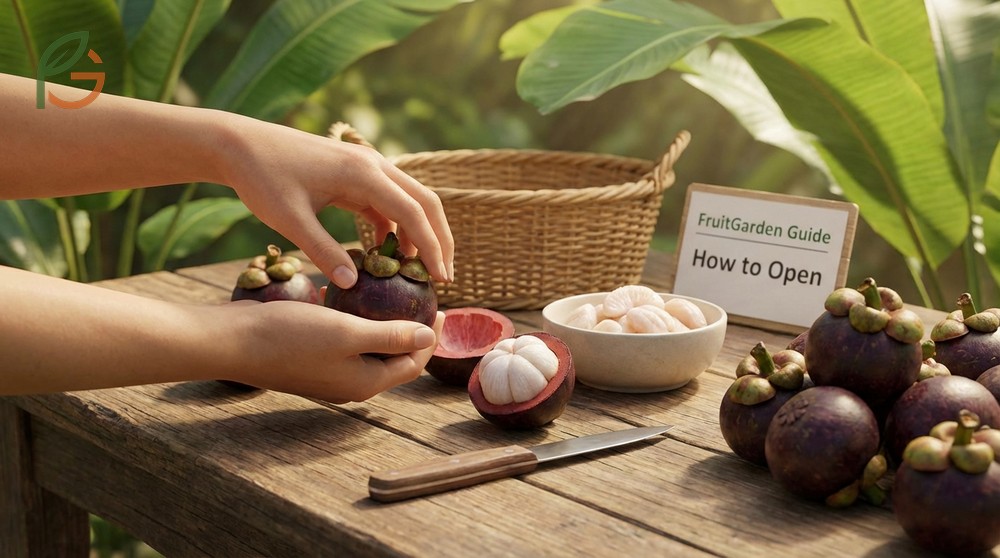
How to eat mangosteen starts with knowing the proper opening technique. Research shows this tropical fruit requires a simple twist-and-press method to access the sweet white segments inside the thick purple rind[1]. The edible flesh contains 73 calories and 1.8g fiber per 100g, making it a nutritious choice for fruit lovers[2]. FruitGarden provides comprehensive guides on selecting, storing, and enjoying this exotic “queen of fruits” from Southeast Asia.
Quick Answer
- Remove the stem and press down gently with your thumb to create a crack in the shell[1]
- Apply pressure from the sides to split the 0.25-0.33 inch thick purple rind and expose white segments[1]
- Eat the soft white flesh directly, avoiding large seeds and the bitter purple rind[3]
- Store at 54-57°F (12-14°C) for up to 20 days without chilling injury[4]
How to Eat Mangosteen
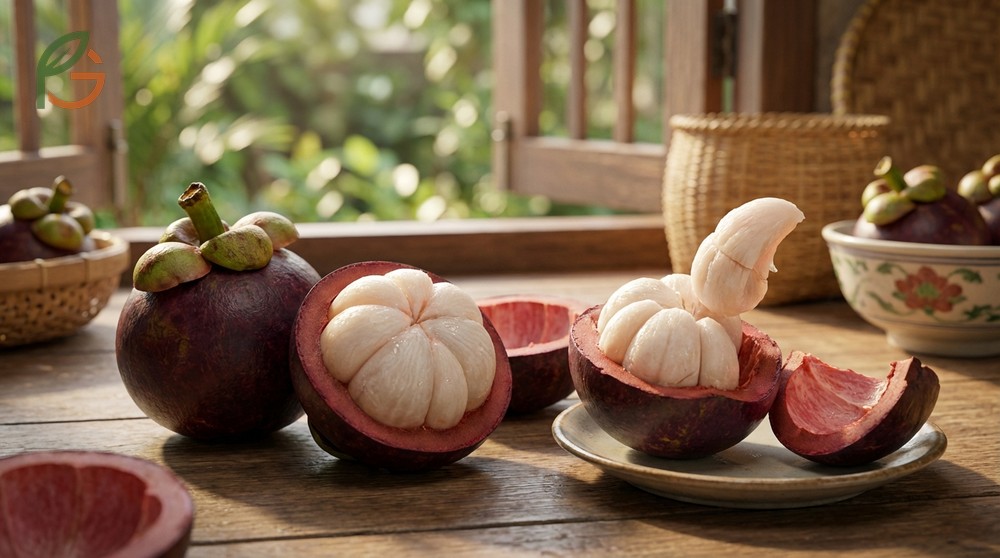
The white flesh inside mangosteen offers a delicate balance of sweet and tangy flavors that make it one of Southeast Asia’s most prized fruits. Once you’ve opened the purple shell, you’ll find 4-8 segments of soft, juicy pulp arranged like orange sections[1]. Most people eat the segments raw by popping them directly into their mouth.
Studies demonstrate that mangosteen’s unique nutritional profile includes xanthones, powerful antioxidants found primarily in the rind but also present in the flesh[5]. These compounds provide anti-inflammatory and antioxidant properties that can help protect cells from oxidative damage[6]. You don’t need utensils—simply use your fingers to pluck out each segment.
The number of petals on the bottom of the fruit tells you how many segments you’ll find inside. A mangosteen with 6 petals contains 6 segments, while one with 8 petals has 8 segments[1]. This visual cue helps you anticipate what’s inside before opening.
What Parts Are Edible
Only the white flesh segments are meant for eating. The thick purple rind is extremely bitter and tough, causing digestive discomfort if consumed raw[3]. The rind can also stain clothing permanently due to its high pigment content.
Research shows the fruit is entirely safe—no part is toxic, though the rind and larger seeds should be avoided[3]. Small seeds occasionally found in segments can be swallowed accidentally without harm, but most people spit them out. The leaves and stem attached to the top aren’t edible either and should be discarded.
Important Note: Don’t bite into a mangosteen like an apple. The purple rind isn’t just inedible—it’s bitter enough to ruin your tasting experience and may leave stubborn stains on your hands.
Taste and Texture
Mangosteen delivers a complex flavor profile that combines sweetness with subtle tartness, often compared to a mix of peach, strawberry, and citrus. The texture is soft and juicy, similar to lychee but slightly firmer. Fresh segments practically melt in your mouth, releasing sweet juice with each bite.
The best-tasting mangosteens come from fruits picked at peak ripeness, when the shell yields slightly to gentle pressure[7]. Overripe fruits develop an off-flavor, while underripe ones taste bland and lack the characteristic sweetness. Temperature also matters—room temperature fruits deliver fuller flavor than cold ones straight from the fridge.
How to Open Mangosteen
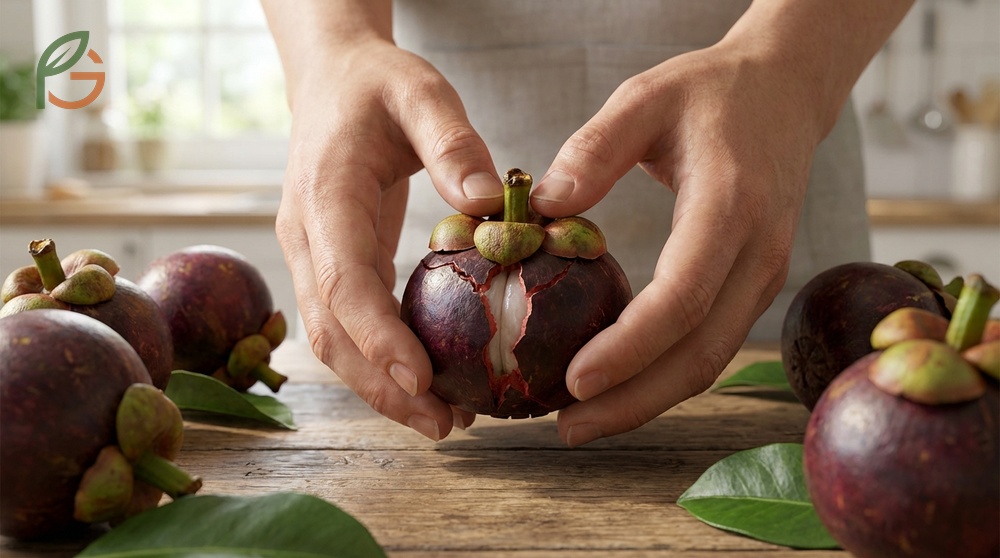
Opening a mangosteen doesn’t require special tools or techniques—just your hands and a gentle touch. The key is working with the fruit’s natural structure rather than forcing it open. Fresh mangosteens split easily when ripe, though older fruits with hardened shells need more pressure[1].
Current guidance emphasizes starting at the stem end, where the shell is thinnest and most vulnerable. This approach minimizes the risk of crushing the delicate segments inside. You’ll know you’re applying the right amount of pressure when you hear a soft crack—that’s the shell beginning to split.
Twist and Press Method
Start by removing the stem and leaves at the top of the fruit with a twisting motion. Place your thumb in the small indentation where the stem was and press down gently until you feel the shell give way[1]. Don’t push too hard—you’re creating a starting crack, not trying to break through completely.
Once you’ve made the initial crack, grip the fruit on opposite sides and apply inward pressure with both hands. The purple shell will split along its natural seams, revealing the white segments nestled inside. If the shell resists, try rotating the fruit 90 degrees and applying pressure from a different angle.
- Hold the mangosteen with the stem end facing up
- Twist and pull the stem until it detaches completely
- Press your thumb into the stem cavity with moderate force
- Squeeze from the sides once you feel the shell crack
- Peel away the top half of the shell to expose the segments
How to Peel Mangosteen Without Knife
You can open mangosteen completely bare-handed by using the squeeze method. Hold the fruit between both palms and apply steady, even pressure until you hear the shell crack[8]. This technique works particularly well with fresh fruits that haven’t been refrigerated for extended periods.
Once the shells crack, use your thumbs to peel away the broken pieces like you’re opening a soft-boiled egg. The shell naturally separates into two halves, making it easy to access the fruit inside. This method takes practice but eliminates any risk of accidentally cutting the segments with a knife.
From My Experience: My cousin in Guadalajara, Mexico grows mangosteen trees in his tropical greenhouse. He taught me that pressing near the stem end works better than squeezing the sides—the shell cracks in about 2 seconds versus struggling for 15-20 seconds with side pressure.
How to Cut Mangosteen
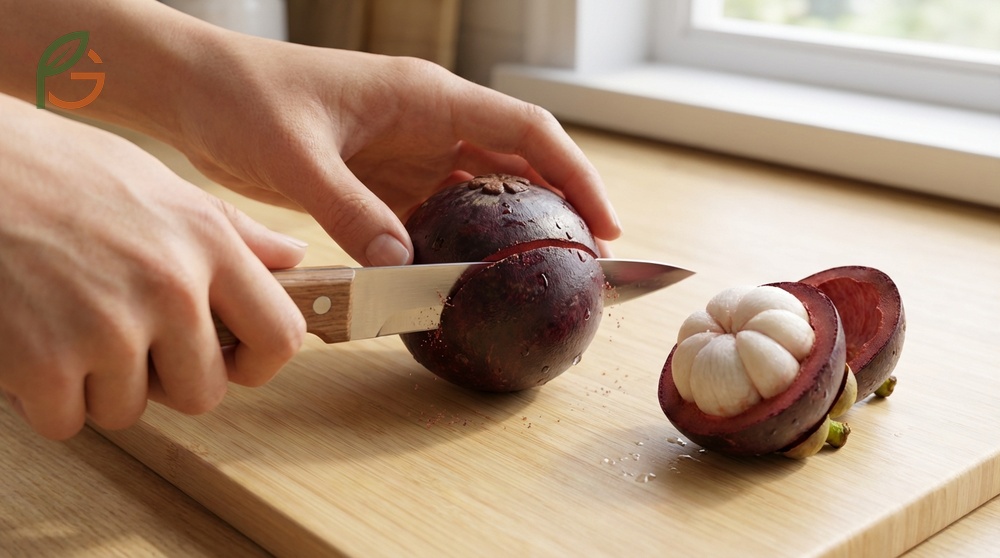
If you prefer using a knife, make a shallow horizontal cut around the equator of the fruit, penetrating only about 0.25-0.33 inches deep[1]. This cut goes through the rind without damaging the flesh segments inside. Use a paring knife with a sharp blade for better control.
After scoring the shell, twist the top and bottom halves in opposite directions. The fruit will separate cleanly, leaving the segments attached to one half. This method works especially well for serving mangosteen to guests or preparing multiple fruits quickly.
- Place the mangosteen on a cutting board with the stem facing up
- Score a horizontal line around the middle, just deep enough to cut the rind
- Rotate the fruit while cutting to create an even circle
- Twist the two halves in opposite directions to separate them
- Lift out the segments from the bottom half with a spoon or your fingers
Safety Tip: Keep your knife blade shallow when scoring the shell. The segments sit directly against the inner rind, and cutting too deep will slice through them, releasing juice and ruining the presentation.
How to Choose Ripe Mangosteen
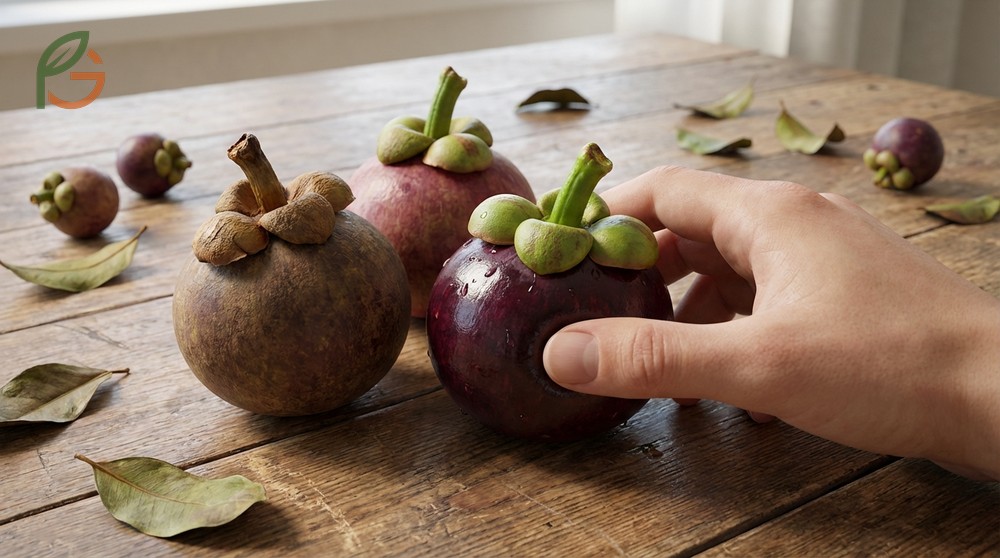
The best indicator of ripeness is shell firmness—ripe mangosteens yield slightly when you apply gentle thumb pressure to the side[7]. If the shell feels rock-hard, the fruit is either underripe or too old to eat. Fresh stems and leaves signal recent harvest—look for green, flexible stems rather than brown, dried-out ones[9].
Color provides additional clues about fruit quality. Deep purple skin with a slight sheen indicates peak ripeness, while dull, brownish rinds suggest the fruit is past its prime. Avoid mangosteens with hardened resin on the outside—this signals that internal juices have leaked out, leaving dried-out segments inside[1].
- Press gently—the shell should give slightly but not feel mushy
- Choose fruits with green, fresh-looking stems and leaves
- Look for deep purple skin with a glossy appearance
- Avoid fruits with brown spots, cracks, or dried resin
- Select smaller fruits when possible—they typically have fewer seeds[9]
- Check for ant trails, which indicate the fruit may be damaged
Size doesn’t always predict quality, but smaller mangosteens often contain more seedless segments than larger ones. The number of bottom petals also matters—fruits with 6-8 petals tend to be sweeter than those with fewer sections[9].
Storing Mangosteen
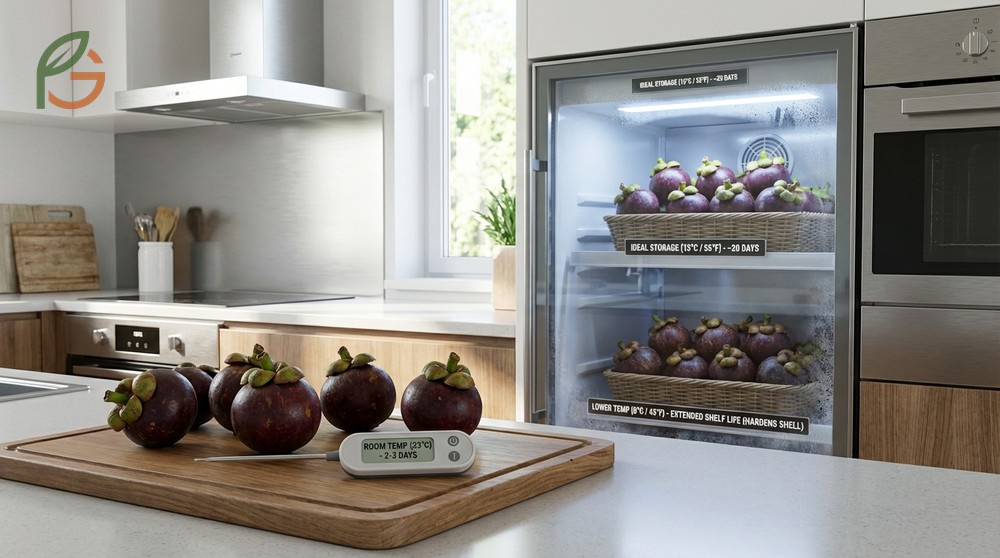
Storage temperature dramatically affects mangosteen shelf life and eating quality. Research shows the ideal range is 54-57°F (12-14°C), which preserves freshness for about 20 days without causing chilling injury[4]. Storing at lower temperatures like 39-46°F (4-8°C) extends shelf life but hardens the shell, making fruits more difficult to open[7].
Room temperature storage works for 2-3 days if you plan to eat the fruit quickly. Beyond that, refrigeration becomes necessary to prevent rapid deterioration. Studies demonstrate that surface coatings or waxing can extend storage to 4 weeks at 55°F (13°C) by reducing weight loss and preventing stem wilting[10].
For maximum freshness, store mangosteens in your refrigerator’s crisper drawer inside a sealed plastic bag or airtight container. This maintains humidity while preventing the fruit from absorbing odors from other foods. Don’t wash mangosteens before storing—moisture accelerates mold growth on the rind.
Storage Warning: Hard mangosteens present a tricky situation—they’re either underripe or overripe. Don’t refrigerate hard fruits, as cold temperatures won’t improve them. Only store mangosteens that already yield slightly to pressure[7].
- Store ripe fruits at 54-57°F (12-14°C) in a crisper drawer for optimal quality
- Use sealed containers or plastic bags to maintain humidity
- Keep mangosteens away from ethylene-producing fruits like apples and bananas
- Leave fruits unwashed until ready to eat
- Consume refrigerated mangosteens within 2 weeks for best flavor
Mangosteen Nutrition Facts
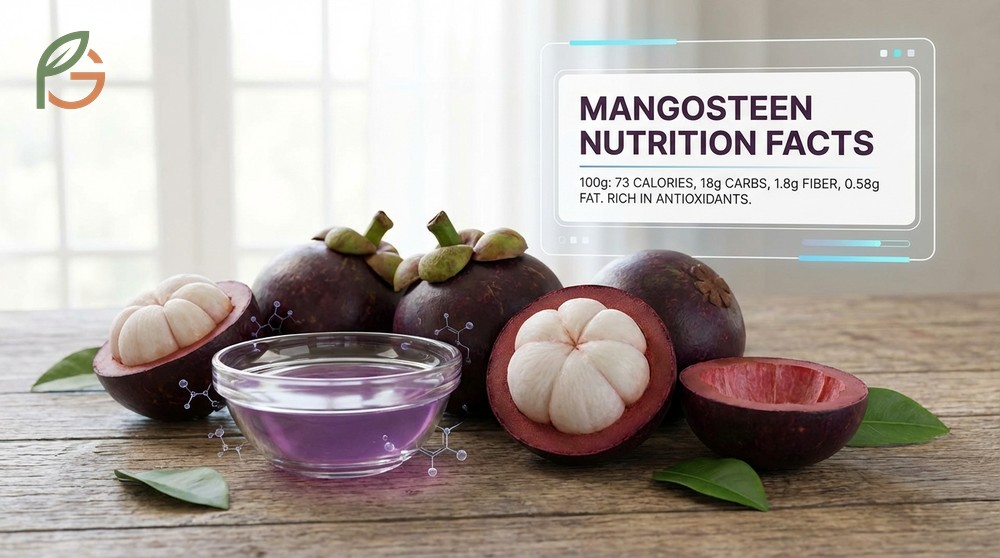
Mangosteen provides modest nutritional value with relatively low calorie density. Data shows that 100g of fresh mangosteen contains 73 calories, 18g total carbohydrates, and 1.8g dietary fiber[2]. The fruit is extremely low in fat at just 0.58g and provides minimal protein at 0.41g per 100g serving[2].
Research indicates mangosteen’s true nutritional strength lies in its antioxidant compounds rather than basic vitamins and minerals. The fruit contains xanthones—particularly α-mangosteen, β-mangosteen, and γ-mangosteen—which demonstrate powerful antioxidant and anti-inflammatory properties[5]. These compounds can reduce reactive oxygen species production and may offer benefits for aging and oxidative stress-related conditions[5].
This table compares nutritional content per 100g between fresh mangosteen and canned mangosteen in syrup, showing calories, macronutrients, fiber, and key vitamins
| Nutrient | Fresh (per 100g) | Canned in Syrup (per 100g) |
|---|---|---|
| Calories | 73[2] | 73[11] |
| Total Carbohydrates | 18g[2] | 18g[11] |
| Dietary Fiber | 1.8g[2] | 1.8g[11] |
| Protein | 0.41g[12] | 0.46g[11] |
| Total Fat | 0.58g[2] | 0.46g[11] |
| Vitamin C | 2.9mg[12] | 2.8mg[11] |
Studies measuring bioavailability show that antioxidants from mangosteen products are absorbed effectively, with peak blood concentration occurring around 1 hour after consumption[13]. The antioxidant capacity in blood increased by 18% within 2 hours and remained elevated for at least 4 hours[13].
Mangosteen Recipes
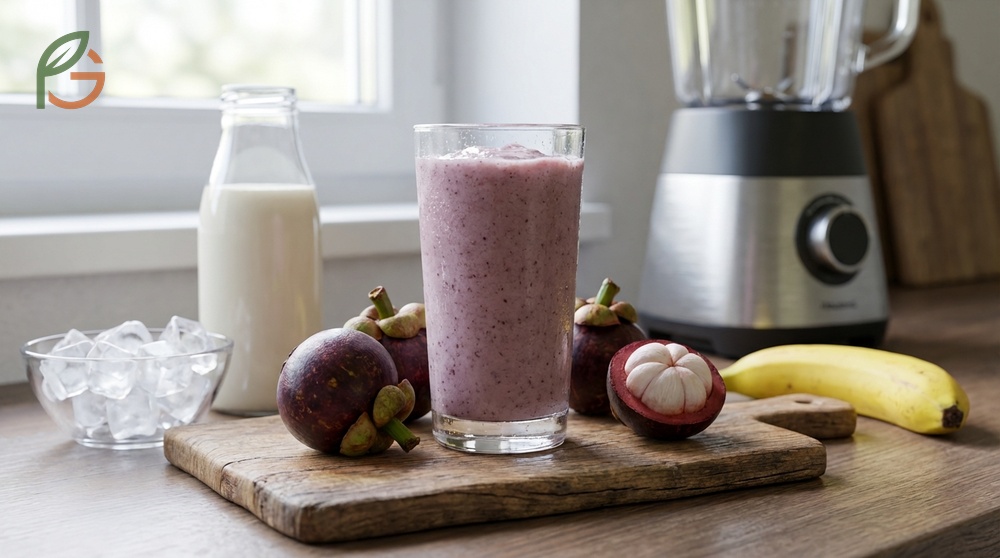
Fresh mangosteen works beautifully in smoothies, where its sweet-tart flavor complements other tropical fruits. The simplest approach involves blending fresh segments with frozen banana, almond milk, and ice for a refreshing breakfast drink. You can also use mangosteen powder if fresh fruit isn’t available.
For a tropical smoothie, combine 1 cup almond milk, 1 frozen banana, 1 tablespoon mangosteen powder, and 1/2 cup ice cubes in a blender[14]. Blend on high until smooth and creamy. The powder provides concentrated antioxidants while maintaining the fruit’s characteristic flavor profile.
- Add fresh segments to fruit salads with papaya, pineapple, and dragon fruit
- Blend into yogurt parfaits with granola and honey
- Make overnight oats by mixing rolled oats, almond milk, mangosteen powder, and chia seeds[14]
- Create a passion fruit smoothie by combining mangosteen with passion fruit juice and strawberries[15]
- Freeze segments and blend them into sorbet or ice cream bases
Mangosteen segments can be frozen for later use in smoothies or desserts. Simply remove the flesh from the shell, place segments on a parchment-lined tray, and freeze until solid. Transfer frozen pieces to an airtight container where they’ll keep for up to 3 months.
Eating Mangosteen Seeds
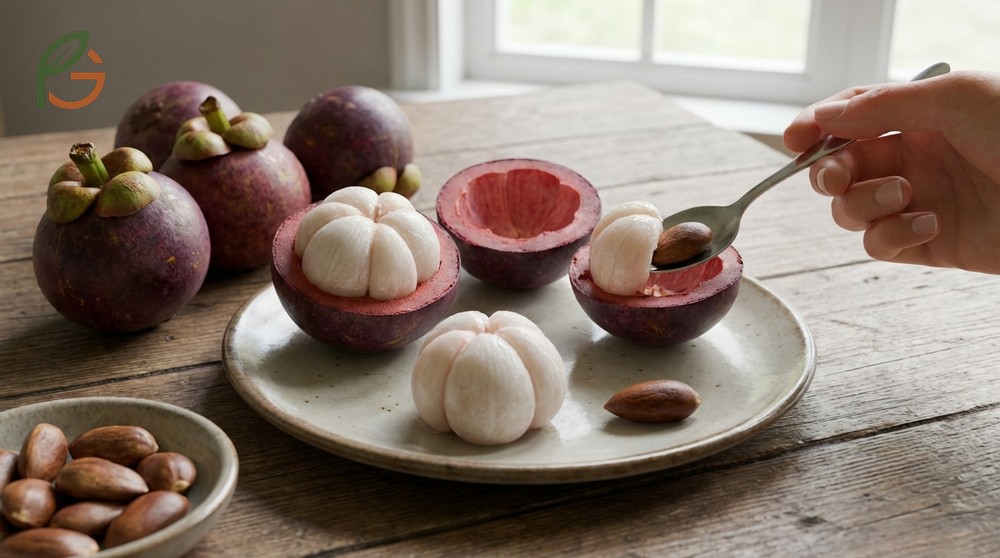
Mangosteen seeds aren’t typically eaten due to their bitter, unpalatable taste. While very small seeds can be swallowed accidentally without harm, larger seeds should be removed and discarded[3]. The seeds aren’t toxic, but they don’t offer any culinary or nutritional benefits in their raw form.
Most mangosteen segments contain no seeds at all, especially in smaller fruits with 6-8 sections. When you do encounter seeds, they’re easy to identify—they’re firm, almond-shaped, and noticeably different in texture from the soft flesh. Simply spit them out or remove them with your fingers before eating the rest of the segment.
Seed Safety: Roasted mangosteen seeds become more palatable, though they’re rarely prepared this way. If you’re curious, small seeds can be roasted at low temperature until dry, but the effort isn’t worth the minimal flavor improvement for most people.
Conclusion
The evidence is clear: mastering how to eat mangosteen requires nothing more than understanding the twist-and-press opening technique and knowing which parts to consume. Fresh mangosteens deliver maximum flavor when you select fruits with slight shell give, green stems, and deep purple color, then store them at optimal temperatures between 54-57°F (12-14°C) for up to 20 days.
Current guidance from agricultural research emphasizes proper handling to preserve the delicate white segments and their beneficial xanthone content. Whether you’re eating mangosteen fresh, blending it into smoothies, or adding it to fruit salads, this “queen of fruits” offers both exceptional taste and valuable antioxidant properties that support overall wellness.
Frequently Asked Questions
How do you know when mangosteen is ripe?
Ripe mangosteen yields slightly when you apply gentle thumb pressure to the shell. Look for deep purple skin with a glossy finish and fresh green stems—these indicate recent harvest and optimal ripeness. Hard shells signal either underripe or overripe fruit that should be avoided.
Can you eat the purple skin of mangosteen?
No, the purple rind isn’t edible. Research shows it’s extremely bitter, tough, and can cause digestive discomfort if consumed raw. Only the white flesh segments inside are meant for eating—the rind also contains pigments that permanently stain clothing.
What’s the easiest way to open mangosteen without a knife?
Remove the stem, place your thumb in the indentation, and press down gently until the shell cracks. Then squeeze from opposite sides with both hands to split the fruit open. This bare-handed method works best with fresh, ripe mangosteens that haven’t been heavily refrigerated.
How long does mangosteen last in the refrigerator?
Studies show mangosteen stored at 54-57°F (12-14°C) stays fresh for about 20 days without chilling injury. Standard refrigerator temperatures of 39-46°F (4-8°C) extend shelf life slightly but harden the shell, making fruits more difficult to open.
Are mangosteen seeds poisonous?
No, mangosteen seeds aren’t toxic or poisonous. They’re simply bitter and unpalatable in their raw form, so most people discard them. Very small seeds can be swallowed accidentally without causing harm, but larger seeds should be removed before eating.
What does mangosteen taste like?
Mangosteen delivers a complex sweet-tart flavor often compared to a combination of peach, strawberry, and citrus. The texture is soft, juicy, and similar to lychee but slightly firmer. Fresh segments at room temperature provide the fullest flavor experience.
Can you freeze mangosteen for later use?
Yes, you can freeze mangosteen segments for up to 3 months. Remove the flesh from shells, place segments on a parchment-lined tray, and freeze until solid. Transfer to airtight containers—frozen mangosteen works excellently in smoothies and frozen desserts.





