
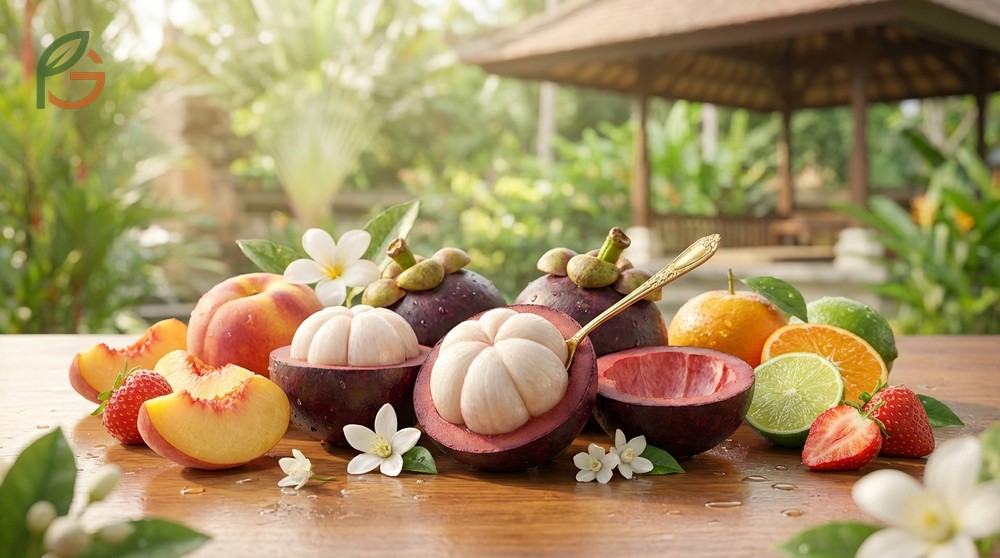
What does mangosteen taste like? It’s a sweet-tart tropical blend combining peach, strawberry, and citrus with delicate floral notes and a creamy, juicy texture.[1] The fruit’s distinctive flavor profile has earned it the nickname “queen of fruits” across Southeast Asia.[2] Research shows that mangosteen’s unique combination of sweetness and acidity, paired with its silky texture, creates an eating experience unlike any other tropical fruit.[3] FruitGarden brings you comprehensive insights into this exotic fruit’s flavor characteristics, nutritional benefits, and practical growing information.
Quick Answer
- Flavor combines 70% sweet like peach with 20% citrus tartness and 10% floral notes[4]
- Texture is creamy and juicy, similar to lychee but more complex[3]
- Contains 73 calories per 100g with 18g carbohydrates and 1.8g fiber[5]
- Thrives in temperatures between 70-90°F (21-32°C) with high humidity[6]
What Does Mangosteen Taste Like
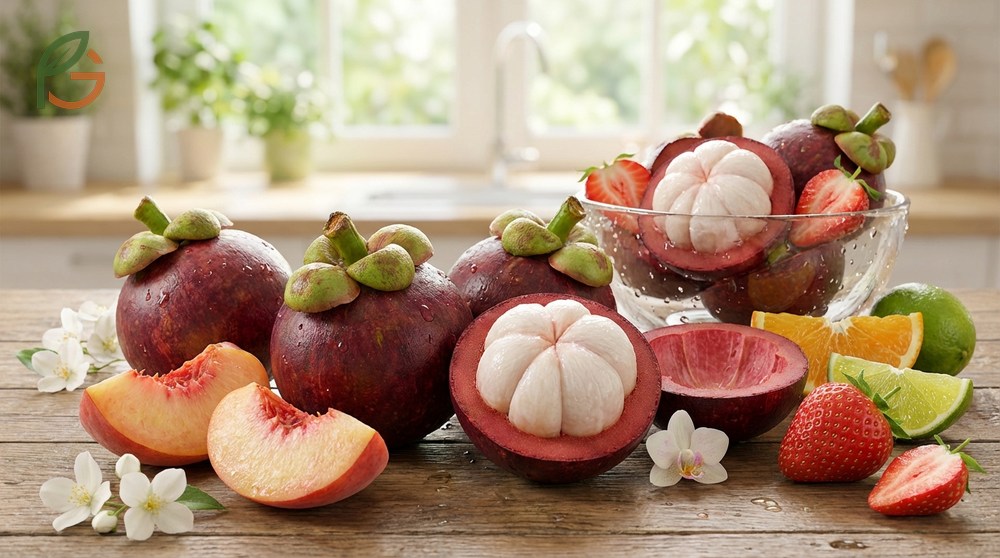
Mangosteen delivers a sophisticated flavor that balances natural sweetness with subtle tartness. The taste resembles a blend of ripe peaches, fresh strawberries, and tangy citrus, all wrapped in delicate floral undertones.[1] Unlike bold tropical fruits, mangosteen’s flavor is refined and never overpowering.
The sweetness isn’t cloying but pure and natural, similar to ripe berries. This moderate sweetness allows the fruit to pair well with various ingredients without dominating other flavors.[7] The tangy element adds refreshing complexity, making it particularly enjoyable in warm weather or as a palate cleanser after rich meals.
Most people find the floral notes reminiscent of lychee or rose water, which adds sophistication to the overall taste experience. These perfumed characteristics set mangosteen apart from ordinary fruits and contribute to its status as a premium tropical delicacy.[3]
Primary Flavor Notes
The flavor profile breaks down into distinct components that create mangosteen’s signature taste. Research shows the fruit achieves a perfect balance where no single element dominates.[4]
- Sweet base: Natural berry-like sweetness that’s refined and not sugary
- Citrus tang: Subtle acidity similar to tangerine or pineapple that provides refreshing contrast
- Peachy notes: Soft stone fruit character that adds depth to the sweetness
- Floral hints: Delicate perfumed quality comparable to lychee or rose water
- Creamy undertone: Slight richness that enhances the luxurious mouthfeel
Important note: Unripe mangosteens taste bitter and astringent with hard, pinkish segments. Always choose fruit with deep purple rinds that yield slightly to gentle pressure for the best flavor experience.[8]
Texture and Mouthfeel
The texture of mangosteen is as distinctive as its flavor. The snow-white segments are tender and juicy, practically melting in your mouth with each bite.[9] Unlike fibrous tropical fruits like mango or pineapple, mangosteen contains virtually no stringy material.
The creamy, silky consistency resembles chilled custard but remains refreshingly juicy. Each segment bursts with moisture, delivering intense flavor throughout your palate without any gritty or dry sensations.[3]
What Is the Mangosteen Fruit
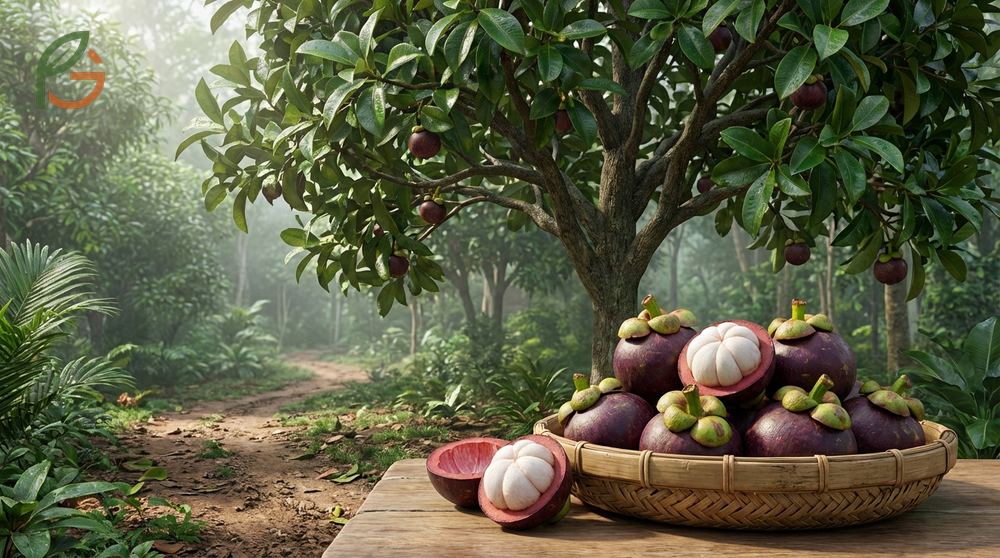
Mangosteen (Garcinia mangostana) is a tropical evergreen tree native to Southeast Asia. The fruit has been cultivated for centuries in Malaysia, Sri Lanka, and Indonesia, where it holds significant cultural importance.[1]
The tree thrives in humid tropical climates with consistent rainfall and requires specific growing conditions. Trees typically take 8-10 years to bear fruit when grown from seeds, making mangosteen a long-term agricultural investment.[6] This slow maturation contributes to the fruit’s premium status and higher market prices.
Studies demonstrate that mangosteen grows best in USDA hardiness zones 10-11, where temperatures remain consistently above 40°F (4°C). The tree can’t tolerate frost and requires year-round warmth to produce quality fruit.[6]
Appearance and Structure
The fruit is small and round with a thick, leathery rind that turns deep purple when ripe. Inside, the edible portion consists of 4-8 snow-white segments arranged in a flower-like pattern.[1]
The rind contains bitter latex that stains easily, which is why proper handling matters when opening the fruit. A persistent calyx remains at the stem end, and quality fruit should be picked with the peduncle still attached.[8]
- Size: Small round fruit typically 2-3 inches in diameter
- Rind color: Deep reddish-purple when ripe, with possible white coating
- Rind thickness: Approximately 6-10mm of inedible leathery skin
- Segments: 4-8 white arils arranged like garlic cloves
- Seeds: Almond-sized seeds in some segments (edible flesh surrounds them)
Queen of Fruits Origin
The “queen of fruits” title stems from Southeast Asian royalty who historically reserved mangosteen for special occasions. The refined flavor and rarity made it a luxury item among nobility.[4]
Unlike durian, which holds the controversial “king of fruits” title, mangosteen’s universally appealing sweet-tart balance makes it beloved across cultures. The elegant flavor never polarizes—it simply delights.[2]
Mangosteen vs Mango Taste
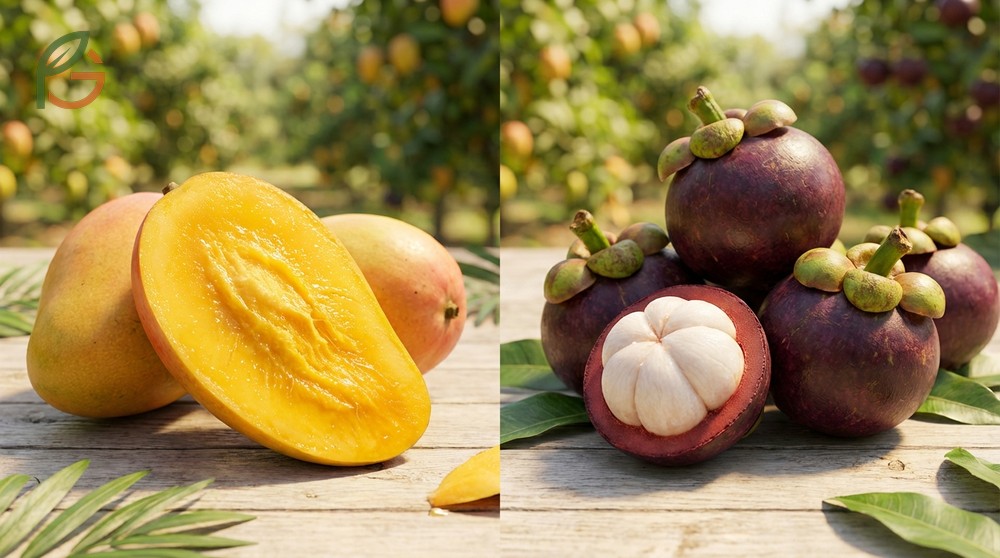
Despite similar names, mangosteen and mango are completely different fruits with distinct flavors and textures. The names create confusion, but they’re botanically unrelated and offer vastly different eating experiences.[4]
Mango delivers bold, intensely sweet flavor with fibrous, stringy flesh that’s similar to pineapple on steroids. Mangosteen offers delicate, floral sweetness with creamy, smooth segments that contain zero fibrous material.[4] The texture difference is immediately noticeable—mango requires more chewing, while mangosteen practically melts in your mouth.
This table compares flavor intensity, sweetness level, texture characteristics, and closest flavor matches between mangosteen, mango, lychee, and rambutan
| Fruit | Flavor Intensity | Sweetness Level | Texture | Closest Match |
|---|---|---|---|---|
| Mangosteen | Delicate, refined | Moderate (balanced)[4] | Creamy, smooth | Lychee + peach hybrid |
| Mango | Bold, tropical | Very sweet | Fibrous, stringy | Pineapple-like |
| Lychee | Perfumed, floral | Highly sweet | Translucent, gel-like | Rosewater + grape |
| Rambutan | Mild, subtle | Moderate-sweet | Soft, slightly chewy | Grape + apple |
Shopping tip: Don’t confuse mangosteen with mango when shopping. Mangosteen has a distinctive purple rind and costs significantly more due to its limited growing regions and import challenges.
Nutrition and Health Benefits
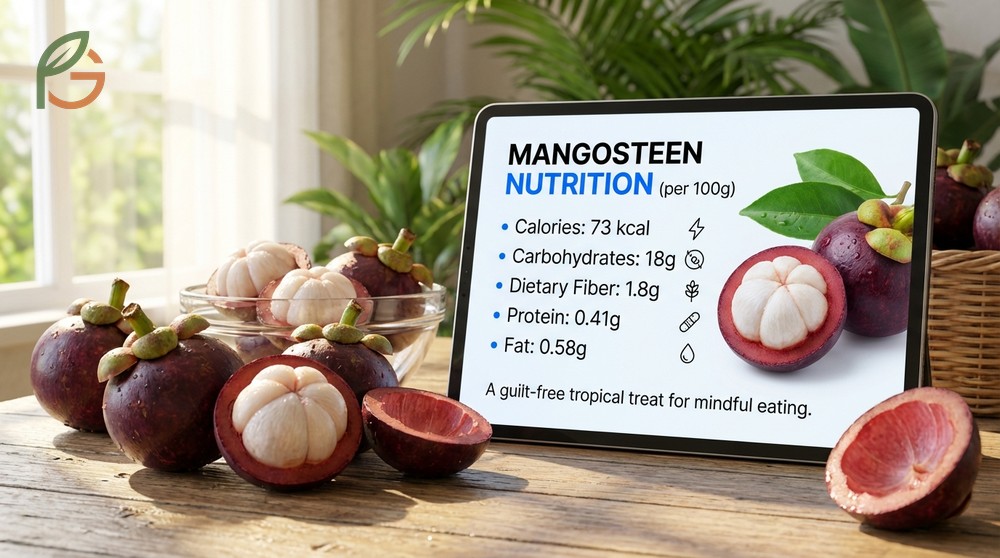
Mangosteen provides impressive nutritional value while remaining low in calories. A 100g serving contains just 73 calories, making it a guilt-free tropical treat.[5] The fruit delivers 18g of carbohydrates and 1.8g of dietary fiber per 100g serving.[10]
The protein content is minimal at 0.41g per 100g, and fat content is negligible at 0.58g.[10] This macronutrient profile makes mangosteen an excellent choice for those monitoring calorie intake while seeking nutrient-dense foods.
Research indicates mangosteen contains essential vitamins including vitamin C at 2.9mg per 100g, plus B vitamins such as thiamine, niacin, and folate. Mineral content includes potassium at 48mg, magnesium, and copper, all supporting various bodily functions.[2]
- Antioxidant power: Contains xanthones, powerful plant compounds with antioxidant properties
- Heart health: Low in fat and sodium while providing potassium for cardiovascular support
- Digestive support: Dietary fiber content aids healthy digestion and gut function
- Skin wellness: Vitamin C and antioxidants may promote healthy skin appearance
- Weight management: Low calorie density with natural sweetness satisfies cravings
- Immune function: Essential vitamins and minerals support overall immune health
How to Select Ripe Mangosteen
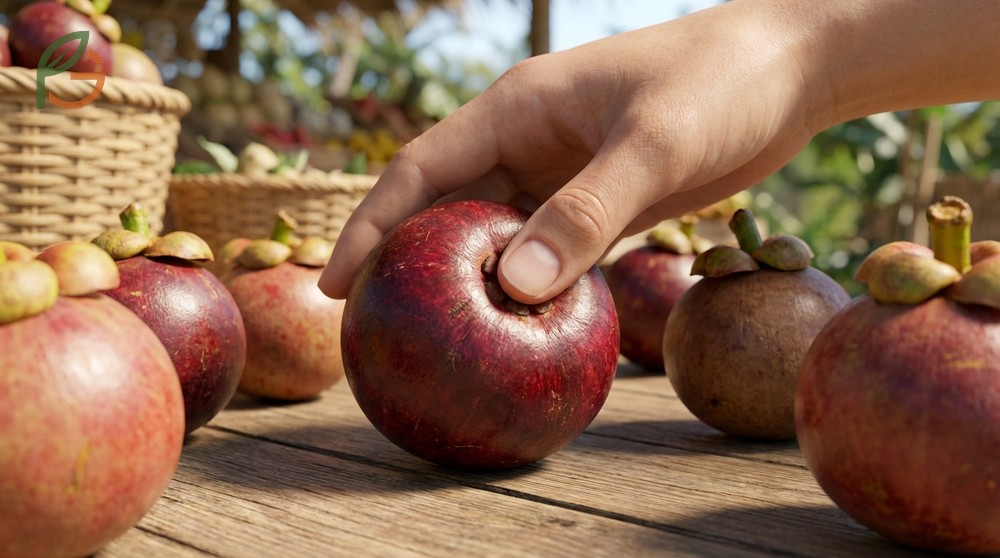
Selecting perfectly ripe mangosteen requires attention to specific characteristics. The primary maturity indicator is skin color change to deep reddish-purple, signaling the fruit has reached peak ripeness.[8] Since mangosteen doesn’t ripen after picking, choosing mature fruit at purchase is critical.
A ripe mangosteen’s rind yields slightly when pressed gently with your thumb. If the rind feels hard, the fruit isn’t ripe yet and won’t develop proper flavor.[11] Conversely, very soft rinds or visible cracks indicate overripe fruit that may have compromised quality.
Visual inspection should reveal a persistent calyx at the stem end. Quality specimens often develop a fine white coating on the purple rind when fully mature, which is a natural characteristic rather than a defect.[12]
- Color: Deep purple rind (avoid brown or pale coloring)
- Firmness: Yields slightly to gentle thumb pressure but isn’t mushy
- Weight: Feels heavy for its size (indicates juicy segments inside)
- Skin condition: Free from cracks, blemishes, or excessive latex staining
- Stem: Peduncle attached with intact calyx at stem end
- Surface: May have natural white coating when fully ripe
Storage tip: Consume fresh mangosteen within a few days of purchase for optimal flavor and texture. The fruit doesn’t store well long-term at room temperature and should be refrigerated if not eaten immediately.
Where to Buy Mangosteen
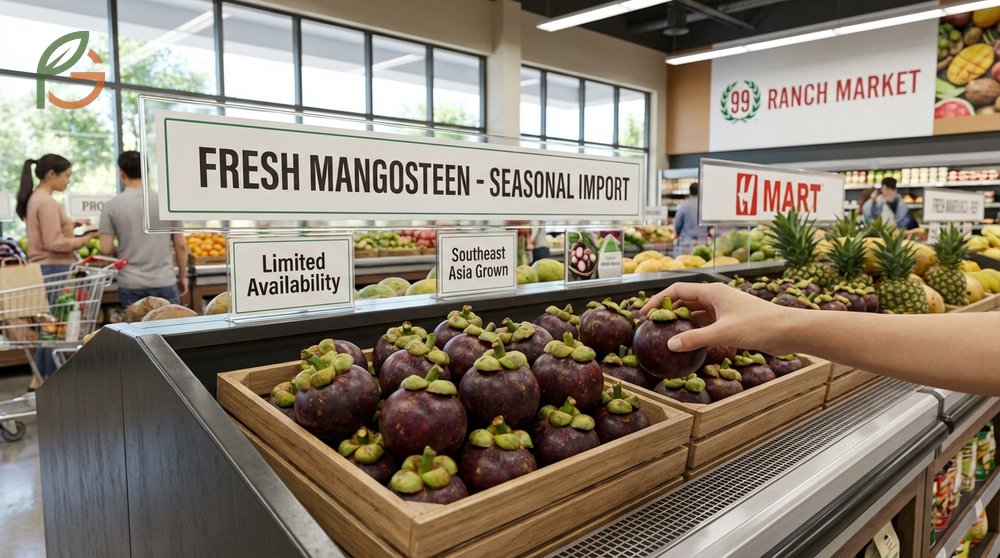
Finding fresh mangosteen in the United States can be challenging due to limited availability and import restrictions. Asian supermarkets offer the most consistent supply, with chains like 99 Ranch, H-Mart, and MT Supermarket stocking fresh mangosteen seasonally.[13]
The fruit appears more commonly during summer months when shipments arrive from Southeast Asian growing regions. Availability depends heavily on when fresh shipments arrive, so calling ahead before visiting stores makes sense.[13] Some specialty grocers like Central Market and higher-end chains occasionally carry mangosteen, though quality tends to be better at Asian markets.
Online delivery services provide convenient alternatives when local stores don’t stock mangosteen. Specialty fruit vendors like Miami Fruit, Good Hill Farms, and iHeartFruitBox ship fresh mangosteen directly to customers nationwide. Instacart and Weee! Asian Market also offer same-day or next-day delivery in many metropolitan areas where partner stores stock the fruit.
- Asian supermarkets: 99 Ranch, H-Mart, MT Supermarket (most reliable for fresh fruit)
- Specialty grocers: Central Market, Sprouts, Whole Foods (occasional availability)
- Online vendors: Miami Fruit, Good Hill Farms, iHeartFruitBox (ship nationwide)
- Delivery services: Instacart, Weee! Asian Market (same-day options in major cities)
- Frozen options: 99 Ranch and H-Mart sometimes stock frozen mangosteen year-round
- Preserved forms: Canned mangosteen available at Asian markets when fresh isn’t in season
Price expectation: Fresh mangosteen costs significantly more than common fruits due to import expenses and limited supply. Expect to pay $10-20 per pound depending on season and location.
Conclusion
The evidence is clear: what does mangosteen taste like is best described as a refined sweet-tart tropical experience combining peach, strawberry, and citrus with creamy texture and floral complexity. This “queen of fruits” delivers sophistication that sets it apart from bold tropical alternatives, offering an elegant eating experience that appeals to virtually everyone who tries it.
Current guidance emphasizes seeking out Asian markets for the freshest specimens during summer months, when Southeast Asian imports peak. FruitGarden encourages exploring this exceptional fruit whether you’re expanding your tropical fruit knowledge or seeking unique flavors for your garden planning.
Frequently Asked Questions
Does mangosteen smell strongly like other tropical fruits?
No, mangosteen has a delicate, fresh fruity scent that’s well-balanced rather than overpowering. The aroma combines subtle citrus notes with soft floral undertones, creating a pleasant fragrance that’s charming without being intense. Unlike durian or jackfruit, mangosteen’s smell is mild and appealing to most people.
Can you eat mangosteen seeds?
Mangosteen seeds are technically edible but bitter and unpleasant tasting. Most people remove and discard the almond-sized seeds while eating the sweet white flesh that surrounds them. The seeds don’t pose health risks if accidentally swallowed, but they’re not considered part of the fruit’s culinary experience.
Why is mangosteen so expensive in the United States?
Mangosteen’s high price stems from limited growing regions, strict import regulations, and the fruit’s inability to ripen after harvest. The fruit must be shipped fresh from Southeast Asia, requiring expensive air freight to maintain quality. Additionally, trees take 8-10 years to produce fruit, limiting overall supply and driving up market prices.
How long does fresh mangosteen last after purchase?
Fresh mangosteen should be consumed within 3-5 days of purchase for optimal flavor and texture. Store the fruit in the refrigerator to extend freshness slightly, but don’t expect long-term storage success. The fruit doesn’t freeze well in its whole form, though frozen segments can work for smoothies if you’re willing to compromise on texture.
What’s the best way to open a mangosteen?
Cut around the circumference of the rind about halfway through with a sharp knife, then twist the two halves apart to reveal the white segments inside. Alternatively, squeeze the fruit gently until the rind cracks open naturally. Avoid cutting too deep—you don’t want to slice through the delicate segments. The bitter rind latex can stain, so handle carefully.
Can I grow mangosteen trees in my backyard?
Mangosteen trees only grow successfully in USDA zones 10-11 with consistent temperatures above 40°F and high humidity year-round. If you live in southern Florida, Hawaii, or southern California coastal areas, cultivation is possible but challenging. Trees require 8-10 years to bear fruit from seed and need tropical conditions with minimal temperature fluctuations.
Does mangosteen taste better than lychee?
“Better” is subjective, but mangosteen offers more complex flavor than lychee’s straightforward floral sweetness. Mangosteen balances sweet, tart, and creamy notes with peachy undertones, while lychee delivers perfumed grape-like sweetness. Most fruit enthusiasts appreciate both for different reasons—lychee for its distinctive floral character and mangosteen for its sophisticated balance.





